Eastern European comfort food does not whisper.
It enters the room with soup, potatoes, dumplings, sour cream, dill, pickles, cutlets, bread, and the emotional confidence of someone who has never once believed dinner should be “just a bite.”
It is warm. It is practical. It is generous in a way that feels almost suspicious if you have spent too much time around tiny plates and decorative lettuce. It does not ask whether you are “being good.” It assumes you are hungry, possibly tired, and in need of something that tastes like somebody cared.
And honestly? That is a very stylish philosophy.
Eastern European comfort food is the dinner equivalent of a good coat: protective, warm, not overly delicate, and deeply uninterested in pretending the weather is better than it is.
Before we romanticize it, let us understand it
Eastern European food is not one single cuisine wearing a floral scarf.
It stretches across many countries, histories, climates, languages and family tables. Ukrainian, Polish, Russian, Romanian, Serbian, Lithuanian, Georgian, Hungarian, Czech, Slovak, Bulgarian, Balkan, Baltic and other regional food traditions all have their own personalities, ingredients and rules that someone’s grandmother is absolutely prepared to defend.
So this is not an encyclopedia. It is a stylish beginner’s field guide for the curious girl who sees borscht, pierogi, pelmeni, kotleti, cabbage rolls, potato pancakes or sour cream on a menu and thinks: I want to understand this dinner before I accidentally order like a tourist with no emotional range.
The good news: you do not need to know everything.
You need to understand the mood.
Warm, filling, practical, often homemade-feeling, rarely afraid of potatoes, and usually better when shared.
Soft dumplings, crisp edges, creamy sides, brothy soups, tender meats, crunchy pickles, and bread doing quiet structural work.
Eat properly. Add sour cream if appropriate. Respect dill. Do not underestimate the soup.
The first thing to know: soup is not a starter, it is a personality
In some restaurants, soup is treated like a polite opening act. A little warm liquid before the important food arrives.
Eastern European soup does not always accept that role.
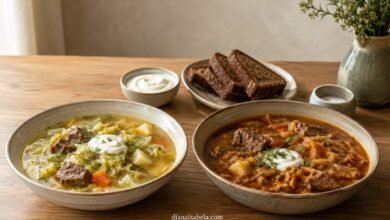
Borscht, for example, can arrive with the color confidence of lipstick and the emotional depth of a novel you read too young. It can be earthy, tangy, slightly sweet, savory, rich or bright depending on who made it and what kind of mood the beets were in. Add sour cream and it becomes softer, silkier, more dramatic. Add bread and suddenly this “starter” has become a whole conversation.
There are also cabbage soups, mushroom soups, chicken soups, bean soups, sour soups, clear broths with dumplings, soups that feel like winter, soups that feel like recovery, soups that make you suspicious of every thin cup of “broth” you accepted in the past.
If you are new to the cuisine, order soup at least once. It tells you how the kitchen thinks.
Diana’s table note: If the soup is good, the restaurant probably understands comfort. If the soup tastes like warm homework, proceed carefully.
Soup is where a kitchen reveals whether it believes in patience.
Dumplings are not just dumplings
The word “dumpling” is useful, but it hides a lot of drama.
Pierogi, varenyky, pelmeni, manti, khinkali, uszka and other dumpling-style dishes may all live somewhere in the broad dumpling universe, but they are not identical little pillows with different passports.
Some are filled with potato and cheese. Some with meat. Some with mushrooms. Some with cabbage. Some are boiled, then maybe pan-fried because life deserves texture. Some arrive with onions, sour cream, butter, herbs or broth. Some are neat and polite. Some are juicy, messy and require a strategy.
The important thing is this: dumplings are usually not casual about comfort.
They look small, but they have emotional density. One plate can feel like a warm little committee meeting between flour, filling and memory.
The menu decoder I wish someone had handed me
When you are new to Eastern European comfort food, menus can feel like a small language test with sauce.
Here is a friendly decoder — not perfect for every region, but useful enough to save you from staring at the menu like it just asked you about tax law.
Potatoes are not a side character here
Potatoes in Eastern European food have range.
Mashed, fried, boiled, grated, stuffed, folded into dumplings, turned into pancakes, served under sauce, eaten with dill, paired with mushrooms, tucked beside cutlets, placed next to pickles like they have been best friends since childhood.
In some food cultures, potatoes are treated like filler. Here, they often feel like infrastructure.
They hold the plate together. They absorb flavor. They soften sharpness. They make rich food feel complete. They are the friend who remembers everyone’s birthday and also knows where the good bread is.
Respect the potatoes.
Mashed potatoes: the soft landing. Best with kotleti, gravy, mushrooms, or anything golden and savory.
Potato pancakes: crisp outside, tender inside, and completely uninterested in being a “light snack.”
Potato dumplings: proof that comfort can be folded into itself and still ask for sour cream.
Sour cream is not decoration
Sour cream in this food world is serious.
It cools, softens, brightens and rounds out dishes that might otherwise be too earthy, salty, rich or sharp. It belongs on borscht. It belongs near dumplings. It makes potato things happier. It appears beside kotleti like it has an official appointment.
If you are the kind of person who says, “Just a little,” fine. Begin there.
But do not treat sour cream like an afterthought. It is often part of the dish’s balance. It is doing more work than some people in group projects.
Pickles, dill and the genius of contrast
This is where Eastern European comfort food gets smarter than people expect.
Because yes, the food can be rich. Yes, there may be potatoes, dumplings, meat, cream, butter, bread, warm sauces and soups with serious intentions.
But then come the sharp things.
Pickles. Fermented vegetables. Sauerkraut. Vinegar. Horseradish. Mustard. Raw onion. Dill. Sour cream. Bright herbs. Tart soups. Salty little interruptions that keep the plate awake.
That is why the food does not feel flat when it is done well. It has contrast. Soft and sharp. Rich and sour. Warm and fresh. Creamy and crunchy. Cozy and slightly mischievous.
Small but important: the pickle is not just sitting there. The pickle is editing the plate.
Kotleti are the quiet luxury of comfort food
Kotleti do not need to be dramatic to be memorable.
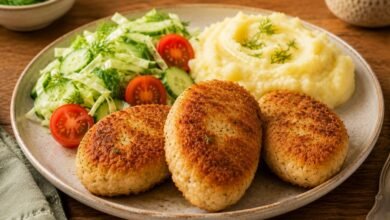
They are usually humble: golden cutlets, tender inside, savory, often served with potatoes or another practical side. But the best ones have that rare quality of food that feels both simple and deeply considered.
They are not flashy. They do not perform for the camera. They just arrive warm and do their job beautifully.
That is why I keep thinking about them as quiet luxury food. Not luxury because they are expensive. Luxury because they understand usefulness, texture, comfort and restraint. They do not scream. They satisfy.
If you want the full craving story, I wrote about searching for them in my Russian kotleti food diary, which is basically what happens when dinner starts acting like a vintage shopping mission.
How to order without panicking
Start with one anchor dish.
Not five. Not the whole menu because you got excited and temporarily lost financial judgment. One anchor dish.
Choose soup, dumplings, kotleti, stuffed cabbage, potato pancakes or a mixed plate if the restaurant offers one. Then build around it with one side or contrast: pickles, salad, bread, sour cream, potatoes, mushrooms or another small plate.
This keeps the meal coherent. It also prevents the table from becoming a museum of your indecision.
First visit order:
borscht or mushroom soup, one dumpling dish, kotleti or potato pancakes, pickles or a fresh salad, and something with sour cream if it makes sense.
If you are with friends, order family-style and share. Eastern European comfort food is often more fun when the table has options and everyone becomes slightly opinionated.
If you are alone, choose one dish that feels like the reason you came. A solo dinner with a good bowl of soup or a proper plate of dumplings can be deeply glamorous in a quiet, “I know how to take care of myself” way.
What if the restaurant looks too casual?
Do not be fooled.
Some of the best comfort food in the world comes from places that do not care about looking fashionable. A deli counter. A family restaurant. A grocery café. A place with laminated menus, serious soups and aunties who do not need your approval. A bakery that also sells hot food because apparently joy can multitask.
Look for clues that matter more than aesthetics: steady customers, fresh trays, steam, turnover, specific regional dishes, people ordering in a language you do not fully understand, reviews that mention “homemade,” and photos where the food looks real rather than professionally lonely.
Pretty interiors are lovely. I love a candle. I support a flattering wall sconce. But comfort food has never required a marble table to be important.
What if the restaurant looks too fancy?
This is also possible.
Sometimes a restaurant takes humble food and polishes it until it becomes shy. A dumpling arrives on a huge plate with three dots of sauce and a garnish that looks like it has a publicist. The food may be good. It may even be excellent. But something can get lost when comfort food becomes too afraid of appetite.
The best upscale versions keep the soul intact.
A refined borscht can still taste like borscht. A beautiful dumpling can still feel generous. Kotleti can be plated elegantly without pretending they are a sculpture. The test is simple: after the styling, does the dish still feel like something you want to eat?
If yes, wonderful.
If no, you are paying for a concept in a nice bowl.
The style of the table matters
Eastern European comfort food loves a table with life on it.
Not necessarily clutter. Life.
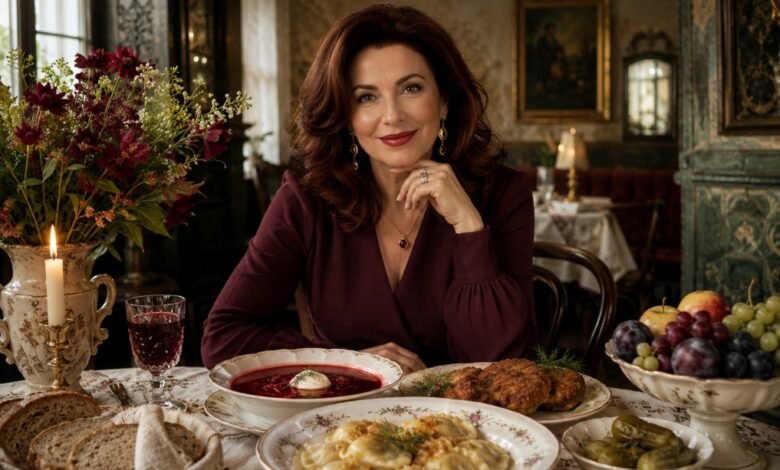
Bread. Glasses. Napkins. A bowl of pickles. A little dish of sour cream. Soup spoons. Someone reaching. Someone explaining what their grandmother did differently. A plate being passed. Steam rising. The table becoming less perfect and more honest as the meal goes on.
This kind of food is not meant to be admired from across the room forever. It is meant to be entered.
That is why it fits so naturally into Diana’s Food Diary. Food here is not just a plate. It is setting, outfit, craving, memory, mood and the little social choreography of dinner.
What to wear when you go for this kind of dinner
I would not wear anything too stiff.
There is nothing wrong with dressing up, but Eastern European comfort food has a way of exposing clothes that do not actually understand sitting down. You want polish, but you also want physical freedom. A dinner outfit should not punish you for ordering potatoes.
Soft knitwear, satin skirts, dark denim, relaxed blouses, warm coats, low boots, simple gold jewelry, deep colors, cream layers, a cardigan with shape, a dress that lets you breathe. That is the zone.
I made a more specific guide on what to wear to a dumpling and kotleti dinner if you want the outfit side of the table handled properly.
How this food fits a stylish life
There is a strange belief that style means lightness.
Light food. Light clothing. Light appetite. Light personality. A woman should float through a café, apparently, surviving on sparkling water, tiny pastries and the approval of strangers.
I disagree with the entire concept.
A stylish life has room for a real dinner. A bowl of soup can belong beside a good coat. Dumplings can happen with beautiful earrings. A plate of kotleti can be part of an evening that still feels elegant. Comfort and style are not enemies unless someone has a very boring imagination.
Actually, the most stylish people I know are not afraid of appetite. They know what they like. They order clearly. They enjoy things without turning the meal into a moral trial.
The chicest thing at the table is not always the outfit. Sometimes it is the confidence to eat the food while it is still hot.
If you are trying this food for the first time
Go in curious, not nervous.
Ask questions. Read the menu slowly. Do not apologize for not knowing everything. Nobody is born understanding every dumpling category. Even people who grew up with this food will disagree about the “right” version of things because food memory is basically family politics with seasoning.
Try one familiar thing and one new thing. If you know you like potatoes, start there. If you love soup, order borscht or mushroom soup. If dumplings are safe territory, choose a filling that sounds comforting. If you want something hearty, kotleti or stuffed cabbage may be your lane.
And if the server recommends something with the calm authority of a person who has seen beginners before, listen.
A tiny etiquette note, because we are still civilized
Do not call everything “Russian food” if the restaurant or dish belongs to another Eastern European tradition.
It happens often, and sometimes people use “Russian” as a broad search term because that is what they know. But if the restaurant is Ukrainian, Polish, Georgian, Romanian, Serbian, Lithuanian, Hungarian, Czech, Bulgarian or another specific cuisine, use the correct name when you can.
Food carries identity. Names matter.
You do not need to be perfect. Just be respectful, curious and willing to learn the difference between dishes instead of flattening a whole region into one label because the alphabet looked unfamiliar.
The dinner I would build for a perfect first visit
I would start with soup.
Maybe borscht with sour cream if the place is known for it. Maybe mushroom soup if the weather is gray and I want something earthy and soft. Then dumplings — potato and cheese or meat, depending on the mood. Then kotleti or potato pancakes for something golden and satisfying. Pickles or a bright salad on the side. Bread if the table looks like it needs a little architecture.
For dessert? Depends.
If there are honey cake, poppy seed pastries, sweet cheese pancakes, fruit dumplings or something layered and serious-looking in the case, I am listening.
Coffee afterward, if the room is pretty and nobody is rushing.
The final spoonful
Eastern European comfort food is not delicate in the way some people expect stylish food to be delicate.
It is not always tiny. It is not always pale and minimal. It does not always arrive with negative space and a garnish that looks emotionally expensive.
It is delicate in a different way.
The tenderness is in the filling of a dumpling. The patience of a soup. The softness of potatoes. The sharp little correction of a pickle. The way sour cream cools a bowl of borscht. The golden edge of a cutlet. The bread passed across the table without ceremony.
That is its beauty.
It is not food that asks you to become smaller before you deserve it. It is food that assumes you have had a day, that you are hungry, that you might need warmth, and that dinner should feel like more than a decorative pause between obligations.
So order the soup. Try the dumplings. Respect the potatoes. Let the sour cream do its job. Wear something comfortable enough to enjoy yourself and pretty enough to remember the evening kindly.
Because Eastern European comfort food is not just about eating.
It is about being welcomed back into your own appetite.
Read next: For the mood behind this whole food diary, start with Comfort Food, But Make It Chic. For a more specific craving story, read I Went Looking for Russian Kotleti Like It Was a Vintage Bag.
For the style side of dinner, use this dumpling and kotleti dinner outfit guide. If you want softer fashion ideas beyond food nights, browse babydoll tops or the cooler Acubi fashion guide.

FAQ
What is Eastern European comfort food?
Eastern European comfort food usually means warm, filling, home-style dishes from many different regional traditions. It can include soups, dumplings, cutlets, potatoes, cabbage rolls, pickles, sour cream, breads, pastries and hearty meals that feel practical, generous and cozy.
Is Eastern European food the same as Russian food?
No. Russian food is only one part of a much larger region. Eastern European comfort food can include Ukrainian, Polish, Romanian, Hungarian, Czech, Slovak, Balkan, Baltic, Georgian and other food traditions. Some dishes may overlap or look similar, but names, ingredients and cultural meaning can be different.
What should I try first at an Eastern European restaurant?
A good first order could include borscht or mushroom soup, dumplings such as pierogi, varenyky or pelmeni, kotleti with potatoes, potato pancakes, pickles or a creamy salad. Choose one main dish you are excited about and add one side that gives contrast, like pickles, salad or sour cream.
Why is sour cream so common in Eastern European food?
Sour cream adds coolness, richness and balance. It softens earthy soups, brightens dumplings, works beautifully with potatoes and helps rich dishes feel smoother. In many meals it is not just decoration — it is part of the flavor structure.
Are dumplings the same in every Eastern European cuisine?
Not at all. Dumplings vary a lot by country and region. Some are filled with potato and cheese, others with meat, mushrooms, cabbage, fruit or sweet cheese. They can be boiled, served in broth, topped with onions, paired with sour cream or pan-fried for extra texture.
Is Eastern European comfort food good for a date night?
It can be a wonderful date-night choice if both people enjoy real food. The atmosphere is usually warm, the dishes are shareable, and the meal feels more relaxed than a tiny-plate restaurant. It is also a good test: anyone afraid of dumplings may not be emotionally ready for joy.
What should I wear to an Eastern European comfort food dinner?
Wear something polished but comfortable: a knit dress, soft sweater, satin skirt, relaxed blouse, dark denim, warm coat or low boots. Avoid outfits that make sitting, eating or reaching across the table difficult. This is food you should actually enjoy, not just pose beside.
Is Eastern European comfort food heavy?
Sometimes, yes — but “heavy” is not always a bad thing. Many dishes are filling because they were built for cold weather, family tables and real appetite. A good meal also has balance from pickles, sour cream, herbs, vinegar, cabbage, soup or bright salads.
How do I know if an Eastern European restaurant is good?
Look for signs of real comfort food: fresh soup, steady customers, specific regional dishes, good dumplings, proper potatoes, pickles, bread, and reviews that mention homemade flavor. A beautiful interior is nice, but a simple place with loyal regulars may be even better.
Can Eastern European comfort food fit a stylish lifestyle blog?
Absolutely. Stylish food is not only tiny, polished or photogenic. A cozy bowl of soup, dumplings with sour cream, a plate of kotleti or potatoes at a candlelit table can be just as chic when it has mood, story, texture and real appetite.