There are days when “food near me” is not specific enough.
Because technically, a salad in a plastic bowl is food. A dry sandwich is food. A tiny plate that looks like it was styled by someone afraid of appetite is also, apparently, food.
But when I search Eastern European food near me, I am not looking for something that merely qualifies as edible. I am looking for real dinner. Food with weight. Food with memory. Food that does not panic when potatoes enter the room.
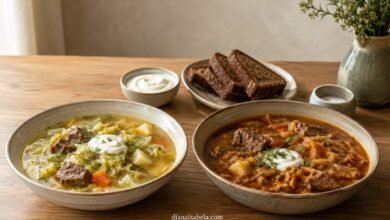
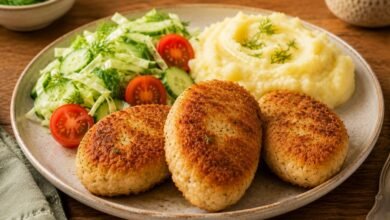
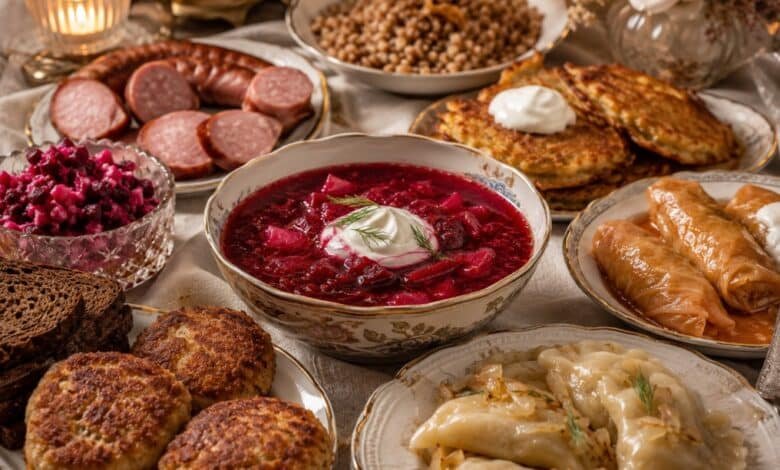
I want kotleti. Pierogi. Vareniki. Pelmeni. Borscht with color and attitude. Cabbage rolls that look like they have family history. Potato pancakes with crisp edges. Buckwheat that understands seriousness. Beet salad, rye bread, soups, kielbasa, pickles, dumplings, sour cream, dill — the whole delicious, slightly dramatic orchestra.
Diana note: Eastern European food is not “heavy” in a lazy way. When it is good, it is layered: warm, sharp, creamy, earthy, crisp, soft, sour, sweet, smoky, cozy. Basically, it dresses better than most dinner trends.
This guide is for the moment when you are hungry, tired of cute food, and ready to find a meal that behaves like dinner. Not a snack in a blazer. Dinner.
The Search Is Bigger Than One Cuisine Label
The first mistake is assuming Eastern European food will always be listed neatly as “Eastern European.” It often will not.
You may find it under Russian restaurant, Ukrainian food, Polish deli, Balkan grill, European market, Slavic grocery, Georgian café, Lithuanian bakery, Romanian food, Hungarian restaurant, Czech pub, or “international grocery” with a prepared food counter that is quietly doing more for dinner than most restaurants on your delivery app.
That is why the search needs range.
Some dinners need a reservation. Eastern European comfort food often needs better search terms.
If your craving is specifically around kotleti, my Russian kotleti near me guide is the more focused place to start. But if you want the bigger world around that plate — the dumplings, soups, salads, breads, delis, and cozy restaurant clues — stay here.
What to Type When “Eastern European Food Near Me” Is Too Broad
Start with the main phrase, then search by dish, by country, and by type of place. Google often understands restaurant categories badly, but it understands repeated signals better when you give it a few angles.
Broad search: Eastern European food near me
Restaurant search: Eastern European restaurant near me
Deli search: Russian deli near me, Ukrainian deli near me, Polish deli near me
Dumpling search: pierogi near me, vareniki near me, pelmeni near me
Comfort plate search: kotleti near me, cabbage rolls near me, potato pancakes near me
Grocery search: Eastern European grocery near me, Slavic market near me, European food store near me
Takeout search: Eastern European prepared food near me
That last phrase is underrated. “Prepared food” can lead you to grocery stores and delis with hot bars, salad counters, frozen dumplings, breads, soups, and takeout trays. It may not sound glamorous, but neither does “good tailoring” until you see the difference.
The Dinner Map: Where Eastern European Food Usually Hides
Eastern European food is not always in one obvious place. Sometimes the best borscht is at a small restaurant. The best kotleti are at a deli. The best pierogi are frozen in a grocery freezer. The best bread is in a bakery you almost walked past. The best cabbage rolls are in a catering tray someone ordered for a family event.
So think in locations, not just cuisines.
The restaurant
This is where you go when you want the full experience: soup, main dish, sides, maybe tea, maybe cake, maybe a room that feels like it has seen generations of birthdays, arguments, reconciliations and people insisting you eat more.
Look for menus with borscht, pelmeni, vareniki, pierogi, kotleti, beef stroganoff, potato pancakes, cabbage rolls, kielbasa, schnitzel-like dishes, soups, rye bread, sour cream and salads. If a restaurant has several of these, it probably understands the comfort food universe.
The deli
The deli is the practical dream. This is where you find prepared food by weight, salads, kotleti, stuffed cabbage, pickles, rye bread, frozen foods and takeout dinners that can save a weeknight.
For a deeper deli-specific guide, use my Russian Deli Near Me guide. A good deli is not just a store. It is a dinner strategy with glass counters.
The grocery store
Eastern European grocery stores are especially useful if local restaurants are limited. Look for frozen pierogi, pelmeni, vareniki, kotleti, blini, soups, rye bread, buckwheat, pickled vegetables, mustard, horseradish, tea, jams, smoked fish, cookies, wafers and cakes.
This is not just shopping. This is building a future dinner for the version of yourself who will be hungry and unwilling to perform culinary optimism.
The bakery
Do not underestimate the bakery.
Some Eastern European bakeries have savory pastries, breads, poppy seed rolls, honey cakes, layered cakes, sweet cheese pastries, buns, pirozhki or other little things that turn a normal errand into a food mood.
I trust any food culture that takes bread, soup and dumplings seriously. That is not a trend. That is civilization with better snacks.
The Dish List That Actually Helps You Order
When you are new to Eastern European food, the menu can look like a beautiful puzzle. The trick is not to memorize every dish. The trick is to recognize categories: soup, dumpling, cutlet, stuffed vegetable, potato thing, grain side, salad, sausage, bread, dessert.
Once you see the categories, the menu becomes less intimidating.
Kotleti
Kotleti are pan-fried cutlets or patties, often made with ground meat, though fish, vegetable and buckwheat versions exist too. They are usually cozy, tender and best with something soft plus something sharp: potatoes and pickles, buckwheat and cabbage salad, beet salad and rye bread.
If you are confused by the names — kotleti, kotlety, Ukrainian kotlety, Polish kotlety mielone, Pozharsky cutlets — my Kotleti Near Me guide explains how to search all the variations without losing your appetite.
Pierogi and vareniki
Pierogi and vareniki live in the dumpling family, and they are often filled with potato, cheese, sauerkraut, mushrooms, meat, cherries or sweet cheese. The names vary by country and menu, but the emotional logic is similar: soft dough, warm filling, sour cream or butter nearby, and absolutely no interest in pretending salad is enough.
Pierogi often appear on Polish menus. Vareniki often appear on Ukrainian or broader Eastern European menus. Try both search terms if you are looking locally.
Pelmeni
Pelmeni are smaller dumplings usually filled with meat. They may be served with sour cream, butter, broth, vinegar, herbs or simple seasoning. They are the kind of food that looks modest until you realize you have eaten the entire bowl without once checking your phone.
Borscht
Borscht is the soup with the color. Beet-based, dramatic, earthy, often served with sour cream and herbs, it can be light or hearty depending on the kitchen. A good borscht does not just start the meal. It sets the mood.
Color theory, but edible: Borscht is one of the few soups that looks like it chose lipstick before dinner. Deep ruby, sour cream swirl, dill on top — not subtle, and better for it.
Cabbage rolls
Cabbage rolls are stuffed cabbage leaves, usually filled with meat, rice or grains, then cooked in tomato sauce or another savory base. They can be deeply comforting when done well and deeply disappointing when treated carelessly, so check photos and reviews.
Potato pancakes
Potato pancakes are crisp, golden and very easy to love. They may appear as draniki, deruny, latkes-adjacent dishes, placki ziemniaczane or simply potato pancakes depending on the place. The correct plate has crisp edges and a soft center. Sour cream is not optional in spirit.
Buckwheat
Buckwheat is the side dish that tells you a restaurant is serious. It is earthy, nutty, practical and very Eastern European. If you see buckwheat as an option, consider it with kotleti, mushrooms, cabbage rolls or roasted meat.
Beet salad and cabbage salad
These are not filler sides. Beet salad brings sweetness, color and earthiness. Cabbage salad brings crunch and acidity. Both can make a rich plate feel balanced instead of heavy.
Kielbasa and sausages
Kielbasa can mean different sausage styles depending on the place, but it is useful on Polish and broader Eastern European menus. It may be grilled, smoked, sliced into dishes, served with cabbage, potatoes, mustard or bread.
Soups beyond borscht
Look for mushroom soup, pickle soup, chicken broth with dumplings, bean soup, cabbage soup, barley soup or seasonal soups. Eastern European food often treats soup as a real part of the meal, not a warm apology before the entrée.
Ordering compass: choose one soup or dumpling, one main dish like kotleti or cabbage rolls, one grounding side like potatoes or buckwheat, and one sharp salad or pickled item.
How to Know If a Place Is Worth Trying
A good Eastern European restaurant or deli does not have to look trendy. Some of the best places have imperfect websites, outdated photos, handwritten signs, slightly chaotic menus and food that makes you forgive all of it immediately.
Look for specificity. Reviews that mention exact dishes are better than vague praise. “Great borscht,” “fresh pierogi,” “best pelmeni,” “good kotleti,” “homemade cabbage rolls,” “real rye bread,” “prepared salads” — these matter.
Look at customer photos. Not the polished photos. The normal ones. The ones taken under bad lighting by people who were already half hungry. If the food still looks good there, trust increases.
Diana review rule: I care less about “cute place” and more about “the dumplings were fresh,” “the soup was excellent,” and “I bought extra to take home.” Cute is lovely. Leftovers are evidence.
Also check whether locals return. If reviews mention regular customers, family orders, holiday catering, deli trays or people buying food by weight, that is a strong sign. Eastern European food often lives through repeat customers, not one-time hype.
The “Real Dinner” Test
Here is how I decide whether a place is likely to give real dinner.
Does the menu have more than one comfort category? Soup plus dumplings. Cutlets plus salads. Bread plus pickles. Sausage plus potatoes. Cabbage rolls plus buckwheat. If yes, good.
Does the food have contrast? Warm and sharp. Creamy and crisp. Rich and sour. Soft and toasted. If everything is beige and soft, the plate may need help. If there is cabbage salad, pickles, beet salad, rye bread, sour cream, dill, mustard or horseradish, the kitchen probably understands balance.
Does the place offer takeout or prepared food? That matters. A restaurant can be nice for one meal, but a deli or market can become part of your life. That is the difference between dinner as an event and dinner as a solution.
Real dinner has structure: something warm, something grounding, something sharp, something you will want again.
What to Order If You Are New
Do not order randomly. Build a plate with intention.
If you want the safest first Eastern European dinner, choose borscht, pierogi or vareniki, and a small salad. That gives you soup, dumplings and balance. If you want something more filling, choose kotleti with buckwheat or potatoes plus cabbage salad or pickles.
If you want a deli-style meal, choose two prepared items and one salad: kotleti, cabbage rolls, buckwheat, beet salad, rye bread. If you want a comfort-heavy dinner, choose pelmeni with sour cream, potato pancakes, and a soup. If you want something Polish-leaning, look for pierogi, kielbasa, potato pancakes, cabbage, soups and cakes.
Soft intro order: borscht, pierogi with potato or cheese, sour cream, tea.
Real dinner order: kotleti, buckwheat, cabbage salad, pickles, rye bread.
Dumpling mood: pelmeni or vareniki, sour cream, broth or soup, something pickled.
Deli takeout: cabbage rolls, beet salad, dark bread, one extra container for tomorrow.
Potato person order: potato pancakes, mushroom sauce or sour cream, soup, cucumber salad.
The goal is not to be perfectly authentic on your first try. The goal is to avoid ordering one lonely dish and missing the whole point of the cuisine.
How Eastern European Food Connects to the Bigger Diana Food Diary
I like food that knows what it is.
Italian aperitivo has its own language: small bites, golden hour, a drink, the stylish little ritual before dinner. Greek tavern food has sun, feta, grilled things, lemon, shared plates and that happy chaos of a table that gets louder as it gets better. A cozy European café has cake, soup, coffee, bread, people-watching and the illusion that your life is more organized than it is.
Eastern European food gives something else. It gives fullness. It gives warmth. It gives a plate that does not ask you to pretend you are less hungry.
That is why it belongs naturally in this food diary, alongside my guides to Italian aperitivo food, Greek tavern food, and cozy European café food. Different moods. Same standard: food should make the day better.
Where the Existing Guides Fit
If you want to go deeper, use this article as the umbrella and follow the more specific guides based on your craving.
For a broader style-and-comfort view, my Stylish Girl’s Guide to Eastern European Comfort Food gives the mood and dish overview. If you want something more opinionated and dinner-focused, Eastern European Comfort Food for Girls Who Are Done Pretending Salad Is Dinner is exactly what it sounds like.
If you are comparing cuisines, the guide to Polish food vs Ukrainian and Russian cuisine helps separate the names, dishes and overlaps. If Ukrainian food is your next rabbit hole, start with the Ukrainian dishes guide. If you are nervous about ordering in a Russian restaurant, the guide to ordering Russian food without panicking is your little menu confidence boost.
And if the night is not just about food but also about the outfit, my dumpling and kotleti dinner outfit guide exists because I believe eating properly and dressing well can absolutely happen at the same table.
When You Want Takeout Instead of a Restaurant
Takeout can work beautifully with Eastern European food if you choose the right dishes.
Good takeout options include kotleti, cabbage rolls, buckwheat, beet salad, cabbage salad, pickles, rye bread, pelmeni, vareniki, pierogi, soups in secure containers, and frozen dumplings for later. Less ideal are dishes that rely on immediate crispness unless you can reheat them properly.
Potato pancakes are risky for delivery because crispness is fragile. They can still be worth it if the place is close or you know how to revive them in a skillet. Dumplings usually travel better. Kotleti travel very well. Salads and bread are reliable. Soup depends on packaging.
Takeout logic: choose food that survives the trip home: kotleti, dumplings, cabbage rolls, salads, rye bread, pickles, buckwheat and soups from places that package carefully.
When There Are No Obvious Eastern European Restaurants Nearby
Do not stop at the restaurant search.
Search groceries, bakeries, delis, churches, community markets, food festivals, cultural centers, holiday bazaars and local Facebook groups. Some Eastern European food is more community-based than restaurant-based, especially in smaller cities or suburbs.
A Polish church event may have pierogi. A Ukrainian community event may have vareniki or borscht. A Russian grocery may have frozen pelmeni and prepared salads. A small European bakery may have savory pastries and rye bread. A deli may have catering trays even if it barely has a website.
The food may be near you. It may just not be optimized for your exact search phrase.
Search like Diana: I start with Google, but I do not let Google make the final decision. Photos, reviews, local groups, grocery counters and bakery cases often know more than a generic “near me” result.
The Dinner I Would Build From an Eastern European Food Search
If I found a promising place tonight, I would not try to order everything. I would build a plate that tells me whether the kitchen has taste.
First, soup if it looks good. Borscht or mushroom soup. Then either kotleti, cabbage rolls, pelmeni, vareniki, or pierogi. Then one grounding side: buckwheat, potatoes or bread. Then one sharp thing: cabbage salad, pickles, beet salad, marinated mushrooms, horseradish, mustard.
That is the test. Warmth, softness, sharpness, depth.
My ideal first plate: borscht, kotleti with buckwheat, cabbage salad, pickles and rye bread. Not minimalist. Not trying to be. Some dinners are better when they have a little architecture.
If the restaurant or deli handles those basics well, I would go back for the deeper cuts: potato pancakes, fish dishes, sausages, stuffed peppers, cakes, frozen dumplings, special salads, catering trays, whatever the regulars seem to be buying.
Why This Food Feels Like Real Dinner
Eastern European food is not shy about appetite. That may be why I love it.
It does not ask you to perform lightness. It does not make dinner into a decorative whisper. It gives you bowls, plates, breads, sauces, sides, soups and things wrapped in dough. It understands that people get hungry after long days, bad emails, cold weather, travel, heartbreak, work, errands, family drama, and the general emotional admin of being alive.
Real dinner is not always delicate.
Sometimes it is a bowl of borscht with sour cream. Sometimes it is pierogi with butter. Sometimes it is kotleti with buckwheat and pickles. Sometimes it is a deli container you bring home and plate nicely because dignity is free and dinner deserves a little styling.
That is the whole charm.
Search Eastern European food near me, but do not search passively. Search like you know what you want: comfort, flavor, texture, warmth, and a meal that does more than fill a gap.
Look for the soup. Look for the dumplings. Look for the cutlets. Look for the bread. Look for the salads. Look for the people who know what they are ordering.
And when you find the place that makes dinner feel like dinner again, save it.

FAQ
What is considered Eastern European food?
Eastern European food can include dishes from Ukrainian, Polish, Russian, Romanian, Hungarian, Czech, Slovak, Lithuanian, Balkan and nearby food traditions. The exact dishes vary by country, but common themes include soups, dumplings, breads, potatoes, cabbage, grains, pickled foods, sausages, cutlets and hearty prepared dishes.
What should I search if I want Eastern European food near me?
Start with “Eastern European food near me,” then try more specific phrases like Ukrainian food near me, Polish food near me, Russian deli near me, pierogi near me, vareniki near me, pelmeni near me, kotleti near me, cabbage rolls near me or Eastern European grocery near me.
What are the best Eastern European dishes to try first?
Borscht, pierogi, vareniki, pelmeni, kotleti, cabbage rolls, potato pancakes, buckwheat, beet salad, cabbage salad, rye bread and kielbasa are all good starting points. Choose based on whether you want soup, dumplings, a full dinner plate or deli-style takeout.
Is Eastern European food always heavy?
No. It can be hearty, but good Eastern European food has balance. Rich dishes are often served with sharp salads, pickles, sour cream, herbs, rye bread, soups or vegetables. The best plates have contrast, not just heaviness.
Where can I find Eastern European food besides restaurants?
Try Russian delis, Ukrainian groceries, Polish delis, Slavic markets, European bakeries, international grocery stores, prepared food counters, community markets and cultural events. Some of the best local options are not formal restaurants.
What is a good first order at an Eastern European restaurant?
A safe first order would be borscht, pierogi or vareniki, and a small salad. For something more filling, try kotleti with buckwheat or potatoes plus cabbage salad or pickles. That gives you a better sense of the cuisine than ordering one dish alone.
Are pierogi, vareniki and pelmeni the same?
They are all dumpling-style foods, but they are not identical. Pierogi are strongly associated with Polish cuisine, vareniki with Ukrainian and Eastern European cooking, and pelmeni are usually smaller meat-filled dumplings often associated with Russian cuisine. Menus may use the names differently depending on the restaurant.
What Eastern European food is best for takeout?
Kotleti, cabbage rolls, pierogi, vareniki, pelmeni, buckwheat, beet salad, cabbage salad, pickles, rye bread and some soups usually work well for takeout. Potato pancakes can be delicious but may lose crispness if they travel too long.
How do I know if an Eastern European restaurant is good?
Look for specific reviews mentioning dishes like borscht, pierogi, pelmeni, kotleti, cabbage rolls, rye bread or prepared salads. Customer photos are also important. A good place usually has fresh-looking food, clear dish variety and repeat customers who mention favorites by name.
What if there is no Eastern European restaurant near me?
Search for delis, groceries and bakeries instead. Try phrases like Eastern European grocery near me, Ukrainian deli, Polish market, Russian grocery, Slavic food store or European bakery. You may find frozen dumplings, prepared foods, rye bread, salads and takeout options even without a restaurant nearby.