Convertible Wedding Dresses: How to Get Two Bridal Looks Without Buying Two Gowns

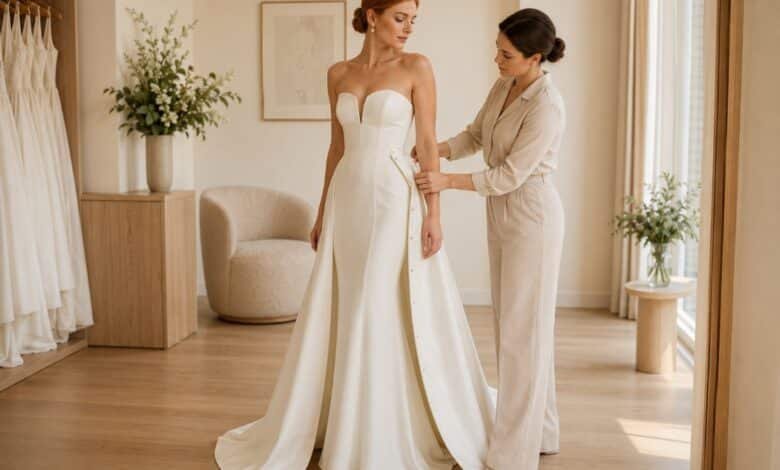
Somewhere between the ceremony and the first serious round of dancing, many brides discover that the dress they loved in the fitting room has developed a second personality.
The train that looked cinematic on a platform is now collecting information from the floor. The overskirt has become a small piece of architecture. The detachable sleeves are still beautiful, but one of them has started turning slowly around the arm as though searching for an exit.
This is usually the point when the idea of a second wedding dress begins to make complete emotional sense.
A second dress can be wonderful. It can also introduce another purchase, another alteration bill, another pair of shoes, another underwear decision and a tightly timed change in a room that may already contain six relatives, three garment bags and no useful chair.
Convertible wedding dresses offer a different solution. Instead of replacing the entire gown, the bride changes selected parts of it: sleeves come off, an overskirt is removed, a cape replaces a veil, a train detaches, or a long ceremony layer reveals a cleaner reception silhouette underneath.
The best convertible dress does not merely produce two photographs. It makes the wedding day easier at the moment when the bride needs more movement, less weight and fewer people standing on expensive fabric.
The worst convertible dress creates two looks and four new problems.
This guide is about telling the difference before the wedding day.
A convertible wedding dress is worth considering when the removable element creates a genuine functional change. An overskirt should reveal a complete dress underneath, detachable sleeves should leave a polished bodice, and a removable train should reduce weight without exposing obvious hardware. The design should be tested while walking, sitting, hugging and dancing—not only while standing on a bridal pedestal.
A convertible wedding dress should transform—not simply lose a decoration
The term “convertible wedding dress” covers several different designs.
Some gowns begin as full ceremony ballgowns and become fitted column dresses after an overskirt is removed. Others have detachable sleeves, straps, capes, bows or trains. Bridal separates may combine a corset, skirt and jacket that can be rearranged throughout the day.
There are also dresses designed with a long removable layer over a mini or tea-length dress.
The strongest designs produce two complete visual ideas.
The ceremony version may be dramatic, architectural and formal. The reception version may be cleaner, lighter and easier to move in.
The weaker designs simply remove something and leave the remaining dress looking unfinished.
A strapless bodice may depend visually on its detachable sleeves. Once they disappear, the neckline can suddenly look too bare. An overskirt may conceal an awkward seam or short underskirt. A removable train may leave visible loops across the back.
The transformed dress should look as though it was designed to exist independently.
| Convertible element | Ceremony effect | Reception effect | Main risk |
|---|---|---|---|
| Overskirt | Adds volume, width and aisle drama. | Reveals a slimmer dress underneath. | Bulky waistband, visible attachments or incomplete underdress. |
| Detachable sleeves | Adds coverage and romance. | Creates a strapless or sleeveless reception look. | Slipping, twisting or exposed attachment points. |
| Removable train | Creates a dramatic rear view. | Reduces weight and floor contact. | Visible hardware or a sudden change in proportion. |
| Cape or jacket | Adds ceremony coverage and structure. | Reveals a simpler gown. | Neckline conflict, excess warmth or difficult storage. |
| Two-piece set | Allows a long skirt or formal topper. | Can become a shorter skirt, trouser or simpler top. | Waistband separation, shifting layers and exposed skin. |
The appeal is not just getting more photographs
Convertible dresses are often presented as a way to achieve two wedding looks. That is true, but the more valuable benefit is changing the garment’s function.
A ceremony dress is asked to create an entrance. It may need to fill a long aisle, frame formal photographs and match the scale of a cathedral, ballroom or garden.
A reception dress has a different job. It needs to survive sitting, dinner, hugs, crowded rooms and dancing.
The same garment can perform both jobs when the transformation is intelligently designed.
Less changing-room time
Removing an overskirt or sleeves may take only a few minutes. Changing into a completely different gown can require assistance, underwear adjustments, shoes and new accessories.
One alteration relationship
A convertible gown is usually fitted as one system. A separate reception dress requires another complete fitting process.
A consistent bridal identity
The bride can change the silhouette without looking like she entered an entirely different wedding.
More use from the main gown
Instead of wearing the ceremony gown for only a few hours, the core dress remains present throughout the day.
Potential budget control
A detachable element may cost less than purchasing and altering a complete second dress. That depends heavily on the design and construction.
Two looks are only a benefit when the transformation takes less time than locating the missing bridesmaid who was supposed to help remove the overskirt.
Choose the transformation point before choosing the detachable piece
A convertible dress works best when the bride knows exactly when and why it will change.
“Sometime during the reception” is not a plan. It is a future group discussion.
Overskirt, sleeves, cape, long train or formal topper remains attached.
Keep the dramatic elements for couple portraits and family photographs.
Remove pieces that make sitting, eating or moving between tables difficult.
Use the lightest and most secure version of the gown.
Some brides remove the overskirt immediately after formal photographs. Others keep it through the first dance and transform before open dancing begins.
A cape may come off after the ceremony because it interferes with dinner chairs. Sleeves may remain for sunset photographs and disappear later when the room becomes warm.
The timeline should reflect comfort and photography priorities.
It should also reflect staffing. If the transformation requires twelve tiny buttons along the back and a special tool, the bride needs an available person who understands the mechanism.
A detachable overskirt creates the biggest transformation—and the biggest fitting risks
An overskirt can turn a fitted sheath, mermaid or column gown into a ballgown or A-line silhouette.
For the ceremony, it adds scale and creates a strong aisle image. At the reception, removing it reveals the narrower dress underneath.
This is often the most convincing two-look option because the entire lower silhouette changes.
Best for dramatic ceremony volume
A full overskirt can create a true ballgown effect over a slim dress.
Check the waistband carefully. It should sit close to the body without creating a thick shelf. The closure should remain invisible from the front and sides.
The fabric should clear the underlying dress rather than catching or twisting around it.
Best for showing the dress underneath
An open-front overskirt frames the central gown and adds volume at the sides and back.
This can work beautifully over lace, beading or a fitted skirt. The opening should remain centered while walking.
If it shifts constantly, formal photographs may require repeated adjustment.
Best for softness without heavy structure
A tulle overskirt adds movement and ceremony volume while allowing the underdress to remain visible.
Check whether embroidery and seams align with the gown beneath. Competing patterns can make the lower half appear visually confused.
The underdress must work alone
Ask to see the gown without the overskirt before becoming emotionally attached to the ceremony version.
Walk away from the pedestal. Sit down. Look at the waist from the side and back.
Some gowns are designed primarily as foundations for overskirts. Without the added layer, the skirt may feel too plain, the waist seam may look unfinished or the proportions may change dramatically.
The overskirt waistband should not become a second waist
Thick hooks, snaps and layers of fabric can create visible bulk.
The waistband should follow the natural waistline of the gown. If it sits higher or lower, the torso may look shortened or divided.
Check the weight
Several layers of tulle, organza, mikado or embroidered fabric can add significant pressure at the waist.
Wear the complete gown for at least fifteen minutes during a fitting. A waistband that feels acceptable for thirty seconds may become uncomfortable after standing, walking and sitting.
Detachable sleeves can create romance, but they must stay where they were introduced
Detachable sleeves can transform a strapless or sleeveless gown into a more formal ceremony dress.
They may attach at the shoulder, upper arm, underarm or neckline. Some are structured and fitted. Others are soft, sheer and intentionally separate from the bodice.
The most common problems are slipping, twisting and creating a visible gap between sleeve and dress.
Attached sleeves
These connect directly to the bodice through snaps, buttons or hidden loops.
They usually create the most integrated appearance, but the hardware must not distort the neckline or irritate the skin.
Off-the-shoulder sleeves
These may sit independently around the upper arms or attach lightly to the gown.
Raise both arms, hug someone and sit with your arms forward. A sleeve that remains perfect only while the arms are resting beside the body is not prepared for a wedding.
Long sheer sleeves
Sheer lace or tulle sleeves can add ceremony coverage without changing the bodice completely.
Check wrist comfort, finger movement and whether rings or bracelets catch the fabric.
Puff sleeves
Removable puff sleeves create a dramatic romantic silhouette. Their volume can also compete with veils, large earrings and elaborate hairstyles.
Test the full visual composition rather than evaluating each accessory separately.
Sleeve test: reach forward, lift a glass, touch the back of your head and hug someone. If the sleeve changes position during each movement, it needs a better attachment plan.
A removable train solves a different problem from a bustle
A train extends from the gown and creates ceremony drama. Afterward, it must either be carried, bustled or removed.
A bustle lifts the train and secures it to the back of the gown. A removable train detaches completely.
Each option changes the reception silhouette differently.
Bustled train
A bustle keeps all the original fabric attached and creates folds across the back of the dress.
It can be beautiful, but it also adds volume and weight around the hips and seat.
Detachable train
A detachable train removes the extra fabric completely and reveals the original gown shape.
The attachment line must be concealed. Check the back after removal for loops, buttons, snaps or a sudden unfinished edge.
Watou or shoulder train
A train attached near the shoulders or upper back can create a cape-like effect.
It avoids pressure at the waist but may affect chairs, veils and the bride’s ability to turn in crowded spaces.
When a bustle is still useful
Some detachable trains leave a smaller train on the core gown. That remaining fabric may still need a bustle.
Ask the seamstress to demonstrate the complete reception configuration, not only the first removal.
Capes and jackets provide the easiest transformation when the base dress is already complete
A cape, bolero, jacket or bridal topper can change the upper half of a gown without altering its structure.
This is often safer than detachable sleeves because the piece behaves as an independent garment.
Sheer cape
A tulle, chiffon or lace cape can replace or accompany a veil. It creates movement and frames the shoulders.
Check where it closes and whether the closure conflicts with the gown’s neckline.
Structured jacket
A cropped satin, mikado or tailored jacket adds ceremony formality and works especially well with simple gowns and bridal separates.
The jacket should close without crushing the bodice or creating new lines across the bust.
Lace topper
A lace topper can convert a strapless dress into a high-neck or long-sleeve ceremony look.
Pattern placement matters. The lace should align attractively across the bust and back rather than ending at awkward points.
Feather or embellished layer
Statement toppers can create a fashion-forward ceremony or evening look.
Test shedding, snagging and contact with the gown. Embellishments should not damage the fabric beneath them.
A topper is most successful when the base gown is strong enough to remain complete after removal.
Bridal separates offer the most freedom—and require the most coordination
Bridal separates may include a corset, bodice, skirt, trouser, overskirt, jacket or detachable peplum.
They allow a bride to change one component while keeping another.
A long ceremony skirt can become a shorter reception skirt. A corset can remain while a jacket disappears. A dramatic overskirt can reveal tailored trousers.
This approach can feel highly personal and may offer opportunities to rewear individual pieces later.
Check the waist from every angle
The top and bottom should meet consistently while standing, sitting and raising the arms.
A gap that appears only during movement may be intentional. It should still look controlled.
Prevent shifting
Hidden snaps or loops can connect the top and skirt. This prevents the bodice from rising and the waistband from rotating.
Match whites carefully
Ivory, natural white, diamond white, cream and champagne can look similar inside a boutique and noticeably different in daylight.
Pieces from different brands should be viewed together under natural light.
Coordinate textures
A smooth satin corset can work with a lace skirt, but the contrast should feel deliberate.
Two almost-matching satins can look more accidental than two clearly different fabrics.
The hidden hardware is where beautiful ideas become practical—or fail completely
Convertible elements rely on hooks, snaps, buttons, loops, zippers, ribbons or magnets.
These details are rarely visible in campaign images. They determine whether the transformation works under real pressure.
| Attachment | Advantage | Risk | What to test |
|---|---|---|---|
| Hooks and eyes | Small and easy to conceal. | Can open under tension or be difficult to locate. | Walking, sitting and removal speed. |
| Snaps | Fast and relatively simple. | May release if fabric pulls unevenly. | Hugging, twisting and lifting the skirt. |
| Buttons and loops | Decorative and secure when fitted well. | Slow to remove and difficult with long nails. | Timing and whether a tool is needed. |
| Zippers | Strong and continuous. | Can catch lace, lining or embroidery. | Removal without seeing the zipper directly. |
| Waist ribbons | Adjustable and visually soft. | Can loosen, rotate or create bulk. | Security during walking and dancing. |
Hardware should be protected from the skin and hidden from view.
Ask whether replacement hooks, snaps or buttons can be included with the gown. Small components can be lost during alterations or wedding-day handling.
The person responsible for the transformation should practice before the wedding.
The convertible dress needs a full wedding-day rehearsal in the fitting room
Do not evaluate the gown only while standing on a raised platform.
The platform exists to create a beautiful vertical line. Your wedding also contains chairs, stairs, hugs, narrow doorways and at least one person who will step backward without looking.
Bring the shoes and undergarments planned for the wedding whenever possible.
Different layers change how the gown sits against the body. The overskirt waistband may interact with shapewear. A topper may catch on a bra strap. A short reception hem may reveal more of the shoe than expected.
Convertible gowns need alterations as a complete system
The core gown cannot be fitted first and the detachable elements treated as accessories later.
Each piece changes pressure, proportion and movement.
Fit the base gown first—but test every layer during the same appointment
The bodice and core skirt establish the foundation. Once that fit is correct, the overskirt, sleeves or topper must be positioned in relation to it.
Mark attachment locations precisely
A small shift at the waist can make an overskirt rotate. A sleeve attached slightly too far forward may twist.
Reinforce high-pressure points
Hooks and snaps at the waist or shoulders may need internal reinforcement so they do not pull through delicate fabric.
Request a final practice appointment
Bring the person who will help with the transformation.
The seamstress should demonstrate the correct order of removal and explain which parts are delicate.
Photograph the hardware
Take close photographs or a short video showing where each hook, button and loop is located.
Wedding-day memory becomes unreliable when several people are standing around a dress saying, “I think this part pulls.”
The transformed dress should feel lighter, not merely look different
If removing the overskirt changes the silhouette but leaves the same pressure, heat and movement restrictions, the transformation may offer limited practical value.
Ask what physical problem each removable piece solves.
Weight
A heavy overskirt or train may create downward pressure at the waist. Removing it should noticeably reduce that weight.
Heat
Long sleeves, capes and jackets may be useful in a cool ceremony space and uncomfortable later in a crowded reception.
Stride length
A fitted underdress may remain restrictive even after a full overskirt disappears.
Walk quickly and attempt a normal dance step in the reception version.
Bathroom access
Determine whether detachable layers make the dress easier or more complicated to manage.
Chair comfort
Buttons, hooks and gathered fabric at the back may press into the body while seated.
Comfort is not separate from appearance. A bride who can move naturally, stand comfortably and remain present in the moment usually photographs better than one managing a garment emergency with a beautiful smile.
Two looks only matter if both are documented intentionally
A convertible dress can produce two distinct bridal portraits, but the photographer needs to know when the transformation will happen.
Schedule photographs of the complete ceremony version before removing anything.
This includes full-length front and back views, movement shots and images showing the train, cape or overskirt at its best.
After the transformation, allow a few minutes for reception portraits.
The bride may want to change earrings, hairstyle or lipstick at the same time. A small adjustment can make the second look feel deliberate without requiring another full outfit.
Check the dress in flash photography
Sheer sleeves, visible corsetry and lining differences may appear stronger under flash.
Check attachment shadows
Bulky waist hardware can create lines beneath smooth fabric.
Photograph the transformed back
The back often reveals leftover loops, snaps or an unfinished seam that is less obvious from the front.
Consider proportion after removal
A dramatic veil or hairstyle balanced by a full overskirt may feel oversized once the gown becomes slim.
Plan which accessories remain after the transformation.
The bride should not be responsible for solving the mechanism while wearing it
Choose one primary person and one backup person to manage the transformation.
The helper should attend the final fitting or watch a clear video.
Do not assign the task to everyone in the bridal party. Group participation increases the likelihood that several people pull different parts of the gown at once.
Create a small transformation kit
Include spare hooks, snaps or buttons if available, small scissors, fashion tape, safety pins, a stain-removal cloth and the seamstress’s instructions.
Choose a suitable room
The bride needs enough space to stand while the overskirt or cape is removed and folded.
A crowded restroom is not an ideal bridal salon merely because it has a mirror.
Allow realistic time
A simple overskirt may take two minutes. A buttoned topper, long sleeves and a shoe change may take much longer.
Include the transformation in the wedding timeline rather than expecting it to happen invisibly.
Every removed piece needs somewhere safe to go
A detached overskirt remains a large and valuable garment after it leaves the bride’s body.
It should not be placed across a random chair, carried around the reception or folded into a decorative basket.
Prepare labeled garment bags
Use separate breathable bags for the overskirt, sleeves, topper, cape and veil.
Assign one storage location
Choose a locked bridal suite, hotel room or secure coat-check area.
Protect embellished pieces
Beading, lace and appliqué can snag when folded against one another.
Record who is responsible
The person removing the pieces should know exactly where they go afterward.
The wedding day should not end with a search for two detachable sleeves last seen near the photo booth.
A convertible gown can save money—but not automatically
A detachable overskirt, sleeves or topper adds design and construction costs.
The gown may also require more complex alterations because several components must align.
Still, the total may be lower than purchasing, altering and accessorizing a second complete dress.
| Cost area | Convertible gown | Two separate dresses |
|---|---|---|
| Initial purchase | One gown plus detachable elements. | Two complete garments. |
| Alterations | Complex system fitting and attachment work. | Separate alterations for both dresses. |
| Accessories | May use the same shoes and jewelry. | Second look may need different shoes, bra or accessories. |
| Cleaning | Multiple connected pieces may need specialist handling. | Two garments may need separate cleaning. |
| Future use | Some separates or toppers may be reworn. | A short reception dress may be easier to rewear. |
Ask for the complete price early.
A gown may be displayed with sleeves, a cape or an overskirt that is sold separately. The full sample look may cost substantially more than the base dress.
Also ask whether the detachable pieces are included in the alteration estimate.
The venue determines which transformation is genuinely useful
Cathedral or formal ballroom
A full overskirt, long train, cape or sleeves can match the scale of the ceremony.
The reception version should reduce weight while preserving formality.
Garden wedding
A light overskirt or removable sleeves may work better than a heavy train.
Consider grass, wind and snagging on natural surfaces.
Beach wedding
A removable chiffon or tulle layer can create ceremony movement.
A heavy structured overskirt may collect sand and become difficult to store.
City hall and restaurant
A jacket, cape, detachable sleeves or short overskirt may provide enough transformation.
Large-volume pieces can become inconvenient in cars, elevators and narrow dining rooms.
Destination wedding
Convertible pieces can reduce the need to travel with two dresses.
Check garment-bag capacity and whether the fabric can recover after travel.
Outdoor-to-indoor wedding
Sleeves, a jacket or cape can respond to changing temperature.
The transformation should be planned around sunset and indoor climate.
The convertible wedding dress mistakes I would avoid first
Falling in love with only the ceremony version
Always inspect and photograph the gown after every detachable element is removed.
Assuming removal will be easy
Practice the entire transformation and time it.
Ignoring the attachment hardware
Look for visible hooks, bumps, scratching and pressure points.
Buying sleeves that work only with the arms down
Test real movement, not just the boutique pose.
Choosing an overskirt that creates waist bulk
Inspect the side profile and sit down in the complete dress.
Forgetting storage
Prepare garment bags and one secure location for removed pieces.
Changing too many accessories at once
A dress transformation, hairstyle change, shoe change and jewelry change can consume a significant part of the reception.
Buying two looks that need different undergarments
The core bra, cups and shapewear should work before and after the transformation.
Skipping photography of the second look
Tell the photographer when the dress will change and schedule a brief second portrait session.
Choosing visual drama without functional improvement
The reception version should become lighter, cooler, shorter or easier to move in—not merely different.
The best convertible gown changes with the wedding instead of interrupting it
A wedding dress does not spend the entire day standing in perfect light.
It walks down an aisle, enters cars, climbs stairs, sits through dinner, accepts hugs and eventually reaches a dance floor where nobody is thinking about preserving the original arrangement of tulle.
A convertible dress can respect all of those moments.
The ceremony version may be grand, covered, full and dramatic. The reception version may be lighter, cleaner and easier to inhabit.
But both versions need to feel complete.
The overskirt should not conceal an unfinished dress. The sleeves should not be responsible for holding the entire neckline together. The removable train should not leave a row of unexplained hardware across the bride’s back.
Most importantly, the transformation should not become its own wedding event.
It should happen calmly, with one informed helper, in a suitable room, according to a plan everyone understands.
Then the bride returns to the celebration looking different enough to create a second moment—but still completely like herself.
Questions and answers
What is a convertible wedding dress?
A convertible wedding dress is a gown designed with removable or changeable elements such as an overskirt, sleeves, cape, train, jacket or separate skirt. These pieces allow the bride to create different ceremony and reception looks without changing the entire dress.
Are convertible wedding dresses worth it?
They can be worth it when the transformation creates a real improvement in comfort, weight or movement. The reception version should look complete on its own, and the detachable pieces should be easy to remove and store.
Is a detachable overskirt comfortable?
It can be comfortable when the waistband lies flat and the weight is distributed properly. Heavy layers, thick closures and an incorrect waist position can create pressure, so the complete dress should be worn for at least fifteen minutes during a fitting.
Do detachable wedding dress sleeves stay in place?
Well-fitted sleeves can stay secure, but they must be tested while raising the arms, hugging, sitting and dancing. Hidden snaps or loops may provide more stability than sleeves that rest independently around the upper arm.
What is the difference between a detachable train and a bustle?
A detachable train is removed completely from the gown. A bustle lifts and secures the train to the back of the dress while keeping all the fabric attached.
Is a convertible wedding dress cheaper than buying two dresses?
It may cost less than purchasing and altering two complete gowns, but detachable elements and complex alterations add expense. Brides should compare the total cost of the base gown, removable pieces, alterations and accessories.
When should a bride remove the overskirt?
Many brides keep the overskirt through the ceremony and formal portraits, then remove it before dinner or dancing. The best timing depends on photography priorities, comfort and the reception schedule.
Who should help transform the wedding dress?
Choose one primary helper and one backup. The primary helper should attend the final fitting or watch a video showing the exact attachment and removal process.
Where should detachable wedding dress pieces be stored?
Place each removed piece in a labeled breathable garment bag and move it to a secure bridal suite, hotel room or supervised storage area. Avoid leaving overskirts, sleeves or capes on reception chairs.
What should I check before buying a convertible wedding dress?
Check both versions from every angle, inspect the attachment hardware, test walking and sitting, remove every piece during the appointment, examine the transformed gown and confirm who will handle the change on the wedding day.
