Shchi vs Solyanka: Two Sour Soups With Completely Different Personalities

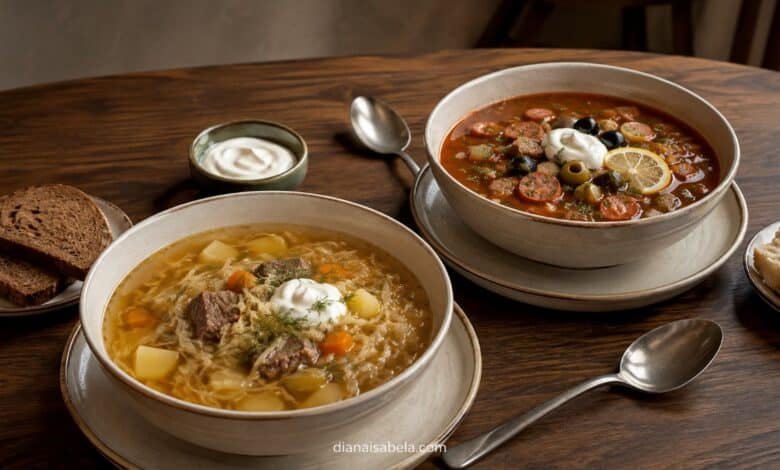
Shchi and solyanka can both arrive at the table sour, savory and substantial enough to make winter seem briefly negotiable. That is almost where the similarity ends. Shchi builds its familiar character around cabbage — fresh, fermented or, in green versions, replaced by tart leafy greens — while meat solyanka takes a much louder route through broth, cured or cooked meats, pickled cucumber, briny accents and often lemon.
If shchi is the quiet person at dinner whose stories become better the longer you listen, solyanka has already ordered another round and is explaining the plot. Its acidity is sharper, its saltiness more deliberate, and its flavor usually feels more concentrated. Shchi can be mild enough for someone who dislikes sour food; solyanka would have to work rather hard to hide what sort of evening it has planned.
They are therefore useful soups to compare precisely because both can satisfy the craving for something tangy and deeply savory without tasting like substitutes for one another. One lets cabbage and broth develop slowly. The other builds contrast almost ingredient by ingredient.
The Simplest Difference: Shchi Thinks in Cabbage, Solyanka Thinks in Contrast
Classic shchi begins in the cabbage world. Fresh cabbage gives the soup a mild, brothy and gently sweet character. Sauerkraut pushes it toward fermentation and acidity. Beef, potato, carrot, onion, mushrooms and herbs can all add depth, but the familiar bowl still feels organized around cabbage and broth.
Solyanka is built differently. In its well-known meat version, the soup is deliberately intense: savory broth, several kinds of meat or sausage, pickled cucumber and other salty-sour elements combine into something much more concentrated. Lemon and sour cream may arrive at serving time, and olives are common in many modern preparations. You do not need a degree in soup studies to notice the volume has gone up.
If shchi itself is still new territory, my broader introduction to the cabbage soup and its different personalities is the more useful place to begin. Here, I am assuming there are two bowls on the table and we are deciding why they taste so dramatically different.
Shchi Can Be Sour Without Making Sourness Its Entire Personality
Fresh-cabbage shchi may barely taste sour at all. Cabbage softens as it cooks, onion and carrot add natural sweetness, and the broth can remain the clearest first impression. A light version may feel closer to an elegant vegetable-and-meat broth than to anything aggressively fermented.
Sour shchi changes when sauerkraut enters the pot. Fermented cabbage carries acidity and salt into the broth, making the soup deeper and sharper. The difference is not simply a squeeze of something acidic at the end; the cabbage itself has already changed through fermentation, so its texture, aroma and flavor become part of the soup from the beginning.
Even then, shchi still tends to leave room for the broth. Beef can add richness, potatoes soften the acidity, and sour cream rounds the bowl rather than creating a completely different flavor profile. If you want to understand how large that fresh-versus-fermented jump really is, I compare the two cabbage styles through flavor and texture here.
Solyanka Likes Several Strong Flavors in the Same Room
Meat solyanka is a different kind of comfort food. Instead of asking one central vegetable to carry the soup, it layers strong savory and acidic ingredients until the broth becomes concentrated, complex and unmistakably itself. Cooked meat, smoked meat, sausage or other meat products can appear together, giving each spoonful more variety than the usual cabbage-broth rhythm of shchi.
Pickled cucumber introduces sharpness and salinity. Tomato elements commonly contribute body, color and another kind of acidity. Olives can bring briny bitterness, while lemon added at serving brightens a soup that would otherwise risk becoming extremely heavy. Sour cream then softens the entire arrangement without pretending any of those flavors were subtle.
The interesting thing is that the soup can sound chaotic on paper and still taste remarkably coherent when the proportions are right. Salt, fat, smoke and acidity all have jobs. Solyanka is not delicious because it contains every assertive ingredient in the refrigerator; it is delicious when those assertive ingredients stop competing and begin building one broth.
The Acidity Comes From Different Places
This is probably the most important distinction if the reason you are comparing these soups is that both have been described as “sour.” Sourness is not one flavor. Yogurt, lemon, vinegar, sauerkraut, pickled cucumber and sorrel can all produce acidity while tasting nothing alike.
In sour shchi, fermented cabbage can be responsible for much of the tang. The acidity therefore carries a recognizable cabbage character along with fermentation aroma and salt. Fresh-cabbage shchi does not automatically have that profile at all, which is why calling all shchi sour can be misleading.
Solyanka tends to combine acidity more aggressively. Pickled cucumber is a major clue, and the brine may influence the broth as well. Tomato and lemon can add additional acidic dimensions depending on the preparation. The result generally feels sharper and more deliberately sour-salty than fresh shchi and often more complexly briny than sauerkraut shchi.
A useful tasting shortcut: when shchi is sour, think fermented cabbage. When meat solyanka is sour, think pickled and briny ingredients working alongside meat, tomato and often lemon.
Shchi Can Contain Meat. Solyanka Can Make Meat the Event.
A hearty beef shchi may contain tender pieces of meat and a rich stock, but the beef still shares attention with cabbage. Meatless shchi also makes complete culinary sense because mushrooms or a strong vegetable broth can create plenty of savory depth.
Meat solyanka operates on another scale. One of its pleasures is the possibility of several meats contributing different textures and flavors to one bowl. A tender cooked meat can provide substance, smoked sausage can add aroma, and cured or smoked components can deepen the salty profile of the broth.
This does not mean more meat automatically produces better solyanka. If every sausage in the refrigerator enters the pot without a plan, the soup can become salty, greasy and confused. Variety works when the cook controls the balance, especially because pickles, olives and other ingredients may already carry considerable salt.
If You Are Sensitive to Salt, These Two Soups Are Not Equal
Fresh-cabbage shchi can be seasoned very gently because the cabbage itself does not enter the pot carrying the salt load of fermented or pickled ingredients. Sour shchi requires more attention because sauerkraut already contains salt from fermentation.
Solyanka demands even more awareness. Pickled cucumbers, olives, sausages, smoked meats and cured meat products can all contribute sodium before the cook reaches for the salt cellar. A good broth therefore needs tasting throughout the cooking process rather than routine seasoning by habit.
This is also why the finished soup should not simply taste salty. Acidity, meatiness, tomato, smoke and broth need to remain distinct enough that salt acts as support rather than becoming the first and last thing you remember.
Pickled Cucumber Is One of Solyanka’s Biggest Clues
If I am looking at a menu description and trying to distinguish solyanka from shchi quickly, pickled cucumber is one of the first ingredients I notice. It immediately points toward a different sour-salty logic from sauerkraut-based shchi. The pickle character can move through the broth while the actual cucumber pieces add their own softer cooked texture.
Olives are another strong visual clue in many contemporary bowls. They contribute salinity and a slight bitter-briny edge that cabbage shchi generally does not seek. Add a slice or wedge of lemon and the finished soup starts showing its personality before you even lift the spoon.
These ingredients should still feel integrated rather than decorative. A bowl does not become convincing solyanka because somebody floated three olives and a lemon wheel on generic meat soup. The broth underneath has to make sense.
Tomato Changes Solyanka’s Appearance, but It Is Still Not Borscht
Solyanka often has a warmer orange-red or reddish-brown appearance because tomato products may contribute to the broth. That can confuse anyone using color as the primary way to identify Eastern European soup, especially when the menu also contains borscht.
Red borscht owes its characteristic identity to beetroot and its earthy sweetness. Solyanka is working with a completely different flavor structure: meats, pickled ingredients, tomato, briny elements and concentrated broth. It can be reddish without tasting remotely like beet soup.
Shchi complicates the color game from the opposite direction because classic cabbage versions tend to remain golden, amber or brownish. If you have been using “red soup versus not-red soup” as your entire navigation system, my comparison of cabbage-driven shchi with beet-driven borscht will make restaurant menus considerably less mysterious.
Solyanka Usually Feels Busier on the Spoon
A spoonful of shchi can be beautifully simple: broth, tender cabbage, potato and perhaps a piece of beef. Even sour versions often maintain that calm structure. The cabbage softens, vegetables become tender, and the liquid remains central.
Meat solyanka tends to provide more interruption. Different pieces of meat or sausage, pickle, perhaps olives and other additions create a spoonful where texture changes more frequently. The broth can also feel more concentrated because several strongly flavored ingredients have contributed to it.
Neither approach is better. Sometimes I want a soup where the pleasure comes from subtle shifts in broth and cabbage. Sometimes I want a bowl that manages to fit smoke, salt, acid, meat and lemon into one spoon without requiring an apology.
What Sour Cream Does to Each Soup
Sour cream makes sense with both, but for different reasons. In sour shchi, it softens fermented-cabbage acidity and gives a relatively clear broth more body. In fresh shchi, the change can be even more noticeable because a mild soup becomes creamier and richer with one spoonful.
In solyanka, sour cream acts against a much busier background. It moderates salt, acidity, tomato and smoked flavors at once. The broth becomes rounder, and the dairy creates a softer transition between all those sharper ingredients.
I would still taste either soup before mixing it in. Otherwise the first impression belongs partly to sour cream, which seems unfair after somebody spent hours making stock.
And Lemon? Very Solyanka. Not a Shchi Requirement.
Lemon suits solyanka because its clean citrus acidity can brighten a broth loaded with meat, pickle and briny ingredients. It does not create the soup’s entire sour character, but it can lift the final spoonful in exactly the place where the soup might otherwise feel too dense.
Classic shchi does not need lemon to announce itself. Sour versions already have fermented cabbage, and fresh versions are not supposed to imitate solyanka’s sharper profile. A cook can obviously make personal choices, but lemon is not the flavor marker I would use to recognize shchi.
That small garnish therefore tells a larger story: solyanka often welcomes one more sharp contrast, while shchi usually rewards restraint.
If Solyanka Is the Bowl You Want, Cooking It Makes the Difference Easier to Understand
The comparison becomes much clearer once you see how solyanka is assembled rather than treating it as “another sour soup.” Its character comes from layering meat, broth and acidic ingredients so that none of them completely disappears. The cook has to manage salt carefully, keep the meat varied without making the pot greasy, and preserve enough brightness that the final soup does not feel monotonously heavy.
If you want to make that version at home, I have a full step-by-step homemade solyanka recipe on Gotuimo. Cooking it beside a simpler cabbage shchi is probably the fastest way to understand why putting both soups under the label “sour Eastern European soup” tells you almost nothing useful about how they actually taste.
Which Soup Feels Heavier?
Solyanka often feels heavier, particularly when the meat version contains several sausages or cured meats and a concentrated broth. Sour cream can add another layer of richness. It is the sort of soup that can move very quickly from first course to complete lunch.
Shchi has a wider range. A fresh-cabbage version in chicken or vegetable broth can be genuinely light. A beef-and-sauerkraut shchi with potatoes and sour cream can become substantial, but it usually remains less crowded with strong ingredients than meat solyanka.
If I knew a heavy main course was coming afterward, I would normally choose fresh shchi. If soup itself were supposed to be dinner, solyanka could make that job very easy.
Which One Tastes More Smoky?
Solyanka is more likely to deliver an obvious smoky character because smoked sausages or meats can be part of the meat mixture. Smoke works naturally with pickle, tomato and concentrated broth, especially when balanced by lemon or sour cream at the table.
Shchi can certainly be made with smoked meat, but smoke is not the defining flavor I would expect from the name alone. A classic beef shchi may taste deeply savory without any smoky note at all. A meatless mushroom version can be earthy rather than smoky, while fresh chicken shchi may be quite delicate.
If smoke is specifically what you crave, reading the meat description matters more than simply choosing between the two soup names.
Which One Is More Sour?
If I had to answer without knowing the exact recipes, I would expect solyanka to taste more overtly sour and briny than fresh shchi. Compared with sour-cabbage shchi, however, the answer becomes less predictable because a strongly fermented batch of sauerkraut can create substantial acidity.
The more useful distinction is the kind of sourness. Sour shchi tends toward fermented cabbage tang. Solyanka tends toward pickle-driven, briny and often citrus-bright acidity layered into a richer meat broth.
If you are trying to choose by flavor rather than ingredients, my tasting guide to shchi’s mild, fermented and green variations gives you the shchi half of that decision in much more detail.
Which One Should You Order?
Choose fresh-cabbage shchi. Solyanka is generally too assertive to fill that role.
Sour shchi is the more direct cabbage expression, especially with beef and rye bread.
Solyanka is probably the obvious choice because those sharp salty-sour contrasts belong naturally to its personality.
Shchi gives you far more room to avoid them, including fresh-cabbage, chicken, mushroom and meatless versions.
A substantial meat solyanka can do that easily, although a rich beef-and-sauerkraut shchi can also be plenty with bread and sour cream.
If a restaurant menu simply says shchi without telling you which version it serves, these are the few questions I would use to decode the bowl before ordering. That matters here because comparing solyanka with mild fresh shchi produces a very different answer from comparing it with intensely sour sauerkraut shchi.
What I Would Eat Beside Each Bowl
With fresh shchi, I have plenty of appetite left for a second course: kotleti, dumplings, buckwheat, potatoes or roasted meat all make sense. Sour shchi may need less, especially when beef and potato are already in the bowl. Dark rye and sour cream can be enough to turn it into a very convincing lunch.
Solyanka asks me to be more restrained because the soup already contains so much flavor and often plenty of meat. Good bread, sour cream and perhaps something fresh on the side are usually enough. Following a large meat solyanka with another plate of sausages feels less like pairing and more like a personal challenge.
For the cabbage-soup side of that table, this is how I balance shchi with bread, starches, cutlets and fresher sides.
Can You Tell Them Apart by Looking?
Usually, but not with absolute confidence. Classic shchi is often pale golden, amber or brownish, with visible cabbage. Sauerkraut versions can become darker but generally stay within that broth-colored family. Green shchi is an obvious exception because sorrel moves the bowl toward muted olive tones.
Solyanka often looks darker, richer and more orange-red because tomato elements may be involved. Pieces of sausage or several meats are another clue, as are olives and lemon at serving. The bowl can look visually busier before you even consider the flavor.
Still, photographs are not recipes. If identifying the dish matters, read the ingredients or ask the kitchen rather than declaring soup citizenship from broth color alone.
Where the Two Soups Meet Is Comfort, Not Recipe
Both soups make sense in cold weather because acidity prevents rich broth from feeling dull. Both work with sour cream. Both welcome bread. Both can use beef. Both belong naturally on menus serving Russian and broader post-Soviet comfort food.
Those similarities describe the experience around the bowl more accurately than the recipe inside it. Shchi can be extremely restrained; solyanka can be extravagantly savory. One can center vegetables and fermentation, while the other can turn preserved meat and pickles into the whole point.
So I would call them culinary neighbors rather than siblings. They understand the same weather. They simply dress for it very differently.
If You Are Looking for Shchi Rather Than Solyanka
Solyanka can sometimes be easier to notice on a menu because its ingredient description sounds dramatic: meat, sausage, pickles, olives, lemon, sour cream. Shchi may sit nearby under the comparatively unglamorous phrase “cabbage soup,” which is exactly how perfectly good dishes disappear in plain sight.
If you are searching specifically for shchi, prepared-food counters are worth checking as well as conventional restaurants because the soup can rotate rather than live permanently on the printed menu. This is the approach I use for deli counters and changing soup selections.
And if you simply want to start with places where the soup may appear, I keep my broader search for shchi here. The important thing is to verify what the kitchen is serving rather than assuming every Eastern European soup menu contains the same classics every day.
My Choice Depends Almost Entirely on the Mood
If I wanted something calm, brothy and vegetable-centered, I would choose fresh shchi without hesitation. If I wanted fermentation, beef and dark bread, sour shchi would win. If I wanted pickles, smoke, lemon and a broth capable of waking up an afternoon that had become suspiciously quiet, I would order solyanka.
That is why asking which soup is “better” does not get us very far. Solyanka is not an upgraded shchi, and shchi is not solyanka with half the interesting ingredients removed. They are solving different cravings.
The better question is how much contrast you want in the spoon. Sometimes cabbage and broth are enough. Sometimes lunch needs an olive, a pickle and a little chaos.
Which Kind of Sour Soup Wins at Your Table?
I am fascinated by where people draw the line between pleasantly tangy and “absolutely not, somebody hand me bread.” Families that love sauerkraut sometimes want shchi aggressively sour, while dedicated solyanka people may consider the pickle-and-lemon combination completely normal and wonder why everyone else is being dramatic.
Tell me which bowl you grew up with, which one you discovered later, how sour you actually want it and what ingredient makes the soup taste right to you. I especially want the tiny family arguments: olives or no olives, how much lemon, which meats belong in solyanka, whether sour shchi needs a night in the refrigerator before it reaches its final form.
If you find a restaurant, neighborhood market or prepared-food counter serving an especially memorable version of either soup, send me the city, place and what made the bowl worth remembering. Those are the discoveries that make this kind of food guide genuinely useful.
info@dianaisabela.comQuestions About Shchi and Solyanka
What is the main difference between shchi and solyanka?
Shchi is most commonly built around cabbage and broth, while meat solyanka combines a richer meat broth with pickled cucumber and other strong salty-sour ingredients. Solyanka generally has a more concentrated and briny flavor.
Are shchi and solyanka both sour soups?
They can both taste sour, but not every shchi is sour. Fresh-cabbage shchi can be mild, while sauerkraut shchi gains acidity from fermented cabbage. Solyanka typically has a stronger sour-salty character from pickled ingredients and may also include lemon.
Which is more sour, shchi or solyanka?
Solyanka is usually the more predictably sour and briny choice, especially compared with fresh-cabbage shchi. A strongly fermented sauerkraut shchi can also be quite tart, but the kind of acidity is different.
Does solyanka contain cabbage?
Cabbage is not the defining ingredient of familiar meat solyanka. Its flavor is more closely associated with meat, broth, pickled cucumber and other salty-sour elements. Shchi, by contrast, is strongly associated with cabbage in its classic forms.
Does shchi contain pickles and olives?
Pickled cucumber and olives are not defining ingredients of classic shchi. They are much more characteristic of many meat solyanka preparations, where they contribute to the soup’s briny and acidic flavor.
Which soup is heavier, shchi or solyanka?
Meat solyanka often feels heavier because it may contain several types of meat or sausage and a concentrated broth. Shchi ranges from light fresh-cabbage versions to substantial beef-and-sauerkraut soups.
Do you put sour cream on shchi and solyanka?
Sour cream works with both soups. It softens fermented acidity in sour shchi and rounds the stronger combination of salt, acidity, meat and tomato in solyanka.
Why is lemon served with solyanka?
Lemon adds fresh citrus acidity that helps brighten a rich broth containing meat and salty or pickled ingredients. It is a common serving accent for solyanka but is not a defining accompaniment to classic shchi.
Which soup should I try first?
Choose fresh shchi if you prefer mild brothy soups, sour shchi if you enjoy sauerkraut and fermented flavors, and solyanka if you like pickles, briny ingredients, smoked meats and stronger salty-sour flavors.
Can shchi or solyanka be a complete meal?
Yes. A substantial beef shchi can be filling with bread and sour cream, while meat solyanka is often hearty enough to function as a meal because of its concentrated broth and multiple meat components.