Fall Wedding Guest Dresses for Cold Weather: How to Stay Warm Without Hiding the Outfit

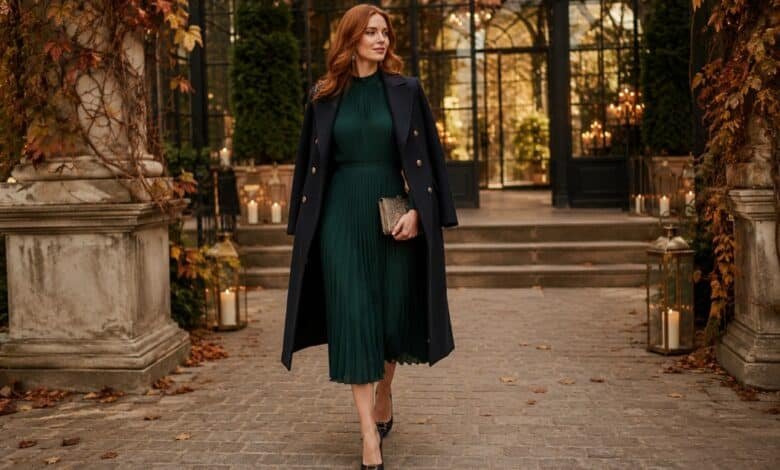
There is a particular kind of optimism involved in choosing a delicate dress for a cold fall wedding and telling yourself that the ceremony will probably be short.
Then the sun disappears behind the venue, the photographer asks everyone to gather outside, the wind discovers the open back of your dress, and the pretty wrap you brought reveals itself to be decorative fabric with no measurable relationship to warmth.
A cold-weather wedding outfit has to be planned from the temperature inward. The dress still matters, of course, but so do the lining, sleeves, shoes, tights, coat, route between the ceremony and reception, and the difference between standing outside for five minutes and sitting beside an open barn door for an hour.
The good news is that warmth does not require hiding under a shapeless coat or dressing as though the wedding is taking place during an expedition. Fall fabrics are naturally elegant. Velvet, crepe, jacquard, satin, fine knit, lined chiffon, suede, wool, and polished leather can create a guest outfit that looks richer precisely because it was designed for the season.
Begin with the forecast, not the fantasy version of fall
“Fall wedding” can mean a sunny September afternoon at 70°F, a windy October evening at 52°F, or a November ceremony where the guests can see their breath. Those are not the same wardrobe problem.
Before choosing the dress, find out when the ceremony begins, whether any part of the event is outdoors, whether the reception is heated, and how far you will need to walk. A dress that works for a five-minute hotel entrance may be miserable during a forty-minute ceremony in an open field.
Cool in the shade, comfortable in motion
You can usually wear satin, chiffon, crepe, a sleeveless midi, or a lighter long-sleeve dress. The important piece is a removable layer for sunset: a cropped jacket, fine wrap, light wool coat, or elegant cardigan.
Open-toe shoes may still work, especially for an indoor reception, but I would avoid anything so summery that it looks disconnected from the season.
The temperature where styling decisions begin to matter
This is comfortable while walking and surprisingly cold while sitting still. Sleeves, a lined dress, closed-toe shoes, and proper outerwear become useful rather than optional.
A midi or maxi in crepe, velvet, jacquard, substantial satin, or lined chiffon works well. Bring a coat you would be happy to wear in photographs.
Real cold-weather wedding territory
A thin dress plus a shawl is unlikely to be enough. Look for long sleeves, lining, heavier fabric, a longer hem, tights where appropriate, closed shoes, and wool outerwear.
This is also where hidden layers become useful. A smooth thermal camisole or fine base layer can add warmth under a high-neck or long-sleeve dress without changing the silhouette.
The coat is part of the outfit
At this point, pretending the dress alone can solve the problem is unfair to the dress. Choose substantial fabrics, full coverage, warm tights if the hem allows, and a long coat that protects the torso and legs.
For an outdoor ceremony, consider gloves, a true wool wrap, elegant boots, or discreet hand warmers. You can remove these details inside; you cannot enjoy the ceremony if you are physically shaking.
Diana’s weather note: wind matters almost as much as temperature. A calm 52°F afternoon can feel manageable. The same temperature on an exposed terrace, hilltop, vineyard, or waterfront can feel dramatically colder.
What actually makes a wedding guest dress warmer
Long sleeves help, but they are only one part of the construction. A sheer sleeve on an unlined chiffon dress may provide less warmth than a sleeveless velvet midi under a wool coat.
When shopping, look beyond the front view and inspect how the dress is made.
A cold-weather dress earns points for:
- A full lining through the bodice and skirt
- Fabric with enough weight to resist wind
- A back that is closed or only moderately open
- Sleeves that are lined, opaque, or tightly woven
- A midi, ankle-length, or maxi hem
- A neckline that works with a thermal camisole or bra
- A silhouette that fits comfortably beneath a coat
- A skirt wide enough to allow tights or a slip underneath
- A hem that will not drag through wet grass or leaves
Lining is the quiet luxury nobody photographs
Lining improves warmth, opacity, movement, and the way a dress falls over the body. It can also reduce static when you wear tights.
A beautifully lined crepe dress often feels more substantial and expensive than a highly decorative unlined dress. Hold the garment up to the light. Look inside. Check whether the sleeves are lined and whether the skirt lining reaches far enough to prevent transparency.
A closed back changes more than the mood
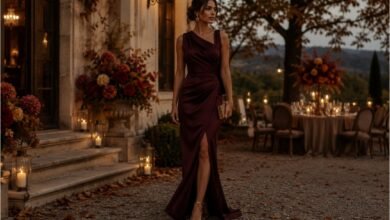
An open-back dress can be gorgeous at an indoor reception, but it creates a large exposed area that no decorative wrap can fully protect. If the ceremony is outdoors, consider a smaller back opening, an illusion panel, or a dress that allows you to keep your coat on comfortably.
Longer hems create warmth without looking covered up
A midi or ankle-length dress protects more of the leg and gives you space for tights, boots, or a slip. It also looks naturally seasonal in rich fabrics.
A maxi is not automatically warmer, though. A long layer of thin chiffon can let cold air move underneath. Fabric density, lining, and the shape of the skirt matter.
Back to contents ↑The fabrics I would reach for first
Cold-weather style becomes much easier when the material already belongs to the season. The best fabrics do not merely keep you warmer; they also make deep fall colors look richer and help a simple silhouette feel intentional.
Velvet
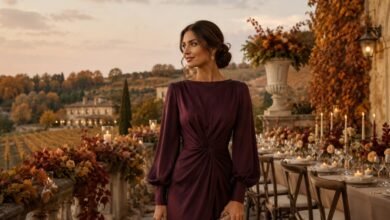
Velvet is the obvious late-fall favorite because it provides depth, softness, and some genuine warmth. A velvet midi, column gown, wrap dress, or long-sleeve style can look luxurious with very little jewelry.
The fabric is visually heavy, so I would balance it with a clean neckline, delicate shoe, or restrained bag. For more examples, see the guide to velvet dresses for fall weddings.
Crepe
Substantial crepe is one of the best all-purpose choices. It holds shape, drapes cleanly, works with sleeves, and fits under tailored coats without excessive bulk.
Crepe can be formal, cocktail, or semi-formal depending on the silhouette. It is also easier to layer than highly textured fabric.
Jacquard and brocade
These woven fabrics trap more warmth than airy chiffon and create visual interest without sequins. They are excellent for fit-and-flare midis, structured sleeves, formal skirts, and historic or church venues.
Choose a pattern that feels refined rather than costume-like. Dark florals, tonal botanicals, abstract texture, and subtle metallic thread work especially well.
Substantial satin
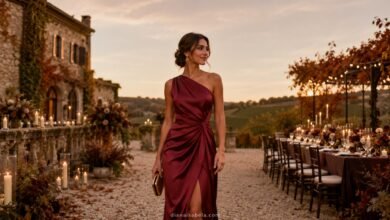
Satin is not automatically warm, but heavier satin with lining can work beautifully. It suits ankle-length dresses, draped sleeves, formal midis, and fluid gowns.
Thin slip satin offers almost no protection from wind. The same silhouette in a heavier, lined fabric behaves very differently.
Fine knit
A high-quality knit dress can work for a relaxed or semi-formal cold-weather wedding when the cut is refined. Look for smooth construction, a defined waist, graceful drape, or an elegant column shape.
Casual ribbing, sweater-dress shapes, and clingy everyday knits are harder to elevate. The difference should be visible before you add accessories.
Lined chiffon
Chiffon remains useful when you want movement rather than weight. Long sleeves, a lined bodice, layered skirt, and proper coat make it more realistic for cool weather.
It works best in early fall or at weddings where only a small part of the event is outdoors.
Fabrics I would approach carefully
Unlined lace, thin jersey, lightweight cotton, linen, airy mesh, and very thin satin can leave you cold even when the dress looks seasonally appropriate in color.
A burgundy dress is not automatically a cold-weather dress. Color creates atmosphere; construction creates warmth.
Back to contents ↑Sleeves can be beautiful, useful, or purely decorative
Sleeves are one of the easiest ways to make a fall dress feel seasonally correct, but not every sleeve performs the same job.
Opaque crepe sleeves
These offer real coverage and work well under coats. Slim sleeves look polished, while softly gathered sleeves create romance without excessive volume.
Velvet sleeves
Warm and dramatic, velvet sleeves suit late fall and evening weddings. Keep the rest of the dress relatively clean so the texture remains elegant.
Sheer chiffon sleeves
They create a lovely autumn look but provide limited warmth. Treat them as visual coverage and plan a proper coat.
Lace sleeves
Lace can soften a high neckline or dark dress. Dense lace provides more coverage than open lace but still needs outerwear in cold weather.
Balloon sleeves
Romantic and photogenic, but check whether they fit beneath your coat. A tight coat sleeve can crush the shape and make the arms uncomfortable.
Three-quarter sleeves
A useful middle ground for early fall or heated venues. They show the wrist, keep the silhouette lighter, and pair beautifully with a cuff or bracelet.
The full guide to fall wedding guest dresses with sleeves explores more sleeve shapes and dress-code combinations.
Back to contents ↑Tights, slips, and hidden layers: the useful details nobody sees
A cold-weather wedding outfit does not need to advertise every practical decision. Some of the most effective warmth is completely invisible.
Can you wear tights to a fall wedding?
Yes, especially with a knee-length or midi dress in cool weather. Sheer black tights look polished with black, navy, burgundy, plum, forest green, and darker prints. Fine brown or espresso tights can work with warm earth tones.
Opaque tights are more casual and visually heavier. They fit best with a structured midi, refined knit dress, or dressy boots at an outdoor, church, barn, or relaxed semi-formal wedding.
For a formal evening event, very sheer tights or bare legs may look more elegant indoors, but warmth and venue still matter. A long gown can hide warmer tights completely.
A slip adds more warmth than people expect
A smooth full slip or half slip creates another layer between the body and the outer fabric. It also helps skirts move over tights and reduces static.
Choose a length shorter than the dress and test it while walking and sitting. The slip should disappear, not make a surprise appearance when you climb stairs.
Thermal camisoles can work under the right neckline
A thin, smooth thermal camisole can hide beneath a high-neck dress, wrap dress with secure coverage, long-sleeve column, or tailored jumpsuit. Choose a color close to your skin tone or dress.
Avoid thick seams, bulky straps, and necklines that become visible. The goal is quiet warmth, not athletic layering.
Short thermal layers under long skirts
Under a full midi or maxi, fine thermal shorts can add warmth without changing the shape. Test the fabric for static and make sure the waistband does not create a visible line.
Always try the complete combination before the wedding: dress, tights, slip, undergarments, shoes, and coat. Fabrics that behave perfectly alone can cling, bunch, or twist once several layers meet.
The coat should not feel like an apology for the dress
Outerwear is where cold-weather wedding outfits often lose their elegance. The dress is carefully chosen; the coat is whatever happened to be near the door.
For a chilly ceremony, arrival photographs, or outdoor cocktail hour, the coat may be visible for a significant part of the wedding. Treat it as one of the major pieces.
The long wool coat
This is the most useful option because it protects more of the body and works with midi, ankle-length, and floor-length dresses. Black, navy, camel, chocolate, charcoal, deep burgundy, and soft taupe are versatile.
The coat does not need to match the dress exactly. It needs to belong to the same level of polish.
The tailored coat
A clean single-breasted or double-breasted coat works beautifully for city, hotel, church, and restaurant weddings. Check that the shoulders fit over the dress and that the coat closes without pulling.
The cape
A cape can be dramatic and practical, particularly over dresses with statement sleeves. It allows more space through the arms and creates an elegant shape.
The risk is theatrical styling. If the cape is the statement, keep the dress, jewelry, and hair controlled.
The velvet or evening jacket
A cropped velvet jacket, satin evening jacket, or embellished bolero can work for indoor transitions and early fall. It may not provide enough warmth for a long outdoor ceremony.
The wrap
A true wool, cashmere, or substantial blended wrap can be useful. A thin sheer stole is mostly decorative.
Secure the wrap before the wedding so you are not holding it closed all evening. A hidden pin, elegant brooch, or intentional drape can keep the shape in place.
Faux fur
A faux-fur stole or cropped jacket suits late-fall formal weddings, historic venues, and evening receptions. Choose a refined texture and avoid combining it with too many other dramatic details.
The dedicated guide to what to wear over a dress to a fall wedding includes more outerwear pairings by silhouette and dress code.
Back to contents ↑Cold-weather wedding shoes need to solve more than one problem
The shoes must suit the dress, the temperature, and the ground. This is why the prettiest option in the bedroom mirror is not always the strongest choice for the actual venue.
Closed-toe pumps
Pointed or almond-toe pumps are reliable for hotels, churches, restaurants, museums, and formal indoor receptions. Suede, velvet, satin, and polished leather all feel appropriate for fall.
Slingbacks
Slingbacks work in transitional weather and provide a lighter look with midis and ankle-length dresses. They are less protective than pumps but more seasonal than a very open sandal.
Dressy ankle boots
A sleek ankle boot can work under a longer midi or maxi. Look for a refined toe, slim shaft, clean leather or suede, and a heel that suits the venue.
Chunky lug soles, distressed finishes, and highly casual boots will change the formality of the dress.
Knee-high boots
Knee-high boots can look elegant with a midi dress when the hem and boot meet cleanly. This combination works best for church, barn, estate, restaurant, and semi-formal weddings.
For formal or black-tie optional events, the boot should be minimal, polished, and visually quiet beneath the skirt.
Block heels
Choose block heels for grass, gravel, uneven stone, and damp ground. A stable heel does not need to look casual when the toe shape and material are refined.
Formal flats
Pointed flats, velvet flats, metallic slingbacks, or embellished evening flats can be elegant and practical. They are particularly useful if the venue includes stairs, long walks, or standing outdoors.
For more detail by terrain and hemline, see what shoes to wear to a fall wedding.
Back to contents ↑The venue determines where the cold will find you
Two weddings can have the same temperature and feel completely different. A heated hotel with a covered entrance is not the same as an open barn, hilltop vineyard, waterfront terrace, or stone church.
Outdoor garden or estate
Plan for wind, damp grass, and a longer ceremony. Choose stable shoes, a lined dress, and outerwear you can keep on without hiding the outfit completely.
Vineyard
Even warm afternoons can become cold after sunset. Gravel and slopes also affect shoes. An ankle-length crepe dress, block heel, and wool coat are a strong combination.
Barn
Some barns are heated beautifully; others remain drafty near doors and walls. Velvet, long sleeves, tights, and polished boots can feel especially natural.
Church
Older churches may be cool even when the reception venue is warm. Sleeves, a tailored coat, and closed shoes create comfort without requiring a second outfit.
Hotel or restaurant
The cold-weather challenge may last only during arrival and departure. You can choose a lighter dress if the coat is warm and the transition indoors is quick.
Waterfront or rooftop
Wind exposure changes everything. Secure skirts, avoid fragile wraps, and bring outerwear that closes properly. A temperature that sounds mild can feel much colder in moving air.
For ceremonies that spend significant time outside, the guide to fall outdoor wedding guest dresses covers grass, wind, rain, and practical dress shapes in more detail.
Back to contents ↑The indoor-outdoor transition is the real styling test
The hardest cold-weather weddings are not fully outdoors. They move repeatedly between temperatures: ceremony outside, cocktails under heaters, dinner indoors, photographs on the terrace, dancing in a warm room, then a cold walk back to the car.
Choose removable warmth
A coat, wrap, jacket, tights, and hidden base layer allow more adjustment than one extremely heavy dress. You may be grateful for sleeves outside and overheated in velvet near the dance floor.
Know where the coat will go
Check whether the venue has a coat check. A long formal coat is useful until it spends dinner hanging from the back of a chair and sliding onto the floor.
Do not make the backup shoes an afterthought
If you bring a second pair, choose flats that still relate to the dress. A formal outfit with athletic slides at 9 p.m. tells a very different story.
Keep one warm item at your seat
A fine wrap or evening cardigan is useful if the coat is checked and the reception room is cool. It should fold easily into a bag or rest neatly on the chair.
Plan the exit too
Temperatures often drop further by the end of the reception. The coat that felt excessive at 4 p.m. may become the smartest piece you brought by midnight.
Cold-weather outfit decisions I would fix before leaving the house
The most common problems are not about taste. They happen when a guest builds the outfit for the photograph and forgets the hours surrounding it.
A summer dress in a fall color
Rust, burgundy, or forest green cannot make an unlined beach dress warm. If the fabric is thin and the back is open, the seasonal color will not solve the physical problem.
A decorative wrap treated like a coat
A sheer stole looks lovely indoors and offers almost no protection outdoors. Bring true outerwear when the forecast requires it.
Statement sleeves that do not fit under anything
Oversized sleeves can be beautiful until the coat compresses them around the upper arm. Try the complete outfit before the wedding.
Open shoes in genuinely cold weather
There is no prize for freezing toes. Closed pumps, slingbacks, dressy boots, and formal flats can all look elegant.
Opaque tights with a very delicate dress
Heavy tights can overpower thin chiffon, pastel satin, or a very airy floral. Either choose sheerer tights or give the dress more visual weight through shoes and outerwear.
A casual puffer over a formal gown
Warmth matters, but so does the arrival. A tailored wool coat, long coat, cape, or refined faux-fur layer will keep the outfit coherent.
Buying the dress before checking the venue
A velvet gown may be perfect for a cold ballroom and uncomfortable in a heated greenhouse. A delicate heel may work at a hotel and fail on vineyard gravel.
Assuming dancing will keep you warm all evening
Perhaps later. It will not help during the ceremony, cocktail hour, dinner, photographs, or wait for transportation.
The small cold-weather wedding kit worth bringing
You do not need to arrive with a suitcase. A few useful pieces can prevent the outfit from becoming uncomfortable or difficult to manage.
Pack or wear:
- A coat appropriate for the expected temperature
- A compact wrap for inside the reception
- Fashion tape for necklines and wrap dresses
- A small anti-static spray or dryer sheet
- Blister pads for closed shoes or boots
- A pair of polished backup flats
- One or two discreet hand warmers for an outdoor ceremony
- A lint roller, especially for velvet and dark wool
- A small umbrella if rain is possible
- A bag large enough for essentials but still appropriate for the outfit
Test the coat while sitting
A coat can fit beautifully while standing and become tight across the shoulders in a car. Sit, reach forward, and close it fully before deciding it works.
Walk in the complete footwear combination
Tights change the fit of shoes. Socks inside boots change it again. Test the exact combination rather than assuming the shoes will feel the same.
Photograph the layers together
Take one photograph in the dress alone and another in the full outdoor look. This is the fastest way to notice whether the coat length, shoe color, or tights are visually disconnecting the outfit.
A beautiful cold-weather wedding outfit is not the dress plus a collection of emergency fixes. It is one complete plan. The fabric, sleeves, hidden layers, shoes, and coat should work together so you can stop thinking about the temperature and enjoy the wedding.
For more seasonal ideas across different venues and dress codes, visit the complete fall wedding guest dress guide or browse the main wedding guest dress collection.
Fall wedding guest dress questions for cold weather
What should I wear to a cold outdoor fall wedding?
Choose a lined midi, ankle-length dress, maxi, formal jumpsuit, or refined knit dress in crepe, velvet, jacquard, heavier satin, or another substantial fabric. Add proper outerwear, closed shoes, and tights or hidden layers when the temperature requires them.
Can I wear tights with a wedding guest dress?
Yes. Sheer black, brown, or tonal tights can look polished with darker fall dresses. Opaque tights work best with structured midis, refined knit dresses, boots, and less formal cold-weather venues.
Are boots appropriate for a fall wedding?
Sleek ankle boots or refined knee-high boots can be appropriate when they suit the hemline and dress code. Choose polished leather, suede, a refined toe, and a heel that does not make the outfit look casual.
What is the warmest elegant fabric for a fall wedding guest dress?
Velvet is one of the warmest traditional evening fabrics, especially when the dress is lined. Substantial crepe, jacquard, brocade, fine knit, and heavier satin are also strong choices.
What should I wear over a formal dress in cold weather?
A long wool coat, tailored formal coat, cape, refined faux-fur stole, or substantial cashmere wrap can work. The outer layer should be warm enough for the actual forecast and polished enough to appear in arrival photographs.
Can I wear a sleeveless dress to a cold fall wedding?
You can, particularly when most of the event is indoors. Pair it with true outerwear and consider a wrap or evening jacket for the reception. A sleeveless velvet or lined crepe dress may feel warmer than a long-sleeve dress in very thin chiffon.
How can I stay warm under a long dress?
Use tights, a smooth slip, fine thermal shorts, or a lightweight base layer that remains invisible beneath the neckline and sleeves. Test the layers together to prevent static, bunching, or visible seams.
Can I wear a sweater dress to a fall wedding?
A refined knit dress can work for a dressy-casual or semi-formal celebration when it has an elegant silhouette, substantial fabric, and polished accessories. A basic ribbed sweater dress may feel too everyday for the occasion.
Should my coat be longer than my dress?
It does not have to be, but a long coat often creates the cleanest line with midi and full-length dresses. Cropped jackets work best when they clearly complement the waist and shape of the dress rather than ending at an awkward point.
What colors work best for cold-weather fall wedding outfits?
Wine, burgundy, forest green, midnight blue, plum, aubergine, chocolate, copper, rust, deep teal, black, slate blue, and warm taupe all suit the season. Fabric and styling matter more than choosing the darkest possible color.