Bolivian Anticuchos in Maryland: Where to Find the Real Thing
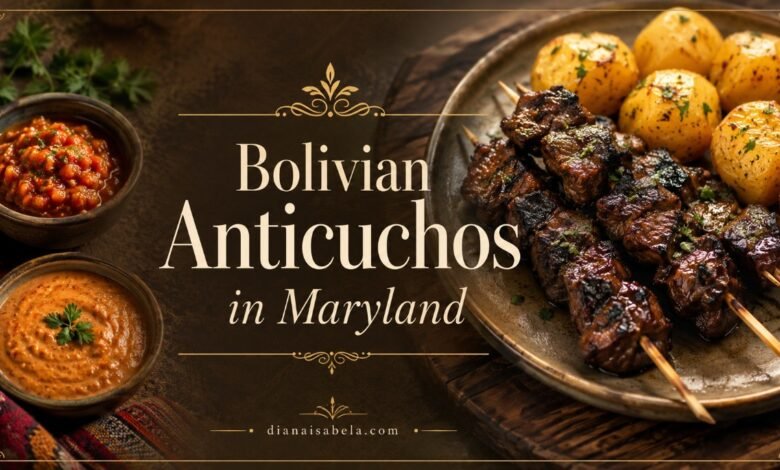
Maryland makes you work a little differently for Bolivian anticuchos than Virginia does. Northern Virginia gives you a small constellation of Bolivian kitchens; Maryland gives you one especially convincing anchor around Wheaton and then surrounds it with enough Peruvian anticuchos to make an impatient search engine feel very pleased with itself.
That is not bad news. It is actually useful. If your only goal is grilled beef heart, Silver Spring gives you several ways to find it. If what you specifically want is Bolivian anticucho — the dish inside a menu that also speaks the language of salteñas, sopa de maní, silpancho, charque, llajua and mocochinchi — the search becomes much narrower, and much more interesting.
The place I would begin is Kantuta’s in the Wheaton/Silver Spring area. Its current menu does something I wish every restaurant menu would do when I am researching dinner: it stops being mysterious. Anticuchos are actually listed, the current price is visible, Bolivian dishes surround them, and both llajua and ají de maní appear among the sauces. No archaeological expedition through a menu screenshot from 2017 is required.
Maryland’s anticucho story therefore is not about pretending the state has twenty Bolivian restaurants hiding behind every Metro station. It is about knowing where the strongest evidence is, recognizing when a nearby anticucho belongs to the Peruvian tradition, and building a very good meal around the place that currently answers the question best.
If you are deciding between Maryland and Northern Virginia rather than searching one state specifically, start with my USA guide to finding Bolivian anticuchos. The DMV is really one connected food landscape even when state lines insist on making dinner sound administratively complicated.
For this particular craving, Maryland points toward Wheaton
Wheaton and the adjoining Silver Spring addresses are where the Maryland search becomes useful. The area has a dense Latin American food landscape, but density alone does not solve our problem because several cuisines live beside each other here. A restaurant can be excellent, serve beef-heart anticuchos and still be the wrong recommendation for a page specifically about Bolivian food.
Kantuta’s changes the equation because its Bolivian identity is not something I have to reverse-engineer from one dish. The restaurant openly presents Bolivian and Latin American food, Wheaton’s own local business material describes it through authentic Bolivian cooking, and its present menu surrounds anticuchos with salteñas, sopa de maní, charque, falso conejo, pique macho, asado boliviano, plato paceño, api and mocochinchi.
That broader menu is what makes the anticucho useful to me. A single beef-heart skewer can travel between culinary traditions; a whole menu starts telling you where you are.
Kantuta’s Restaurant — Silver Spring / Wheaton
If I were leaving home specifically for Bolivian anticuchos in Maryland, this is the phone number I would put in first. Kantuta’s has served Bolivian food in the Wheaton community for years, and its current menu is unusually helpful: anticuchos are not hidden behind a vague “ask about specials” note, and the restaurant gives you enough accompanying Bolivian dishes to make the stop worthwhile even if your ambitions expand as soon as you sit down.
I also like that the menu offers both llajua and ají de maní. Anticucho can be reduced to “meat + skewer” remarkably quickly in English descriptions, but the sauces are where the plate starts making sense. Lean grilled heart wants moisture, chile wants something to carry it, and potato is basically standing nearby waiting for someone to make the correct decision.
The current price is useful as a planning number, not a promise carved into stone. Restaurant prices move, and the same is true of availability. If you are coming from Baltimore, Annapolis or the far side of Montgomery County solely for anticuchos, I would still call before leaving. A menu can be current and the kitchen can still sell out — a subtle distinction that becomes extremely clear when you have already spent forty minutes on the Beltway.
If you want one clean Maryland answer: Kantuta’s is the place I would check first. It currently gives the strongest combination of Bolivian identity, an actual anticucho listing, sauces that make sense with the dish and enough traditional food around it to turn one skewer into a proper meal.
The $17.99 tells me less than the sauces beside it
When I checked the current menu, Kantuta’s listed anticuchos at $17.99. That number is useful because it tells you roughly what the stop costs today, but I would not compare it too aggressively with anticucho prices at unrelated restaurants. Portion sizes differ, some plates include more accompaniments, some sell individual skewers, and city costs have their own ideas about romance.
What interests me more is the small supporting cast on the menu. Llajua is currently available without an added charge, while ají de maní appears as an optional side. Those two names tell a more specific Bolivian story than a dollar amount does.
A peanut chile sauce works beautifully with heart for a very practical reason. Beef heart is lean, so a sauce with body restores richness and moisture; chile prevents that richness from becoming heavy, while potato gives the sauce somewhere soft and starchy to land. Nothing on that plate is there merely because the designer felt the ceramic needed another color.
If the anticuchos arrive with a sauce you have not tried before, taste it before deciding what needs more of it. I have seen too many confident people apply hot sauce as if spreading moisturizer and then spend the next ten minutes pretending their eyes are watering for emotional reasons.
Why a Silver Spring search suddenly turns very Peruvian
This is the part of Maryland that makes a dedicated page worthwhile. Search for anticuchos around Silver Spring and Wheaton and you quickly encounter other restaurants serving grilled beef heart. Some of them look extremely convincing because the dish itself is absolutely real — but the surrounding menu speaks Peruvian almost immediately.
That distinction matters only if the word Bolivian matters to you. If tonight’s goal is simply excellent beef-heart anticucho, by all means expand the search. But if you came looking for the Bolivian tradition, the restaurant around the skewer becomes part of the answer.
Nearby Peruvian menus commonly place anticucho beside things such as papa a la huancaína, ceviche, causa, lomo saltado, chicha morada, choclo and other very recognizable Peruvian dishes. One local menu, for example, currently describes anticucho as marinated beef-heart skewers with corn, golden potatoes and fresh onion salad. That sounds delicious; it also exists inside a menu that repeatedly identifies its sauces and seafood preparations as Peruvian.
Kantuta’s looks different. Anticucho sits in the company of salteñas, charque, falso conejo, sopa de maní, plato paceño, api and mocochinchi. That context is why it is my Bolivian anchor.
There is no need to turn this into a culinary custody battle. Bolivia and Peru share a much larger Andean anticucho history, and American restaurants blur borders even further as cooks, families and customers move. The useful thing is simply knowing which version you meant to find.
I unpack that overlap separately in Bolivian Anticucho vs Peruvian Anticucho.
Wheaton works because the meal does not end at the skewer
I am always more confident recommending a restaurant for one traditional dish when the rest of the menu gives you somewhere interesting to go afterward. Otherwise dinner starts behaving like an airport layover: you arrived for one very specific reason and now everyone is waiting to leave.
At Kantuta’s, the anticucho can be a starting point rather than the entire event. A salteña gives you a completely different texture — soft pastry around a juicy filling — while sopa de maní moves the meal toward warmth and comfort. Silpancho is the opposite strategy: a full, generous plate for the person who looked at an appetizer and decided restraint had been overrated all along.
Charque brings another Bolivian meat tradition into the conversation, falso conejo is useful if you want to see how a breaded beef preparation changes under chile sauce, and plato paceño takes you into an entirely different combination of potato, corn, beans and cheese. In other words, the restaurant gives a first-time diner room to discover Bolivia beyond the one dish they searched on their phone.
What I would order around the anticuchos
My ideal table would not attempt to make every course compete for the title of “most meat.” Anticuchos already bring grill, smoke and concentrated beef flavor, so the next thing I want is contrast. Luckily, the current menu gives several ways to do that.
If there are two of you
I would share the anticuchos first, add a couple of salteñas if you have never tried them, and then split one larger plate according to appetite. This gives you grill, pastry and a main dish without making dinner feel like an endurance event sponsored by beef.
If the weather is miserable
Sopa de maní is the obvious emotional decision. Warm peanut soup beside a meal that began with charred beef heart gives you two completely different uses of richness and makes considerably more sense to me than ordering another grilled appetizer simply because it is nearby on the menu.
If everyone arrived genuinely hungry
Silpancho, charque or pique macho can take over after the anticucho. I would share unless your table has spent the afternoon moving furniture or participating in some very energetic agricultural activity.
If you want the meal to feel distinctly Bolivian all the way to the glass
Look for mocochinchi or api depending on your mood and the time of day. Neither exists merely to provide a beverage-shaped gap between bites; both give you another little doorway into Bolivian food culture.
For the fuller plate logic — including potato, chile, sauces and what works beside grilled heart — see what to eat with Bolivian anticuchos.
Salteñas before anticucho? I support this decision.
If you are new to Bolivian food, I actually like beginning with a salteña because it establishes immediately that this cuisine has more range than the rather severe phrase “beef-heart skewer” suggests. The pastry is slightly sweet, the filling is juicy and savory, and eating one neatly requires just enough concentration to make conversation pause for a second.
This is not a criticism. Some foods deserve your full attention, especially when gravity is involved.
Then anticucho arrives with an entirely different personality: smoke instead of pastry, char instead of stew, a firmer bite instead of a juicy filling. The two dishes make each other more interesting because they do not attempt the same trick.
If I were introducing someone to Bolivian food for the first time in Maryland, that contrast is exactly what I would want. Give them something immediately comforting, then something slightly less familiar. Curiosity works better when it has somewhere soft to land.
The sauces deserve their own little strategy
One reason I am especially interested in Kantuta’s current menu is the presence of both llajua and ají de maní. Even if the restaurant serves them differently from the street-food versions you might encounter in Bolivia, the menu is giving you two very useful flavor directions.
Llajua should bring freshness, chile and enough sharpness to make grilled food feel livelier. Ají de maní moves toward richness, body and a nuttier texture. With lean beef heart, those functions are not cosmetic. A sauce can take a bite from “well-grilled meat” to something much more complete because it changes moisture, heat and rhythm.
I would try each sauce on a small piece first rather than immediately turning the entire plate into an abstract painting. The goal is to understand what the grill did before the condiment enters the conversation.
My father taught me a version of that rule long before I cared about writing about food: taste before fixing. It applies to soup, sauce, salt, relationships and occasionally bad haircuts, although the last category has fewer culinary solutions.
If you take anticuchos home, do not make them commute longer than you do
Takeout is practical, especially around Silver Spring, but grilled heart is one of those foods that rewards punctuality. It is lean, which means it does not have a luxurious cushion of internal fat protecting it while the container sits in traffic. As the meat cools, its firm texture becomes more obvious, and reheating it too aggressively only finishes the job.
If you are picking up rather than eating there, I would time the order so the skewers spend as little time as possible becoming acquainted with the passenger seat. Keep sauces separate when possible, especially fresh chile-based ones, and do not drown the potatoes before the drive unless the restaurant’s serving style specifically calls for it.
At home, a quick hot pan is usually a kinder way to revive cooked meat than a long microwave session. You are trying to restore heat and a little surface energy, not cook the heart for a second career.
My takeout rule: anticucho is a very good thing to bring home from nearby. It is a much less charming thing to transport across three counties while answering emails.
What I would ask before leaving Baltimore, Annapolis or Frederick
If you live close to Wheaton, calling ahead is sensible. If you are coming from another part of Maryland specifically for anticuchos, it becomes mandatory in my book. Current menu evidence is strong, but restaurants can sell out of individual dishes while the website remains blissfully unaware.
You do not need to ask the staff whether the preparation is anthropologically representative of La Paz in the late twentieth century. Let the restaurant answer the dinner questions and let us handle the rabbit holes here.
Maryland anticucho vocabulary for people who hate phone calls
If you are reading menus instead, a few words help enormously. Anticuchos de corazón is the clearest phrase when you specifically want beef heart. A simple anticuchos can still mean heart, but it is worth reading the description because restaurants increasingly use anticucho language for chicken, steak and other proteins.
Ají de maní tells you to expect a peanut-and-chile direction. Llajua points toward Bolivia’s much-loved chile sauce family. And once words such as silpancho, plato paceño, falso conejo, charque, sopa de maní, api and mocochinchi begin appearing around the same anticucho, the Bolivian context becomes much harder to miss.
One reason Silver Spring search results can feel confusing is that Peruvian restaurants use equally clear but different vocabulary: huancaína, causa, ceviche, lomo saltado, chicha morada and choclo quickly push the menu in another direction. Knowing even five dish names is more useful than reading twenty generic restaurant descriptions promising “authentic Latin flavors.”
Outside Montgomery County, I would lower expectations before lowering standards
The current Maryland evidence does not justify pretending that Baltimore, Annapolis or Western Maryland have equally strong Bolivian anticucho clusters. Searches farther north produce anticuchos, but many of the identifiable dishes sit inside explicitly Peruvian menus. That can solve a beef-heart craving, but it does not give me enough reason to build another Bolivian place card.
Baltimore is a good example. Current restaurant menus there do offer anticucho, yet the strongest clear listings I found describe those dishes inside Peruvian sections. I would happily use them in a guide about Peruvian anticuchos or a general beef-heart search; I will not repaint them Bolivian because Maryland would look nicer with another city heading.
The same discipline applies to Rockville and Gaithersburg. There are Latin American restaurants with Bolivian-style dishes and salteñas, but I do not currently have anticucho evidence strong enough to tell you to drive there specifically for this dish. That may change, and when it does, the page can grow.
Until then, the honest Maryland map is delightfully uncomplicated: **Wheaton/Silver Spring first, with Kantuta’s as the strongest Bolivian anticucho destination.**
The interesting thing about a one-anchor state
At first glance, one especially strong restaurant can make a state guide look less exciting than a page with fourteen listings. I think the opposite is true when the information is honest.
If Maryland currently gives you one place where Bolivian identity, anticucho availability, current menu data, address, phone, sauce vocabulary and a broad traditional menu all line up, that is valuable. Adding twelve weak restaurants would not make the page twelve times more useful. It would simply make the reader work harder to rediscover the same answer.
This is one of the reasons I prefer food guides to restaurant directories. A directory feels incomplete until it has many pins. A guide can say, “This is the place I would begin, this is why, and here is what the nearby alternatives actually represent.”
The difference is small on paper and enormous at dinnertime.
If Kantuta’s is out of anticuchos, I would not leave hungry out of principle
A strong fallback should stay inside the kitchen you already found rather than sending you on a panicked tour of Silver Spring. The current menu gives plenty of choices.
If you want something warm and soothing, sopa de maní is the obvious turn. If you want a full plate, silpancho or charque can replace the grilled-heart mission with something equally rooted in Bolivian comfort food. Falso conejo gives beef a completely different treatment, while pique macho is for the moment when your original plan for “a few skewers” has clearly lost all influence over dinner.
Plato paceño takes the meal away from the meat-heavy path altogether, and salteñas remain one of the easiest things to order when everyone at the table wants one more bite but nobody can agree on another large plate.
In other words, anticucho selling out would annoy me. It would not convince me to drive away from a Bolivian restaurant that still has dinner.
Maryland or Virginia — where would I go first?
This is the useful DMV question. Virginia has the broader Bolivian restaurant landscape, especially around Falls Church and Arlington, so it gives you more places to call and more backup options. Maryland currently gives you a cleaner single answer: Kantuta’s has an actual current anticucho listing and a coherent Bolivian menu around it.
If I lived equally far from both states and wanted the highest chance of ordering from a menu that already says anticuchos, I would call Kantuta’s first. If the dish was unavailable and I wanted several more Bolivian kitchens within a manageable radius, I would pivot toward Falls Church.
That is why the two state pages should support each other without becoming copies. Virginia is a route. Maryland is an anchor.
Different geography, different dinner strategy.
The Maryland version of a perfect first anticucho evening
I would arrive hungry enough to share but not so hungry that everyone immediately starts ordering independently. Put anticuchos in the middle first. Try a piece with only a little sauce, then with llajua, then with ají de maní if you order it. Give the potato some attention rather than treating it like the administrative assistant of the plate.
Add salteñas if someone at the table is new to Bolivian food, because pastry and juicy filling make a beautiful contrast with charred heart. Then choose one substantial dish for the table instead of attempting to survey the entire menu in a single evening. Sopa de maní if you want comfort, silpancho or charque if hunger has become serious, plato paceño if you want to see another side of the cuisine.
Order mocochinchi if curiosity is still active by the time drinks arrive. Ask what the kitchen is especially happy with that day. And if somebody at the table admits that they were terrified of beef heart ten minutes earlier but now want another piece, do not make too much of it.
Food is allowed to change people’s minds quietly.
Know another Maryland kitchen making Bolivian anticuchos?
Maryland is exactly the kind of state where a second strong lead could change this guide significantly. If you know a Bolivian restaurant, family kitchen, caterer, food truck, bakery counter or weekend event serving anticuchos de corazón, send me the name, city and whatever current information you have.
A menu photo, price, phone number or note about which days anticuchos appear is especially helpful.
Email: info@dianaisabela.com
Where can I find Bolivian anticuchos in Maryland?
Wheaton and Silver Spring are the strongest places to begin. Kantuta’s Restaurant at 2400 University Blvd W currently lists anticuchos and has a broad menu of Bolivian dishes, sauces and drinks.
How much are anticuchos at Kantuta’s in Maryland?
The current online menu listed Anticuchos at $17.99 when checked. Restaurant prices can change, so use this as a recent planning price rather than a permanent guarantee.
What sauces can I order with anticuchos at Kantuta’s?
The current menu lists both llajua and ají de maní among the available sides and sauces. These give you two useful Bolivian flavor directions: fresh chile heat and a richer peanut-and-chile accompaniment.
Are there Bolivian anticuchos in Baltimore?
Current Baltimore searches produce anticuchos, but the clearest documented examples are associated with Peruvian menus rather than a strong Bolivian restaurant context. For specifically Bolivian anticuchos, Wheaton and Silver Spring are the better Maryland starting points.
Are Bolivian and Peruvian anticuchos the same in Maryland?
Not necessarily. Both traditions use beef heart, but marinades, sauces, sides and the wider menu can differ. Around Silver Spring, some restaurants serve clearly Peruvian anticuchos while Kantuta’s places the dish within a broad Bolivian menu.
Should I call Kantuta’s before driving there for anticuchos?
Yes if anticuchos are the main reason for a long trip. The dish is currently listed on the menu, but individual restaurant items can sell out or become temporarily unavailable.
What should I order with Bolivian anticuchos in Maryland?
Salteñas, sopa de maní, silpancho, charque, falso conejo or plato paceño can turn the anticucho order into a broader Bolivian meal. Mocochinchi and api are also currently listed on the menu.
Can I get Bolivian anticuchos for takeout in Maryland?
Pickup availability should be confirmed with the restaurant. If you take grilled beef-heart anticuchos home, eat them relatively soon because lean heart becomes firmer as it cools and can dry out with aggressive reheating.
What does anticuchos de corazón mean?
Anticuchos de corazón refers specifically to anticuchos made from heart, usually beef heart. The wording is useful because some restaurants also use anticucho or anticuchero for chicken, steak or other grilled proteins.
Is Maryland or Virginia better for Bolivian anticuchos?
Virginia currently has a broader cluster of Bolivian restaurants, while Maryland has a particularly clear current anticucho anchor at Kantuta’s in the Wheaton and Silver Spring area. The better choice depends on your location and whether you want one confirmed menu stop or several Bolivian kitchens to call.