What Does Dominican Longaniza Taste Like? A Flavor & Texture Guide
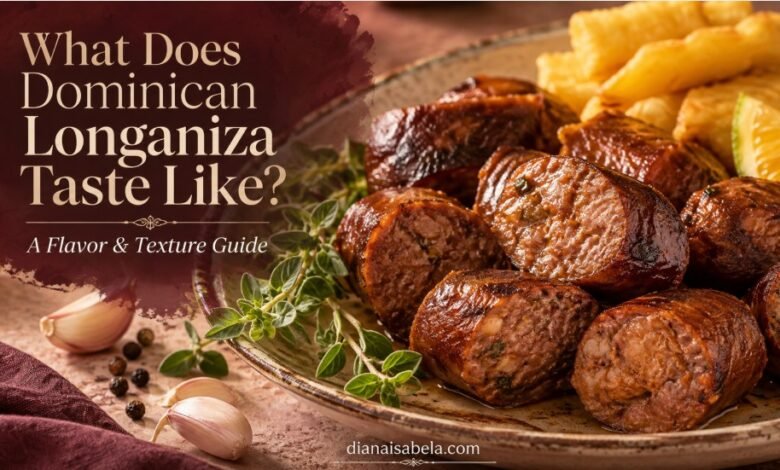
Describing Dominican longaniza as “savory sausage” is technically correct in the same way that describing perfume as “something that smells” is technically correct. We can do better.
Dominican longaniza has a flavor that develops in layers. First comes the browned meat and pork richness. Then you begin noticing garlic, oregano, pepper and the brighter edge that sour citrus can bring to traditional seasoning. If the sausage has been fried well, the casing and exposed meat add their own toasted, deeply savory notes without turning the interior dry.
It is bold without needing to be aggressively hot. It can be fatty without tasting merely greasy. And although two producers may season their longaniza quite differently, there is a recognizable Dominican flavor vocabulary that makes the sausage especially comfortable beside tostones, yuca, mangú, rice and sharp onions.
So instead of giving you one adjective, I want to explain the bite: what you smell before tasting it, where the garlic and oregano appear, whether it is actually spicy, how sour orange changes richness, what good casing should feel like, and how to recognize the difference between beautifully fried longaniza and a sad oily version that has been sitting around too long.
Dominican longaniza usually tastes savory, pork-rich, garlicky and herbal, with oregano as a common seasoning note and sour citrus sometimes adding brightness. Fried longaniza develops a deeply browned exterior and crisp edges while the interior should remain juicy. It can taste strongly seasoned, but it is not inherently chile-hot.
The flavor is savory first, aromatic second
The base of traditional Dominican longaniza is pork and pork fat, so richness is part of the experience. But a good sausage does not taste like anonymous fatty meat. Seasoning needs to survive the frying process clearly enough that you can still notice aromatics through the browned exterior.
Garlic is one of the easiest notes to understand. Oregano adds a warm herbal character rather than fresh green brightness. Black pepper contributes background spice, and traditional preparations may include ají gustoso and agrio de naranja — sour orange — which can introduce both aroma and acidity.
That acidity matters more than it might seem. Pork sausage naturally carries richness, especially once fat begins rendering during cooking. A sour element does not turn the sausage into something citrusy like lemonade; it helps keep the seasoning from feeling flat and heavy.
Those bars are not laboratory measurements. They are a practical way to visualize the traditional flavor direction, and individual sausages absolutely vary. One producer may lean heavily into oregano; another may be more garlicky, peppery, salty or tangy.
That variation is part of why understanding what Dominican longaniza is matters before deciding there is only one correct taste.
A good bite changes from outside to inside
I think longaniza makes much more sense when you stop imagining one uniform taste and think about the sequence of the bite. Fried sausage gives you several surfaces at once, and each contributes something different.
First: the browned exterior
You meet toasted meat flavors and whatever crispness the cooking created. If the sausage was cut before or during frying, exposed meat surfaces can become especially browned.
Then: the casing
The casing adds resistance and structure. It should not feel like chewing through rubber. Depending on the sausage and preparation, you may get a pleasant snap or a softer bite.
Then: the seasoned pork
This is where garlic, oregano, pepper and the underlying pork richness become clearer. The interior should still have enough moisture to taste juicy rather than dusty or crumbly from overcooking.
Finally: the rendered fat
Fat carries seasoning and gives the sausage much of its richness, but good frying allows enough of it to render that the finished bite tastes succulent rather than coated in grease.
This is why I care about texture almost as much as seasoning. A longaniza with excellent spices can still disappoint if it is pale and oily or fried until the filling is dry enough to file paperwork.
Garlic and oregano give it personality; sour orange gives it lift
Garlic and oregano are two of the most useful flavor anchors for understanding Dominican longaniza. They make the sausage feel aromatic and savory before we ever get into questions of heat.
Oregano does not necessarily jump out like a fresh herb garnish. Mixed into sausage meat, its character becomes warmer and more integrated. Garlic behaves similarly: it seasons the entire filling rather than appearing as a separate sharp bite.
Sour orange — agrio de naranja — is particularly interesting because it brings acidity into a very rich product. Traditional Dominican preparations document it alongside pork, fat, garlic, oregano, black pepper and ají gustoso. The exact balance varies, but the culinary logic is beautiful: fat gives depth while acidity keeps the flavor awake.
This is the detail I would pay attention to: the best rich foods usually contain some form of contrast. With longaniza, that contrast can already begin inside the sausage before onions, avocado or plantains ever reach the plate.
Is Dominican longaniza spicy?
Usually think “well seasoned” before you think “hot.” Traditional Dominican longaniza can include pepper and aromatic peppers, but chile heat is not the defining characteristic of the sausage.
That distinction matters because English uses spicy for two different ideas: food with lots of spices and food that burns. Dominican longaniza can absolutely have the first quality without giving you much of the second.
A restaurant or producer can make a hotter version, of course. Recipes change. Hot sauce can be added at the table. Longaniza guisada can be pushed toward more picante if the cook wants it. But you should not order ordinary Dominican longaniza assuming it will behave like a chile-heavy sausage.
This is also one of the reasons Dominican longaniza should not simply be treated as another name for chorizo. If that comparison is what brought you here, I break it down separately in Dominican longaniza vs chorizo.
Texture tells you whether the frying helped or hurt
A good longaniza bite needs contrast. The exterior has experienced much more heat than the center, and that should be an advantage rather than a problem.
Longaniza fillings can differ in grind and density, so I would not insist on one universal interior texture. Some sausages feel coarser; others are denser and more cohesive. What I do want is a filling that still feels like food rather than a dried-out consequence of enthusiastic frying.
Frying does much more than make the sausage crispy
Dominican longaniza has a deep cultural relationship with frying, and the technique changes flavor as much as texture. Browning creates roasted, savory notes that are simply not present in the same way before cooking. Fat renders from the meat, the casing tightens, and any cut surfaces gain extra contact with heat.
This is why sliced and whole sausage can eat differently. More exposed surface means more opportunity for browning. It also means more opportunity to lose moisture if the pieces stay in hot oil too long.
Whole links protect more of the interior, while cut pieces give you more browned edges. Neither idea is automatically superior. I care much more about whether the cook achieves the balance: enough heat to create color and texture, not so much that the casing toughens and the filling dries.
Fried Dominican longaniza is commonly served with tostones as part of picalonga or fritura, where crisp sausage meets another crisp fried food. That combination is delicious, but it makes acidity and freshness elsewhere on the plate even more valuable.
You can often judge the plate before the second bite
Longaniza is generous food, but it does not hide careless frying particularly well. A beautifully browned piece can make you want another before you have finished the first; a pale greasy piece announces problems just as quickly.
Signs I want to see
Signs that worry me
None of this requires longaniza to be delicate restaurant food. It is exactly the opposite. Fritura should be generous, satisfying and fun. But rustic food still has technique, and frying is not automatically successful merely because the food became brown eventually.
The best sides change what you notice in the sausage
Longaniza has enough salt, fat and aromatic intensity that the side dish should do something useful. Sometimes that means offering starch. Sometimes it means adding acidity. Sometimes it means giving the sausage a completely different texture to play against.
Tostones
Crisp fried green plantain doubles down on crunch and savory flavor. Because both components are fried, onions or another brighter element can make the combination feel more balanced.
Yuca
Cassava brings a denser, calmer starchiness. Its mild flavor gives garlicky, herbal sausage plenty of room to remain the star.
Mangú
Soft mashed green plantain creates perhaps the strongest texture contrast. The mangú absorbs some of the sausage richness while the longaniza provides salt, casing and aromatic meat flavor.
Pickled or sautéed onions
Sharpness is especially valuable against rendered pork fat. A little acidity can make the next piece of sausage seem more appealing rather than increasingly heavy.
Avocado
Avocado adds creaminess without adding another fried crust. It is a quieter pairing than tostones but can make a substantial plate feel less relentlessly crisp and salty.
Rice dishes
Once longaniza cooks with rice, some of its fat and seasoning migrate into the grains. The sausage stops being merely a protein beside the meal and starts seasoning the meal itself.
For a deeper breakdown of the plantain pairing, I keep that discussion in my longaniza frita with mangú guide rather than squeezing an entire breakfast into this flavor page.
Its closest comparisons are useful precisely because they are not identical
If you have never tasted Dominican longaniza, you may naturally reach for another sausage as a reference point. That helps — as long as the comparison does not erase the differences.
Compared with Dominican salami
Dominican salami has a smoother, denser, more uniform interior and a particularly strong relationship with mangú and Los Tres Golpes. Longaniza feels more clearly like seasoned meat inside casing, with aromatics such as garlic and oregano playing a larger role in its identity.
I cover that breakfast distinction fully in longaniza vs Dominican salami.
Compared with Puerto Rican longaniza
The two traditions can overlap in garlic, oregano, pork and fried preparations, but Puerto Rican longaniza has its own regional expressions. Orocovis, in particular, has a celebrated longaniza tradition associated with annatto and a chunkier chopped-meat texture.
That is why nationality matters when a menu simply says longaniza. I compare those two traditions separately in Dominican vs Puerto Rican longaniza.
If you are tasting it for the first time, keep the plate simple
I would not make a first encounter with Dominican longaniza complicated. You want enough supporting food to understand why the sausage belongs at the table, but not so many sauces and fried meats that you lose track of what you came to taste.
If your question has moved from “what does it taste like?” to “where can I actually try it?”, use my guide to finding fried Dominican longaniza in the U.S.. That is where the restaurant and location side of the story belongs.
And when the plate arrives, look at the sausage before reaching for sauce. Smell it. Try one piece with very little else. Then add plantain or onions. A regional food deserves at least one bite where it gets to introduce itself.
Did I miss a longaniza flavor worth knowing?
One of the reasons I love regional food is that the neat definition is almost never the whole story. Maybe your family seasons longaniza differently. Maybe you know a wonderful version with a stronger citrus note, a particular oregano, an unusual preparation, a recipe handed down at home, or a restaurant that fries it exactly the way it should be.
If you have a longaniza recipe, serving idea, new Dominican location, family story, menu discovery, photo or flavor combination I should know about, write to me at info@dianaisabela.com. I am always curious about the small details that make a dish more interesting, and I would genuinely love to hear what longaniza tastes like where you eat it. Together, we can keep making this guide more useful for everyone trying to understand — and find — really good Dominican longaniza.
What does Dominican longaniza taste like?
Dominican longaniza typically tastes savory, pork-rich, garlicky and herbal. Oregano is a common seasoning note, and traditional preparations may include sour orange, pepper and aromatic peppers. Frying adds browned, roasted flavors to the exterior while the center should remain juicy.
Is Dominican longaniza spicy or hot?
Dominican longaniza is usually better described as strongly seasoned than chile-hot. Garlic, oregano, pepper and other aromatics give it plenty of flavor, but intense heat is not an essential characteristic. Individual producers and restaurant preparations can still make hotter versions.
Does Dominican longaniza taste like chorizo?
Not exactly. Both are seasoned sausage traditions, but chorizo itself varies greatly by country. Dominican longaniza commonly emphasizes pork, garlic and oregano, while Spanish and Mexican chorizo styles have their own characteristic spice profiles and textures.
Is Dominican longaniza garlicky?
Garlic is one of the recurring ingredients in traditional Dominican longaniza, so a noticeable savory garlic character is common. Its strength varies with the recipe and producer.
Why does Dominican longaniza sometimes taste tangy?
Traditional recipes may use agrio de naranja, or sour orange, which adds acidity and brightness to the rich pork and fat. The amount varies, so some sausages taste noticeably brighter than others.
What texture should fried Dominican longaniza have?
A well-fried longaniza should have meaningful browning on the exterior, casing with some structure, and a moist interior. It should taste rich without being dominated by grease, while an overcooked sausage can become dry or develop a tough casing.
What tastes good with Dominican longaniza?
Tostones, yuca, mangú, onions, avocado and rice dishes all work well for different reasons. Plantains and cassava provide starch, onions bring acidity, avocado adds creaminess, and rice can absorb some of the sausage’s rendered fat and seasoning.
Does Dominican longaniza taste like Dominican salami?
No. Dominican salami generally has a smoother, denser and more uniform texture, while longaniza has a more obvious casing-and-filling structure and a particularly aromatic seasoning identity. Both can be fried and served with plantain dishes, but they create different bites.
Where can I try Dominican longaniza in the United States?
Dominican restaurants, cafeterias, delis and fritura counters are useful places to look, particularly in areas with established Dominican communities. Diana Isabela’s national fried longaniza guide covers U.S. options and what to order with them.