Ask whether Dominican longaniza is spicy and you can receive two completely different answers from people who are both technically correct.
One person takes “spicy” to mean full of spice: garlic, oregano, black pepper, sour citrus, pork and enough seasoning that the sausage would never be mistaken for a shy breakfast link. By that definition, Dominican longaniza can absolutely feel spicy. Another person hears “spicy” and thinks chile heat — the mouth-burning, water-reaching kind. By that definition, the answer is much less dramatic.
Traditional Dominican longaniza is generally better understood as strongly seasoned and aromatic rather than automatically hot. Garlic and oregano are central flavors. Sour or bitter orange can give the meat brightness. Black pepper contributes warmth. Individual recipes and commercial products vary, and some cooks can absolutely add hotter peppers or seasonings, but chile burn is not the one defining characteristic that makes the sausage Dominican.
This distinction matters particularly if you are ordering it for the first time. Someone who loves garlic but dislikes hot peppers may enjoy longaniza perfectly well. Someone expecting the aggressive chile profile of another sausage tradition may bite into Dominican longaniza and wonder where the fire went. Nobody is wrong; the word “spicy” is simply doing too many jobs before breakfast.
Dominican longaniza is usually strongly seasoned with flavors such as garlic, oregano, sour or bitter orange, salt and black pepper, but it is not necessarily hot from chile peppers. Recipes vary by household and producer, so some versions can have more heat than others. If you are very sensitive to hot peppers, it is worth asking how a specific restaurant or brand seasons its longaniza.
The entire question depends on what you mean by “spicy”
English makes this unnecessarily confusing. We routinely use spicy for food that contains a lot of aromatic seasoning and for food that contains enough chile to make your forehead reconsider its career choices.
Those are not the same sensation.
Two meanings hiding inside one word
Dominican longaniza belongs much more reliably in the first category. Its identity is tied to aromatic seasoning. A good sausage can taste assertive, garlicky, herbal and peppery while still being perfectly manageable for someone who does not enjoy genuinely hot food.
That is why I would never translate “strong flavor” directly into “high heat.” A sausage can practically introduce itself from across the room and still not require emergency milk.
If I had to draw its flavor as a dial, heat would not be at the top
There is no universal Dominican longaniza recipe, so this is not a scientific rating system. It is a practical way to understand the qualities that commonly matter more than chile heat.
The Dominican longaniza flavor dial
If you want the broader sensory picture — casing, juiciness, citrus, garlic and what frying does to the meat — I explore that separately in my Dominican longaniza flavor guide.
Garlic, oregano and sour citrus create intensity without chile
The best way to understand the sausage is to stop looking for one ingredient responsible for “spice” and notice how several aromatics build on one another.
Put all three together with pork fat and salt and you get a sausage that tastes highly seasoned even before the casing hits hot oil. That distinction explains why someone may describe Dominican longaniza as “spicy” while simultaneously telling you that it is not especially hot.
Black pepper can make the sausage feel warm without making it hot-hot
Black pepper deserves its own paragraph because it creates yet another form of heat. It can give a gentle prickling warmth, particularly in a strongly seasoned sausage, but the sensation is different from the sustained burn of a hot chile.
If you are only mildly sensitive to spicy food, black pepper is unlikely to be the same concern as Scotch bonnet, habanero or another genuinely hot pepper. If you have a specific medical or dietary reason to avoid pepper entirely, of course, ingredient questions become much more precise than “Is this spicy?” and you should ask the restaurant or check the actual product label.
For everyone else, think peppery warmth, not automatically hot-sauce heat.
The frustratingly correct answer is: the specific longaniza still matters
Longaniza has a strong home-made and artisanal tradition, and recipes are not identical. Different cooks can adjust garlic, citrus, oregano, pepper and other seasonings. Commercial products can have their own formulations as well.
This is also why I avoid giving Dominican longaniza a universal “2 out of 10” or “4 out of 10” heat rating. That would look conveniently precise and be less useful than simply explaining where variation comes from.
If you dislike hot food, ask one better question
“Is it spicy?” can produce an answer based entirely on how the person taking your order defines the word. I would make the question more specific.
What I would actually ask
This separates aromatic seasoning from actual pepper heat immediately.
Useful when the plate arrives with a condiment that may be much hotter than the meat itself.
A very elegant solution to a problem that did not need a committee.
If the restaurant cannot tell you how the sausage is seasoned and you are extremely sensitive to hot peppers, caution makes sense. But for the average diner who simply avoids fiery food, classic Dominican longaniza should not automatically be treated like a chile-heavy sausage.
Do not use chorizo as your heat calculator
The words longaniza and chorizo cover multiple regional traditions, which is why comparing them only by color or heat creates trouble quickly.
Dominican longaniza
The flavor commonly leans toward pork, garlic, oregano, sour citrus and pepper. Chile heat can vary, but it is not the single characteristic defining the sausage.
Chorizo
Different Spanish and Latin American chorizos use very different seasoning systems. Some are smoky, some chile-forward, some mild and some quite hot. The name alone cannot tell you the heat level.
The more useful comparison is seasoning structure rather than “which sausage is hotter?” I go through those differences in my Dominican longaniza vs chorizo comparison.
Frying makes longaniza taste more intense without adding chile
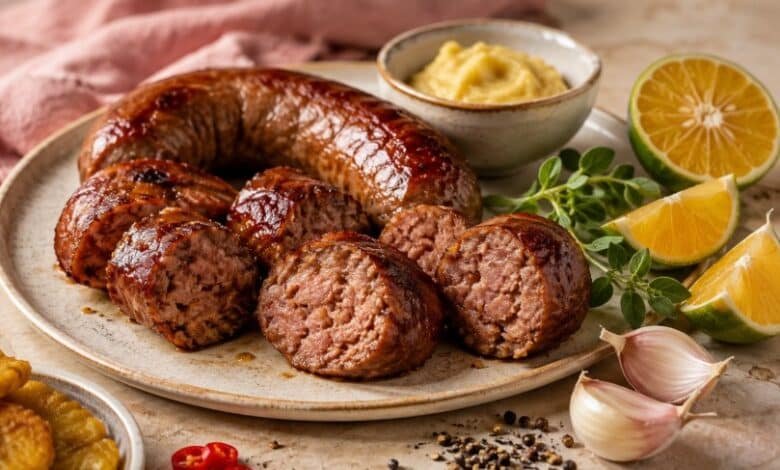
This is another reason people can interpret fried longaniza as “spicier” than expected. Frying changes concentration and texture. The casing browns, pork fat renders, exposed cut surfaces develop deeper savory notes, and the warm sausage releases garlic and herb aromas much more clearly than a cold slice ever could.
None of that magically creates capsaicin. It simply makes existing seasoning louder.
A well-fried piece can therefore taste more assertive than the uncooked mixture or a gentler cooked preparation even when its actual hot-pepper content has not changed. Browning, salt, warm fat, garlic, black pepper and acidity all arrive at the palate at once.
This is exactly why fried longaniza is so good with relatively mild starches. The sausage does not require another ingredient shouting beside it.
If the seasoning feels strong, choose sides that lower the volume
Even when the sausage is not chile-hot, a rich, garlicky, peppery fried piece can benefit from something softer or fresher beside it.
For a much deeper breakdown of which side to choose depending on the meal, see my Dominican longaniza pairing guide.
Four assumptions I would leave off the plate
So, would I warn a chile-sensitive friend away from Dominican longaniza entirely? No. I would tell them that the sausage is likely to be bold, garlicky, herbal and savory, and that the safest question is whether the particular version contains hot peppers.
And if that answer makes you more hungry than nervous, see where I would look for fried Dominican longaniza across the U.S..
How spicy is the longaniza you grew up with?
This is one of those questions where family recipes can be much more revealing than a tidy definition. I would love to know whether your household makes longaniza mostly garlicky and herbal, adds noticeably hot peppers, uses extra sour orange, has a favorite local producer, or serves something beside the sausage specifically because the seasoning is intense.
If you have a family longaniza recipe, a seasoning detail, a local sausage maker, a Dominican restaurant with an especially interesting version, a menu find or simply a story about how your family likes it, write to me at info@dianaisabela.com. I am always curious about the small flavor differences that make regional food feel personal, and together we can make this guide more useful for the next person wondering whether “spicy” means deliciously seasoned or genuinely bring-me-water hot.
Is Dominican longaniza hot and spicy?
Dominican longaniza is usually strongly seasoned rather than defined by intense chile heat. Garlic, oregano, sour or bitter orange, salt and black pepper are common flavor elements. Individual recipes vary, so some versions may contain hotter peppers or seasonings.
What spices are in Dominican longaniza?
Recipes vary, but common Dominican longaniza seasonings include garlic, oregano, black pepper, salt and sour or bitter orange. Some household and commercial versions include additional herbs, peppers or seasonings.
Can I eat Dominican longaniza if I do not like spicy food?
Many people who dislike chile-hot food may still enjoy Dominican longaniza because its bold flavor often comes from garlic, oregano, citrus and black pepper rather than strong hot peppers. If you are particularly sensitive, ask whether the specific sausage contains hot chiles.
Why does Dominican longaniza taste spicy if it is not hot?
The sausage can taste intense because several strong flavors arrive together: garlic, oregano, black pepper, acidic citrus, salt, pork fat and browned flavors from frying. That intensity can be described as spicy even when there is little chile burn.
Is Dominican longaniza hotter than chorizo?
There is no universal answer because both longaniza and chorizo include many regional styles. Dominican longaniza commonly emphasizes garlic, oregano and sour citrus, while different chorizos may be mild, smoky or chile-forward. Check the specific sausage rather than relying on the name alone.
Does frying make longaniza spicier?
Frying does not create additional chile heat, but it can make the sausage taste more intense. Browning, rendered pork fat and warm aromatic seasonings make garlic, herbs, pepper and salt more noticeable.
What should I eat with strongly seasoned longaniza?
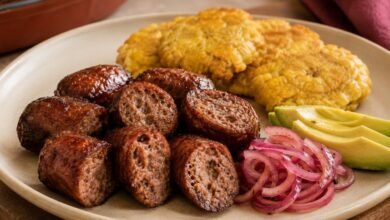
Mangú, yuca and tostones provide mild starches that balance strongly seasoned sausage. Avocado adds cool creaminess, while vinegary red onions provide acidity that cuts through the richness of fried pork.
Can different Dominican longanizas have different heat levels?
Yes. Longaniza recipes vary between families, butchers, restaurants and commercial producers. One version may be mostly garlicky and herbal while another may include additional pepper heat. Ask about the specific sausage if heat level matters to you.
How can I ask a restaurant whether longaniza is spicy?
Instead of simply asking whether it is spicy, ask whether the sausage contains hot chile peppers and whether any heat comes from the sausage itself or from a sauce served with it. That usually gives a clearer answer.