Best Locro de Zapallo Near Me: The Cozy Peruvian Dish Worth Finding

There are restaurant cravings that require no research. You want pizza, you type pizza, civilization handles the rest. Locro de zapallo is a little more mysterious. You know you want that warm golden Peruvian squash stew with soft potatoes, big kernels of choclo and little salty bites of queso fresco, but suddenly you are fourteen menus deep, one restaurant only serves it on Thursdays, another translates it as “pumpkin stew,” and Google has introduced you to three entirely different South American locros. At this point dinner has become a minor investigative project, and frankly, we deserve rice.
This is exactly the kind of food search I love, though, because the reward is not another dish designed for everyone to photograph and nobody to finish. A good locro de zapallo is generous, mellow, savory and quietly luxurious in the way only serious comfort food can be. The squash melts into the sauce, potato gives it body, choclo keeps the texture interesting, fresh cheese wakes up the sweetness, and rice sits beside everything with the calm confidence of someone who knows she is essential and does not need to mention it.
If you searched best locro de zapallo near me, you probably do not need a lecture on every stew ever cooked in the Andes. You need to know where to look, what the Peruvian version should be like, how much you are likely to spend, whether one portion will feed you or your entire group chat, what tastes especially good beside it, and whether the restaurant forty minutes away is actually worth putting on real shoes for.
That is what we are doing here.
First, this is not pumpkin soup wearing a Spanish name
Locro de zapallo is a traditional Peruvian squash-based dish with Andean roots, and the easiest way to understand it is somewhere between a very thick vegetable stew and the sort of home cooking that does not particularly care whether it photographs symmetrically. The squash — zapallo — softens until part of it almost becomes the sauce, while ingredients such as potato, choclo, fava beans, peas, queso fresco, ají amarillo, milk and herbs can build out the bowl depending on the recipe.
The exact combination changes from kitchen to kitchen. That is part of the pleasure rather than evidence that somebody failed an authenticity exam. One family may use more potato. Another may finish the locro with milk. One restaurant may add avocado. Another may keep the bowl more rustic and deeply squash-forward. What should remain recognizable is the personality: warm, thick, savory, vegetable-centered and substantial enough to be dinner.
And yes, squash naturally brings sweetness, but good locro does not taste like someone forgot to add cinnamon and turn it into pie. Onion, garlic, ají amarillo, salt, cheese and herbs keep the flavor firmly on the savory side.
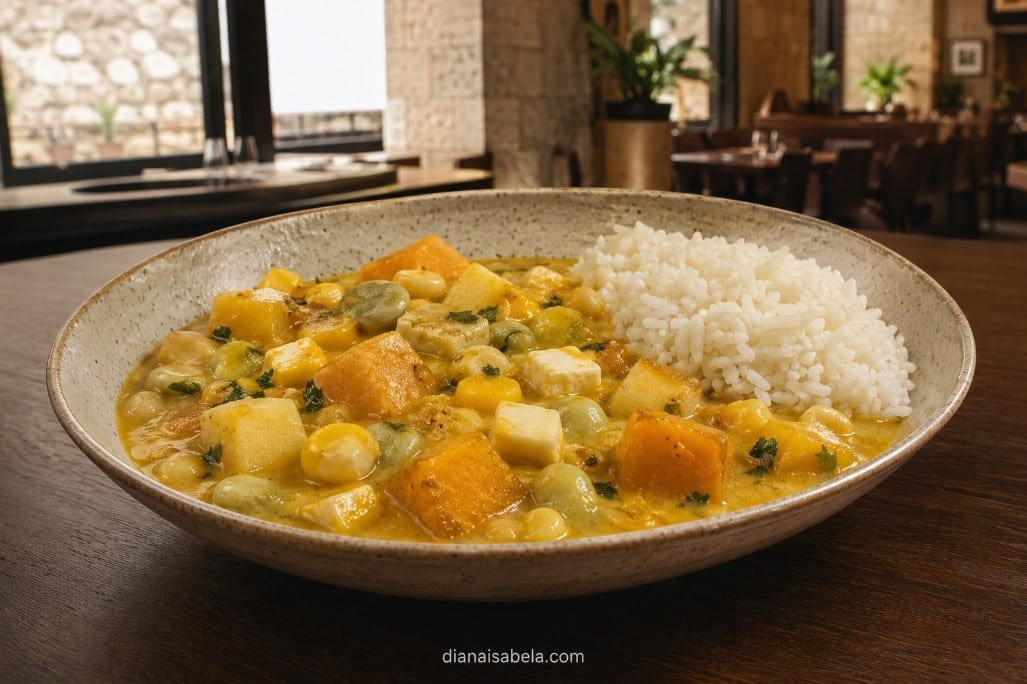
What does locro de zapallo taste like?
Imagine the sweetness of roasted squash brought firmly back to earth by onion, garlic, cheese and chile. Then add soft potato, the substantial chew of Peruvian choclo, perhaps fava beans, a little herbal freshness and enough richness to make you instinctively slow down after the first few spoonfuls.
It is creamy in spirit even when the recipe is not drowning in cream. The creaminess comes partly from the squash itself breaking down. That is important because locro should not taste like a heavy cheese sauce with some vegetables accidentally trapped inside it. Squash remains the main character.
I especially like the little salty interruptions from queso fresco. Without them, an ultra-soft squash-and-potato bowl can begin to feel very polite. Cheese gives it gossip.
Choclo does something similar for texture. Peruvian corn kernels are larger and more substantial than the neat little sweet-corn pearls many Americans expect, so every few spoonfuls you get a bite that refuses to disappear politely into the stew.
The quick flavor description: savory-sweet squash, soft potato, mild chile warmth, creamy fresh cheese, earthy beans and sweet substantial corn. Cozy rather than spicy. Rich enough to satisfy, but usually not the butter-and-cream avalanche the color might suggest.
Will you actually love locro, or are you being influenced by a very pretty bowl?
I support being influenced by pretty bowls. It is one of the less damaging decisions available online. Still, locro has a very specific personality, and knowing whether it fits your taste is useful before you organize dinner around it.
This is not the dish I order when I want something sharp, raw, crisp and electrically fresh. It is what I order when dinner needs to be kind. There are nights for ceviche. There are nights for a giant salad and sparkling water. And there are nights when a salad looks at you and you simply know she is not qualified for what happened today.
Where I would actually search for locro de zapallo near me
I would begin with Peruvian restaurants rather than generic “Latin food” searches. More specifically, I get excited when the restaurant has a real criollo or home-style side to its menu. Ceviche and lomo saltado are wonderful, obviously, but they are also the dishes almost every Peruvian restaurant knows newcomers recognize. Locro often appears where the menu gets a little more domestic.
Look for restaurants also serving things like ají de gallina, seco, cau cau, papa a la huancaína, ocopa, tallarines verdes, soups, daily lunch specials and other dishes that suggest the kitchen is interested in more than a short greatest-hits album.
Then search the menu for locro rather than assuming it will appear under soup. A full locro can be treated as an entrée. It can sit under vegetarian dishes. It can show up in a lunch section. It can become a daily special that technically exists but has been completely ignored by the restaurant website designer.
My search order: “locro de zapallo near me” → “Peruvian restaurant near me” → individual menu search for “locro” and “zapallo” → recent food posts → one quick phone call if I am about to drive far. This is dramatically more reliable than assuming the restaurant with the prettiest ceviche Reel also has the squash stew you want.
A few U.S. places that put locro on the map
I do not want to build one of those fake “best restaurants in America” lists where a writer confidently recommends twelve places she found by searching the same internet you did. Instead, these are **real menu leads** I found while researching this guide. The important distinction: traditional dishes rotate, online menus change, and I would confirm availability before crossing a city specifically for locro.
Machu Picchu
Somerville, MassachusettsThis is the cleanest current example I found. The restaurant’s online ordering menu lists a vegetarian Locro de Zapallo for $16 with Andean potato, squash stew, fava beans, choclo, queso fresco and avocado.
I like this as a first-locro order because the menu description gives you almost the entire structure before you arrive. There is enough going on to make it a complete entrée, but it still sounds recognizably like the home-style squash dish rather than a chef turning locro into twelve dots of purée and a philosophical statement.
Aromas Peruvian Cuisine
Norwalk, ConnecticutAromas has an online ordering presence tied to a dedicated locro de zapallo item and an active Norwalk location at 235 Main Avenue. The broader menu leans heavily into traditional Peruvian cooking alongside seafood, ceviche, cau cau, seco norteño, ocopa and other dishes that make it a sensible place to investigate when locro is the craving.
This is exactly the kind of restaurant where I would make the tiny effort of calling first. If the dish is available, lovely. If it is rotating off that day’s menu, you are still looking at a kitchen with enough Peruvian comfort-food depth to provide a very respectable Plan B.
Rocoto Peruvian Kitchen
Portland, OregonA menu listing for Rocoto Peruvian Kitchen describes Locro de Zapallo as a vegetarian winter-squash stew with tender white corn and farmer’s cheese. The listing shows $6.95, which looks much more like a small-format portion than the $15–20 entrée budget I would use elsewhere.
This is also where I would be careful: the available menu source itself says prices and menu information may change. So I am including Rocoto because the dish has genuinely appeared on the menu, not promising that $6.95 locro will be waiting for you when you read this.
I actually prefer location blocks like this to pretending there is a universal ranking. A restaurant in Boston does not help a reader in Phoenix simply because somebody declared it “#2 Best Locro in America.” What does help is seeing how the dish appears on real U.S. menus — sometimes a full entrée, sometimes a smaller traditional item, sometimes a rotating special — and using that information to search intelligently where you live.
How far would I drive for locro? We need boundaries
I appreciate a food pilgrimage. I have emotional respect for anyone willing to change neighborhoods for good potatoes. But not every craving requires interstate infrastructure.
Under 15 minutes: absolutely. If the menu confirms locro, put on shoes.
15–30 minutes: still an easy yes if the restaurant has good reviews and a broader menu you want to explore.
30–45 minutes: I want confirmation that locro is actually available today. At this distance, “we only serve it Sundays” becomes personal.
More than 45 minutes: make it a Peruvian food outing, not a single-dish mission. Bring someone. Order locro plus other things. Get dessert. We are no longer running an errand; we have entered lifestyle territory.
The further I travel, the more I want the restaurant to have a strong Plan B. If I am driving forty-five minutes to a tiny traditional Peruvian restaurant where locro may sell out but the menu also has great ceviche, ají de gallina, anticuchos and seco, fine. If locro is literally the only reason I would eat there, I am calling first like a responsible woman with limited gasoline and feelings.
So what does a bowl of locro de zapallo actually cost?
There is not enough standardized nationwide menu data for me to give you a fake precise average like “the average locro in America costs $17.43,” because that number would have the scientific integrity of choosing lipstick based on moon phase.
What I can give you is a useful restaurant budget.
Based on the current $16 full entrée I verified in Somerville and the way similar casual Peruvian restaurants price complete meals, I would keep about $15–20 in mind for an entrée-size locro at a casual U.S. Peruvian restaurant. That is an editorial planning range, not an official national statistic. A lunch special or small portion can be cheaper; an upscale restaurant in an expensive city can move comfortably above $20.
Then remember tax, tip and the particular financial opera known as delivery apps. A $16 locro can develop surprisingly ambitious career goals after service fees, delivery fees, taxes and whatever fee has been invented since you opened the app.
Now the real question: how much locro should you order?
I am not going to tell women to order a “girl portion,” because women are not decorative woodland creatures who become full after observing half an avocado. Appetite changes with the person, the day, lunch, activity, hormones, whether you skipped breakfast and whether somebody made you spend two hours inside IKEA.
What is useful is understanding the dish. Locro sounds light because the first word in the English description is usually squash. Then potato arrives. Then corn. Then beans. Then cheese. Then rice. Suddenly your innocent vegetable entrée has acquired considerable real estate.
The crucial phrase here is your appetite. Not “a woman should eat X cups.” Not “this is the feminine portion.” Your body did not consult Pinterest before arriving at dinner.
What I would order for a girls’ dinner
This is my favorite format because locro becomes much more interesting when it is one personality at the table rather than the entire cast.
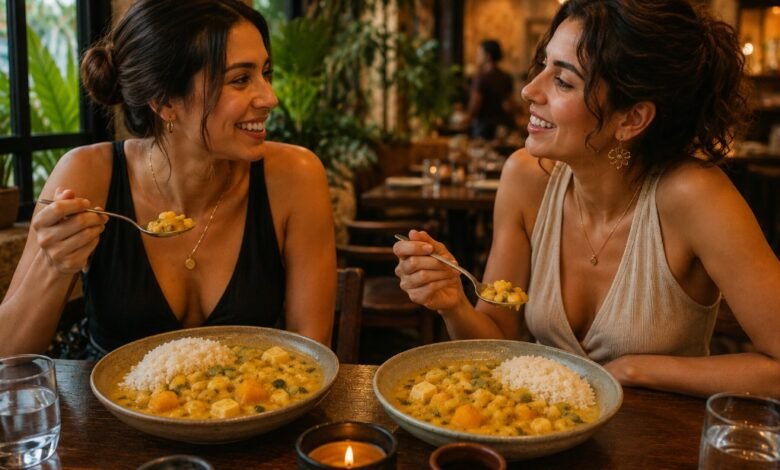
For two friends, I would order one locro, one bright starter and one contrasting main. The starter could be ceviche if both eat fish, or perhaps causa if we want something cool and punchy. For the second entrée, I want something with edges — lomo saltado, grilled fish, anticuchos, chicken, something wok-fired or something citrusy. I do not want to surround the soft golden locro with four more dishes that all have the texture of a very comforting pillow.
Then I would add salsa criolla or cancha if they are available, because acidity and crunch transform the rhythm of the meal.
This is a very Food Girl dinner to me: enough variety that the table feels beautiful, enough food that everyone actually eats, and no strange performance where three women split one appetizer and later wonder why the ride home has become spiritually focused on French fries.
That is also the whole idea behind my food girl aesthetic: beauty and appetite are not enemies. A table can be stylish and still contain dinner.
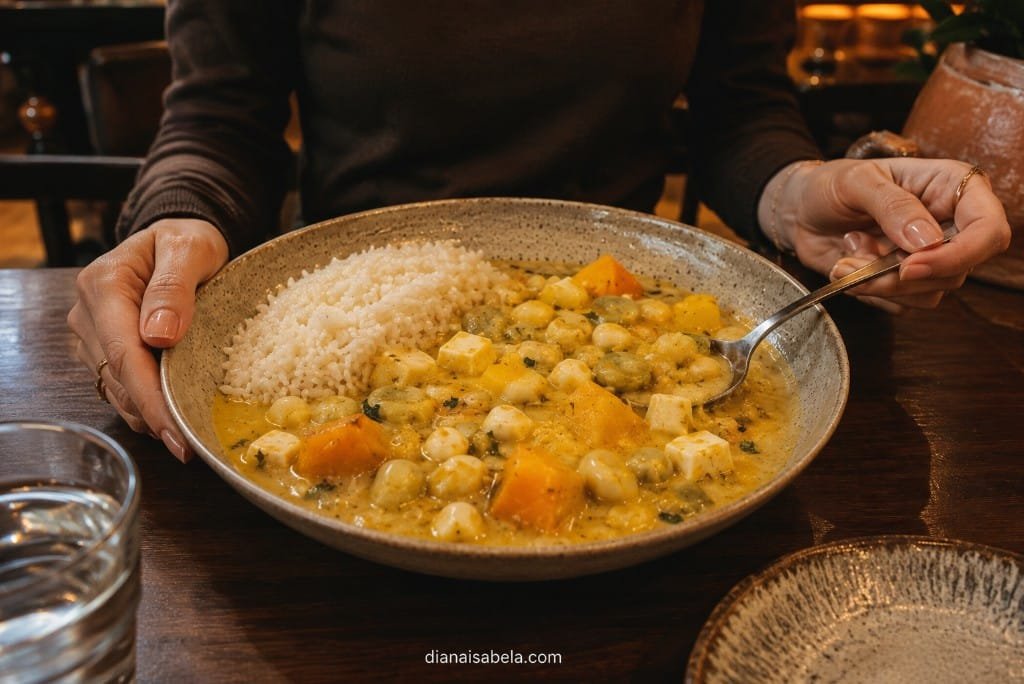
For a date, locro is surprisingly charming
Not every date-night dish needs to be oysters wearing tiny diamonds. Locro has another kind of appeal. It is warm, unfamiliar enough to create conversation if neither of you grew up with it, easy to share and difficult to eat in an aggressively sexy way, which frankly gives everyone a chance to relax.
I would not both order locro unless we were specifically obsessed with locro. One bowl for the table is more interesting. Add ceviche or tiradito for contrast, then one second entrée.
A pisco sour before dinner makes the whole evening feel sharper and brighter. Then locro arrives like the cozy second act.
Also, the practical fashion note nobody requested but Diana is giving you anyway: if your dinner includes a golden-orange stew and ají sauces, perhaps this is not the evening for the enormous white bell sleeve that drapes elegantly through every plate on the table. Fashion should enhance dinner, not attempt to consume it.
The solo locro lunch may actually be the perfect order
If I saw locro de zapallo on a weekday lunch menu, I would be thrilled. It makes much more sense as a complete one-bowl lunch than many elaborate restaurant entrées because the plate already has a built-in structure: vegetable, starch, cheese, often beans or corn, rice beside it. You can order one thing and be done.
For a lighter lunch, I would eat the locro first and treat the rice as adjustable rather than mandatory. Maybe half the rice is enough. Maybe all of it is delicious and today was apparently a full-rice day. We do not need a committee.
Then coffee afterward if the restaurant does decent coffee, or walk somewhere else for one. This is exactly the kind of tiny solo lunch that can make an ordinary Tuesday feel intentional without requiring an “experience.”
What actually tastes best with locro?
Because the main dish is soft, warm and rounded, I want contrast. Think less about adding another “traditional side” and more about what the palate is missing.
Salsa criolla — my first choice
Thinly sliced onion, lime and chile bring exactly the sharpness a creamy squash dish wants. One little forkful beside locro makes the next spoon taste brighter. If the restaurant sells salsa criolla as a side, I would happily pay the couple of dollars.
Avocado — creamy on creamy, somehow still correct
Normally I preach contrast and then avocado walks in and ruins my argument. The cool buttery texture works because it tastes fresh against the warm cooked squash. It is especially good if the locro has a little more ají warmth.
Cancha — the crunch button
Toasted Peruvian corn is lovely here because every few bites you get a crisp salty interruption. Locro itself does not provide much crunch, so cancha is doing useful structural work while pretending to be a snack.
Ceviche — the dramatic opposite
Cold versus warm. Citrus versus creamy. Raw fresh texture versus slow-cooked softness. If I am sharing food with someone, this may be my favorite restaurant combination because the two dishes show completely different personalities of Peruvian cuisine.
Grilled or roasted protein
If you want something more substantial, chicken, fish or beef can work well when the preparation is comparatively simple. I would rather add something grilled than another heavy creamy sauce.
A simple salad
Not glamorous, but genuinely useful. Greens, lime, onion, perhaps avocado. Suddenly every spoon of locro feels cozy again instead of the whole dinner becoming one long soft note.
Yes, eat the rice. No, you do not need to marry it
White rice is a classic companion for locro because it absorbs the thick sauce and gives the meal a neutral base. I like keeping it beside the locro rather than mixing everything immediately. Take a little rice with a spoonful, then try the next spoon without it. Add avocado. Add salsa criolla. Let the bowl have chapters.
If you have a lighter appetite, rice is also the easiest part of the portion to control. You can enjoy the whole locro and leave some rice without feeling as though you have somehow insulted Peru.
And if the locro itself is already very potato-heavy and the rice portion looks large enough to receive mail, I would definitely start slowly. Comfort is the goal. Needing to lie completely flat for three hours is a different lifestyle category.
What should you drink with locro de zapallo?
Chicha morada is the obvious non-alcoholic Peruvian choice and also one of the prettiest. Made from purple corn and commonly flavored with fruit and spice, it has enough character to feel part of the meal rather than the beverage equivalent of waiting quietly.
Maracuyá juice is another favorite because passion fruit brings acidity against the mellow squash. If the restaurant makes a good house version rather than pouring something painfully sugary from a machine, even better.
For cocktails, a pisco sour makes beautiful sense. Lime and acidity wake up the palate before a soft creamy stew. This is also the moment when your cozy squash dinner suddenly gets cheekbones.
And sparkling water with lime remains unbeatable when you want the food to do all the talking.
The little things I look for when the bowl arrives
I am not grading someone’s grandmother, and I do not believe traditional food needs to come out of one universal recipe machine. But I do have expectations.
First, the locro should smell savory. Squash sweetness is lovely; dessert energy is not what we ordered. Onion, garlic, ají and herbs should give the bowl depth.
Second, I want thickness. A little variation is normal, but locro should not feel like orange broth with vegetables drifting through it wondering what happened.
Third, texture. Some squash can completely melt. Great. I still want pieces of potato, choclo, fava beans or cheese giving my spoon something to discover.
Fourth, balance. If queso fresco is present, I want those salty creamy bites to matter. If ají amarillo is present, I want its warmth and fruitiness without necessarily needing the restaurant to prove something about my pain tolerance.
Finally, the rice should be rice, not a dry decorative monument placed beside the stew because the plate felt lonely.
The ideal bowl: thick but not gluey, sweet from squash but clearly savory, soft without becoming monotonous, filling without feeling like cheese sauce disguised as a vegetable.
Locro may be one of the nicest vegetarian orders on a Peruvian menu
This is another reason I like the dish. Vegetarian restaurant food can sometimes feel as though a chef designed a normal entrée, removed the protein and then confidently sent the remaining three vegetables into the world. Locro does not need to apologize for being vegetable-centered. Squash is the point.
Many versions are vegetarian and may include queso fresco or milk. That dairy matters if you are vegan, obviously, and broth matters for both vegetarians and vegans. A vegetable-looking stew can still be made with meat-based stock.
If dietary restrictions matter, the cleanest question is simply: “Is the locro vegetarian, including the broth?”
For vegan diners: “Does it contain milk or cheese, and is the base vegetable broth?”
A vegan version is completely plausible. Squash, potato, choclo, fava beans, onion, garlic, ají and herbs already do most of the structural work. But I would rather ask than begin lunch with optimism and finish it reading ingredient philosophy on my phone.
One wonderful thing about locro: delivery does not immediately ruin it
This is more significant than it sounds. Some foods have approximately nine beautiful minutes between leaving the kitchen and becoming a completely different product. Fries lose hope. Fried calamari steams itself into surrender. Dressed salads begin writing their wills.
Locro travels rather well because softness is already part of the plan.
If possible, I want the rice, avocado, salsa criolla and fresh garnishes packed separately. Then the locro can be gently reheated without punishing everything else.
It will often thicken in the refrigerator, which is normal. Reheat slowly and add a tiny splash of water or appropriate broth if needed. Do not attack it with maximum microwave power until the cheese has developed geological properties.
This is also why I feel no pressure to finish a restaurant portion. Locro tomorrow is still a very respectable lunch.
Why Google keeps showing you completely different locro
Because locro is bigger than one Peruvian recipe. The dish belongs to a broader Andean food tradition and has developed into distinct regional versions across South America.
The Peruvian locro de zapallo we are discussing here puts squash at the center. Argentine locro is commonly much heartier, with corn, beans and meats playing major roles. Other places have their own combinations and traditions.
This is why image search can become mildly surreal. One result is golden and creamy. The next looks like an enormous bean-and-meat stew. Both may be called locro and both may be legitimate.
If you want this particular Peruvian dish, use “Peruvian locro de zapallo”, “locro de zapallo Peru” or “Peruvian squash stew” when the results wander.
Specificity saves dinner.
The best place for locro may not be the chicest restaurant — and I am fine with that
Dianaisabela.com is about stylish living, but stylish living does not mean eating only in rooms with travertine tables and one enormous olive tree imported for ambiance.
Sometimes the stylish choice is knowing where the good food is.
I would happily eat locro in a beautiful modern Peruvian restaurant with excellent lighting and a pisco list. I would also happily eat it in a family restaurant with slightly chaotic menus, very good rice and an aunt somewhere in the building who appears to be in charge of whether everyone is being fed correctly.
Atmosphere matters when you want an evening out. Food matters when you want the dish.
The real luxury is knowing which one you are shopping for.
If I am planning birthday dinner energy, yes, I care about the room. If I am craving locro on a rainy Sunday afternoon, I care whether the squash is good and whether someone remembered the queso fresco.
How I read a menu before choosing the restaurant
The first signal is obvious: does it actually say locro de zapallo?
Then I read the description. Squash should be prominent. Potato, choclo, fava beans, queso fresco, avocado and ají-related flavors are all useful signs depending on the house recipe.
I also look at what surrounds it. A restaurant offering a good range of Peruvian dishes makes me more confident that locro is part of an actual cooking tradition in the kitchen rather than “fall squash special” wearing a borrowed name.
Then I check customer photos, but not because I need the plate to be beautiful. Honestly, slightly ugly customer food photography is often more useful. It shows the size without a lens trick. It shows whether rice comes with it. It shows if the stew is genuinely thick. It shows how much cheese appears. It shows the plate after nobody spent fifteen minutes arranging the corn.
That is information.
If they are out of locro, dinner is not cancelled
This is the emotional resilience portion of the article.
You have called nobody. You drove across town. You arrive. The server says, “No locro today.”
Fine.
We are adults.
We will recover.
If you wanted something creamy and comforting and you eat chicken, ají de gallina is an excellent turn. Shredded chicken, ají amarillo-based creamy sauce, rice, potatoes — completely different dish, similar emotional department.
If potatoes and a creamy pepper-cheese sauce sounded appealing, papa a la huancaína can scratch part of that itch in a cooler appetizer format.
If you want to abandon comfort entirely and become a bright citrus person, order ceviche. Sometimes dinner needs a plot twist.
If the kitchen has seco, that is another deeply comforting stew direction, usually meatier and herbier.
And causa is always a charming consolation prize because Peruvian potatoes rarely arrive without a plan.
Yes, I have a locro dinner outfit opinion
Of course I do. You have reached Diana’s Food Diary. We were never going to discuss a golden-orange stew for several thousand words and pretend sleeves do not exist.
For a casual Peruvian restaurant: straight jeans or relaxed trousers, a fitted knit or clean tee, little earrings, jacket, comfortable flats. Cute enough that dinner feels like a plan, relaxed enough that your waistband does not begin negotiations halfway through the rice.
For date night: black trousers, an interesting top, small bag, lip color, simple jewelry. I would avoid a giant floating sleeve unless you are confident it can be controlled around sauces. There are outfits that photograph beautifully while seated and outfits that let you actually eat. I continue to insist we aim for both.
For a girls’ night: good jeans, heel or ballet flat, jacket, bag that fits your phone and lipstick, not your entire administrative life.
The point is not dressing “for locro.” The point is that a restaurant night is a whole little mood — where you go, what you order, what you wear, whether you split dessert, whether someone says “one drink” and then orders a second pisco sour with suspicious confidence.
This is exactly why comfort food belongs in a stylish life
For a while, lifestyle content became strangely afraid of visible appetite. Everything had to be pale, pristine, tiny and described as “clean.” Then actual dinner came back. Sauce came back. Potatoes came back. Shared plates, steaming bowls, neighborhood restaurants, grandmother food, big pasta, bread with butter, cakes that look like cakes.
I am grateful.
Locro fits beautifully into that world because it does not need to become fashionable to be good. It is already doing the difficult part: making the table warmer.
That is the same reason I love the idea behind comfort food, but make it chic. “Chic” does not mean reducing a real meal into three elegant bites. Sometimes it means ordering the thing you genuinely want, wearing a good jacket, turning your phone face down and enjoying dinner while it is hot.
I want beauty, yes.
I also want dinner.
If this is your first locro, here is exactly how I would do it
Popularity is secondary. Evidence that the kitchen is cooking your dish comes first.
A thirty-second call is cheaper than resentment.
For one person, treat it as a main dish rather than a starter unless the menu specifically labels it small.
You can add as much as you want without turning the entire bowl into rice before tasting the locro itself.
Salsa criolla, cancha or a bright shared appetizer makes the whole meal more interesting.
Ají amarillo is aromatic as well as warm. Give the restaurant a chance to introduce itself before redecorating.
The locro worth finding is probably not trying very hard to impress you
I think that is why I like it.
The best locro de zapallo near you may not come from the most photogenic restaurant in the city. It may live on a lunch menu at a family-run Peruvian place twenty-five minutes away. It may be $16 with rice and avocado. It may appear only a few days a week. It may arrive looking less like an editorial food photograph and more like someone genuinely wanted you to eat.
That is fine.
I want squash that tastes like squash but deeper. Soft potato. Big bites of choclo. A few fava beans. Salty queso fresco. Enough onion, garlic, ají and herbs to stop the sweetness from getting sleepy. Rice waiting on the side. Something limey nearby. Maybe avocado. Maybe a pisco sour if the evening has decided to become an evening.
And if we are two girls, I want one locro, another interesting plate and enough space left for dessert.
Not because we are trying to be restrained.
Because having three different delicious things is often more fun than having two identical giant bowls.
That, to me, is the entire food-girl philosophy in one dinner: know what you are ordering, eat enough, choose contrast, share when sharing makes the table better, order your own when you do not want to share, wear something you can breathe in and never trust a restaurant website simply because it has beautiful typography.
Find the bowl that feels like somebody cooked for you, not at you.
Questions and answers
Where can I find the best locro de zapallo near me?
Start with independent Peruvian restaurants, especially kitchens with traditional criollo dishes and broader Peruvian menus. Search the exact phrase locro de zapallo first, then check individual restaurant menus under vegetarian entrées, lunch specials and traditional dishes. If you are making a long trip specifically for locro, confirm availability with the restaurant first because the dish may rotate.
How much does locro de zapallo usually cost?
For planning purposes, roughly $15 to $20 is a reasonable budget for a full entrée-size locro at a casual U.S. Peruvian restaurant, although this is not a formal national average. Lunch specials and smaller portions can cost less, while upscale restaurants and expensive cities may charge more. A current Somerville restaurant example lists a full vegetarian locro at $16.
Is one locro de zapallo enough for one person?
Usually yes if it is sold as an entrée. Locro can be more filling than it looks because a serving may combine squash, potato, corn, beans, cheese and rice. Someone with a lighter appetite can eat less of the rice or save part of the meal for later, while hungrier diners may want a small appetizer as well.
Can two people share one locro de zapallo?
Yes, especially if you want to explore several dishes. For two people, sharing one locro alongside a bright starter and a contrasting second main can make a more interesting restaurant meal than ordering two identical bowls. If locro is the only main dish you plan to eat, one entrée per person will usually make more sense.
What tastes best with locro de zapallo?
White rice is the classic easy companion. Salsa criolla adds lime and onion acidity, cancha provides crunch and avocado gives cool creaminess. When sharing a larger meal, ceviche can be an especially good contrast because its cold citrusy freshness is completely different from the warm, soft squash stew.
What should I drink with locro de zapallo?
Chicha morada is a traditional non-alcoholic Peruvian option, while passion-fruit juice can add welcome acidity. For cocktails, a pisco sour is a natural restaurant pairing because lime brightens the palate before the rich, mellow stew. Sparkling water with lime also works beautifully if you want something simple.
What does Peruvian locro de zapallo taste like?
It is savory and gently sweet from the squash, with a thick, soft texture and more substantial bites from ingredients such as potato, Peruvian corn, fava beans and queso fresco. Ají amarillo, onion, garlic and herbs help keep the dish savory and may add mild warmth without making it extremely spicy.
Is locro de zapallo vegetarian or vegan?
Many versions are vegetarian and some restaurants specifically list locro as a vegetarian entrée. Dairy ingredients such as queso fresco or milk are common, however, so vegetarian locro is not automatically vegan. Broth can also vary. Vegan diners should ask about both dairy and the type of broth used.
Is locro de zapallo good for takeout?
Yes. Locro generally travels and reheats better than foods that depend on crisp texture because it is already a thick stew. If possible, ask for rice, avocado and fresh garnishes separately. Refrigerated locro may thicken, so reheat it gently and add a small amount of water or broth if necessary.
Is Peruvian locro de zapallo the same as Argentine locro?
No. Locro has several regional forms across the Andes. Peruvian locro de zapallo is centered strongly on squash and often includes potato, corn, beans and fresh cheese. Argentine locro is commonly a heartier preparation with corn, beans and meat playing a much larger role. Both belong to the wider locro tradition but are different dishes.