Longaniza Frita in Maryland: Dominican Sausage from Silver Spring to Baltimore
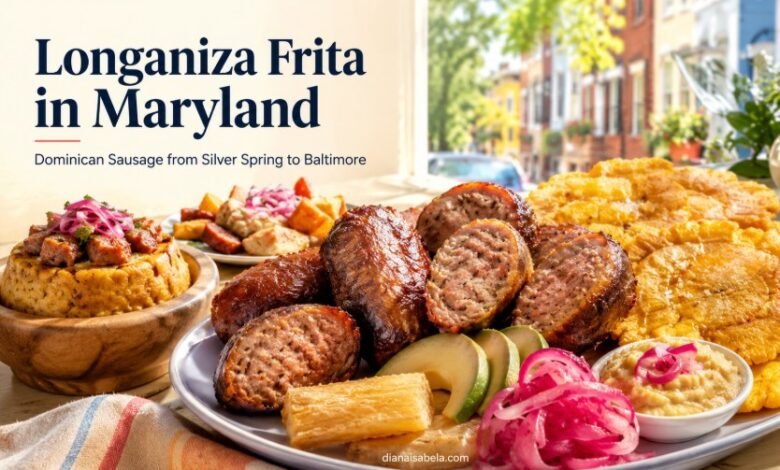
Maryland makes you read the menu more carefully than some of the other states in this guide. There is plenty of Dominican longaniza around Silver Spring, Hyattsville, Jessup and Baltimore, but the restaurants do not all describe it in the same way. One menu gives you longaniza beside mangú. Another folds fried sausage into mofongo. Another puts longaniza into a Dominican fritura platter without spelling out the preparation of every individual meat.
That could be irritating if your only goal were building the longest possible restaurant list. It is actually useful if you want to eat well. Maryland shows why the word longaniza and the phrase longaniza frita are not automatically interchangeable. The sausage may be Dominican; the restaurant may be Dominican; the plate may contain tostones and queso frito — and you can still have one small unanswered question about what happened to the sausage in the kitchen.
So this page follows preparation rather than hype. The strongest menus get the strongest recommendation. Restaurants with current Dominican longaniza but incomplete cooking language remain useful, but I tell you what to ask. Maryland has enough genuine Dominican food density that there is no reason to inflate certainty simply to make every card look identical.
Silver Spring and Hyattsville give you the deepest current concentration, with longaniza appearing as an appetizer, with mangú, inside mofongo and beside tostones. Baltimore adds Dominican fried-platter and rice-with-longaniza context, while Cazabe in Jessup currently serves Longaniza Dominicana as its own entrée and includes longaniza in a large Dominican platter. For specifically fried longaniza, Curzi’s current mofongo description is one of the clearest preparation clues, while several other places are better treated as call-first options.
Maryland is less about one perfect plate and more about knowing what the menu is promising
The useful geography runs through the Washington-side suburbs and up toward Baltimore. Silver Spring has several Dominican restaurants with longaniza and mangú. Hyattsville adds both stand-alone sausage and mofongo. Jessup gives us a more traditional Dominican restaurant menu with longaniza, tostones and a large family platter. Baltimore adds fritura, locrio and Dominican street-food language.
What Maryland does not give me everywhere is the same perfect sentence we found in places such as Connecticut: “Fried Dominican Sausage with Tostones.” That changes the way I would use the guide. Instead of pretending every menu offers the same preparation, I would use the menu language to decide which places deserve a direct trip and which deserve a thirty-second question before leaving home.
Four Maryland menu patterns worth recognizing
For the broader location picture, including states where current menus use more explicit fried-sausage wording, see where I would look for Dominican longaniza across the United States.
Curzi’s Restaurant — Hyattsville
Strong fried-preparation leadCurzi’s is where Maryland begins making culinary sense instead of just giving us promising nouns. The current longaniza-and-tostones combination already puts the sausage inside familiar Dominican territory, but the stronger clue comes from the mofongo listing, which explicitly describes fried sausage.
I still would not take the word “fried” from the mofongo and automatically paste it onto every longaniza order the restaurant sells. Kitchens can prepare a protein differently for different dishes. But it is strong current evidence that fried longaniza is genuinely part of the restaurant’s repertoire rather than something we are inventing because tostones happen to be nearby.
For a first plate, longaniza con tostones makes more sense to me than mofongo. Tostones remain separate from the sausage, which means you can judge how browned the casing is, how much moisture stayed inside and whether the seasoning survives the cooking. Mofongo is the second-visit dish — wonderfully garlicky and comforting, but much more willing to absorb every bit of sausage fat and seasoning into the plantain.
La Casa del Mofongo — Silver Spring
Best for breakfast & plantain rangeLa Casa del Mofongo is the Maryland stop I would choose if I cared more about what happens around longaniza than proving one exact frying verb. The sausage is clearly identified as Dominican on the active menu, and it appears in both appetizer and mangú contexts. That gives you a useful choice between tasting the sausage with minimal interference and making it part of a full breakfast-style plate.
The current menu is also a nice reminder that Dominican breakfast has its own structure. Mangú with longaniza exists, but the restaurant separately lists Mangú Tres Golpes with fried cheese, fried salami and fried eggs. Longaniza does not have to replace salami in the classic plate simply because both happen to be Dominican meats.
What the current appetizer description does not explicitly tell us is whether that particular longaniza portion is fried. The restaurant has plenty of fried foods — salami, cheese, beef, pork chops — and those items are labeled as such. I therefore would not borrow their cooking language for the sausage.
Cazabe Restaurant — Jessup
Best family-platter contextCazabe is probably Maryland’s best example of why restaurant identity, dish identity and cooking method have to be read separately. There is no question that the current menu is Dominican and that the sausage is identified as Longaniza Dominicana. The restaurant also serves a large Dominican platter surrounded by unmistakably fried foods.
What I do not have from the stand-alone entrée description is a literal statement that the longaniza itself is fried. The current listing calls it Spanish sausage in the English description while naming the dish Longaniza Dominicana — slightly clumsy menu translation, perhaps, but exactly the kind of inconsistency I refuse to silently repair for publication.
That does not make Cazabe a weak restaurant lead. Quite the opposite: its menu gives you several useful ways to build the meal. Tostones keep the sausage in familiar fritura territory. Yuca makes the starch denser. Rice and beans turn the sausage toward a fuller lunch or dinner rather than a snackier fried-food experience.
The $50 Dominican Platter is a completely different proposition and is currently described as suitable for a group. Longaniza shares space with multiple meats, salami, pastelitos and tostones. That is the order I would choose for a family table, not the order I would use to introduce one person to longaniza for the first time.
El Merengue Restaurant — Baltimore
Best Baltimore fritura contextEl Merengue gives Baltimore a useful place on this page because the menu is openly interested in Dominican fried food. The Bandeja de Fritura is not a shy plate: sausage joins crispy chicken, pork chop, fried salami, pork ears and blood sausage. This is clearly a fried-food context rather than a delicate restaurant entrée that happens to contain a sausage.
Still, I want to preserve one small distinction. The platter description says the tray is Dominican-style fried favorites, but the individual sausage component is not separately labeled “Dominican longaniza frita” in the wording I could verify. That makes the platter a strong lead rather than the cleanest exact-match wording in the cluster.
The menu’s Locrio de Longaniza gives you an entirely different reason to visit. Locrio folds the sausage into Dominican-style rice, letting its seasoning and rendered fat influence the grain rather than forcing you to judge crispness against tostones. If you already know the sausage and want to see it move beyond fritura, that is the more interesting order.
Maryland longaniza changes personality between breakfast and dinner
Morning: mangú takes control
Silver Spring is particularly useful for breakfast-style ordering. Mangú creates a soft, mild base that makes the sausage casing feel more obvious and gives onions, egg or fried cheese room to participate without requiring another pile of crisp starch.
Lunch: keep the sausage visible
A longaniza-and-tostones order makes more sense when you actually want to evaluate the sausage. You can compare browned exterior, casing and interior moisture without rice, mofongo or several other meats blending into the same bite.
Dinner: rice becomes interesting
Locrio and rice-and-beans plates let the sausage behave as part of a fuller meal. The rendered fat and seasoning can influence the starch instead of remaining confined to the sausage itself.
Sharing: bring on the fritura
Large Dominican platters make sense when multiple people are eating. Longaniza becomes one texture among salami, pork, chicken and fried cheese rather than carrying responsibility for the entire meal.
For the breakfast side of the story, especially where longaniza joins rather than replaces the traditional components, see why longaniza and mangú work so well together.
The Maryland menu prices make more sense when sorted by format
There is no useful reason to average an appetizer, a longaniza-and-tostones plate, a mangú breakfast and a family fritura platter into one statewide number. Those prices buy completely different amounts of food. The menu format tells you more than the arithmetic.
Current published examples
For a focused longaniza meal, the practical Maryland zone currently runs from a relatively inexpensive stand-alone sausage order into the mid-teens for a plated sausage-and-starch meal. Once the price enters the twenties or higher, you are usually buying breakfast with several components or a larger mixed fritura rather than simply “more expensive sausage.”
For a first Maryland plate, I would resist the largest platter
Maryland has enough combination plates to make over-ordering very easy. This is one of those rare culinary problems that sounds charming until the third fried meat arrives and you realize your original research question has vanished beneath queso frito.
I would start in Hyattsville with longaniza and tostones, or in Silver Spring with a stand-alone Dominican sausage portion after confirming preparation. Both keep the meat exposed enough to notice whether the casing has browned, whether the center stayed moist and whether the seasoning still tastes like more than frying oil.
Mangú would be my next move because it creates the strongest texture contrast. Soft mashed green plantain makes the sausage casing feel more pronounced and gives you a quieter background for garlic, oregano, pepper and pork richness.
Only then would I move to a big fritura or Dominican family platter. Those orders are valuable precisely because they stop asking longaniza to carry the whole meal. But that is much more enjoyable when you already know which piece on the tray you are excited to reach for.
For the full side-dish comparison, see the best pairings for longaniza frita.
The Maryland suburbs make takeout tempting; steam remains undefeated
A sausage has one advantage over more delicate fried foods: structure. Longaniza can handle a reasonable drive without falling apart, and its internal fat helps keep the filling from drying immediately. What it cannot do is keep a perfectly crisp casing indefinitely inside a humid takeout box.
Tostones usually lose their crispness faster. Fried cheese changes quickly as it cools. Mangú does not care about crispness at all, but it becomes firmer as it sits. A mixed fritura has the hardest job because several hot fried meats release moisture and fat into the same enclosed space.
If I were driving home from Silver Spring, Hyattsville or Jessup, I would keep onions and wet sauces separate when possible and open the container once I arrived rather than letting everything steam while I forgot about dinner on the counter.
If there is sausage left for tomorrow, reheat the longaniza separately and protect its texture instead of treating the entire plate as one microwave object.
Maryland also produces some very convincing wrong answers
Search for longaniza around Baltimore and you quickly find sausages that have nothing to do with the Dominican dish this guide is built around. Colombian restaurants serve their own longaniza and chorizo traditions. Mexican restaurants may use longaniza in tacos, breakfast burritos or other dishes. A menu can be completely legitimate and still be the wrong answer to a Dominican-longaniza question.
For example, a current Dundalk menu lists longaniza alongside clearly Colombian foods such as morcilla colombiana, artisanal Colombian chorizo, bandeja paisa and Colombian picada. That is not a “bad” longaniza result. It is simply Colombian, which means it does not become Dominican because the restaurant happens to be in Maryland.
I also excluded an older Pikesville menu from the recommendation list because it explicitly labels its longaniza as Spanish sausage. Again, the menu itself is giving us a reason not to overwrite the sausage identity for convenience.
If you regularly see longaniza and chorizo mixed together in search results, the Dominican longaniza vs chorizo comparison will make restaurant menus considerably easier to read.
Maryland, this is exactly the kind of guide that local knowledge can sharpen
Maryland already has a surprisingly interesting longaniza map: Silver Spring for mangú and Dominican restaurants, Hyattsville for sausage with tostones and mofongo, Jessup for a fuller family-restaurant menu, Baltimore for fritura and locrio. What I still want are the tiny details menus are terrible at explaining — which places fry the sausage to order, which counter has the best yuca beside it, which new Dominican spot quietly opened without announcing itself to the entire internet.
If you live in Maryland and know an excellent Dominican longaniza plate I should add, or if one of these restaurants changes its menu, preparation, price or location, write to me at info@dianaisabela.com. Send the restaurant, city, dish, current price and a photo or menu detail if you have one. I am especially interested in genuinely fried Dominican longaniza — and in the neighborhood places that deserve attention long before they figure out how to make a beautiful website.
Where can I find Dominican longaniza in Maryland?
Some of the strongest current areas are Silver Spring, Hyattsville, Jessup and Baltimore. Current menus include longaniza with tostones, Dominican sausage appetizers, mangú with longaniza, mofongo de longaniza, Dominican platters and rice dishes with longaniza.
Where can I find longaniza frita in Maryland?
Curzi’s in Hyattsville has current longaniza dishes including Longaniza con Tostones and a mofongo description that explicitly references fried sausage. Other Maryland restaurants clearly serve Dominican longaniza but may not explicitly state the cooking method for every order, so calling first is useful when frying is essential.
Can I get Dominican longaniza in Silver Spring?
Yes. La Casa del Mofongo currently identifies its longaniza appetizer as Dominican sausage and also serves Mangú Longaniza. Tipico Dominicano and Punta Cana Tropical Grill also currently list longaniza in Silver Spring.
Can I get longaniza with tostones in Maryland?
Yes. Curzi’s in Hyattsville currently lists Longaniza con Tostones. Cazabe in Jessup also allows tostones as a side with its Longaniza Dominicana entrée. Exact sausage preparation should still be confirmed when the menu does not explicitly say fried.
Can I eat longaniza with mangú in Maryland?
Yes. La Casa del Mofongo currently serves Mangú Longaniza, while Punta Cana Tropical Grill currently includes longaniza in a Cuatro Golpes breakfast with mangú, fried cheese, fried egg and fried salami.
Where can I find Dominican longaniza near Baltimore?
El Merengue Restaurant in Baltimore currently includes sausage in its Dominican-style fried platter and also lists Locrio de Longaniza. Cazabe in Jessup currently serves Longaniza Dominicana as an entrée and includes longaniza in a large Dominican platter.
Is every longaniza in Maryland Dominican?
No. Maryland menus also include Colombian, Mexican, Spanish and other longaniza traditions. Check the restaurant cuisine and the individual dish description instead of assuming every sausage called longaniza is Dominican.
Is Dominican longaniza always fried?
No. Dominican longaniza can appear with mangú, in mofongo, in rice dishes, on mixed platters and in other preparations. If a menu only says longaniza or Dominican sausage, confirm the cooking method when fried preparation specifically matters to you.
What should I order with Dominican longaniza in Maryland?
Tostones are a useful first pairing because they keep the sausage easy to taste. Mangú gives a softer breakfast contrast, yuca provides a denser starch, and mixed fritura makes more sense when you want to compare longaniza with other Dominican meats.