Find the Lebkuchen Worth Buying
Compare soft Elisen rounds, glazed classics and chocolate-covered favorites before choosing your first box.
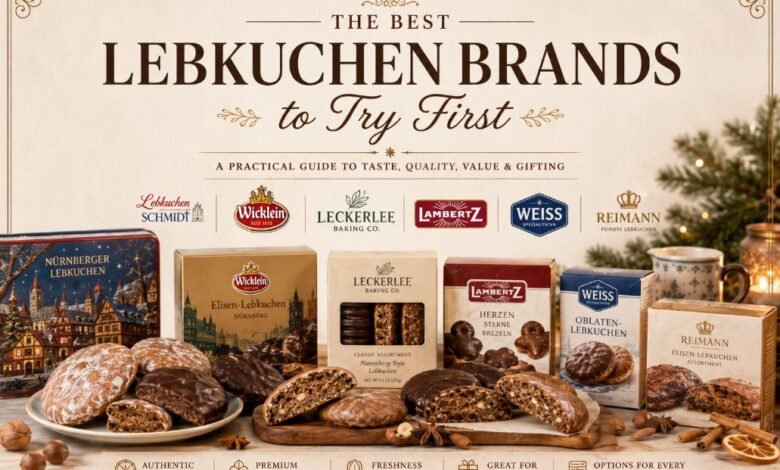
The best Lebkuchen brand depends on whether you care most about freshness, traditional Nuremberg production, premium nut content, affordable variety or impressive gift packaging. Lebkuchen-Schmidt offers the broadest specialist collection. Wicklein provides one of the strongest ladders from affordable wafer gingerbread to premium Elisenlebkuchen. Leckerlee is the most distinctive freshly baked United States option. Lambertz and Weiss are practical choices for larger, less expensive holiday assortments.
Those differences matter because “best” does not mean the same thing for every shopper. A $5 package can be a sensible introduction for a family cookie plate, while a $30 small-batch box may be the better choice for someone who wants to understand what nut-rich Lebkuchen can taste like. A decorative music box may make a memorable gift but provide less edible value than an ordinary refill package.
This guide compares the most useful Lebkuchen brands by style, texture, nut content, price level, packaging and ideal buyer. It does not declare one universal winner. Instead, it helps you choose the brand that matches the experience you want.
Readers who are new to the category can first review what Lebkuchen is, how it tastes and why its texture varies. For current stores, seasonal sellers and call-ahead advice, use the Best Lebkuchen Near Me guide.
Quick answer: Start with Leckerlee or a mixed premium Elisen box when freshness and texture matter most. Choose Lebkuchen-Schmidt for the widest traditional selection and gift formats. Choose Wicklein when you want several quality levels from one historic Nuremberg brand. Choose Weiss or Lambertz when affordability and party-size variety matter more than premium nut content.
The Best Lebkuchen Brands at a Glance
The table below is not a permanent quality ranking. It is a practical map showing what each brand does especially well. Product lines vary within a brand, so a premium Wicklein Elisen cookie should not be judged as though it were identical to Wicklein’s more affordable standard wafer gingerbread.
| Brand | Strongest reason to buy | Typical style | Price position | Best for |
|---|---|---|---|---|
| Lebkuchen-Schmidt | Widest specialist range | Elisen, Oblaten, slices, annual flavors, tins and chests | Mid-range to premium | Traditional variety and gifts |
| Wicklein | Broad quality ladder from everyday to premium | Oblatenlebkuchen, Elisen, minis, organic and specialty flavors | Budget to premium | Comparing several styles |
| Leckerlee | Fresh United States small-batch production | Nuremberg-style, glazed, dark chocolate, assorted and gluten-free | Premium | Freshness and first serious tastings |
| Lambertz | Large accessible holiday assortment | Chocolate shapes, filled hearts, bars, mixed gingerbread and Printen | Budget to mid-range | Families, parties and variety |
| Weiss | Low-cost introduction | Glazed and chocolate wafer gingerbread | Budget | Casual tasting and large tables |
| Reimann | Large premium nut-rich rounds | Glazed and dark-chocolate Elisen-style assortment | Premium | Rich texture and elegant serving |
Lebkuchen-Schmidt is the strongest all-purpose specialist. Its catalog makes it possible to compare classic glazed Elisen, chocolate Elisen, miniature pieces, slices, annual flavors and large gift packages without moving between several producers.
Wicklein is the most useful brand for learning how quality levels work. One retailer may carry a modest Wicklein Oblaten package, a medium nut-content assortment and a premium Elisen box with more than 40% tree nuts. The same brand therefore teaches an important lesson: brand name alone does not determine the exact recipe.
Leckerlee is the clearest freshness-focused choice for United States buyers. Its products are baked in Colorado in small batches rather than imported after a long international distribution process. That does not automatically make every cookie superior to every German import, but it creates a different advantage: recent baking, domestic shipping and a focused core range.
Lambertz and Weiss are not consolation prizes. They serve a different buyer. Someone filling a holiday cookie tray for twelve people may be happier with a generous chocolate assortment than with five expensive Elisen rounds that require careful portioning.
The smartest comparison is not “Which logo is best?” It is “Which exact product gives me the texture, quantity and presentation I need?”
A Better Way to Compare Lebkuchen Brands
Lebkuchen rankings become misleading when they compare products from different categories. A small flour-based chocolate heart, a premium nut Elisen round and a decorated festival cookie may all carry the name Lebkuchen, yet they are built for different purposes.
A fair comparison should examine six factors: the dough category, nut content, coating, freshness, package value and intended use.
| Factor | What to check | Why it matters |
|---|---|---|
| Dough category | Elisen, Oblaten, brown Lebkuchen, filled or shaped gingerbread | Predicts texture more accurately than brand reputation |
| Nut content | Percentage and position of almonds, hazelnuts or walnuts | Higher nut content usually produces denser and richer dough |
| Coating | Glazed, dark chocolate, milk chocolate or plain | Changes sweetness, aroma and first-bite texture |
| Freshness | Baking schedule, import timing and package seal | Affects moisture and spice aroma |
| Edible value | Net weight, number of cookies and contents | Prevents overpaying for packaging |
| Purpose | Tasting, sharing, gifting, collecting or decorating | The premium option is not always the practical option |
The first factor—dough category—is the most important. Elisenlebkuchen follows stricter composition standards and relies heavily on almonds, hazelnuts or walnuts while limiting cereal flour and starch. Standard Oblatenlebkuchen may also be soft and wafer-backed but can contain a different proportion of flour and nuts.
Nut percentage helps refine the comparison. A Wicklein product containing more than 40% tree nuts belongs in a different tasting group from a 14% nut Oblaten package, even though both come from the same producer. A Leckerlee cookie made with 40% almonds and hazelnuts should be compared with another premium nut-rich product, not with an inexpensive chocolate heart.
Coating can also distort judgments. Dark chocolate adds fat, bitterness and a polished finish. It can make a modest flour-based center feel richer. Sugar glaze reveals more of the dough’s spice and citrus. To compare brands accurately, taste products with similar coatings.
Freshness is harder to measure from a package photograph. A freshly baked domestic product may have a stronger aroma, but a carefully sealed German import can still arrive soft and fragrant. Distribution speed, storage and package integrity matter as much as distance.
Gift packaging must be evaluated separately. A musical tin, illustrated chest or embossed box has real value when presentation and collectibility matter. The same packaging has little value to someone who only wants to taste the cookies. Net weight and actual product list reveal whether the higher price pays for food, container or both.
Comparison rule: Match category with category, coating with coating and package purpose with package purpose. Do not compare a premium Elisen tin with a budget party bag and then conclude that one entire brand is better.
Six Lebkuchen Brands and the Buyer Each One Suits
Each brand below receives a different editorial treatment because each fills a different role in the market. The goal is not to repeat the same list of “pros and cons,” but to show how a real shopper might use the brand.
Best broad specialist: Lebkuchen-Schmidt
Lebkuchen-Schmidt is the easiest brand to recommend to someone who wants to explore the category deeply without assembling products from many manufacturers. Its range includes glazed and chocolate-coated Elisenlebkuchen, standard wafer Lebkuchen, miniature pieces, slices, nut varieties, annual editions, tins, parcels and substantial gift chests.
The brand is especially useful because it offers progression. A first-time buyer can begin with a small Elisen assortment. A returning customer can move toward annual flavors, specialty nut recipes or a larger holiday chest. A collector can choose illustrated tins and music boxes.
The strongest entry purchase is not necessarily the largest chest. A mixed package with glazed and chocolate-coated pieces provides enough variety to understand the core product without adding unrelated cakes and biscuits.
The 2026 Nuremberg Dream Tin, for example, contains five pieces—two chocolate-coated and three glazed—in a reusable container. That is a manageable gift or first assortment. The much larger Gift Chest contains several pounds of products and is better suited to a household, office or serious annual tradition.
Choose Schmidt when: you want the largest traditional selection or a polished German gift.
Begin with: a small mixed Elisen box or five-piece tin.
Avoid starting with: the largest multi-product chest unless several people will share it.
Best next step: compare a classic assortment with the current Lebkuchen of the Year.
Best quality ladder: Wicklein
Wicklein is unusually helpful for buyers who want to see how recipe, nut percentage and packaging affect price. Its range stretches from standard Oblatenlebkuchen and small chocolate pieces to premium Elisen products, organic assortments, reduced-sugar recipes and flourless extra-nutty specialties.
This breadth is an advantage, but it can also confuse shoppers. A low-cost Wicklein box and a premium Wicklein Elisen assortment are not interchangeable. Read the full product name and nut content before assuming what the brand will taste like.
For a balanced introduction, the Meistersinger assortment is useful because it combines glazed, chocolate-covered and plain pieces in one lower-cost package. A shopper ready for a richer experience can move to the 8.8-ounce Elisen assortment containing more than 40% tree nuts.
Wicklein also offers practical “Bruch” or broken-piece packages in some markets. These contain cosmetically imperfect pieces at a potentially better value. They make sense for personal eating, baking or a casual dessert board where perfect round shapes do not matter.
Choose Wicklein when: you want to compare quality levels or buy authentic Nuremberg products at different prices.
Begin with: a mixed Meistersinger or standard assortment.
Upgrade to: a 40% nut Elisen assortment or flourless Creation product.
Watch for: the difference between standard Oblaten, 20–25% nut products and premium 40% nut products.
Best freshly baked United States option: Leckerlee
Leckerlee occupies a different position because it produces Nuremberg-style Lebkuchen in Longmont, Colorado. Its focused range centers on classic glazed, dark chocolate, assorted, mini and gluten-free options rather than an enormous catalog of unrelated German holiday sweets.
The brand states that its core recipe uses 40% almonds and hazelnuts, real honey and warm spices without added preservatives. It also bakes in small batches through the holiday season. Those details appeal to buyers who prioritize recent baking and a soft, fragrant texture.
Leckerlee is particularly appropriate for a first serious tasting in the United States. The assorted box allows a direct comparison between classic and chocolate finishes using the same general bakery style. Mini versions work well for groups, while limited-edition tins provide a more decorative gift.
The tradeoff is price. A fresh small-batch product generally costs more than a budget imported supermarket box. The core question is whether the buyer values freshness and nut-rich texture enough to pay that premium.
Choose Leckerlee when: freshness, domestic shipping and small-batch production matter most.
Begin with: the standard assorted box.
Choose minis for: offices, tasting boards and larger groups.
Consider the tin when: the package will be part of the gift.
Best for broad holiday variety: Lambertz
Lambertz is a major German confectionery group with an extensive seasonal portfolio. Its products include chocolate-covered Lebkuchen shapes, filled hearts, bars, Printen, dominoes, mixed gingerbread assortments and large holiday packages.
This is the brand to consider when a household wants more than large round Elisenlebkuchen. A Lambertz selection can provide hearts, stars, pretzels, filled pieces and other German Christmas sweets in one coordinated range.
Lambertz products often sit in a more accessible price band than artisan Elisen boxes. That makes them practical for children, parties and casual holiday snacking. The softer flour-based centers and milk-chocolate coatings may also feel familiar to people who do not yet enjoy candied citrus or dense nut dough.
However, buyers should not use a standard Lambertz chocolate assortment as the final judgment on all Lebkuchen. It represents one accessible branch of the tradition, not the entire premium Elisen experience.
Choose Lambertz when: you need quantity, shapes, fillings and family-friendly variety.
Begin with: a mixed Herzen-Sterne-Brezeln-style package or simple glazed product.
Best setting: party platters and mixed German Christmas cookie tables.
Do not expect: every product to have the dense nut content of premium Elisenlebkuchen.
Best low-cost introduction: Weiss
Weiss offers simple glazed and chocolate wafer gingerbread that often appears through American German-food retailers at an entry-level price. It is useful for someone who is curious about Lebkuchen but not ready to pay for a large tin or specialty shipment.
A glazed Weiss package can also serve as a control sample in a tasting. Place it beside a premium Elisen product and compare weight, crumb, spice, nut flavor and moisture. The difference teaches more than reading a definition.
Weiss is also practical for holiday tables where Lebkuchen is only one of several sweets. Spending heavily on every cookie category is unnecessary when the plate also includes Stollen, Spekulatius, marzipan and vanilla crescents.
Choose Weiss when: price and simple seasonal enjoyment matter most.
Begin with: glazed Oblatenlebkuchen.
Use it for: coffee breaks, parties and comparison tastings.
Upgrade later if: you want more nuts, softer texture and stronger citrus aroma.
Best premium alternative to the largest brands: Reimann
Reimann is worth considering when a buyer wants large glazed and chocolate-covered Elisen rounds but does not necessarily want a Schmidt or Wicklein package. Retail descriptions of its assorted Elisen products emphasize more than 40% tree nuts and substantial round cookies.
This makes Reimann suitable for an elegant coffee service or small gathering. Large rounds can be cut into wedges, allowing guests to compare glazed and chocolate versions without each person taking several full cookies.
The brand is less widely distributed in the United States than Lambertz or Wicklein, so availability may be seasonal and retailer-dependent. That relative scarcity can make it interesting for an experienced buyer looking beyond the most familiar labels.
Choose Reimann when: you want premium large Elisen rounds from an alternative specialist.
Best format: a glazed-and-chocolate assortment.
Best occasion: a small tasting, host gift or refined dessert plate.
Confirm before buying: current nut content, net weight and seasonal stock.
Lebkuchen Brand Prices: Compare the Product, Not Just the Number
The prices below are examples from United States retailers reviewed during the 2026 season. They are not permanent promises. Promotions, shipping, package redesigns and seasonal supply can change the total.
| Example product | Observed price | Package | What the price mainly buys |
|---|---|---|---|
| Weiss glazed Oblatenlebkuchen | About $4.95 | 7 oz | Budget glazed introduction |
| Lambertz Contrella | About $5.95 | 7.1 oz | Soft glazed cookie with chocolate base |
| Wicklein Meistersinger assortment | About $7.95 | 7 oz | Glazed, chocolate and plain comparison |
| Wicklein standard gift box | About $9.95–$24 | Varies | Oblatenlebkuchen plus decorative packaging |
| Wicklein mini specialty Elisen | About $13.95 | 5.29 oz | Flavored mini Elisen and chocolate |
| Wicklein premium Elisen assortment | About $20.95 | 8.8 oz | Large rounds with over 40% tree nuts |
| Lebkuchen-Schmidt Dream Tin 2026 | About $24.96 | 5 pieces / 8.81 oz | Assorted cookies plus reusable tin |
| Leckerlee standard box | Usually premium-priced | Varies by format | Small-batch domestic baking and high nut content |
| Large Schmidt chest | Premium gift range | Several pounds | Multiple specialties, scale and presentation |
The table shows why “cheap” and “expensive” are incomplete judgments. The $4.95 Weiss package and the $20.95 Wicklein Elisen package do not promise the same recipe. The first is a low-risk introduction. The second uses large premium rounds with a much higher stated nut content.
The Nuremberg Dream Tin demonstrates another issue: package value. Five cookies in an illustrated tin cost more than a simple refill box might. The difference can be sensible for a gift and unnecessary for personal eating.
Shipping can overturn the apparent bargain. A low-cost package purchased alone may become expensive after delivery charges. Combining several German holiday products in one order can improve the final cost per item.
Value formula for real shoppers: useful product quantity + ingredient quality + freshness + packaging you actually want − shipping inconvenience.
Do not calculate value only by piece count. Twelve mini cookies may contain less total dough than five large Elisen rounds. Net weight provides the fairer starting point.
Price per ounce also has limitations. A chocolate coating contributes weight, while an expensive nut-rich dough may use relatively little flour. Two products with an identical cost per ounce can still contain very different ingredients.
Which Lebkuchen Brand Matches Your Situation?
| Buyer or occasion | Best starting brand | Recommended format | Reason |
|---|---|---|---|
| First premium tasting | Leckerlee or Wicklein | Glazed-and-chocolate Elisen assortment | Clear comparison of premium nut-rich dough |
| Traditional German gift | Lebkuchen-Schmidt | Medium tin or parcel | Strong Nuremberg identity and presentation |
| Large family party | Lambertz | Mixed shapes or holiday assortment | Quantity and familiar chocolate styles |
| Low-cost first taste | Weiss | Glazed Oblatenlebkuchen | Minimal financial commitment |
| Brand comparison project | Wicklein | Standard, 20–25% nut and premium Elisen products | Several quality levels from one producer |
| Fresh United States delivery | Leckerlee | Standard assorted box | Domestic small-batch production |
| Collector or decorative gift | Schmidt or Wicklein | Music box or annual tin | Reusable collectible packaging |
| Experienced Lebkuchen fan | Reimann or specialty Wicklein | High-nut or flourless Elisen | Moves beyond basic assortments |
| Office tasting | Leckerlee minis or Schmidt mini Elisen | Mini assorted pieces | Easy individual portions |
| Dessert board | Two or three brands | Premium rounds plus small standard shapes | Creates real texture contrast |
A beginner with a serious interest in food should not start with the cheapest chocolate assortment alone. A mixed premium box teaches more about nuts, wafer, citrus and coatings. However, a parent feeding a large group of children may find that same premium box impractical.
For gifting, medium packages often outperform giant chests. They cost less to ship, are easier to store and reduce the risk that the recipient will feel overwhelmed by several pounds of sweets.
For a party, use brand contrast intentionally. Place wedges of premium Elisenlebkuchen beside smaller chocolate hearts and crisp Spekulatius. Guests will understand the German holiday-cookie spectrum more clearly than they would from three nearly identical premium tins.
The best brand is the one that fits the eater, the occasion and the quantity—not the one with the most impressive box.
How to Decode a Lebkuchen Brand Package in Less Than a Minute
A strong brand can sell several very different products. The following sequence prevents mistaken purchases.
First, read the complete product name. Look for Elisenlebkuchen, Oblatenlebkuchen, filled Lebkuchen, Printen or an assortment description.
Second, check the nut statement. A package may state 14%, 20%, 25%, 40% or another amount. That number changes expectations.
Third, identify the coating. Glazed, dark chocolate and milk chocolate create different sweetness and texture.
Fourth, find the net weight. Ignore the visual size of the tin until you know how much food it contains.
Fifth, read the piece count. Determine whether the cookies are miniatures, standard rounds or large individual pieces.
Sixth, list everything in the box. A “Lebkuchen chest” may also contain biscuits, fruit pastries, Stollen or chocolates.
Seventh, check the delivery date. Preorder availability does not mean immediate shipment.
Eighth, review allergens. Nuts, wheat, eggs, milk and soy can appear across several components.
German words provide useful clues. Elisen signals the premium nut-rich category. Oblaten indicates the edible wafer base but does not establish Elisen-level nut content. Zartbitter means dark or bittersweet chocolate, while Vollmilch indicates milk chocolate.
Bruch means broken pieces. These may offer excellent edible value because visual imperfections do not necessarily affect the recipe. Mischung, Sortiment and Allerlei indicate mixed contents, but the exact meaning must be checked.
Packaging statements such as “original Nuremberg” and “Nuremberg-style” are not identical. Original Nürnberger Lebkuchen refers to geographic production, while a United States baker may accurately describe a recipe as inspired by the Nuremberg style without claiming German production.
A Five-Plate Lebkuchen Tasting That Actually Teaches Something
Most home tastings fail because every sample changes several variables at once. The following format creates a more useful progression.
| Plate | Suggested sample | Question to answer |
|---|---|---|
| 1 | Budget glazed Oblatenlebkuchen | How does the basic spice-and-wafer format taste? |
| 2 | Premium glazed Elisenlebkuchen | What changes when nuts replace much of the flour? |
| 3 | Chocolate version of the same premium dough | Does chocolate improve or hide the dough? |
| 4 | Small flour-based chocolate shape | How does a party cookie differ from a premium round? |
| 5 | Special flavor or annual edition | Does innovation support the traditional base? |
Use room-temperature samples and cut large rounds into equal wedges. Serve water between plates. Do not reveal the brands until everyone has described texture, aroma, sweetness and balance.
The most useful scorecard contains only five categories:
Aroma: Can you smell nuts, citrus and spices before biting?
Texture: Is the intended center moist, dense, cakey, chewy or crisp?
Balance: Does sugar or chocolate overwhelm the dough?
Finish: Do the spices and nuts remain after swallowing?
Would you buy it for its purpose? A party cookie and premium gift should not be scored by identical expectations.
A Leckerlee or premium Wicklein assortment can fill plates two and three. Weiss can provide the inexpensive glazed control. Lambertz can provide the small chocolate shape. A Schmidt annual edition can complete the final plate.
This format prevents brand prestige from influencing the first reaction. A modest package may outperform expectations, while an expensive tin may reveal that much of its appeal comes from presentation.
A Note From Diana: I would rather compare five carefully chosen pieces than open five giant gift boxes. The point is not to prove that the most expensive cookie wins. The point is to discover whether you value fresh spice, high nut content, dark chocolate, soft texture or the nostalgic feeling of a holiday assortment.
Which Brand Makes the Best Lebkuchen Gift?
Lebkuchen-Schmidt is the safest traditional gift brand, Leckerlee is the strongest freshness-led American gift and Wicklein is the most flexible choice across several budgets.
Choose Schmidt when the recipient appreciates German heritage, Nuremberg imagery and a broad assortment. A five- or eight-piece tin is usually sufficient for a host. Large chests are better for families, offices or repeat customers who already know the brand.
Choose Leckerlee when recent baking and distinctive contemporary tin design matter. It can feel more personal than a mass-distributed imported package, particularly for a recipient in the United States.
Choose Wicklein when you need to control the budget. A simple assortment can be affordable, while a music box or premium Elisen tin creates a much more elaborate presentation.
Choose Lambertz when the recipient has children or enjoys mixed chocolate cookies rather than only large nut-rich rounds. A varied box creates more immediate visual excitement on a family table.
| Gift recipient | Best brand direction | Package to choose |
|---|---|---|
| German-food enthusiast | Lebkuchen-Schmidt | Mixed Elisen tin |
| Design-conscious host | Leckerlee | Limited-edition tin |
| Family with children | Lambertz | Mixed shapes and coatings |
| Serious baker or food lover | Wicklein | Premium or flourless Elisen |
| Large office | Schmidt minis or Leckerlee minis | Individually manageable pieces |
| Collector | Schmidt or Wicklein | Music box or annual design |
Do not send a giant chest without checking the recipient’s household size and dietary needs. A spectacular package can become an obligation when it contains several pounds of nuts, wheat, chocolate and sweets that must be consumed after opening.
For a formal winter gathering, a decorative Lebkuchen tin can become part of the coffee table. Readers planning a cold-weather event may also find the site’s guide to winter wedding guest dresses useful when coordinating the wider occasion.
Dietary Needs Can Change the Best Brand Completely
A brand recommendation is useless when the product does not fit the eater’s dietary needs. Recipes vary not only between brands but between products from the same manufacturer.
Traditional premium Elisenlebkuchen contains substantial tree nuts. Leckerlee’s standard recipe emphasizes almonds and hazelnuts. Wicklein’s premium products may contain 25%, 40% or more nuts depending on the line. Schmidt’s Elisen products are also built around nuts. These are poor choices for someone with a tree-nut allergy.
High nut content does not automatically mean gluten-free. Wheat may appear in the dough or edible wafer. Leckerlee offers a specifically identified gluten-free line, but shoppers with celiac disease should still review current production and cross-contact information.
Milk chocolate introduces dairy. Dark chocolate may still contain milk traces. Eggs and honey are common in traditional recipes, making many products unsuitable for vegans.
Wicklein has offered products labeled organic and vegan within its broader range, demonstrating why shoppers must search the exact product rather than make assumptions about the entire brand.
For gluten avoidance: choose an explicitly gluten-free product, not merely a high-nut Elisen cookie.
For vegan buyers: confirm honey, eggs, dairy and glaze ingredients.
For nut allergies: premium Elisenlebkuchen is generally unsuitable.
For dairy avoidance: check both chocolate and shared-production statements.
For lower sugar preferences: review the nutrition panel and any reduced-sugar specialty line.
Assortments create extra complexity because one box may contain several recipes. The allergen statement may cover every product in the package, even when only one piece contains a particular ingredient.
Seven Ways Shoppers Waste Money on Lebkuchen Brands
Buying the brand without reading the product category. A famous producer may sell both premium Elisenlebkuchen and ordinary flour-based shapes. The logo does not tell you which one is inside.
Choosing the largest box first. A beginner does not need several pounds of cookies to learn whether they enjoy candied citrus and nut-rich dough.
Comparing piece count instead of weight. Twelve minis may contain less dough than five large rounds.
Paying for a collectible tin when no one wants the tin. Decorative packaging is valuable only when presentation or reuse matters.
Assuming imported always means fresher or better. A domestic small-batch cookie can arrive more recently baked, while a high-quality sealed import may provide stronger regional authenticity.
Ordering chocolate during extreme heat without checking shipping. A premium coating can arrive melted or bloomed.
Judging all Lebkuchen from one budget bag. Standard chocolate shapes do not represent the texture of premium Elisenlebkuchen.
The reverse mistake also occurs: someone buys only expensive Elisen rounds and concludes that inexpensive standard Lebkuchen has no purpose. A large casual party may be better served by smaller, sweeter and more durable pieces.
The Best Lebkuchen Brand to Try First
For the strongest premium first experience in the United States, choose a Leckerlee assorted box or a premium Wicklein Elisen assortment. Both provide a useful comparison of finishes while keeping the focus on nut-rich dough.
For the widest traditional German selection, choose Lebkuchen-Schmidt. Begin with a small mixed Elisen package rather than a giant chest. Move into annual flavors and elaborate gift formats only after you know what you enjoy.
For a low-cost first taste, choose Weiss glazed Oblatenlebkuchen or a Wicklein Meistersinger assortment. These allow you to explore the basic flavor without a major commitment.
For a large family holiday tray, choose Lambertz. Its variety of shapes, coatings and fillings is more practical than serving only large premium rounds.
For an experienced buyer, explore premium Wicklein, Reimann or Schmidt specialty editions. Flourless, extra-nutty and annual-flavor products show how far the category extends beyond standard Christmas gingerbread.
| Final category | Recommended brand | Best first format |
|---|---|---|
| Best overall specialist | Lebkuchen-Schmidt | Small mixed Elisen package |
| Best fresh U.S. option | Leckerlee | Classic-and-chocolate assortment |
| Best range of quality levels | Wicklein | Meistersinger, then premium Elisen |
| Best family assortment | Lambertz | Mixed chocolate shapes |
| Best budget introduction | Weiss | Glazed Oblatenlebkuchen |
| Best alternative premium rounds | Reimann | Glazed-and-chocolate Elisen |
No single brand wins every category. Schmidt wins breadth. Leckerlee wins the clearest freshness story for United States shoppers. Wicklein wins flexibility. Lambertz wins practical family variety. Weiss wins accessibility. Reimann offers a worthwhile premium alternative.
Once you know which direction fits your needs, use the Best Lebkuchen Near Me guide to compare current retailers, seasonal stock, prices, shipping and local pickup possibilities.
What is the best Lebkuchen brand?
Lebkuchen-Schmidt is the strongest all-purpose specialist because it offers a wide range of Elisen, wafer gingerbread, annual flavors and gift packages. Leckerlee is a strong fresh United States option, while Wicklein offers useful choices from affordable assortments to premium Elisenlebkuchen.
Which Lebkuchen brand should a beginner try first?
A beginner who wants a premium experience should try a mixed Leckerlee or Wicklein Elisen assortment containing glazed and chocolate-covered cookies. For a lower-cost introduction, Weiss glazed Oblatenlebkuchen or Wicklein Meistersinger is more practical.
Is Lebkuchen-Schmidt or Wicklein better?
Schmidt is better for the widest specialist selection and elaborate gifts. Wicklein is better for comparing multiple quality levels, from standard wafer gingerbread to high-nut and flourless premium Elisen products. The better choice depends on the exact product.
Is Leckerlee better than imported Lebkuchen?
Leckerlee offers the advantage of small-batch United States production and recent baking. German imports may offer protected Nuremberg origin, broader variety and traditional gift formats. Freshness and regional origin are different advantages rather than direct substitutes.
What is the best budget Lebkuchen brand?
Weiss and selected Lambertz or Wicklein products are practical budget options. Check the net weight, nut content and product category because inexpensive standard Lebkuchen differs from premium Elisenlebkuchen.
Which Lebkuchen brand is best for gifts?
Lebkuchen-Schmidt is the safest traditional gift choice because it offers many tins, parcels and chests. Leckerlee works well for a fresh contemporary United States gift, while Wicklein offers decorative packages across several price levels.
Which Lebkuchen brands offer high-nut products?
Leckerlee states that its core recipe uses 40% almonds and hazelnuts. Wicklein and Reimann sell premium assortments described with more than 40% tree nuts, while Schmidt offers a broad selection of Elisenlebkuchen built around substantial nut content.
Are supermarket Lebkuchen brands worth buying?
Yes, when the goal is an affordable holiday assortment, a large party or a casual first taste. Supermarket packages should not be expected to have the same dense nut structure as premium Elisenlebkuchen unless the label specifically identifies that category.
How should I compare Lebkuchen brands?
Compare products from the same category and with similar coatings. Check nut percentage, flour level, net weight, piece size, freshness, package contents and whether you are paying for collectible packaging.
Where can I buy these Lebkuchen brands in the United States?
Leckerlee sells directly within the United States. German brands are available seasonally through importers such as European Deli, German Specialty Import, The Taste of Germany and selected World Market locations. Check current stock before visiting.