Shchi Soup in New York: Where to Look in Brooklyn, Queens & NYC
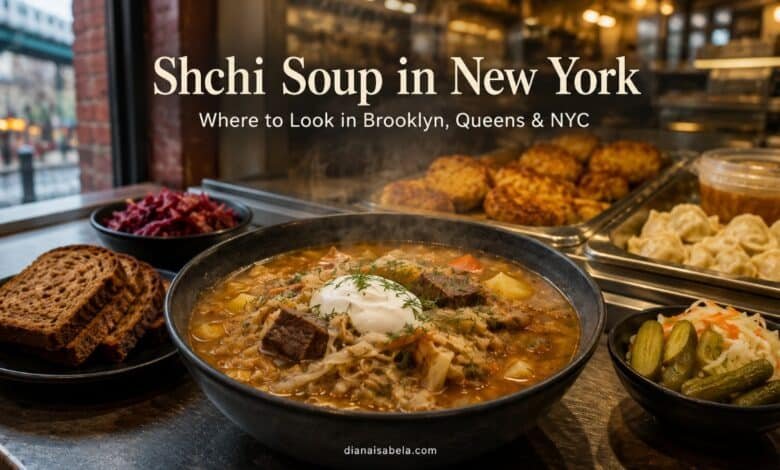
New York should be one of the easiest places in America to find shchi. Few cities give you this much Russian-speaking, Ukrainian, Uzbek, Central Asian and broader Eastern European food culture in one metro area. You can buy pelmeni, plov, kotleti, Olivier salad, smoked fish, dark bread, syrniki, stuffed cabbage and enough prepared food to turn a grocery run into a weekend menu.
And yet shchi remains strangely slippery online. Borscht usually gets the permanent menu position. Tashkent’s Brighton Beach soup menu currently gives you red borscht, shurpa, mastava, lagman, rassolnik, kharcho and green borscht among a long list of soups, but not a permanent shchi item. NetCost gives New Yorkers multiple stores with active prepared-food and deli operations, but its location pages do not promise shchi either.
That does not make New York a weak shchi city. It makes it a city where the search should follow food infrastructure instead of one permanent menu item. Brighton Beach and nearby southern Brooklyn remain the strongest first move. Rego Park gives Queens a practical alternative. And Manhattan has changed: Tashkent now operates a substantial West Village prepared-food market, so a Manhattan reader no longer needs to treat Brooklyn as the only serious starting point.
For Shchi in New York, I Would Still Start in Southern Brooklyn
If I had one afternoon and wanted the best odds of finding shchi — or at least learning exactly where and when to find it — I would begin around Brighton Beach, Sheepshead Bay and the surrounding part of southern Brooklyn.
The reason is not that one famous restaurant has conquered the shchi market. It is density. Russian-speaking and post-Soviet food culture exists here through supermarkets, bakeries, prepared-food counters, Uzbek kitchens, restaurants and stores where buying several cooked dishes for home is ordinary neighborhood behavior.
That density matters enormously for a rotating soup. If one place does not have shchi today, another relevant kitchen may be nearby. If nobody has the exact soup, you still have a food neighborhood capable of producing a very good lunch and a very dangerous grocery bag.
New York gives you two fundamentally different ways to search for a traditional dish.
The first is the classic restaurant search: find a polished menu, confirm the dish, make a reservation or order.
The second is more neighborhood-based: identify businesses that actually cook the food, inspect prepared-food counters, ask which soups were made that morning and learn whether the dish follows a weekly or seasonal rhythm.
Shchi strongly favors the second method.
This is especially true because Russian-speaking New York is not culturally uniform. Uzbek and other Central Asian businesses can carry dishes familiar throughout the former Soviet world without becoming Russian restaurants. Ukrainian and Russian food traditions overlap in some everyday foods without becoming identical. A food search works better when it acknowledges that complexity rather than filtering everything through one nationality button.
For the larger American map, my United States shchi guide connects New York with the other states where restaurant, deli and prepared-food infrastructure gives us a serious search.
And if you need the broader starting point — what shchi is, which names to search and why grocery counters matter internationally — use the main Shchi Soup Near Me guide.
The New York Search Now Has Three Strong Personalities
Southern Brooklyn
Still the deepest search. Brighton Beach, Sheepshead Bay and nearby neighborhoods combine NetCost, Tashkent, smaller markets, bakeries, restaurants and prepared-food counters inside one dense Russian-speaking and post-Soviet food landscape.
Queens
Rego Park is the practical alternative when Brooklyn is inconvenient. NetCost confirms a real prepared-food operation there, so you have somewhere sensible to call rather than crossing the city on probability alone.
Manhattan
No longer merely an opportunistic side search. Tashkent’s West Village market gives Manhattan a substantial Central Asian and prepared-food destination, although the current online menu still does not establish shchi as a permanent item.
These are three different search experiences.
Brighton Beach is strongest for neighborhood density. Rego Park is useful because it can save a Queens reader an unnecessary trip. Manhattan now provides a serious prepared-food option for people who are already downtown.
The correct choice therefore depends partly on cuisine and partly on where you are standing when hunger becomes a planning problem.
This is New York. Geography is not background information. Geography is one of the ingredients.
Brighton Beach Is Where the Search Becomes a Food Afternoon
Brighton Beach works because the neighborhood can absorb failure.
That sounds less romantic than “best shchi destination,” but it is much more useful.
If you travel forty minutes to one isolated restaurant and the soup is gone, the day immediately becomes irritating. If one Brighton Beach counter says no shchi while several prepared-food businesses, bakeries and restaurants remain within the same area, the word no simply changes your next stop.
This is the great practical value of food density.
Brighton Beach is also one of the places where I would pay more attention to the physical counter than the polished menu language.
Prepared foods reveal the kitchen’s actual habits. If several soups are sitting in the case, the chance that the business rotates traditional soups becomes more interesting. If the store’s recent food selection includes only packaged goods and no house-made dishes, the relevance drops.
I also like looking at what else is cooking because it helps identify the kitchen’s culinary range. A counter with plov, cutlets, cabbage rolls, dumplings, salads and several soups is a very different shchi lead from a store that merely sells Russian candy and frozen pelmeni.
And if someone behind the counter tells you shchi is made only on a particular day, that piece of neighborhood intelligence is more useful than another hour of searching menu databases.
NetCost Gives Shchi Somewhere Plausible to Exist — Without Promising That It Does Today
NetCost is useful because the current official store pages confirm exactly the infrastructure this search needs: prepared foods and grab-and-go meals, onsite delis and bakeries at the Brighton Beach Avenue and Rego Park locations, with an even broader food operation at Ocean Avenue.
What those pages do not currently confirm is a permanent shchi item.
So I would label NetCost as a strong prepared-food lead, not a confirmed shchi destination.
NetCost Market — Brighton Beach Avenue
This is the most geographically obvious NetCost stop for a Brighton Beach food afternoon.
I would begin with one simple question: “What homemade soups do you have today?”
Then, if shchi is not named, ask whether the kitchen makes it on another day.
NetCost Market — Ocean Avenue
Ocean Avenue makes particular sense if the soup hunt is also dinner shopping.
A large store with prepared food, bread, fish, deli items and groceries can justify the visit even if the soup rotation refuses to cooperate.
If I am already buying dark bread, sour cream and something for tomorrow, the trip is not being held emotionally hostage by one container of cabbage soup.
This is the prepared-food principle in its cleanest form: a business can be highly relevant to shchi without allowing us to claim that shchi is there right now.
The difference between relevance and confirmation is not annoying legal language. It is what prevents a food guide from sending somebody on a pointless train ride.
If you want the full deli-specific strategy, the guide to finding shchi at Russian and Ukrainian delis goes deeper into rotating soup counters, daily specials and what evidence is actually worth trusting.
In New York, “Not Online” and “Not Cooking” Are Completely Different Ideas
A restaurant often needs a stable menu.
A supermarket hot bar can have Wednesday.
That small difference explains half this article.
One day the case has borscht, chicken soup and mushroom soup. Another day the kitchen may make rassolnik or something cabbage-based. One season may bring sorrel. Another may favor heavier soups.
The web page does not need to change every morning for the kitchen to keep cooking.
So do not ask only:
“Do you have shchi?”
Ask:
“Do you make shchi, and when?”
The first question may give you no.
The second may give you Friday.
Tashkent Is One of New York’s Best Soup-Counter Lessons — Even Without Shchi on the Current Menu
Tashkent Supermarket is particularly useful because its Brighton Beach menu currently gives us real, specific soup information rather than vague assumptions.
The current selection includes red borscht, chicken meatball soup, salmon soup, boiled lamb shurpa, Samarkand mastava, fried lamb shurpa, Turkish chicken soup, dov’ga, lentil soup, Uyghur lagman, chicken bouillon, beef meatball soup, green borscht, rassolnik and kharcho.
That is a serious soup program.
It is also currently a soup program without a permanent shchi listing.
Tashkent Supermarket — Brighton Beach
This is exactly the kind of business that proves why cuisine labels should not become shortcuts.
Tashkent is an Uzbek and Central Asian food destination. Its menu also includes dishes familiar across the broader post-Soviet food world. That overlap makes it useful for the search without turning the business into a Russian restaurant.
If shchi is your exact target, ask.
If it is not there, the soup section gives you an unusually good set of alternatives.
Do not collapse the soup menu: red borscht is not shchi. Green borscht is not automatically green shchi. Rassolnik is not sour-cabbage shchi. Shurpa and mastava belong to their own Central Asian traditions. Similarity is a reason to learn more, not an excuse to rename lunch.
I actually think the absence of shchi from the current visible menu makes Tashkent more useful editorially, not less.
It shows what an excellent soup kitchen looks like when it still does not have the exact dish you searched.
That distinction protects the guide from becoming lazy.
If the result were simply “Tashkent has soup, therefore Tashkent has shchi,” the page would be longer and less accurate.
Instead, the reader learns two useful things: this is a major prepared-food destination worth checking, and the exact soup should still be confirmed.
Precision and appetite are allowed to coexist.
A No-Shchi Day at Tashkent Is Still a Very Good Day for Soup
If you wanted shchi because you were craving something sour and savory, rassolnik may catch your attention. Pickles and pearl barley move it into a completely different flavor structure, but the salty-sour quality can satisfy the same part of the appetite.
If you wanted a rich meat-and-vegetable soup, shurpa gives you another direction.
Mastava brings rice and a different Central Asian comfort-food profile.
Kharcho changes the conversation again.
Red borscht gives you familiar beet-led territory.
Green borscht may be tempting if sorrel or greens were part of what drew you toward green shchi, although the kitchen’s current version uses spinach, egg, lemon juice and beef broth and should be treated as the dish it actually names.
None of these soups needs to become shchi to rescue lunch.
This is one of the pleasures of New York: the original search can remain specific while the meal remains flexible.
Queens Has a Very Sensible Answer: Check Rego Park Before Crossing the City
If you live in Queens, Brighton Beach may be culturally exciting and geographically irritating.
Rego Park gives you a more practical first step.
NetCost Market on Queens Boulevard currently confirms prepared foods and grab-and-go meals, an onsite deli and bakery. That does not establish permanent shchi, but it absolutely establishes a relevant kitchen to call.
NetCost Market — Rego Park
If I lived nearby, I would phone Rego Park before making a dedicated Brooklyn trip.
If the kitchen confirms shchi, geography has solved the problem.
If the answer is no but the store has another homemade soup and I need groceries, the trip may still make sense.
If the answer is “we never make it,” then Brighton Beach becomes the more interesting next move.
This is the entire purpose of local structure: not every reader should be routed toward the same famous food neighborhood.
A Queens reader deserves a Queens-first option when the evidence supports one.
Manhattan Changed: Tashkent Makes the West Village a Real Prepared-Food Stop
This is the section I would change most strongly from an older version of this guide.
Manhattan used to be easier to dismiss for this particular search because southern Brooklyn had dramatically deeper Russian-speaking and post-Soviet prepared-food infrastructure.
That is still true in terms of neighborhood density.
But Tashkent opened a West Village supermarket at 378 Sixth Avenue in 2025, bringing its huge prepared-food model into Manhattan.
Tashkent Supermarket — West Village
This does not suddenly make Manhattan a stronger shchi zone than Brighton Beach.
It changes Manhattan from “probably search elsewhere” to “check this real prepared-food kitchen first if you are already downtown.”
That is an important practical improvement.
The Manhattan location also demonstrates how quickly food geography can change. A local guide written before 2025 could reasonably send readers toward Brooklyn. A current guide has to acknowledge that one of Brighton Beach’s best-known prepared-food concepts now has a substantial downtown presence.
I would still keep expectations disciplined. The current Manhattan ordering menu emphasizes plov, samsa, manti, shawarma, chebureki, salads, syrniki, breads and other prepared foods rather than establishing a permanent shchi soup listing.
So again:
Strong kitchen.
Worth checking.
Not a confirmed daily shchi promise.
This may feel repetitive, but repetition is cheaper than inaccurate directions.
New York Gives You Enough Languages to Make One Soup Name Surprisingly Complicated
The menu may say shchi.
It may say щи.
It may say Russian cabbage soup.
It may say sour cabbage soup.
And it may use a broader term that makes you ask one more question.
That last distinction is especially useful in New York because green borscht appears on actual prepared-food menus.
If what you want is sorrel, ask whether sorrel is in the soup.
If what you want is fermented cabbage, ask whether sauerkraut is used.
Ingredients often solve translation problems more efficiently than arguing about names.
The deeper Shchi vs Cabbage Soup guide is useful here because New York has enough overlapping Eastern European food traditions that “cabbage soup” alone is far too broad a category.
The Old Sheepshead Bay Cabbage-Soup Clue Is Not Strong Enough to Send You Anywhere
Older menu traces around Sheepshead Bay have included generic cabbage soup.
I would not build a current recommendation around them.
This is an important change from the way older local food guides were often written. An old menu can tell you a business once made something. It cannot tell you whether the business still operates the same kitchen, whether the recipe was shchi or another cabbage soup, whether the soup remains in rotation or whether the listing survived long after the food disappeared.
How I Treat an Old Menu Clue
Useful for: identifying a business or neighborhood worth rechecking.
Not useful for: telling someone to travel there today.
Next step: verify the current business, current prepared-food operation and the actual soup.
If the trail becomes current again, add it back as a real place card. Until then, history belongs in the notebook rather than the directions.
New York Is the City Where a Ninety-Second Call Can Save an Hour
Distance in New York is an emotional concept.
Three miles can be twenty minutes.
Three miles can also involve a train delay, one platform change, an unexpected bus decision and enough underground time to make you forget whether it is raining.
If shchi is specifically why you are making the trip, call first.
If the business tells you, “We make it Thursdays,” save the information.
That one sentence may be more valuable than a hundred search results.
It also turns the next trip from speculation into planning.
For a more detailed ordering script, the How to Order Shchi guide covers menu names, portions, meat, cabbage style and what to ask before making a special trip.
Fresh, Sour or Green: New York Has Enough Variety That the Distinction Matters
Finding “shchi” is not necessarily the end of the question.
A fresh-cabbage bowl and a sauerkraut bowl can feel like entirely different moods.
Fresh-cabbage shchi
Fresh cabbage usually gives a gentler vegetable sweetness and a cleaner profile. The broth, meat or mushrooms determine how rich the soup becomes, but the cabbage itself does not bring the fermented tang of sauerkraut.
Sour-cabbage shchi
Fermented cabbage creates deeper acidity and a stronger sweet-sour character. Long cooking can soften the sharper edges, making the soup feel rich and integrated rather than simply acidic.
Green shchi takes another path, commonly through sorrel. Its acidity feels brighter and more herbal, and egg often appears in the bowl.
This matters enormously when the deli gives you a one-word answer over the phone.
“Yes, we have shchi.”
Excellent.
“Which kind?”
That one extra sentence can prevent forty minutes of imagining sauerkraut while the kitchen is ladling a completely different fresh-cabbage soup.
If the difference is important to your craving, use the fresh-cabbage vs sour-cabbage shchi comparison before choosing a destination.
Finding Shchi in Brighton Beach Is Only the Beginning of the Grocery Problem
Southern Brooklyn is dangerous in the best way because soup rarely remains the only purchase.
You need bread.
Then somebody mentions kotleti.
Then you see dumplings.
Then the salads begin making persuasive arguments from behind the glass.
The full pairing logic lives in What to Eat With Shchi. In New York, the more immediate advice is simply not to waste a good prepared-food neighborhood by thinking only one meal ahead.
Buy what you will actually eat.
Then stop.
This sounds obvious until you see the pastry counter.
New York May Be Better for Take-Home Shchi Than for a Formal Shchi Dinner
I mean that as a compliment.
A deli container is a very natural home for this soup.
Shchi does not rely on a fragile crisp exterior. Cabbage, broth, meat, potatoes and vegetables are already cooked together. The journey home does not fundamentally damage the dish.
Sour-cabbage shchi can be particularly forgiving because integrated flavor is part of the point.
Green shchi deserves a little more care if fresh sorrel and herbs are giving the bowl much of its character.
At home, reheat the portion you plan to eat until properly hot. Add sour cream afterward. Fresh dill or green onion goes on at the end. Keep bread outside the soup container and away from condensation if you still want it to behave like bread.
A larger container can also turn a successful search into tomorrow’s lunch.
In a city where getting across town for one meal can require actual planning, this is not greed.
It is logistics.
How Far Across New York Should You Travel for an Unconfirmed Bowl?
This is where New York food guides often become theatrical.
They treat every destination as though the reader lives three blocks away and owns a teleportation device.
Real people have jobs, train delays, weather, children, parking problems and evenings that do not improve because someone online described a 70-minute journey as “just head to Brooklyn.”
A useful guide includes the cost of getting there.
For shchi, my rule is very simple.
Short distance: a strong prepared-food lead may be enough.
Long distance: confirm the exact soup.
What I Would Not Put on This New York List Just to Make It Look Bigger
I would not list every Russian restaurant.
I would not list a place merely because it has borscht.
I would not label Tashkent’s green borscht as green shchi.
I would not turn rassolnik into “close enough.”
I would not revive an old Sheepshead Bay cabbage-soup menu without current confirmation.
I would not create Manhattan, Queens, Brighton Beach, Brooklyn and Staten Island child pages until each could genuinely offer more than a shorter version of this page.
New York has enough actual food that fake abundance would be particularly embarrassing.
Three strong prepared-food routes plus honest current menu information are more useful than twenty restaurant names selected because they look Russian in a directory.
So Where Would I Go First Today?
If I were starting from anywhere reasonably convenient to southern Brooklyn, I would still choose Brighton Beach.
Not because I can guarantee shchi at one magic address.
Because the neighborhood gives the search the best resilience.
I would call one or two prepared-food counters before leaving if shchi were the entire reason for the trip.
I would check Tashkent’s current soup menu.
I would check NetCost’s prepared-food section.
If shchi appeared, excellent.
If not, I would ask when it appears.
Then I would eat whatever genuinely looked best rather than forcing another soup to impersonate shchi.
If I lived in Queens, I would call Rego Park first.
If I were in the West Village, I would now check Tashkent Manhattan before automatically going to Brooklyn.
That is the big improvement in the current New York map.
Brighton Beach remains the strongest ecosystem.
It is no longer the only sensible ecosystem.
Know a New York Counter With a Real Shchi Day?
This is exactly the New York information I want to collect: not another generic Russian-restaurant recommendation, but the small details locals actually know.
If a Brighton Beach market makes sour-cabbage shchi every Thursday, tell me. If a Queens deli has a green sorrel version for only part of the year, tell me that too. If a Manhattan prepared-food counter quietly added shchi and nobody has bothered to put it on a permanent menu, that is precisely the kind of update that makes this guide better.
Send the business name, neighborhood, address and phone number if you have it. Tell me how the soup is labeled. Tell me whether it uses fresh cabbage, sauerkraut or sorrel. Tell me the current price and portion size if you know them.
The useful details are often beautifully ordinary: “They make it Fridays.” “It sells out before 2.” “Ask for щи rather than cabbage soup.” “The large container feeds two.” “They only make the sour version in winter.”
I also want the stories menus never contain. What do you eat with it? Does the version taste like the one your family made? Is there a place where everyone in the neighborhood seems to know the soup schedule except the internet?
New York has enough famous restaurants. I am very interested in the grocery counter your aunt insists everybody else has overlooked.
If you know the bowl, send me the trail.
info@dianaisabela.comQuestions About Finding Shchi in New York
Where should I look for shchi soup in New York?
Southern Brooklyn remains the strongest place to start, particularly Brighton Beach and nearby Sheepshead Bay, because the area has a dense concentration of Russian-speaking and post-Soviet prepared-food businesses. Rego Park in Queens and the newer Tashkent Supermarket in Manhattan’s West Village are also practical call-first options.
Can I find shchi in Brighton Beach?
Brighton Beach is one of New York’s strongest areas to search because NetCost, Tashkent and other prepared-food businesses operate in the neighborhood. I did not confirm shchi as a permanent current item at the major businesses in this guide, so call or check the day’s soup selection before making a special trip.
Does NetCost Market currently list shchi?
The current NetCost location pages for Brighton Beach Avenue, Ocean Avenue and Rego Park confirm prepared foods or grab-and-go meals, onsite delis and other food departments, but they do not establish shchi as a permanent menu item. Treat these stores as strong prepared-food leads and ask about the current soup rotation.
Does Tashkent Supermarket in Brighton Beach serve shchi?
Shchi is not currently shown as a permanent item on the visible Brighton Beach soup menu. The menu does include a large selection such as red borscht, shurpa, mastava, lagman, green borscht, rassolnik and kharcho, so Tashkent remains a strong soup destination where it is reasonable to ask about specials or rotation.
Can I look for shchi in Manhattan now?
Yes. Tashkent Supermarket opened a West Village location at 378 6th Ave in 2025 and operates a major prepared-food program there. I did not find a permanent shchi item in its current online ordering menu, so check the current selection rather than assuming the soup is available every day.
Where should I look for shchi in Queens?
NetCost Market at 97-10 Queens Blvd in Rego Park is the most practical Queens starting point in this guide because its current location information confirms prepared foods, grab-and-go meals, an onsite deli and bakery. Call before making a trip specifically for shchi.
Is green borscht the same as green shchi?
Not automatically. Both names may appear in overlapping sorrel and green-soup traditions, but recipes and family terminology vary. If you specifically want green shchi, ask whether the soup contains sorrel and how the kitchen itself identifies the dish.
What is the difference between fresh and sour shchi?
Fresh-cabbage shchi is generally gentler and more vegetable-forward. Sour shchi uses fermented cabbage or sauerkraut, producing a deeper tang and stronger sweet-sour character. Both can vary considerably depending on broth, meat, mushrooms, potato and cooking time.
Should I call before traveling across New York for shchi?
Yes if shchi is the main reason for the trip. Ask whether it is available that day, whether it is made with fresh cabbage or sauerkraut, whether there is a usual soup day and whether a portion can be held. New York travel time makes a short call especially worthwhile.
Is shchi good for takeout in New York?
Yes. Shchi generally travels well because broth, cabbage, vegetables and meat are already cooked together and the dish does not depend on a crisp exterior. Keep bread separate, refrigerate the soup promptly if necessary, reheat it properly and add sour cream or fresh herbs at the end.