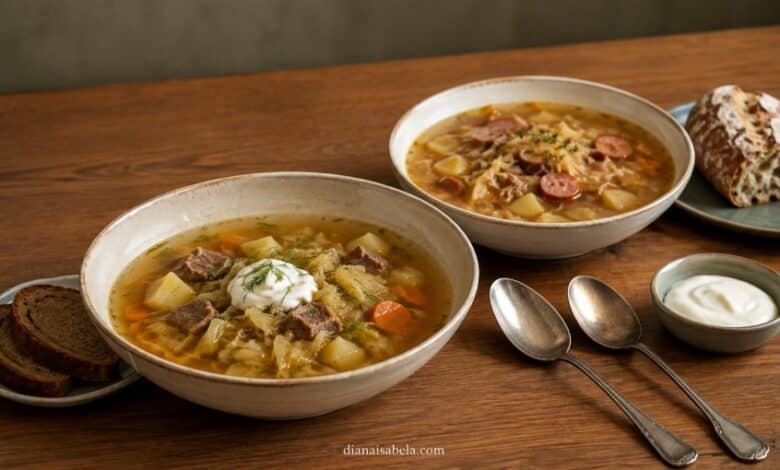
Shchi is cabbage soup, but not every cabbage soup is shchi. That distinction sounds almost irritatingly simple until you open three restaurant menus, see “cabbage soup” written on all of them, and realize one may be Russian shchi, another Polish kapuśniak, and the third somebody’s vegetable soup containing half a cabbage because the refrigerator needed intervention.
Cabbage is one of those ingredients that belongs to too many food traditions to identify a dish by itself. Fresh cabbage, sauerkraut, beef broth, pork, potatoes, tomatoes, mushrooms, smoked meat, dill and sour cream can be combined in dozens of ways, and several of those combinations produce genuinely traditional soups with their own names and histories. The useful question is therefore not “Does it contain cabbage?” but “What kind of cabbage soup is this kitchen actually making?”
That is where shchi becomes easier to understand. It is not simply any soup with cabbage floating in it. It belongs to a recognizable Russian soup tradition with its own broad family of fresh-cabbage, sour-cabbage and green variations, even though individual recipes can differ dramatically from one kitchen to another.
Cabbage Tells You What Is in the Pot, Not What the Pot Is Called
The phrase cabbage soup is descriptive in the same way chicken soup is descriptive. It tells you something important, but not enough. Chicken soup could mean clear broth with noodles, avgolemono, chicken tortilla soup, arroz caldo or somebody’s Sunday pot with dumplings. Nobody would reasonably claim those dishes are identical because a chicken was involved.
Cabbage deserves the same respect. Shchi uses cabbage in many of its most familiar forms, but the ingredient also appears in Polish, Ukrainian, German, Czech, Slovak, Balkan, Jewish and other regional soup traditions. Once sauerkraut enters the conversation, the family becomes even larger.
The easiest way to think about shchi is as a specific culinary tradition rather than a generic ingredient category. If you are completely new to the dish, I explain its basic identity, variations and ingredients in my introduction to the shchi family. Here, the more interesting task is drawing the boundary between shchi and all the other delicious things a cook can do with cabbage and broth.
Shchi Itself Is Already More Than One Soup
Before comparing shchi with other cabbage soups, it helps to admit that shchi does not arrive as one rigid formula. Fresh-cabbage shchi can be mild, brothy and slightly sweet from cooked cabbage, carrot and onion. Sour shchi uses fermented cabbage or sauerkraut and moves toward a deeper, tangier flavor. Meat, mushrooms, potatoes, herbs and broth can all vary from kitchen to kitchen.
That means two bowls both honestly called shchi may taste surprisingly different. One can be light enough for lunch, while another feels like it was invented specifically for February, dark bread and the refusal to leave the house again. The cabbage may be fresh in one and fermented in another, which changes acidity, aroma and texture before the cook even begins adjusting the rest of the pot.
If that fresh-versus-fermented distinction is the part you care about most, I have a deeper look at how those two cabbage choices change the entire bowl.
Why “Russian Cabbage Soup” Is Useful — and Still Incomplete
When an English-language menu calls shchi “Russian cabbage soup,” it is doing something practical. A diner who has never seen the word shchi immediately understands the general category. There will probably be broth. Cabbage matters. This is not beet-red borscht wearing a disguise.
The problem begins when that translation starts behaving like a definition for every cabbage soup. A Polish sauerkraut soup does not become shchi because an English speaker thinks “sour cabbage soup” sounds close enough. A generic vegetable soup with cabbage does not become shchi because it contains potatoes and dill. Similar ingredients can create related eating experiences without erasing the identity of the original dish.
I would therefore treat “Russian cabbage soup” as a useful explanation of shchi, not as permission to rename every cabbage-based bowl on the table.
Other Cabbage Soups Can Look Surprisingly Familiar
The confusion is understandable because cabbage soups across Central and Eastern Europe often share ingredients that naturally belong together. Cabbage likes potatoes. Sauerkraut likes pork and smoked meats. Onion and carrot are reliable soup citizens almost everywhere. Sour cream has never shown much interest in respecting borders. Put enough of these things in a bowl and visual resemblance becomes inevitable.
Polish kapuśniak
Kapuśniak is a Polish cabbage soup often associated with sauerkraut and can be quite sour, hearty and meat-forward. Potatoes, pork, sausage or smoked elements may appear depending on the recipe. To someone seeing only an English description such as “sauerkraut soup,” it can sound extremely close to sour shchi, but the two belong to different culinary traditions and should not be collapsed simply because fermented cabbage is doing important work in both.
Ukrainian cabbage soups
Ukrainian cooking includes several cabbage-centered preparations, and names, regional forms and household recipes vary. Some may overlap in ingredients with shchi, while others have their own identity and logic. This is exactly why I do not rename a soup based only on an ingredient list.
German and Central European sauerkraut soups
Sauerkraut also appears in hearty German and Central European soups, often with pork, sausage, smoked meat or potatoes. They can share the tangy comfort-food mood of sour shchi while tasting much smokier or meatier depending on the preparation.
Generic vegetable cabbage soup
This category can contain almost anything: tomatoes, beans, celery, peppers, cabbage, broth and whatever vegetables needed a purpose before tomorrow. It may be excellent. It may even resemble a light shchi in photographs. But resemblance alone is not a culinary birth certificate.
The Ingredients Overlap So Much That Flavor Is Often a Better Clue
If you line up ingredient lists, the distinctions can look maddeningly small. Cabbage, onion, carrot, potato and broth appear everywhere. Add beef to one pot and pork to another and you still have two soups that seem related enough to confuse a search result. What matters is how the ingredients are treated and which flavor is supposed to lead.
Fresh shchi often lets broth and softened cabbage remain fairly clear and direct. Sour shchi uses fermented cabbage as part of the flavor structure, so acidity moves through the broth rather than appearing as a decorative finishing note. A Polish sauerkraut soup may push harder toward pork or smoked meat. Another cabbage soup may rely heavily on tomato, beans or paprika and end up somewhere completely different despite beginning with the same vegetable.
This is why I pay attention to the first spoonful rather than performing ingredient mathematics. What is leading: clean broth, fermented cabbage, smoked meat, tomato, beetroot, paprika, mushrooms? Once that answer becomes clear, the name on the menu starts making more sense.
So What Does Shchi Taste Like Compared With Ordinary Cabbage Soup?
The awkward answer is that “ordinary cabbage soup” has no single flavor. A tomato-heavy cabbage soup can be sweet and acidic. A pork-and-sauerkraut soup can be smoky and deeply sour. A vegetable version can be light and almost sweet. A bean-and-cabbage soup can feel thick and rustic. The generic name does not give you enough information to predict the spoonful.
Shchi is narrower, even with all its variations. Fresh-cabbage versions generally stay within a brothy, savory, vegetable-centered range, while sour-cabbage versions bring fermented tang into that same basic soup world. Beef, mushroom or chicken can shift the weight of the bowl, but the cabbage remains culturally and structurally central rather than merely one vegetable among ten.
That does not mean shchi tastes “more cabbage-like” than every other cabbage soup. A heavily smoked sauerkraut soup might taste much more aggressively of fermented cabbage. The difference is identity, not a competition over which bowl contains the most cabbage per square inch.
Sauerkraut Is Where the Comparison Gets Especially Tricky
Once cabbage has been fermented, several soups suddenly begin sharing the same seductive vocabulary: sour, savory, warming, hearty, salty, perfect with potatoes, even better when the weather is offensive. Sour shchi sits naturally in that world, but it does not own it.
Sauerkraut itself is a transformed ingredient. Fermentation gives the cabbage acidity and changes its texture before it enters the pot, so any soup using it starts with a stronger flavor foundation than one made from fresh cabbage. From there, culinary traditions take the ingredient in different directions. One kitchen builds around beef broth and shchi logic; another uses pork and smoked sausage; another adds beans, paprika or tomato.
This is why “contains sauerkraut” is useful information but not enough to identify the dish. The same ingredient can speak several culinary languages without becoming confused about its passport.
And Green Shchi Is the Excellent Exception to the Cabbage Rule
Just when “shchi equals cabbage tradition” begins to feel wonderfully clear, green shchi arrives with sorrel and reminds us that food terminology enjoys making confident statements nervous. Green shchi is commonly associated with sorrel and other leafy greens rather than white cabbage or sauerkraut, and its acidity feels bright and herbal instead of fermented.
Potatoes, egg, herbs, chicken or beef may join the bowl, and the result can taste almost springlike compared with a deep sour-cabbage soup. If you have seen green shchi, zeleny shchi or a related sorrel-based description and wondered why the cabbage disappeared, I cover the sorrel-based side of the family here.
So yes, the broad shchi tradition is more flexible than one cabbage definition suggests. But that exception does not turn every unrelated vegetable soup into shchi either. Food is allowed to be complicated without becoming meaningless.
If You Want Shchi Specifically, Say Shchi
If I were searching a restaurant menu or calling a deli because I specifically wanted shchi, I would not ask merely for cabbage soup. That phrase is too broad. I would ask whether they have shchi or щи, then ask what style they are making: fresh cabbage, sauerkraut or green.
At a Russian or Ukrainian prepared-food counter, I would also ask whether the soup appears only on certain days. A deli may make several homemade soups and rotate them without ever maintaining a permanent online menu. That is why I treat these kitchens differently from conventional restaurants; my deli-search method focuses on the kitchen rather than the printed menu.
If the staff says “cabbage soup” in English but recognizes the word shchi and confirms that is what they mean, wonderful. Translation problem solved. If they say no, it is another cabbage soup, I believe them. This is one of those situations where curiosity is much more useful than culinary overconfidence.
They May Share Bread and Sour Cream, but Dinner Can Still Go in Different Directions
Shchi likes sturdy, uncomplicated company. Dark rye bread works beautifully because it gives a clear broth something substantial to lean on. Sour cream can soften both fresh and fermented versions, while dill adds freshness without demanding attention. A lighter shchi can lead into kotleti, dumplings, buckwheat or potatoes; a rich beef-and-sauerkraut bowl may already be doing most of the work.
Other cabbage soups can want very different things. A smoked pork-and-sauerkraut soup may already contain enough meat to make a second course unnecessary. A tomato-heavy vegetable cabbage soup may welcome grilled meat or bread for entirely different reasons. The fact that all of these soups contain cabbage does not mean the table around them should be identical.
If you are building a full shchi meal rather than comparing soup families, I put the more useful combinations in my guide to what actually tastes good beside the bowl.
What If a Restaurant Calls Shchi Simply “Cabbage Soup”?
I would not panic about it. Restaurant menus translate food for practical reasons, and “Russian cabbage soup” may be far easier for unfamiliar diners than asking them to decode shchi before the appetizer. If the restaurant itself identifies the dish as shchi elsewhere, or the staff confirms that the cabbage soup is щи, the English wording is simply doing translation work.
The problem appears only when we reverse the logic and assume every menu item called “cabbage soup” must secretly be shchi. That shortcut erases other dishes and is unnecessary when one question can solve the mystery.
I also look at the restaurant itself. A Russian or Central Asian kitchen serving familiar post-Soviet dishes gives a generic “cabbage soup” description one context; a Polish restaurant gives it another. Context helps, but I still prefer confirmation over guesswork.
Shchi and Borscht Are Actually Easier to Separate
People frequently compare shchi with borscht because both are famous Eastern European soups and both can contain cabbage. That comparison is much cleaner because beetroot gives familiar red borscht such a distinct flavor and visual identity. Cabbage may be present, but beetroot still organizes the bowl in a way classic shchi does not.
With cabbage soups, the overlap is more intimate. Sauerkraut can create very similar acidity across different traditions, and potatoes, meat and broth can make the bowls look related. If you want the beet-versus-cabbage distinction specifically, I unpack it in my comparison of the two famous soup traditions.
What I Would Order If the Menu Gave Me Three Cabbage Soups
I would read the original names first and resist the instinct to rank them by familiarity. If one were shchi with fresh cabbage, one sour shchi and one Polish kapuśniak, I would already know I was not choosing between three identical bowls. The decision would come down to what kind of acidity, broth and meat I wanted that day.
For something lighter, fresh shchi would probably win. For a fermented broth where beef and cabbage share the spotlight, sour shchi would be hard to resist. If the kapuśniak leaned toward smoked pork or sausage, that would become a completely different craving — richer, smokier and probably more substantial.
This is exactly why names matter when food is genuinely different. Not because dinner needs more rules, but because knowing the name helps you order the thing you actually want instead of discovering halfway through lunch that your “cabbage soup” had an entirely different plan.
The Best Rule Is Surprisingly Simple: Do Not Rename Other People’s Soup
If a kitchen calls its dish shchi, call it shchi. If it calls the soup kapuśniak, use that name. If a family says green borscht while another says green shchi for a related sorrel soup, ask what is inside before deciding one grandmother needs correction from the internet.
Food traditions overlap because ingredients travel, people migrate, neighboring cuisines influence one another and good ideas have never respected borders particularly well. That overlap is interesting. It does not require turning every related dish into the same dish.
For anyone trying to find an actual bowl rather than untangle cabbage terminology from the sofa, I keep the broader shchi location guide here, with the local side separated from this culinary comparison.
Tell Me What Your Family Means by “Cabbage Soup”
This is one of those deceptively ordinary food phrases that can reveal an entire family history. One person hears “cabbage soup” and imagines clear broth with fresh cabbage and beef. Someone else immediately thinks sauerkraut and smoked pork. Another sees tomatoes, beans and a vegetable pot that has never met shchi in its life.
I want those differences. Tell me what your family calls the soup, whether the cabbage is fresh or fermented, what meat or broth belongs in the pot, what is absolutely forbidden, and which ingredient somebody always adds despite everybody else insisting it is unnecessary.
I also want the local restaurant and deli versions that are difficult to decode from the English menu alone. If you find a place where “cabbage soup” turns out to be excellent shchi — or very definitely something else — send me the name, city and what arrived in the bowl. These tiny naming mysteries are half the fun of following food across neighborhoods and generations.
info@dianaisabela.comQuestions About Shchi and Cabbage Soup
Is shchi the same as cabbage soup?
Shchi is a type of cabbage-centered soup tradition, but cabbage soup is a much broader category. Many cuisines have their own cabbage soups, so not every soup containing cabbage should be identified as shchi.
What makes a cabbage soup shchi?
Shchi belongs to a specific Russian soup tradition and commonly uses fresh cabbage or fermented cabbage such as sauerkraut, together with broth and varying additions such as potatoes, onions, carrots, meat, mushrooms and herbs. Recipes vary, so one ingredient alone does not define every version.
Is sauerkraut soup always shchi?
No. Sauerkraut appears in several Central and Eastern European soup traditions, including Polish and German dishes. A sour cabbage soup should not automatically be called shchi unless the kitchen or recipe identifies it that way.
What is the difference between shchi and Polish kapuśniak?
Both can use cabbage or sauerkraut, but they belong to different culinary traditions. Kapuśniak often appears with pork, sausage or smoked flavors, while shchi varies between fresh-cabbage and sour-cabbage preparations with its own Russian culinary identity.
Can shchi be made with fresh cabbage?
Yes. Fresh-cabbage shchi is a common style and usually tastes milder and more vegetable-forward than sour shchi made with fermented cabbage or sauerkraut.
Does all shchi contain sauerkraut?
No. Some shchi uses fresh cabbage, while sour shchi uses fermented cabbage. Green shchi can move away from white cabbage entirely and use sorrel or other leafy greens.
Why do some restaurant menus call shchi Russian cabbage soup?
Russian cabbage soup is a practical English description that helps unfamiliar diners understand the dish. It can be an accurate translation for shchi, but the phrase should not be used to identify every cabbage soup from other cuisines.
How can I tell whether cabbage soup on a menu is shchi?
Look for the words shchi or щи, check the original-language name, read the ingredient description and ask the restaurant if needed. The presence of cabbage or sauerkraut alone is not enough to identify the soup.
Is green shchi a cabbage soup?
Green shchi is commonly associated with sorrel and other leafy greens rather than white cabbage or sauerkraut. It belongs to the wider shchi tradition but has a distinctly green, tart and herbal character.
What should I serve with shchi?
Dark rye bread, sour cream and dill are natural companions. Depending on how rich the soup is, a fuller meal can also include potatoes, buckwheat, kotleti, dumplings or a simple fresh salad.