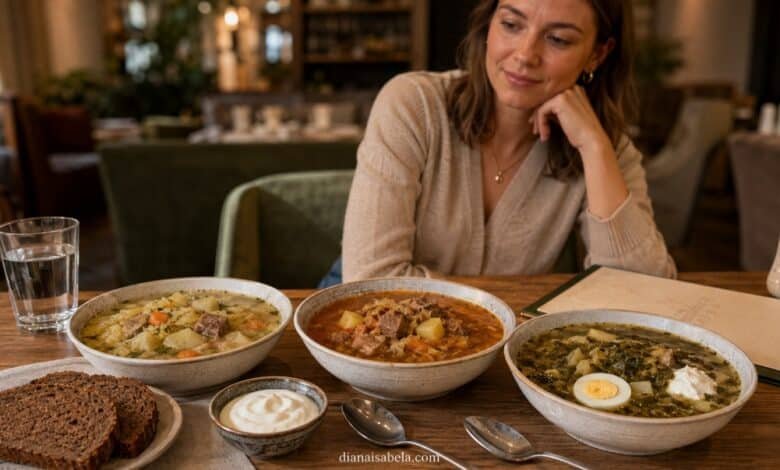
Ordering shchi should not feel like solving a linguistic puzzle before lunch. You see the soup, you want the soup, you order the soup. The only useful complication is that the same name can lead to very different bowls depending on whether the kitchen is cooking with fresh cabbage, sauerkraut or sorrel, and many American menus do not explain that distinction nearly as clearly as hungry people deserve.
One restaurant may serve a mild beef-and-cabbage shchi with potatoes and dill. Another may bring you a darker, tangier bowl built around fermented cabbage. A third may mean green shchi with sorrel, egg and chicken. Then there are Russian and Ukrainian delis where the soup has no permanent menu description at all because the real system is simply: somebody cooked a pot this morning, and regular customers already know to ask.
The easiest way to order well is not to memorize every possible recipe. It is to know which four or five questions actually change what arrives in front of you.
You Do Not Need Perfect Russian to Order Shchi
The Russian word is written щи, and English usually transliterates it as shchi. That spelling looks as though somebody dropped several consonants on the floor and asked us to arrange them before dinner. English speakers often approximate the pronunciation as something close to “shchee,” although the original Russian consonant does not map perfectly onto an ordinary English sound.
The practical lesson is much simpler: do not let pronunciation stop you from ordering. Say the word naturally, point to it on the menu if needed, and move immediately to the part that matters more — finding out what kind of shchi the kitchen is serving.
You may also see the name written as schi, translated as Russian cabbage soup, or described more specifically as sour cabbage soup. At a deli, the label may simply say щи. Recognizing that one word is useful even if the rest of the handwritten sign remains a complete mystery.
If you are still looking for somewhere that serves the dish rather than already standing in front of a menu, start with my Shchi Soup Near Me guide. Once you actually find a kitchen, the problem becomes much easier: identify the style, ask about the broth, and choose the bowl that fits your appetite.
The Most Useful Question Is “What Kind of Shchi Is It?”
I would not start with “Is it authentic?” because that sounds meaningful while telling you surprisingly little about dinner. One family’s familiar shchi may be built around fresh cabbage, another around sauerkraut, and another kitchen may be serving a green sorrel version that looks nothing like the cabbage soup in your imagination. All of them can have real culinary roots without tasting remotely identical.
Instead, ask the practical question: “What kind of shchi do you have today?” If the answer gives you enough detail, stop there. If the staff simply says “cabbage,” ask whether it is fresh cabbage or sauerkraut. If they say “green,” ask whether they mean sorrel. Those small questions will tell you more about the bowl than a long conversation about tradition ever could.
This is the quickest way to understand whether the soup will be mild and vegetable-forward or noticeably tangier from fermented cabbage.
Useful when a menu says only “green soup” or “green shchi.” Sorrel brings a naturally tart leafy flavor that is quite different from cabbage-based versions.
Ask this if meat matters to you. A soup can contain no visible beef or chicken and still be cooked in meat broth.
Some kitchens add it automatically, others serve it separately, and some leave the decision entirely to you.
If you are new to the soup altogether and want the bigger culinary picture first, What Is Shchi Soup? explains the family before you start choosing among individual versions.
Fresh, Sour or Green: Pick the Mood You Actually Want
Fresh-cabbage shchi is generally the easiest introduction for someone who wants a warm brothy soup without pronounced fermentation. The cabbage softens during cooking and brings a gentle vegetable sweetness, while beef, chicken, mushrooms, potatoes or herbs can remain easy to taste. If you already know that sauerkraut is not your favorite thing on Earth, there is absolutely no culinary virtue in forcing yourself to begin with the sour version.
Sour-cabbage shchi is for a different craving. Fermented cabbage gives the whole broth a tangier foundation, which works especially well with rich beef and soft potatoes. If you love pickles, sauerkraut and dishes where acidity is doing real structural work, this is probably the version that will make immediate sense to you. The difference between the two cabbage styles is large enough that I break it down separately in Fresh Cabbage Shchi vs Sour Cabbage Shchi.
Green shchi leaves the cabbage argument almost entirely and heads toward sorrel and other greens. It can be bright, tart and herbal, often with potato and egg, and it may use chicken, beef or a meatless base depending on the kitchen. If that sounds more like your kind of lunch, What Is Green Shchi? explains why the flavor feels so different from the cabbage versions.
Fresh-cabbage shchi is usually the safest choice. Ask what broth the kitchen uses and whether there is beef, chicken or mushrooms.
Look for sauerkraut, sour cabbage or fermented cabbage in the description and expect a more assertive broth.
Ask for green shchi with sorrel and find out whether egg or meat is included.
Ask about beef, meatballs, potato and the broth itself rather than trying to judge richness by color alone.
Vegetarian-Looking Soup Can Still Be Made With Meat Broth
This is probably the most important practical question for anyone who avoids meat. A bowl full of cabbage, carrots, potato, onion and dill can look completely vegetable-based while sitting in beef or chicken stock. Asking only whether the soup “has meat” may not solve the problem, because the person answering might reasonably think you mean visible pieces of meat.
The clearer question is: “Is the broth vegetarian?” That removes the ambiguity immediately. The same applies to green shchi, where sorrel, potato and egg can make the bowl look light and almost garden-like while the broth underneath is chicken-based.
If dairy matters, ask about sour cream separately. Some kitchens place a generous spoonful in the bowl before it reaches the table, while others serve it on the side. If you want to taste the original broth first, asking for sour cream separately is an easy solution and requires no philosophical debate about whether the soup is “supposed” to have it.
Ordering at a Deli Is More About Timing Than Menu Reading
If the staff says they make it only sometimes, ask whether it is usually fresh cabbage, sauerkraut or green shchi, and whether calling earlier in the day is worthwhile. If the drive is long, ask whether they can hold one container. None of this needs to feel formal; it is simply the normal logic of buying food from a kitchen that cooks in batches.
For the full deli method — how to recognize a genuine prepared-food kitchen, what clues are worth trusting and why “not today” is different from “we never make it” — use How to Find Shchi at a Russian or Ukrainian Deli.
Shchi Is One of Those Soups That Makes Takeout Look Sensible
There are dishes that spend twenty minutes in a container becoming a sadder version of themselves. Shchi is not especially vulnerable to this problem. The cabbage, broth, vegetables and meat are already meant to share space, so a ride home usually does far less damage than it would to something dependent on crisp texture or perfect plating.
At a deli, ask whether the soup is sold by cup, pint, quart or weight. Portion terminology varies enough that “one” can mean a modest lunch bowl in one place and tomorrow’s dinner plan in another. If the soup is the main reason you came, buying enough for a second serving is not excessive; it is transportation efficiency dressed as appetite.
Keep sour cream separate when possible and carry bread in its own bag. If fresh herbs come with the order, add them after reheating so they still smell fresh rather than disappearing into the second cooking. Shchi is forgiving, but dill should not be asked to survive unnecessary adversity.
Sour Cream Changes the Bowl More Than People Think
Sour cream is not merely a white decoration floating on top of the soup. It changes texture, temperature and flavor. In a sour-cabbage shchi, the cream softens fermented acidity and adds richness without removing the tang completely. In a milder fresh-cabbage version, it can make the broth feel rounder and more substantial. With green shchi, it calms the leafy tartness of sorrel and works beautifully with potato and egg.
If you are tasting a particular shchi for the first time, I like asking for the sour cream on the side. Try a few spoonfuls without it, then add some. You learn much more about the broth that way, and you can decide whether you prefer the sharper original version or the softer creamy one.
Bread is easier. Dark rye or another substantial loaf is almost never a bad idea with shchi because the soup is brothy and extremely willing to share. If you are ordering a richer bowl with beef and potatoes, bread plus sour cream may be all the support it needs. For more complete lunches and dinner combinations, What to Eat With Shchi covers the pairings without requiring every meal to become a family banquet.
Restaurant Shchi and Deli Shchi Are Two Different Pleasures
A restaurant bowl arrives as a finished idea. The kitchen chooses the portion, the temperature, the garnish and the balance of broth to solids. Sour cream may already be sitting beautifully in the center, and the bread may arrive as part of the meal. If you are trying to understand one chef’s version, that controlled experience can be ideal.
Deli shchi feels more domestic. You take it home, choose the bowl, decide how much sour cream you want, add fresh dill if you have it and perhaps discover that the second serving late that evening is even better than lunch. A quart of soup in the refrigerator has a completely different emotional energy from one restaurant bowl, and for shchi that informality feels entirely appropriate.
Neither is more legitimate. They simply answer different appetites. One is a meal someone finished for you; the other is practically an invitation to make yourself comfortable.
Most Ordering Mistakes Come From Assuming One Word Means Too Much
The first common mistake is assuming that every cabbage soup is shchi. Eastern European cuisines contain many cabbage-based soups, and English translations often simplify names for diners. If the kitchen itself calls the dish shchi or щи, the identification is easy. If the menu says only “cabbage soup,” ask what it is instead of quietly renaming somebody else’s recipe.
The second mistake is assuming that all shchi should taste sour. A fresh-cabbage version can be mild, brothy and only gently acidic, while a green shchi can taste tart for a completely different reason. One bowl does not define the entire soup family, which is why people can have wildly different first impressions and all be talking about shchi.
The third mistake is assuming that green means vegetarian. It does not. Chicken broth, beef, meatballs and egg can all appear in green preparations, so color is not dietary information. The fourth mistake is trusting an old online menu more than the person standing beside today’s soup pot. If a deli rotates soups, the current kitchen will always know more than a photograph from three winters ago.
The easiest rule to remember: ask what gives the soup its character — fresh cabbage, sauerkraut or sorrel — then ask about the broth and meat. After that, sour cream and portion size are the pleasant details.
If the Menu Translation Is Strange, Ingredients Will Rescue You
Shchi often appears in restaurants where several culinary traditions meet, and English wording can become wonderfully unpredictable. A Central Asian restaurant may serve shchi beside lagman, manti and plov. A Ukrainian deli may use a familiar family name that does not match the translation you expected. A Russian-speaking grocery may shorten the label because regular customers know exactly what is in the container.
This is where ingredient questions are better than terminology arguments. Ask whether the soup contains fresh cabbage or sauerkraut, whether green shchi uses sorrel, which broth is underneath it, whether there is beef or chicken, and whether egg or sour cream is part of the serving. Those answers tell you what you are actually about to eat.
I would rather understand the bowl than correct the menu. Food names travel through families, languages and neighborhoods, and they do not always arrive in English wearing perfectly ironed labels.
What I Would Actually Say at the Table
If the menu simply said Shchi, I would ask: “Is it fresh cabbage or sauerkraut?” If the answer were sauerkraut, I would ask whether it was made with beef broth. Then I would probably order sour cream on the side the first time, because I like knowing what the broth tastes like before I make it creamier.
If the menu said Green Shchi, I would ask whether it was sorrel-based and whether the soup contained chicken, beef or meatballs. If the menu already listed sorrel, potato, egg and chicken clearly, I would stop asking questions and allow everybody involved to return to the important work of feeding people.
At a deli, I would simplify it even further: “Do you have shchi today?” If yes, ask which kind. If no, ask when they usually make it. That is enough. Nobody waiting behind you for Olivier salad needs to witness a twelve-part documentary interview.
Once You Know the Four Useful Questions, Ordering Becomes Easy
The intimidating part of shchi is mostly the spelling. The actual choices are ordinary and delicious: fresh cabbage or fermented cabbage, green sorrel or cabbage, meat broth or meatless, sour cream or no sour cream, starter portion or dinner portion. Once those decisions are clear, the rest is simply learning what one particular kitchen does well.
That variation is part of the pleasure. A sour-cabbage bowl with beef can feel deep and wintry, while a chicken sorrel shchi with egg can taste bright enough to belong to spring. Both still make sense under the wider shchi name because this is a soup tradition with room inside it, not a single frozen recipe.
If you are looking specifically across the United States, my Shchi Soup Near Me in the United States guide covers the current geographic search. Once you have found the kitchen, though, the last step is wonderfully low-tech: ask what is in the pot, choose the bowl that sounds good, and eat it while it is hot.
Send Me the Menu Description That Required a Second Question
I am endlessly interested in the little translation moments that happen around food. Maybe your local place calls shchi “sour cabbage soup,” maybe green shchi appears simply as “green soup,” or maybe the menu description is technically understandable while somehow creating three new mysteries. Those details are funny, but they are also useful because they show how real dishes change vocabulary as they move between kitchens and languages.
If you find a restaurant or deli that explains its shchi particularly well, send me the wording. I also want to hear about the practical things people only learn after ordering: whether sour cream arrives separately, which version sells out first, whether the deli has a reliable soup day, what bread belongs beside it, and which second course made the whole meal feel unexpectedly perfect.
Send your finds, family habits and local food stories to me. The more versions of one soup we compare, the less interesting the idea of a single “correct” bowl becomes.
info@dianaisabela.comQuestions About Ordering Shchi
How do you pronounce shchi?
English speakers often approximate shchi as something close to “shchee.” The original Russian word is щи, and its consonant does not map perfectly onto an ordinary English sound. Pointing to the menu is perfectly fine if needed.
What should I ask before ordering shchi?
Ask what kind of shchi is being served, whether it uses fresh cabbage, sauerkraut or sorrel, and what broth or meat it contains. Those questions reveal most of the differences that affect flavor.
How do I order sour cabbage shchi?
Look for sauerkraut, sour cabbage or fermented cabbage in the menu description. If the menu simply says shchi, ask whether the current version is made with sauerkraut.
How do I order green shchi?
Ask whether the green shchi is made with sorrel and whether it contains chicken, beef, meatballs or egg. Green shchi commonly has a bright leafy acidity rather than the fermented flavor of sauerkraut shchi.
Is shchi always made with meat?
No. Shchi can be made with meat, meat broth or meatless ingredients depending on the recipe. If you avoid meat, ask specifically whether the broth is vegetarian rather than checking only for visible meat pieces.
Does shchi come with sour cream?
Often, but not always. Some restaurants place sour cream directly in the bowl while others serve it on the side. Asking for it separately lets you taste the original broth before adding creaminess.
Can I order shchi for takeout?
Yes. Shchi travels and reheats well, so restaurants and prepared-food delis may sell it by the bowl, pint, quart or another container size. Ask for sour cream separately when possible.
What does щи mean on a menu?
Щи is the Russian word commonly transliterated into English as shchi. Seeing щи on a menu or deli label is a useful clue that the dish is being identified as shchi rather than merely as generic cabbage soup.
Is every cabbage soup shchi?
No. Several Eastern European cuisines have cabbage-based soups, and generic English wording can hide those distinctions. If a menu says only cabbage soup, ask how the kitchen identifies the dish and what ingredients it contains.
What should I eat with shchi?
Dark rye bread and sour cream are classic companions. Depending on how rich the soup is, you can also add kotleti, buckwheat, potatoes, dumplings or a simple fresh salad for a fuller meal.