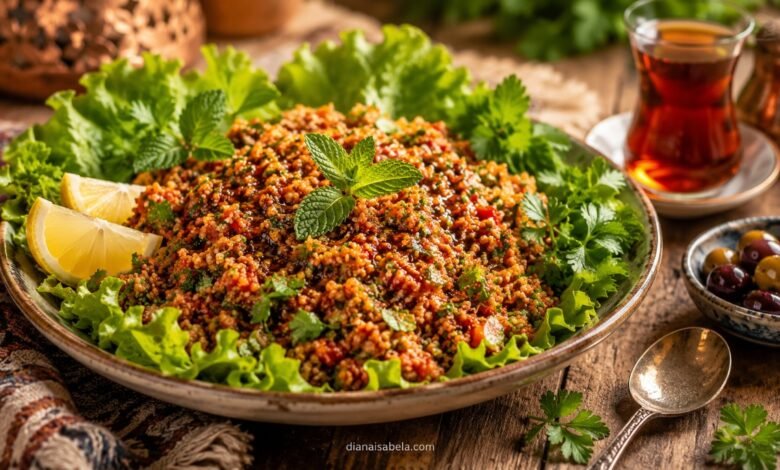
Kısır is one of those dishes that looks simple until the first forkful proves otherwise. At a glance, it is a bowl of reddish bulgur mixed with herbs and vegetables. In practice, a good kısır is bright with lemon, savory from tomato and pepper paste, gently sweet-sour from pomegranate molasses, and fresh enough to work as a light lunch, a mezze plate, a picnic dish, or a side beside grilled food.
This guide explains what kısır is, how it should taste, why fine bulgur matters, how Turkish families and restaurants serve it, and how to tell it apart from tabbouleh and other grain salads. For verified restaurants, current menu prices, and call-ahead advice, use the main Kisir Bulgur Salad Near Me guide.
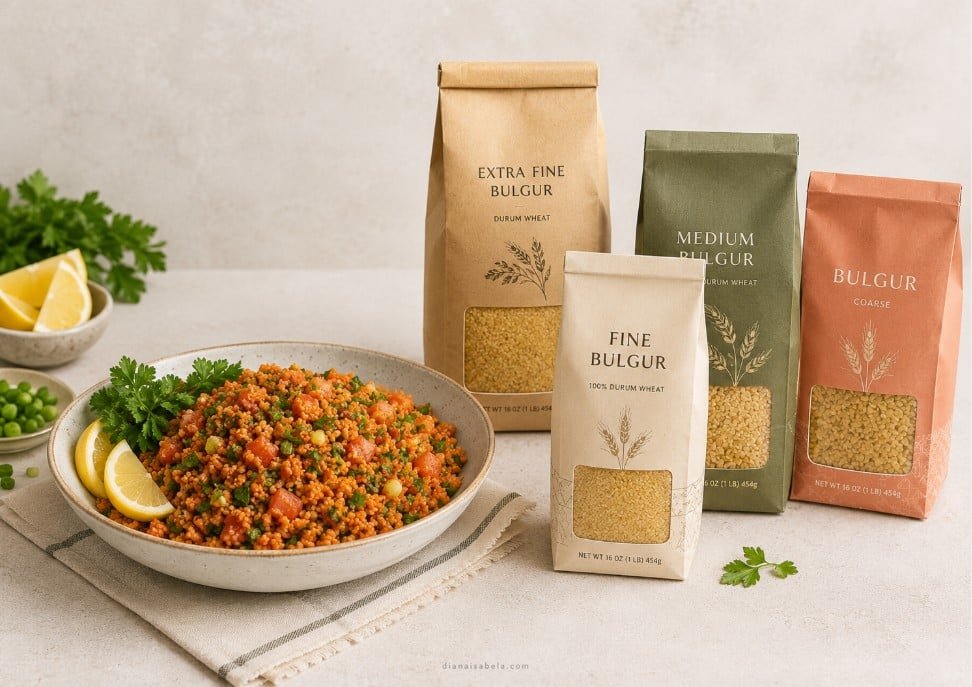
Craving This Salad? Start With the Right Bulgur.
Fine-grain bulgur gives homemade kisir its tender texture and helps every bite absorb the tomato, lemon, herbs and spices.
What kısır actually is
Kısır is a Turkish salad built around fine bulgur, tomato or pepper paste, olive oil, lemon, herbs, and often pomegranate molasses. The dish is usually served cool or at room temperature and may appear as a salad, mezze, side dish, tea-time plate, picnic food, or vegetarian lunch. Its red-orange color comes mainly from tomato paste, red pepper paste, or a combination of the two.
The Turkish spelling is kısır, with a dotless “ı.” English-language menus may simplify the name to kisir. Some restaurants add an explanatory phrase such as “Turkish bulgur salad,” “spicy bulgur salad,” or “fine bulgur salad.” Those descriptions are useful, but they do not fully capture the dish. Kısır is not merely cooked bulgur tossed with tomatoes. The grain is seasoned while it is still warm and absorbent, allowing the paste, oil, acidity, and spices to penetrate rather than sit on the surface.
The role of kısır in Turkish food culture is broader than the word “salad” suggests. It can be placed among small plates at a mezze table, wrapped in lettuce leaves, served beside grilled meat, packed for a picnic, offered during afternoon tea, or prepared in a large bowl for a family gathering. Turkish food writers commonly describe it as a familiar home dish rather than a restaurant-only specialty. That matters when searching for it in the United States: some of the best versions may appear at bakeries, grocery counters, catering kitchens, or community events rather than on a permanent restaurant menu.
Kısır is also a dish of balance. The grain provides body, the paste adds depth and color, lemon gives brightness, pomegranate molasses contributes a dark sweet-sour note, herbs lift the mixture, and scallions or onions add freshness. Aleppo-style pepper, dried mint, cumin, sumac, black pepper, or red pepper flakes may appear depending on the cook. No single ingredient should dominate so strongly that the salad becomes flatly sour, aggressively hot, oily, or paste-heavy.
Although kısır is now widely described online, it remains easy to misidentify. A grain bowl with large bulgur kernels, roasted vegetables, feta, and a creamy dressing may be delicious, but it is not automatically kısır. The traditional identity of the dish comes from the use of fine bulgur and a deeply worked red seasoning mixture, followed by generous herbs and acidity.
What kısır tastes like—and what the texture should feel like
Kısır should taste savory, tart, herbal, and gently spicy, with enough richness from olive oil to carry the flavors without making the salad greasy. The first impression is often lemon and pepper paste. A second bite may reveal pomegranate molasses, dried mint, parsley, scallion, and warm spice. Better versions change slightly as you chew: bright at first, deeper in the middle, then clean and herbaceous at the end.
The texture is just as important as the flavor. Fine bulgur should be fully softened but not turned to paste. Each tiny grain should remain visible, yet the salad should hold together when scooped. A spoonful should feel moist and cohesive rather than wet. Chopped herbs and vegetables should provide small bursts of freshness without making the mixture watery.
Temperature changes the experience. Kısır is usually served cool or at room temperature, not piping hot. Straight from the refrigerator, the olive oil and grain can feel firm and the acidity may seem muted. After resting briefly, the aroma opens, the texture softens, and the lemon and pepper become clearer. That is why a takeout order often tastes better after ten or fifteen minutes outside the refrigerator, provided it has been stored safely.
The dish should not crunch because of underhydrated grain. Fine bulgur is small, but dry centers are still noticeable. It should also not collapse into a dense red mass. Overhydration, too much paste, excessive kneading, or adding watery vegetables too early can erase the fine texture that makes kısır appealing.
Lift a forkful and look closely. The grains should appear tender and separate, while still clinging lightly to the herbs and seasoning. Liquid should not pool at the bottom of the plate.
Spice level varies. Some versions are mild enough for nearly anyone, while southeastern-style or restaurant versions may use hot pepper paste and Aleppo pepper more generously. “Spicy” on an English menu does not always mean chile-hot; it may simply mean strongly seasoned. When ordering for children or spice-sensitive diners, ask whether the kitchen uses sweet pepper paste, hot pepper paste, or both.
Pomegranate molasses deserves special attention because it can transform the entire bowl. A small amount gives kısır a rounded, wine-dark tang that is different from lemon. Too much can make the dish sticky and sweet. Some cooks leave it out entirely and rely on lemon, sumac, or another souring ingredient. Both approaches can be traditional within a household context; the important question is whether the final salad feels balanced.
The ingredients that make kısır recognizable
The defining core of kısır is fine bulgur plus a red seasoning base, fresh herbs, oil, and acidity. The exact list changes from home to home, but a dish missing the grain size, paste, or herb-acid balance will taste more like a generic grain salad than kısır.
Fine bulgur: In Turkish markets, the most useful package may be labeled ince bulgur, köftelik bulgur, fine bulgur, or extra-fine bulgur. This grade softens by soaking and absorbs seasoning readily. Medium and coarse bulgur are better suited to pilaf-like dishes because their larger pieces remain more distinct and require more cooking.
Tomato paste and pepper paste: Tomato paste contributes sweetness, acidity, and deep red color. Turkish red pepper paste, known as biber salçası, adds a fuller pepper flavor and may be mild or hot. Many cooks use both. A kısır made only with tomato paste can still be satisfying, but pepper paste often gives the dish its more distinctive savory warmth.
Olive oil: The oil coats the grains, carries spice aromas, and softens the sharper edges of lemon and pomegranate molasses. Good kısır should feel supple rather than oily. The oil is part of the dressing, not a visible puddle.
Lemon and pomegranate molasses: Lemon brings clean acidity. Pomegranate molasses adds darker fruitiness and a sweet-sour finish. Some recipes use one more heavily than the other. The best proportion depends on the saltiness and intensity of the pastes.
Parsley and scallions: Flat-leaf parsley is the most common fresh herb. Scallions add freshness without the heaviness of large amounts of raw onion. Mint may be added fresh or dried. Dill appears less consistently but can work in lighter versions.
Vegetables: Tomato, cucumber, lettuce, pickles, or peppers may be included. These are not equally universal. Tomato and cucumber release water, so careful cooks often add them shortly before serving. Romaine or another crisp lettuce may be chopped into the salad or used as a scoop.
Spices and seasonings: Salt, black pepper, red pepper flakes, Aleppo-style pepper, dried mint, cumin, and sumac are common possibilities. Garlic appears in some versions but is not essential. The seasoning should support the paste and herbs, not turn kısır into a heavily spiced pilaf.
Substitutions can change the identity of the dish. Quinoa, couscous, cauliflower rice, and cracked wheat are sometimes used in kısır-inspired recipes, but they produce a different texture and should be described clearly. Couscous is pasta, not bulgur. Cracked wheat may not be parboiled and can require a different cooking method. Fine bulgur is made from wheat that has already been cooked, dried, and cracked, which is why it hydrates so efficiently.
Why fine bulgur matters more than almost any other choice
Fine bulgur is the grain that gives kısır its characteristic tender, cohesive texture. The small pieces absorb hot water quickly and take on the seasoning without needing to simmer like rice. This allows the salad to remain fresh and herb-forward instead of tasting like a cooked grain pilaf that has been chilled.
Package terminology can be confusing because grading systems differ by brand. “Fine,” “extra fine,” “No. 1,” “köftelik,” and “ince” may all point toward the correct product. The grains should look much smaller than the coarse bulgur used for pilaf. If the pieces resemble chopped barley or small brown-rice fragments, they are probably too large for the classic texture.
The correct hydration method depends on the exact grain. Some fine bulgur needs only enough boiling water to cover it. Some brands soften with a one-to-one ratio. Others require slightly more. The safest approach is to add less water first, cover the bowl, and check the grain after it rests. Additional hot water can be added by the spoonful; excess water is harder to remove.
Fine bulgur also affects flavor distribution. Tomato and pepper paste can be worked through thousands of tiny grains, creating a uniform red color and savory base. Lemon and olive oil then coat the expanded surface area. In coarse bulgur, the same amount of dressing may sit between the kernels rather than becoming part of them.
This does not mean every grain must disappear. Good kısır still has structure. The cook hydrates the bulgur until tender, mixes in the paste while the grain is receptive, then folds in delicate herbs and vegetables later. If everything is added at once and stirred aggressively, the salad can become compressed and dull.
Look for a package labeled fine bulgur, extra-fine bulgur, ince bulgur, or köftelik bulgur. Avoid coarse pilaf bulgur when the goal is classic kısır.
Shopping location matters less than grain grade. Fine bulgur may be stocked at Turkish, Middle Eastern, Mediterranean, Armenian, Kurdish, Persian, or international grocery stores. It can also appear in the global-food aisle of a large supermarket. When buying online, examine the product description and grain image instead of relying only on the word “bulgur.”
Regional styles, family habits, and why two authentic bowls can taste different
There is no single bowl of kısır that represents every Turkish kitchen. Turkey’s regional food traditions, household preferences, ingredient availability, and occasion all influence the final salad. One version may be deep red and peppery; another may be lighter, greener, and sharply lemony. Both can belong to the same culinary tradition.
Versions associated with southern and southeastern flavors often lean toward pepper paste, pomegranate molasses, cumin, sumac, and more pronounced chile warmth. A family in another region may emphasize tomato paste, lemon, parsley, and fresh vegetables. Some cooks use finely chopped lettuce inside the mixture. Others serve crisp leaves alongside the bowl so diners can scoop the kısır by hand.
The amount of fresh produce also varies. A herb-heavy version can feel light and refreshing, while a grain-forward bowl is more filling. Tomato may be diced into the salad, grated into the seasoning, or omitted to prevent excess moisture. Cucumber may add freshness, yet many cooks avoid it because it can water down leftovers.
Tea-time kısır may be served with pastries, börek, stuffed grape leaves, cakes, cookies, and tea as part of a larger social spread. Picnic kısır may be packed more firmly and made slightly drier so it travels well. Restaurant kısır is often portioned as a mezze and may use more oil or paste for visual richness. A catered tray may be garnished heavily with lettuce, lemon, pickles, or pomegranate seeds.
Modern interpretations introduce roasted vegetables, pomegranate arils, walnuts, herbs beyond parsley and mint, or unusual dressings. These additions can be excellent, but they should not erase the recognizable center of the dish. The question is not whether every variation follows one rigid formula. The question is whether the eater can still recognize fine bulgur transformed by pepper-tomato seasoning, herbs, and acidity.
Household memory is especially important with kısır. It is the kind of dish people compare to a parent’s, aunt’s, neighbor’s, or hometown version. For that reason, claims such as “the only authentic recipe” should be treated cautiously. A better description explains the style: pepper-forward, lemony, herb-heavy, pomegranate-rich, mild, spicy, or vegetable-heavy.
Kısır vs. tabbouleh—and the similar dishes that cause menu confusion
The main difference between kısır and tabbouleh is the center of gravity: kısır is primarily a seasoned bulgur salad, while modern Levantine tabbouleh is primarily a parsley salad with a smaller amount of bulgur. Both may include tomato, lemon, scallion, olive oil, and herbs, which explains the frequent comparison. Their flavor, color, and texture are nevertheless distinct.
Kısır is usually reddish because tomato paste and pepper paste are worked through the grain. Tabbouleh is usually green because chopped parsley dominates the bowl. Kısır often includes pomegranate molasses and pepper paste; tabbouleh more commonly emphasizes parsley, mint, lemon, tomato, and olive oil. Kısır feels more substantial and cohesive. Tabbouleh feels more herbaceous and loose.
The phrase “Turkish tabbouleh” can help a new diner understand the broad category, but it can also create the wrong expectation. Someone expecting a parsley-dominant salad may be surprised by a rich, red, grain-forward bowl. A menu that uses “Turkish tabbouleh” should ideally mention tomato or pepper paste and fine bulgur.
Kısır vs. eetch: Armenian eetch is another red bulgur salad with tomato, herbs, and acidity. The dishes can look very similar and may reflect overlapping regional food traditions. Eetch often has its own family and community variations. Restaurant labels should be respected rather than treating one as merely a renamed version of the other.
Kısır vs. mercimek köftesi: Turkish red lentil and bulgur patties use fine bulgur and some similar seasonings, but the mixture includes cooked red lentils and is shaped into individual pieces. Kısır remains a loose salad served by the spoonful.
Kısır vs. çiğ köfte: Meatless çiğ köfte also uses fine bulgur, pepper paste, spices, and pomegranate molasses, yet it is kneaded much more intensely and shaped. It is generally denser, spicier, and more elastic. Kısır should feel lighter and contain more visible herbs and vegetables.
Kısır vs. generic bulgur salad: A generic bulgur salad can contain roasted vegetables, cheese, beans, vinaigrette, or any number of ingredients. Kısır refers to a specific Turkish seasoning approach and texture. The name should communicate more than the presence of bulgur.
How kısır is served and what belongs beside it
Kısır can function as a mezze, side dish, light main course, picnic food, or part of a Turkish tea-time spread. The right accompaniments depend on whether the meal should feel light, filling, vegetarian, or centered on grilled food.
For a first tasting, a small bowl of kısır with lettuce leaves, lemon, and one creamy mezze creates the clearest experience. Lettuce adds crunch and can be used as a scoop. Hummus or a yogurt-based dip softens the acidity. Warm bread is useful, though kısır itself already contains wheat and does not require bread to feel complete.
On a mezze table, kısır works with stuffed grape leaves, olives, ezme, hummus, eggplant salads, cacık, roasted peppers, pickles, and fresh tomato-cucumber salad. Avoid ordering only sharp, acidic dishes. Pairing kısır with a creamy or smoky plate gives the table contrast.
Beside grilled food, kısır can replace rice or another starch. It pairs naturally with chicken şiş, lamb kebab, köfte, grilled vegetables, fish, or roasted eggplant. The lemon and herbs refresh richer foods, while the bulgur makes the plate more substantial than a leafy salad alone.
For a vegetarian lunch, combine a generous portion of kısır with hummus, stuffed grape leaves, roasted eggplant, olives, and salad. For a vegan order, confirm that no butter, yogurt sauce, or meat-based accompaniment is mixed into a restaurant platter. Traditional kısır itself is commonly plant-based, but service combinations vary.
Drinks should support rather than overwhelm the salad. Turkish tea fits the social tea-time context. Ayran can cool a spicy version, though it is dairy-based. Sparkling water with lemon works well with a tart bowl. A lightly tannic tea or crisp non-sweet drink is usually more comfortable than a sugary beverage.
Portion language can be misleading. A mezze order may be only a few spoonfuls. A deli container may hold enough for two or three side servings. A catering tray can serve a group, but the quoted number often assumes kısır is one dish among several. When ordering, ask whether the portion is intended as an individual side, a shared appetizer, or part of a larger spread.
One shared kısır, one creamy mezze, one vegetable dish, warm bread, and either grilled food or stuffed grape leaves. This gives contrast without making every plate taste similar.
Kısır generally travels well because it is served cool and has no fragile crisp crust. The main risk is water from tomatoes, cucumber, or lettuce. For takeout, ask whether fresh garnishes can be packed separately. At home, stir gently before serving and add fresh lemon only after tasting; the salad may already be acidic enough.
How to recognize a well-made bowl
Good kısır has tender fine grains, even seasoning, fresh herbs, controlled moisture, and a balanced sweet-sour-savory finish. Appearance alone is not enough. A very red bowl can still taste flat if color comes from excessive tomato paste without enough lemon, pepper, herbs, or oil.
Start with the grain. The bulgur should be tender throughout and should not crunch. At the same time, the salad should not resemble mashed grain. Tiny pieces should remain visible, especially around the edges of a forkful.
Look at the color. A natural kısır color ranges from warm orange-red to brick red depending on the pastes. A dark mahogany tone may indicate more pomegranate molasses or pepper paste. The herbs should remain green rather than wilted black. Fresh garnish cannot rescue stale, gray-green herbs mixed through the bowl.
Notice the moisture. Kısır should hold together lightly, but liquid should not separate at the bottom. Watery salad may result from tomatoes, cucumber, or lettuce sitting too long. A very dry bowl may have been refrigerated uncovered or made with insufficient oil and acidity.
Taste for sequence rather than intensity. A good forkful may begin with lemon, move into pepper and tomato, then finish with parsley, mint, and pomegranate. If one ingredient overwhelms every bite, the salad loses complexity. Too much pomegranate molasses makes it sweet and sticky; too much lemon makes it harsh; too much paste makes it dense and metallic; too much oil makes it heavy.
Freshness is evident in the herbs and onions. Parsley should smell clean and green. Scallions should taste crisp, not sulfurous or slimy. Tomato pieces should hold their shape. Lettuce, when included, should still offer some bite.
Positive signs: tender grain, bright herbs, no pooled liquid, layered acidity, gentle chile warmth, and a clean finish.
Warning signs: crunchy dry grain, mushy texture, excessive sweetness, stale herbs, separated oil, or a watery bottom.
Restaurant style can be richer than home style. More paste and oil help the color remain attractive under refrigeration and service lighting. That does not automatically mean the dish is poor. The test is whether the richness still feels balanced and whether the grain retains freshness.
Dietary information, gluten, and common allergen questions
Traditional kısır is often vegan and dairy-free, but it is not gluten-free because bulgur is wheat. Restaurant preparation can differ, and cross-contact may occur in kitchens that handle bread, dairy, nuts, sesame, or other allergens.
Vegan and vegetarian: The basic dish commonly contains bulgur, vegetables, herbs, olive oil, pastes, lemon, spices, and pomegranate molasses. Those ingredients are plant-based. However, a restaurant may serve kısır with yogurt, meat, cheese, or a non-vegan platter component. Ask about the entire order, not only the salad.
Gluten: Bulgur is made from wheat and contains gluten. A quinoa or cauliflower version may be gluten-free, but it should not be assumed safe unless the kitchen confirms ingredients and cross-contact procedures. Shared prep surfaces and utensils matter for people with celiac disease or severe sensitivity.
Dairy: Dairy is not normally required in kısır. Butter is also uncommon in the classic salad because olive oil is standard. Still, individual kitchens may change recipes or add a yogurt garnish.
Nuts and sesame: Nuts are not essential, but walnuts may appear in modern or regional variations. Sesame may appear indirectly through nearby hummus, tahini, bread, or shared mezze preparation. Confirm directly when allergies are involved.
Alliums: Scallions, onion, and sometimes garlic are common. Diners avoiding alliums should not assume they can simply remove visible onion because the seasoning may already contain it.
Halal: The traditional ingredients are generally compatible with halal eating, but restaurant certification and preparation standards are separate questions. Ask the business directly if formal halal sourcing or kitchen practices matter.
Oil and sodium: Kısır can contain a noticeable amount of olive oil and salt because it is often seasoned as part of a mezze spread. Pepper paste, tomato paste, pickles, and commercial pomegranate molasses can contribute sodium or sugar. A restaurant portion should not be treated as nutritionally identical to a home recipe.
A note from Diana
Kısır is easy to underestimate because it does not arrive sizzling, layered with cheese, or covered in an elaborate sauce. Its appeal is quieter: a forkful can be fresh, spicy, tart, filling, and light at the same time. When I compare versions, I pay attention to whether the grain still has life, whether the herbs taste freshly cut, and whether the acidity makes me want another bite instead of tiring my palate.
For a first order, I would choose a straightforward version before trying a beet variation, grain substitution, or oversized modern bowl. The classic profile makes every later comparison more useful. And when no nearby restaurant lists it, kısır is one of the rare dishes that can move successfully from restaurant search to home kitchen without requiring specialized equipment.
What is kısır?
Kısır is a Turkish salad made primarily with fine bulgur, tomato or pepper paste, olive oil, lemon, herbs, and often pomegranate molasses. It is commonly served cool or at room temperature as a mezze, side dish, picnic food, or light meal.
How do you pronounce kısır?
The Turkish word kısır is commonly approximated in English as kuh-SUHR or kuh-SUR. The Turkish dotless ı does not sound exactly like the English letter i, so pronunciations vary when the word is written as kisir.
Is kısır spicy?
Kısır can be mild or moderately spicy. The heat depends on whether the cook uses sweet pepper paste, hot pepper paste, Aleppo-style pepper, or red pepper flakes. A menu may call it spicy even when the flavor is more deeply seasoned than chile-hot.
Is kısır served hot or cold?
Kısır is usually served cool or at room temperature. It is not normally served piping hot. A refrigerated portion often tastes better after resting briefly so the olive oil softens and the herb and lemon aromas become clearer.
What kind of bulgur is best for kısır?
Fine or extra-fine bulgur is best for classic kısır. Packages may also be labeled ince bulgur or köftelik bulgur. Medium and coarse bulgur produce a firmer pilaf-like texture and usually require more cooking.
What is the difference between kısır and tabbouleh?
Kısır is a red, grain-forward Turkish salad seasoned with tomato or pepper paste and often pomegranate molasses. Modern Levantine tabbouleh is greener and parsley-forward, with bulgur playing a smaller supporting role.
Is kısır vegan?
Traditional kısır is often vegan because it is based on bulgur, vegetables, herbs, olive oil, lemon, and plant-based seasonings. Restaurant platters may include yogurt, cheese, or meat, so confirm the complete preparation when necessary.
Is kısır gluten-free?
No. Bulgur is wheat and contains gluten. Quinoa or cauliflower versions may be gluten-free alternatives, but they are adaptations and require direct confirmation about ingredients and kitchen cross-contact.
What should I serve with kısır?
Kısır pairs well with lettuce leaves, hummus, stuffed grape leaves, olives, eggplant dishes, yogurt dips, warm bread, grilled vegetables, chicken şiş, kebabs, köfte, or fish. A creamy or smoky mezze balances its lemony, peppery flavor.
Where can I find kısır near me?
Search Turkish restaurants, bakery-cafés, Mediterranean grocery counters, catering kitchens, and prepared-food businesses. Menus may list it as kisir, kısır, Turkish bulgur salad, spicy bulgur salad, or Turkish tabbouleh. The main Kisir Bulgur Salad Near Me guide on DianaIsabela.com includes verified menu examples and call-ahead advice.