Shchi Recipe: A Deeply Comforting Cabbage Soup You Can Make Fresh or Sour

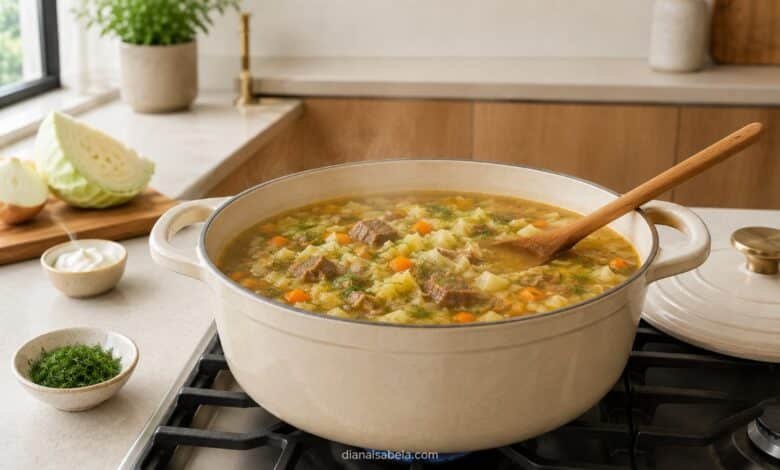
Shchi is one of those soups that rewards restraint. You do not need fifteen spices, a blender, three pans or the sort of garnish that requires tweezers. You need good broth, cabbage, onion, carrot, potato if you like it, enough time for the vegetables to stop tasting like strangers, and the discipline not to keep adding things simply because the kitchen contains them.
This version begins with fresh cabbage because it gives you the clearest introduction to the soup: golden beef broth, tender cabbage, vegetables and small pieces of beef, finished with dill and sour cream at the table. Then I will show you exactly how I would turn the same basic idea toward sour shchi with sauerkraut, because those two bowls share a name and still manage to have very different personalities.
The recipe is intentionally generous. Shchi is excellent the next day, and it freezes well enough that cooking a small nervous saucepan feels unnecessarily cautious.
A Good Shchi Recipe Starts With the Broth, Not the Garnish
The goal is a broth that tastes savory enough to carry cabbage without becoming greasy. Beef gives the soup the deepest traditional comfort-food character, especially if you simmer a piece of chuck or another stewing cut until tender and use that cooking liquid as the base. Chicken works too, and vegetable or mushroom broth can make an excellent meatless version.
For the fresh-cabbage recipe below, I want the cabbage to soften without disappearing, the potato to remain intact, and the carrots and onions to enrich the broth rather than turning the soup sweet. Sour cream and dill come at the end because both are more interesting when you can still taste them.
If you have never made or eaten shchi before, this broader look at what actually belongs to the shchi family explains why there is no single rigid recipe hiding behind the name.
Ingredients for Classic Fresh-Cabbage Shchi
Makes: about 6 generous servings
- 1½ lb / 680 g beef chuck or another stewing beef cut
- 10 cups / 2.4 liters water, or enough to comfortably cover the beef and build the broth
- 1 medium bay leaf
- 1 medium yellow onion, finely chopped
- 1 medium carrot, grated or finely sliced
- 1½ tbsp neutral cooking oil or a small amount of rendered beef fat
- 1½ lb / 680 g fresh green or white cabbage, thinly sliced
- 3 medium potatoes, peeled and cut into bite-size pieces
- 2 small garlic cloves, finely minced
- 1 to 2 tbsp chopped fresh dill, plus more for serving
- Salt, added gradually to taste
- Freshly ground black pepper, to taste
- Sour cream, for serving
- Dark rye bread, for serving
If using ready-made unsalted or lightly salted beef broth instead of making broth from the beef, use roughly 8 to 9 cups / 1.9 to 2.1 liters and simmer the beef directly in it until tender.
How to Make Shchi
Build the beef broth
Place the beef in a large soup pot and add the water. Bring it gradually to a simmer rather than attacking it with a violent boil. Skim any foam that collects on the surface, add the bay leaf, then keep the broth at a gentle simmer until the beef is tender, usually around 1½ to 2 hours depending on the cut and size.
Once the meat is tender, remove it temporarily and keep the broth hot. Cut or pull the beef into comfortable spoon-size pieces. If the broth has an excessive amount of fat floating on top, skim some away, but do not obsessively remove every trace; a little richness is part of why beef broth tastes like beef broth.
Cook the onion and carrot separately
Heat the oil in a skillet over medium heat. Add the onion and cook until softened and translucent, then add the carrot. Let both cook gently until they smell sweet and aromatic without browning aggressively.
This small step matters because raw onion dropped straight into broth tastes different from onion that has had time to soften in fat. We are not trying to caramelize it into French onion soup; we simply want to give the aromatics a head start.
Add the potatoes to the broth
Bring the broth back to a gentle simmer and add the potatoes. Cook for about 7 to 10 minutes before the cabbage enters, depending on how large the pieces are. They should begin softening but should not be completely cooked yet.
Add the fresh cabbage
Add the sliced cabbage in batches if the pot looks alarmingly full. Fresh cabbage loses volume quickly once it meets hot broth, so what initially appears to be an agricultural mistake will soon look like soup.
Simmer until the cabbage becomes tender but still recognizable, usually another 10 to 15 minutes. Very young cabbage may need less time; tougher winter cabbage may need a little longer.
Return the aromatics and beef
Add the cooked onion and carrot along with the beef pieces. Let everything simmer together for another 5 to 10 minutes so the broth, cabbage, potato and meat begin tasting like one dish rather than several ingredients sharing accommodation.
Add garlic and season carefully
Stir in the minced garlic near the end of cooking so its aroma remains noticeable. Add salt gradually and taste between additions. Beef broth, especially if you began with purchased stock, may already contain enough sodium that enthusiastic early seasoning becomes a regret later.
Add black pepper according to taste. I prefer it present but not dominant; shchi is about cabbage and broth, not proving that the pepper grinder works.
Let the soup settle
Turn off the heat, add some of the fresh dill and let the soup rest covered for 10 to 15 minutes before serving. This short pause allows the flavor to settle and saves everyone from burning their mouth because dinner smelled too good to wait.
Serve it simply
Ladle the shchi into bowls with a fair balance of broth, cabbage, potato and beef. Add fresh dill and a restrained spoonful of sour cream if you want it. Serve dark rye bread alongside and let the soup remain recognizable beneath its garnish.
Diana’s Kitchen Rule: Do Not Rush the Broth and Then Overcook the Cabbage
Those two mistakes pull shchi in opposite bad directions. A rushed beef broth tastes thin, so people compensate with salt, seasoning or too much garnish. Overcooked cabbage then loses its shape and develops a heavier cooked-cabbage aroma, which makes an otherwise elegant soup feel tired.
Give the beef enough time first. Add the vegetables later according to how quickly they cook. Potatoes need longer than shredded cabbage; fresh dill needs almost no cooking at all. Once you start treating the ingredients according to their actual behavior instead of throwing everything into one pot at the same time, the soup becomes much easier.
This is one of the cooking lessons my father drilled into me long before I had language for it: a soup is not improved by giving every ingredient the same amount of heat. Timing is seasoning too.
How to Turn This Into Sour Shchi
For sour shchi, replace most or all of the fresh cabbage with sauerkraut. I like using roughly 1¼ to 1½ lb / 570 to 680 g sauerkraut for this amount of broth, but the strength of the sauerkraut matters as much as the weight. Taste it before it goes into the pot.
If the sauerkraut is extremely salty or aggressively sour, you can drain it and, if necessary, rinse a small portion briefly. I would not wash all the flavor away automatically. Fermentation is the point. The goal is to control intensity, not transform sauerkraut back into confused cabbage.
Add the sauerkraut after the potatoes have begun cooking. Because fermented cabbage can remain pleasantly textured through a longer simmer, I generally give sour shchi a little more time than delicate fresh-cabbage shchi. Let the sauerkraut cook into the broth for around 20 to 30 minutes, then return the beef and aromatics and finish seasoning only after you taste the fully combined soup.
Be particularly cautious with salt. Sauerkraut already contains it, and some of its brine may enter the pot. If you want a clearer understanding of why these two versions behave so differently, this is my side-by-side look at what fresh and fermented cabbage do to the same soup idea.
Which Broth Makes the Best Shchi?
There is no one answer, but there is a hierarchy of mood. Beef broth makes the deepest, most cold-weather version. Chicken broth makes the soup gentler. Mushroom broth can make a meatless shchi surprisingly serious, especially when paired with sauerkraut. Vegetable broth works too, but because the recipe is so simple, a weak vegetable broth remains weak after cabbage enters it.
For beef shchi, chuck is forgiving because long simmering turns it tender and gives the broth time to develop. Short ribs can create an even richer base, though they also bring more fat. I would skim excess fat rather than remove all of it.
If using ready-made broth, choose one you would be willing to drink on its own. This sounds dramatic until you remember that broth is most of the soup.
How Thin Should You Slice the Cabbage?
Thin enough to become tender on the spoon, but not so thin that it dissolves into threads. I like ribbons roughly ¼ inch / 6 mm wide for mature cabbage, slightly wider if the cabbage is very young and tender.
Very thick cabbage pieces need longer cooking and can dominate every spoonful. Extremely fine shreds disappear too easily and make the broth feel cluttered rather than substantial. Somewhere in the middle gives you that satisfying soft leafiness that makes shchi feel like cabbage soup rather than broth decorated with vegetables.
Fresh cabbage should also go into the pot later than many people expect. Once it is tender, more cooking is not automatically improvement.
Should You Fry the Cabbage First?
You can, but I do not think you need to for this version. Lightly sautéing cabbage before adding broth can deepen sweetness and create a more roasted vegetable flavor, which is lovely when that is the effect you want. For a cleaner traditional-style broth, I prefer adding fresh cabbage directly to the soup.
Sauerkraut is different. Some cooks gently stew or sauté it before it joins the broth, particularly when they want a deeper sour shchi. That can create a richer flavor, but it also adds another step and more fat. The straightforward version above already gives you plenty of fermented character.
Potatoes Are Optional, but They Make the Soup Easier to Love
Potatoes soften the broth and make the bowl feel like a meal. In fresh shchi they provide substance without competing with cabbage. In sour shchi they are even more useful because their mild starchiness balances fermented acidity.
Choose a potato that holds together reasonably well in soup and cut it into pieces small enough to fit comfortably on a spoon. If you plan to freeze a large batch, remember that cooked potato may become softer or grainier after thawing. I go into that issue in my practical guide to freezing and reheating extra portions.
If you dislike potato in shchi, leave it out. The cabbage police have not been notified.
Does Shchi Need Tomato?
No. This fresh version does not need tomato at all. A little tomato can appear in some household recipes and can add sweetness, color and acidity, but it is not required for the soup to become shchi.
I prefer leaving it out here because the golden broth and cabbage are easier to understand without another strong flavor stepping in. If you do add tomato, keep it restrained enough that the soup does not drift toward tomato cabbage soup and make you wonder what happened to the original plan.
Does Shchi Need Garlic?
Not absolutely, but I like a small amount near the end. Two modest cloves in a large pot add warmth without making the soup taste primarily of garlic. Add them too early and their aroma disappears into the long simmer; add an entire head at the end and nobody will remember we were discussing cabbage.
This is one of those ingredients where household preference matters more than doctrine. If your family never uses it, the soup can still be completely convincing.
Seasoning Shchi Is Mostly About Knowing When to Stop
Wait until the broth, meat and cabbage have cooked together before deciding how much salt the pot needs. This is especially important with sauerkraut or prepared broth.
Enough to warm the broth, not enough to make every spoonful taste like pepper soup.
Fresh dill has more aroma when it has not spent half an hour boiling itself into anonymity.
If you want true sour-cabbage character, use sauerkraut. Vinegar can adjust acidity, but it does not recreate fermented cabbage.
What If the Soup Tastes Flat?
First, ask whether it actually needs salt. Flatness and low salt can feel similar, but they are not always the same problem. A weak broth may need more time or a little reduction. Fresh cabbage may need another few minutes to integrate. Sour shchi may need more sauerkraut character rather than more salt.
A spoonful of sour cream can make the finished bowl feel richer, but it should not be used to hide a broth that never developed. Fresh dill can restore brightness. Black pepper can add warmth. What I would not do is start throwing random seasonings into the pot until the original soup becomes unrecognizable.
My favorite correction order: taste the broth, check the salt, check the cabbage, check the acidity, then decide whether anything actually needs fixing. Panic seasoning is rarely elegant.
What If Sour Shchi Is Too Sour?
Add balance rather than trying to erase the sauerkraut. More broth can dilute excessive acidity. Potato can soften the perception of sourness. A small amount of carrot or onion sweetness helps too. Sour cream at the table rounds the final bowl particularly well.
I would avoid dumping sugar into the pot unless a specific recipe calls for it. A tiny amount can technically change balance, but it is easy to move from “less sour” to “why is my cabbage soup sweet?” before you realize what happened.
The other possibility is that the soup is exactly as sour as intended and you simply prefer fresh shchi. That is allowed. This sensory guide to mild, fermented and green shchi can help you identify which style actually matches your palate.
Can You Make Shchi Without Meat?
Absolutely. Replace the beef broth with a strong mushroom or vegetable broth and leave the beef out. Mushrooms work especially well because they add savory depth that makes a meatless bowl feel much more complete.
For fresh shchi, I would sauté mushrooms with the onion and carrot before adding them to the broth. For sour shchi, mushrooms and sauerkraut are already such good partners that the soup barely notices meat has left the building.
Serve with sour cream if dairy is appropriate, or keep it fully plant-based without it. The soup does not need meat to justify itself.
Can You Make Shchi With Chicken?
Yes, and the result is noticeably lighter. Chicken thighs make a particularly good broth because they remain tender and provide more flavor than extremely lean breast meat. Simmer them until cooked and tender, remove the meat, strain or skim the broth as needed, then continue with the vegetables.
Fresh cabbage works beautifully with chicken because neither overwhelms the other. Green shchi also pairs naturally with chicken, though that sorrel-based version is its own direction. If you want to understand that branch before adapting this recipe, my guide to the sorrel-based bowl explains what makes it different.
How Long Should Shchi Cook?
If you are making beef broth from scratch, the meat is what requires patience. The vegetable stage itself is relatively quick once the broth is ready. Potatoes may need around 15 to 20 minutes total, cabbage often 10 to 15 minutes depending on maturity and thickness, and the final combined simmer does not need to last forever.
Sour shchi can tolerate a somewhat longer simmer because sauerkraut is already softened by fermentation and often benefits from spending more time with the broth. Even then, I would not boil the soup aggressively. Gentle simmering develops flavor without turning the pot into a washing machine.
Is Shchi Better the Next Day?
It can be. Once the soup rests overnight, broth, cabbage, meat and aromatics taste more integrated. Sour shchi especially can deepen because the fermented cabbage continues sharing its character with the liquid.
Fresh shchi loses a little of the just-cooked freshness of the cabbage but gains cohesion. I would happily cook it one day ahead for lunch or dinner the next day, especially if I knew the first evening would otherwise involve trying to serve a hot soup while everyone asks whether it is ready every forty seconds.
How I Like to Serve Shchi
Put sour cream on the table rather than deciding for everyone. Add fresh dill after the soup reaches the bowl. Serve good dark rye bread alongside. That alone is enough for a satisfying meal if the shchi contains beef and potato.
For a bigger dinner, fresh-cabbage shchi can be followed by kotleti, buckwheat, dumplings or roasted meat because the soup itself is relatively gentle. Sour shchi is stronger and may need less help. A fresh cucumber-and-tomato salad can be more useful than another heavy side because it changes the texture and temperature of the meal.
I put those combinations together in my guide to building dinner around the bowl without turning the table into a buffet.
How Much Sour Cream Should Go in the Bowl?
As much as makes the soup better for you, but I would begin with a tablespoon rather than burying the surface. Sour cream softens acidity, adds richness and makes a clear broth feel fuller. It is especially good with sour shchi and green shchi.
Taste the soup first. Then stir in the cream. The before-and-after difference is part of the fun, and you actually learn what the broth tastes like before dairy edits it.
How to Store Leftover Shchi
Cool leftovers promptly and refrigerate them in covered containers. Shchi reheats particularly well because its ingredients are already supposed to be soft and integrated rather than crisp.
If you know you made far too much, freeze some early rather than waiting until everyone has eaten cabbage soup for three days and started avoiding eye contact with the refrigerator. Freeze in practical meal-sized portions, preferably before adding sour cream.
What Makes This Recipe Shchi Rather Than Generic Cabbage Soup?
The honest answer is not one secret ingredient. It is the combination of a broth-based soup, cabbage as the central vegetable in the classic version, familiar Russian shchi technique and the fresh-versus-fermented distinction that shapes so much of the dish’s identity.
Other cuisines have excellent cabbage soups using sauerkraut, smoked pork, sausage, tomato, beans and other ingredients. They do not become shchi because their ingredient lists overlap. I unpack that distinction in my look at where shchi sits inside the much larger world of cabbage soups.
And No, It Is Not Borscht Without Beets
Borscht and shchi may share cabbage, potatoes, carrot, onion, meat, dill and sour cream, which makes them look oddly related on paper. In the bowl, the familiar red form of borscht is organized around beetroot and its earthy sweetness. Shchi is not.
If you add beets to this recipe until the broth becomes ruby and beet flavor begins driving the soup, you have changed the culinary conversation. My comparison of the two soups by flavor rather than ingredient overlap explains why that distinction matters more than color alone.
Should You Make Fresh or Sour Shchi First?
If you have never tasted shchi and want to understand the basic broth-and-cabbage relationship, I would make the fresh version first. It is calmer, cleaner and gives you a better sense of what the broth, vegetables and cabbage are doing without fermentation taking control.
If you already love sauerkraut and sour soups, skip the gentle introduction and make the sour version. Beef, potato, fermented cabbage, rye and sour cream are a combination that understands cold weather better than most humans do.
If you are trying to decide before buying ingredients, the same questions I use for choosing a restaurant bowl work surprisingly well at home too: fresh or fermented cabbage, what broth, how much meat, and how sour do you actually want dinner?
What If You Would Rather Taste Shchi Before Cooking a Whole Pot?
That is completely reasonable. Soup recipes look easy until you discover you have made six servings of something whose main ingredient you were emotionally uncertain about.
If you can find a Russian, Ukrainian or broader Eastern European restaurant or prepared-food kitchen serving shchi, try a bowl first. Ask whether it is fresh-cabbage or sour-cabbage so you know which recipe direction you are actually tasting.
If you need somewhere to begin looking, this is where I collect the broader search for places serving shchi.
My Favorite Part of This Recipe Is What It Does Not Need
It does not need to be spectacular. It does not need a long spice list, a complicated garnish or an ingredient flown across three borders. The recipe succeeds when broth tastes like broth, cabbage tastes like cabbage, meat is tender and the vegetables have cooked long enough to become part of the same story.
That simplicity is harder than it looks because there is nowhere for mediocre stock or overcooked cabbage to hide. But once the pot is balanced, the soup feels effortless in exactly the way good home food should.
Make the fresh version first. Make the sour one next. Then decide which personality belongs in your kitchen more often.
Tell Me What Your Pot of Shchi Refuses to Compromise On
This is where I expect family recipes to become opinionated. Maybe your cabbage goes in much earlier. Maybe potatoes are essential or absolutely forbidden. Perhaps beef belongs in every pot, perhaps mushrooms do all the work, or perhaps your family would consider my amount of dill emotionally restrained.
I am especially curious about the fresh-versus-sour divide. If your family makes sauerkraut shchi, tell me whether the cabbage is rinsed, whether any brine goes into the broth, how long the soup rests, and whether everyone agrees it tastes better the next day. I suspect the last question alone could occupy several generations.
If you cook this version or have a family variation worth sharing, send me the details at the address below. And if you know a restaurant, deli or neighborhood kitchen serving an exceptional bowl, send the city and place too. I am always interested in the small techniques that turn cabbage and broth into something people remember.
info@dianaisabela.comQuestions About Making Shchi
What is shchi made of?
Classic shchi commonly combines cabbage, broth, onion and carrot, often with potatoes, beef or other meat, herbs and sour cream for serving. Fresh cabbage makes a milder version, while sauerkraut creates sour shchi.
Can I make shchi with fresh cabbage?
Yes. Fresh-cabbage shchi is mild, brothy and slightly sweet from the cooked vegetables. Add the cabbage after the potatoes have begun cooking so it becomes tender without being unnecessarily overcooked.
How do I make sour shchi?
Replace most or all of the fresh cabbage with sauerkraut and simmer it in the broth until tender and integrated. Taste the sauerkraut before seasoning because it already contributes both acidity and salt.
What meat is best for shchi?
Beef chuck works well for a rich traditional-style broth because long simmering makes it tender. Chicken can make a lighter version, while mushroom or vegetable broth works for meatless shchi.
Does shchi need potatoes?
No, but potatoes are common and make the soup more substantial. They are especially useful in sour shchi because their mild starchiness balances the acidity of sauerkraut.
Does shchi need tomato?
No. Tomato appears in some household versions but is not required. A classic fresh-cabbage shchi can remain golden and broth-based without tomato or beetroot.
How long should cabbage cook in shchi?
Thinly sliced fresh cabbage often needs about 10 to 15 minutes, depending on its age and thickness. Sauerkraut can usually simmer longer because it is already softened by fermentation.
Is shchi better the next day?
It often tastes more integrated after resting overnight because the broth, cabbage, meat and vegetables have had more time to combine. Sour shchi can become especially cohesive after resting and reheating.
Can I freeze homemade shchi?
Yes. Shchi freezes well, particularly beef and sour-cabbage versions. Potatoes may soften after freezing, and sour cream is best added fresh after reheating.
What do you serve with homemade shchi?
Dark rye bread, fresh dill and sour cream are classic companions. A lighter shchi can also be followed by kotleti, buckwheat, potatoes, dumplings or a fresh salad.