Longaniza Frita in Connecticut: Dominican Sausage from Danbury to Hartford
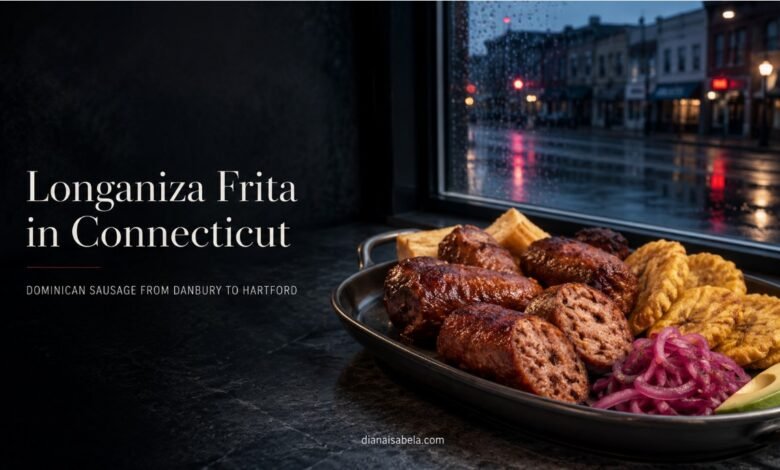
Connecticut is a good reminder that the most useful Dominican food maps do not always follow the biggest cities. If I were looking for longaniza frita here, I would not automatically start with New Haven or Bridgeport simply because their names are more familiar. The cleanest current menu evidence appears in Danbury and Hartford, where two restaurants make the preparation unusually easy to verify: the sausage is Dominican, it is fried, and it comes with tostones.
Then the story gets more interesting. New Haven has current Dominican longaniza on a menu that also identifies itself with both Dominican and Puerto Rican food, which means cuisine labels deserve more attention rather than less. Bridgeport gives us Dominican sausage inside rice and breakfast combinations instead of a clean stand-alone fritura plate. Those are still useful places, but they answer a different question.
So this Connecticut guide is built around confidence rather than quantity. Two places are strong fried-longaniza destinations. Two more help explain how the sausage moves through Connecticut’s broader Dominican food scene. I would rather make that distinction clear than line up eight restaurant names and quietly hope nobody notices that half of them never actually said how the sausage was cooked.
Quisqueya Deli & Market in Danbury and Caribe Restaurant in Hartford are the two strongest current matches. Quisqueya currently lists Longaniza as Fried Dominican Sausage with Tostones, while Caribe describes its Longaniza as Fried Dominican sausage served with tostones. Both make the preparation much clearer than a menu that simply lists “longaniza” as a protein.
Connecticut splits neatly into two fried-longaniza anchors and two context cities
The current menus make this easier than expected. Danbury gives us an unusually complete Dominican deli-market menu where longaniza can appear with tostones, fried yuca, mangú and inside mofongitos. Hartford gives us perhaps the cleanest restaurant description in the state: fried Dominican sausage served with tostones, sitting inside a menu that also identifies its picadera as Dominican fried street food.
New Haven and Bridgeport are useful in a different way. Caliente Deli clearly identifies its longaniza as Dominican sausage, but the current menu wording does not explicitly call that stand-alone sausage fried. Sabor Tipico Dominicano currently puts longaniza into rice and breakfast-related food rather than giving us an equally clean fritura line.
The route I would actually use
If Connecticut is part of a larger road trip, see the places serving fried Dominican longaniza across the U.S. before deciding how far you want to travel for one particular plate.
Quisqueya Deli & Market — Danbury
Best overall menu depthQuisqueya is probably the Connecticut stop I would choose if I wanted to understand more than one version of the dish without changing restaurants. The menu does not trap longaniza in a single combination. You can begin with fried sausage and tostones, then move toward yuca, mangú or a mixed Dominican plate once you know what the sausage itself is doing.
The $14.99 tostones order is the cleanest introduction. Green plantain is mild enough to let the sausage’s seasoning stay prominent, while the fried surface of a tostón gives you a second texture without adding another strong meat flavor. It is still an indulgent plate, obviously, but at least the ingredients are not all competing for the same paragraph.
The fried-yuca option changes the balance. Cassava is denser and less aggressively crisp throughout than a tostón, which makes the sausage casing stand out differently. The menu’s mangú combination moves in the opposite direction again: mashed plantain becomes soft background, so the casing and browned edges of longaniza become the strongest texture on the plate.
Caribe Restaurant — Hartford
Cleanest classic fritura wordingCaribe is the Hartford answer I like because the current menu is refreshingly specific. The word “Dominican” is attached to the sausage itself. The word “fried” is attached to the cooking method. Tostones are attached to the plate. There is remarkably little left for a food writer to creatively misunderstand.
The broader menu also helps establish context. Its picadera is described as a sampler of Dominican fried street food and includes Dominican sausage alongside salami, cheese, chicken, pork and tostones. That does not mean you should immediately order the biggest combination. It means longaniza is clearly living inside the fried-food vocabulary of the restaurant rather than appearing as a mysterious isolated sausage line.
For a first-time order, I would still choose the stand-alone longaniza with tostones. Picadera is much more useful once you know the sausage and want to compare it with fried salami, pork and cheese. Otherwise, the first few bites become less “What does longaniza taste like?” and more “Which fried thing did I just pick up?”
Caliente Deli — New Haven
Strong current lead — confirm fryingCaliente Deli is exactly the kind of place where being precise about evidence makes the guide better rather than less useful. The restaurant clearly sells Dominican longaniza. The current menu clearly has fried Dominican breakfast components, fried pork, tostones and other relevant foods. But those neighboring words do not automatically transfer themselves onto the sausage.
So I would absolutely keep Caliente on the Connecticut map, especially for someone already in New Haven, but I would ask how the longaniza is prepared before driving across the state specifically for longaniza frita.
The restaurant’s Dominican-and-Puerto-Rican identity is also worth noticing. Both cuisines have longaniza traditions, and menu context can overlap. Here the menu itself labels the $13 item Dominican Sausage, which gives us the cuisine identity we need; what remains uncertain is the technique, not the sausage tradition.
Sabor Tipico Dominicano — Bridgeport
Best for menu context, not exact fritaBridgeport is the place on this page that best demonstrates why a longaniza guide should not force every restaurant into the same fried-sausage box. Sabor Tipico currently gives us Dominican sausage, but one of the clearest menu uses is rice with longaniza rather than a dedicated fried sausage plate.
That is useful information, not a failure. Rice changes the meal completely. Instead of crisp sausage against crisp plantain, you get a softer grain-based dish where sausage seasoning can spread through the rice. It belongs to the broader Dominican longaniza conversation, but I would not send someone here specifically because they asked for the clearest longaniza frita in Connecticut.
The breakfast menu also contains Dominican-style combinations built around cheese, sausage, salami and eggs with starch choices such as yuca or green banana. Again, that is valuable if you are exploring how Dominican meats move through breakfast, but Hartford and Danbury remain the stronger first choices for exact fried preparation.
Not every Connecticut recommendation deserves the same confidence label
This is the most useful way I found to organize the state. The restaurants are not “best, second best, third best.” They answer different levels of the same question.
This distinction is particularly important with longaniza because the name travels across several Latin food traditions and because frying is a preparation, not part of the sausage’s legal identity. A restaurant can serve excellent Dominican longaniza without frying it in the exact form you searched for.
Connecticut gives you four orders that should not be made identical
For the cleanest first taste
Hartford or Danbury. Both currently give us explicit fried Dominican sausage with tostones, so you can focus on browning, casing and seasoning rather than interpreting the menu.
For yuca
Danbury. Quisqueya’s current menu gives longaniza and fried yuca as a distinct combination, which changes the starch balance without changing the sausage.
For a mixed Dominican plate
Hartford. Caribe’s picadera puts Dominican sausage beside salami, cheese, chicken and pork, useful once you want comparison rather than isolation.
For something other than fritura
Bridgeport. Rice with Dominican sausage lets longaniza behave like a flavoring protein in a softer meal instead of forcing another plate of fried starch.
For the broader logic behind mangú, yuca, tostones, onions and other sides, see how I choose what to eat with longaniza frita.
The clearest Connecticut frita orders currently sit in the low-to-mid teens
Connecticut gives us a fairly readable price picture because the two strongest exact matches are both focused sausage orders rather than giant family platters. I still would not call this a statewide average; it is simply an observed set of current menu prices.
Published prices checked for this guide
For someone specifically chasing fried longaniza, the useful current starting range is roughly $12.50 to $14.99 at the two strongest verified stops. That is far more useful than averaging rice dishes, breakfast combinations and family picadera into one artificial number.
If this is your first Connecticut longaniza plate, let the sausage speak first
I would choose Hartford or Danbury and order longaniza with tostones before doing anything more elaborate. The reason is not tradition for tradition’s sake. It is simply the clearest way to judge whether the exterior browned properly, whether the casing still has some snap and whether the inside stayed moist.
Mangú is wonderful, but it changes the experience immediately because soft plantain turns the sausage casing into the dominant texture. Mofongo pulls the sausage flavor into mashed garlicky plantain. Picadera surrounds it with several other fried meats. All three can be better meals depending on your mood, but none is as useful for understanding the sausage for the first time.
Once you have that reference point, Danbury’s fried yuca combination becomes especially interesting. Same type of sausage, denser starch, less crisp-on-crisp competition. That is the kind of comparison I find much more useful than ordering the largest menu item because it contains the most Dominican nouns.
If you want the sensory baseline before you order, this is what Dominican longaniza should taste and feel like.
Connecticut distances are manageable; the closed container is still the enemy
Longaniza itself travels reasonably well compared with fragile fried food. The casing softens with steam, but the sausage still has enough structure to remain recognizable after a short ride. Tostones are less forgiving because almost everything you love about them depends on their fried surface remaining dry.
Fried yuca behaves slightly differently. Its denser center gives you more than surface crispness, so it can remain satisfying even after the exterior softens somewhat. Mangú was never meant to be crisp in the first place, though it becomes firmer as it cools. A picadera has the biggest challenge because several fried meats share one humid container and gradually begin negotiating a common texture.
I would keep wet onions and sauces separate when possible, especially if the drive is more than a few minutes. And if the sausage becomes lunch the next day, use a reheating method designed for fried longaniza rather than giving the whole container the same microwave treatment.
Connecticut, send me the counter that never bothered building a beautiful website
The current map already gives us something I like: Danbury and Hartford provide very clean fried-longaniza evidence, while New Haven and Bridgeport show that the sausage does not need to stay inside one preparation. But Connecticut has enough Dominican restaurants, delis and neighborhood counters that I doubt these four menus are the whole story.
If you know a Connecticut restaurant, deli, bakery, food truck or cafeteria serving excellent Dominican longaniza — particularly an explicitly fried version in Danbury, Hartford, Bridgeport, New Haven, Waterbury or somewhere between them — write to me at info@dianaisabela.com. Send the current dish, price, side, city and a menu or food photo if you have one. The places with the least polished online presence are often exactly where a local guide needs a little help from someone who actually knows the neighborhood.
Where can I find Dominican longaniza frita in Connecticut?
Two of the strongest current matches are Quisqueya Deli & Market in Danbury and Caribe Restaurant in Hartford. Both currently describe their longaniza as fried Dominican sausage and serve it with tostones.
How much does longaniza frita cost in Connecticut?
Current focused examples in this guide include $12.50 for fried Dominican sausage with tostones at Caribe Restaurant in Hartford and $14.99 for fried Dominican sausage with tostones at Quisqueya Deli & Market in Danbury.
Where can I find longaniza frita in Danbury?
Quisqueya Deli & Market currently lists Longaniza as Fried Dominican Sausage with Tostones. Its menu also offers longaniza with fried yuca, mangú with longaniza and Dominican picadera containing Dominican sausage.
Where can I find fried Dominican sausage in Hartford?
Caribe Restaurant on Park Street currently lists Longaniza as Fried Dominican sausage served with tostones. Its menu also includes Dominican sausage in a picadera of fried Dominican street foods.
Can I find Dominican longaniza in New Haven?
Yes. Caliente Deli currently lists Longaniza as Dominican Sausage. The current stand-alone description does not explicitly state that the sausage is fried, so confirm the cooking method if longaniza frita is specifically what you want.
Can I find Dominican longaniza in Bridgeport?
Yes. Sabor Tipico Dominicano currently lists Arroz con Longaniza, described as rice with Dominican sausage. This is a current longaniza option, although it is not the same as a dedicated fried-longaniza plate.
What should I eat with longaniza frita in Connecticut?
Tostones are the easiest first pairing because they keep the sausage prominent. Fried yuca gives a denser starch, while mangú creates a softer contrast. Mixed picadera makes more sense when you want to compare longaniza with other Dominican fried meats.
Is every Dominican longaniza in Connecticut fried?
No. Dominican longaniza can appear in different preparations and dishes. A menu may identify the sausage as Dominican without stating that it is fried, so check the preparation when that detail is important.
Is Dominican longaniza the same as Puerto Rican longaniza?
No. The two traditions can differ in seasoning, preparation and serving style, even though both use the name longaniza. Connecticut menus can include both Dominican and Puerto Rican food, so individual item wording matters.