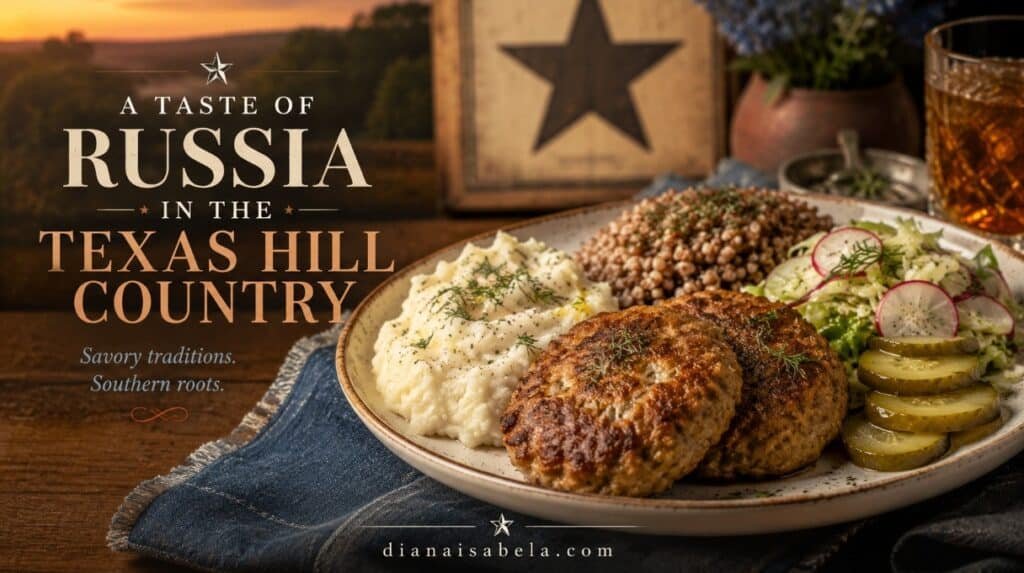
Russian Kotleti in Texas: Where to Eat, Buy & Take Them Home
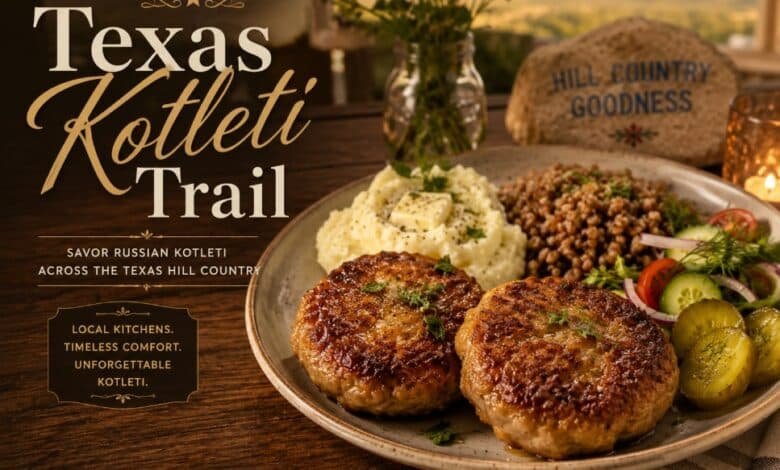
Texas has plenty of meat, plenty of big appetites and plenty of highways. What it does not have is a neat little row of Russian restaurants conveniently serving kotleti every twenty miles.
Finding Russian kotleti here requires a slightly different kind of intelligence.
Austin and Cedar Park currently have one of the most interesting prepared-meal setups I have found anywhere in this series: a business literally called Cutlet, with beef cutlets, chicken cutlets, Pozharsky cutlets, mashed potatoes, buckwheat and family packs built around exactly the sort of dinner we are looking for. There is one important catch: when I checked, its Austin ordering system was temporarily paused.
Dallas–Fort Worth is stronger as a full Eastern European restaurant ecosystem than as one obvious permanent kotleti entrée. Bubala in Far North Dallas has Russian, Uzbek and Georgian-adjacent comfort food all over the menu. Restaurant Volga in Carrollton gives you borscht, pelmeni, golubtsi, buckwheat and the sort of old-world restaurant atmosphere where a plate of kotleti would feel perfectly at home—even though I am not going to pretend the current menu promises them.
Houston changes the plan again. Here I would think deli and prepared-food counter just as seriously as restaurant. Golden Grain is essentially a Russian and European pantry with a kitchen attached, while Terrace Cafe gives us a home-style chicken-cutlet lead that deserves a phone call before we decide exactly which branch of the cutlet family it belongs to.
And Austin itself is a good reminder that local food changes quickly. The old Russian House that once defined this search closed years ago. A nostalgic menu page floating around the internet is not dinner. A business that is actually operating now is.
That is why this Texas guide is built around what you can realistically use today: current businesses, current addresses, current phones, honest evidence levels and the occasional sentence nobody wants to hear but everybody needs—call before you drive across Texas.
I say this as someone whose father is a chef and who grew up believing a family would happily drive a fairly unreasonable distance for the right food.
They will.
Texas can still defeat them.
Austin/Cedar Park: strongest actual cutlet-focused prepared-meal concept, but ordering is currently paused. Houston: strongest Russian market-and-deli route, plus a home-style chicken-cutlet restaurant lead. Dallas–Fort Worth: strongest broader Eastern European dining ecosystem. San Antonio: I did not find enough reliable kotleti inventory to pad the page with weak recommendations.
The useful map
Texas is a city-by-city kotleti hunt, not a statewide restaurant list
Texas punishes vague geography.
“There is a Russian restaurant in Dallas” is not useful if you are in Houston. “There are cutlets near Austin” becomes considerably less useful when the ordering page says they are taking a break.
So I would divide the state by what each metro can realistically do for dinner.
Cutlet Austin has beef, chicken and Pozharsky cutlets plus family portions and classic sides—but its ordering system was temporarily paused when checked.
Bubala and Restaurant Volga give you a strong surrounding menu of pelmeni, borscht, golubtsi, Olivier, buckwheat, kebabs and other comfort foods, even when exact kotleti require a check.
Golden Grain is built for Russian and European grocery shopping plus prepared food, while Terrace Cafe is the stronger restaurant lead for home-style chicken cutlets.
I would search local European and international markets before planning a special kotleti trip. The verified inventory is not strong enough for me to manufacture a confident shortlist.
That last line matters.
A local guide becomes useless the moment every city is required to have three recommendations whether those recommendations deserve to exist or not.
Sometimes the useful answer is: this metro is not your strongest bet yet.
Central Texas
Austin and Cedar Park: the most literal cutlet answer comes with one important caveat
I did not expect the Austin-area winner to be a prepared-meal service.
It makes perfect sense now that I have seen it.
The business is called Cutlet.
Subtlety has left the chat.
Cutlet Austin — Cedar Park pickup
A home-style prepared-meal service built around exactly the sort of food this search usually struggles to uncover: beef cutlets, chicken cutlets, Pozharsky cutlets, buckwheat, mashed potatoes and family portions.
This is almost suspiciously perfect for me: meat patties, buckwheat, cabbage salad and enough portions that tomorrow’s lunch quietly takes care of itself. The only unromantic part is that “temporarily not taking orders” is still not edible.
Menu and ordering status checked August 2026.
Why this format suits kotleti so well
Kotleti are almost aggressively practical food.
They are wonderful fresh from the pan, but they do not collapse emotionally when reheated. They can survive a refrigerator. They can go beside potatoes tonight and buckwheat tomorrow. They can become lunch without somebody inventing a “meal-prep transformation.”
They were already doing meal prep before meal prep needed matching containers.
That is why I actually like seeing them sold as prepared family food.
There is a domestic logic to it.
The menu pairs beef cutlets with mashed potatoes and chicken cutlets with buckwheat, which are two very sensible combinations. Beef has more depth and usually enough richness to love something soft and creamy beside it. Chicken is milder; buckwheat gives it earthiness and a slightly firmer texture.
And then there is the Pozharsky cutlet.
Pozharsky cutlet is its own little rabbit hole
A Pozharsky cutlet is traditionally associated with an especially tender poultry mixture, historically linked with the Pozharsky family and the famous inn at Torzhok in Russia.
Like many dishes with an origin story old enough to acquire legends, the details have been polished by repetition. What matters on the plate is the technique: finely prepared poultry, richness and a deliberately delicate interior rather than burger-like density.
It is exactly the kind of food where too much handling ruins the point.
My father’s rule about minced meat applies beautifully here: once the mixture holds together, continuing to attack it because mixing feels productive is not discipline. It is anxiety with a spoon.
If Cutlet is still paused, Austin has a very good second plan
Cedar Park now has Sami Sumeli, an Eastern European and Georgian restaurant with a genuinely useful current menu.
It does not currently list kotleti, and I am not going to turn lula kebab into kotleti just because both involve ground meat.
But it gives you pelmeni, buckwheat, borsh, sour cabbage, lightly salted cucumbers, pkhali, khinkali and syrniki.
That is an excellent fallback if what you wanted was a comforting Eastern European dinner rather than one single non-negotiable patty.
Sami Sumeli — Cedar Park
Not an exact kotleti destination, but a particularly useful current restaurant when the broader craving is pelmeni, buckwheat, borsh, pickled vegetables and the flavors that make this kind of dinner satisfying.
Menu and location checked August 2026.
Austin’s old Russian House should not send you on a ghost hunt
If you have searched this before, you may still encounter references to Russian House on East Fifth Street.
It was once a major Russian and Eastern European restaurant in Austin.
It is no longer operating.
This is precisely why local food needs dates.
An old menu can remain online much longer than the restaurant that cooked it.
I have a sentimental weakness for historical restaurant menus—I can happily read them like tiny documents about what a city wanted to eat in a particular decade—but they make terrible driving directions.
North Texas
Dallas–Fort Worth: come for the wider Eastern European table, not one guaranteed patty
DFW is the opposite of Austin.
Austin gives us a business centered almost comically perfectly around cutlets.
Dallas gives us stronger permanent restaurant infrastructure, but less reason to pretend one exact kotleti dish currently rules the menu.
That is not a weakness.
For someone who wants Russian and Eastern European comfort food generally, Dallas may actually be easier.
Bubala Cafe & Grill — Dallas
A lively Uzbek and Eastern European restaurant where the surrounding menu is excellent for the person who came looking for kotleti but is willing to let dinner take another direction.
Bubala is the place where I would arrive intending to “just check the menu” and somehow end up negotiating whether the table also needs khachapuri. The table usually believes it does.
Menu, address and phone checked August 2026.
The lula kebab is not kotleti, and that distinction is useful
Bubala’s current menu describes lula kebab as finely ground meat with herbs and spices, shaped around a skewer and grilled.
Technically, that puts it much closer to kotleti than a whole chicken schnitzel in one sense: both begin with ground meat.
But technique does not stop at the grinder.
Lula kebab is built for the grill and the skewer. Its seasoning, structure and cooking environment are different. Kotleti are patties, generally pan-cooked or otherwise cooked without that kebab architecture.
I mention this because “ground meat” is a useful first test, not the entire definition.
Food classification becomes silly when we try to reduce it to one ingredient.
Restaurant Volga: the old-school DFW Russian-food route
Drive north toward Carrollton and the mood changes.
Restaurant Volga sits alongside the Russian Banya of Dallas and leans unapologetically into a broader Eastern European experience.
Restaurant Volga — Carrollton
A Russian and Eastern European restaurant attached to the Dallas banya, built around scratch-made traditional dishes and the sort of leisurely group dining that makes one plate become six.
Current business details checked August 2026.
Volga is also a nice reminder that food does not always need to be optimized for speed.
Banya food makes sense after hours rather than minutes. Soup. Dumplings. Tea. Potatoes. A long table. People who have stopped looking at their phones because their phones should absolutely not be inside a sauna.
I am not suggesting you need to steam yourself before earning a plate of pelmeni.
I am saying the rhythm is culturally coherent.
Food can be part of an afternoon instead of the interruption between errands.
Houston
Houston: skip the obsession with restaurants and go where people actually shop
Houston is perhaps the most natural Texas city for the deli-first approach.
This is an enormous immigrant-food city. The useful question is often not “Which restaurant owns this dish?” but “Which grocery store has a kitchen?”
Golden Grain is exactly that kind of answer.
Golden Grain — Houston
A Russian and European grocery, deli and prepared-food stop that makes much more sense if your goal is to bring home dinner rather than locate one perfectly translated restaurant entrée.
This is much closer to how I naturally shop for this food anyway. Start with the thing that can become dinner, then add buckwheat, pickles, dark bread and perhaps something sweet you had absolutely no intention of buying until it looked at you.
Address, phone and business information checked August 2026.
Why I would happily choose a grocery store over a restaurant
A restaurant solves eight o’clock tonight.
A good specialty market can solve tonight, tomorrow and the evening next week when you remember the pelmeni hiding in the freezer.
That difference is especially valuable in Texas, where specialty-food trips can require enough driving that you should probably extract more than one meal from the journey.
Golden Grain describes thousands of products from Eastern European and Caucasus countries, plus deli foods, pastries and prepared foods.
That is not a consolation prize because the menu does not say kotleti in giant letters.
That is infrastructure.
Terrace Cafe: a chicken-cutlet lead, with one question still worth asking
Terrace Cafe — Houston
A Russian restaurant with a long-standing menu record for home-style chicken cutlets served with potatoes and vegetables or pickled cabbage.
Restaurant contact and menu records checked August 2026.
This is exactly where I refuse to let the word cutlet do more work than it deserves.
The phrase “home-style chicken cutlets” sounds extremely promising.
But if I cannot confirm whether the chicken begins ground or whole, I am not awarding it the same status as an explicitly minced kotleta.
One phone question fixes that.
And if the answer is “ground chicken,” wonderful.
If the answer is “breaded chicken breast,” also wonderful.
Just a different dinner.
Choose the problem first
Do you want dinner now, dinner at home, or dinner for everybody?
I want to sit down somewhere
Houston: Terrace Cafe is the most direct current chicken-cutlet restaurant lead, with the ground-versus-whole question still worth asking.
Dallas–Fort Worth: Bubala and Volga are stronger for the complete Eastern European meal than for one guaranteed permanent kotleti entrée.
Austin: Sami Sumeli works beautifully as an Eastern European fallback, but its current menu is not a kotleti menu.
I want food in my refrigerator
Austin/Cedar Park: Cutlet would be my first choice the moment ordering resumes because its entire model is built around prepared family food.
Houston: Golden Grain wins on flexibility. Prepared food now, groceries for later, freezer insurance for another evening.
Kotleti are not a fragile restaurant dish. They are excellent refrigerator citizens.
I have somehow agreed to feed everyone
Restaurant Volga explicitly accommodates special events. Bubala has banquet and catering infrastructure. Market-style businesses can also be useful for larger prepared-food orders.
But do not start with “I need catering.”
Start with:
“Can you make kotleti for twelve people?”
Then ask how many pieces per person, what meat is used, whether sides are available in quantity, how the food is packaged and how much notice the kitchen needs.
This is much more efficient than discovering on Friday night that your Saturday dinner plan depended entirely on optimism.
Useful food detective work
Texas has chicken-fried everything. Here is how not to confuse it with kotleti.
This distinction is particularly funny in Texas because the state already has an enormous cultural relationship with breaded and fried meat.
A chicken-fried steak is a cutlet in the broadest structural sense.
It is also very much not Russian kotleti.
The fastest test is to ask what the meat looked like before the cook shaped or breaded anything.
Kotleti side of the family
The meat is minced, mixed with ingredients such as onion and often bread or another moisture component, shaped into patties and cooked.
Schnitzel / cutlet side
The cook starts with one intact piece of chicken, pork, veal or beef, then pounds, breads or fries it.
Lula kebab side
The meat is ground, but the seasoning, shaping and grill technique take it in a different direction from kotleti.
These are relatives, not aliases.
What makes a kotleta tender?
Fat matters.
Moisture matters.
Onion matters.
Bread can matter.
But technique is the thing that can ruin all of them.
Ground meat is made of proteins that start binding as you work the mixture. Mix aggressively and the texture becomes tighter. That is useful when you want certain sausage textures. It is much less charming when you wanted a soft chicken kotleta.
This is why the instruction “mix until combined” deserves more respect than it gets.
Combined is a destination.
It is not the beginning of cardio.
Why bread is not an insult to the meat
Home-style cutlets often use softened bread because bread does two jobs at once.
Historically, it stretches an expensive ingredient.
Technically, it can hold moisture and soften the structure of the meat mixture.
That second part is important.
If you have ever eaten a kotleta that was unusually tender and wondered why it did not feel like a burger, the answer may be sitting quietly inside it disguised as yesterday’s bread.
Texas is hot. Dinner knows.
What I would actually eat with kotleti here
There is a point in a Texas summer when the idea of pairing meat with the heaviest possible version of every traditional side becomes almost performance art.
I still love mashed potatoes.
I simply do not always want them at 98°F.
Buckwheat
Probably my favorite warm-weather starch for kotleti. Nutty and substantial without the creaminess of mashed potatoes.
Cabbage salad
Crunch, acidity and freshness. Exactly what a browned meat patty needs when the weather is already doing enough.
Lightly salted cucumbers
The salt-and-dill profile makes them almost absurdly compatible with chicken kotleti.
Vinegret
Beet sweetness and pickle acidity give richer meat somewhere interesting to go.
Mashed potatoes
Still unbeatable when comfort is the objective. Especially with beef or mixed-meat kotleti and a sharp pickle beside them.
Pickled cabbage
Terrific beside softer foods because it contributes acid and actual bite instead of more softness.
And in cooler weather?
Then I become much less reasonable.
Borscht first.
Kotleti and mashed potatoes.
Dark bread.
Pickles.
Tea.
Something sweet that absolutely was not part of the original grocery list.
That is the advantage of a real deli trip: you do not need to decide whether dinner is one entrée or a collection of small comforts.
You can let the refrigerator decide tomorrow.
The Texas version of immigrant food
Sometimes the best Russian-food address is owned by an Armenian couple, serves Georgian food and stocks Ukrainian groceries
This sounds confusing only if we expect migration to organize itself like a cookbook index.
Golden Grain is a perfect example.
Its own story describes an Armenian couple who previously ran a grocery and butcher business in Sochi, then built a Houston market carrying food from Russia, Ukraine, Armenia, Moldova, Georgia and many other places.
That is not an exception to immigrant food culture.
That is immigrant food culture.
People move through countries. Families speak multiple languages. A grocery store serves the community that actually lives nearby rather than the neat national category somebody wishes it represented.
The same thing happens in Dallas, where Uzbek, Russian and Georgian foods comfortably share restaurant menus.
Cedar Park gives you Georgian pkhali, Ukrainian borsh, pelmeni and syrniki in the same dining room.
None of those dishes loses its history because it shares a table.
If anything, the table tells you a second history: the one about where people went next.
When Texas wins the distance argument
If your nearest option requires a road trip, widen the food search before widening the drive
The tempting response to not finding kotleti nearby is to increase the radius until the internet finally rewards you.
In Texas, this can get out of control quickly.
Do something more useful.
Search Russian deli or Russian market. Kotleti belong naturally in prepared-food cases and freezer sections.
Try Ukrainian and Eastern European grocery stores too. Minced cutlet traditions cross several regional cuisines.
Ask about ground-meat cutlets. The store may translate the item differently than you do.
Check frozen food. One thirty-minute grocery trip is far more attractive when it produces four future dinners.
Then decide whether the drive is still worth it. Texas distances should not be accepted without negotiation.
If you want to compare options outside Texas, continue with my guide to finding Russian kotleti near you.
If the real problem is finding a store rather than a restaurant, the Russian store guide gives you another route.
And if every sensible option is still too far away, the Russian kotleti recipe is where I would stop driving and start chopping onion.
When making kotleti at home, spend less time searching for a mysterious secret ingredient and more time protecting the texture. Keep the mixture moist, mix only as much as necessary, shape without compressing the life out of it and let the pan actually brown the first side before you start moving things around.
Call before the highway
The questions I would ask before leaving home
Do you have kotleti or ground-meat cutlets today?
Are they beef, chicken, pork or mixed meat?
Are they made from ground meat or a whole piece of meat?
Are they sold as a meal, individually, by weight or frozen?
Can I order more in advance for a family dinner or party?
That conversation takes approximately two minutes.
The drive between major Texas metros does not.
Where I would start
My Texas shortlist
Austin / Cedar Park: watch Cutlet Austin first. Its actual menu is the closest thing to a purpose-built kotleti dinner service in this guide, but wait until ordering resumes.
Dallas: Bubala for a large current Russian, Uzbek and Eastern European menu where a failed kotleti search still produces a very good dinner.
Carrollton: Restaurant Volga for a more traditional Russian/Eastern European meal and group-friendly setting.
Houston: Golden Grain when bringing food home sounds better than restaurant service; Terrace Cafe when you want to investigate the current home-style chicken cutlet.
San Antonio: I would currently shop broadly rather than promise a kotleti destination I cannot verify properly.
Texas is not the state where every city hands you the same dish.
It is the state where knowing whether to choose a restaurant, a deli, a prepared-meal service or your own stove saves a lot of unnecessary driving.
Local information checked: August 2026. Prepared-food inventory, restaurant menus, pricing and ordering availability can change. Call before a long trip when one specific dish is the reason you are going.
Texas questions
Russian Kotleti in Texas FAQ
Where can I find Russian kotleti in Texas?
Austin and Cedar Park currently have one of the most direct cutlet-focused options through Cutlet Austin, although its ordering system was temporarily paused when checked. Houston is strong for Russian markets and prepared food, while Dallas–Fort Worth has a broader Russian and Eastern European restaurant scene.
Where can I buy kotleti near Austin?
Cutlet Austin offers beef cutlets with mashed potatoes, chicken cutlets with buckwheat, Pozharsky chicken cutlets and family portions with Cedar Park pickup. However, the service was temporarily not accepting orders when checked in August 2026, so confirm that ordering has resumed first.
Where can I find Russian food in Dallas?
Bubala Cafe & Grill in Far North Dallas has a current Uzbek and Eastern European menu with dishes such as pelmeni, Olivier, beef stroganoff, buckwheat and lula kebab. Restaurant Volga in nearby Carrollton is another strong option for Russian and Eastern European comfort food.
Where should I look for Russian kotleti in Houston?
Golden Grain is a useful Russian and European market and deli for prepared food and groceries. Terrace Cafe is a restaurant lead with home-style chicken cutlets on its menu records, but ask whether the current cutlets are made from ground chicken if classic kotleti texture is important to you.
Are home-style chicken cutlets the same as Russian kotleti?
They can be, but the name alone does not prove it. Classic kotleti are generally shaped from ground or minced meat. Some chicken cutlets are made from whole chicken breast instead. Ask whether the meat is ground or whole before making a long trip for one specific dish.
Where can I buy Russian prepared food in Houston?
Golden Grain at 5406 Birdwood Rd is a Russian and European market, deli and bakery with prepared foods, groceries and frozen items. The store phone number is 832-778-8255. Exact kotleti availability should be checked directly.
Is there Russian food near Cedar Park, Texas?
Yes. Sami Sumeli in Cedar Park serves Eastern European and Georgian food including pelmeni, borsh, buckwheat, sour cabbage, pkhali and syrniki. Its current menu does not list kotleti, so it is better treated as a strong alternative rather than an exact kotleti destination.
What should I eat with Russian kotleti in Texas?
Buckwheat, cabbage salad, pickled cabbage, lightly salted cucumbers and vinegret work especially well in warm weather. Mashed potatoes remain a classic choice when you want a richer comfort-food plate. Pickles add acidity and crunch to either version.
Should I call before driving to a Texas restaurant for kotleti?
Yes. Texas distances are large and prepared-food menus can rotate. Ask whether kotleti are available that day, what meat is used, whether the cutlets are made from ground meat and whether they are sold hot, chilled, frozen, individually or by weight.
What should I do if there are no kotleti near me in Texas?
Check Russian, Ukrainian and Eastern European markets before increasing your driving radius. Prepared-food counters and freezer sections may be more useful than restaurant searches. If nothing practical is close, making kotleti at home is usually a better answer than crossing a large part of Texas for dinner.