Shchi Soup in Washington: Where to Find It in Seattle
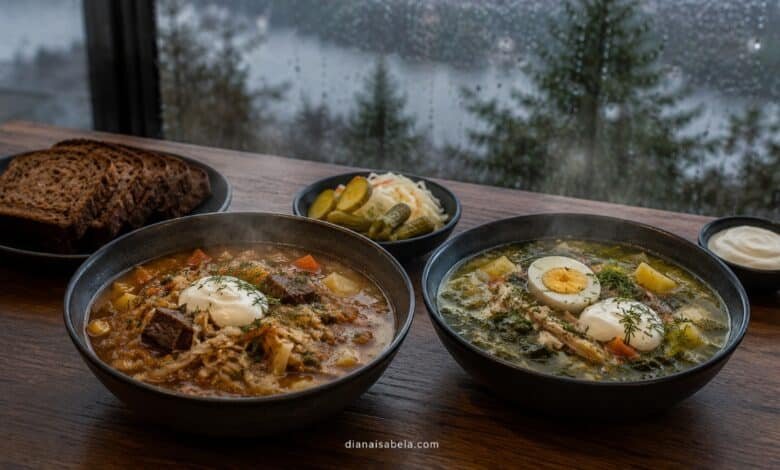
Washington is the rare state in this shchi search where I can begin with an actual current bowl instead of telling you to call three delis and develop a relationship with uncertainty. In Seattle, Broth&Co currently lists two distinct versions at the same Roosevelt Way address: Beef Sauerkraut Shchi and Zeleny Shchi, described as Chicken Sorrel Soup.
That makes Washington unusually useful for understanding the dish because the difference is not theoretical. One bowl is dark, beefy and built around fermented cabbage. The other is greener, lighter and sharpened by sorrel. Put them beside each other and the phrase “Russian cabbage soup” immediately reveals how incomplete it can be.
Seattle is therefore the obvious first stop. Beyond the city, I would shift into prepared-food mode: Russian and Ukrainian groceries, Eastern European delis and markets around Kent, Auburn, Federal Way, Fife, Bellevue and the wider Puget Sound region. Those businesses can be excellent shchi leads, but unless the soup itself is currently confirmed, I treat them as places to call rather than imaginary permanent bowls.
Washington Gives Us Something Better Than a Promising Lead: Two Confirmed Seattle Shchi Styles
If I wanted shchi in Washington today, I would start at 5600 Roosevelt Way NE in Seattle.
Broth&Co currently lists both Beef Sauerkraut Shchi and Zeleny Shchi, or Chicken Sorrel Soup, at $14.90 each. That gives us an unusual luxury for a niche traditional-food search: we do not have to infer shchi from a cabbage-soup label or a generic Russian restaurant category. The menu actually names the dish.
Even better, the two bowls represent different branches of the tradition. That means a first-time diner can learn more at one table than an entire afternoon spent reading soup definitions.
If you like fermented cabbage: begin with the Beef Sauerkraut Shchi.
If you prefer chicken, herbs and bright tartness: choose Zeleny Shchi.
If two people are eating: order one of each and share. Washington gives you one of the easiest side-by-side shchi lessons I have found.
This confirmed Seattle anchor is what makes Washington different from several other state guides in this collection. In states where I have only strong deli infrastructure, the honest answer is “call first.” Here, I can give you a current menu item first and then use the rest of the state page to expand the search.
For the wider American landscape, my United States shchi guide connects Washington with the other states where restaurants, delis and prepared-food kitchens make the search worthwhile.
And if you arrived here before learning why cabbage shchi and green shchi can both carry the same name, the main Shchi Soup Near Me guide gives the broader international picture.
Broth&Co Is the Washington Anchor Because the Menu Says Exactly What the Soup Is
Broth&Co — Seattle
The Beef Sauerkraut Shchi is described as a traditional Russian cabbage soup made with fermented cabbage, tender beef, vegetables and rich beef broth.
The Zeleny Shchi takes a completely different route: chicken, sorrel, potatoes, carrots, onions, herbs and egg.
This is exactly why I am careful with the phrase “cabbage soup.” It is perfectly useful when explaining classic shchi quickly. It becomes much less useful the moment a sorrel-based green shchi arrives.
What I like about this menu is that the distinction survives translation. You are not looking at one vague “Russian soup” item and hoping the kitchen knows what you meant. The names themselves give you enough information to make an informed order.
Broth&Co also sits inside a wider Eastern European and post-Soviet comfort-food menu, so shchi does not arrive as an isolated novelty. Borscht, solyanka and other familiar soup traditions appear beside plov, cutlets, stroganoff, salads and bread.
That context matters.
A traditional soup makes more sense when the rest of the menu understands what belongs around it.
It also gives you an excellent fallback if one version sells out. The fallback should remain whatever dish it actually is — borscht does not become shchi because you crossed town — but the kitchen gives you enough other food that lunch is unlikely to collapse.
Your First Seattle Decision Is Not “Do I Like Shchi?” It Is “Which Shchi Do I Mean?”
Ordering one bowl and using it to judge the entire shchi family would be like eating one tomato sauce and announcing a final opinion on Italian pasta.
The Seattle menu makes that problem unusually obvious.
Beef Sauerkraut Shchi
This is the darker, deeper, fermented-cabbage direction. Beef and rich broth give the acidity weight. The cabbage contributes more than sourness: fermentation brings savory complexity, salinity and a flavor that becomes increasingly integrated as the soup cooks.
Choose it when you want something hearty, fermented and substantial enough to make bread feel like a complete supporting cast.
Zeleny Shchi
Sorrel changes everything. The acidity becomes leafy and bright rather than fermented. Chicken gives the broth a lighter foundation, while potato, vegetables and egg keep the soup from feeling thin.
Choose it when you like tart greens, prefer chicken to beef or want a soup that feels fresh without becoming timid.
Neither is the “real” version at the expense of the other.
They are different expressions of a tradition broad enough to contain both.
That is why Washington is especially valuable for someone who has never tried shchi. Instead of asking which definition sounds correct, you can taste two contrasting branches yourself.
If you want the deeper culinary comparison before ordering, use my fresh-cabbage vs sour-cabbage shchi guide. Seattle gives you a confirmed sour-cabbage example; the comparison helps place it inside the wider cabbage-shchi family.
Beef Sauerkraut Shchi: Fermentation Is Doing More Work Than the Word “Sour” Suggests
I understand why English menus reach for “sour cabbage soup.” It is direct. It is also slightly unfair to the dish.
Fermented cabbage does not contribute only acidity.
It contributes depth.
Fresh cabbage begins with sweetness, moisture and vegetal character. Fermented cabbage arrives already transformed. Its acidity is accompanied by salt, savory complexity and the distinctive flavor of cabbage that has had time to become something else before it even enters the soup pot.
Then the cooking changes it again.
In a beef broth, that matters because the fat and gelatinous body of meat-based stock can soften the sharper perception of acidity. Carrots and onions bring sweetness. Potato or other vegetables add body. Cabbage cooks down and becomes part of the liquid rather than simply an ingredient floating inside it.
The phrase “winter soup” comes naturally here, but I would not reduce it to weather. Fermented cabbage and beef have enough flavor to be satisfying whenever you want them.
Still, Seattle certainly gives the dish an excellent stage.
A gray evening, wet pavement and a hot fermented-cabbage soup are not exactly fighting one another for aesthetic coherence.
What I would avoid is immediately stirring in a large quantity of sour cream before tasting the broth.
Sour cream is wonderful with shchi. It rounds acidity, adds richness and makes the soup feel softer.
But it is also powerful.
Taste first.
Then decide what you want the dairy to change.
Zeleny Shchi Is the Bowl That Breaks the “Cabbage Soup” Shortcut
The green shchi at Broth&Co is described as Chicken Sorrel Soup, and that description immediately tells you where the flavor is going.
Sorrel is tart.
Not fermented-cabbage tart.
Not pickle tart.
Not exactly lemon tart either.
It has its own fresh leafy acidity — a green brightness that can make broth feel lively without needing large quantities of citrus.
Chicken gives the soup a lighter savory foundation. Potatoes make it more substantial. Carrot and onion fill in the familiar soup base. Herbs reinforce the green character.
And then there is egg.
Egg matters more than it looks like it should. The mild richness of egg softens sorrel’s sharper edge and gives the bowl another texture without turning it heavy.
Who should order green shchi first?
Someone who likes chicken soup but wants more acidity.
Someone who enjoys sorrel or tangy leafy greens.
Someone who has never loved sauerkraut and assumes that means shchi is not for them.
Someone ordering lunch on a day when beef broth sounds slightly too serious.
I would not call green shchi “less flavorful” than sauerkraut shchi.
That confuses weight with intensity.
The green bowl can be lighter in body and still be very assertive because sorrel has such a distinct personality.
If this branch is the one that interests you most, my guide to green shchi goes deeper into sorrel, naming, egg, regional overlap and why green borscht and green shchi should not automatically be treated as synonyms.
Seattle Weather Does Not Make Shchi Authentic — It Just Makes It Sound Extremely Sensible
I try to avoid food-writing clichés where every rainy city apparently exists for soup and every sunny city apparently lives on salad.
People eat hot food in summer.
People eat ice cream in winter.
Human appetite has never shown much respect for editorial rules.
Still, Seattle and a steaming bowl of shchi have obvious chemistry.
Cool air changes appetite.
Rain changes the emotional value of broth.
A meal you might overlook on a bright hot afternoon can sound perfect after walking through drizzle in shoes that are no longer as waterproof as the salesperson promised.
The two Broth&Co bowls even fit different kinds of Seattle weather in my head.
Beef sauerkraut shchi is the serious rain.
Zeleny shchi is the lighter gray day when sorrel and chicken sound fresher.
This is not science.
It is weather-based lunch styling, which is admittedly a field I just invented.
More importantly, Seattle has the international and immigrant food infrastructure to support dishes like this beyond one restaurant. The greater Puget Sound region includes Ukrainian and Russian groceries, European delis and prepared-food markets where home-style food is part of normal shopping.
That is where I would expand the search next.
Beyond Broth&Co, Washington Becomes a Prepared-Food Search
This is where I would change strategy.
I have a confirmed Seattle restaurant bowl.
For the rest of Washington, I do not want to manufacture a list of “shchi restaurants” from businesses that simply happen to sell Ukrainian or Russian groceries.
I want actual kitchens.
That means prepared foods, deli counters, hot food, soups, house-made dishes and enough culinary activity that asking about shchi makes sense.
These places matter because they expand the Washington search south of Seattle without pretending we have four more confirmed bowls.
That honesty makes the state page stronger.
There is nothing wrong with writing:
“This is an active Ukrainian prepared-food market worth calling.”
That sentence is useful.
The bad version is:
“Here is where to get shchi,” when the only evidence is that the store sells Ukrainian sausage.
If you use delis regularly, the separate guide to finding shchi at Russian and Ukrainian delis explains how I judge soup counters, rotating menus, fresh-food cases and older customer clues.
The Washington Deli Question Is Not “Do You Sell Russian Food?”
That question is too broad.
A grocery store can sell imported buckwheat, candy, preserved fish and frozen dumplings without cooking one spoonful of soup.
For shchi, I care about the kitchen.
Ask:
- Do you have homemade soups today?
- Do you ever make shchi?
- Do you call it cabbage soup or shchi?
- Is it fresh cabbage or fermented cabbage?
- Do you make green shchi with sorrel?
- Is there a regular soup day?
- Can you hold a container if I am driving from another city?
If somebody says, “We make sauerkraut soup on Fridays,” do not immediately rewrite the answer into “confirmed shchi.”
Ask how the kitchen identifies it.
Polish, Ukrainian, Russian and other Central and Eastern European cuisines all have cabbage and sauerkraut soups.
The ingredient is a clue.
The kitchen’s own dish is the answer.
Why Washington’s Confirmed Green Shchi Makes This Page More Useful Than a Generic State List
Many shchi location pages naturally emphasize cabbage because that is what most English-language diners associate with the name.
Washington gives us a reason to broaden the conversation immediately.
A reader can actually order green shchi in Seattle.
That means the green version does not need to live in a footnote or “other variations” paragraph.
It becomes one of the two main choices.
This has practical value because some people encounter shchi for the first time through fermented cabbage and decide the entire soup family is too heavy or too sour for them.
But sorrel shchi is sour in a different way.
Fresh, herbal acidity can appeal to someone who has no interest whatsoever in sauerkraut.
The opposite is also true.
Someone craving deep fermented cabbage may find green shchi perfectly good and completely wrong for the mood.
Washington lets both people leave happy.
Shchi, Borscht, Solyanka and Kharcho Should Not Be Treated as Four Shades of “Eastern European Soup”
One reason Broth&Co is useful is that the broader menu gives you several famous soup traditions side by side.
That makes comparison tempting.
It also makes lazy comparison dangerous.
I dislike the phrase “if you like borscht, you will like shchi” when it is presented as a guarantee.
You may.
But what exactly do you like about borscht?
If the answer is beet sweetness, shchi does not recreate it.
If the answer is sour cream, vegetables, beef broth and a hot savory soup, then yes, you are probably exploring the right neighborhood.
Seattle’s best version of the decision is:
Beet? Borscht.
Fermented cabbage? Beef sauerkraut shchi.
Sorrel? Zeleny shchi.
Three ingredients. Three very different lunches.
Seattle Rain and a Shchi Takeout Container Are Extremely Compatible
I do not think weather is required for soup.
I do think certain weather can make a takeout container feel like excellent life planning.
Shchi travels well because its best qualities are already integrated.
Fermented cabbage does not need to remain crisp.
Beef is supposed to be tender.
Potatoes and vegetables are already inside broth.
The green version is slightly more delicate because sorrel and fresh herbs are part of its brightness, but it is still fundamentally soup rather than a piece of fragile restaurant architecture.
The beef sauerkraut version may be one of the most takeout-friendly traditional soups imaginable.
The entire point is ingredients that have already had time to meet.
A short trip home is not going to introduce them.
If Broth&Co Is Sold Out, Do Not Start Renaming Other Soups
This is where niche food guides often go wrong.
They find one exact match.
Then they need more addresses.
Suddenly every cabbage soup becomes shchi, every green soup becomes zeleny shchi and every Eastern European restaurant becomes “a place to find it.”
I would rather have one confirmed Washington restaurant and four good prepared-food leads than ten invented matches.
Confirmed: Broth&Co currently names two shchi dishes.
Worth investigating: Washington groceries and delis with genuine prepared-food kitchens.
Not enough: a business simply selling Russian or Ukrainian groceries.
Kapusniak does not need to become shchi.
Generic sauerkraut soup does not automatically become shchi.
Green borscht does not automatically become green shchi.
Borscht certainly does not become shchi because both soups contain cabbage somewhere in the recipe.
The more specific the query, the more valuable specificity becomes.
Beyond Seattle: Where I Would Investigate Next in Washington
Seattle gives us the confirmed bowl.
The rest of western Washington gives us several useful prepared-food corridors.
I would not turn every one into its own page yet. I would first build enough confirmed local information to justify that level of detail.
Kent
Kent is interesting because Eurasia Deli House is described around a substantial prepared-food and deli operation rather than simply imported groceries.
That is the right kind of infrastructure.
I would ask which soups are homemade, whether cabbage soup appears and what the kitchen calls it.
If shchi becomes a confirmed recurring item, Kent immediately becomes more important to this guide.
Auburn
Marvel Food & Deli is another useful South King County direction. Customer material has mentioned hot food and even sauerkraut soup, which is enough to make me curious and not enough to let me confidently rename the dish.
This is exactly where one phone call can improve a guide dramatically.
“Do you still make the sauerkraut soup?”
Then:
“Do you call it shchi?”
Two questions.
Problem solved.
Federal Way
Euro Food & Deli provides another Russian/Ukrainian grocery-and-deli option south of Seattle.
The important part is the deli and hot-food activity.
That gives us a kitchen worth watching.
Again, I would not promote the business into a confirmed shchi destination until the soup itself is established.
Fife and Tacoma
Emish Market in Fife identifies itself around Ukrainian groceries and house-made specialties, making it particularly relevant to the Tacoma-area search.
If I lived around Tacoma, I would investigate locally before automatically making Seattle the answer to every Eastern European food question.
A local prepared-food market with the right soup beats a confirmed Seattle bowl if Seattle is an hour away and the local kitchen is ten minutes away.
Bellevue and the Eastside
Bellevue, Redmond and the wider Eastside have long had Russian-speaking and Eastern European grocery culture.
The challenge is separating current businesses from old directory traces.
I would use only active stores with current evidence of prepared food, then ask about the soup itself.
An old business profile from twenty years ago may be historically interesting. It is not a dinner recommendation.
Spokane
Spokane deserves its own independent research rather than inheriting Seattle’s food map.
I would not create a Spokane child page until there are enough current kitchens, actual soup evidence or strong prepared-food leads to make the article useful to someone who lives there.
Vancouver, Washington
Vancouver has the additional complication of Portland sitting directly across the Columbia.
State boundaries matter for addresses.
They matter less when people are deciding where to drive for dinner.
A future Vancouver section should therefore reflect the actual metro geography rather than pretending the Oregon side of the river does not exist.
Washington Is the Best State in This Cluster for a Two-Bowl Shchi Tasting
This is the practical thing I would do with the current Seattle evidence.
Bring one other person.
Order Beef Sauerkraut Shchi.
Order Zeleny Shchi.
Get dark bread.
Taste the cabbage soup first without sour cream.
Taste the green soup.
Then go back.
The first comparison is acidity.
Fermented cabbage produces a deeper, savory tang.
Sorrel produces brighter green acidity.
The second comparison is broth weight.
Beef makes one soup fuller.
Chicken keeps the other lighter.
The third is texture.
Fermented cabbage has one kind of softness.
Sorrel, vegetables and egg create another.
Then add sour cream if you want it and notice how dairy changes both soups differently.
This is far more useful than trying to decide which one better represents the word shchi.
The category is broad enough to contain them both.
A Washington Shchi Order for Four Different Moods
I would choose the last option for a first visit.
You will understand the category immediately.
And if you still cannot decide which one you prefer, that is an excellent reason to return.
The Grocery Stop Matters Because Shchi Belongs to a Larger Table
A traditional soup becomes easier to understand when you see the foods around it.
Dark bread explains itself beside broth.
Sour cream makes more sense when you see how often cultured dairy appears across the food tradition.
Fermented cabbage stops looking like an eccentric soup ingredient when the grocery shelves are full of preserved vegetables.
Dumplings, cutlets, cooked grains and salads explain why soup often works as one part of a larger everyday meal rather than the entire occasion.
This is why I like grocery-and-deli searching even when the exact soup is already confirmed at a restaurant.
The restaurant answers:
“Where can I eat shchi today?”
The market can answer:
“What food world does this bowl belong to?”
Those are different questions.
Both are worth asking.
What Would Make Me Add a New Washington Place to This Guide?
I would add a current menu that names shchi.
Easy.
I would add a deli with a confirmed regular soup day.
Also useful.
I would add a grocery counter where staff directly confirms a recurring fresh-cabbage, sauerkraut or green shchi.
Yes.
I would add a restaurant special if the business can establish when it appears.
Absolutely.
I would not add a place merely because it is Ukrainian.
I would not add one merely because it is Russian.
I would not add every business serving borscht.
I would not add a historical directory listing if I cannot establish the current operation.
And I would not call a soup shchi simply because cabbage and sour cream are visible in the same photograph.
A smaller guide with strong evidence is much more useful than a larger guide assembled by cuisine association.
Know Another Washington Kitchen With a Real Shchi Day?
Washington is especially interesting to me because we already have two clearly named Seattle shchi styles, which means the next useful discoveries can make the state guide genuinely richer rather than simply longer.
If you know a Russian deli, Ukrainian market, Eastern European grocery, Central Asian restaurant, catering kitchen or small prepared-food counter that makes shchi, send me the details.
I want the practical information first: business name, city, address, phone number, how the soup is labeled, whether it is available every day or only on certain days, current price if you know it and whether the kitchen will hold a container.
Tell me the style too.
Fresh cabbage?
Sauerkraut?
Sorrel?
Beef?
Chicken?
Meatless?
Those details help someone decide whether a promising bowl is actually the bowl they are craving.
I am especially curious about Kent, Auburn, Federal Way, Fife, Tacoma, Bellevue, the Eastside, Spokane and Vancouver. Smaller places are welcome too. Some of the most useful traditional food never appears in the neighborhood people expect.
And send the family details.
Do you eat your shchi with dark rye?
Does the sour version taste better the next day?
Does your family call a sorrel soup green shchi, green borscht or something else entirely?
Does the local deli make one version only when the weather changes?
I love finding new flavors, old recipes, unusual serving habits and little places with one dish worth remembering. The more precise the local information, the better this Washington guide becomes for the next person looking for a hot bowl.
info@dianaisabela.comQuestions About Finding Shchi in Washington
Where can I find shchi soup in Washington?
Seattle is the clearest current starting point. Broth&Co at 5600 Roosevelt Way NE currently lists both Beef Sauerkraut Shchi and Zeleny Shchi, a chicken sorrel soup. Beyond Seattle, prepared-food markets in places such as Kent, Auburn, Federal Way and Fife are worth calling about rotating soups rather than assuming shchi is permanently available.
Where can I find shchi in Seattle?
Broth&Co at 5600 Roosevelt Way NE currently lists two shchi styles: Beef Sauerkraut Shchi and Zeleny Shchi, described as Chicken Sorrel Soup. This makes it the strongest confirmed Seattle destination in this guide.
How much does shchi cost at Broth&Co in Seattle?
The current online menu lists both Beef Sauerkraut Shchi and Zeleny Shchi at $14.90. Prices can change, so check the current menu if the exact price matters before ordering.
What is Beef Sauerkraut Shchi?
The Seattle version is a traditional Russian cabbage soup made with fermented cabbage, tender beef, vegetables and rich beef broth. Fermented cabbage gives the soup a deeper savory acidity than a fresh-cabbage version.
What is Zeleny Shchi?
Zeleny shchi means green shchi. Broth&Co describes its version as Chicken Sorrel Soup made with chicken, sorrel, potatoes, carrots, onions, fresh herbs and egg. The acidity comes from tart green sorrel rather than fermented cabbage.
Which Seattle shchi should I try first?
Choose Beef Sauerkraut Shchi if you like fermented cabbage, beef broth and a hearty soup. Choose Zeleny Shchi if you prefer chicken, herbs and brighter sorrel acidity. If two people are eating, ordering one of each is the easiest way to compare the two branches of shchi.
Can I find shchi outside Seattle?
Washington has Russian, Ukrainian and Eastern European groceries and prepared-food businesses in areas including Kent, Auburn, Federal Way and Fife. These are useful places to ask about rotating soups, but this guide does not treat them as confirmed shchi destinations without direct current evidence of the dish.
Is green shchi the same as cabbage shchi?
No. Cabbage shchi can use fresh or fermented cabbage, while green shchi is commonly associated with sorrel or other greens. Their acidity, color, broth and overall flavor can be very different even though both belong to the broader shchi tradition.
What should I eat with shchi in Seattle?
Dark bread works with either style. Beef sauerkraut shchi is substantial enough that bread and a fresh side may be enough, while lighter chicken-and-sorrel shchi can comfortably lead into a cutlet, potatoes or another shared main.
Is shchi good for takeout?
Yes. Shchi generally travels well because cabbage, vegetables, meat and broth are already cooked together. Keep bread separate, reheat the soup properly and add sour cream or fresh herbs at the end. Green shchi benefits from gentler reheating so its sorrel and herb character remains fresh.