What Is Green Shchi? The Bright, Tangy Sorrel Soup Worth Knowing

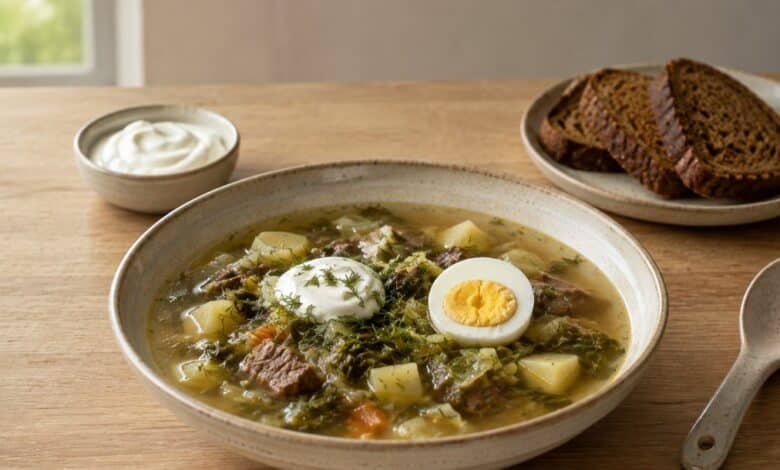
Green shchi is what happens when the shchi family puts away the cabbage for a moment and becomes obsessed with leaves.
Instead of the pale cabbage and amber broth people often picture when they hear shchi, this version is commonly built around sorrel — a leafy green with a naturally tart, almost lemony personality. Add broth, potato, onion, herbs and usually egg somewhere in the story, and the result is a soup that manages to feel both comforting and surprisingly bright.
It is also responsible for an impressive amount of menu confusion. Green shchi can overlap in conversation with sorrel soup, green soup and green borscht, especially once family terminology, regional habits and English translations all arrive at the table together. So yes, we need to talk about the names. But first, the delicious part.
Green Shchi Is Not Cabbage Shchi Dyed a Fashionable Shade of Green
Green shchi is a leafy, tart soup traditionally associated with sorrel and other spring greens rather than the white cabbage or sauerkraut used in more familiar cabbage-based shchi.
It can be cooked with meat broth or made lighter. Potato and onion are common companions. Egg appears frequently, either chopped, halved or cooked into the soup depending on the kitchen. Sour cream and dill make excellent finishing moves because apparently Eastern European soup understands accessories.
The defining impression is usually not cabbage.
It is green freshness plus acidity.
That acidity is important because it explains why the soup feels so different from ordinary vegetable soup.
Sorrel has its own sharpness. You do not need to pickle it first. You do not need sauerkraut to provide fermented tang. The leaf itself brings a bright sour note that changes the broth as it cooks.
This is also why green shchi belongs in the broader shchi conversation without tasting like a green version of fresh- or sour-cabbage shchi.
The family resemblance is there.
The personality has gone outside to collect herbs.
Sorrel Is the Ingredient That Makes the Soup Make Sense
If you have never eaten sorrel, imagine a tender leafy green that has somehow discovered citrus without becoming citrus.
Raw sorrel can taste distinctly tart. When cooked, the leaf collapses quickly and loses the neat bright-green look people expect from spinach. That visual transformation surprises first-time cooks: a luxurious pile of fresh green leaves can turn into a softer, darker olive-green presence in the soup.
This is normal.
Green shchi does not have to be electric emerald to be good.
In fact, an aggressively neon bowl would make me more suspicious than impressed.
The acidity is part of the leaf
Sorrel’s characteristic tartness comes from naturally occurring oxalic acid. That is what gives it the sharp, refreshing quality people often compare loosely to lemon.
In soup, that tartness is diluted and balanced by broth, potato, egg and sour cream. Instead of tasting like someone squeezed a lemon into spinach, a well-balanced bowl tastes green, savory and gently sour at the same time.
Other greens can appear too
Recipes are not identical. Spinach, nettles and other tender greens may join sorrel or appear in related preparations depending on place, season and household.
But if I am trying to understand a restaurant’s “green shchi,” sorrel is the first ingredient I want to ask about.
A Good Bowl Has More Going On Than Sorrel and Water
The leaf gets the headline because it creates the recognizable green-shchi character, but the rest of the bowl decides whether the soup feels complete.
Broth gives the acidity somewhere to land
Chicken broth is a beautiful fit because it gives the soup enough savory depth without overwhelming the greens. Beef can make the bowl richer and darker. Meatless versions can work too, provided the vegetable base has enough character.
The important thing is balance. Sorrel needs something beneath it. Otherwise you have tart green water, which sounds less like dinner and more like a regrettable wellness trend.
Potato makes the soup feel like food
Potatoes absorb broth, soften acidity and give each spoonful substance. They are particularly useful in green shchi because the leaves themselves collapse so dramatically during cooking.
A few tender potato pieces turn all that green brightness into something unmistakably comforting.
Egg is not decorative
Egg is one of the most recognizable companions to sorrel soup.
A halved hard-boiled egg gives the bowl a beautiful yellow-and-white contrast. Chopped egg distributes richness through more spoonfuls. Some preparations introduce egg differently, but the role is similar: soft richness against tart greens.
It works because the soup is acidic.
The egg quietly says, “I brought calm.”
Sour cream softens the sharp edges
Sour cream may seem like a strange thing to add to a soup that is already tart, but the two kinds of acidity behave differently.
The cream adds fat and coolness while rounding the leafy sharpness. Stir it completely and the broth becomes paler and silkier. Leave it partly intact and every few spoonfuls change slightly.
I prefer the second approach mostly because dinner deserves a little suspense.
Dill makes the bowl smell finished
Dill belongs naturally with potato, egg, sour cream and broth, so green shchi gives it very little resistance.
Fresh herbs added at the end also restore some aromatic brightness after the sorrel itself has cooked down.
What Does Green Shchi Actually Taste Like?
Think tart rather than vinegary, leafy rather than cabbage-heavy, savory rather than salad-like, and comforting without necessarily being heavy.
A spoonful can move from bright sorrel to mellow potato, then into chicken or beef broth, then catch a bit of egg and finally become creamy if sour cream has been stirred through.
That movement is the appeal.
Compared with fresh-cabbage shchi, green shchi tends to feel sharper and more herbal.
Compared with sour-cabbage shchi, its acidity feels fresher rather than fermented.
Compared with borscht, it generally lacks the earthy sweetness and deep beet color that many people associate with the most familiar red versions of borscht.
But I would resist trying to reduce it to “spinach soup, but sour.” Sorrel has a distinct personality, and once you know it, you start recognizing why cooks build whole dishes around it.
Green shchi is especially good for people who enjoy lemony soups, yogurt-based soups, sour broths, bright herbs or dishes where acidity is part of the structure rather than something added timidly at the end.
Why the Color Can Look Less Glamorous Than the Name
This is one of those useful kitchen truths that photographs occasionally try to hide.
Cooked leafy greens change color.
Fresh sorrel may enter the kitchen looking bright, crisp and photogenic. Once it hits hot liquid and softens, it can turn into a much more subdued green.
That does not mean anything went wrong.
It means the soup is cooked.
A real green shchi can range from muted green to olive, yellow-green or even a fairly brownish green depending on the broth, greens, cooking time, egg and sour cream.
Food does not owe us Pantone accuracy.
What matters more is whether the broth tastes alive, the potato is tender, the greens still have character and the acidity feels integrated instead of harsh.
Chicken, Beef or No Meat at All?
Green shchi does not require one single protein arrangement.
A chicken-based version feels intuitive because chicken broth supports the herbs without trying to become the entire event.
Beef gives the soup more weight. Beef meatballs can do something slightly different again: instead of turning the whole broth deeply beefy, they create rich little moments inside a brighter soup.
A meatless green shchi can be excellent too, especially when potato, onion and greens are handled generously rather than as punishment for not adding meat.
This matters when ordering because the word green tells you virtually nothing about whether the soup is vegetarian.
Ask.
The same applies to conventional shchi. Cabbage style, color and protein are separate decisions.
Now for the Name Problem: Green Shchi, Sorrel Soup or Green Borscht?
There is no universal English restaurant dictionary capable of forcing every family, region and kitchen to label these soups in exactly the same way.
That is why two very similar sorrel-based bowls may arrive under different names — and why two dishes carrying similar names may not be identical.
Green shchi commonly points toward a soup built around sorrel or other leafy greens within the shchi tradition.
Sorrel soup is the most ingredient-forward English label. It tells you what the cook wants you to notice without necessarily solving the cultural naming question.
Green borscht is another familiar term in Ukrainian and neighboring food traditions for green sorrel-based soup preparations.
This is precisely where I do not like aggressively correcting menus from the dining table.
Food terminology travels through languages, families, borders and generations. A person can grow up calling a green sorrel soup one thing while another family calls a closely related bowl something else.
If the exact distinction matters, look at what is actually in the soup.
Sorrel?
Spinach?
Egg?
Potato?
Chicken?
Beef?
That tells you more about tonight’s dinner than winning a terminology argument before the appetizers arrive.
For the much easier red-soup comparison, I separate the major differences in Shchi vs Borscht.
Green Shchi and Green Borscht Can Be Close Cousins Without Becoming One Universal Recipe
This deserves a little more room because English-language menus sometimes make the situation look simpler than it really is.
Sorrel-based green soups exist across several Eastern European food traditions. Families inherit versions. Cooks substitute available greens. Restaurants translate names for customers. Ingredients shift with season and place.
That creates overlap.
It does not create one global master recipe.
One kitchen may make a chicken-and-sorrel soup with potato and halved egg and call it green shchi.
Another may serve a very similar combination under green borscht.
A third may simply write sorrel soup because that is easier for English-speaking customers to understand.
I would rather know what is in the bowl than pretend every naming tradition can be flattened into one sentence.
This is one of those moments when food culture benefits from curiosity more than certainty.
A Real American Example Shows Why the Description Matters
Seattle currently gives us a particularly clear example.
Broth&Co lists Zeleny Shchi / Chicken Sorrel Soup and describes a bowl built with chicken, sorrel, potato, carrot, onion, herbs and egg.
At the same restaurant, Beef Sauerkraut Shchi sits in a completely different direction.
That is almost the perfect accidental lesson.
One shchi is sour because fermented cabbage is doing the work.
The other is bright and green because sorrel is doing the work.
Same broad soup family.
Very different dinner.
This is why I care about menu descriptions. A person searching only for “cabbage soup” could easily overlook green shchi entirely, even though it may be exactly the tart, brothy bowl they would prefer.
For U.S. locations and current local searching, the broader Shchi Soup Near Me in the United States guide covers the geographic side separately.
Green Shchi Has Spring Energy, Even When You Eat It in November
Sorrel is strongly associated with spring and early-season greens, which gives green shchi a different emotional place at the table from the deep fermented cabbage soups people often associate with cold weather.
It feels brighter.
More herbaceous.
Less wool blanket, more open kitchen window.
That does not mean you are legally required to eat it while birds are singing and someone is planting tulips.
Frozen or preserved sorrel can extend the season, and restaurants obviously work according to their own ingredient supply.
But the seasonal association explains something about the dish’s personality.
After a winter of roots, cabbage, stored vegetables and heavy broths, a tart green soup makes immediate emotional sense.
The leaves come back.
The soup notices.
Hot or Cold? Please Do Not Let the Color Mislead You
Green shchi is typically thought of as a hot soup.
Its green color can make modern diners mentally file it beside chilled cucumber soups, green gazpacho and other summer bowls, but the traditional comfort here is broth-based and warm.
That warmth is part of what makes the sorrel so interesting.
Cold acidity feels refreshing.
Hot acidity feels awakening.
There is something wonderfully contradictory about a steaming bowl that tastes bright enough to remind you of spring.
What I Would Put on the Table Beside Green Shchi
Because green shchi already carries acidity, I would resist making every other dish at dinner equally sharp.
Simple, substantial and very good at turning a bowl of soup into a real lunch without distracting from the sorrel.
Yes, even with an already tart soup. Its richness changes the texture and rounds the leafy acidity rather than merely adding more sourness.
Useful if the bowl contains beef or meatballs and you want dinner to stay grounded rather than becoming a parade of sour things.
A bright sorrel soup can be an excellent first course before something warm and savory because its acidity keeps the meal from feeling too heavy too early.
Cucumber, tomato and herbs work. I would keep the dressing gentle so the soup remains the most interesting acidic thing on the table.
There are more substantial combinations in What to Eat With Shchi, but green shchi needs less help than people think. Bread, sour cream and one good second course can already feel complete.
If You Do Not Like Spinach, You May Still Like Sorrel
This question comes up because visually the leaves can seem related once cooked.
Flavor is another matter.
Spinach is mild, vegetal and slightly earthy.
Sorrel announces acidity.
Someone bored by spinach may find sorrel much more interesting precisely because that tartness gives the leaf a stronger identity.
The opposite is possible too.
If you love gentle greens but dislike lemony or sour flavors, green shchi may surprise you more than fresh-cabbage shchi would.
That is why “green soup” is a spectacularly unhelpful description on its own.
Green is a color.
I need gossip.
Which leaf?
What broth?
Is there egg?
Is there meat?
Now we can order.
And No, It Should Not Taste Like Lawn Clippings
A soup built around greens still needs structure.
If all you notice is cooked leaves, something is missing.
Good green shchi should have savory depth from its broth, enough salt to make the greens taste alive, starch or potato for substance, and enough richness somewhere — perhaps meat, egg or sour cream — to keep the acidity from floating around by itself.
The tartness should wake the bowl up.
It should not punish you for ordering lunch.
This is especially useful when tasting a version for the first time. Do not ask only, “Is it sour?”
Ask whether the sourness has somewhere to go.
Does broth support it?
Does potato soften it?
Does egg add richness?
Does dill lift the aroma?
Does sour cream make another spoonful suddenly taste rounder?
That is where a simple green soup becomes very good food.
Who Should Order Green Shchi First?
I would choose it immediately if you already know you like sorrel.
Also if you enjoy lemony soups, tart broths, yogurt-based savory dishes, pickled flavors or meals where acidity is doing real work rather than sitting in a decorative lemon wedge.
If you dislike fermented cabbage but still want to understand why people talk about sourness in shchi, green shchi gives you a completely different route into that conversation.
And if your mental picture of Eastern European soup is permanently beet-red, this is a useful correction.
The soup world is much larger than borscht.
Much greener too.
The Bowl I Would Choose on the First Warm Day
There are soups you want because the weather is terrible.
Green shchi is one of the few that can make sense because the weather is getting better.
That is probably what I like most about it.
It still has all the things that make soup feel like comfort: hot broth, potatoes, herbs, something creamy at the table, bread waiting nearby.
But the sorrel keeps pulling the flavor upward.
It refuses to become sleepy.
A rich winter soup says stay inside.
Green shchi feels more like eat your lunch and then go somewhere.
Preferably somewhere with good shoes, mild weather and no urgent responsibilities.
Tell Me What “Green Soup” Means at Your Table
This is exactly the sort of dish where family language becomes as interesting as the recipe.
I want to know what your kitchen calls it.
Green shchi?
Green borscht?
Sorrel soup?
Something completely different that makes perfect sense only after your grandmother explains it?
Tell me which greens you use, whether egg belongs in the bowl, whether the broth is chicken, beef or meatless, and whether sour cream is optional or the kind of “optional” that causes immediate family concern when somebody refuses it.
I also want restaurant and deli discoveries — especially places serving a genuinely good sorrel soup under a name that makes it difficult for anyone outside the neighborhood to find.
Send the details, the memories, the strange menu translations and the bowls worth crossing town for. Food becomes much more interesting when we stop pretending everybody grew up calling it the same thing.
info@dianaisabela.comQuestions People Ask About Green Shchi
What is green shchi?
Green shchi is a tart leafy soup commonly associated with sorrel and other spring greens rather than the white cabbage or sauerkraut used in cabbage-based shchi. It may also contain potato, onion, broth, egg, herbs, meat and sour cream depending on the recipe.
Does green shchi contain cabbage?
Not necessarily. Unlike fresh- or sour-cabbage shchi, green shchi is commonly centered on sorrel or other leafy greens. Recipes vary, so the exact ingredients depend on the cook, region and family tradition.
What does green shchi taste like?
Green shchi usually tastes savory, leafy and pleasantly tart. Sorrel provides a naturally bright acidity, while broth, potato, egg and sour cream can make the soup richer and more balanced.
Why is sorrel sour?
Sorrel naturally contains oxalic acid, which contributes to its characteristic tart flavor. In soup, that sharpness is balanced by broth, potatoes, egg, meat or sour cream.
Is green shchi the same as green borscht?
The terms can overlap in family, regional and restaurant usage, especially for sorrel-based green soups, but they should not be assumed to describe one universal recipe. Checking the actual ingredients is more useful than relying on the English name alone.
Does green shchi contain egg?
Egg is a common addition to green shchi but is not the only possible preparation. It may be served halved, chopped or incorporated differently depending on the kitchen.
Is green shchi vegetarian?
It can be, but the name does not guarantee it. Green shchi may use chicken broth, beef, meatballs or other meat ingredients, while other versions are made without meat. Ask about the broth as well as visible meat.
Is green shchi served hot or cold?
Green shchi is generally served as a hot soup. Its sorrel and leafy character can feel fresh and springlike, but it remains a warm broth-based comfort dish.
What should I eat with green shchi?
Dark rye bread, sour cream, potatoes, buckwheat, a simple salad or a savory second course such as kotleti can work well. Because the soup is already tart, the rest of the meal does not need excessive acidity.
Can spinach replace sorrel in green shchi?
Spinach can appear in green soups and may accompany sorrel, but it does not naturally provide the same tart flavor. A spinach-heavy version will therefore taste different unless acidity comes from another ingredient.