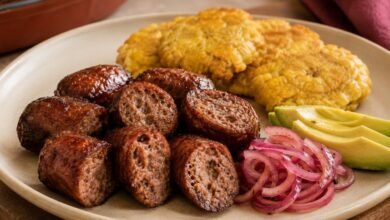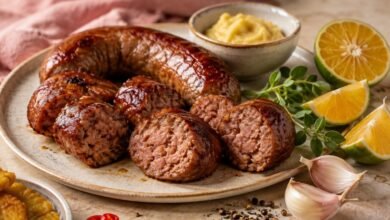
Kotleti are tender, hand-shaped cutlets made with ground meat, fish, potatoes, cabbage or other vegetables. They can be pan-fried until deeply golden, baked for an easier family dinner or cooked in an air fryer when you want a crisp exterior with less oil.
This guide brings the most useful kotleti recipes, cooking methods, serving ideas and storage advice into one place. Start with the classic Russian version, choose lighter chicken or turkey kotleti, compare beef and pork, or explore fish and vegetable alternatives for a completely different meal.
Not sure where to begin? Make the classic Russian kotleti recipe for a traditional family dinner, or try juicy chicken kotleti for a lighter version that also works well for school lunches and meal prep.
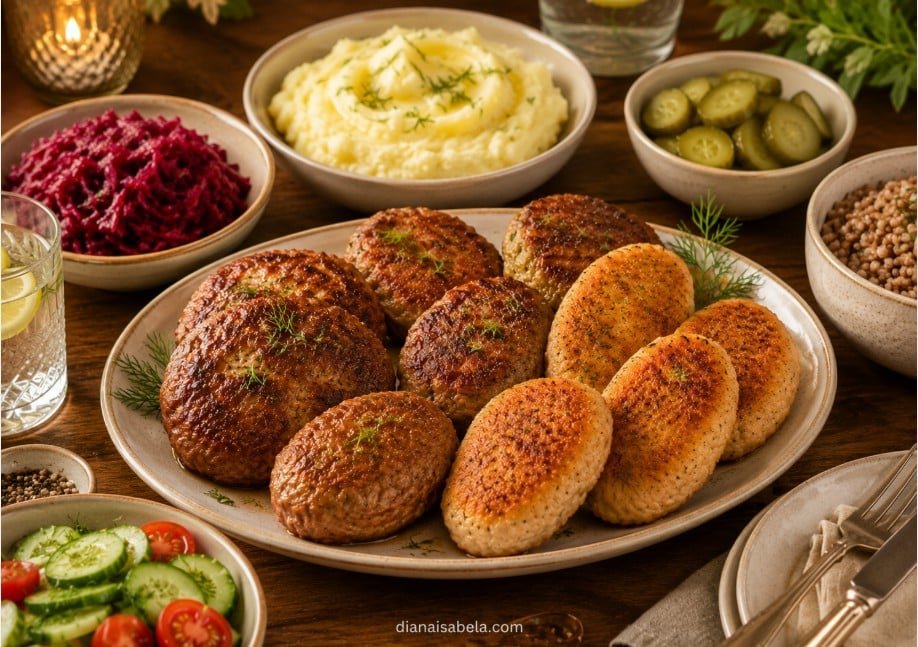
What are kotleti?
Kotleti are Eastern European cutlets most often made by combining ground meat with onion, softened bread or breadcrumbs, seasoning and enough moisture to keep the center tender. The mixture is shaped into small oval patties and cooked until the outside is golden and the middle is fully done.
They may resemble hamburgers, but the texture is different. A burger is generally formed from seasoned ground meat with very little added to it. Kotleti are mixed with ingredients that deliberately soften the filling. Grated onion, bread soaked in milk or water, sour cream, finely grated vegetables or a small amount of butter can all help create the tender interior people expect from a good kotleta.
The same name is also used for fish patties, potato cutlets and vegetable versions. Kotleti are therefore better understood as a broad family of homemade cutlets rather than one fixed recipe.
Golden outside · tender inside · family-friendly · freezer-ready
Kotleti are not the same as burgers
Burgers usually depend on the flavor and fat of the meat itself. Kotleti are intentionally softened with onion, bread, liquid or other ingredients. This creates a gentler texture that works especially well with mashed potatoes, grains, vegetables and sauces.
Kotleti are not always breaded cutlets
In English, the word cutlet may describe a thin whole piece of chicken, pork or veal that is breaded and fried. Traditional ground-meat kotleti are shaped from a mixture rather than cut from a whole piece of meat.
Some kotleti are coated lightly in breadcrumbs, but others are cooked without any breading at all.
How to choose the right kotleti
The best version depends on the meal you want, the type of meat available and how much active cooking you feel like doing.
For a traditional family dinner: Choose Russian-style beef-and-pork or mixed-meat kotleti.
For a lighter weeknight meal: Make chicken or turkey kotleti and serve them with salad, vegetables or buckwheat.
For the juiciest result: Pork or mixed-meat kotleti are usually the most forgiving.
For a large batch: Oven-baked kotleti require less hands-on cooking.
For a crisp surface with less oil: Use an air fryer and lightly brush or spray the kotleti with oil.
For a meat-free dinner: Try potato, cabbage, mushroom or mixed vegetable kotleti.
For leftovers: Make potato kotleti from cold mashed potatoes or fish kotleti from cooked fish.
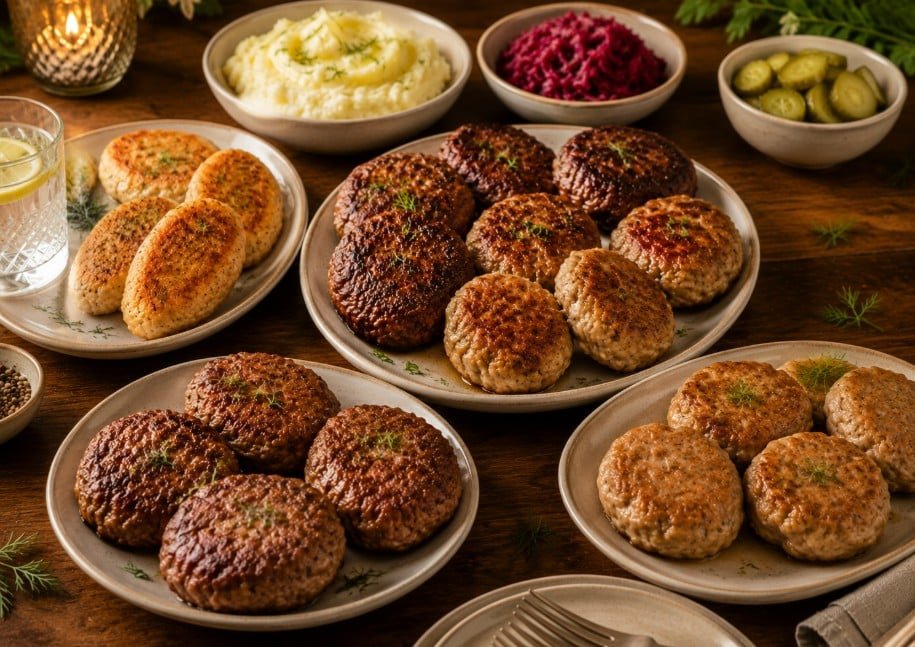
Kotleti recipes and guides available now
The collection currently includes two complete kotleti recipes and two wider guides. New turkey, pork, beef, baked, air-fryer, fish and vegetable recipes will be added here after their individual pages are published.
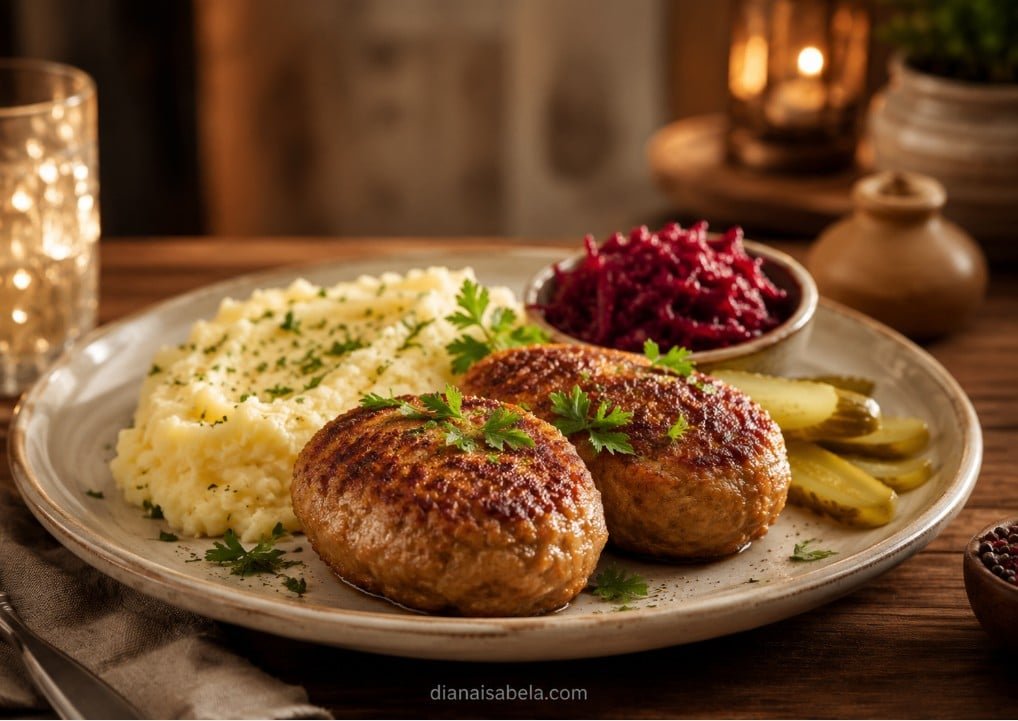
Russian Kotleti Recipe
Start with this recipe when you want the traditional soft center, browned exterior and familiar family-dinner flavor associated with classic kotleti.
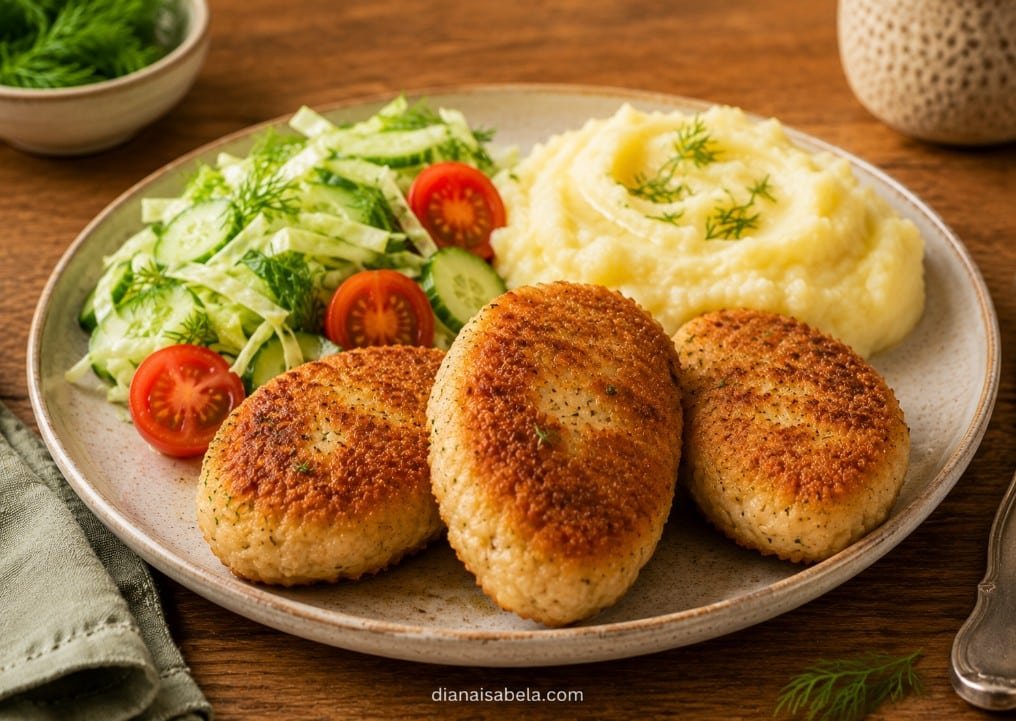
Chicken Kotleti Recipe
These juicy ground-chicken cutlets work for weeknight dinners, family lunches, school meals and relaxed celebrations.
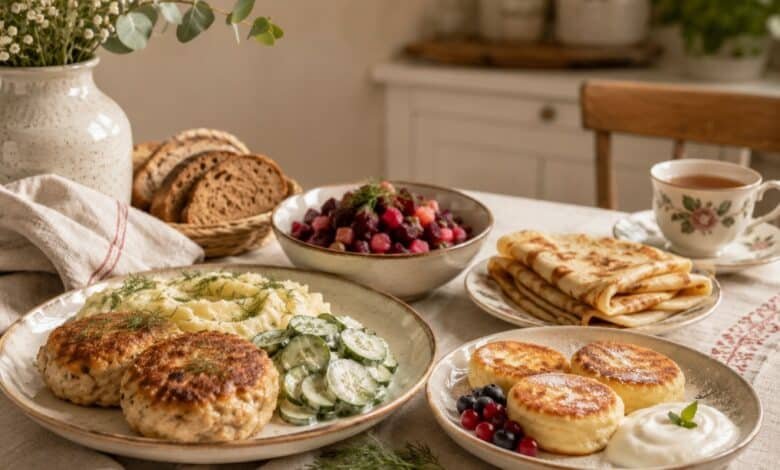
Easy Russian Recipes at Home
Use this wider guide when you want more approachable Russian dishes that feel warm, practical and satisfying.
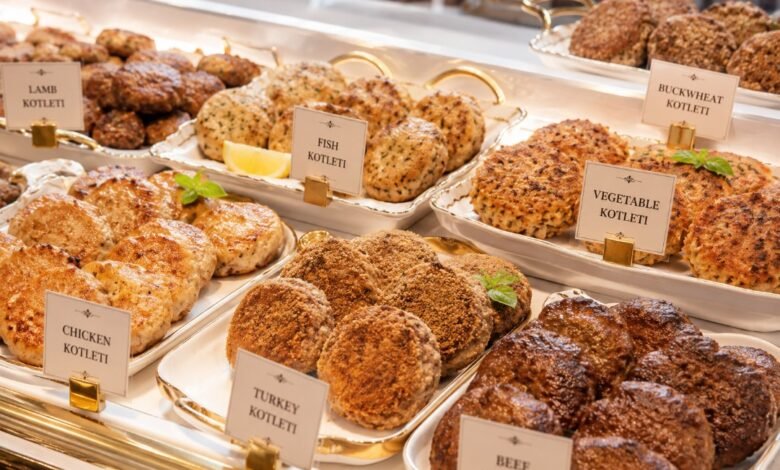
Russian Kotleti Near Me
Prefer to order instead of cook? This guide explains how to find kotleti at Russian restaurants, Eastern European delis, prepared-food counters and specialty stores.
Chicken, turkey, pork, beef and mixed-meat kotleti
Changing the meat affects flavor, tenderness, moisture, cooking time and how well the kotleti reheat. Lean poultry needs different treatment from pork or mixed meat.
Chicken kotleti
Chicken kotleti are mild, tender and easy to pair with mashed potatoes, rice, buckwheat, vegetables or salad. Their familiar flavor also makes them a practical choice for children.
Ground chicken can be soft and sticky. Do not immediately add large amounts of breadcrumbs just to make shaping easier. Chill the mixture for 20 to 30 minutes, then shape it with lightly wet or oiled hands.
Chicken breast is lean and can dry out quickly. A mixture containing some dark meat is usually more forgiving.
Turkey kotleti
Turkey kotleti can be light and flavorful, but they need protection from dryness. Ground turkey breast is especially lean, while turkey containing dark meat produces a fuller flavor and softer texture.
Grated onion, softened bread, sour cream or a small amount of melted butter can help retain moisture. Avoid pressing down on the patties while they cook.
Pork kotleti
Pork naturally creates rich and juicy kotleti. It is one of the easiest choices for beginners because the fat helps protect the meat during frying and reheating.
Pork pairs well with onion, garlic, black pepper, mustard, dill, mushroom sauce and cabbage-based side dishes.
Beef kotleti
Beef kotleti have a deeper flavor and a firmer bite. Very lean beef can create dry or heavy patties, especially when the mixture is overworked or cooked too long.
Choose beef with some fat, use grated onion and include properly softened bread. Shape the patties gently rather than compressing them into dense discs.
Mixed-meat kotleti
Mixed meat often gives the best balance of tenderness and structure. Pork contributes moisture and richness, while beef adds flavor and firmness.
Chicken or turkey can also be mixed with pork when you want something lighter than classic beef-and-pork kotleti but juicier than an all-poultry version.
Diana’s practical rule: The leaner the meat, the more carefully you need to protect its moisture. Use grated onion, softened bread or another moist ingredient instead of trying to fix every texture problem with extra breadcrumbs.
Fish, potato, cabbage and vegetable kotleti
Kotleti do not have to contain red meat or poultry. Fish and vegetable versions are useful when you want a lighter meal, a budget dinner or a way to turn leftovers into something new.
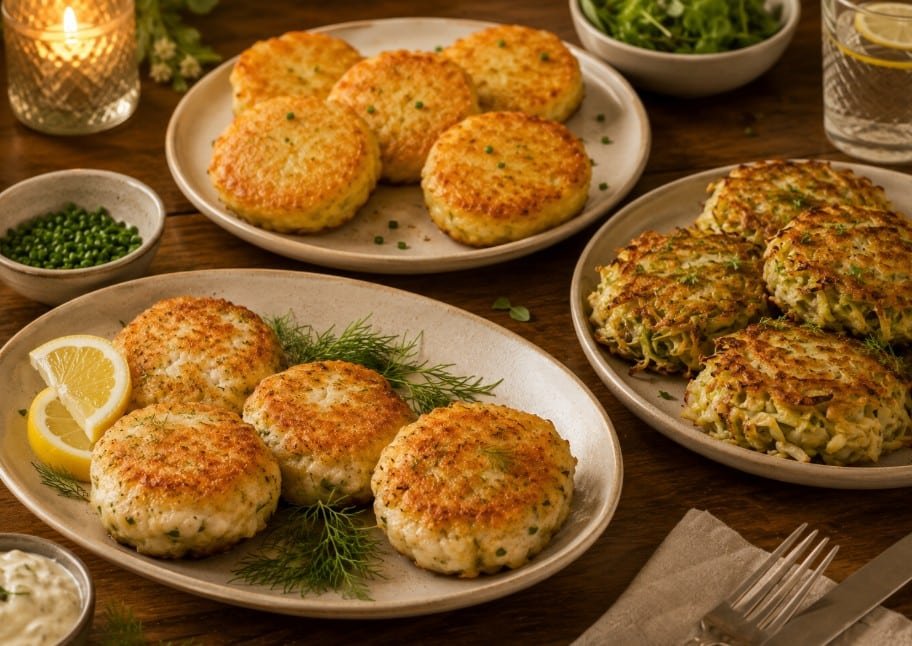
Fish kotleti
Fish kotleti can be made from raw fillets, canned fish or leftover cooked fish. Cod, pollock and other white fish create a delicate result, while salmon produces richer patties.
Chop or grind raw fish without turning it into a completely smooth paste. Add enough binding to hold the mixture together, but not so much that the patties become dry.
Dill, parsley, lemon zest, onion and black pepper work especially well with fish.
Potato kotleti
Potato kotleti are one of the best uses for cold leftover mashed potatoes. Chilled potatoes are firmer and easier to shape than freshly mashed potatoes.
They can be left plain or filled with mushrooms, cabbage, cheese or seasoned meat. A light breadcrumb coating creates a crisp exterior while the middle remains soft.
Cabbage kotleti
Cabbage kotleti are economical and satisfying when the cabbage is cooked until tender and drained properly. Excess water is the most common reason they spread or break.
Finely chopped cabbage can be combined with onion, herbs, egg and a modest amount of flour, semolina or breadcrumbs.
Other vegetable kotleti
Zucchini kotleti: Salt and squeeze the grated zucchini thoroughly.
Carrot kotleti: Use cooked or finely grated carrots with gentle seasoning.
Mushroom kotleti: Cook the mushrooms until their liquid evaporates.
Buckwheat kotleti: Combine cooked buckwheat with onion, mushrooms or potato.
Bean kotleti: Mash the beans coarsely so the center does not become pasty.
Pan-fried, baked or air-fryer kotleti?
Each method creates a different exterior and requires a slightly different approach. The best option depends on batch size, desired crust and how much active cooking time you have.
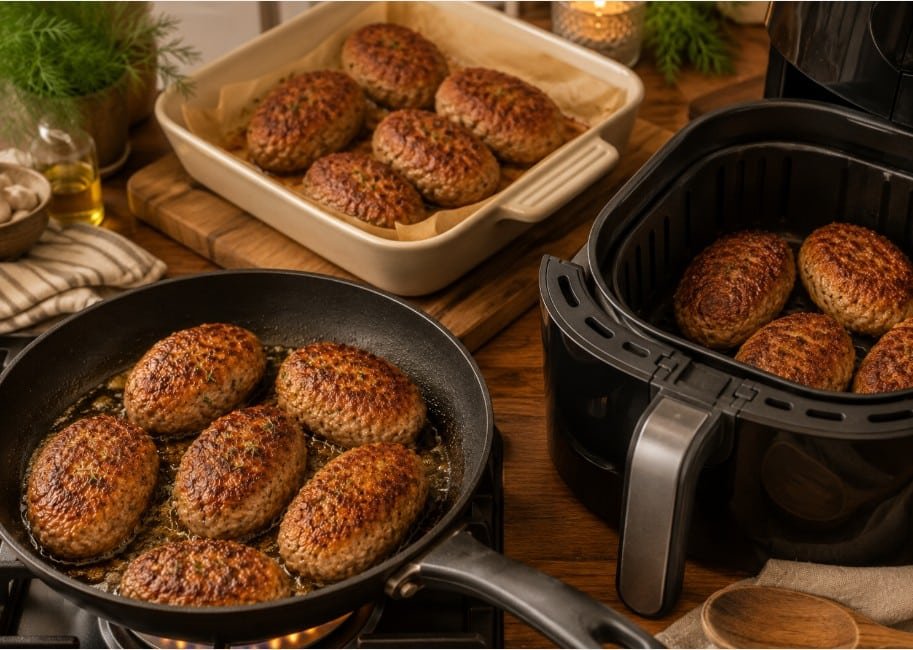
Pan-fried kotleti
Pan-frying creates the most traditional crust. Preheat the pan before adding the kotleti, but do not let the oil smoke.
A cold pan encourages sticking and allows the meat to release liquid before the exterior sets. Leave enough space between the patties and avoid moving them repeatedly.
Wait until the first side forms a proper crust before flipping.
Baked kotleti
Baking works especially well for large batches. Arrange the kotleti on a parchment-lined or lightly greased baking sheet with space between them.
Lightly brushing or spraying the surface with oil improves browning. Turn them once if you want more even color, although the exact need depends on the baking sheet and oven.
Air-fryer kotleti
Air frying gives a crisp surface with less oil and works best for smaller batches. Lightly oil the basket and do not crowd it.
Flip the kotleti halfway through unless your air fryer browns evenly from both directions. Cooking time will vary by thickness and meat type.
Deepest crust: Pan-fried kotleti.
Best for a large family batch: Oven-baked kotleti.
Least oil: Air fryer or oven.
Most traditional method: Pan-frying.
Least active work: Baking.
How to keep kotleti juicy
Juicy kotleti do not depend on one secret ingredient. The result comes from the balance between meat, fat, onion, bread, liquid, mixing and cooking temperature.
Use softened bread instead of too many dry breadcrumbs
Bread soaked in milk or water forms a soft panade that helps hold moisture inside the meat. Dry breadcrumbs absorb liquid more aggressively and can make the mixture dense when too much is added.
Grate the onion
Grated onion distributes moisture and flavor more evenly than large diced pieces. Large pieces can also create weak spots that make the patties split.
Do not overmix
Mix only until the ingredients are evenly combined and the mixture holds together. Aggressive mixing can produce a firm, springy texture.
Keep the mixture cold
A chilled mixture is easier to shape and keeps the fat from softening too early. If the mixture feels loose, refrigerate it before adding extra breadcrumbs.
Do not press the patties in the pan
Pressing with a spatula squeezes out moisture. Shape the thickness before cooking and leave the kotleti alone while the crust develops.
Ground poultry should reach an internal temperature of 165°F or 74°C. Ground beef, pork, veal and lamb should reach at least 160°F or 71°C.
Why kotleti fall apart
Kotleti usually break because the mixture is too wet, too warm, poorly shaped or moved before the first side has formed a crust.
Too much liquid: Add a small amount of breadcrumbs and let the mixture rest before deciding whether it needs more.
Large onion pieces: Grate or finely mince the onion.
Warm mixture: Refrigerate it before shaping.
Patties are too large: Form smaller oval kotleti that are easier to turn.
Pan is not hot enough: Preheat it so the exterior begins setting immediately.
Flipped too early: Wait until the underside is browned and releases more easily.
Watery vegetables: Squeeze moisture from zucchini, cabbage, mushrooms or other wet ingredients.
Cook one small test kotleta before frying the entire batch. This lets you check the seasoning, moisture and structure without risking all of the mixture.
What to serve with kotleti
Kotleti can feel cozy, fresh, casual or festive depending on the sides and sauces served with them.
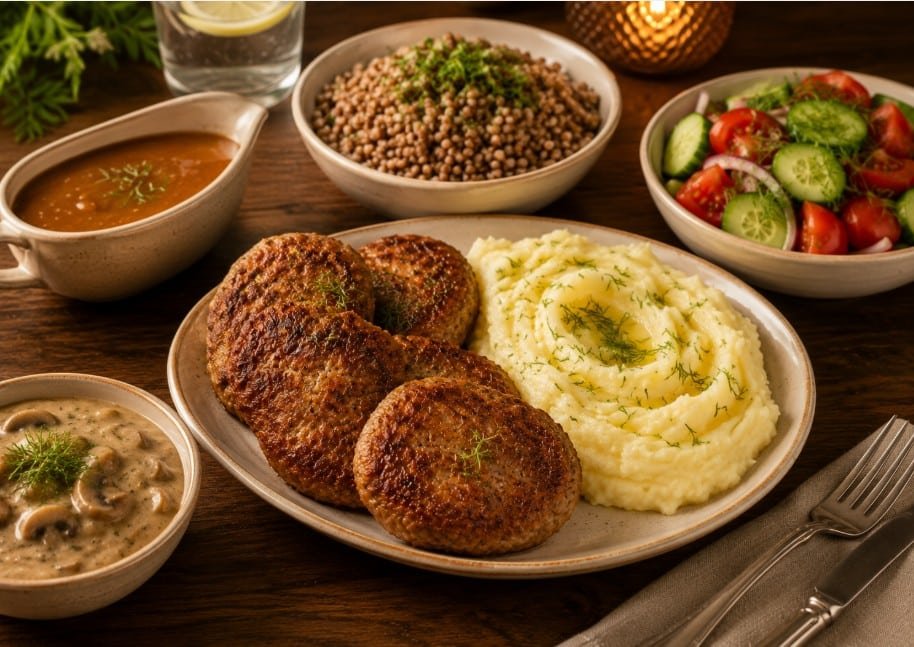
Potatoes
Creamy mashed potatoes
Roasted potatoes with garlic and dill
Boiled baby potatoes with butter
Potato wedges
Potato kotleti
Grains and pasta
Buckwheat with butter and sautéed onion
Rice with herbs
Barley with mushrooms
Egg noodles with butter
Pasta with mushroom sauce
Fresh and cooked vegetables
Cucumber, tomato and dill salad
Cabbage and cucumber salad
Beet salad
Roasted carrots
Green beans with butter
Steamed peas
Pickled cucumbers and vegetables
Sauces
Mushroom sauce: Best with beef, pork and mixed-meat kotleti.
Simple gravy: Works with almost every meat version.
Sour cream and dill: Good with chicken, turkey, fish and potatoes.
Mustard cream sauce: Especially good with pork.
Tomato sauce: Useful for baked kotleti and leftovers.
Lemon yogurt sauce: A fresh option for fish and vegetable kotleti.
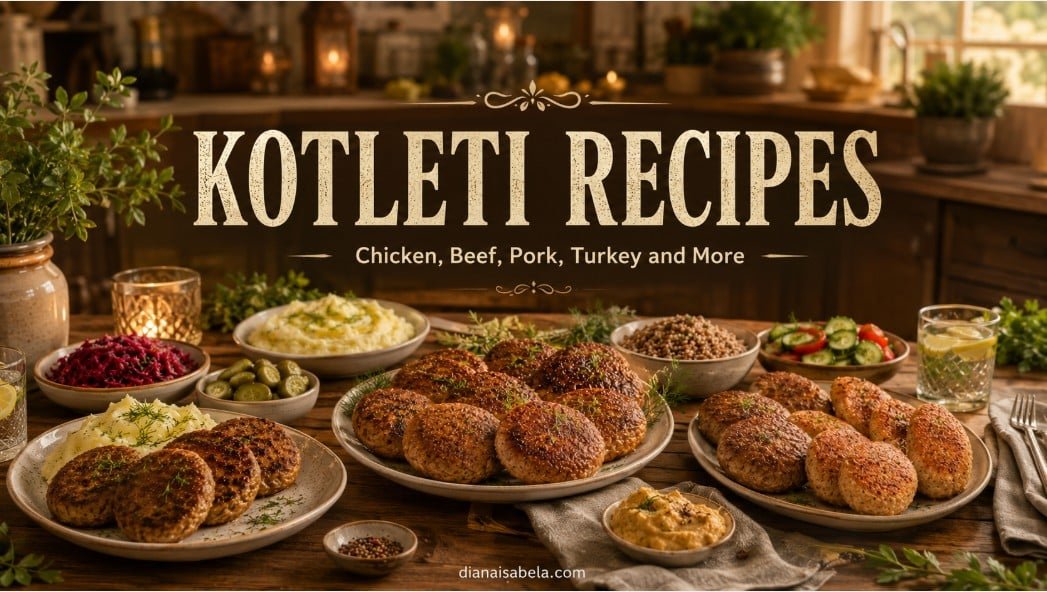
How kotleti fit real family meals
One batch of kotleti can become several different meals without feeling like the same dinner repeated every day.
Weeknight dinner
Serve freshly cooked kotleti with mashed potatoes, buckwheat or rice and one simple salad. The meal feels complete without requiring several complicated dishes.
School or work lunch
Smaller chicken or turkey kotleti are easy to pack with rice, cucumber slices, tomatoes, fruit or pasta.
Cool the cooked kotleti before closing the lunch container so steam does not soften the entire meal.
Kotleti sandwich
Place a cold or reheated kotleta in a soft roll with lettuce, cucumber, mustard, yogurt sauce or pickled vegetables.
Kotleti bowl
Build a bowl with buckwheat or rice, sliced kotleti, cabbage salad, cucumbers and sour cream or yogurt sauce.
Holiday or celebration table
Make the kotleti slightly smaller and more uniform, arrange them on a warm platter and serve mushroom sauce separately. Add roasted potatoes, salads, pickles and fresh herbs.
Cooking for a crowd
Plan approximately two medium kotleti per adult when they are the main course. Children may eat one, while guests with larger appetites may take three.
Shape the patties in advance and refrigerate them on trays. Cook in batches and keep them warm in a covered baking dish at a low oven temperature.
How to store and freeze kotleti
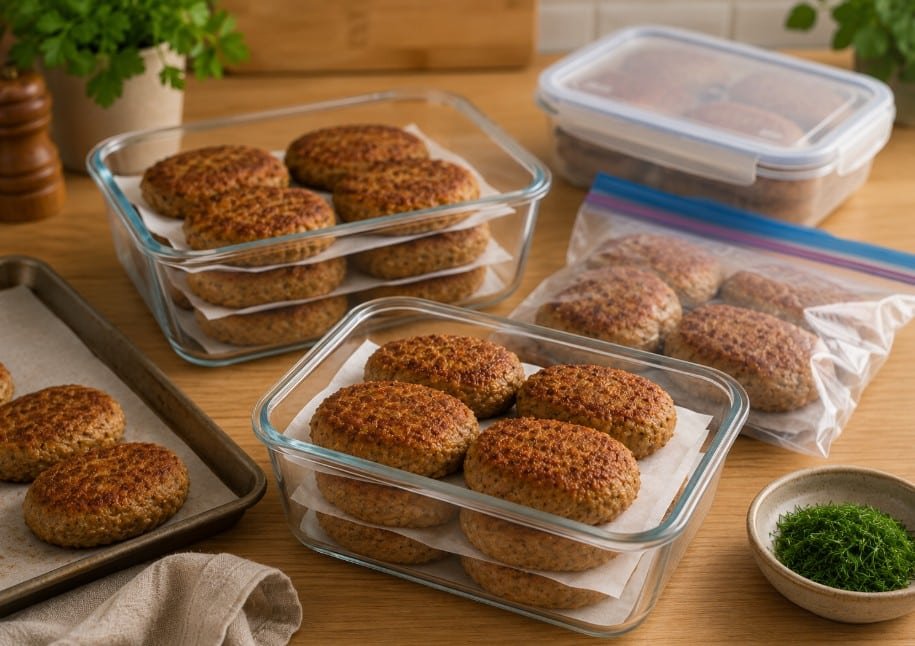
Refrigerating cooked kotleti
Cool the cooked kotleti and transfer them to an airtight container. Place parchment between layers if they have a delicate crust.
Most cooked kotleti are best eaten within three to four days.
Freezing raw kotleti
Shape the raw mixture into individual patties and place them on a parchment-lined tray without touching.
Freeze until firm, then move them to a freezer-safe bag or container. Separate layers with parchment and label the package with the meat type and date.
Freezing cooked kotleti
Cool cooked kotleti completely before freezing. Freeze them in a single layer first or separate each layer with parchment.
Remove as much air as practical from the package to reduce freezer burn.
Thawing
Thaw raw or cooked kotleti overnight in the refrigerator. Cook raw meat kotleti promptly after thawing.
Reheating
Reheat kotleti gently in a covered skillet with a small splash of water or broth. They can also be warmed in a covered baking dish.
When using a microwave, choose medium power, cover the kotleti and heat in short intervals.
Meal-prep idea: Freeze part of the batch raw for a freshly cooked dinner and part cooked for quick lunches. Label the packages clearly so you know which cooking method each batch needs.
How this kotleti collection will grow
This hub begins with the classic Russian and chicken recipes, then expands by meat, cooking method and purpose.
Future complete recipes will cover turkey, pork, beef, mixed meat, baked, air-fryer, fish, potato and cabbage kotleti.
Separate guides will also cover mushroom sauce, mashed potatoes, side dishes, freezing and the most common reasons kotleti fall apart.
Until those pages are published, this guide gives you the essential techniques without sending you to empty or invented links.
Frequently asked questions about kotleti
What meat is best for kotleti?
Pork-and-beef mixtures are classic because pork adds moisture while beef adds flavor and structure. Chicken and turkey are lighter but require more careful handling to prevent dryness.
Why is bread added to kotleti?
Softened bread helps retain moisture and creates a tender texture. It works differently from adding a large amount of dry breadcrumbs, which can make the patties dense.
Do kotleti need an egg?
Not every meat mixture needs an egg. Egg can add structure, but too much may make kotleti firm. Fish and vegetable mixtures often benefit more from egg than some meat versions do.
Can I bake kotleti instead of frying them?
Yes. Arrange the shaped kotleti on a lined or lightly greased baking sheet, leave space between them and lightly oil the surface for better browning.
How do I keep chicken or turkey kotleti juicy?
Use grated onion, softened bread and enough moisture. Avoid overmixing, pressing the patties with a spatula or cooking them longer than necessary.
Why do my kotleti break when I flip them?
The mixture may be too wet, too warm or flipped before the first side forms a crust. Chill a soft mixture, shape smaller patties and preheat the pan properly.
Can kotleti be frozen before cooking?
Yes. Shape the raw kotleti, freeze them individually on a parchment-lined tray and then transfer them to a freezer-safe bag or container.
How long do cooked kotleti last in the refrigerator?
Cooked kotleti are generally best eaten within three to four days when cooled promptly and stored in an airtight container.
What is the best way to reheat kotleti?
Reheat them gently in a covered skillet with a small splash of water or broth, or warm them in a covered baking dish.
What should I serve with kotleti?
Mashed potatoes, buckwheat, rice, roasted potatoes, cucumber salad, cabbage salad, beet salad, vegetables, mushroom sauce and gravy all work well.