How to Tell Which Part of an Outfit Is Making It Feel Wrong

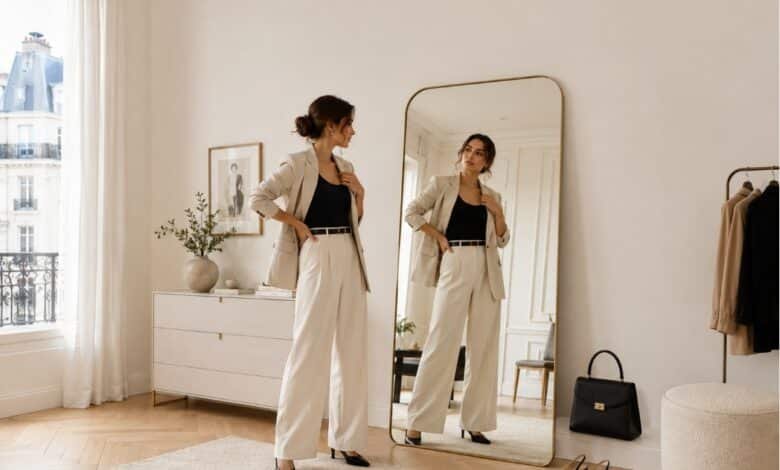
There is a very specific kind of wardrobe frustration that has nothing to do with not owning enough clothes. You put on pieces that all make sense separately. The trousers fit. The top is flattering. The shoes are not objectively wrong. The bag is nice. And yet the outfit still feels slightly off, as though one sentence in an otherwise good paragraph has been written in the wrong tone.
That feeling is useful. It usually means the outfit is not a disaster; it is simply sending two or three visual messages at once. The mistake is trying to fix everything together. You change the shoes, add jewelry, remove the jacket, retuck the shirt and suddenly you no longer know which version was closest to working.
What usually makes an outfit look wrong? Most often, one relationship is unresolved: the top ends at the wrong point, the shoe is visually heavier than the rest of the look, the neckline is crowded, the color weight is sitting in one area, or the bag and layer belong to a different level of formality. The fastest fix is to isolate one relationship at a time.
First, read the outfit instead of reacting to it
When an outfit feels wrong, most people immediately begin editing. That is understandable, but it removes the evidence. Before you touch anything, stand normally. Let the jacket hang the way it actually hangs. Put down the hand that is secretly holding the waistband in place. Stop turning your body toward the angle you already know is the most flattering.
Now ask one question: where does your eye stop?
Not where you wish it stopped. Not what you intended to be the statement piece. Where does it actually stop? On a waistband? A bulky shoe? A short jacket hem? A bright bag? A neckline that seems crowded? An ankle gap that looks accidental?
That point is often the beginning of the answer.
The pause point
If your eye repeatedly returns to one area, that area is probably interrupting the outfit’s flow. The item itself may be fine; its placement or relationship to the surrounding pieces may be the real problem.
There is also a difference between an outfit that is visually wrong and one that is emotionally unfamiliar. A new silhouette may feel strange simply because you have not seen yourself in it before. Wide trousers, a longer coat, a lower waist or a larger shoe may need time before your eye accepts the proportion. That does not automatically mean the look is unsuccessful.
A real styling problem tends to stay visible from several angles. An unfamiliar look often becomes more convincing after movement, a better mirror distance or ten minutes of wearing it around the house.
Only after you know what you are seeing should you start changing it.
Is the problem the outfit’s shape?
Most mysterious outfit problems begin with shape. Not body shape—the shape created by clothes. Every outfit has a visible outline and a few important horizontal breaks: shoulder line, neckline, jacket hem, waistband, top hem, skirt hem, trouser break and shoe opening.
When those breaks land in unhelpful places, the outfit can feel chopped, boxy or strangely heavy even when the clothes fit correctly.
The top may be ending at the wrong point
A top that stops exactly at the widest part of the hip can create a strong horizontal line. That does not mean the top is “unflattering” or that the hips need to be hidden. It simply means the garment is dividing the silhouette at a visually important point.
Before rejecting the top, fold it inward by one or two inches. Do not fully restyle the outfit. Just change the length. If the whole look becomes clearer, you have identified the problem.
The same test works with jackets. A jacket ending only slightly below the top underneath can create two close, competing hems. Either a clearly shorter jacket or a noticeably longer one may look more intentional.
The outfit may have no visible center
Long top, wide trousers, open overshirt, large bag: every piece can be attractive, but the body may disappear inside a series of broad rectangles. The solution is not always a belt. Sometimes all the outfit needs is one visible point of structure—a waistband, a wrist, a narrow neckline, an open jacket line or a cleaner shoe.
People often hear “define the waist” as a command to make the body look smaller. That is not the useful version of the idea. A visible center simply helps the eye understand the construction of the outfit.
Two volumes may be asking for attention at once
Oversized top with wide trousers can look excellent, but the outfit usually needs a second organizing idea. It might be a strong shoulder, matching color, a narrow shoe, a visible ankle, a deep neckline or fabric with enough movement to prevent the look from becoming one static block.
If the outfit feels bulky, do not immediately replace the wider piece. First change one volume. Keep the trousers and switch the top to something cleaner. Then return to the original top and test it with a straighter bottom. The comparison tells you whether the problem is the individual garment or the combination.
When volume looks deliberate
There is a strong line, a clear opening, repeated color, visible movement or one narrow point that gives the eye a place to rest.
When volume looks accidental
Every section is equally wide, several hems land close together, and the fabric stands away from the body without a clear direction.
The lower hem and the shoe may be fighting
A midi skirt can look graceful with one shoe and strangely heavy with another. The reason is often not the style of the shoe but the amount of leg trapped between the hem and the shoe opening.
A tiny gap between a skirt hem and a high boot may look accidental. A larger gap can look deliberate. Closing the gap completely can also work. The awkward zone is often the in-between.
Trouser length creates the same issue. A full break over a substantial shoe may feel relaxed. A clean crop above a low shoe may feel sharp. But trousers that almost reach the shoe and bunch only slightly can look unplanned.
The hem is a punctuation mark. If it lands in the wrong place, the outfit sounds uncertain.
When the problem is happening near your face
The area around the face is small, but it often contains the most competing information: neckline, collar, lapel, necklace, earrings, scarf, hair, glasses, makeup and the top edge of a jacket.
An outfit can be calm everywhere else and still feel wrong because this one zone is too busy.
Clear the area before adding anything
Remove the necklace. Move the hair behind the shoulders. Open the jacket. Undo one button. Then look again.
If the outfit suddenly feels more expensive, calmer or more modern, the clothes were not missing detail. They were missing space.
High necklines plus large earrings: both frame the face strongly and can compete.
Printed tops plus statement necklaces: the necklace may sit on top of an already active surface.
Large collars plus long hair worn forward: the collar shape disappears and the area becomes dense.
Blazer lapels plus a scarf: several diagonal lines can crowd the chest.
Detailed neckline plus crossbody strap: the strap creates another line through the focal area.
The neckline may belong to a different mood
A neckline carries personality. A sharp square neck feels graphic. A soft scoop feels relaxed. A high crewneck feels clean or sporty. A deep V feels open and directional. A ruffled collar feels decorative. Problems appear when the neckline tells one story and every other item tells another.
That contrast can be stylish, but it needs a bridge. A sporty crewneck with a satin skirt may need a clean sneaker or simple hair to make the combination feel intentional. A romantic blouse with rigid cargo trousers may need a softer shoe or bag to keep the top from looking accidentally borrowed from another outfit.
Find where the outfit feels too heavy
Visual weight is not the same as physical weight. A black platform shoe can look heavier than a pale flat. A large dark bag can pull the outfit downward. A broad bright jacket can make the upper body dominate. Shiny hardware can attract more attention than a matte fabric even when the item is small.
Color, scale, texture and coverage all contribute to weight.
Use the squint test
Stand back and slightly blur your vision. The details disappear, leaving the biggest light and dark shapes. Where is the darkest area? Where is the brightest color? Is one part of the outfit visually isolated?
If the only dark element is a large shoe, the outfit may feel bottom-heavy. If the only bright element is a jacket, the upper half may dominate. If a dark bag sits at the widest part of the body, it may become more noticeable than you intended.
One repeated color often solves this. Not exact matching—just a visual echo. A dark shoe can make more sense when the belt, bag handle, sunglasses or top contains a small amount of the same depth.
Shoes can change the whole outfit without changing the clothes
The shoe is not a final decorative choice. It changes the silhouette above it.
A chunky loafer can support wide trousers because both have visual substance. The same loafer under a fine, narrow dress may dominate unless another structured element supports it. A delicate flat can extend a slim trouser but disappear under a broad puddled hem.
The bag may be changing the outfit’s balance
A bag has shape, scale and a carrying position. All three matter.
A small structured bag can sharpen a relaxed outfit. A large soft tote can make tailoring feel practical and casual. A crossbody strap can cut through a carefully shaped waist or interrupt a print. A shoulder bag may sit exactly at the widest part of the body and create a new visual block.
Sometimes the right fix is not a different bag. It is carrying the same bag differently.
Sometimes every piece is good, but they belong to different days
An outfit can fail without any obvious proportion problem. The issue may be emotional consistency. One piece is formal, one sporty, one romantic, one utilitarian—and none of them is clearly acting as the contrast piece.
Mixing moods is not the problem. Unresolved mixing is.
Look for a missing bridge
A satin skirt and sweatshirt can work because the sweatshirt relaxes the skirt. But if you add a very formal bag and technical running shoes, the outfit now contains three different levels of polish. One bridge is missing.
Color: the shoe repeats the top, helping casual and dressy elements belong together.
Texture: a matte bag softens a shiny skirt.
Shape: a structured jacket supports a substantial shoe.
Styling: simple hair and minimal jewelry make an unusual mix feel intentional.
Repetition: one sporty detail appears twice instead of existing alone.
Fabric energy can expose the mismatch
Fabric communicates before we consciously name it. Crisp poplin feels controlled. Washed denim feels familiar. Satin catches light and appears more dressed. Fleece looks practical. Leather adds density. Lace feels decorative. Linen looks relaxed even when tailored.
Contrast between fabrics can make an outfit richer. But if every fabric has a different level of polish, the look may feel assembled rather than composed.
The outfit may be too literal
Sometimes the problem is not mismatch but overcommitment. Every element confirms the same aesthetic: bow, ruffle, pastel, tiny bag, dainty shoe, pearl earring. Or black leather, metal hardware, dark sunglasses, heavy boot, graphic top.
The outfit begins to feel like a costume because there is no ordinary piece to ground it.
Remove the most literal detail. Keep the silhouette or the strongest item, then add something from your actual everyday wardrobe. Personal style often appears in the tension between the aesthetic you admire and the clothes you genuinely live in.
The guide to building a personal style uniform can help identify those grounding pieces.
The outfit is not finished until it survives real life
An outfit that only works while standing still in front of a mirror is not fully solved.
Sit down. Walk quickly. Raise your arms. Put on the bag. Reach for something. Cross your legs. Put on the coat you will actually wear. Watch what moves.
If the top rides up, the waistband rolls, the skirt twists, the strap falls, the jacket pulls or the shoes change your walk, the visual doubt may be coming from physical discomfort.
Your body may be warning you before your eye understands
Constant adjustment creates tension. Even a beautiful outfit looks less convincing when the wearer is monitoring it every few seconds.
Comfort does not mean everything must be loose or soft. It means the outfit is secure enough to let you forget it. A fitted dress can be comfortable. A loose top can be uncomfortable if it slips. A low heel can be worse than a higher one if it is unstable.
Use the camera for evidence, not punishment
A mirror shows depth and movement. A phone camera freezes one angle and often exaggerates the nearest body part. A close selfie is a poor tool for judging the full outfit.
Use the back camera from several feet away. Take a front photo, side photo and a short walking video. If the problem appears only in one awkward frame, it may not matter in real life. If it appears from every angle, you have stronger evidence that the line, fit or balance needs adjustment.
For the emotional side of this process, the article on confidence in your outfit separates real styling problems from the fear of being noticed.
Eight outfit problems that feel vague until you name them
“I look bulky, but nothing is too small”
The likely issue is stacked volume or hidden structure. Reveal one narrow point: wrist, ankle, neckline, waist signal or open jacket line. If the outfit becomes clearer, it needed an edge—not tighter clothes.
“The outfit looks boring, but accessories make it worse”
The base may lack one strong anchor. Choose a single decisive element: interesting shoe, stronger neckline, clear belt, textured jacket or purposeful color contrast. Several tiny details do not replace direction.
“It looks good from the waist up and wrong full-length”
Check the shoe, trouser break and lower hem. Selfies hide the lower half. The top may be perfectly fine while the shoe weight changes the whole outfit.
“It looks too young”
Usually several sweet signals are stacked together: short hem, puff sleeve, pastel color, bow, round-toe shoe and tiny bag. Keep the element you genuinely like and simplify one or two supporting details.
“It looks too serious”
Dark color, sharp collar, tailored trouser, formal shoe, structured bag and sleek hair may all be reinforcing the same message. Relax one category with texture, exposed skin, softer color or a less formal bag.
“It looks cheap even though the pieces were expensive”
Check finish before price. Wrinkles, pilling, scratched hardware, loose threads, dirty shoes and stretched hems can dominate the whole impression. Also check whether too many shiny surfaces are competing.
“The outfit works until I put on the coat”
The coat changes the silhouette. Compare coat hem to skirt or dress hem, check shoulder scale and see whether the bag fits under the coat’s volume. The coat is not a neutral cover; it is another major shape.
“The outfit is flattering but does not feel like me”
This is not a fit issue. Add one familiar signature: your usual shoe shape, jewelry scale, color, hairstyle, bag or level of ease. A flattering outfit can still feel wrong when it removes every recognizable part of your style.
Use the same detective method before buying more clothes
The best time to identify an outfit problem is before the item enters your closet.
Instead of asking only whether the garment is attractive, ask what relationships it requires.
For tops
Where does the hem land? Does the neckline need special jewelry or undergarments? Is the sleeve volume compatible with your jackets? Is the fabric stiff, fluid, clingy or sheer? Which three bottoms in your actual closet give it a clear shape?
For trousers
Which shoe height does the length require? Does the rise stay comfortable while sitting? Does the width need a shorter top or stronger shoulder? Does the fabric hold its line after walking?
For dresses and skirts
Where does the hem meet your usual shoes? Does the garment move or only photograph well while still? Does the neckline work with the layer you will need? Are you comfortable carrying your real bag with it?
For shoes
Judge them with full outfits, not in isolation. A shoe can be beautiful and still be too delicate, too substantial, too formal or too high-contrast for the clothes you wear most.
For bags
Check strap drop, scale, closure, hardware and where the bag sits against the body. A practical bag should be evaluated with coats, not only with a fitted fitting-room outfit.
The online clothes shopping guide is useful for measurements, fabric clues and return decisions. This method adds a different question: not “Does the item fit?” but “What will this item ask the rest of my wardrobe to do?”
The useful answer is usually smaller than you think
When an outfit feels wrong, do not replace the whole look. Freeze it. Notice where your eye stops. Test the shape before the accessories. Clear the neckline. Find the heaviest area. Check whether the shoe and bag support the same mood. Move, sit and photograph from a normal distance.
Then keep the first change that makes the outfit quieter.
The best correction is often almost boring: two inches less length, one open button, a lighter shoe, a moved strap, a removed necklace or a layer worn open instead of closed. Small fixes work because most outfits are not completely wrong. They are simply interrupted.
Questions readers ask when an outfit feels off
Why does my outfit look wrong even when everything fits?
The issue may be the relationship between the pieces rather than the fit of any single item. Check where hems land, how much visual weight the shoes add, whether the neckline is crowded and whether the bag or layer belongs to the same mood.
What is the first thing I should change when an outfit feels off?
Test proportion first. Fold the top slightly shorter, reveal the waistband, open the jacket or change the tuck. Proportion affects the whole silhouette, so it usually gives clearer information than changing jewelry first.
Why do oversized clothes sometimes make an outfit look bulky?
The outfit may be hiding every narrow point or stacking equal volume on top and bottom. Revealing a wrist, ankle, neckline, waistband or open vertical line can make the shape readable without requiring tighter clothes.
How can I tell whether the shoes are ruining the outfit?
Compare one lighter shoe, one heavier shoe and one shoe closer in color to the bottom. This reveals whether the problem is visual weight, contrast or a mismatch in formality.
Can colors match and still make an outfit look unbalanced?
Yes. Dark, bright or highly contrasting colors carry more visual weight. If all that weight sits in one part of the outfit, the look can feel unbalanced even when the colors technically coordinate.
How do I know if I am wearing too many accessories?
Temporarily remove everything near the face and chest, including necklaces, scarves and large earrings. Add back one element at a time. If the outfit looked stronger before the additions, it needed space rather than more decoration.
Why does a trendy outfit sometimes feel like a costume?
Too many details may be confirming the same aesthetic at once. Keep one or two strong signals and add an ordinary item from your real wardrobe so the outfit feels connected to your own style.
Why does my outfit look better in the mirror than in photos?
A mirror shows movement and depth, while a camera freezes one perspective and may distort proportions. Use a full-length back-camera photo from a normal distance and a short walking video instead of judging the outfit from a close selfie.
How do I know when to stop fixing an outfit?
Stop when one change makes the silhouette clearer and you no longer feel compelled to keep adjusting it. Continuing after the main problem is solved often creates a new source of visual noise.