What Does Colombian Sancocho Taste Like? Broth, Yuca, Plantain & Meat

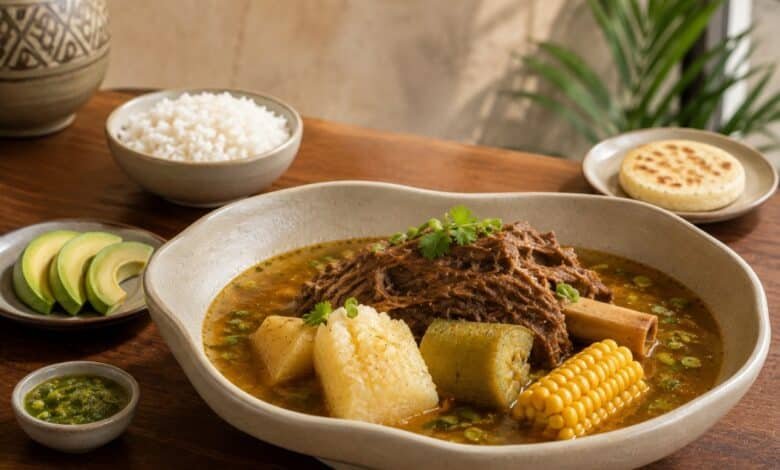
The first spoonful of Colombian sancocho is rarely dramatic in the way a chile-heavy curry or a sharply acidic ceviche can be dramatic. It does something quieter. The broth tastes savory and settled, the yuca begins to soften against your tongue, green plantain gives the soup a distinctly earthy starchiness, and then a piece of corn arrives with a little sweetness just when the meat and broth are becoming serious.
That is the broad family resemblance. The exact flavor can shift considerably depending on whether the pot contains beef rib, hen, chicken, oxtail, several meats or fish, and Colombian regional traditions are far too varied for one bowl to represent all the others. The useful way to describe sancocho is not “it tastes like beef soup.” It is to understand what each part contributes and how those pieces become one very comforting pot.
The First Spoonful Is More Savory Than Spicy
One of the easiest misconceptions is expecting Colombian sancocho to announce itself through chile heat. That is not what defines the dish. A classic bowl is primarily savory, aromatic and starchy, with the protein and vegetables building flavor over a long simmer.
Cilantro, scallion, garlic and other aromatics can give the broth brightness, but they normally work inside the flavor rather than sitting on top of it like a raw herb salad. The meat contributes depth. The starches soften the edges. Corn can add a gentle sweet note. Salt ties everything together.
If ají is served alongside, that is where you can bring heat and acidity into the meal yourself. I like that arrangement because it means the original broth gets one chance to introduce itself before hot sauce starts speaking over everyone.
The Broth Should Taste Like the Ingredients Have Been Living Together
There is a particular difference between soup whose ingredients have cooked together and soup that feels assembled. Sancocho needs the first feeling.
Meat gives flavor to the liquid while yuca, plantain and potato release starch. Corn adds a softer sweetness. Aromatics move through the broth. With time, the boundaries begin to blur just enough that a spoonful without any meat in it still tastes like the whole pot.
That does not mean the broth must be thick. Some bowls are clearer and lighter; others carry more starch and gelatin. The important thing is cohesion. If the liquid tastes like salted water while every vegetable appears to be having a private experience, something has gone wrong.
The texture I want from the broth
I want enough body that the broth lightly coats the spoon, but not so much starch or fat that it becomes gravy. With beef rib or oxtail, gelatin can create a silkier mouthfeel. With gallina, the broth may feel cleaner and more aromatic. Fish can take it in an entirely different direction.
This is also why judging sancocho only by photographs is dangerous. A bowl with the most spectacular rib and the largest piece of corn can look magnificent while the liquid underneath tastes strangely empty. Soup keeps secrets.
Yuca Is the Ingredient That Makes Me Understand the Whole Bowl
Soft, earthy and quietly luxurious
Yuca does not have an aggressive flavor. Its magic is texture. When properly cooked, it becomes tender and almost fluffy inside, somewhere between a very starchy potato and something more fibrous and substantial.
In sancocho, those porous pieces absorb broth. That means a bite of yuca can taste more intensely of the pot than a spoonful of liquid alone. Beef broth makes it taste beefier. Gallina broth turns it poultry-rich. Fish broth changes it again.
Yuca also releases starch as it cooks, contributing to the body of the soup. Too little cooking and it remains stubborn, dry or fibrous. Too much vigorous cooking and pieces can collapse, thickening the broth more than intended.
The sweet spot is a piece that gives easily under a spoon but still arrives in your bowl looking like itself.
Green Plantain Does Not Make Sancocho Taste Like Dessert
If your main relationship with plantain is a plate of caramelized maduros, green plantain in soup can be a small revelation. It is not ripe, sugary or dessert-like. Its flavor is much more restrained: vegetal, earthy and starchy.
During cooking it contributes body to the broth and takes on the flavors around it. The texture should soften while retaining more structure than yuca. A good piece of plantain feels as though it belongs to the soup; a badly timed one can taste strangely separate, like someone boiled it elsewhere and dropped it into the bowl shortly before serving.
That green plantain flavor is one of the reasons sancocho does not taste exactly like American beef-and-potato soup even when beef is the protein. Remove the plantain and yuca, replace them with carrots and noodles, and you have changed more than the ingredient list. You have changed the language of the broth.
Then Corn Interrupts With Something Sweet
Corn in sancocho is one of my favorite pieces of flavor punctuation. You can be eating beef, broth and yuca — all savory, earthy and rather serious — and then bite into corn and get a small burst of sweetness.
It should not make the soup sugary. Think contrast rather than dessert. The sweetness gives your palate somewhere else to go before returning to meat and broth.
Texturally, corn also does something useful. Yuca can be very soft, potato can become tender, and plantain has its own dense starchiness. Corn remains juicy and slightly crisp by comparison, so the bowl does not become one uninterrupted sequence of soft beige things, which is a sentence I suspect no restaurant wants on its menu.
Change the Protein and You Change the Entire Personality
This is where any single answer to “what does sancocho taste like?” begins to break apart. The starches may remain familiar, but the protein changes the broth, richness, aroma and texture of the meal.
Sancocho de Res
Beef gives the broth deeper savory notes. When costilla is used, bone and connective tissue can add gelatin and make the broth feel fuller. The meat itself can become exceptionally tender after slow cooking.
For a first-time diner, beef is probably the easiest bridge into sancocho because the flavor is recognizable while yuca and green plantain introduce the parts that feel distinctly different from familiar beef soups.
Sancocho de Gallina
Gallina means mature hen, and that distinction matters. The meat normally has more texture than young chicken and a stronger poultry character. The broth can taste deeply savory without having the darker richness of beef.
Herbal flavors can feel particularly clear in gallina broth, and the combination with yuca and plantain can be wonderfully balanced. If you want to explore this difference further, my sancocho de gallina vs sancocho de res comparison goes much deeper into the two meats.
Sancocho de Costilla
Costilla means rib, and I think of it as the lush version of beef sancocho. You have bone, meat and connective tissue all contributing to the pot. When it is well made, the broth gets body without turning greasy and the rib becomes tender enough that cutting it should feel almost unnecessary.
Sancocho de Cola
Oxtail pushes richness further. The cut contains a great deal of connective tissue around bone, which can give long-cooked broth a silky quality. The meat is deeply beefy and usually eaten around the bones rather than as one clean boneless piece.
If costilla feels comforting, cola can feel almost decadent.
Sancocho Trifásico
A trifásico brings multiple proteins into the same pot. Depending on the kitchen, the exact combination can vary, so I always prefer a menu that tells me what those meats actually are.
The flavor becomes broader and meatier because several proteins contribute fat, gelatin and savory compounds. The danger is muddiness. The pleasure is getting a broth that somehow tastes more complex than any one meat alone.
Sancocho de Pescado
Fish turns the familiar architecture of sancocho toward the coast and river. Yuca, plantain and corn can remain, but the broth loses the dark meatiness of beef and takes on seafood savoriness instead.
Depending on the fish and region, the result can feel brighter and less heavy while still being substantial because the starches have not gone anywhere.
There Is No Single Colombian Sancocho Flavor
Colombia’s geography makes the idea of one definitive national pot almost impossible. Coastal kitchens, the Pacific, Valle del Cauca, Andean regions and other parts of the country work with different ingredients, proteins, herbs and local traditions.
Gallina has an especially famous relationship with Valle del Cauca. Fish and seafood naturally become more important in coastal and river cuisines. Elsewhere beef, pork or multiple meats may shape the broth. Even familiar ingredients such as yuca, corn and plantain do not appear in precisely the same proportions everywhere.
The cooking environment can change the experience too. Traditional outdoor and wood-fire cooking remains part of some Colombian sancocho traditions. Smoke, the size of the pot, cooking time and the sheer scale of a meal prepared for many people can produce an experience very different from a restaurant portion made in a commercial kitchen.
If you want the cultural map rather than only the taste, my guide to Colombian sancocho explains the broader family of dishes and why the word refers to more than one fixed recipe.
Is Sancocho Thick Like Stew?
Sometimes people call sancocho a stew in English because “soup” can sound too light for something containing half a corn cob, a large piece of yuca, plantain and an enthusiastic portion of meat. Neither translation captures every bowl perfectly.
The liquid itself is generally recognizable as broth rather than a thick flour-bound sauce. What makes the dish feel substantial is the quantity and density of what sits inside that broth.
Yuca and potato can release starch and make the liquid more full-bodied. Long-cooked bones can contribute gelatin. A vigorously cooked pot may become cloudier and thicker. Still, if I received something with the consistency of beef gravy, I would not consider that the natural target simply because sancocho is hearty.
Does It Taste Like Ajiaco?
They can occupy the same broad emotional territory — hot Colombian comfort food, potatoes, poultry in some versions, herbs, a bowl you are very happy to meet on a cold day — but the flavors are not interchangeable.
Ajiaco santafereño is built around its own potato-driven texture and distinctive herb profile, traditionally including guascas. Colombian sancocho is a broader family with yuca and green plantain playing major roles and with far more variation in the protein.
That difference is especially obvious once you chew the vegetables. Plantain and yuca make sancocho feel earthier and more rustic in texture. Ajiaco tends to bring your attention back to potato and its thickening effect.
If somebody tells you they dislike one, I would not automatically assume they will dislike the other.
Rice, Avocado and Ají Change the Flavor Without Changing the Pot
Sancocho often arrives with accompaniments, and I resist calling them “extras” because each one can alter the rhythm of the meal.
I like eating these elements in rotation rather than turning everything into one giant mixed bowl. Broth, rice, meat, avocado, back to broth. The contrast is part of the pleasure.
Why Does Sancocho Feel So Comforting?
Part of it is obvious: it is hot, savory food containing starch and slow-cooked protein. Humanity has been finding emotional value in that combination for a very long time.
But there is also something about the physical scale of the ingredients. Sancocho does not usually hide everything in tiny dice. A real piece of yuca feels substantial. Corn still looks like corn. A rib may occupy half the visual space above the broth. You understand what you are eating before you take the first bite.
That makes the dish feel generous in a very uncomplicated way. It is not trying to impress you with forty components placed by tweezers. Even in a polished restaurant, the best versions retain the logic of a pot intended to feed people rather than photograph like jewelry.
And because sancocho is strongly associated with family meals, gatherings and regional food traditions in Colombia, the comfort is cultural as well as physical. A soup can taste of memory even when the person eating it for the first time has none of those memories yet.
What a Disappointing Sancocho Tastes Like
Sometimes understanding a dish becomes easier when you know what should make you suspicious.
If the liquid tastes like salted water while the meat and vegetables carry all the flavor, the pot has not developed much depth.
Fat can carry flavor, especially in beef-rib and oxtail versions, but a heavy slick across the mouth is not the same thing as a gelatin-rich broth with body.
Hard or fibrous yuca can make the entire bowl feel unfinished. It should be tender enough to break without an argument.
Green plantain should have absorbed the character of the pot. If it tastes bland inside an otherwise flavorful broth, the cooking timing may be off.
Costilla should be tender. Gallina can legitimately remain firmer but should not be desert-dry. Fish should not be cooked until its only remaining texture is regret.
A generous restaurant may load a bowl with so much potato, yuca, plantain and meat that almost no liquid remains. Impressive photograph, exhausting soup.
What Does Sancocho Smell Like?
The aroma depends on the protein, but expect savory stock first, then herbs and cooked vegetables. Beef-rib sancocho can smell rounder and meatier. Gallina often gives a clearer poultry aroma. Fish changes the profile immediately, particularly when regional herbs and coastal ingredients are involved.
Cilantro and scallion can give the top of the bowl a fresher aroma than the visual heaviness suggests. Corn smells subtly sweet. Plantain and yuca are more restrained, contributing far more through texture than perfume.
If the soup has been cooked over wood, smoke can become part of the sensory experience too. It should feel integrated rather than as though someone dropped a campfire into the stockpot.
If This Is Your First Bowl, Here Is What I Would Order
I would begin with sancocho de costilla if the restaurant makes a good one. Beef rib provides an accessible flavor reference while allowing the unfamiliar ingredients to introduce themselves one at a time.
First taste the broth without ají. Then try the yuca by itself. Notice that it is softer and more fibrous than potato. Try the green plantain and compare its savory starchiness with the sweetness of corn. Pull a little meat from the rib. Then add avocado or rice.
Only after you understand that version would I go chasing gallina, oxtail, trifásico or fish. Not because beef is more authentic — it is not — but because comparison is more interesting when you have a baseline.
And when the craving has graduated from curiosity to “I need this for lunch,” my best sancocho colombiano near me guide is where I keep the restaurant side of the search.
The Flavor I Remember Is Not Beef, Chicken or Plantain — It Is Balance
That may sound less exciting than calling sancocho “an explosion of flavor,” but I distrust food descriptions that make every meal sound as though it requires protective eyewear.
A good sancocho is satisfying because none of its quieter ingredients has to shout. Yuca contributes body. Green plantain contributes savory starchiness. Corn adds sweetness. Meat gives the broth direction. Herbs stop the richness from becoming flat. Rice and avocado provide contrast outside the pot.
The individual components are simple enough to recognize. Their proportions are what make the cook visible.
Too much starch and the soup becomes heavy. Too much fat and the herbs disappear. Too little cooking and the root vegetables feel disconnected. Too much cooking and every texture begins moving toward the same soft destination.
When the balance is right, the broth tastes richer than its ingredient list suggests. That, more than any single spice, is what Colombian sancocho tastes like to me: a pot in which ordinary ingredients have had enough time together to become more interesting than they were separately.
The Bowls I Want to Hear About Are the Ones That Taste Different
If your family’s sancocho is lighter than the one I have described, I want to know why. If your grandmother adds an herb that changes the entire aroma, tell me which region she is from. If the best restaurant version you know uses fish, oxtail, gallina or a combination I have not mentioned, that is exactly the detail that makes this dish worth continuing to explore.
You can send me the city or Colombian region, protein, vegetables, herbs, sides and the flavor detail you notice first. For restaurant bowls, include the menu name, current price and serving day if you know them. Photos are welcome too — especially when they help explain a regional version rather than simply proving that lunch happened.
Write to me at info@dianaisabela.com. The most useful food conversations usually begin when somebody says, “Ours doesn’t taste like that at all.”
Questions About the Taste of Colombian Sancocho
What does Colombian sancocho taste like?
Colombian sancocho is generally savory, aromatic and deeply comforting, with a broth flavored by meat or fish and substantial pieces of ingredients such as yuca and green plantain. Corn can add gentle sweetness, while herbs such as cilantro help keep the broth fresh. The exact flavor changes considerably with the region, protein and cook.
Is Colombian sancocho spicy?
Sancocho is not usually defined by chile heat. The soup itself is primarily savory and aromatic. Restaurants may serve ají alongside so diners can add heat, herbs and acidity according to taste.
Is sancocho sweet or savory?
Sancocho is fundamentally savory. Corn can provide small bursts of natural sweetness, but green plantain is starchy and earthy rather than sweet like ripe plantain. The overall flavor should remain firmly in savory-soup territory.
What does yuca taste like in sancocho?
Yuca has a mild earthy flavor and a soft, starchy texture when properly cooked. In sancocho it absorbs the broth around it, so a piece of yuca may carry an especially concentrated taste of the meat, herbs and other ingredients in the pot.
What does green plantain taste like in sancocho?
Green plantain is not sweet like ripe maduros. It tastes mild, vegetal, earthy and starchy. During cooking it absorbs broth while also contributing starch and body to the soup.
Does beef sancocho taste different from gallina sancocho?
Yes. Beef, particularly beef rib, can produce a deeper broth with more gelatin-rich body and tender long-cooked meat. Gallina uses mature hen and tends to have a more pronounced poultry flavor with firmer meat. The herbs and vegetables can also register differently against each broth.
Is sancocho thick like stew?
Sancocho is hearty enough to eat as a full meal, but the liquid is normally still recognizably broth rather than a thick sauce. Yuca, potato and plantain can add starch, and collagen-rich meats can add body, so some versions are fuller than others.
Does all Colombian sancocho taste the same?
No. Colombian sancocho varies by region, family and restaurant. It can be made with beef, beef rib, gallina, chicken, oxtail, several meats, fish or other proteins, and local vegetables, herbs and cooking traditions can change the flavor considerably.
What should I order if I have never tried sancocho before?
Sancocho de costilla is an approachable first choice because beef rib provides a familiar savory flavor while introducing the textures of yuca, green plantain, corn and the broth. After that, gallina, oxtail, trifásico or fish can show how much the dish changes with the protein.
What makes a good sancocho taste good?
Balance matters more than any single ingredient. The broth should taste developed rather than watery, the meat should suit its cut, yuca and plantain should be properly cooked, and there should be enough liquid around the substantial ingredients. Richness should come from the pot without becoming excessively greasy.