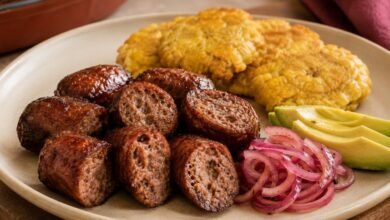
Longaniza Frita with Mangú: Why This Dominican Breakfast Works So Well

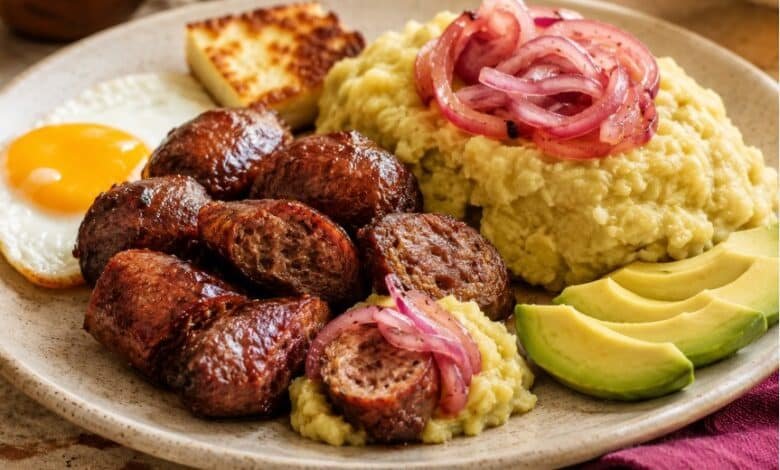
Some food pairings make sense because tradition tells us they belong together. Longaniza frita and mangú have the added advantage of making sense before anyone explains the tradition at all.
One is soft, mild and almost soothing: boiled green plantains mashed until creamy. The other arrives browned, salty, garlicky, herbal and full of rendered pork flavor. Mangú gives longaniza somewhere to put all that intensity. Longaniza gives mangú exactly the savory interruption it needs.
Then the onions arrive, sharp with vinegar, and suddenly the plate has a third voice. If you add egg or queso frito, breakfast becomes richer again. Add avocado and the textures soften in a completely different direction. This is why I find the combination much more interesting than simply saying “sausage goes well with mashed plantains.”
There is also one important cultural distinction to keep straight from the beginning. Longaniza with mangú is a legitimate Dominican breakfast combination, but longaniza is not the traditional sausage in classic Los Tres Golpes. That role belongs to Dominican salami. Longaniza can replace it or join a larger breakfast plate, but the distinction is worth preserving because good food writing should make traditions clearer, not blur them into one convenient brunch.
Yes. Fried Dominican longaniza pairs very well with mangú because the soft, mild mashed green plantain balances the sausage’s salty pork richness, aromatic seasoning and browned casing. Vinegar-seasoned onions add acidity, while eggs, queso frito or avocado can turn the pairing into a fuller Dominican breakfast.
The pairing works because neither food tries to do the same job
Longaniza frita has intensity. Depending on the producer, the sausage may emphasize garlic, oregano, pepper, pork fat and acidic seasoning. Frying adds another layer: browned casing, rendered edges and deeper roasted meat flavor.
Mangú moves in the opposite direction. Green plantains are boiled and mashed into a soft, mild base. Instead of competing with the sausage’s seasoning, the plantain spreads it across the bite. A small piece of longaniza that might taste quite salty or rich on its own becomes gentler when eaten with a spoonful of mangú.
Longaniza brings the drama
Mangú answers quietly
This is also why I would not judge the combination by tasting either half in isolation. Mangú does not need to be wildly seasoned to deserve its place. Longaniza does not need to become less assertive. Their differences are the point.
If you want the sausage itself decoded first, my Dominican longaniza flavor guide goes much deeper into garlic, oregano, acidity, casing and fried texture.
Mangú is mild — but “mild” does not mean irrelevant
Mangú starts with green plantains rather than sweet ripe ones, so the flavor is savory and restrained instead of dessert-like. The plantains are boiled, mashed and softened with liquid and fat until the result is smooth enough to take on whatever accompanies it.
That last part is important. Mangú behaves almost like an edible pause between more forceful components. With salami, it absorbs salt and browned sausage flavor. With queso frito, it softens a firm salty cheese. With longaniza, it catches rendered pork flavor and makes an aromatic sausage easier to eat as part of a complete breakfast.
Texture matters too. Good mangú should not feel like a dry mound requiring excavation. It works best when smooth enough to combine naturally with the other foods on the plate rather than sitting beside them like an unrelated side project.
What happens in one simple bite
The plantain reduces the intensity of salt and fat without hiding the seasoning. That is a much more useful pairing than putting two equally aggressive foods together and asking them to negotiate.
This is really a texture love story
If longaniza and mangú had similar textures, the plate would be considerably less interesting. Instead, every part of one exposes something different about the other.
There is almost no resistance in a properly mashed plantain bite. It provides a soft landing for meat with casing and crisp edges.
The sausage adds the structural texture that mangú lacks: a browned exterior, casing and a seasoned meat filling.
A little rendered sausage fat can season the plantain rather than remaining concentrated entirely in the meat.
Each sausage piece breaks up the softness so the breakfast never becomes one uninterrupted spoonful of mash.
This is why I prefer a piece of sausage and a modest amount of mangú in the same bite rather than hiding the longaniza under a mountain of plantain. The goal is contrast, not witness protection.
The onions are doing far more work than their salary suggests
Mangú is traditionally served with Dominican-style red onions prepared with vinegar. On a plate containing fried sausage, that acidic component becomes particularly valuable.
Longaniza contributes pork fat. Mangú adds starch. If the breakfast also includes fried cheese and egg, the richness keeps increasing. Vinegary onions interrupt that progression with acidity, moisture and a sharper aroma.
Diana’s favorite three-part logic: take some longaniza for browned meat and seasoning, add mangú for soft starch, then include just enough onion to brighten the bite. It is a tiny sequence, but suddenly you can understand why the whole plate works instead of merely accepting that Dominicans know what they are doing with breakfast.
I would especially miss the onions if the longaniza were quite fatty. More fat is not always the answer to fat. Sometimes the correct response is vinegar.
Longaniza with mangú is not exactly Los Tres Golpes
This distinction is small enough to get blurred on restaurant menus and important enough to explain correctly.
Classic Mangú con Los Tres Golpes is served with fried Dominican salami, queso frito and fried egg. Those are the traditional three “golpes.” Longaniza can be served with mangú and can substitute for the salami in a variation, but that does not make longaniza the traditional sausage of the original combination.
Neither plate needs to apologize for existing. They simply tell slightly different Dominican breakfast stories.
If those two sausages still look interchangeable from a menu description, I separate them properly in my longaniza vs Dominican salami comparison.
Egg, fried cheese or avocado? Each changes the breakfast differently
Longaniza and mangú already form a complete flavor idea, so additions should have a purpose beyond making the plate larger.
This is where personal appetite matters more than rules. Longaniza, mangú and onions can already be deeply satisfying. Egg makes the meal rounder. Cheese makes it more emphatic. Avocado makes it gentler. Adding all three is possible, but breakfast then stops pretending it has afternoon plans.
How I would build the best bite
I would start with less mangú than instinct suggests. If the plantain overwhelms the fork, the sausage disappears; if there is too much longaniza, the bite becomes salty and rich before the mangú has a chance to help.
The balanced fork
You get casing first, then seasoned pork, then soft plantain, while vinegar from the onion cuts through the rendered fat. It is one of those bites where every ingredient becomes easier to understand because the others are present.
If egg is on the plate, add a little yolk every few bites rather than turning all of the mangú into egg sauce immediately. If there is queso frito, I prefer alternating it with the sausage instead of forcing both proteins onto every fork.
There is no official geometry. The goal is simply to keep enough contrast that breakfast remains interesting until the last bite.
Does longaniza with mangú have to be breakfast?
No. Mangú is strongly identified with Dominican breakfast, and longaniza fits naturally there, but longaniza itself moves comfortably through breakfast, lunch and dinner. There is nothing structurally wrong with eating the pairing later in the day.
The difference is mood. Add eggs and fried cheese in the morning and the plate clearly speaks breakfast. Serve longaniza with mangú, onions and avocado later and it can feel more like a substantial comfort-food meal.
I have never understood why clocks should have final authority over mashed plantains anyway.
If you want to understand how longaniza changes with tostones, yuca and other sides instead, the broader eating logic is in my guide to eating longaniza frita.
How I would order longaniza with mangú at a Dominican restaurant
If I were ordering the combination specifically to understand it, I would resist turning the first plate into the largest breakfast on the menu. More components do not automatically create more information.
For the clearest first taste
Longaniza, mangú and onions. This lets you understand the sausage, the plantain and the acid balance without too many competing fried foods.
For a fuller breakfast
Add a fried egg. The yolk changes the texture without introducing another heavily seasoned meat.
For maximum Dominican breakfast energy
Add queso frito too. You now have sausage, mash, egg, fried cheese and onions — delicious, substantial and entirely uninterested in minimalism.
For a slightly calmer plate
Choose avocado instead of adding every fried extra. The longaniza already provides more than enough savory intensity.
If a menu simply says “sausage” or “longaniza,” I would still confirm what style the restaurant means. Dominican, Puerto Rican and other longaniza traditions are not identical, and mangú does not magically turn every sausage beside it into Dominican longaniza.
A few things I would tell a first-time diner
If you are trying to find the fried sausage itself rather than study breakfast terminology, my U.S. guide to finding Dominican longaniza is where I keep the restaurant side of the story.
For me, the appeal of longaniza with mangú is ultimately very simple. The sausage is allowed to be loud. The plantain does not try to outshout it. The onions know exactly when to interrupt. That is a very good breakfast arrangement — and, frankly, a useful model for certain dinner parties too.
Is there a mangú and longaniza combination I should know?
I am always interested in the details that make familiar food suddenly feel new again — a family way of seasoning longaniza, an onion preparation I have not seen before, a particular texture you insist mangú should have, an unexpected breakfast combination, a restaurant serving an excellent version, or a recipe with a story behind it.
If you know a great longaniza-and-mangú plate, a new Dominican location, a family recipe, a different way of serving it, or simply a detail you think belongs in this guide, write to me at info@dianaisabela.com. Photos and food stories are very welcome. I would genuinely love to hear from you, and together we can keep making this guide to longaniza with mangú more useful, more delicious and more connected to the people who actually eat it.
Can you eat Dominican longaniza with mangú?
Yes. Fried Dominican longaniza pairs naturally with mangú because the mild, soft mashed green plantain balances the sausage’s salt, pork richness, aromatic seasoning and browned casing.
Is longaniza with mangú Los Tres Golpes?
Not in the classic form. Traditional Los Tres Golpes consists of mangú served with fried Dominican salami, queso frito and fried egg. Longaniza can replace the salami or appear as an additional breakfast protein, but it is a variation rather than the canonical sausage component.
What goes with longaniza and mangú?
Vinegar-seasoned red onions are especially useful because their acidity balances the rich sausage. Fried egg, queso frito and avocado can also be added depending on how substantial you want the breakfast to be.
What does mangú taste like with longaniza?
Mangú is mild, savory and soft, so it spreads the stronger garlic, herb, salt and pork flavors of the longaniza across the bite. The result is gentler than eating fried longaniza alone while still allowing the sausage to remain the dominant flavor.
Why are onions served with mangú and longaniza?
Dominican-style onions prepared with vinegar bring acidity, moisture and sharper flavor to the plate. That contrast is especially useful beside fried sausage and mashed plantain because it cuts through pork fat and refreshes the next bite.
Is longaniza better than Dominican salami with mangú?
Neither is universally better. Dominican salami is the traditional sausage in Los Tres Golpes and provides a dense, uniform fried texture. Longaniza is more aromatic and has a clear casing-and-meat structure, creating a different breakfast experience.
Can longaniza with mangú be eaten for lunch or dinner?
Yes. Mangú is strongly associated with Dominican breakfast, but there is no reason the combination cannot be eaten later in the day. Longaniza itself is eaten across breakfast, lunch and dinner contexts.
What should I order with longaniza and mangú for the first time?
For the clearest introduction, try fried longaniza with mangú and vinegar-seasoned onions. Add a fried egg if you want a fuller breakfast, and add queso frito if you prefer an especially substantial plate.
Where can I find Dominican longaniza with mangú in the United States?
Dominican restaurants, cafeterias and breakfast counters are good places to look, particularly in areas with established Dominican communities. Menu wording varies, so longaniza may appear as a breakfast protein or as a substitution for salami.