Shchi Soup Near Me in the United States: Restaurants, Delis & Soup Counters
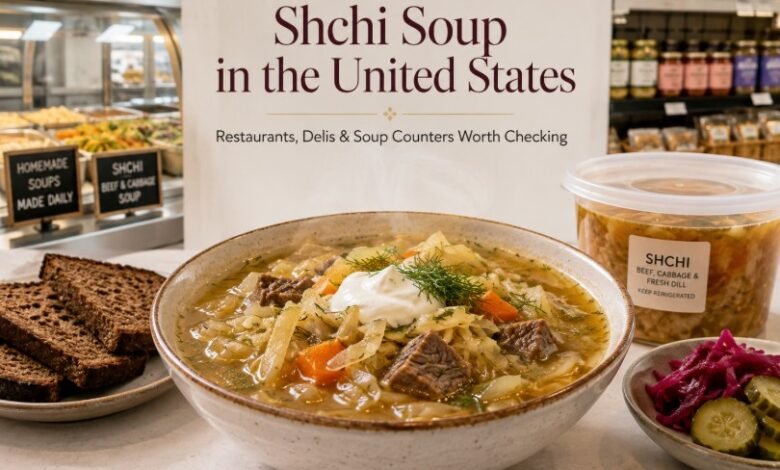
Finding shchi in the United States is a little more interesting than typing “Russian soup near me” and accepting the first red pin. The soup appears in Russian and Ukrainian food communities, but it also turns up in Uzbek and other Central Asian restaurants, neighborhood groceries with serious prepared-food kitchens, and deli counters where the soup selection changes with the day of the week.
Some American cities make the search remarkably easy. Philadelphia has several current menu options. The Chicago suburbs give you clearly identified sour-cabbage shchi. Seattle currently offers both beef sauerkraut shchi and green sorrel shchi, which is almost unfairly convenient if you want to understand how different two bowls with the same family name can be.
Other places require a different instinct. In New York, New Jersey, Florida, California, Maryland and Texas, Russian, Ukrainian and broader Eastern European food can live as much in markets and prepared-food counters as in restaurants. That means the most useful local clue may be a soup rotation, not a permanent menu.
Start With the Kind of Place That Actually Cooks Lunch
If there is one thing the American search has taught me, it is that cuisine labels are useful only up to a point.
A Russian restaurant may not serve shchi. An Uzbek restaurant may have it printed clearly in the soup section. A Ukrainian grocery may cook several homemade soups without putting any of them on its website. A Russian market can function as grocery, deli, bakery and neighborhood kitchen all at once.
So I would begin with a simple question: does this business actually cook the kind of everyday food where shchi belongs?
If the answer is yes, keep looking.
Excellent. You have a real starting point. Check the style, price and location, and confirm availability before an unusually long drive.
Also promising. Ask whether shchi appears in the rotation and which day it is usually made.
Worth investigating. Look for soup containers, hot trays and daily specials rather than expecting the imported-food aisles themselves to answer the question.
Do not dismiss it. Shchi, borscht, Olivier and other foods can sit naturally beside plov, lagman, manti and shurpa.
Treat it as a clue, not lunch plans. The restaurant may still make the soup, but the next step is verification.
For readers looking outside the United States too, the broader Shchi Soup Near Me map covers the international search.
Three Places Show How Different American Shchi Can Be
I would use these as reference points rather than a national ranking. They are useful because the current menus tell us something concrete about the soup itself.
Asia Mix Restaurant
This is a particularly good example of why I would not translate or reinterpret a restaurant’s wording more confidently than the restaurant itself does. The current menu says sour grass. If you specifically want sorrel, ask.
What is clear is the larger food context: shchi appears beside mastava, Ukrainian borscht, shurpa, dumpling soup and lagman inside an Uzbek-European restaurant.
Chinor Restaurant
This is the clean, uncomplicated version of menu research. The restaurant says shchi. It describes the dish as sour cabbage soup. You know immediately that fermented-cabbage acidity is part of what you are ordering.
Chinor is also Uzbek, which is useful in another way: it proves that searching only businesses labeled “Russian” can make you miss an actual bowl of shchi.
Broth&Co
Seattle gives you the most useful one-address comparison I have found so far.
One bowl goes toward fermented cabbage and beef. The other goes toward chicken and sorrel. Same soup family, completely different mood.
This is why “I tried shchi once” tells me less than you might expect.
Where to Look for Shchi Around the United States
The useful American pattern changes from place to place. In some states I would start with a current restaurant menu. In others I would begin with a neighborhood known for Russian, Ukrainian or Eastern European prepared food and make one quick call before leaving home.
Pennsylvania
Philadelphia is currently Pennsylvania’s strongest destination because there is enough variety to choose between different shchi experiences rather than simply celebrate finding the word on one menu.
Northeast Philadelphia is especially useful: Central Asian restaurants, Russian-speaking food culture and prepared-food markets overlap there. South Street adds a more central green-shchi option.
Elsewhere in Pennsylvania, including Pittsburgh, I would search active Eastern European kitchens and soup rotations before assuming Philadelphia is the only possible answer.
Find shchi in Pennsylvania →Philadelphia
Philadelphia deserves its own stop on this list simply because it gives you several genuinely different current choices.
You can find a direct Shchi (Щи) listing, tart-green interpretations and an explicitly identified green shchi with sorrel. The city is also one of the better American places to see how Central Asian restaurant menus and Eastern European prepared-food culture overlap.
If sorrel is specifically what you want, Philadelphia is more interesting than the generic phrase “Russian cabbage soup” would lead you to expect.
Find shchi in Philadelphia →Illinois
The Chicago suburbs are currently more important to this particular search than downtown Chicago.
Carol Stream has a clearly described sour-cabbage shchi at Chinor. Buffalo Grove adds another current bowl at Samarkand Cafe, where the shchi is described as sour cabbage soup with meatballs.
Buffalo Grove also has Ukrainian and European groceries and prepared-food businesses, so one restaurant lunch can easily turn into a useful deli stop for tomorrow’s dinner.
Find shchi in Illinois →Washington
Seattle is the state I would choose if the goal were to understand two opposite sides of shchi without constructing a complicated tasting expedition.
Broth&Co currently gives you beef sauerkraut shchi and chicken sorrel green shchi at the same address.
Beyond Seattle, the Puget Sound area has enough Russian and Eastern European grocery culture that prepared-food searching remains worthwhile, especially when you care more about take-home soup than table service.
Find shchi in Washington →New York
New York is less about one restaurant and more about food geography.
Brighton Beach and the surrounding part of southern Brooklyn remain natural places to look because Russian-speaking and post-Soviet food businesses are concentrated there. Queens adds another strong prepared-food route, particularly around markets and delis where customers buy full meals rather than only imported groceries.
The important distinction is permanent menu versus rotating counter. New York has plenty of relevant kitchens; the question is often what they cooked today.
Find shchi in New York →New Jersey
North and central New Jersey reward the deli approach.
Livingston, Paramus and Manalapan have active Russian and European prepared-food businesses where soup belongs naturally in the food mix. That does not mean shchi should be assumed every day.
It means the local search is worth making properly: find the kitchen, check the current soup list and ask about the weekly rotation.
Find shchi in New Jersey →Florida
South Florida has one of the country’s strongest Russian and Eastern European deli cultures, especially around Sunny Isles Beach, Hollywood and Boca Raton.
The challenge is not finding businesses that cook this kind of food. The challenge is finding the exact soup on the exact day you want it.
Florida also adds a seasonal reality: a hot bowl of cabbage soup has to compete with South Florida weather. I would expect soup rotations and demand to behave differently here than in Chicago in February.
Find shchi in Florida →California
In California, I would concentrate on Los Angeles and the San Fernando Valley before wandering randomly across the state.
Russian and international groceries with prepared-food programs are especially useful because the distances involved make weak restaurant guesses expensive in time.
Check the current soup list first. If you are heading across Los Angeles specifically for shchi, a short confirmation is much more attractive than discovering after forty-five minutes of traffic that today was chicken-noodle day.
Find shchi in California →Maryland
Maryland’s search lives largely in the suburbs rather than in one obvious downtown restaurant district.
Bethesda, Rockville, North Bethesda and Gaithersburg are useful areas for Russian, Ukrainian and Eastern European grocery and prepared-food searching.
Here I would pay close attention to green soup terminology too. Sorrel, green borscht and green shchi can sit close together culturally while still being names worth distinguishing rather than automatically merging.
Find shchi in Maryland →Texas
Texas makes the call-first rule feel less like advice and more like transportation planning.
Dallas, Carrollton and Houston have Russian, Eastern European and Central Asian food businesses worth investigating, but metropolitan distances are large enough that one weak lead can eat an impressive amount of the afternoon.
I would look for actual prepared-food kitchens, ask whether shchi appears in the soup rotation and only then decide whether the drive makes sense.
Find shchi in Texas →Why an Uzbek Restaurant Can Be a Better Shchi Lead Than a Russian Restaurant
This surprises people mostly because American restaurant categories encourage us to imagine cuisines as cleanly separated boxes.
Real food history is messier.
Across the former Soviet Union, dishes moved between cities, households, cafeterias, military kitchens, restaurants and family tables. People moved too. That is why an Uzbek restaurant in Illinois or Pennsylvania can serve shchi alongside plov, lagman, manti and shurpa without becoming a Russian restaurant.
The respectful approach is straightforward.
Call the restaurant what it calls itself.
Call the dish what the menu calls it.
And enjoy the overlap instead of trying to force the whole meal under one national label.
This also makes the food search better. If you filter out every Uzbek or Central Asian restaurant before checking the menu, you can literally filter out the shchi.
If You Cannot Find Shchi Nearby, Change the Search Before Changing the City
When a normal search produces nothing, I would not immediately conclude that nobody nearby makes the soup.
I would change the vocabulary.
The Cyrillic spelling can surface menus, photographs and community posts that English-only searching misses.
Some American menus translate the dish instead of transliterating its name. Treat the phrase as a lead and check the recipe description rather than assuming every cabbage soup is shchi.
This can help when the kitchen emphasizes sauerkraut or fermented cabbage rather than the Russian name.
Useful when the bowl you want is the bright green version. Do not automatically rename every sorrel soup shchi; use the result to identify kitchens worth checking.
Russian deli, Ukrainian grocery, Eastern European market, Slavic grocery, Uzbek restaurant, Bukharian restaurant, prepared food, homemade soup and hot bar can reveal kitchens that a dish-only search misses.
The best clue is cooking. A shop selling imported candy, canned fish and frozen dumplings may be excellent for groceries but irrelevant to today’s lunch. A business with homemade soups, hot trays, prepared salads, cutlets and stuffed cabbage is much more interesting.
The Prepared-Food Counter Is Not a Backup Plan
I think this distinction matters because restaurant culture gets most of the attention online.
Shchi is household food.
That makes the deli counter unusually natural territory for it.
A neighborhood grocery can make one large pot, portion it into containers and sell it to people buying dinner on the way home. The soup may never acquire a permanent listing because regular customers simply look at the case or ask what was cooked.
That does not make the food less significant.
It makes the internet less complete.
And there are advantages to finding shchi this way.
- You can often buy more than one portion.
- You may be able to take home sour cream separately.
- Bread, salads, pickles and another prepared main are already nearby.
- You can ask which soups appear on other days.
- The staff may tell you when the next batch will be made.
The useful question is sometimes not “Do you have shchi?”
It is “When do you make shchi?”
If the answer is Friday, you have not failed to find the soup.
You have found Friday.
Fresh, Sour or Green: Make Sure You Are Searching for the Bowl You Actually Want
The current American examples already show why this matters. Shchi is not one fixed flavor profile wearing the same name everywhere.
Fresh-cabbage shchi
Fresh cabbage usually produces a gentler bowl. The cabbage softens into the broth and brings vegetable sweetness rather than the stronger fermented tang associated with sauerkraut.
Beef, chicken, mushrooms or a meatless broth can all change the character of the finished soup considerably.
If someone dislikes sauerkraut, this is an important distinction: sour-cabbage shchi is not the only shchi available to like or dislike.
Sour-cabbage shchi
This is the deeper, tangier direction. Fermented cabbage brings acidity, saltiness and a savory character that can become especially rich with beef broth or meat.
Illinois currently gives us clear restaurant examples of this style, while Seattle has a specifically named beef sauerkraut shchi.
If this fermented character is the entire reason for the craving, ask whether the kitchen uses sauerkraut rather than settling for a generic “cabbage soup” description.
Green shchi
Green shchi moves away from cabbage and toward leafy acidity, most famously sorrel.
Egg, potato, chicken, beef meatballs and other additions vary by kitchen. The flavor can be bright and tart rather than deeply fermented.
Seattle currently makes this difference particularly easy to see, and Philadelphia also offers useful green-shchi options.
This is one of my favorite things about the soup: the name gives you a culinary family, not necessarily a photographic duplicate of the bowl you remember.
Five Questions That Can Save a Very Long Soup Drive
Do Not Confuse Every Cabbage Soup With Shchi
This becomes especially important in American cities with several overlapping Eastern European food traditions.
Polish cooking has its own cabbage soups. Ukrainian kitchens have related soups and regional preparations. Jewish, German, Central European and Balkan traditions add still more cabbage-based bowls.
Similar ingredients do not make all of them the same dish.
If a current restaurant menu says Shchi or Щи, the identification is easy.
If it says only “cabbage soup,” look at the ingredients and, if necessary, ask the kitchen what they call it.
I would rather leave a good cabbage soup under its real name than improve my shchi count by quietly renaming somebody else’s lunch.
How Far Is Too Far to Drive for Shchi?
This may be the most American question in the article.
The answer depends on what waits at the other end.
A twenty-minute drive to a restaurant currently listing exactly the sour-cabbage shchi you want? Easy.
Forty-five minutes to a grocery with a serious prepared-food kitchen but no current soup information? Call first.
Ninety minutes because an eight-year-old photograph shows something vaguely cabbage-like in a bowl? I admire your commitment, but no.
I would also make longer trips do more work.
If you are heading to Brighton Beach, Northeast Philadelphia, Buffalo Grove, Sunny Isles or another food-rich neighborhood, make the soup one part of the outing. Buy bread. Look at the deli counter. Pick up a salad. Find the dumplings. Take tomorrow’s dinner home.
One good food neighborhood can justify the drive better than one speculative soup bowl ever will.
What to Eat Once You Finally Find the Shchi
The answer depends on the bowl and on the kitchen serving it.
You have room to build a fuller meal afterward. A cutlet, dumplings, roasted meat, potatoes or buckwheat can work beautifully.
The fermented tang already brings plenty of personality. Bread, sour cream and something simple or fresh can balance the bowl before a heavier second course.
The bright sorrel acidity can handle a richer main surprisingly well. At a Central Asian restaurant, this might mean manti, plov or grilled meat rather than forcing the meal into one predetermined tradition.
One soup, one main, one starch and one fresh or pickled side is usually a very good dinner. The existence of fourteen other containers is not a legal requirement to purchase them.
And yes, good bread matters.
Shchi is exactly the kind of soup that makes a substantial slice of rye or dark bread feel less like an accessory and more like part of the plan.
Takeout May Actually Be One of the Best Ways to Buy Shchi
Some foods collapse the moment they enter a container.
Shchi is not one of them.
The cabbage, broth, vegetables and meat have already spent plenty of time together. Nothing in the dish depends on remaining audibly crisp for the fifteen minutes between restaurant and kitchen table.
That makes a quart from a deli surprisingly practical.
Keep sour cream separate.
Keep bread outside the steam zone.
Reheat only what you plan to eat.
And if the soup tastes even more integrated after sitting overnight, you have discovered one of the reasons dishes like this have survived so comfortably outside restaurant culture.
If Your State Is Not Mentioned Above, Do Not Assume the Soup Is Missing
A local shchi option can be almost invisible online.
Look for Russian, Ukrainian and Eastern European groceries that actually advertise prepared food. Check Uzbek and Central Asian restaurants. Search the Cyrillic name. Look at recent menu photographs. Call businesses that mention homemade soup.
The location may be less obvious than the dish.
A strip-mall market can be more useful than a downtown restaurant.
A grocery counter can know the soup better than a delivery app.
A staff member who says “we make it on Thursdays” can give you more useful information than twenty search results.
That is the American shchi search in one sentence:
follow the kitchens, not just the labels.
Know a Shchi Pot I Should Hear About?
I am especially interested in the American bowls that are easy for locals to know and difficult for everyone else to discover.
Maybe your neighborhood Russian deli makes shchi every Wednesday but never posts the soup online. Maybe a Ukrainian market sells a sour-cabbage version by the quart. Maybe your favorite Uzbek restaurant quietly has green shchi beside the lagman. Maybe there is a tiny prepared-food kitchen in Ohio, Massachusetts, Michigan, Colorado or somewhere I have not reached yet where regular customers already know exactly which day to arrive.
Send me the useful details: business name, city and state, address, phone number, how the soup is labeled, fresh cabbage or sauerkraut or sorrel, meat or meatless, approximate price, which day it appears and whether it tends to sell out.
I also love the details that never fit neatly on menus — what bread people eat with it, whether the family insists it tastes better tomorrow, what gets added at the table and which supposedly tiny recipe difference can start an argument between two grandmothers.
Those stories are part of the food too.
info@dianaisabela.comQuestions About Finding Shchi in the United States
Where can I find shchi soup in the United States?
Start with Russian and Ukrainian restaurants, Eastern European prepared-food markets and Central Asian restaurants that serve familiar post-Soviet dishes. Current strong examples include Philadelphia, the Chicago suburbs and Seattle, while several other states have active deli and grocery kitchens worth checking for rotating soups.
Where is shchi currently listed on restaurant menus in the U.S.?
Current examples include Philadelphia, Illinois and Washington. Chinor in Carol Stream lists sour-cabbage shchi, while Broth&Co in Seattle currently lists both beef sauerkraut shchi and chicken sorrel green shchi. Philadelphia also has several current shchi menu options.
Why do Uzbek restaurants in the United States serve shchi?
Food traditions circulated widely across Russian-speaking and post-Soviet communities. An Uzbek restaurant can therefore serve shchi, borscht or Olivier alongside plov, manti, lagman and shurpa while remaining clearly Uzbek in its own culinary identity.
Can Russian or Ukrainian grocery stores sell shchi even when it is not online?
Yes. Some groceries operate substantial prepared-food kitchens and rotate homemade soups by day. The absence of a permanent online shchi listing does not rule out the soup, but calling the kitchen is the safest way to confirm the current rotation.
What is the best way to search for shchi near me?
Search shchi, щи, Russian cabbage soup, sour cabbage soup and green shchi, then combine those terms with Russian deli, Ukrainian grocery, Eastern European market, Uzbek restaurant, prepared food or homemade soup. Look for businesses that actually cook meals rather than only sell packaged groceries.
Is green shchi the same as regular cabbage shchi?
They belong to the same broad soup tradition but can taste very different. Fresh- and sour-cabbage shchi center on cabbage, while green shchi commonly uses sorrel or other greens and may include egg, potato, chicken or meatballs.
Should I call before driving to get shchi?
Call when the trip is long, the soup is the main reason for going or the business uses a rotating prepared-food menu. Ask whether shchi is available now, which style it is and whether a portion can be held for pickup.
Is every Russian cabbage soup shchi?
No. Several Eastern European and Central European cuisines have cabbage soups of their own. When a menu uses only a generic English description, check the ingredients or ask the kitchen how the dish is identified before assuming it is shchi.
What should I eat with shchi?
Bread and sour cream are easy companions. A lighter shchi can lead into dumplings, cutlets, plov or grilled meat, while a rich sour-cabbage or meatball version may need only bread, salad or something pickled to feel like a complete lunch.
Is shchi good for takeout?
Yes. Shchi travels well because its appeal does not depend on crisp texture. Keep sour cream and bread separate, refrigerate leftovers promptly and reheat only the portion you plan to eat.