Shchi Soup in Pennsylvania: Where to Find It in Philadelphia and Beyond
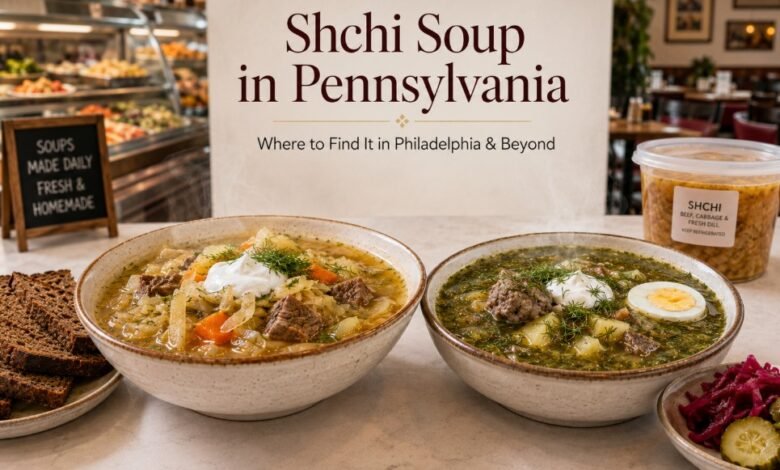
Pennsylvania has one very clear shchi center and then a much more interesting question mark.
Philadelphia currently gives you several actual menu listings, different styles of shchi, green sorrel versions, Central Asian restaurants that know the dish and Eastern European prepared-food markets clustered closely enough to turn one soup into a useful food outing. Western Pennsylvania has deep Eastern European cooking, active markets and old immigrant food traditions, but I do not currently have a Pittsburgh bowl I can verify strongly enough to tell you, “Drive here and order shchi.”
So I would not make the entire state pretend to be Philadelphia. This guide works differently. It tells you where Pennsylvania becomes confirmed, where it becomes promising, when the trip east actually makes sense, and how to search locally before deciding that cabbage soup requires crossing the Commonwealth.
The Pennsylvania Shchi Map Has Three Levels of Confidence
Philadelphia: confirmed and varied. This is where I can point you toward current restaurant menus that actually use the word shchi, including green versions.
Pittsburgh and western Pennsylvania: culturally promising, but not yet confirmed enough for me to name a current shchi restaurant with the same confidence.
The rest of the state: research territory. Some cities have Eastern European food communities and specialist markets, but a cuisine label alone does not establish a shchi destination.
Philadelphia
Multiple current restaurant listings, more than one shchi style, green sorrel options and substantial prepared-food infrastructure.
Pittsburgh
Active Eastern European food businesses and a strong regional food tradition make local searching sensible, but I would not promise a current shchi bowl yet.
Elsewhere in Pennsylvania
Look for actual kitchens, rotating homemade soup and prepared food before treating any city as another confirmed destination.
This is the state-level distinction I find much more useful than filling a page with twenty addresses.
A reader in Philadelphia needs specific restaurant choices.
A reader in Pittsburgh needs an honest search method.
A reader in Harrisburg, Scranton or Erie needs to know whether local research is worth doing before a much longer trip.
Those are different problems.
For the broader American picture, use my United States shchi guide. The main Shchi Soup Near Me guide goes wider still, including menu names, soup styles and the larger international search.
Philadelphia Is the Pennsylvania City Where Shchi Stops Being Theoretical
I am deliberately not repeating every Philadelphia restaurant card here.
That city now has enough current shchi inventory to deserve its own detailed local guide, and the Pennsylvania page should not force someone from Erie to scroll through the ingredients of four Northeast Philadelphia soup bowls before reaching anything relevant to western Pennsylvania.
What matters at state level is that Philadelphia currently gives us several different forms of useful evidence.
If Philadelphia is the destination, switch to my dedicated Philadelphia shchi guide. That is where the individual current restaurants, neighborhoods, prices, green-shchi comparison and Northeast Philadelphia food route belong.
This is an important structural choice for the state guide.
Philadelphia should be strong enough here that you know it is Pennsylvania’s best-confirmed destination.
It should not be repeated so exhaustively that the separate city guide has nothing left to contribute.
Think of Pennsylvania as the map.
Philadelphia is the street-level walk.
Pittsburgh Has the Food History. What I Still Want Is the Bowl.
Pittsburgh is where I become much more conservative with recommendations.
The area unquestionably has living Polish, Ukrainian and broader Eastern European food culture. You can find specialist groceries, handmade pierogi businesses, stuffed cabbage, smoked meats, dark breads and the kind of home-style food that makes shchi culturally plausible.
What I cannot currently give you is a Pittsburgh restaurant with a sufficiently strong current shchi listing to match the Philadelphia evidence.
That difference matters.
Nataliya European Food Market
A current European grocery in Pittsburgh gives local shoppers a real specialist-food starting point. That makes it relevant to local research, not a confirmed shchi address.
Pierogies Plus
The McKees Rocks business remains an active Polish/Eastern European takeout kitchen specializing in pierogi and other homemade food. Again, useful evidence of the region’s food culture — not evidence that shchi is on today’s menu.
I would rather preserve that distinction than construct a fake Pittsburgh restaurant list from nearby cuisines.
Pierogi are not shchi.
Stuffed cabbage is not shchi.
Borscht is not shchi.
A store selling Russian or Ukrainian groceries is not automatically cooking shchi.
But these businesses still tell me Pittsburgh is worth investigating locally before anyone starts planning an eastern Pennsylvania soup pilgrimage.
If I Lived in Pittsburgh, I Would Search the Kitchen Before Searching the Cuisine Label
The obvious query is “Russian restaurant Pittsburgh.”
I would widen it almost immediately.
Search Ukrainian markets.
Search Polish and Eastern European prepared-food businesses.
Search Russian-speaking groceries.
Search Central Asian restaurants.
Then filter by something more important than nationality:
Who is actually cooking soup?
A store with frozen dumplings and imported sweets may be wonderful but tell you almost nothing about shchi availability.
A business making hot lunches, homemade soups, stuffed cabbage, cutlets and ready-to-eat food is a much stronger lead.
The dedicated guide to finding shchi at Russian and Ukrainian delis explains this prepared-food logic in more detail.
I would ask:
- What homemade soups do you make during the week?
- Do you ever make shchi or щи?
- Do you call it Russian cabbage soup?
- Do you make a sauerkraut version?
- Do you ever make sorrel soup or green shchi?
- Is there a regular soup day?
That final question is the useful one.
“No” can mean never.
It can also mean not Monday.
I want to know which.
The Rest of Pennsylvania Should Be Researched by Food Corridor, Not Population
The next useful Pennsylvania shchi destination may not be the next-largest city.
It may be a smaller place with one Ukrainian market that cooks every morning.
That is why I would resist creating a neat descending list of Allentown, Reading, Harrisburg, Scranton, Lancaster and Erie simply because those names look sensible on a state map.
This is one of the places where the phrase “near me” deserves to be taken literally.
The best bowl in Pennsylvania is not automatically the best recommendation for someone three hundred miles away.
Local availability changes the answer.
When Does a Pennsylvania City Deserve Its Own Shchi Guide?
Philadelphia already clears the bar easily.
Pittsburgh might in the future.
For other cities, I want actual local value rather than another page built around one grocery store and three paragraphs explaining cabbage.
A city is ready when…
There are multiple current shchi listings, one strong confirmed restaurant plus meaningful prepared-food infrastructure, or enough rotating soup kitchens to give readers genuine choices.
A city should stay here when…
The evidence is one loosely related restaurant, an old menu, a grocery selling imported food without a cooked-food program, or a cabbage soup that nobody has actually identified as shchi.
This keeps the Pennsylvania guide useful as it grows.
If Pittsburgh develops three solid leads, give Pittsburgh its own deep guide.
If Allentown produces one confirmed shchi restaurant and two relevant prepared-food markets, investigate whether there is enough local decision-making to justify more detail.
If one deli in a small city makes shchi every Thursday, put the useful Thursday information here.
Not every excellent bowl needs its own page.
Should You Actually Drive to Philadelphia for Shchi?
Sometimes yes.
Sometimes that is a deeply unreasonable response to lunch.
This sounds obvious when written down.
Local food pages often forget it anyway.
A recommendation has a transportation cost.
Pennsylvania is large enough that state lines tell you almost nothing about whether a restaurant is actually near you.
How to Search Pennsylvania Locally Before Giving Up
If you are outside Philadelphia, I would use two different searches at the same time.
Search the dish
Try shchi, schi, щи, Russian cabbage soup, sour cabbage soup and green shchi. If sorrel is what you want, search sorrel separately rather than assuming every restaurant uses the term green shchi.
Search the kitchen
Look for Ukrainian groceries, Russian delis, Eastern European prepared-food markets and Central Asian restaurants. Then check whether those businesses actually cook soup.
The combination is important.
Dish-only searching can miss a deli whose rotating menu never reaches the web.
Cuisine-only searching produces dozens of businesses that may never make shchi.
Use both.
Then call the strongest kitchen.
If the soup name itself is creating confusion, my How to Order Shchi guide gives you the menu language and useful questions without turning the phone call into a linguistics exam.
Know Which Shchi You Are Willing to Travel For
Pennsylvania already shows why this matters.
Philadelphia has green shchi evidence.
Another kitchen may eventually give western Pennsylvania a sour-cabbage version.
Those are not interchangeable merely because the menu uses the same family name.
If green shchi is specifically the reason for the trip, read What Is Green Shchi? before treating every generic sorrel soup as the same recipe.
If cabbage is the target, remember that Polish, Ukrainian, Russian and other Pennsylvania food traditions can all produce cabbage soup under different names.
The kitchen’s own name matters.
A Pennsylvania Shchi Trip Should End With Dinner, Not Another Search Tab
Once you find the right kitchen, use the surrounding food intelligently.
Restaurant lunch
Let the restaurant’s own cuisine guide the second course. At a Central Asian restaurant, plov or manti can make more sense than forcing every shchi meal into a generic Russian template.
Prepared-food dinner
Soup, bread, one main and one fresh or pickled side is usually enough. A deli counter does not require you to rescue every tray from loneliness.
Take-home shchi
Keep bread and sour cream separate, refrigerate the soup appropriately and reheat only what you are eating. Shchi is wonderfully forgiving takeout food because it does not depend on crispness.
If you are building the whole table at home, use What to Eat With Shchi for bread, sour cream, kotleti, grains, vegetables and larger meal combinations.
One Pennsylvania Detail I Would Always Save: the Day of the Week
This matters most outside Philadelphia.
Suppose a Pittsburgh market says:
“We do make shchi, but only Friday.”
That sentence instantly changes the western Pennsylvania section of this guide.
The business does not need a polished permanent menu.
It does not need delivery-app photography.
It needs a recurring, verifiable soup day.
That is genuine local information.
I would save:
- the business name;
- the day;
- fresh, sour or green;
- price or container size if available;
- whether it sells out;
- whether staff will hold a portion.
That information can be more useful to a local reader than a nationally famous restaurant hundreds of miles away.
What Would Change This Pennsylvania Map?
One confirmed Pittsburgh shchi restaurant would matter.
Two or three recurring western Pennsylvania soup counters would matter even more.
A strong Lehigh Valley prepared-food corridor would matter.
A Ukrainian deli in Harrisburg confirming that shchi is made every weekend would matter.
A current restaurant in Scranton identifying its sour cabbage soup specifically as shchi would matter.
That is how this page should grow.
Not by adding every European restaurant in Pennsylvania.
By increasing the amount of information that can actually change a reader’s lunch decision.
What Pennsylvania Already Tells Us About the American Shchi Search
The state gives us a useful contrast.
Philadelphia shows what happens when several relevant food communities and active restaurants create enough density for multiple current bowls.
Pittsburgh shows why cultural relevance alone does not justify pretending a specific dish has been confirmed.
The rest of Pennsylvania reminds us that a rotating soup counter in a smaller city could eventually be more useful to local readers than any Philadelphia restaurant.
That is the balance I want.
Specific when we know.
Curious when we have good reason to investigate.
Quiet when we do not have evidence.
Help Me Fill In the Pennsylvania Map With Real Soup, Not Guesswork
Philadelphia is already giving us plenty to work with.
What I want next is western, central and northern Pennsylvania.
If you know a restaurant, Ukrainian grocery, Russian deli, Polish market, Central Asian kitchen, church food program or prepared-food counter that genuinely makes shchi, send me the details.
I especially want the practical information that rarely survives on a restaurant directory:
Which day?
What does the kitchen call it?
Fresh cabbage, sauerkraut or sorrel?
Meat or meatless?
What does a bowl or take-home container cost?
Does it sell out?
Can somebody reserve a quart?
I am curious about Pittsburgh, Allentown, Bethlehem, Reading, Harrisburg, Scranton, Lancaster, Erie and the smaller Pennsylvania towns that food guides usually skip because nobody thought to photograph the deli soup board.
And send me the family details too.
Maybe your favorite version rests overnight before anyone is allowed to touch it.
Maybe your grandmother would consider potato in shchi a minor scandal.
Maybe the Ukrainian market in your town calls it cabbage soup in English and щи when regular customers order.
Those details make a guide useful because they make it alive.
info@dianaisabela.comQuestions About Finding Shchi in Pennsylvania
Where can I find shchi soup in Pennsylvania?
Philadelphia currently has the strongest verified selection in Pennsylvania, with several restaurant menus listing shchi or green shchi. Outside Philadelphia, especially in western Pennsylvania, local Eastern European and Ukrainian markets are worth investigating, but this guide does not currently treat Pittsburgh as a confirmed shchi destination.
Is Philadelphia the best place to look for shchi in Pennsylvania?
Based on the current verified menu evidence, yes. Philadelphia has multiple current shchi listings, including green versions, plus substantial Eastern European and Central Asian prepared-food infrastructure in Northeast Philadelphia.
Can I find green shchi in Pennsylvania?
Yes. Current Philadelphia menus include green shchi and sorrel-based shchi listings. Green shchi differs from cabbage-based versions because its acidity usually comes from sorrel or other greens rather than fresh or fermented cabbage.
Can I find shchi in Pittsburgh?
Pittsburgh has active Eastern European food businesses and specialist groceries, but I do not currently have a specific Pittsburgh shchi bowl verified strongly enough to recommend as a confirmed destination. Local markets and prepared-food kitchens are still worth calling about their homemade soup rotations.
Should I drive from Pittsburgh to Philadelphia just for shchi?
That is a very long trip for one soup. Search western Pennsylvania prepared-food kitchens first. If you are already planning a larger Philadelphia food trip, the city has enough current shchi options to make it a worthwhile part of the itinerary.
Do Pennsylvania Russian or Ukrainian delis sell shchi?
Some may, but prepared-food service alone does not prove shchi is available. Ask what homemade soups are being made, whether shchi appears on a regular day and whether the current version uses fresh cabbage, sauerkraut or sorrel.
Is every Pennsylvania cabbage soup shchi?
No. Pennsylvania has Polish, Ukrainian, Russian and other Eastern European cabbage-soup traditions. Similar ingredients are not enough to rename a dish. Use the kitchen’s own name and ask about the recipe when the menu simply says cabbage soup.
What Pennsylvania cities should I search besides Philadelphia and Pittsburgh?
Allentown, Bethlehem, Reading, Harrisburg, Scranton, Lancaster and Erie are reasonable places to investigate when current Eastern European or Central Asian kitchens have real prepared-food and soup programs. This guide does not treat those cities as confirmed shchi destinations without stronger dish-specific evidence.
Should I call before making a special trip for shchi?
Yes when the drive is substantial or you want one exact style. Ask whether shchi is available now, whether it is fresh-cabbage, sour-cabbage or green shchi, and whether a portion can be held for pickup if the kitchen makes only a small batch.
What should I eat with shchi in Pennsylvania?
Bread and sour cream are easy starting points. At a Central Asian restaurant, shchi can lead naturally into plov, manti or grilled meat. For take-home deli meals, pair the soup with one main, a grain or potato side and something fresh or pickled.