Shchi Soup in New Jersey: Where to Look in Paramus, Livingston & Beyond
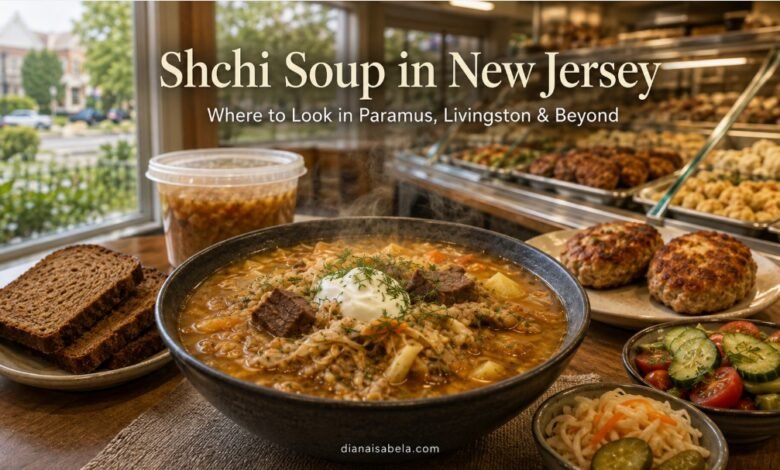
New Jersey is an excellent example of why looking for shchi should begin with kitchens rather than restaurant categories. I do not currently have a New Jersey business I can honestly promise will hand you shchi every day. What the state does have is something almost as useful: active Russian and Eastern European prepared-food businesses in Paramus, Livingston and Manalapan where soup, cutlets, stuffed cabbage, dumplings, salads and take-home dinners are already part of normal service.
That makes New Jersey a call-first state. NetCost Market gives us large prepared-food operations in Paramus and Manalapan. Babushka’s Deli in Livingston currently lists red borscht, cold borscht, harcho, mushroom soup, chicken meatball soup, spinach soup and solyanka alongside cutlets, stuffed cabbage, pilaf, khinkali and other home-style dishes. Shchi itself is not on that permanent current menu, which is exactly why I would ask about rotation rather than quietly pretending the soup is confirmed.
The advantage is geography. North Jersey and Central Jersey both have places worth checking, so you do not have to treat Brooklyn as the automatic answer to every Russian-food craving. The challenge is also geography: New Jersey looks compact until somebody suggests crossing half the state at 5:30 p.m. for a soup that may have sold out at lunch.
In New Jersey, I Would Search the Prepared-Food Counter Before the Dining Room
If I wanted shchi in New Jersey this week, I would not begin by opening every restaurant result containing “Russian,” “Ukrainian” or “European.” I would begin with businesses that give me evidence of an actual working kitchen.
Shchi makes enormous sense as prepared food. It can be cooked in a substantial batch, portioned for lunch, sold cold for reheating, carried home without destroying its texture and paired with almost everything else a Russian or Eastern European deli already makes. That gives supermarkets and neighborhood delis a structural advantage in this particular search.
The important word is prepared. A store full of imported buckwheat, canned fish and jars of pickles may be useful for groceries, but it tells me very little about today’s soup. A business with ready-made meals, a deli counter, homemade soups and trays of cooked food tells me much more.
Paramus
My first North Jersey call if you want a large food-market experience. NetCost confirms prepared foods, grab-and-go meals, an onsite deli and bakery at its Route 4 store.
Livingston
The strongest current soup-menu evidence. Babushka’s already lists a broad range of Russian and regional soups, even though shchi itself is not currently among the permanent listings.
Manalapan
The sensible Central Jersey option. NetCost’s Tennent Road store gives you the same useful combination of prepared foods, grab-and-go meals, deli and bakery without forcing a trip north.
Those three places do not make a confirmed shchi directory. They create something more honest: a practical route through New Jersey businesses that are actually cooking the right kinds of food.
For the national view, start with my United States guide to finding shchi. New Jersey belongs inside a broader American pattern where Russian restaurants, Ukrainian groceries, Central Asian kitchens and Eastern European prepared-food stores all contribute differently to the search.
And the main Shchi Soup Near Me guide explains the larger international search, menu names and why a rotating deli counter can be more useful than a permanent restaurant menu.
The New Jersey question is narrower: where would I actually start calling if I lived here?
Paramus Works Best When Shchi Is Part of a Bigger Food Run
Paramus is the first North Jersey place I would check if I wanted shchi but did not want the entire day to depend on one bowl.
NetCost Market on Route 4 currently confirms the infrastructure I care about: prepared foods and grab-and-go meals, an onsite deli, an onsite bakery and a large international grocery operation. What its current location page does not give me is a permanent shchi listing.
That distinction changes my recommendation.
NetCost Market — Paramus
I would call Paramus and ask about the current homemade or prepared soup selection rather than assuming a large Eastern European supermarket automatically has shchi in stock.
The advantage is that even a “no” does not waste the entire trip. If you already need bread, sour cream, pickles, dumplings, smoked fish, grains or ready-made dinner, the store has a much broader reason to visit than one soup.
I would resist asking ten questions before confirming the soup exists. First establish whether they make it. Then ask whether the cabbage is fresh or fermented, whether meat is included and whether the soup follows a weekly rotation.
If the answer is no shchi today but the counter has another homemade soup, look at it before deciding the mission failed. Prepared-food shopping rewards flexibility. You may walk in thinking about sauerkraut broth and walk out with borscht, cutlets and tomorrow’s dumplings.
That is not failure. That is lunch developing a subplot.
The supermarket format also makes sense if you are shopping for several people. A restaurant bowl solves one meal. A prepared-food counter can solve soup tonight, bread for breakfast, dumplings for tomorrow and the inevitable moment when somebody asks what else you bought.
This is why I would give Paramus a higher practical value than a random restaurant with Russian décor but no current soup evidence. One has a documented prepared-food operation. The other merely looks culturally plausible.
A Supermarket Kitchen Can Be Exactly the Right Place for a Soup That Refuses to Stay on One Menu
There is a tendency to assume restaurant equals more authentic and supermarket equals compromise. For shchi, that hierarchy makes very little sense.
This is home-style soup.
A prepared-food kitchen serving repeat shoppers can be an ideal environment for it because the menu does not need to stay frozen for months. The cooks can rotate according to demand, ingredients and whatever makes sense for that week.
Monday might be borscht. Tuesday might be chicken soup. Another day can bring mushroom soup, cabbage soup or solyanka. A permanent restaurant menu values predictability. A neighborhood prepared-food counter can afford to be more domestic.
That domestic rhythm is exactly where shchi belongs.
It also explains why a website can undersell the food dramatically. A large market may devote its web page to store services and grocery departments while the actual counter contains a changing selection of dishes nobody bothered to upload individually.
I therefore treat “prepared foods + Eastern European grocery culture” as meaningful evidence of a kitchen worth investigating, but not as proof of shchi.
That distinction may sound fussy until you imagine driving forty minutes based on the sentence “they probably make it.”
Accuracy becomes very appealing somewhere around mile twenty-six.
Babushka’s in Livingston Gives Us the Strongest Current Soup Evidence
If Paramus is the supermarket strategy, Livingston is the menu strategy.
Babushka’s Deli currently lists a genuinely substantial soup selection: cold borsch, red borsch with meat, vegetable red borsch, harcho, mushroom soup, chicken meatball soup, spinach soup and solyanka. The same current menu also includes chicken cutlets, stuffed cabbage or peppers, pilaf, khinkali, salads, cheburek and syrniki.
That is a kitchen where asking about shchi makes culinary sense.
But the current menu also gives us the necessary limit: shchi itself is not listed.
Babushka’s Deli — Livingston
Babushka’s is therefore not a place I would describe as “serving shchi” without direct confirmation. It is a place I would call because the current menu proves the kitchen already makes several traditional soups and home-style dishes.
The menu itself is useful even if the answer is no.
Solyanka tells you the kitchen is comfortable with a stronger sour-savory soup. Harcho moves into Georgian territory. Red borsch gives the familiar beet-led option. Mushroom soup offers an earthier direction. Spinach soup may be tempting if what attracted you to green shchi was the idea of a greener, lighter bowl rather than cabbage specifically.
Those dishes are not interchangeable, and I would never rename one simply because the original craving did not work out.
But they do make Babushka’s a good place to learn the menu around shchi.
That matters because people often discover Eastern European soup culture through borscht and stop there. A kitchen like this immediately shows how much larger the category is: beet soup, meat-and-pickle soup, mushroom soup, greens, Georgian soup, meatballs in broth. Shchi is one member of a much bigger family of comforting bowls.
And then there is the food beside the soups. Stuffed cabbage, cutlets, pilaf and khinkali make this a place where you can order soup as the beginning of lunch instead of asking it to carry the entire meal.
If someone comes with you and does not share your level of cabbage commitment, that is useful.
If Babushka’s Says No Shchi, You Still Have a Very Good Soup Problem
This is the kind of problem I enjoy.
You wanted fermented cabbage soup.
The kitchen says no.
Then the menu presents solyanka, harcho, red borsch, mushroom soup, chicken meatball soup and spinach soup.
Now lunch has options.
If sourness was the attraction, solyanka may be the most interesting detour, although its pickle-driven salty-sour character is quite different from sauerkraut shchi.
If you wanted beefy depth, harcho goes somewhere else entirely, with Georgian roots and a different aromatic profile.
If you wanted the familiar comfort of a Russian-speaking deli, borscht is sitting there doing absolutely nothing wrong merely because it gets more fame than shchi.
Ask when shchi appears.
Then eat something.
No food search needs to become a hunger strike for semantic purity.
Manalapan Keeps Central Jersey From Being Treated Like a Suburb of Paramus
New Jersey is compact in the abstract and surprisingly ambitious in real driving time.
If you live around Manalapan, Freehold, Marlboro or other parts of Monmouth County, telling you to start in Paramus because “it’s all New Jersey” is not useful local advice.
NetCost Market’s Tennent Road location gives Central Jersey its own relevant prepared-food base.
NetCost Market — Manalapan
The official location information confirms prepared foods and grab-and-go meals, an onsite deli and bakery. Again, it does not currently give me a permanent shchi item.
So I apply exactly the same evidence standard here as Paramus.
This is a strong relevant kitchen to call.
It is not a confirmed bowl.
That last part matters more in Manalapan because a supermarket can have enough traffic to sell through individual prepared foods. If shchi exists in a small batch and you are driving specifically for it, “Can you hold one?” is a remarkably sophisticated piece of culinary strategy for a sentence containing six words.
The Manalapan store also protects the larger dinner plan. If shchi is absent, you are still inside a market with deli, bakery and ready-made meals. You can change direction instead of converting the entire trip into a disappointing inspection of an empty soup space.
I would use the same philosophy everywhere in this guide: do not make one rotating item responsible for justifying a long drive unless you confirmed it first.
The Other Soups Tell You Whether You Are Asking the Right Kitchen
When shchi itself is not visible, the surrounding soup menu becomes evidence about the kitchen rather than evidence about the exact dish.
That distinction is subtle and extremely useful.
New Jersey makes that last point particularly important because cabbage soup does not belong to one cuisine.
Jewish deli traditions have sweet-and-sour cabbage soup. Polish kitchens have their own cabbage and sauerkraut soups. German and other Central European food traditions use cabbage in still more ways. Ukrainian cooking gives us additional cabbage-soup relationships and terminology.
Those dishes do not need to be transformed into shchi to deserve attention.
The dedicated Shchi vs Cabbage Soup guide handles that distinction more carefully. Here, the practical rule is enough: “cabbage soup” is a reason to ask another question, not a reason to rewrite the menu yourself.
The New Jersey Phone Call Should Be Short, Specific and Worth Making
I understand why people dislike calling restaurants and markets.
You have to interrupt another human being instead of quietly judging a website in private.
Still, a ninety-second phone call is dramatically less annoying than forty-five minutes on a highway for a soup that exists only on an old photograph.
If the answer is simply “no, we don’t make it,” that is valuable too. Cross the business off the shchi-specific list and return when you actually want its other food.
A local guide gets better when it knows where not to send you.
If deli counters are still unfamiliar territory, the separate guide to finding shchi at Russian and Ukrainian delis goes deeper into soup rotation, prepared-food clues and what counts as a strong call-first lead.
Decide Which Shchi You Want Before You Discover the Wrong Bowl Is an Hour Away
There is a slightly ridiculous version of food travel where we become so excited about finding a dish that we forget to ask what version of the dish it is.
Shchi deserves one extra question because the difference between fresh cabbage and fermented cabbage is not cosmetic.
Fresh-cabbage shchi
Usually the gentler side of the family. Fresh cabbage softens into the broth and brings mild vegetable sweetness. Meat, mushrooms, potato and the broth itself determine how substantial the finished soup feels.
Sour-cabbage shchi
Fermented cabbage or sauerkraut gives the bowl deeper tang and a stronger sweet-sour character. Long cooking can soften the sharpness and make the acidity feel much more integrated.
Green shchi
Sorrel and other greens move the soup away from familiar white-cabbage territory. The acidity is brighter and more herbal, with potato, egg, meat or sour cream appearing depending on the version.
Meatless shchi
Perfectly possible. Vegetables, mushrooms and fermented cabbage can create considerable savory depth without beef, so never infer the broth from the word cabbage alone.
If the distinction matters to you, read the fuller fresh-cabbage vs sour-cabbage shchi comparison before turning a specific craving into a long drive.
My own rule is simple: if I am crossing more than one county for soup, I want to know whether it is the soup I had in mind.
A beautifully made fresh-cabbage shchi can still disappoint someone who spent the entire drive fantasizing about fermented cabbage and beef.
The kitchen did nothing wrong.
The expectation did.
Paramus, Livingston or Manalapan? Choose the Trip Before You Choose the Soup
These are not three versions of the same outing.
They solve different New Jersey problems.
Choose Paramus when you want the full market run
NetCost makes sense when the soup search is only one part of a larger grocery mission. Prepared food, deli, bakery and imported groceries give the trip multiple ways to succeed.
This is particularly useful if several people at home want different things. One wants soup. Someone wants dumplings. Somebody suddenly remembers sour cream. Another person considers smoked fish an essential emergency.
A supermarket absorbs this chaos better than a small restaurant.
Choose Livingston when soup itself is the point
Babushka’s gives you the strongest current evidence of a broad soup kitchen. There is no confirmed permanent shchi, but the menu already contains enough soups to make a direct question completely reasonable.
It also gives you a straightforward deli lunch if shchi is absent.
Choose Manalapan when Central Jersey is home
This may be the least glamorous advice in the article and perhaps the most useful.
Do not drive north because an article mentions Paramus first.
Call Manalapan.
If the prepared-food department has the soup, congratulations: you have successfully used geography.
Shchi Is Only the Beginning of the New Jersey Deli Problem
The problem is not finding something to eat.
The problem is leaving with a quantity of food appropriate to the number of humans in your household.
I like building dinner by texture. Soup is soft and brothy. Kotleti add browning. Rye adds chew. Salad or pickles add crunch and acidity. Buckwheat adds something drier and earthier.
The result feels like dinner rather than a sequence of foods that happened to be sold within twelve feet of one another.
Shchi Might Be One of the Most New Jersey-Compatible Takeout Foods Possible
This is affectionately meant.
New Jersey involves driving.
Shchi does not resent the car.
French fries begin a countdown the second the lid closes. Crispy schnitzel starts negotiating with steam. Shchi is already broth, cooked cabbage, vegetables and, depending on the version, tender meat.
Twenty or thirty minutes in a sealed soup container does not destroy the basic reason you wanted it.
That makes the prepared-food model especially logical here. Buy the soup. Keep the bread separate. Keep sour cream cold. Get home. Reheat the portion you are going to eat and add herbs at the end.
Sour-cabbage shchi is particularly forgiving because deep integrated flavor is part of the appeal. Green shchi deserves gentler treatment if sorrel and herbs are providing the brightness.
I would also resist reheating the entire family container repeatedly if you only want one bowl. Portion what you need and keep the rest refrigerated appropriately.
And no, the back seat of a warm car does not become an approved storage system because you are technically still in transit.
Soup is comforting. Food poisoning is not.
How Far Is Shchi Worth Driving in New Jersey?
If the business is fifteen minutes away, a promising lead may be enough.
If it is thirty minutes away and you also want groceries or prepared dinner, a call-first deli can still be a very reasonable outing.
If it is forty-five minutes away solely because you saw an old cabbage-soup photograph somewhere, I want considerably more evidence.
If the route requires crossing half the state during rush hour, I want the soup confirmed, a container reserved and possibly a notarized statement from the cabbage.
The joke exists because local food guides often ignore travel cost.
An address is not a recommendation in a vacuum. Distance, traffic, menu reliability and what else the business offers all change whether a trip makes sense.
This is why the large NetCost stores gain practical value even without confirmed shchi. If you have other things to buy, the visit has multiple reasons to succeed.
Babushka’s gains value differently. Its current menu gives you a substantial soup and hot-food fallback if shchi is absent.
So my New Jersey rule is:
Short drive: curiosity can be enough.
Medium drive: confirm that there is an active relevant prepared-food program.
Long drive for shchi specifically: confirm the actual soup.
Three New Jersey Signals I Trust More Than a Random Old Review
I am much less impressed by a six-year-old menu scan, a photo of unidentified cabbage soup or a review that says only “great Russian food.”
Those things can point you toward a business.
They cannot tell you what is in today’s soup pot.
What I Would Not Add to This Guide Just to Make New Jersey Look More Abundant
I would not add every Russian restaurant in the state.
I would not add a Polish restaurant simply because it has sauerkraut soup.
I would not add a Jewish deli’s sweet-and-sour cabbage soup and quietly call it shchi.
I would not add a grocery store with no evidence of a prepared-food kitchen merely because it imports Russian products.
I would not treat borscht as “close enough.”
And I would not resurrect a restaurant from an old menu because its former cabbage soup happens to improve the length of the page.
This approach creates a shorter list of businesses and a much stronger guide.
Food specificity deserves specificity in the recommendations.
If You Live Near New York, Should You Skip New Jersey and Go to Brooklyn?
Sometimes.
Not automatically.
If you live near Paramus, check Paramus first. A large prepared-food market without a bridge or tunnel can be a very persuasive argument.
If Livingston is convenient, Babushka’s gives you a current soup kitchen worth calling before you turn a meal into interstate travel.
If you are in Central Jersey, Manalapan is geographically sane in a way Brighton Beach may not be.
Brooklyn becomes the better choice when you specifically want the density and wider Russian-speaking food culture of neighborhoods such as Brighton Beach and are willing to turn the outing into a larger food day.
That is a different experience, which is why my New York shchi guide treats it separately rather than pretending New York and New Jersey are one giant deli zone separated only by paperwork.
The nearest state line is not always the nearest lunch.
My Actual New Jersey Plan Would Take Five Minutes Before I Left Home
If I were in North Jersey, I would call Paramus and Babushka’s.
That is step one.
I would ask whether either has shchi today and whether it is fresh-cabbage or sauerkraut based.
If one confirms it, done.
If Babushka’s says no but the current soup menu sounds excellent, I might go anyway for lunch.
If Paramus says no shchi but I need groceries, I might still make the market trip.
If either tells me, “We usually make it on Thursday,” then I have information worth keeping.
If I were in Central Jersey, I would do the same with Manalapan before considering either northern option.
Notice what is missing from this plan:
No fifty browser tabs.
No driving to every business that sells pelmeni.
No declaring spinach soup to be green shchi because the color felt promising.
No argument with the person answering the phone about why a Russian kitchen ought to have cabbage soup.
Call the kitchen.
Learn the day.
Eat what is actually good.
Why New Jersey Deserves Its Own Shchi Guide Even Without a Permanent Confirmed Bowl
This is an important question because a local food page should not exist merely because a state name can be attached to a dish.
New Jersey earns the page through food infrastructure.
It has multiple active Russian and Eastern European prepared-food operations in different parts of the state. It has a current Livingston deli with a serious soup menu. It has large prepared-food markets in both North and Central Jersey. It sits next to one of the strongest Russian-speaking food corridors in the country while still offering enough of its own food culture that residents do not need to cross into New York automatically.
What the page should not do is turn that infrastructure into fake certainty.
At the moment, the useful New Jersey answer is not “Here are seven restaurants definitely serving shchi.”
It is:
Here are the active kitchens I would contact first.
Here is what their current food programs actually support.
Here is where shchi remains unconfirmed.
Here is what to ask.
Here is how to distinguish the soup if someone says “cabbage soup.”
And here is how to avoid crossing half the state for a bowl that is not there.
That is a real local service.
Tell Me Which New Jersey Kitchen Actually Has a Shchi Day
New Jersey is exactly the kind of place where one local tip could improve this guide more than another evening spent opening menus.
If you know a Russian deli, Ukrainian grocery, Eastern European market, Uzbek kitchen, catering business or prepared-food counter that genuinely makes shchi, I want the details.
Tell me the business name, city and address. Tell me what the kitchen calls the soup. If it says simply “cabbage soup,” tell me whether the staff identifies it as shchi. If it is made with sauerkraut rather than fresh cabbage, that matters. If there is a green sorrel version for part of the year, that matters too.
Most of all, tell me the practical things: which day it appears, whether it sells out, what a container costs, whether the kitchen will hold one and what people usually buy with it.
Photos are welcome. Family stories are welcome. So are corrections when a place stops making something or changes its number. Local food is alive; the guide should be allowed to stay alive with it.
I am interested in Bergen County, Essex County and Monmouth County, but I also want the places outside those obvious starting points — the grocery in a smaller town, the counter hidden behind a bakery, the restaurant that has never bothered to put its weekly soup online.
I love beautiful restaurants, obviously. I also have enormous affection for food tips that begin, “Go into this market and ask what they cooked.”
If that sentence ends with an excellent bowl of shchi, send it to me.
info@dianaisabela.comQuestions About Finding Shchi in New Jersey
Where should I look for shchi soup in New Jersey?
Start with active Russian and Eastern European prepared-food businesses in Paramus, Livingston and Manalapan. NetCost Market currently confirms prepared foods, grab-and-go meals and onsite delis in Paramus and Manalapan, while Babushka’s Deli in Livingston has a substantial current soup menu. Shchi itself should still be confirmed directly before making a special trip.
Does NetCost Market in Paramus currently list shchi?
I did not find a permanent current shchi listing on NetCost Market’s Paramus location page. The store does confirm prepared foods, grab-and-go meals, an onsite deli and bakery, which makes it a relevant place to call and ask whether shchi or Russian cabbage soup is available in the prepared-food department.
Does Babushka’s Deli in Livingston serve shchi?
Shchi is not currently listed on Babushka’s permanent menu. The current soup selection includes red and cold borsch, harcho, mushroom soup, chicken meatball soup, spinach soup and solyanka, so it is still a strong kitchen to ask about rotating specials or seasonal shchi.
What is the current phone number for Babushka’s Deli in Livingston?
The current online menu lists Babushka’s Deli at 491 S Livingston Ave in Livingston and gives the phone number as (973) 221-8992. Because business details can change, it is sensible to confirm current hours when calling about a specific soup.
Where can I look for shchi in Central New Jersey?
NetCost Market at 700 Tennent Rd in Manalapan is the most practical starting point in this guide for Central Jersey. Its current location information confirms prepared foods, grab-and-go meals, an onsite deli and bakery. Call the prepared-food department before driving specifically for shchi.
Is every cabbage soup in New Jersey shchi?
No. Jewish, Polish, German, Ukrainian and other Central and Eastern European food traditions all include cabbage soups. A menu item called cabbage soup is a useful clue, but it should not automatically be renamed shchi without more information about the recipe and how the kitchen identifies it.
What is the difference between fresh-cabbage and sour-cabbage shchi?
Fresh-cabbage shchi is usually gentler and more vegetable-forward. Sour-cabbage shchi uses fermented cabbage or sauerkraut, creating a deeper tang and stronger sweet-sour character. Broth, meat, mushrooms, potato and cooking time can further change the richness of either style.
What should I ask a New Jersey deli when looking for shchi?
Ask what homemade soups are available today, whether the kitchen makes shchi or Russian cabbage soup, whether it uses fresh cabbage or sauerkraut, whether green sorrel shchi is ever made, what day shchi usually appears and whether a container can be held for pickup.
Is shchi worth driving to New York for if I live in New Jersey?
Not automatically. Paramus, Livingston and Manalapan give New Jersey residents relevant prepared-food kitchens to check first. New York may offer a denser Russian-speaking food scene, but a long cross-state trip makes more sense after confirming that the specific soup you want is actually available.
Is shchi good for takeout?
Yes. Shchi travels well because broth, cabbage, vegetables and meat are already cooked together and the dish does not depend on a crisp exterior. Keep bread separate, refrigerate the soup promptly if you are not eating it immediately, and add sour cream and fresh herbs after reheating.