Shchi Soup in Texas: Where to Look from Dallas to Houston
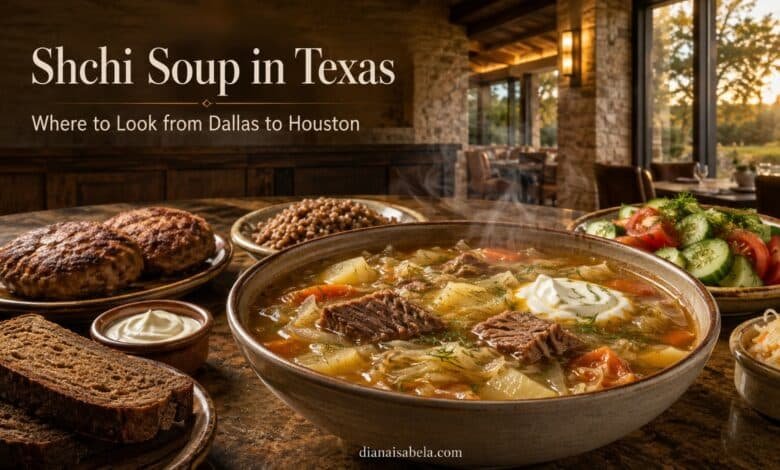
Texas is enormous enough to make almost every phrase containing the words “near me” slightly ridiculous. A restaurant in Dallas and a grocery in Houston may both be in the same state, but they are not remotely part of the same lunch plan. That matters with shchi because Texas does not currently give us one obvious neighborhood where cabbage soup appears everywhere. Instead, it gives us several strong Eastern European food pockets — especially around Dallas–Fort Worth — where the surrounding kitchen culture makes the search worthwhile.
The clearest place to begin is North Texas. Dallas and Carrollton have active restaurants serving Russian, Uzbek, Georgian and broader Eastern European dishes, with menus full of borscht, solyanka, kharcho, shurpa, lagman, pelmeni, vareniki, stuffed cabbage and buckwheat. Shchi itself is not sitting permanently on the current menus I can verify, which means this page has to do something more useful than simply rename another soup. It needs to show you which kitchens make sense to ask, what terminology to use, and when a grocery or deli becomes a better lead than a restaurant.
Houston, Austin and San Antonio each add a different kind of clue. Houston has one of the state’s established Russian-European grocery and deli businesses with ready-to-go food. Austin has a dedicated Eastern European market built by Russian and Ukrainian founders. San Antonio has a Russian-European grocery with a culinary department and the very ingredients — fermented cabbage and sorrel included — that tell you the local community cooks beyond supermarket stereotypes. Texas therefore has a real shchi trail. It just happens to be measured in kitchens and conversations rather than a tidy list of ten guaranteed bowls.
Texas Needs a Food Route, Not a Fake Statewide Ranking
If I lived in Dallas, I would not drive to Houston because somebody somewhere described a grocery store as “Russian.” If I lived in Austin, I would not treat Carrollton as my neighborhood soup counter. Texas rewards regional thinking, and the shchi search becomes much easier once you stop treating the state like one giant city with cowboy boots.
North Texas is the strongest place to begin because Dallas and Carrollton have restaurants whose current menus already live in the right culinary universe. Houston is a grocery-and-deli search. Austin and San Antonio are more exploratory: both have active Eastern European markets, but I would want a direct conversation with the kitchen or store before promising anyone a container of shchi.
If the dish itself is still unfamiliar, start with my guide to what shchi soup actually is. Once you understand why fresh cabbage, sauerkraut and sorrel can all lead to very different bowls, the Texas search stops looking like a hunt for one exact recipe and starts looking like a hunt for the right kind of kitchen.
And if Texas is only one piece of your search, my complete shchi soup near me guide is the main map that connects the state pages, local food leads and supporting guides.
This distinction between restaurant, deli and grocery matters more than it sounds. A restaurant gives you a stable menu but may never decide that shchi deserves permanent real estate beside borscht. A prepared-food counter can make it once a week and sell every container before anybody considers updating a website. A grocery without a kitchen may not make soup at all, yet the person behind the counter may know exactly which local caterer does. Different places solve different parts of the search.
Dallas Is Where I Would Begin — Because the Soup Culture Is Already There
Bubala Cafe & Grill on Preston Road is the strongest first stop I found in Texas, not because I am going to pretend its current menu contains shchi, but because the menu shows exactly the kind of kitchen where a shchi conversation makes sense. Borscht sits beside lagman, shurpa, kharcho and chicken noodle soup. Pelmeni, vareniki and manti cover several dumpling traditions. Stuffed cabbage, beef stroganoff, buckwheat with mushrooms, Olivier, herring, pickled vegetables and Uzbek bread make it clear that the restaurant is not using “Eastern European” as decorative branding.
Bubala Cafe & Grill — Dallas
The soup lineup is what catches my attention first. Borscht is currently described as a traditional beet-and-cabbage soup and is vegetarian. Shurpa moves toward clear lamb broth and vegetables; kharcho gives you beef, herbs and spices; lagman brings noodles, beef broth and vegetables. Those are four completely different soup personalities living under one roof, which tells me the kitchen and its customers are comfortable with soup that extends well beyond chicken noodle.
The rest of the menu makes the restaurant even more useful. Pickled cabbage appears on the cold side of the menu, stuffed cabbage appears among the mains, and buckwheat kasha with mushrooms is available as a side. In other words, nobody here needs an explanation of why cabbage, fermentation and slow-cooked comfort food belong together. That still does not prove there is an unadvertised pot of shchi in the kitchen; it simply means that asking whether the restaurant ever offers it as a special is a reasonable question rather than wishful thinking.
Bubala is also a good place to understand why I refuse to use borscht as a substitute in the listings. Both soups can contain cabbage. Both can include potatoes, carrots, onion and sour cream. What usually changes the identity is which ingredient leads the bowl: beetroot gives classic borscht its earthy sweetness and unmistakable color, while cabbage — fresh or fermented — sits at the center of classic shchi. If that distinction is still fuzzy, my shchi vs borscht guide separates them in much more useful detail.
There is another Texas-specific reason I like Dallas as the starting point: the menu reflects the broader food geography of immigrant communities rather than one narrow national cuisine. Russian dishes sit naturally beside Uzbek lagman and pilaf, Georgian kharcho and khachapuri, and Central Asian kebabs. That mixture is not a problem to solve. It is exactly how many post-Soviet food scenes work in American cities, and it helps explain why the kitchen may be able to answer a shchi question even when the dish is not printed permanently.
Carrollton Gives North Texas Its More Traditional Russian Dinner
A short drive north changes the mood again. Restaurant Volga, connected with the Russian Banya of Dallas in Carrollton, is one of the state’s clearest explicitly Russian dining environments. The current official site describes it as an Eastern European restaurant serving handmade traditional dishes, while the business remains active at 2515 E Rosemeade Parkway. Available menu records show borscht and solyanka among the soups, alongside pirozhki, khachapuri, pickled vegetables and other familiar dishes.
Restaurant Volga / Russian Banya — Carrollton
Solyanka is particularly useful here because it tells us something about the restaurant’s soup vocabulary. This is not a kitchen afraid of deeply sour, intensely savory flavors. Solyanka typically arrives in a much more assertive register than shchi, with pickles, cured or cooked meats and a sharp saline-acid balance. If you crave sour-cabbage shchi because you like fermented flavors, solyanka may appeal to the same side of your appetite while remaining very much its own dish.
That last phrase matters. Texas restaurant searches get messy quickly because menus use broad words such as “Russian soup,” and it is tempting to collapse everything into the dish you hoped to find. I would rather keep the names clean. Borscht is borscht. Solyanka is solyanka. Kharcho is kharcho. If Volga tells you it makes shchi on a particular weekend, wonderful — now we have something new and specific. Until then, it belongs here as a serious place to ask, not as a fabricated confirmed bowl.
If you are staying in North Texas, I would call Bubala and Volga before expanding the search much farther. Two active kitchens with substantial Russian and Eastern European menus are more useful than ten grocery-store pins scattered across the Metroplex. You can also ask a better follow-up question than simply “Do you have shchi today?”: ask whether it has ever appeared as a special, whether a sour-cabbage soup rotates during cooler months, or whether the kitchen makes it for catered events.
That kind of questioning is exactly why I built a separate guide to ordering shchi when the menu language is unclear. Sometimes the difference between finding the dish and missing it is one extra sentence.
Texas Heat Does Not Make Shchi Absurd — It Just Changes the Moment
I understand the visual contradiction. Shchi belongs so completely to the mental image of cold-weather cooking that a steaming bowl in August Dallas heat can look like somebody dressed for the wrong season. But food does not stop belonging to people because they moved somewhere warmer. Immigrant cuisines travel with households, not climate maps, and Texas restaurants already prove this every time somebody orders hot lagman, kharcho, borscht or shurpa while the parking lot outside is attempting to cook the tires.
The practical difference is appetite. On a cold North Texas evening, sour-cabbage shchi with beef, dark bread and sour cream sounds almost aggressively correct. During a brutal summer afternoon, I would personally lean toward a lighter fresh-cabbage version or green sorrel shchi if a kitchen offered it. That does not make one more authentic than the other; it simply means the weather has joined the dinner conversation.
This seasonal question is worth asking directly at delis and restaurants. Some traditional soups may appear more often during cooler weather or when the ingredients are convenient. Green shchi, for example, lives in a very different flavor register from dark beef-and-sauerkraut soup. If sorrel is the version you are hunting, my guide to green shchi and sorrel soup explains why it can feel almost like another branch of the family.
Houston Is a Deli Search Now, Not a Terrace Cafe Nostalgia Tour
Houston needs a careful update because older food writing can make the city look easier for Russian restaurant dining than it currently is. Terrace Cafe once served a broad menu of Russian, Ukrainian, Belarusian, Uzbek and other former Soviet dishes, including borscht, pelmeni soup and okroshka, but the restaurant is now reported permanently closed. That matters because local-food pages become useless very quickly when old reviews continue circulating long after the dining room disappears.
The current Houston business I find much more interesting is Golden Grain on Birdwood Road. Its own site describes a Russian and European market and deli carrying thousands of products from countries including Russia, Ukraine, Armenia, Moldova and Georgia. More importantly for this page, the store specifically advertises a large selection of ready-to-go foods. That phrase is what takes Golden Grain from “somewhere to buy imported tea” into “somewhere I would actually call about soup.”
Golden Grain — Houston
The owners’ background also tells you why the store is more than an American supermarket with an international aisle. Golden Grain describes itself as a community hub and says its owners previously ran a grocery and butcher business in Sochi before coming to the United States. That does not mean a pot of shchi is guaranteed, but it does mean this is a business where the question belongs culturally and practically.
I would call and ask what ready-to-go soups are available, whether cabbage soup appears in the prepared-food selection, and what the store calls it. If they say “borscht,” do not pressure the poor person on the phone into turning it into shchi for the sake of your search. If they say “we sometimes have sour cabbage soup,” now ask whether the kitchen considers it shchi and when it is usually made.
Houston is also where the broader guide to finding shchi at Russian and Ukrainian delis becomes especially useful. Restaurant menus are wonderful when the dish is permanent; deli culture is often better when the food lives on a weekly rotation that regular customers understand perfectly and search engines understand not at all.
Austin and San Antonio Are Worth Watching — for Different Reasons
I would not force either city into the same category as Dallas. I have stronger evidence for active Eastern European grocery communities than I do for current shchi restaurant menus, and that difference should remain visible. But both cities are interesting enough that I would absolutely investigate locally before ordering ingredients online or assuming Texas has nothing between Dallas and Houston.
Austin
Borderless European Market on West Parmer Lane identifies itself as Austin’s dedicated Eastern European grocery and describes its origin in a partnership between Tatiana from Russia and Taras from Ukraine. The store stocks food from across Eastern Europe and receives fresh deliveries every week. I would use it first as a community-information and ingredient stop rather than claim an unverified hot-soup program.
San Antonio
Sasha’s Market is more immediately interesting for the shchi question because its site lists a culinary department in addition to grocery, dairy, fish, sausage and bakery departments. Its grocery inventory also specifically includes fermented cabbage and sorrel — two ingredients that sit directly inside the classic shchi conversation.
DFW markets
The Dallas–Plano–Frisco area also has Craft Foods, which currently describes itself as a Russian, Ukrainian, Armenian and European market with specialty deli items and homemade-style meals. I would treat that as another prepared-food lead to ask about, not a confirmed shchi listing.
Austin is especially interesting from the cooking side. Borderless European Market carries the sort of dark bread, dairy, grains, pickled vegetables and frozen foods that let you build the meal even when no restaurant has the soup. If you discover that Texas has defeated your ready-made shchi ambitions for the day, buying the right ingredients is a much better consolation prize than pretending some unrelated cabbage soup is close enough.
San Antonio gives me a different clue because Sasha’s Market actually lists a culinary department and also sells sorrel and fermented cabbage. That combination tells me the shop understands both the pantry and prepared-food side of this cuisine. I would call and ask whether the culinary counter currently makes soups, whether shchi appears at any point during the year, and whether staff know of a local caterer or community cook who offers it.
Those questions may feel slightly old-fashioned in an era when we expect every edible thing to have a button marked “Order Now,” but traditional food communities often operate through precisely this kind of knowledge. Somebody knows who makes the pirozhki. Somebody knows which shop gets the good rye bread. Somebody knows whose cabbage soup appears on Saturday. A useful guide should help you reach that information rather than pretending the internet has already indexed all of it.
Know Which Shchi You Want Before Texas Hands You a Different Cabbage Soup
Texas makes this distinction particularly important because the state’s Eastern European food scene crosses Russian, Ukrainian, Armenian, Georgian, Uzbek, Jewish, Polish and other traditions. Cabbage appears all over that landscape. So do beets, fermented vegetables, meat broth, sour cream and dill. Shared ingredients are part of what makes the region’s food so fascinating, but they also make careless menu interpretation very easy.
Classic fresh-cabbage shchi is usually the gentler direction. Fresh cabbage softens into the broth, contributing sweetness and vegetal flavor without the unmistakable acidic edge of fermentation. With chicken or a lighter vegetable broth, this can be a relatively delicate soup despite the rustic reputation of the dish. It is the version I would be most tempted by on a warm Texas day, especially with a cucumber-and-dill salad alongside it.
Sour-cabbage shchi is another mood entirely. Fermented cabbage or sauerkraut changes the broth from simply savory to tangy, deeper and more insistent. Beef fits naturally here because richness and acidity balance each other; dark bread suddenly becomes almost compulsory, and sour cream can soften the edges without erasing them. If this is the bowl you imagine when you search for shchi, asking “fresh or fermented?” before driving is not fussy — it is practical.
The two versions are different enough that my fresh-cabbage vs sour-cabbage shchi guide treats them as a real choice rather than a footnote.
Green shchi then takes the family in another direction again. Sorrel or other greens replace the cabbage-centered personality with a bright herbal acidity, and egg commonly joins the bowl. This is where naming overlaps most easily with “green borscht,” especially in Ukrainian and mixed immigrant food communities. I follow the kitchen’s own language rather than looking at sorrel, potato and egg and deciding I know better than the people who cooked it.
A Thirty-Second Call Beats Crossing Dallas–Fort Worth for the Wrong Soup
Texas is where calling ahead stops being optional if the drive is meaningful. Twenty miles can be a casual distance on an empty highway and a philosophical experience at the wrong hour. If one particular bowl is the point of the trip, confirm it before you leave.
I would also ask about seasonal specials. Texas heat can make restaurants adjust soup demand even if the cuisine itself remains unchanged, and a substantial sour-cabbage soup may appear more naturally when temperatures fall. The important thing is to ask without leading the answer. “Do you ever make shchi?” is useful. “You must make shchi because you are a Russian restaurant, right?” is how inaccurate local guides are born.
What I Would Put Around a Texas Bowl of Shchi
Texas Eastern European restaurants have one dangerous quality: the surrounding menu can be substantially more dramatic than the soup. At Bubala, for example, you can move from shurpa to khachapuri, chebureki, manti, pilaf, kebabs and lamb chops before your decision-making system has had a chance to defend itself. I would resist the urge to turn one cabbage soup search into a banquet designed for a minor royal wedding.
If you want the full pairing logic, continue with my guide to what to eat with shchi. If the restaurant or deli counter leads you toward cutlets, the existing Russian kotleti guide is the natural next stop.
Shchi is also unusually well suited to Texas takeout because it does not depend on crispness or instant plating. Tender cabbage remains tender; meat remains in broth; potatoes are not offended by twenty minutes in a sealed container. Keep the bread separate, keep sour cream cold until you are ready to eat, and reheat the soup gently. With a green sorrel version I would be a little more careful because aggressive reheating can flatten its fresh acidity; a sour-cabbage beef soup is considerably more durable.
If I Had One Texas Weekend for This Search
I would make Dallas–Carrollton the first experiment. I would call Bubala and Restaurant Volga before leaving home and ask the same simple question: whether shchi ever appears as a special or rotating soup. If one says yes, that decides the route. If both say no, I would choose based on the rest of the menu rather than punish myself with another hour of searching. Bubala wins for the broad Russian–Uzbek–Georgian spread; Volga wins when I want the more explicitly Russian restaurant atmosphere.
In Houston, I would call Golden Grain before inventing a restaurant crawl around businesses that no longer exist. I would ask about ready-made soups and prepared foods, then use the store as a real grocery stop regardless of the answer. That is the pleasure of a good Russian-European deli: a missing shchi does not mean you leave empty-handed. Bread, pickles, dairy, sausages, sweets and tomorrow’s dinner all have a way of following you to the register.
In Austin, I would use Borderless European Market partly as a reconnaissance stop. A store founded specifically to serve the Eastern European community is exactly where I would ask whether any local restaurant, caterer or home-food business is known for shchi. In San Antonio, Sasha’s Market gives the question an even more concrete starting point because there is a culinary department and the grocery stocks sorrel and fermented cabbage. The fact that the ingredients exist locally does not prove the finished soup is for sale; it does prove the conversation has somewhere intelligent to begin.
This is also why I am not making Dallas, Houston, Austin or San Antonio child shchi pages yet. Dallas is closest because its restaurant ecosystem is strong, but a city guide should provide more than a longer version of “call these two places.” When we have enough confirmed bowls, recurring soup schedules or independently useful prepared-food leads, the city deserves its own page. Until then, keeping Texas together here is more helpful.
Where Texas Fits Into the Larger American Shchi Trail
Texas is not currently as straightforward as San Diego, where California gives us a named restaurant shchi listing, or Seattle, where the soup has appeared in clearly differentiated sour-cabbage and green forms. Texas is valuable for another reason: it shows what the search looks like in a state with substantial Eastern European and post-Soviet food culture but weaker permanent shchi visibility.
That is useful information in its own right. It tells us not to equate “no obvious Google result” with “nobody here cooks this.” Dallas has active Russian and Eastern European restaurants with serious soup programs. Houston has a long-running Russian-European deli with ready-made food. Austin has a dedicated Eastern European market. San Antonio has a Russian-European grocery with a culinary department. The infrastructure exists; the exact soup needs more local confirmation.
For the full state-by-state picture, continue with my United States shchi guide. Texas belongs there as a strong investigative state rather than a page padded with invented certainty.
And that is ultimately the standard I want for this entire series. If I can verify a bowl, I will tell you where it is and what it costs. If I can verify a kitchen but not the bowl, I will tell you why the kitchen is worth calling. If all I can find is an old closed restaurant whose menu still floats around the internet, I would rather tell you it closed than send you to an empty address. Cabbage soup is not worth lying about. Very little is.
Know the Texas Kitchen That Actually Makes Shchi?
Texas is exactly the kind of state where one email from a local reader could improve this guide enormously. The distances are huge, the Eastern European food communities are scattered, and some of the best prepared food never becomes a permanent online menu item. If there is a restaurant, Russian or Ukrainian deli, Eastern European grocery, Central Asian kitchen, caterer or prepared-food counter near you that makes shchi, I want to know about it.
Send me the practical details: the business name, city, address, how the soup is labeled, whether the cabbage is fresh or fermented, what meat is used, whether there is a green sorrel version, what a portion costs, and whether the soup appears every day or only on a particular schedule. If you know that a Dallas restaurant quietly makes it in winter, that a Houston deli sells it on Fridays, or that somebody in Austin or San Antonio has a regular batch people in the community already know about, those are exactly the details worth adding.
I also want the stories that do not fit neatly into a restaurant card. Send photographs of the bowl. Tell me what bread comes with it. Tell me whether your family adds sour cream immediately or considers that a decision each person should make at the table. Tell me whether the soup tastes better the next day, whether your grandmother called a particular version shchi while somebody else insists it was kapusnyak, or whether the best local batch sells out before noon.
I love polished restaurants, obviously, but local food knowledge is often much more interesting than that. Sometimes the useful sentence is simply, “There’s a little market in our part of town, and you have to ask what they cooked on Saturday.” If you know the Texas version of that sentence, write to me. I want this guide to become better because the people actually eating the food help build it.
info@dianaisabela.comQuestions About Finding Shchi in Texas
Where should I look for shchi soup in Texas?
Start in the Dallas–Fort Worth area, where Dallas and Carrollton have the strongest current Russian and Eastern European restaurant scene. Bubala Cafe & Grill has an extensive soup and traditional-food menu, while Restaurant Volga in Carrollton is another serious Russian dining lead. Shchi is not currently confirmed on their regular menus, so call before making a soup-specific trip.
Can I find shchi in Dallas?
Dallas has strong Russian and Eastern European food options, but the current Bubala Cafe & Grill menu lists borscht, lagman, shurpa, kharcho and chicken noodle rather than shchi. Ask whether shchi appears as a special or rotating soup instead of assuming it is permanently available.
Where can I look for Russian soup in Carrollton?
Restaurant Volga at the Russian Banya of Dallas is an active Russian and Eastern European restaurant in Carrollton. Available menu information includes soups such as borscht and solyanka. If shchi is your specific goal, confirm directly with the restaurant before visiting.
Where should I look for shchi in Houston?
Golden Grain on Birdwood Road is a useful Houston lead because it operates as a Russian and European market and deli and advertises a large selection of ready-to-go foods. Call and ask which soups or cabbage dishes are currently prepared rather than relying on older restaurant listings.
Are there Eastern European markets in Austin and San Antonio?
Yes. Borderless European Market serves Austin with groceries from across Eastern Europe, while Sasha’s Market in San Antonio has Russian and European grocery departments plus a culinary department. These stores are useful places to ask about local soup availability, but they should not be presented as confirmed shchi sellers without direct confirmation.
Is borscht the same as shchi?
No. Classic borscht is usually led by beetroot, while classic shchi is centered on cabbage, either fresh or fermented. They can share cabbage, potatoes, carrots, onions, meat and sour cream, but their dominant flavors and culinary identities are different.
What is sour-cabbage shchi?
Sour-cabbage shchi is made with fermented cabbage or sauerkraut, which gives the broth a deeper tang than a fresh-cabbage version. Beef is a common partner, although recipes vary. The acidity works particularly well with dark bread and a restrained spoonful of sour cream.
What should I ask a Texas restaurant or deli when looking for shchi?
Ask which homemade soups are available that day, whether the kitchen ever makes shchi, whether it uses fresh cabbage or sauerkraut, whether a green sorrel version appears seasonally, which day the soup is usually made and whether a portion can be reserved.
What should I eat with shchi?
Dark rye bread and sour cream are classic companions. A lighter shchi works well before kotleti, dumplings or another prepared main, while a rich beef-and-sauerkraut version may need little more than bread and a crisp tomato-and-cucumber salad.
Is shchi good for takeout in Texas?
Yes. Shchi travels well because cabbage, meat and vegetables are already meant to soften together in broth. Keep bread and sour cream separate, refrigerate leftovers promptly, reheat the soup gently and add fresh herbs after warming.