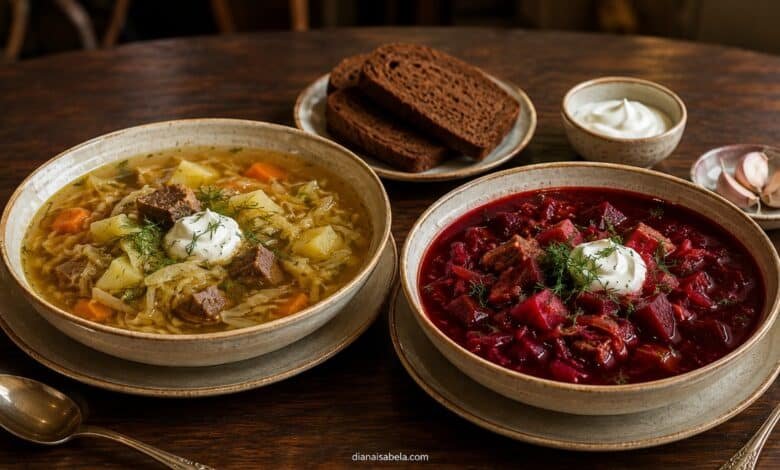
Shchi and borscht are often introduced to English-speaking diners as if they were neighboring variations of the same Eastern European soup idea: vegetables, broth, sour cream, possibly beef, probably something red or cabbage-related, please choose one. This is convenient for menus and not especially useful for understanding dinner.
The easiest distinction is that classic shchi is fundamentally associated with cabbage, while the red borscht most people recognize is built around beetroot. But that one sentence only gets us through the front door. The two soups differ in sweetness, acidity, aroma, texture, color and the way their vegetables shape the broth. Even when they sit beside each other on the same restaurant menu, they rarely feel interchangeable once the spoon reaches your mouth.
And then green shchi and green borscht arrive to make the naming conversation less tidy, because food traditions have never shown much interest in behaving like filing cabinets. We will get to that part too.
The Shortest Useful Difference Is Cabbage Versus Beetroot
Classic shchi belongs to the cabbage-soup world. It may use fresh cabbage for a gentler, more vegetable-forward broth or sauerkraut for something deeper and tangier. Meat, mushrooms, potatoes, carrots, onions and herbs can all change around that foundation, but cabbage remains central to the identity of the familiar white or sour versions.
Red borscht belongs to a different flavor landscape. Beetroot gives the soup its famous ruby color, but more importantly it brings earthy sweetness that affects the entire broth. Cabbage can absolutely appear in borscht too, which is where people sometimes get confused, but cabbage being present does not make the soup shchi. The beet-driven balance is doing different work.
If you are looking for places that serve shchi rather than trying to distinguish the bowls once they arrive, my Shchi Soup Near Me guide is the broader starting point. Here, the interesting question is what happens after both soups reach the table.
Shchi Lets Cabbage Decide the Personality
Fresh-cabbage shchi can be remarkably gentle. The cabbage softens into the stock, onion and carrot add sweetness, potato gives the bowl weight, and the broth often remains easy to recognize as beef, chicken, mushroom or vegetable. The result is comforting without necessarily being sharp or heavy. Someone expecting fermented cabbage on the first spoonful can actually be surprised by how calm the soup tastes.
Sour-cabbage shchi changes the mood completely. Sauerkraut brings fermentation acidity before the other ingredients have had a chance to say anything, so the broth becomes tangier and more assertive. Rich beef works beautifully here because the fermented cabbage keeps all that savory depth from becoming flat. Potato softens the middle, dill brightens the aroma, and sour cream can round off the acidity without erasing it.
This is why “What does shchi taste like?” has no single neat answer. The cabbage itself may begin fresh or already transformed through fermentation. If that distinction is what you are trying to understand, Fresh Cabbage Shchi vs Sour Cabbage Shchi goes much deeper into the two versions.
Borscht Builds Its Drama Around Beetroot
Red borscht announces itself before you taste it. Beetroot colors the broth so completely that the bowl can range from jewel-like crimson to dark burgundy, depending on the recipe and cooking method. But color is the least interesting difference once you start eating. Beets bring an earthy sweetness that cabbage alone does not, and that sweetness changes how acidity, meat, garlic, vegetables and sour cream behave around it.
A good borscht is rarely simply “sweet beet soup.” The beet sweetness is usually balanced by savory broth and some degree of acidity, while cabbage, potato, carrot, onion and tomato may contribute additional layers depending on the regional or household recipe. Beef can make the soup deeply substantial, while meatless versions allow the vegetables to dominate. The final bowl can feel earthy, sweet, tart and savory at the same time.
That layered sweet-sour balance is one reason borscht tastes so different from sour shchi even when both bowls contain cabbage and both have noticeable acidity. One is fundamentally organizing itself around beetroot. The other is letting fresh or fermented cabbage shape the liquid.
The Difference Becomes Much Clearer When You Stop Looking at Ingredients and Start Thinking About the Spoonful
A list of ingredients makes shchi and borscht look more similar than they taste because both can contain cabbage, potatoes, carrots, onion, meat, herbs and sour cream. The distinction becomes obvious when you think about which flavor reaches you first and which one remains after you swallow.
With fresh-cabbage shchi, broth and vegetables often lead. With sauerkraut shchi, acidity may arrive immediately, but it is a fermented cabbage acidity rather than beet sweetness balanced by sourness.
Even tart borscht usually carries the unmistakable sweetness of beetroot underneath the acidity. That sweet-earthy note is one of the clearest sensory differences between the soups.
A clear broth, tender cabbage and vegetables can produce a surprisingly delicate bowl, especially compared with a beefy red borscht.
If plenty of fermented cabbage is involved, the soup can be tangier and less sweet than a typical beet-based borscht, even when both use rich meat broth.
In shchi, it can soften cabbage acidity and enrich the broth. In borscht, it also mellows acidity but creates a particularly striking contrast with beet sweetness and earthy flavor.
They Can Both Taste Sour, but the Sourness Has Different Origins
This is where many first-time comparisons go wrong. People taste acidity in both soups and assume the flavor structure must be similar. It is not necessarily similar at all.
In sour shchi, fermented cabbage can provide acidity directly. The sauerkraut enters the soup already transformed, already salty and already tangy, and that fermented character moves into the broth during cooking. Fresh-cabbage shchi does not have that same built-in sourness, so its acidity depends much more on the particular recipe.
Borscht often uses acidity to balance the natural sweetness of beetroot. Different cooks achieve that balance differently, and recipes vary considerably, but the relationship is important: the sour element is often working against sweetness rather than against fatty richness alone. This gives borscht its characteristic sweet-sour tension.
Think of it this way: sour shchi can taste tart because the cabbage itself has been fermented; red borscht often needs acidity because the beetroot naturally brings sweetness. Similar sensation, different culinary job.
Beef Works in Both, but It Does Not Make Them Taste More Alike
Beef is one of those ingredients that can quietly convince diners two soups must belong in the same category. Put tender beef, potatoes and sour cream in two Eastern European bowls and the resemblance suddenly looks convincing. Taste the broth, though, and the illusion disappears.
In sour shchi, beef richness is pulled against the acidity of fermented cabbage. The combination feels savory, salty, tart and deeply warming. In red borscht, beef has to live with beetroot’s sweetness as well as whatever acidity the cook has introduced, so the flavor becomes rounder and more sweet-savory. Both combinations are excellent, but they solve different problems.
Chicken changes the character again. A lighter chicken shchi can feel clean and brothy, while chicken also appears in some green soup traditions. Meatless versions of either soup can be substantial when the vegetables and stock are handled seriously, so neither “shchi” nor “borscht” automatically tells you whether meat is involved. If you are ordering rather than cooking, asking about the broth remains the safest move.
The Nationality Question Is More Complicated Than a Restaurant Menu Makes It Look
Borscht is especially strongly associated with Ukrainian culinary culture, and Ukrainian borscht cooking was inscribed by UNESCO in 2022 on the List of Intangible Cultural Heritage in Need of Urgent Safeguarding. At the same time, borscht and related beet soups are cooked across a broad part of Eastern Europe and beyond, with regional and family variations that do not collapse neatly into one universal formula.
Shchi has a long association with Russian cuisine and Russian-speaking food culture, but that does not mean every bowl encountered in the United States will appear inside a restaurant labeled “Russian.” Migration and the shared culinary history of the former Soviet space mean shchi can also appear in Ukrainian, Uzbek and other post-Soviet food environments.
The practical way to handle this is not to turn lunch into a flag-labeling contest. Respect how a restaurant identifies itself, respect how a family names its food, and pay attention to what is actually in the bowl. Culinary history is interesting precisely because people and recipes have always moved more freely than neat category labels suggest.
And Then “Green Borscht” and “Green Shchi” Make Everything Less Neat
If red borscht and cabbage shchi were the entire story, comparison would be wonderfully easy. Unfortunately for tidy charts and fortunately for food, green sorrel soups complicate the vocabulary. You may encounter green shchi, green borscht or simply sorrel soup, and the ingredients can overlap substantially depending on family, region and restaurant translation.
Green shchi is commonly associated with sorrel and other leafy greens rather than white cabbage. Potato, broth, egg, herbs and sometimes chicken or beef may appear. The defining flavor is typically bright and tart because sorrel naturally carries acidity. It therefore tastes very different from both fresh-cabbage shchi and red beet borscht.
Green borscht is also a familiar name for sorrel-based green soup in Ukrainian and neighboring traditions. The safest approach is not to insist that every kitchen use one universal English label. Look at the ingredients and respect the name the kitchen or family uses. I cover the leafy side separately in What Is Green Shchi?.
Which Soup Should You Order?
If you want something earthy, colorful and naturally sweeter, I would choose red borscht. Beetroot gives the soup a flavor no amount of cabbage can imitate, and the combination of earthy sweetness, acidity and sour cream is exactly why the dish feels so distinctive.
If you want a broth where cabbage itself is the central story, choose shchi. Fresh-cabbage shchi is especially good when you want something gentler and more openly brothy. Sour-cabbage shchi makes more sense when you want fermentation, tang and a soup that can stand confidently beside beef and dark bread.
If you dislike beets, this decision becomes remarkably efficient: shchi. If you dislike sauerkraut, do not eliminate shchi completely — order a fresh-cabbage version instead. And if both red beet soup and cabbage soup sound too winter-heavy for your mood, green shchi may be the bright, sorrel-based escape route you did not know you needed.
If You Love Borscht, Will You Automatically Love Shchi?
Not automatically, and that is exactly why trying both is worthwhile. Loving borscht may tell me that you enjoy Eastern European soup traditions, sour cream, broth, vegetables and possibly beef. It does not tell me whether you enjoy fermented cabbage, which can dominate sour shchi, or whether the gentler sweetness of cooked fresh cabbage will excite you after the earthier flavor of beets.
The reverse is equally true. Someone can love shchi and dislike borscht because beetroot has such a specific flavor. It is earthy, sweet and visually dramatic in a way cabbage simply is not. No amount of telling someone that both soups contain carrots and potatoes will make beets stop tasting like beets.
I would treat them as two separate dishes that happen to share part of the same pantry. Comparing them is useful. Expecting one to substitute perfectly for the other is where dinner gets disappointing.
What About Texture?
Shchi usually lets cabbage define much of the texture. Fresh cabbage can stay softly leafy and recognizable, while sauerkraut becomes more integrated and tender as it cooks. Depending on the recipe, potatoes and meat may remain chunky enough to make the soup feel substantial without turning it into stew.
Borscht often has more visual and textural complexity because beets, cabbage, carrot, potato and other vegetables can all occupy the same bowl. Some versions are cut finely and feel relatively unified; others retain larger vegetable pieces. Beetroot also colors neighboring ingredients, so the entire soup can look more cohesive even when plenty of separate textures remain.
Neither soup should automatically be puréed. If somebody hands you smooth crimson beet cream and calls it borscht, that may be a modern interpretation, but it should not become your mental template for every traditional bowl. The same applies to shchi: cabbage soup does not mean cabbage smoothie, and I would like us all to keep it that way.
At the Table, They Want Similar Companions for Different Reasons
Both soups welcome sour cream, herbs and good bread, which can make the table look more similar than the bowls taste. Dark rye works beautifully with shchi because it gives a brothy cabbage soup more substance and catches every last bit of liquid. With borscht, bread also gives the sweet-sour broth something sturdy to push against.
Garlic can make sense around borscht, while pickled or fermented sides should be handled more carefully beside already-sour shchi unless you deliberately want an aggressively tangy meal. A rich beef version of either soup may need very little afterward, while lighter vegetable versions leave room for dumplings, cutlets, potatoes or another main course.
If you are trying to build an actual meal rather than merely compare soups academically, What to Eat With Shchi gives the shchi side much more room.
How I Would Decide Between Them at a Restaurant
I would first look at the rest of the meal. If I were planning a heavy second course — perhaps dumplings, plov, cutlets or roasted meat — I might choose a lighter fresh-cabbage shchi because it leaves more room for what follows. If I wanted soup to carry most of the meal, a beefy sour shchi or substantial borscht could make more sense.
Then I would look at my actual craving rather than what seems more famous. If I wanted earthy sweetness, beetroot and sour cream, borscht would win immediately. If I wanted a savory broth with cabbage, especially something fermented and tangy, shchi would be the obvious choice. If both appeared on the menu and I had never tried either, I would be strongly tempted to bring another person and order one of each. Culinary diplomacy occasionally requires two spoons.
If the restaurant description is vague, my How to Order Shchi guide has the useful questions for identifying fresh, sour and green versions without turning the server interaction into an oral examination.
Why Restaurants Often Put Them Beside Each Other
From a diner’s perspective, shchi and borscht make natural neighbors. Both belong comfortably inside Eastern European comfort-food menus, both can be substantial enough for lunch, both can use beef, potatoes, vegetables, herbs and sour cream, and both travel well into restaurant and deli settings. If a kitchen already cooks one, the other does not look culturally out of place beside it.
That proximity can also make borscht a useful clue when you are searching for shchi. A deli making several homemade soups may rotate both dishes even if only borscht appears permanently online. But one does not guarantee the other, which is why a Russian or Ukrainian prepared-food counter is worth asking rather than assuming. My deli guide explains how I would check those rotating soup kitchens before making a special trip.
And if you are searching specifically around the United States, current restaurant bowls and deli-heavy areas are collected separately in Shchi Soup Near Me in the United States.
The Better Soup Is the One You Actually Wanted
I do not think shchi versus borscht needs a winner. They solve different cravings too well for that. Borscht gives you beetroot’s earthy sweetness, visual drama and a beautiful sweet-sour balance. Shchi gives you a much wider cabbage conversation, from gentle fresh leaves in clear broth to deeply tangy sauerkraut versions that seem specifically designed for dark bread and cold weather.
The useful comparison is not “Which soup is better?” It is “Which flavor do I want tonight?” If the answer is beetroot, the cabbage has already lost the election. If the answer is fermented tang and broth, borscht can be magnificent and still be the wrong soup. Food becomes considerably easier once we stop asking dishes to defeat one another and let them satisfy different appetites.
Personally, I like that the choice can change with weather, appetite and what else is on the table. A ruby bowl of borscht can feel completely right one week, while the next week all I want is clear broth, soft cabbage, dill and sour cream. Loyalty is a wonderful quality in people. I see no reason to impose it on soup.
Which Bowl Does Your Family Reach for First?
This is where the comparison gets much more interesting than any tidy definition. Some families treat borscht as the unquestioned soup of childhood; others have a pot of shchi that feels just as foundational. Even within one family, somebody prefers the sweeter beet version, somebody wants sauerkraut sharp enough to wake up the entire table, and somebody quietly adds so much sour cream that the original color becomes theoretical.
I want to hear those differences. Tell me whether shchi or borscht was more common in your kitchen, which version your family makes, what belongs beside the bowl, and which tiny recipe decision becomes mysteriously non-negotiable whenever two generations cook together.
I also love local discoveries: restaurant versions worth ordering, delis that rotate both soups, unusual green variations, and menus that finally explain the difference clearly instead of assuming everyone grew up knowing it. Send your food stories and finds to me at the address below. The soups are old; the conversations around them are very much alive.
info@dianaisabela.comQuestions About Shchi and Borscht
What is the main difference between shchi and borscht?
Classic shchi is primarily associated with cabbage, using either fresh cabbage or fermented cabbage such as sauerkraut. The familiar red form of borscht is centered on beetroot, which gives the soup its characteristic color, earthy sweetness and different sweet-sour balance.
Does borscht contain cabbage?
Many borscht recipes do contain cabbage, but cabbage alone does not make the soup shchi. In red borscht, beetroot remains central to the soup’s color and flavor structure even when cabbage, potatoes, carrots and other vegetables are also present.
Is shchi sourer than borscht?
It can be. Sour-cabbage shchi made with sauerkraut may have pronounced fermented acidity, while fresh-cabbage shchi can be quite mild. Borscht also often contains acidity, but it commonly balances the natural earthy sweetness of beetroot.
Is shchi red like borscht?
Usually no. Classic cabbage shchi is generally pale gold, amber or brownish depending on the broth and cabbage. Red borscht gets its distinctive ruby or burgundy color from beetroot.
Do shchi and borscht both contain meat?
Either soup can be prepared with meat, meat broth or without meat depending on the recipe. Beef is common in many substantial versions, but neither name guarantees that meat is present.
Do shchi and borscht both come with sour cream?
Sour cream is a common accompaniment to both soups. In shchi it can soften cabbage acidity and enrich the broth, while in borscht it balances beet sweetness and acidity and makes the texture creamier.
Is green shchi the same as green borscht?
The terms can overlap in some family, regional and restaurant usage for sorrel-based green soups, but they should not be treated as one universal recipe. Ingredients and naming traditions vary, so checking the actual preparation is more useful than relying on the English label alone.
Which is better for someone who does not like beets?
Shchi is the more natural choice because classic cabbage shchi does not rely on beetroot. A fresh-cabbage version is mild and brothy, while sour-cabbage shchi offers a stronger fermented flavor.
Which soup is sweeter, shchi or borscht?
Red borscht is generally the sweeter of the two because beetroot contributes natural earthy sweetness. Shchi can have sweetness from cabbage, carrot and onion, but it is usually more broth-driven and may be distinctly sour when made with sauerkraut.
Can I order shchi and borscht at the same restaurant?
Yes. Russian, Ukrainian and some Central Asian or broader Eastern European restaurants and delis may serve both soups, although availability varies and deli soups may rotate by day.