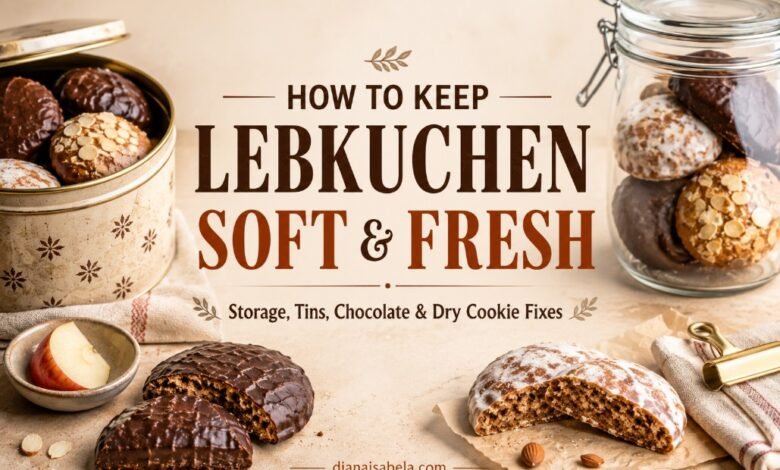
The best way to store Lebkuchen is to keep it tightly sealed in a cool, dry and dark place away from sunlight, steam, strong odors and frequent temperature changes. Unopened factory packages should normally remain sealed until they are needed. Once opened, the cookies should be returned to a tightly closed inner wrapper or transferred to a clean airtight food container.
That basic advice works for most Lebkuchen, but it does not tell the whole story. A soft, nut-rich Elisenlebkuchen round responds to air differently from a firm decorated heart. A sugar glaze can become sticky in humid conditions, while chocolate can develop pale marks after temperature fluctuations. A beautiful metal gift tin may protect cookies from light and crushing without actually keeping air out.
Storage therefore has two goals. The first is food safety: protecting the product from contamination, moisture damage, mold and poor handling. The second is preserving quality: keeping the center soft, the nuts fresh, the spices aromatic and the coating attractive.
This guide explains how to store unopened and opened Lebkuchen, how decorative tins should actually be used, whether refrigeration or freezing is helpful, how to manage large assortments and what can—and cannot—be done when a previously soft cookie begins to feel dry.
Readers who need a broader introduction can first explore what Lebkuchen is, how it tastes and why its texture varies. Shoppers comparing products and current sellers can use the Best Lebkuchen Near Me guide.
The practical answer: preserve the original inner packaging whenever possible, open only one package at a time and keep the remaining cookies sealed in a stable pantry environment. Complicated storage tricks matter less than consistently protecting Lebkuchen from air, heat and humidity.
A Reliable Storage Plan for Most Lebkuchen
Most commercially packaged Lebkuchen is made to survive distribution and remain enjoyable longer than a fresh cream pastry. That durability should not be confused with immunity to poor storage. Once air reaches the cookies, their moisture and aroma begin adjusting to the room around them.
Start by examining the package. Many decorative boxes and tins contain an additional sealed inner bag. That inner layer is usually more important for freshness than the outer presentation. Do not remove every cookie from its factory wrapper simply because the tin looks attractive.
When the inner package remains unopened, place it in a cool interior cabinet and follow the date and instructions printed by the manufacturer. Once the package is opened, remove only what you expect to serve and close it immediately.
| Situation | Best first action | Main risk |
|---|---|---|
| Unopened factory package | Keep the manufacturer’s seal intact | Heat, sunlight or package damage |
| Opened soft Lebkuchen | Reseal tightly or transfer to an airtight container | Drying and aroma loss |
| Chocolate-covered pieces | Store in a stable, cool cabinet | Melting, bloom and surrounding odors |
| Sugar-glazed pieces | Keep dry and separate delicate layers | Sticky glaze caused by humidity |
| Filled Lebkuchen | Keep individual wrappers and labels | Recipe-specific moisture and shelf life |
| Mixed gift assortment | Preserve separate inner packages | Flavor and moisture migration |
| Homemade Lebkuchen | Cool completely before sealing | Condensation trapped in the container |
Choose a container that matches the quantity remaining. Two cookies placed in a very large box are surrounded by unnecessary air, and every opening replaces that air again. A smaller container is easier to close securely and makes the remaining amount visible.
Label the opening date. This is especially useful when several seasonal products are being eaten at once. Without a date, it is easy to discover half a package several weeks later and have no reliable memory of when it was opened.
Do not store Lebkuchen beside onions, garlic, cleaning products, strongly scented candles or open containers of spices. Chocolate and nut-rich cookies can absorb surrounding aromas, particularly when their packaging is not completely sealed.
Protect the cookies from air first, heat second and surrounding odors third. Those three habits solve most ordinary storage problems.
Why Lebkuchen Becomes Dry, Sticky, Hard or Less Aromatic
Lebkuchen changes because it exchanges moisture with the surrounding environment. In a dry room, water gradually moves from the cookie into the air. In humid conditions, sugar-based surfaces may absorb moisture instead.
The result depends on the recipe. A premium Elisenlebkuchen contains substantial almonds, hazelnuts or walnuts and relatively little cereal flour. Its natural fat and dense structure can support a soft texture, but the exposed surface still dries after the protective packaging is opened.
A more flour-based Lebkuchen often has a lighter, cake-like crumb. As it loses moisture, it may become bready or crumbly rather than simply denser. Small hearts, stars and mini rounds also have more exposed surface relative to their interior, so they may change faster than one large cookie.
Chocolate slows moisture movement across the coated surface, but it does not create a perfect seal. Air can still enter through the wafer base, uncoated edges, cracks or areas where the chocolate is thin.
Sugar glaze reacts differently. It does not melt like chocolate, but it can draw moisture from humid air. A once-dry glaze may become tacky, transfer to neighboring pieces or adhere to the packaging.
Filled Lebkuchen introduces another variable. Fruit preparations, jam, marzipan and other centers contain their own moisture. Over time, moisture can move between the filling and surrounding dough. That is one reason filled products should normally remain in their labeled original wrappers.
| Observed change | Likely explanation | What it does not automatically mean |
|---|---|---|
| Dry or firmer center | Air exposure or storage beyond peak quality | The cookie was originally low quality |
| Sticky sugar glaze | Humidity or condensation | The center is underbaked |
| Flat pale marks on chocolate | Chocolate bloom | Mold is definitely present |
| Weak spice aroma | Long air exposure or cold serving temperature | The recipe contains no spices |
| Soft decorative heart | Moisture absorption | It was designed as a soft Elisen cookie |
| Tough edible wafer | Moisture migration or age | The wafer was meant to be removed |
Aroma can fade before the cookie becomes obviously dry. Cinnamon may remain recognizable while more delicate notes of orange, citron, honey and cardamom weaken. A product can therefore remain edible but no longer provide its best tasting experience.
Quality and safety must be judged separately. A best-before date normally refers to expected quality under proper storage. It is not a guarantee that an opened package will remain equally aromatic until that date, and it is not a reason to ignore mold, rancidity, fermentation or damaged packaging.
The Best Containers for Opened Lebkuchen
A clean food-storage container with a secure airtight lid is the most reliable general choice. Glass and good-quality food-safe plastic both work. The container should be dry, free from strong odors and only slightly larger than the cookies.
Glass does not easily retain food aromas and makes the remaining quantity visible. Its disadvantages are weight, breakability and light exposure when stored on an open shelf. A glass container belongs inside a cabinet rather than beside a sunny window.
Plastic is lighter and easier to stack. Use a container intended for food and verify that the lid closes evenly. Old containers that smell of tomato sauce, curry, onions or detergent are poor choices for delicate spiced cookies.
Are decorative Lebkuchen tins airtight?
Some may close tightly, but many decorative tins are designed mainly for presentation and physical protection. A loose-fitting metal lid can protect cookies from dust, crushing and light while still allowing slow air exchange around the rim.
The best solution is to combine the tin with an inner moisture barrier. Keep the original bag closed inside the tin, place the cookies in a food-safe resealable bag or use a smaller airtight container that fits inside the decorative package.
Airtight gasket container: best for dependable everyday storage.
Resealable food bag: economical and useful for refill packages.
Decorative metal tin: attractive outer protection; may need a sealed inner layer.
Original inner wrapper: often the best first barrier when it can be closed properly.
Cardboard gift box: not a reliable long-term moisture barrier by itself.
Open cookie jar: suitable for quick serving, not for preserving soft Lebkuchen.
Food-safe parchment can separate glazed and chocolate-covered layers. It reduces direct contact and makes delicate cookies easier to lift. Avoid printed paper, craft tissue or fragranced liners touching the food.
Cut and broken pieces deserve a smaller separate container. Their exposed interiors lose moisture faster than intact rounds, so they should be eaten first.
Do not place warm homemade Lebkuchen into a sealed container. It must cool completely first. Trapped steam can soften glazes, create condensation and increase spoilage risk.
How Storage Changes by Lebkuchen Type
The general rule remains consistent—keep the product sealed, cool and dry—but each style has a different primary vulnerability.
| Lebkuchen type | Primary concern | Practical storage approach |
|---|---|---|
| Soft Elisenlebkuchen | Drying and loss of nut-and-citrus aroma | Use an airtight container and open only for serving |
| Chocolate-covered rounds | Heat, bloom and odor absorption | Store in stable, cool conditions |
| Sugar-glazed rounds | Humidity and sticky surfaces | Keep dry with parchment between layers |
| Mini Lebkuchen | Faster moisture exchange | Use a small container and serve in batches |
| Filled bars and hearts | Filling migration and product-specific shelf life | Retain individual wrappers and labels |
| Decorated festival hearts | Humidity, broken icing and contamination during display | Store flat, dry and protected |
| Broken Elisen pieces | Additional exposed surfaces | Reseal tightly and consume before intact pieces |
| Homemade Lebkuchen | Residual warmth and recipe-specific moisture | Cool fully and follow the tested recipe |
Soft Elisenlebkuchen deserves particular care because the soft, dense texture is one of the main reasons to pay more for it. Large rounds can be separated with parchment and stored in a container that is opened only when needed.
Chocolate-covered Lebkuchen needs temperature stability. Avoid a location that becomes warm during the day and cold at night. Chocolate also absorbs surrounding odors, especially when stored in a refrigerator without complete protection.
Glazed Lebkuchen needs protection from humidity. A cabinet above a dishwasher, electric kettle or steaming stove is unsuitable even when the air elsewhere in the kitchen feels dry.
Mini Lebkuchen is convenient for parties but should be placed on the table gradually. Refill a serving bowl rather than exposing the complete package for several hours.
Filled products should not be removed from their individual packaging merely to create a prettier storage tin. The wrapper preserves identification, allergens and any product-specific information.
Decorated Lebkuchen hearts may be intended partly as souvenirs. A heart displayed uncovered for many days should not later be treated as though it had remained protected food. Decide whether the piece is for eating or display before leaving it exposed.
Readers deciding between coatings can use the complete comparison of glazed and chocolate-covered Lebkuchen.
The Best Storage Location Is Usually an Ordinary Pantry Shelf
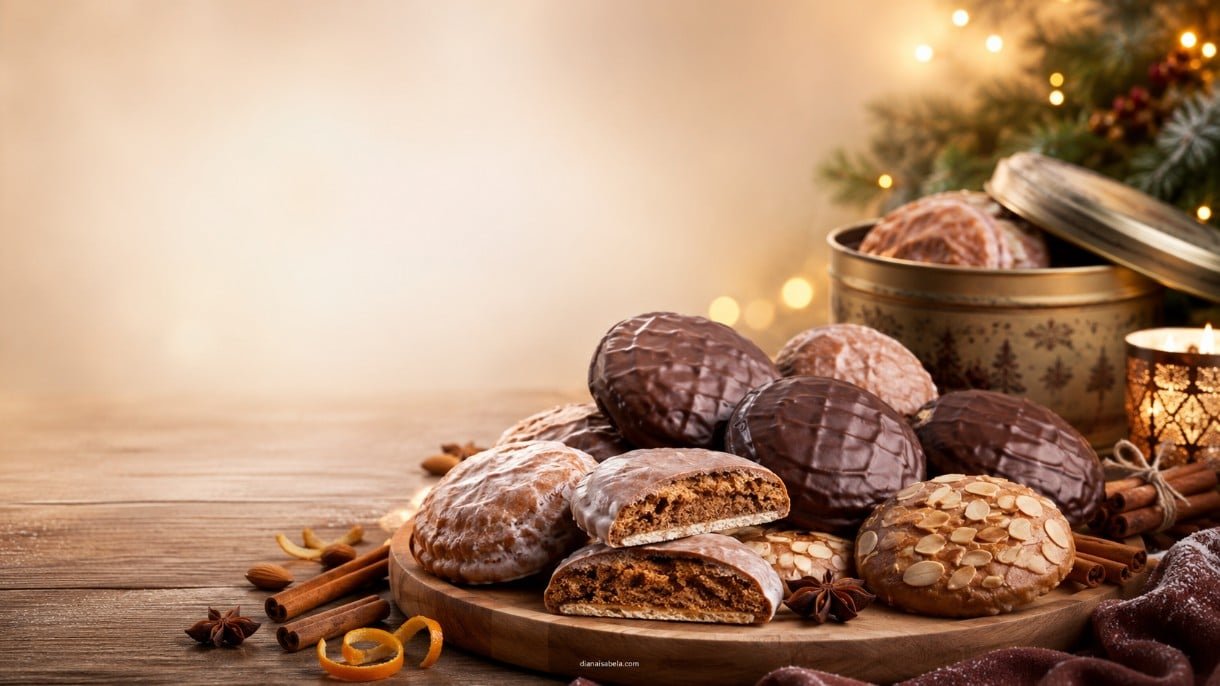
The best storage location is rarely the most decorative spot in the kitchen. Lebkuchen benefits from a shaded interior cabinet where temperature and humidity remain relatively stable.
A cabinet beside an oven can warm significantly during cooking. The space above a refrigerator also receives heat from the appliance and rising kitchen air. A shelf near a dishwasher may experience bursts of humidity even when the room normally feels dry.
Direct sunlight is another concern. Metal tins can become warm near a window, especially dark or gold-colored tins that absorb heat. The surrounding room may feel comfortable while the interior of the container becomes noticeably warmer.
Good location: an interior pantry shelf away from appliances, windows and strongly scented food.
Poor location: above the refrigerator, beside the oven, near a kettle or in direct afternoon sunlight.
Unreliable location: a garage, car, porch or basement with changing humidity.
Do not use an unconditioned garage or outdoor cabinet as overflow food storage. Even sealed packages may be exposed to large temperature changes, insects, moisture and accidental damage.
When the product is intended as a future gift, keep the unopened package inside its shipping carton until needed. This protects the decorative box from scratches, sunlight and accidental opening.
Air-conditioned homes can become very dry. Cool air protects chocolate from melting but may accelerate drying after a package has been opened. Airtight storage remains necessary even when the room feels cool.
Opened and Unopened Lebkuchen Need Different Treatment
An unopened manufacturer package contains a barrier that should normally remain intact. Opening a box “just to check the cookies” begins the period of increased air exposure.
Inspect an unopened package without breaking the seal. Look for punctures, torn seams, moisture marks, unusual swelling or crushed areas. Check the date and read the storage instructions on the specific product.
When several packages arrive together, rotate them by date. Open the earliest one first and leave the others sealed. Do not pour every box into one decorative tin merely for presentation.
| Storage task | Unopened package | Opened package |
|---|---|---|
| Check the closure | Inspect the factory seal | Confirm the container closes after every serving |
| Transfer the cookies | Usually unnecessary | Useful when the original wrapper cannot reseal |
| Track time | Use the printed date | Add the date opened |
| Combine varieties | Keep factory separation | Combine only compatible products with labels retained |
| Priority | Earlier package date first | Broken, cut and unwrapped pieces first |
After opening, preserve the product label. If the cookies are transferred to another container, keep the ingredient list, allergen statement and date nearby. This is important when serving guests who may need to know whether a piece contains tree nuts, wheat, milk, eggs or soy.
Individually wrapped cookies should stay wrapped until needed. Their packaging limits air exposure and makes them easier to pack for work, school or travel.
If an inner bag closes only by folding, fold it tightly and use a food-safe clip before placing the package inside another sealed container.
How to Organize a Large Lebkuchen Tin or Gift Chest
Large gift chests often contain several product categories rather than one uniform batch of cookies. A chest may include premium Elisenlebkuchen, standard Oblatenlebkuchen, filled hearts, biscuits, marzipan, Stollen or other pastries.
Do not open every package for one tasting. The sealed inner divisions are part of the storage strategy. Instead, create three practical groups.
Eat first: already opened, broken or minimally wrapped products.
Keep sealed: intact packages with later dates.
Share early: duplicates that the household is unlikely to finish.
Make a simple inventory. Write down the product name, date and whether each package is open. Keep the list inside the lid without allowing inked paper to touch unwrapped food.
As the chest empties, transfer opened items into smaller containers. A large nearly empty chest contains a substantial volume of air and may have a loose lid.
Separate strong aromas and fillings. Marzipan, fruit, coffee and heavily spiced products can influence neighboring cookies when they are removed from individual wrappers.
For a gathering, build a tasting plate rather than opening everything. Cut one glazed and one chocolate-covered round into wedges and add several small standard shapes. Refill the plate only when needed.
A gift chest is a collection of products, not one storage unit. Preserve separate wrappers and manage each component according to its coating, filling, date and intended texture.
Can Slightly Dry Lebkuchen Become Soft Again?
A slightly firm Lebkuchen may absorb a small amount of moisture inside a sealed container. The traditional method involving a piece of apple can work, but it must be brief, separated and carefully monitored.
The apple should not touch the cookies directly. Place a fresh piece in a separate small food-safe cup or on its own parchment. Close the container and inspect it at least once each day.
Remove the apple as soon as the cookie improves, when condensation appears or when the fruit begins to deteriorate. This is not a long-term storage method. Fresh fruit introduces moisture, microorganisms and the possibility of fermentation or mold.
| Condition | Possible action | When not to rescue it |
|---|---|---|
| Slightly firm with normal aroma | Brief controlled rehydration | Stop if condensation develops |
| Dry cut edge | Eat promptly or use in a dessert | Discard if the whole piece smells stale or rancid |
| Very hard soft-style cookie | Check date and storage history first | Do not rescue when its history is unknown |
| Visible fuzzy growth | Discard | Never attempt rehydration |
| Rancid nut odor | Discard | Added moisture cannot reverse rancidity |
| Wet or fermented smell | Discard | Do not taste it to investigate |
Do not spray the cookies with water, wrap them in a wet towel or place them directly against fruit. Uneven moisture can damage the coating and produce wet areas that are difficult to evaluate safely.
A sound but slightly dry cookie can still be useful. Crumble it over yogurt, ice cream, custard or baked fruit. It can also contribute spice to a cheesecake base or layered dessert.
Repurposing is appropriate only when the food remains normal in smell and appearance. A recipe should never be used to hide mold, rancid nuts, fermentation or an unknown storage history.
Moisture restoration also has limits. It cannot bring back lost citrus aroma, repair stale nuts or reproduce the precise texture of a freshly opened premium Elisenlebkuchen.
Chocolate Bloom, Melting and Condensation
Chocolate-covered Lebkuchen may develop pale gray, white or marbled marks after temperature changes. This appearance is commonly known as chocolate bloom.
Bloom can involve cocoa butter moving and recrystallizing on the surface or moisture dissolving sugar and leaving pale crystals after evaporation. It may affect gloss, snap and mouthfeel without automatically making the product unsafe.
Bloom generally appears flat, streaked, dusty or marbled. Mold is more likely to appear fuzzy, raised or irregular and may be accompanied by moisture damage or an unpleasant odor.
Flat pale streaks: may be chocolate bloom.
Fuzzy raised growth: treat as possible mold and discard.
Soft smeared chocolate: likely heat exposure.
Droplets inside the wrapper: possible condensation.
Rancid, sour or fermented smell: discard regardless of surface appearance.
Do not wipe chocolate with water. Added moisture can create new surface problems. If a recently delivered package arrives melted, photograph the condition and contact the seller before discarding packaging.
Prevent temperature cycling. Do not move the same package repeatedly from refrigerator to countertop and back again. Each transition increases the opportunity for condensation and surface change.
When a cold package enters a warm humid room, leave it sealed until it gradually approaches room temperature. The sealed wrapper reduces direct condensation on the chocolate.
Chocolate also absorbs odors. Even inside a refrigerator, it should never sit in an incompletely sealed box beside onions, cheese, leftovers or strongly aromatic sauces.
Should Lebkuchen Be Refrigerated?
Standard commercially packaged Lebkuchen usually does not need refrigeration unless the manufacturer gives a specific instruction. A cool pantry is normally easier and avoids several cold-storage problems.
Refrigeration can harden chocolate, mute spice aroma and expose an unsealed package to strong food odors. Removing a cold cookie into warm humid air can also create condensation on glaze, chocolate or the edible wafer.
In an extremely hot home where no cool pantry exists, refrigeration may be preferable to prolonged heat exposure. Use a fully airtight, moisture-resistant container and allow it to warm while still sealed before opening.
Can Lebkuchen be frozen?
Freezing depends on the exact product. The dough itself may tolerate freezing, but chocolate, glaze, wafers and fillings can respond differently during thawing. The producer’s recommendation should take priority over a general cookie-storage rule.
Freeze only fresh, undamaged Lebkuchen. Freezing does not improve a cookie that is already stale, dry or rancid.
Divide a large quantity into small portions before freezing. That makes it possible to thaw only what is needed and prevents repeated freeze-and-thaw cycles.
When freezing is approved, wrap the portions carefully and record the date. Thaw them while sealed to reduce condensation. Do not open the frozen package immediately in a warm kitchen.
Cold storage is a backup strategy, not the default. Stable pantry storage is normally simpler for ordinary Lebkuchen, while filled and specialty products should follow their own package instructions.
How to Serve Stored Lebkuchen So It Tastes Its Best
Lebkuchen is generally best served at room temperature. Cold chocolate feels harder and releases less aroma, while warm chocolate can become messy and dominate the texture.
Remove only the amount needed for the current serving. Close the main container before carrying the plate to the table.
Do not microwave chocolate-covered Lebkuchen to soften it. Microwave heating can melt the shell unevenly while overheating parts of the center.
Use a sharp clean knife for large rounds. Wipe the blade between glazed and chocolate-covered varieties. Cut pieces should be served promptly because their exposed interior dries faster than an intact cookie.
A logical tasting order prevents stronger coatings from overwhelming subtler examples:
First: plain or lightly glazed Lebkuchen.
Second: dark-chocolate-covered Lebkuchen.
Third: milk-chocolate, fruit-filled or strongly flavored specialties.
Black coffee, breakfast tea and Earl Grey balance the sweetness without masking the spices. Pear, apple and orange add freshness. Avoid allowing wet fruit to remain in direct contact with cookies on a serving platter for a long period.
For two people: cut one glazed and one chocolate-covered round into quarters and return untouched pieces to storage.
For a family: serve the assortment in two stages rather than opening every package at once.
For an office: choose mini or individually wrapped pieces and keep reserve stock sealed.
A No-Waste Plan From Delivery to the Final Cookie
Good storage starts before the order is placed. A large chest is not a bargain when the household cannot finish it while the products remain at their best.
Compare net weight, package count and household size. Five large premium rounds may be enough for a focused tasting. Several pounds of assorted sweets make more sense for a family, office or holiday event.
Inspect a delivery promptly. Compare the products with the order, look for broken seals and photograph heat damage before disposing of wrappers. Retailers may require timely evidence for melted chocolate or damaged packaging.
| Stage | Action | Why it helps |
|---|---|---|
| Before buying | Compare quantity with household size | Prevents unnecessary leftovers |
| At delivery | Inspect seals, dates and heat damage | Allows prompt retailer contact |
| Before opening | Select one package | Preserves factory protection on the rest |
| After opening | Label and reseal immediately | Improves rotation and accountability |
| During serving | Put out a limited amount | Reduces air exposure and handling |
| When quality declines | Repurpose sound pieces | Reduces avoidable waste |
| While packages are still fresh | Share duplicates | Preserves value for another household |
Check opened packages once each week during the season. Choose the oldest normal product and plan a coffee break or dessert around it. This small habit prevents forgotten cookies from accumulating.
Share sealed duplicates early rather than waiting until the date is approaching. A neighbor, host, teacher or colleague will appreciate a fresh complete package more than a last-minute box that has sat for months.
After the food is gone, clean and dry reusable tins thoroughly. They can store packaged tea, napkins or seasonal decorations. Do not place new unwrapped food in an old tin without cleaning it first.
Final Lebkuchen Storage Checklist
Keep unopened packages sealed until they are actually needed.
Use an airtight container after the original wrapper is opened.
Choose a cool interior cabinet away from ovens, windows and steam.
Protect chocolate from heat and repeated temperature changes.
Protect sugar glaze from humidity and condensation.
Keep separate products labeled when allergens, fillings or dates differ.
Write down the opening date rather than relying on memory.
Eat cut and broken pieces first because their centers are exposed.
Do not assume a decorative tin is airtight.
Do not refrigerate automatically unless conditions or instructions justify it.
Use the apple method only briefly and never allow fruit to touch the cookies.
Discard abnormal products showing mold, rancidity, fermentation or unexplained moisture.
The final answer: tightly sealed packaging and a stable pantry environment preserve Lebkuchen better than complicated tricks. Protect the cookies from air, heat, humidity and strong odors, and follow the instructions printed on the exact product.
For help choosing products before storage becomes an issue, continue to the Best Lebkuchen Brands guide.
What is the best way to store Lebkuchen?
Store Lebkuchen in a tightly closed original wrapper or airtight food container in a cool, dry and dark place. Keep it away from sunlight, steam, heat, strong odors and frequent temperature changes. Follow the storage directions printed on the exact package.
Is a decorative Lebkuchen tin airtight?
Not always. A decorative tin protects cookies from crushing, dust and light, but many lids allow slow air exchange. Keep the original sealed inner bag or place the cookies in a food-safe resealable bag inside the tin.
How should Lebkuchen be stored after opening?
Close the original wrapper tightly or transfer the remaining cookies to a clean airtight container. Label the opening date, keep different fillings and allergens identified and eat broken or cut pieces first.
Should Lebkuchen be refrigerated?
Most standard packaged Lebkuchen does not require refrigeration unless the manufacturer says otherwise. Refrigeration can harden chocolate, reduce aroma, introduce food odors and create condensation when the package returns to room temperature.
Can Lebkuchen be frozen?
Some varieties may tolerate freezing, but glaze, chocolate, edible wafers and fillings may change during thawing. Follow the producer’s instructions for the exact product, freeze only fresh cookies and thaw approved portions while still sealed.
Can dry Lebkuchen be softened again?
Slightly firm Lebkuchen may absorb moisture in a sealed container with a small apple piece kept separate from the cookies for a brief monitored period. Remove the fruit quickly and never attempt to rescue moldy, fermented or rancid food.
Why is the chocolate on my Lebkuchen turning white?
Flat pale streaks may be chocolate bloom caused by temperature or moisture changes. Bloom differs from fuzzy mold, although any uncertain product with abnormal odor, moisture or raised growth should be discarded.
How should sugar-glazed Lebkuchen be stored?
Keep glazed Lebkuchen tightly sealed in a dry place. Separate delicate layers with food-safe parchment and protect the cookies from humidity and condensation, which can make the glaze sticky.
How should chocolate-covered Lebkuchen be stored?
Keep chocolate-covered Lebkuchen in a cool location with a stable temperature. Seal it from surrounding odors and avoid repeated movement between a refrigerator and a warm room.
Should every cookie in a Lebkuchen assortment be stored together?
Preserve the manufacturer’s separate inner packages whenever possible. Filled, crisp, soft, glazed and chocolate-covered products may transfer moisture or aroma after opening and may have different allergens and best-before dates.