Russian Kotleti in Washington: Where to Eat, Buy & Take Them Home
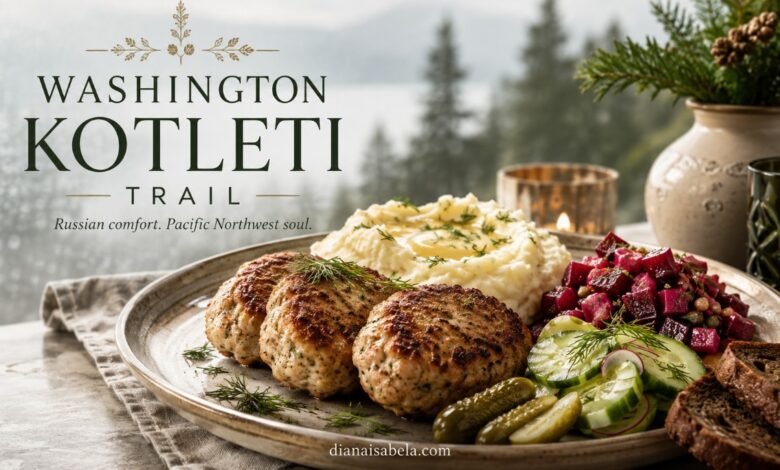
Washington makes an excellent argument for ignoring downtown when dinner tells you to. If you are looking for Russian kotleti around Seattle, the strongest current answers are not hiding under a glittering restaurant awning beside Pike Place. They are farther south and east, inside the kind of European markets where the deli counter matters more than the dining-room lighting.
Renton gives us one of the cleanest results in the state: VITMAR Euro Food currently lists Kotleti and immediately explains them as chicken patties. Auburn and Tacoma give us another direct answer through Marvel Food & Deli, whose current prepared-food menu includes Chicken Kotlety among borscht, stuffed cabbage, tefteli, potato dishes and a formidable collection of salads. Fife adds a Ukrainian market-and-café route where the exact cutlet is not currently promised, but the broader home-food infrastructure is very strong.
This makes Washington an unusually good example of something I keep noticing with kotleti: the dish often lives where people shop rather than where people make reservations. That feels completely logical to me. Kotleti are not inherently restaurant food. They are the food you make enough of because tomorrow exists, the food that goes beside potatoes tonight and buckwheat the next day, the food that somehow disappears cold from the refrigerator while everyone in the house claims not to have touched it.
Growing up around a chef made me particularly suspicious of the idea that simple food is easy food. A chicken kotleta has nowhere to hide. If the meat is overmixed, the texture becomes tight. If the cook ignores moisture, it turns dry. If the pan is timid, you get pale softness instead of the browned crust that gives the patty half its personality. A beautifully tender kotleta is basically restraint with good timing.
Washington also gives us a useful cultural overlap. Russian and Ukrainian markets here often carry foods from several parts of Eastern Europe because real immigrant shopping does not organize itself as neatly as a national-cuisine dropdown. A store may sell Russian-style borscht, Ukrainian cabbage, Georgian eggplant, Korean carrot salad and chicken kotlety within a few feet of each other. That is not culinary confusion. That is how communities actually eat.
Renton is the cleanest exact chicken-kotleti stop. Auburn and Tacoma are excellent for daily prepared-food hunting through Marvel. Fife is the strongest Ukrainian grocery-and-café fallback. Seattle proper is better for dumplings, bakeries and broader Eastern European food than for one obvious permanent kotleti entrée.
The geography matters
Washington’s kotleti trail runs through the Puget Sound suburbs, not one restaurant district
Seattle is the obvious city name, but it is not the most useful way to search this dish. The stronger current kotleti inventory runs through a south-and-east corridor: Renton, Auburn, Tacoma and Fife. That is where European grocery stores, Russian and Ukrainian prepared foods, deli cases and family-style cooking become more visible.
I actually prefer this structure to a list of restaurants ranked from one to ten. A market in Renton and a deli in Auburn serve a very different purpose from a café in Seattle. One is where you stop for dinner and accidentally buy enough food for Wednesday; another is where you sit down for dumplings. Pretending those are the same experience does not help anyone who is hungry now.
VITMAR Euro Food currently lists Kotleti as chicken patties and operates as an Eastern European grocery, deli and ready-to-eat food shop.
Marvel Food & Deli lists Chicken Kotlety on its current entrée menu, but the menu rotates, so this is a call-first or counter-first stop rather than a guaranteed tray at every hour.
The same broader European deli system extends into Tacoma, making the south Puget Sound area much stronger than a Seattle-only search would suggest.
Emish Market has its own bakery, café and house-made Ukrainian food. Exact kotleti are not on the current café menu I checked, but the store is a very useful alternative for a home-style dinner.
Seattle proper has Russian and Eastern European dumpling and bakery options, but I would not send someone across the city pretending there is one clearly verified permanent kotleti plate when the stronger evidence is elsewhere.
This is the Washington rule I would actually follow: search south before searching farther. If you are in Seattle or Bellevue, Renton may solve the craving faster than another hour spent scrolling through restaurant menus whose idea of “Russian” begins and ends with dressing on a sandwich.
Renton
VITMAR is the cleanest current answer because the menu simply says Kotleti
VITMAR Euro Food is the kind of place I want to find when researching this dish. It does not make us reverse-engineer a photograph or decide whether “chicken cutlet” means schnitzel. The current menu lists Kotleti and explains them in English as Chicken Patties.
That is exactly the level of clarity a local food guide should reward.
VITMAR Euro Food — Renton
An Eastern European grocery and deli with a current menu that directly identifies kotleti as chicken patties, plus ready-to-eat foods and order-ahead options for larger meals.
My dinner move: chicken kotleti, vinegrette and something crunchy or pickled. I would choose that before automatically adding every creamy salad in the case, because a deli counter has a supernatural ability to convince a reasonable adult that six containers constitute restraint.
Menu and contact information checked August 2026.
The side-dish case is almost as useful as the kotleti
VITMAR’s current menu tells you immediately what kind of dinner this can become. There is Olivie, the potato-and-vegetable salad bound with mayonnaise; vinegrette with beets, potatoes, carrots, pickles and peas; shuba layered with salted herring and vegetables; Korean-style carrot salad with garlic and vinegar; beet salad with walnuts and prunes; stuffed cabbage rolls; piroshki and other foods that are entirely comfortable sharing a refrigerator.
For chicken kotleti, I would resist creating a plate made only of soft textures. The patties themselves are tender. Mashed potatoes would be tender. Olivier is creamy and soft. Put all three together and dinner begins to resemble an upholstered room. Delicious, yes, but it needs a window open somewhere.
That is why vinegrette, carrots with vinegar, cabbage or pickled vegetables work so well. Acid wakes up browned meat. Crunch makes tenderness more noticeable. A side dish succeeds not because it wears the correct national costume, but because it gives the main dish something it does not already have.
Chicken kotleti reveal whether the cook understands moisture
Lean poultry can make beautiful kotleti, but it gives the kitchen less room for arrogance. Ground beef or pork often brings more fat naturally. Chicken needs better handling. Onion can contribute moisture, bread or a panade can help hold liquid, and the meat should be mixed just enough to come together rather than worked until it develops the structural confidence of a tennis ball.
My father’s instruction for ground meat was much shorter than mine: stop touching it. It took me years to appreciate how often professional kitchen advice is simply a more elegant version of knowing when to leave something alone.
The ideal chicken kotleta should brown outside while remaining juicy and soft inside. It should hold together when lifted but yield easily under a fork. The goal is not burger density. It is tenderness with structure.
South Puget Sound
Marvel Food & Deli is where the prepared-food counter becomes the main event
Marvel operates in Auburn and Tacoma and describes itself as a European food store carrying foods connected with Russia, Ukraine and other European cuisines. More importantly for us, its own current café menu explicitly includes Chicken Kotlety.
There is one line on that menu I would pay attention to before leaving home: entrées vary daily. That does not weaken the recommendation. It simply tells you how to use the place correctly. This is prepared food, cooked in batches, not a steakhouse promising the same entrée at 7:18 every evening.
Marvel Food & Deli — Auburn & Tacoma
A European grocery and deli whose current prepared-food menu includes Chicken Kotlety alongside Russian borscht, stuffed cabbage, tefteli, mashed potatoes and a long list of salads.
This is my kind of dangerous store: you arrive for chicken kotlety and leave with beets, cabbage, piroshky, something from the bakery and a completely revised understanding of how much food two people need.
Current menu and store information checked August 2026.
Rotating food is not a flaw—it is how a deli kitchen works
I would much rather tell you honestly that the entrée selection changes than invent permanent availability because it makes a cleaner card. Prepared-food businesses cook to demand. Trays sell out. Some dishes appear on particular days. A kitchen may make chicken kotlety in the morning and have none left by the time somebody finishes a long commute south from Seattle.
This is why the phone matters. Ask whether chicken kotlety are in the café today, whether they are hot or chilled, and how they are sold. If you are shopping for several people, ask whether a larger quantity can be prepared ahead rather than arriving at the counter and hoping your appetite has coincided perfectly with production.
There is something charmingly old-fashioned about this model. The internet wants every food item to exist permanently with a button beside it. Real kitchens still cook batches.
Marvel may be even better when you stop thinking in single meals
The menu around the kotlety is unusually useful for building a refrigerator rather than one plate. There are several cabbage and beet preparations, Russian borscht, stuffed cabbage rolls, tefteli in sauce, blintzes, potatoes, piroshky and a broad bakery selection. In other words, the shop is capable of turning one dinner errand into several future meals without much additional planning.
If I were coming from Seattle or the Eastside, that would matter. A specialty-food trip should earn the drive. I would buy the kotlety if available, one acidic salad, perhaps potatoes or another starch, something baked, and then check the freezer and pantry before leaving. The objective is not maximal shopping. The objective is not needing to repeat the same trip on Wednesday because you forgot that human beings continue eating.
Fife
Emish is where the search shifts from Russian kotleti to a very good Ukrainian dinner
Emish Market is Ukrainian-owned and combines a grocery store, bakery and café. Its current café menu includes Ukrainian borscht, deruny, several perogies, village salad and other house-made food, while the broader market emphasizes imported Ukrainian and European products and its own in-house production.
I did not find a current exact kotleti listing on the café menu I checked. That means I am not going to dress it up as one. Emish belongs here because it is a strong nearby home-food alternative, not because I need a third green badge.
Emish Market — Fife
A Ukrainian-owned grocery, bakery and café with fresh house-made food and a substantial Ukrainian and European grocery selection.
If I arrived craving kotleti and found good borscht, deruny and warm bread instead, I would consider dinner redirected rather than ruined. Food plans should have standards, not emotional rigidity.
Current market, café and contact information checked August 2026.
The bakery changes the value of the stop
A market that makes its own bread and pastries is automatically more useful to me than one where every department behaves like an unrelated business. Fresh bread beside soup, deli food, sausages or tomorrow’s breakfast gives the trip coherence. You can buy a meal and also improve the next morning without constructing an elaborate shopping strategy.
Emish says its in-house production includes bread, pastries, desserts and traditional Ukrainian sausages. That matters because local food culture survives as much through these ordinary products as through headline dishes. The bread somebody buys every week often tells you more about a cuisine’s daily life than the one ceremonial meal everyone photographs once a year.
Seattle proper
Seattle is where I would stop forcing the exact dish and follow the surrounding food instead
Seattle itself has Russian and Eastern European bakeries, dumpling spots and neighboring food traditions, but the current exact kotleti evidence is much cleaner in Renton and south Puget Sound. I would rather tell you that plainly than pad this guide with restaurants that happen to serve pelmeni and hope nobody notices the missing cutlet.
If you are staying in central Seattle and do not want to drive, this is where I would make a decision based on the craving itself. Is the important part specifically a browned minced patty? Then Renton is worth checking. Is the important part the larger feeling of Eastern European comfort food—dumplings, soup, cabbage, bread, sour cream, something warm after rain? Seattle can solve that without pretending the answer is kotleti.
This may sound like a small distinction, but it is the difference between a useful local guide and a list of restaurants vaguely related to the topic. The reader should know when a place has the dish and when I am simply offering the best nearby alternative.
Do not cross three neighborhoods for a weak “maybe.” If the exact kotleta matters, use the stronger Renton or south-Puget-Sound evidence. If comfort food matters more than the noun on the menu, let Seattle give you dumplings, soup or bakery food instead.
If you prefer the market route in general, my guide to finding Russian delis is the better companion because Washington is precisely the kind of state where a grocery counter can outperform a restaurant search.
Choose the evening
Washington has three different answers depending on what dinner needs to do
I want the clearest kotleti match
Go toward Renton. VITMAR gives us the least ambiguous current wording: Kotleti, explained as chicken patties. That is the first place I would check when the exact dish matters more than having restaurant service.
I want several meals, not one plate
Marvel in Auburn or Tacoma is particularly useful because the kotlety sit inside a much larger prepared-food and grocery ecosystem. Buy dinner, one or two good salads, perhaps something from the bakery and a freezer item for another day. This is kotleti behaving like the household food they were always meant to be.
I want something comforting nearby even if kotleti are unavailable
Use Fife or Seattle according to where you already are. Emish gives you a strong Ukrainian market-and-café meal in Fife. In Seattle, choose the best dumpling, soup or bakery option rather than making the entire evening depend on one patty.
The part a menu cannot explain for you
A good chicken kotleta should be tender enough to make a knife feel unnecessary
Chicken kotleti dominate the strongest Washington results, which makes texture especially important. Chicken is relatively lean, and lean minced meat becomes unforgiving when it is overworked or overcooked. The cook has to create moisture and tenderness deliberately rather than relying on a generous amount of fat to cover every mistake.
Onion and panade have jobs
Grated or finely prepared onion can contribute moisture as well as flavor. Bread or another panade-style component can hold liquid and soften the structure of the meat mixture.
More mixing is not more skill
Ground meat binds more tightly as it is worked. For tender kotleti, the objective is an evenly combined mixture, not a workout.
Browning creates the contrast
The outside should develop real savory color while the inside remains soft. A pale steamed-looking patty may be cooked, but it has missed one of the pleasures of the dish.
Chicken does not reward anxiety
Repeatedly cutting, pressing and extending the cooking time “just to be sure” is an efficient way to remove the moisture you worked so hard to protect.
Why bread inside a kotleta is not cheap filler
This is one of those culinary ideas that seems obvious once somebody explains it properly. Bread historically helped households stretch meat, of course. Home cooking has always lived inside economics. But when bread is hydrated and incorporated correctly, it also changes texture. It helps the mixture retain moisture and prevents the final patty from feeling as compact as a burger.
That technical role is why dismissing bread as merely filler misses the point. Practical cooking often discovers useful food science long before anyone gives it a laboratory vocabulary. Grandmothers did not need to say “protein matrix” to know which batch was tender.
The fork is a better judge than the label
A classic minced kotleta should have structure without resistance. It should hold when lifted from the pan but feel yielding when cut. That texture separates it immediately from a breaded whole chicken breast, even if an English menu chooses to call both dishes “cutlet.”
If the menu wording is unclear, the useful question is still: is this made from ground chicken, or from a whole piece of chicken? That sentence does more work than ten minutes of staring at a badly lit menu photograph.
Pacific Northwest meets the deli counter
What I actually want beside Washington chicken kotleti
Washington’s climate makes these foods feel unusually at home. A wet grey day makes warm potatoes, browned chicken and beet salad sound less like nostalgia and more like common sense. But the state also has beautiful produce and long bright summer evenings, so I would not serve the exact same plate in January and July.
Vinegrette
Possibly my favorite option at VITMAR or Marvel. Beets, pickles and vegetables give chicken kotleti the acid and earthy sweetness they need without adding another heavy element.
Mashed potatoes
The classic comfort choice. Especially good when the weather has spent the day reminding you that Washington owns a lot of clouds.
Garlic-and-dill potatoes
More texture and aroma than mash, with enough familiarity to feel completely at home beside a chicken patty.
Korean-style carrots
Garlic, vinegar and spice make this post-Soviet deli staple a particularly clever counterpoint to mild chicken.
Ukrainian cabbage
Cabbage brings structure and acidity to a plate where the meat itself is deliberately soft.
Fresh cucumber salad
For warmer weather, cucumber and herbs make the meal noticeably brighter without asking the kotleti to become something fashionable and unrecognizable.
My rainy-day plate
On the sort of Washington afternoon where the sky appears to have misplaced its enthusiasm, I would choose chicken kotleti, mashed potatoes and vinegrette. If there is borscht and I am properly hungry, I would happily start there too. The plate is warm and soft where it should be, but the beet-and-pickle acidity prevents it from becoming sleepy.
My summer version
Chicken kotleti with a cucumber or cabbage salad, perhaps buckwheat or a smaller portion of potatoes, and something pickled. The meat remains exactly what it is; the sides simply acknowledge that the sun has finally appeared and nobody wants to celebrate by eating as though daylight ends at 4:17 p.m.
Why this state is interesting
Washington shows how immigrant food follows households more than city centers
There is a pattern across Renton, Auburn, Tacoma and Fife that I find more interesting than a conventional restaurant district. These businesses combine grocery shopping, prepared foods, bakery items and foods from several neighboring cultures. They exist because communities need places to buy familiar ingredients and everyday meals, not because somebody decided the neighborhood needed a themed dining attraction.
Marvel describes a food world connected with Russia, Ukraine and other parts of Europe. Emish explicitly centers Ukrainian food while importing goods from Ukraine and Europe. VITMAR describes itself more broadly through Eastern European groceries and ready-to-eat dishes. The boundaries matter, but so does the overlap created by migration.
A person buying chicken kotlety may also buy Ukrainian cabbage, Korean carrots, a Georgian eggplant salad and Russian borscht. None of those dishes loses its history simply because they share the same shopping basket. The basket is telling a second story: what people who moved across countries actually eat together now.
That is one reason I prefer these markets to overly neat cuisine labels. Food culture is not a museum cabinet. It continues reorganizing itself around families, neighborhoods and whatever tastes good beside dinner.
When Renton is still too far
Change the type of place before turning kotleti into a road trip
If you live outside the Seattle–Tacoma corridor, Washington becomes much thinner very quickly. At that point I would broaden the search intelligently rather than add another hundred miles to the radius simply to make the map produce an answer.
Search Russian and Eastern European delis. Kotleti often live in prepared-food cases rather than on formal restaurant menus.
Include Ukrainian markets. Ground cutlets and related home-style dishes cross household traditions even when the exact menu terminology differs.
Ask specifically for chicken kotleti or ground-chicken patties. “Cutlet” by itself can mean too many things.
Check prepared and frozen foods. A specialty-store trip becomes much more worthwhile when it produces several future dinners.
Cook them when geography wins. At some point a frying pan is a much more reasonable transportation system than I-5.
For the wider location search beyond Washington, continue with my guide to finding Russian kotleti near you.
If the nearest useful deli is still farther away than dinner deserves, the Russian kotleti recipe is where I would stop checking traffic and start preparing the meat.
Do not solve a simple dish by adding fourteen ingredients. Protect moisture, season confidently, mix gently and let the first side brown before turning. The secret to tender kotleti is often not what else you put in the bowl—it is knowing when to stop doing things to it.
Call before you merge onto I-5
The five questions that save the most time in Washington
Do you have chicken kotleti today? This matters particularly at Marvel, where entrée selections rotate.
Are they made from ground chicken? The question distinguishes minced kotleti from whole chicken cutlets immediately.
How are they sold? Ask whether the kotleti are individual pieces, part of a prepared meal, chilled or available in a larger quantity.
What sides are available today? Rotating delis often change salads and hot dishes along with the main entrées.
Can I order ahead for a group? VITMAR accepts order-ahead prepared-food requests, but quantities and specific dishes should be confirmed directly.
That conversation takes less time than one traffic light in the wrong part of Seattle, and it gives you considerably better odds of arriving somewhere that still has dinner.
Where I would begin
My Washington shortlist
VITMAR first when you want the clearest exact current answer: Kotleti explicitly described as chicken patties, plus a full Eastern European deli and prepared-food selection.
Marvel when the daily café is the priority. Chicken Kotlety are on the current menu, but call because entrées rotate.
The second Marvel location extends the same prepared-food strategy farther south and makes Tacoma much more useful than a Seattle-only search would suggest.
Emish when an excellent Ukrainian grocery-and-café dinner works even if exact kotleti are not available.
Do not force a weak kotleti match simply because Seattle is the largest city. Either make the short regional trip toward stronger evidence or enjoy the dumplings, soups and bakeries Seattle already does well.
Washington’s best kotleti lesson is wonderfully unglamorous: sometimes dinner is not hiding in the city center. It is in a grocery store in Renton, beside a beet salad and a refrigerator full of things you suddenly remember your family used to buy.
I like that version better anyway.
Local information checked: August 2026. Prepared-food selections can rotate and sell out, particularly at deli counters. Call before a long trip when one specific dish is the entire reason you are going.
Washington questions
Russian Kotleti in Washington FAQ
Where can I find Russian kotleti in Washington State?
Renton and the south Puget Sound area are the strongest current places to begin. VITMAR Euro Food in Renton lists Kotleti as chicken patties, while Marvel Food & Deli in Auburn and Tacoma lists Chicken Kotlety on its prepared-food menu.
Where can I buy chicken kotleti near Seattle?
VITMAR Euro Food in Renton is one of the clearest current options near Seattle. Its menu directly lists Kotleti and describes them as chicken patties. The store is at 4033 NE Sunset Blvd, Suite 4, and the phone number is (425) 255-4671.
Does Marvel Food & Deli sell kotleti?
Marvel Food & Deli currently lists Chicken Kotlety among its café entrées. The company has locations in Auburn and Tacoma. Its menu notes that entrées vary daily, so call before making a dedicated trip only for kotlety.
Where can I find Russian or Eastern European prepared food in Tacoma?
Marvel Food & Deli has a Tacoma location and offers European prepared foods including Chicken Kotlety, Russian Borscht, stuffed cabbage, tefteli, salads, potatoes and piroshky. Daily entrée availability can change.
Is there Ukrainian food near Tacoma?
Emish Market in nearby Fife is a Ukrainian-owned grocery store, bakery and café with house-made food. Its current café menu includes Ukrainian borscht, deruny, perogies and other comfort foods. Exact kotleti were not confirmed on the menu checked.
Are chicken patties the same as Russian kotleti?
They can be when the patties are made from ground chicken and shaped from a seasoned meat mixture. VITMAR specifically labels its chicken patties as Kotleti. A whole breaded chicken breast, however, belongs to a different cutlet style.
What should I eat with chicken kotleti?
Mashed potatoes, buckwheat, vinegrette, cabbage, Korean-style carrots and cucumber salad all work well. Chicken kotleti are mild and tender, so acidic or crunchy sides are particularly useful for balancing the plate.
Can I order kotleti for a family gathering in Washington?
VITMAR Euro Food offers order-ahead prepared foods for gatherings and events. Contact the store directly to confirm whether chicken kotleti can be prepared in the quantity you need and how much notice is required.
Should I call a Washington deli before driving for kotleti?
Yes. This is especially important for stores with rotating prepared-food counters. Ask whether kotleti are available that day, whether they are made from ground chicken, how they are sold and whether larger quantities can be ordered ahead.
What should I do if there are no Russian kotleti near me in Washington?
Search Russian, Ukrainian and Eastern European delis and markets before increasing the driving radius. Prepared-food counters and freezer sections may be more useful than restaurant searches. If nothing practical is nearby, homemade kotleti are usually the easier option.