The Fabric Test: What to Check Before Buying Clothes Online

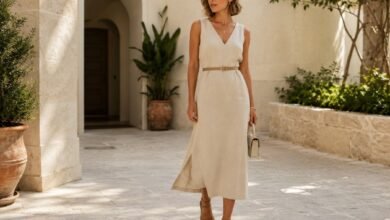
Online shopping has become very good at showing us what a dress looks like while a tall woman stands completely still in a bright studio with one hand resting near her hair.
It is less skilled at showing what happens after the dress meets a chair.
The product page may describe the fabric as soft, premium, airy, luxurious, sculpting, cloud-like or designed to move with you. These words create a mood. They do not tell you whether the skirt is transparent in sunlight, whether the lining twists, whether the knit pills near the bag strap or whether the trousers become two inches shorter after washing.
A garment can look excellent in photographs and still be badly suited to its intended job.
The opposite is also true. A simple cotton shirt may have excellent seams, a properly reinforced collar and fabric that becomes better after several washes, even if the product page is not especially dramatic.
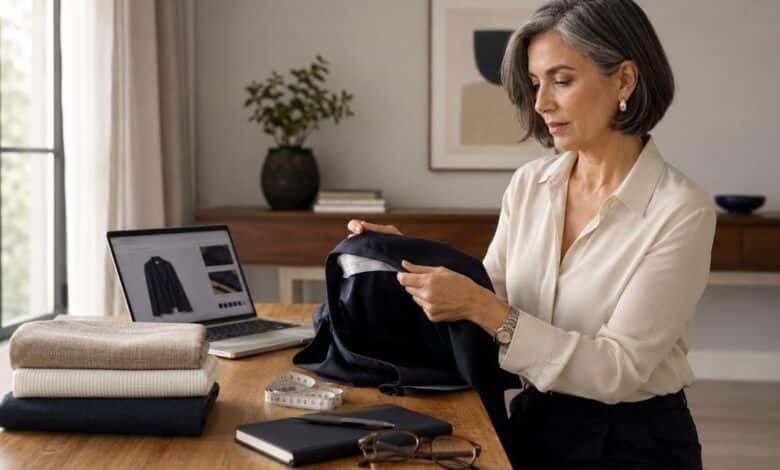
The challenge is that online shoppers cannot touch the cloth, test the weight, examine the inside or watch the garment recover after sitting.
But a product page leaves clues.
The fiber percentages, lining information, close-up images, seam placement, model poses, care instructions, customer photographs and even the information a brand chooses not to provide can help you predict how the garment may behave.
This is not about becoming suspicious of every beautiful thing. It is about learning to separate useful product information from decorative language before your credit card becomes involved.
Before buying clothes online, check the complete fiber composition, lining, fabric weight, transparency, stretch, seam placement, care instructions and customer photographs. Look for images showing the back, side, sitting position and fabric close-up. Read reviews for repeated comments about shrinkage, pilling, wrinkling, color transfer, static and fit rather than relying only on the average star rating.
Begin by deciding what job the garment is supposed to perform
Quality is not completely separate from purpose.
A lightweight dress designed for occasional dinners does not need to survive the same conditions as work trousers worn twice a week. A delicate silk blouse may require careful treatment, while an everyday cotton tee should tolerate ordinary washing without beginning a personal decline after three cycles.
Before evaluating the material, decide where the garment needs to go.
The fabric should recover, resist pilling and remain comfortable during repeated wear.
Check wrinkling, waistband comfort, opacity and how the garment looks from the back.
More delicate care may be acceptable when the fit and appearance justify it.
If you need a washable office dress, a dry-clean-only unlined silk dress may be beautiful but wrong for the assignment.
If you need trousers for long flights, a rigid waistband and crease-prone fabric deserve more attention than whether the color photographs well.
Product pages encourage shoppers to imagine the garment at its best. Your job is imagining it during the least glamorous part of its future.
Will you sit in it for eight hours? Carry a shoulder bag across it? Wash it weekly? Wear it in humidity? Pack it in a suitcase?
A garment is not poor quality simply because it requires care. It becomes a poor purchase when its care and behavior conflict with the life it is expected to support.
The fiber label matters—but it does not tell the whole story
Natural fibers are often treated as automatically superior and synthetic fibers as automatically disappointing.
Real fabric behavior is more complicated.
Cotton can be soft, crisp, heavy, thin, smooth or rough. Linen can be airy and fluid or stiff and scratchy. Wool can feel luxurious or irritating. Polyester can trap heat, but it can also help a pleated skirt hold its shape or make a travel garment dry quickly.
The percentages matter because marketing names often highlight the smallest attractive ingredient.
A sweater may be promoted as a “cashmere blend” while containing only a small amount of cashmere. A “linen-blend dress” may be mostly viscose or polyester. A “silk-touch blouse” may contain no silk at all.
| Fiber | Possible strengths | Common risks | Useful questions |
|---|---|---|---|
| Cotton | Breathable, washable and comfortable. | Shrinkage, wrinkling and loss of shape in weak knits. | Is it poplin, jersey, voile, twill or another construction? |
| Linen | Breathable, dry-feeling and textural. | Wrinkling, scratchiness and transparency. | Is it prewashed, lined or blended with another fiber? |
| Wool | Temperature regulation, structure and recovery. | Itching, felting and specialized care. | What type of wool is used, and is the garment lined? |
| Silk | Lightness, drape and temperature adaptability. | Water marks, delicacy and visible sweat. | Is it washable, lined and suitable for frequent wear? |
| Viscose or rayon | Fluid drape and a cool hand feel. | Shrinkage, stretching when wet and wrinkling. | Does the care label require hand washing or dry cleaning? |
| Lyocell | Smoothness, drape and breathability. | Water spotting and loss of shape in very fluid pieces. | Is the garment structured enough for its intended silhouette? |
| Polyester | Durability, shape retention and fast drying. | Heat retention, static and odor retention. | Is it used for performance or simply to reduce cost? |
| Acrylic | Warmth, softness and affordability. | Pilling, static and reduced breathability. | Will the garment experience friction from bags or coats? |
| Elastane | Stretch and improved movement. | Loss of recovery and heat sensitivity. | Is the stretch necessary, and how much is included? |
Read the order of the fibers
Fiber lists usually appear from the largest percentage to the smallest.
If polyester appears first and linen second, the garment may not behave like the linen piece suggested by the campaign.
A small percentage of elastane can improve comfort. A high amount may make fabric feel more synthetic and may affect longevity if the garment is repeatedly exposed to high heat.
Ask what the blend is trying to accomplish
A linen-viscose blend may wrinkle less and drape more fluidly than pure linen. A wool-polyester blend may increase durability. Cotton with elastane can improve movement in trousers.
The question is not whether a blend is morally acceptable. It is whether every fiber contributes something useful to the garment.
“Premium fabric blend” is not a fiber composition. It is a sentence written while hoping you will not scroll farther down the page.
Fabric weight determines whether a garment floats, falls or clings
Most product pages do not provide fabric weight in grams per square meter. You can still estimate it through photographs and construction details.
Look at the hem. Does it hang with a clean downward pull, or does it flutter around the body? Look at pockets. Are their outlines visible through the outer fabric? Look at folds. Are they broad and controlled or small and clingy?
A heavier fabric is not automatically better. It may be too warm or stiff for the intended garment.
A very light fabric is not automatically luxurious. It may require lining, reveal underwear or attach itself to the body through static.
Signs of a lighter fabric
The garment moves dramatically in small amounts of air. Pocket bags and seams remain visible. Light passes through overlapping layers. The fabric gathers into many small folds.
Signs of a medium-weight fabric
The garment maintains a clear silhouette but still moves. Pleats hold their shape. Trousers fall from the hip without attaching to the leg.
Signs of a heavier fabric
The garment creates broad folds, structured volume and less visible transparency. It may also appear stiff around the waist, sleeves or hem.
For relaxed clothes, the best result often comes from enough weight to create drape without so much weight that the garment becomes hot or rigid.
This is why the same wide-leg trouser can look luxurious in one fabric and like thin sleepwear in another.
The lining may determine comfort more than the outer fabric
A product can be described as cotton, linen, silk or wool while the layer touching most of the body is polyester.
Always search for a separate lining composition.
A lining can improve opacity, reduce static, help a skirt move and protect delicate outer fabric. It can also trap heat, twist, cling and make a breathable garment feel significantly warmer.
Useful for structure and opacity
Full lining can improve tailored dresses, skirts, jackets and light-colored trousers.
Check whether the lining is breathable, whether it reaches the correct length and whether it is attached securely at the hem and side seams.
Potentially cooler, but inspect the stopping point
A skirt may be lined only to mid-thigh, while a blouse may contain a lined front but sheer back.
The lining edge should lie smoothly and not create a visible horizontal line.
Not automatically a flaw
Unlined shirts, linen dresses and summer trousers may feel cooler and more natural.
The fabric must still provide enough opacity and seam finishing for the intended use.
Look for customer comments about the lining rising while walking, clinging to tights, making noise or feeling hotter than expected.
If the brand does not disclose lining composition, assume you still lack an important piece of information.
Stretch is useful only when the fabric returns to its original shape
A fabric can stretch comfortably when sitting and then remain stretched at the knees, elbows or seat.
This is the difference between stretch and recovery.
Product descriptions often promote flexibility without explaining whether the garment maintains shape after movement.
Look for repeated review language
Comments such as “bags out,” “loses shape,” “knees become loose,” “waist stretches during the day” or “neckline becomes wider” indicate recovery problems.
Consider garment tension
Even a good stretch fabric may distort when the garment is too tight. Product photographs showing horizontal pulling, open pockets or strained buttons suggest the fabric is working harder than intended.
Check knit structure
Fine loose knits may stretch under their own weight. Ribbed knits often recover better, though this depends on fiber and construction.
Be careful with heavy knit dresses
A long knit dress may become longer while hanging. Customer reviews mentioning hem growth or stretched straps deserve attention.
When a product is described as “sculpting,” check whether the fabric contains enough stretch for comfort and enough recovery to prevent permanent distortion.
Transparency can often be predicted before the garment reaches daylight
Brands rarely describe clothing as transparent unless transparency is intentional.
Instead, look at visual clues.
Inspect overlapping areas
At hems, pockets, waistbands and folded sleeves, multiple layers create darker areas. If those areas contrast strongly with the rest of the garment, the single layer may be quite sheer.
Look at the model’s hand through the fabric
Hands placed behind skirts, sleeves or loose trousers may reveal opacity.
Study bright backgrounds
A white garment photographed against a white wall may appear more opaque than it is. Customer photos outdoors or near windows provide more useful evidence.
Check whether every image includes a jacket or hand placement
If the model always covers the hip, chest or back with a bag, blazer or hand, inspect that area carefully.
Search reviews for specific words
Look for “sheer,” “see-through,” “needs a slip,” “pockets show,” “lining too short” and “visible underwear.”
White trousers and skirts deserve particular attention. A garment may appear opaque while standing and become more transparent when stretched over the body or while sitting.
Product photographs should answer questions, not merely create desire
A useful product page shows the front, back, side, close-up texture, interior construction and garment in motion.
When one of those views is missing, ask what remains unknown.
Video is especially useful for evaluating drape. Pause while the model turns. Watch whether the skirt returns to position, whether trousers cling between the legs and whether a blazer collapses when the arms move.
Remember that product samples may be pinned, clipped or professionally steamed.
If the back view is missing entirely, you do not know whether the garment has darts, elastic, gathering, a visible zipper or an unexpected design detail.
Model poses can reveal what the garment does not do naturally
A pose is not necessarily deceptive. Fashion photography is meant to present the clothing attractively.
But repeated pose patterns can hide fit information.
The hand holding the waist
This may create shape in a dress that otherwise falls very loosely.
The hand lifting the skirt
This shows movement but may prevent you from seeing the natural hem, width or transparency.
The jacket worn only over the shoulders
You cannot tell whether the sleeves fit, whether the armholes allow movement or whether the jacket closes.
The trousers shown only while walking
Movement can disguise pocket flare, crotch pulling and excess fabric at the front.
The model seated with the garment arranged around her
This does not show what happens after she sits naturally without assistance.
The body turned in every photograph
A turned pose can create a more defined waist and hide width across the front.
Photo rule: if the garment is never shown in a neutral standing position from the front and back, you are being asked to purchase without seeing its default shape.
Construction quality often appears at the edges
Even without touching the garment, you can inspect collars, cuffs, hems, pockets and seam intersections.
Collars
A collar should sit symmetrically and remain stable. Rippling, curling or one side collapsing may indicate weak interfacing or poor construction.
Shoulder seams
Check whether the seam sits where the design intends. Natural shoulders, dropped shoulders and extended shoulders create different silhouettes, but both sides should appear balanced.
Side seams
Side seams should generally fall vertically rather than twisting toward the front or back.
Pockets
Pockets should lie flat. Open pockets can indicate poor placement, insufficient room or fabric tension.
Hems
Look for even length, sufficient weight and no visible puckering. A very narrow hem on a heavy fabric may not hang well.
Pattern matching
Stripes, checks and large prints should align thoughtfully at visible seams when the garment price suggests careful construction.
Perfect pattern matching is not necessary for every affordable garment. But a stripe interrupted unevenly at the center front can make an otherwise simple piece look careless.
These details connect directly to the broader principles in the guide on how to make affordable clothes look more polished. Construction often matters more than the logo attached to it.
Pilling usually begins where the garment meets friction
Pilling occurs when fibers loosen, tangle and form small balls on the surface.
Some fabrics pill more easily because of fiber length, softness, loose construction or blend composition.
Areas under the arms, across the seat, near bag straps and beneath outerwear experience the most friction.
High-risk clues
Very soft fuzzy sweaters, loose acrylic knits, brushed synthetic fabrics and some low-quality blends may pill quickly.
Close-up photographs
Zoom in on the underarm, side seam and surface. Sample garments may already show small fuzzy areas after limited studio use.
Customer language
Search for “pills,” “fuzz,” “bobbles,” “looks old quickly,” “sheds” and “fabric shaver.”
Do not judge only by softness
Extremely soft fabric can feel luxurious during the first touch and become less attractive after repeated friction.
A denser, smoother knit may feel less dramatic initially but age better.
Pilling is not always proof that a garment is unusable. Some high-quality natural fibers can pill initially. The question is whether the surface stabilizes or continues deteriorating.
The care label predicts whether the garment will remain the same size
Shrinkage risk depends on fiber, construction, previous treatment and washing method.
Cotton, linen and viscose garments deserve careful review. Natural fibers are not guaranteed to remain unchanged.
Look for “prewashed” or “garment washed”
This may reduce future shrinkage and create a softer feel, though it does not eliminate all risk.
Read the exact care instruction
“Machine washable” is incomplete without temperature and drying information.
A garment may tolerate cold washing but require air drying. Using a hot dryer can change length, width and texture.
Search reviews by fiber name
Look for comments about the garment becoming shorter, tighter, twisted or rough after washing.
Viscose deserves special attention
Some viscose garments become weaker or stretch when wet, then shrink if dried incorrectly.
Check whether the brand includes post-wash measurements
Most do not. Repeated customer reports become the best available evidence.
Never purchase a slightly short trouser while planning to “be careful with washing.” The trouser has already begun negotiations from a weak position.
Wrinkling is not automatically poor quality, but it should fit the garment’s purpose
Linen wrinkles. Cotton creases. Silk can mark. Viscose may develop folds after sitting.
The relevant question is whether the fabric wrinkles attractively and whether the garment can tolerate those wrinkles.
Broad wrinkles versus sharp tension lines
Broad soft creases can look natural. Sharp horizontal lines across the hips, stomach or shoulders often indicate tightness.
Garment structure
A relaxed shirt can carry some rumpling. A formal pencil skirt may look less polished when severely creased after sitting.
Travel suitability
If the product is marketed for travel, search reviews for packing, steaming and crease recovery.
Product-photo clues
If a linen garment is heavily edited or perfectly smooth in every photograph, customer photos may provide a more honest preview.
The earlier guide to expensive-looking relaxed clothing explains how natural wrinkles can remain elegant when the fit, hem and accessories still look intentional.
Online color is an interpretation, not a contract
Studio lighting, screen settings and photo editing can change how color appears.
A garment described as burgundy may arrive red, brown or purple. Cream may appear yellow. Navy may look almost black.
Compare every available image
Look at studio photographs, outdoor campaign images, videos and customer photos.
If the color changes dramatically between images, expect variation in person.
Read the color name carefully
Names such as oat, stone, mushroom, wine, clay and mist are suggestive rather than precise.
Look for undertones
A pale beige may lean pink, gray or yellow. This affects how it works with skin tone and existing wardrobe colors.
Check dye-transfer reviews
Dark denim, black trousers, saturated red and suede-like fabrics may transfer color onto bags, shoes, furniture or lighter garments.
Expect variation in natural materials
Garment-dyed and natural-fiber clothing may show slight color differences between batches.
When matching separates, purchase them together when possible. Two items described with the same color name may not be identical if produced at different times or in different fabrics.
The average star rating is less useful than repeated specific complaints
A garment can receive positive reviews because the color is beautiful, delivery was fast or the buyer has not washed it yet.
Read reviews for behavior over time.
Specific after-wear detail
“The trousers stretched at the knees after four hours and the waistband became looser by evening.”
This explains recovery and fit across a full day.
General first impression
“So cute. I cannot wait to wear it.”
This tells you the garment arrived and generated optimism.
Post-wash information
“Cold washed and air dried. The dress became about one inch shorter but did not change in width.”
This gives measurable care information.
Repeated issue across sizes
Several reviewers mention the same zipper, lining or transparency problem.
Repeated construction complaints are more meaningful than one isolated opinion.
Search within reviews
Use terms such as wash, shrink, pill, sheer, zipper, lining, itchy, stretch, wrinkle, static and color.
Sort by newest
Brands sometimes change fabric, factories or construction while keeping the same product name.
Compare reviews by color
White may be more transparent than black. Different colors can even use slightly different fabric compositions.
Look for body and measurement context
Height, bust, waist, hip and usual size help explain fit comments.
Do not dismiss all negative reviews
A review may describe a preference rather than a defect. “Too oversized” may be useful to someone wanting a generous fit.
Read the evidence, not only the conclusion.
The size chart should describe the garment, not merely the customer
Many brands provide body measurements but not finished garment measurements.
Body measurements tell you which size the brand recommends. Garment measurements tell you how much room the item actually contains.
Look for garment length
Model height alone is not enough. Two people of the same height may have different torso and leg proportions.
Check rise and inseam for trousers
“Full length” is not a measurement.
Check bust and waist in fitted dresses
Stretch percentage and fabric recovery affect how much flexibility exists.
Look for shoulder width
This is particularly important for blazers, shirts and structured dresses.
Check whether measurements change by size
Some garments increase in width without enough additional length or sleeve room.
When garment measurements are missing, customer measurements and photographs become more important.
A generous return policy is especially valuable when the brand provides limited fit information.
The return policy is part of the product
A garment with uncertain fabric, incomplete measurements and final-sale status carries more risk than the price tag suggests.
Check the return window
Count from the delivery date or purchase date, depending on the policy.
Check return shipping costs
International returns can cost a significant percentage of the garment price.
Check restocking fees
Some retailers deduct fees from the refund.
Check whether sale items are returnable
“Sale” and “final sale” are not always the same.
Check original shipping and duties
These may not be refunded.
Check exchange rules
An exchange may require returning and repurchasing rather than directly changing the size.
A difficult return policy does not automatically mean poor garment quality. It does change the level of evidence you should require before ordering.
Risk rule: the less information a product page provides, the more flexible the return policy needs to be.
Different garments need different online quality tests
Check opacity, collar and button spacing
Look for transparency at the torso, pulling across the bust, collar stability and whether the sleeves remain structured.
Customer photos in daylight are more useful than studio images.
Check drape, rise and pocket behavior
Look for fabric pulling at the crotch, pockets flaring, lining showing and hems collapsing over the shoe.
Finished inseam measurements are essential.
Check fiber blend and surface texture
Look for pilling, fuzz, loose stitches and whether the garment stretches while hanging.
Read reviews written after several wears.
Check lining, armholes and sitting length
Look for side-bra exposure, transparency, pockets pulling and whether the skirt becomes shorter while moving.
Confirm the care process matches frequent hot-weather wear.
Check shoulder shape, lining and lapel stability
Look for pulling when buttoned, collar gaps, twisted sleeves and whether the jacket is shown with the arms moving.
Fabric composition and lining determine heat and structure.
Check static, seam rippling and surface shine
Thin satin can reveal underwear and cling. Look for bias-cut twisting, uneven hems and reviews mentioning snags.
The online shopping red flags I would not ignore
No fiber composition
A product page should state what the garment is made from.
No back view
You cannot assess zipper placement, transparency, gathering or rear fit.
No close-up image
Texture and construction remain hidden.
Only highly posed campaign photographs
The garment is not shown in a neutral position.
“One size” without garment measurements
Stretch and intended fit remain unclear.
“Premium” without specific construction information
Marketing language replaces evidence.
Natural-fiber headline with synthetic lining omitted from the main description
The garment may behave differently from what the title suggests.
Repeated customer complaints about the same closure or seam
This may indicate a construction issue rather than individual preference.
Only positive reviews displayed by default
Sort or search to find a fuller picture.
Very restrictive return policy combined with incomplete sizing
The customer carries most of the risk.
Different fabric compositions listed in separate parts of the page
Contact the retailer before ordering.
The model wears a different size in every image without explanation
Fit comparisons become difficult.
The seven-minute test before placing the order
You do not need to perform a textile investigation for every basic tee.
For expensive, fitted, delicate or final-sale clothing, this short process can prevent many disappointing orders.
If the garment still makes sense after this process, the purchase is supported by more than the mood of the campaign.
If the product page leaves several essential questions unanswered, save the item and continue looking.
There will be another white shirt. Fashion has not yet indicated plans to stop producing them.
The best online purchase begins with slightly less imagination
Fashion photographs are designed to help us imagine.
We imagine the dinner, the office, the trip, the weather and the version of ourselves who owns the correct shoes and never spills anything on pale fabric.
That emotional part of shopping is not the enemy. Clothes should create interest and pleasure.
But before ordering, the imagination needs to share the room with evidence.
Read the percentages. Inspect the lining. Look at the back. Watch the video twice. Search the reviews for what happened after washing. Check whether the model ever stands normally.
A good garment usually survives this attention.
Its fabric makes sense for its purpose. Its seams support the silhouette. Its care instructions fit the role it is supposed to play. Its return policy gives you a reasonable opportunity to discover what photographs cannot show.
The goal is not predicting every possible flaw from a screen.
The goal is recognizing when a product page gives you enough information to make a thoughtful decision—and when it is offering beautiful lighting instead.
Questions and answers
How can I tell if clothing is good quality when shopping online?
Check the full fiber composition, lining, close-up photographs, seam placement, closures, care instructions and customer images. Look for repeated review comments about washing, shrinkage, pilling, transparency, zippers and fabric recovery.
Are natural fabrics always better than synthetic fabrics?
No. Natural fibers can be breathable and comfortable, but they may shrink, wrinkle or require special care. Synthetic fibers can improve durability, stretch and shape retention. The best choice depends on the garment’s purpose and construction.
How can I tell if a white garment will be transparent?
Inspect overlapping areas, pocket outlines and photographs taken against bright backgrounds. Customer photos in daylight are especially useful. Search reviews for words such as sheer, see-through, lining and visible underwear.
What fabric is most likely to pill?
Soft loose knits, acrylic fabrics, brushed synthetics and some short-fiber blends may pill more quickly, especially in high-friction areas such as under the arms and beneath bag straps.
How do I know whether clothes will shrink?
Read the fiber composition and exact care instructions, then search reviews for post-wash changes. Cotton, linen and viscose may shrink when exposed to heat or incorrect drying. Prewashed fabric may reduce but not eliminate the risk.
What is the difference between body measurements and garment measurements?
Body measurements describe the person a size is intended to fit. Garment measurements describe the actual dimensions of the clothing and reveal how much ease, length and room the piece contains.
Is polyester always poor quality?
No. Polyester can improve durability, wrinkle resistance and drying time. It may be less breathable and can retain odor or static. Its usefulness depends on the amount, construction and intended garment function.
What should I look for in customer clothing reviews?
Prioritize specific comments written after wearing or washing the garment. Repeated reports about shrinkage, pilling, difficult zippers, short lining, color transfer or loss of shape are more useful than general first impressions.
Why is lining composition important?
The lining may touch more of the body than the outer fabric and can affect heat, static, opacity and movement. A breathable outer fabric with a heavy synthetic lining may feel warmer than expected.
What is the biggest red flag on an online clothing product page?
A major red flag is missing basic information such as fiber composition, back photographs, garment measurements or lining details, especially when the item is final sale or difficult to return.