Work to Dinner Outfits: How to Look Polished All Day Without Carrying a Second Life in Your Bag

A work-to-dinner outfit has to survive two very different audiences: the people who saw you answering emails at 10:12 a.m. and the people who meet you under flattering restaurant lighting at 7:30 p.m.
The usual advice is to “add a statement earring.” Useful, but incomplete. Earrings cannot rescue trousers that creased into surrender during the commute, shoes that became painful by lunch, a blouse that photographs like office lighting made fabric, or a tote bag large enough to transport tax records.
The real trick is not transforming into a different person in a restaurant bathroom.
It is building a daytime outfit with an evening future.
That means choosing pieces that look professional without feeling corporate, polished without being delicate, comfortable without becoming shapeless, and interesting enough that one or two small changes after work create an actual shift.
You should be able to sit through meetings, commute, walk several blocks, eat a full dinner, take a photograph, remove a jacket, and still feel like the outfit belongs to you.
No garment bag. No second pair of trousers. No private dressing room hidden beneath your desk.
Just better planning.
The work-to-dinner outfit is decided before breakfast
The worst time to realize your outfit has no evening potential is five minutes before leaving the office.
That is when people begin adding everything at once: bold lipstick, large earrings, perfume, open blazer, untucked shirt, different shoes, smaller bag, hair rearrangement. Each change is reasonable. Together, they can look like an office outfit being forced to perform nightlife.
Start with the evening destination.
Is it a casual neighborhood restaurant, a birthday dinner, cocktails at a hotel bar, a date, a client dinner, a rooftop, or a restaurant where everybody appears to have made an effort without admitting it?
Then work backward to the office.
Ask which part of the outfit should already feel evening-ready
Maybe it is the satin blouse beneath the blazer. The sculptural shoe hidden under wide-leg trousers. The sleek midi dress that looks professional with a cardigan and elegant after the cardigan comes off. The dark straight-leg jeans that remain invisible beneath a long blazer until dinner.
You do not need every piece to transform. One strong base usually carries the outfit.
The useful question: if I remove the most obviously “work” item, does the outfit underneath look ready to go somewhere?
Dress for the hardest part of the day
If you have a long commute, choose fabric that does not wrinkle emotionally and physically. If you will walk to dinner, the shoes matter more than the bag. If the restaurant is cold, the evening layer needs to be attractive. If the office is conservative, your base can still have texture, color, neckline, or shape beneath a blazer.
A successful outfit anticipates the point of failure.
Choose a base that does not belong exclusively to the office
Some pieces can move between work and dinner naturally. Others carry such strong workplace energy that no amount of jewelry fully changes the story.
Strong bases
A softly draped midi, fluid trousers, a satin shell, a fitted knit top, a clean jumpsuit, a column skirt, dark jeans, a fine knit dress, a wrap dress, or a simple slip skirt under structured layers.
Harder bases
A stiff interview suit, plain office sheath, heavily striped button-down, very corporate pencil skirt, bulky commuter shoes, or a blouse that looks designed for fluorescent lighting.
This does not mean traditional office pieces are unattractive. It means they require a larger evening change.
Texture gives a simple outfit range
Matte satin, ribbed fine knit, crepe, suede, soft leather, velvet accents, polished denim, and fluid twill catch restaurant light differently from flat suiting fabric.
A simple black top can look ordinary in cotton jersey and quietly elegant in silk-touch knit or draped crepe.
Color can do work that accessories cannot
Deep chocolate, navy, oxblood, petrol blue, olive, plum, charcoal, cream, warm taupe, and soft metallic neutrals move well between professional and evening settings.
Bright color can work too, especially when the silhouette is controlled. A red knit top under a charcoal suit feels polished by day and lively after the blazer comes off.
The point is not darkness. It is depth.
Professional does not have to mean visually finished at noon
The office version should feel intentional on its own, not like an evening outfit temporarily hiding under a blazer.
That is where proportion matters.
If the top is soft, add structure
A satin camisole, fine knit shell, draped blouse, or softer neckline becomes work-appropriate beneath a blazer, long vest, cardigan, or tailored jacket.
At dinner, the structured layer can come off or remain draped over the shoulders if the room is cool.
If the trousers are fluid, keep the upper half clean
Wide-leg trousers already create movement. Pair them with a fitted knit, tucked blouse, clean bodysuit, or streamlined jacket rather than adding volume everywhere.
If the dress is fitted, choose a daytime layer that changes the mood
A cardigan softens. A blazer sharpens. A long vest adds polish without hiding the waist. A cropped jacket changes the proportion.
The layer should look good both worn and removed. A blazer that only works buttoned may reveal an awkward unfinished outfit underneath.
Check the outfit in daylight before leaving home. Office mirrors and restaurant mirrors are both unreliable in different directions. Daylight reveals sheerness, wrinkles, and whether a supposedly cream blouse is actually transparent optimism.
The commute is where elegant plans become crumpled evidence
A day-to-night outfit must tolerate real movement.
Cars create seat creases. Trains create heat. walking creates friction. Shoulder bags crush blazers. Long coats wrinkle skirts. Rain changes shoes. By dinner, the outfit has lived an entire day.
Fabric recovery matters
Crepe, ponte, fine knit, fluid twill, substantial jersey, and many blends recover better than delicate linen, thin satin, and crisp cotton.
Wrinkles are not always disastrous. A soft linen blend at a summer terrace can look relaxed. The same wrinkles at a formal client dinner can look as though the outfit lost an argument with the train seat.
Do not wear the most delicate shoe through the entire day
Sometimes the smartest choice is not one shoe. It is one work shoe and one compact evening shoe.
A slim slingback, pointed flat, kitten heel, or low sandal can fit in a tote without requiring a second life. That is not overpacking. That is protecting the feet that still have to carry you home.
Protect the evening layer
If your blazer or coat is the key dinner piece, avoid wearing a heavy crossbody strap across it all day. Straps can distort shoulders, crush lapels, and leave pressure marks.
Carry the bag by hand for short distances or choose a strap that sits cleanly.
The five-minute shift should change the energy, not the entire identity
A good work-to-dinner transformation is visible but believable.
You still look like yourself. Just less associated with spreadsheets.
Change the neckline
Remove the blazer, open one button, adjust a collar, or reveal the satin shell underneath. The upper half often creates the fastest mood shift.
Change the shoe shape
Swap a loafer for a slingback, a flat for a low heel, or a practical ankle boot for a sleeker pair. Height matters less than silhouette.
Change the light near the face
Add earrings, a richer lip, softly defined liner, or a small amount of shimmer. One deliberate detail looks better than a complete makeup renovation performed beside a hand dryer.
Change the bag scale
Move the essentials from a work tote into a compact bag stored inside it. The outfit instantly looks less daytime, even when the clothes remain unchanged.
Change the posture of the outfit
Untuck only if the top was designed to fall well. Push sleeves once. Drape the blazer. Remove the work badge. Small changes matter when they look intentional.
The transformation should take less time than ordering the first drink.
Dresses are efficient, but the wrong dress becomes office furniture
A dress is the easiest one-piece answer, but not every work dress has evening potential.
The draped midi
This is one of the best options because it already has movement. Wear it with a blazer, closed shoe, and simple jewelry at work. For dinner, remove the blazer, add a stronger earring, and switch the bag.
The knit column
A substantial knit dress can feel polished and comfortable through a long day. Choose a smooth knit rather than casual ribbing, and make sure the fabric does not stretch into visible fatigue by evening.
The wrap dress
Wrap dresses handle sitting, dinner, and changing body comfort well. Check the neckline during movement and use discreet fashion tape if needed.
The sleeveless sheath with personality
A sheath can work when it includes an interesting neckline, rich color, draping, texture, or an unexpected back. A plain corporate sheath may remain corporate even after the blazer disappears.
The shirt dress
A fluid shirt dress can shift beautifully with an open collar, stronger belt, rolled sleeve, and evening shoe. Crisp cotton versions may wrinkle heavily; softer crepe or satin-back fabric often travels better.
Before choosing a dress: sit for ten minutes, stand, and look again. Some dresses only look polished before contact with a chair.
Trousers can look more evening-ready than a mediocre dress
There is a persistent idea that dinner requires a dress. It does not.
Well-cut trousers often create a sharper, more adult evening outfit—especially when paired with a top that changes after work.
Wide-leg trousers
They create movement and presence. Keep the waist clean, the hem precise, and the shoe visible enough to avoid the “fabric searching for the floor” effect.
Straight tailored trousers
These are reliable with a satin blouse, fitted knit, sculptural top, or clean blazer. At dinner, change the jewelry and shoe rather than the trousers.
Soft pleated trousers
Pleats provide comfort for sitting and eating, but the fabric needs enough drape to avoid looking bulky. Try them after lunch, not only first thing in the morning.
Black trousers without corporate energy
Look for texture, fluidity, unusual seam placement, a high waist, slit hem, or elegant width. Plain black work trousers with a plain blouse and plain pump may need more change than expected.
A beautifully cut trouser outfit can feel more stylish than a dress chosen only because dinner was on the calendar.
Jeans work when the restaurant and the rest of the outfit agree
Dark jeans can move from work to dinner easily in creative, casual, or relaxed workplaces. The question is not whether jeans are “allowed.” It is whether they belong to both settings.
Choose a clean wash
Dark indigo, black, charcoal, or clean medium blue photographs better at night than distressed or heavily faded denim.
Keep the shape deliberate
Straight, slim-straight, wide-leg, and clean bootcut jeans can all work. The hem should relate to the shoe rather than bunching around it.
Upgrade the top, not every accessory
A satin blouse, fitted knit, soft blazer, or elegant jacket creates enough contrast. You do not need large earrings, metallic heels, a glitter bag, and red lipstick simply because denim appeared.
Know when jeans stop being the answer
A formal restaurant, client dinner, celebration with an explicit dress code, or very traditional workplace may require trousers or a dress instead.
The best jeans outfit feels intentional, not like dinner happened before you had time to go home.
Skirts offer range, but the waistband has to survive dinner
A skirt is a good middle path between trousers and a dress. It also introduces one important issue: sitting comfort.
The slip skirt
Pair it with a fine knit or blouse and blazer at work. At dinner, remove the blazer, change the bag, and add a softer lip or stronger earring.
Check static. Tights, office chairs, and dry air can turn a graceful skirt into a personal attachment device.
The column midi
A clean column skirt works with tucked knits, shirts, and fitted jackets. Make sure the back slit permits walking at normal human speed.
The softly pleated skirt
Pleats hide some wrinkles and create movement under evening light. Keep the top streamlined so the outfit does not become visually busy.
The leather or faux-leather skirt
This can look polished in a creative office and excellent at dinner. Choose a refined finish and balance the texture with knit, silk-touch fabric, or a simple shirt.
The best shoe is not the highest one; it is the one still helping at 9 p.m.
Work-to-dinner shoes have an unfair job. They must look professional, tolerate movement, survive hours, and still feel attractive beside candlelight.
Pointed slingback
A low or medium heel works with dresses, trousers, skirts, and dark jeans. It feels lighter than a pump and more polished than a basic flat.
Refined loafer
A slim loafer in polished leather, suede, metallic finish, or an elegant shape can work beautifully for a casual dinner. Avoid overly heavy soles when the rest of the outfit is delicate.
Almond-toe pump
More forgiving than a severe point, especially for a long day. Choose a heel height you can still walk in after sitting through work.
Sleek ankle boot
Excellent with trousers, column skirts, knit dresses, and jeans. A narrow shaft and clean toe prevent the boot from feeling too casual.
Kitten heel or compact evening flat
Easy to carry, visually different from commuter shoes, and realistic for walking to dinner.
Do not choose a shoe that requires you to become less active all day in order to preserve it for dinner.
The work tote is useful, loyal, and rarely seductive
A large tote is often necessary. Laptop, charger, notebook, water bottle, makeup pouch, umbrella, and the mysterious collection of receipts that develops in every adult bag all need somewhere to live.
The answer is not pretending you only carry a tiny evening bag to work.
The bag-inside-the-bag method
Place a compact shoulder bag, clutch, or mini top-handle bag inside the work tote. At the end of the day, move your phone, cardholder, keys, lip product, and anything essential into the smaller bag.
Leave the work tote in the office, car, coat check, or another safe location when possible.
If you need one bag only
Choose a medium structured bag with a removable strap. It should fit more than an evening bag without looking like office equipment.
Avoid visible overstuffing
A beautiful bag loses polish when it cannot close and a charger cable escapes from the top.
Editing the contents may improve the outfit more than buying another accessory.
The layer is often the difference between “at work” and “going somewhere”
Blazers, jackets, cardigans, and coats control the first impression of the outfit. They also create the easiest transformation.
The blazer
A blazer gives a softer top professional structure. At dinner, remove it, drape it, or keep it open with pushed sleeves.
Choose one that still looks elegant after a full day. Extremely crisp fabric can appear tired once the elbows and seat begin to crease.
The long vest
Useful in warm weather and modern workplaces. It adds polish without hiding sleeves, neckline, or jewelry.
The cropped jacket
Works with high-waisted trousers, dresses, and skirts. It can create more evening proportion than a standard office blazer.
The cardigan
A fine cardigan can soften a dress or blouse at work. At dinner, remove it or wear it buttoned as a top if the shape allows.
The coat
If the restaurant entrance, walk, or outdoor seating will be part of the evening, the coat becomes visible. Choose outerwear that does not erase the outfit completely.
A long wool coat, tailored trench, soft leather jacket, or clean wrap coat can carry both parts of the day.
Evening makeup does not need to arrive as a completely different face
The fastest beauty shift is usually contrast.
A slightly deeper lip. More definition near the lashes. A touch of cream blush. Hair released from a work style. A cleaner part. Earrings replacing the visual function of an office badge.
Choose one area to intensify
If the lip becomes stronger, the eye can remain soft. If you add liner, keep the lip easy. If the outfit already includes shine, makeup can stay polished and fresh.
Refresh before adding
Blot, moisturize dry areas, smooth concealer, and remove any makeup that has migrated. Adding new product over a tired base can create more texture rather than more glamour.
Hair should survive the day it actually had
A low bun can become loose waves if the hair cooperates. A ponytail can become sleek rather than completely undone. Natural texture can be refreshed around the face.
Do not plan an evening hairstyle that requires tools, twelve clips, and access to an electrical outlet unless you genuinely enjoy the operation.
The restaurant changes how far the outfit needs to travel
Neighborhood dinner
Dark jeans, a good top, blazer, loafers, ankle boots, or slingbacks are enough. The outfit should feel polished without performing occasion dressing.
Birthday restaurant
Add color, texture, or an interesting accessory. You are not the birthday girl, but the group photograph will remember whether everyone made an effort.
Date night
Choose one detail that feels personal rather than simply professional: neckline, fragrance, lipstick, softer fabric, or a shoe you enjoy.
Client dinner
Keep the structure. Refine rather than relax. A smaller bag, better jewelry, and polished shoe may be enough.
Rooftop or hotel bar
Movement, wind, temperature, and evening light matter. Secure the hair, bring a real layer, and avoid a shoe that cannot handle standing.
Fancy restaurant
A draped dress, tailored jumpsuit, fluid trouser look, or elegant skirt outfit works better than visibly casual workwear upgraded at the last second.
For a more food-centered version of dinner dressing, the article about dressing for dinner when the meal is the main event is a natural next read once that page is published.
Seven outfits that can complete the entire relay
Dark jeans + satin blouse + long blazer + slingbacks
At work, keep the blouse neatly tucked, wear small earrings, and carry a structured tote. At dinner, remove or drape the blazer, add a stronger earring, and switch to the smaller bag hidden inside the tote.
Chocolate midi dress + tailored blazer + almond-toe pumps
The blazer controls the neckline and formality during the day. At night, remove it, add a berry lip, and let the dress become the focus.
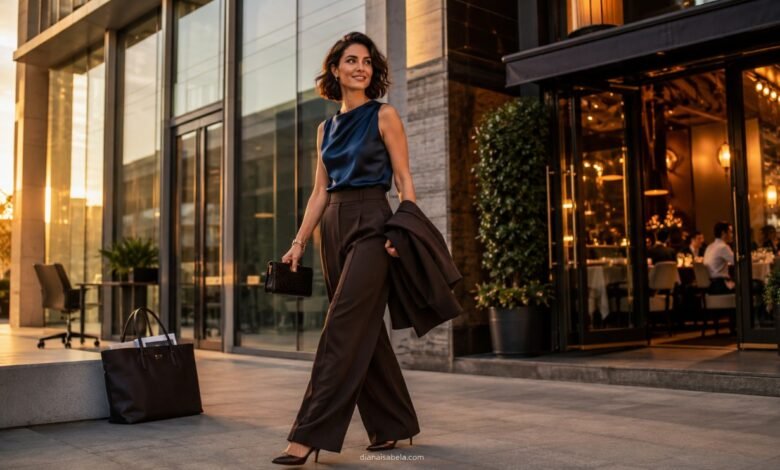
Fluid trousers + sleeveless knit + long vest + low sandals
The vest makes the daytime outfit feel finished. Remove it at dinner, add gold jewelry, and keep the trousers relaxed enough for a long meal.
Black wide-leg jeans + fitted top + cropped jacket + pointed flats
At the end of the day, exchange the flats for kitten heels if desired, add a compact metallic bag, and keep the rest simple.
Navy trousers + silk-touch blouse + soft blazer + polished loafers
No dramatic transformation is needed. Change the tote, refresh makeup, and add one refined piece of jewelry. The goal is continuity with more evening polish.
Fine knit dress + long coat + sleek ankle boots
This outfit prioritizes comfort without looking casual. Add earrings at dinner and loosen the hair if that feels natural.
Slip skirt + fitted cardigan + blazer + slingback flats
Wear the cardigan buttoned as a top beneath the blazer. At dinner, remove the blazer, open one cardigan button if appropriate, add lipstick, and switch the work tote for a compact shoulder bag.
Where the outfit usually loses the handoff
The base is too corporate
A plain sheath, standard pump, stiff blazer, and office tote may remain office wear after every accessory change. Begin with one piece that has evening character.
The change is too dramatic
Switching shoes, bag, jewelry, lipstick, hair, and neckline all at once can make the transformation feel costume-like. Two strong changes are usually enough.
The evening shoe has never been tested
A compact heel is only useful if it fits after a full day, when feet may be slightly swollen. Test it under real conditions.
The blouse does not survive sitting
Some satin and crisp cotton tops wrinkle across the waist and back. Sit before buying, not only before dinner.
The bag change creates a storage problem
Know where the work tote will go. Carrying both bags through dinner can make the smaller one feel decorative rather than useful.
The outfit becomes uncomfortable after eating
Rigid waistbands, tight bodysuits, and dresses that only look good before dinner are poor long-evening partners.
The look depends on removing the blazer, but the restaurant is freezing
Make sure the evening layer is attractive enough to remain on. A transformation that only works in warm air is not a complete plan.
The desk drawer can quietly become your best stylist
You do not need a backstage dressing room. A small pouch can solve most work-to-dinner problems.
The useful evening pouch
The pouch should prevent small problems, not create a second beauty routine.
The 4:55 p.m. check before you leave work
Do not wait until the restaurant bathroom.
Look once, fix only what matters
Then stop adjusting.
An outfit can be edited into nervousness. Once it works, let it live.
The best work-to-dinner outfit does not perform a dramatic reveal. It simply becomes more itself as the day gets later.
The structure softens. The better shoe appears. The tote disappears. The light near the face changes. Nothing looks forced because the evening was built into the outfit from the beginning.
For more help creating polished looks from clothes you already own, read how to make relaxed clothes look more refined. And when the problem is not the outfit but the feeling that nothing in your closet works, the article about why a full closet can still feel impossible is the better place to start.
Work-to-dinner outfit questions
What is the easiest work-to-dinner outfit?
A draped midi dress with a blazer is one of the easiest options. The blazer keeps the outfit professional during the day, while removing it, changing the bag, and adding stronger earrings creates an evening shift without requiring a full change.
Can I wear jeans from work to dinner?
Dark, clean jeans can work for casual offices, creative workplaces, neighborhood restaurants, and relaxed birthday dinners. Pair them with a polished top, blazer, elegant flats, slingbacks, or ankle boots. For a formal restaurant or client dinner, tailored trousers may be safer.
How can I make office clothes look less corporate at night?
Remove or soften the most obviously corporate element. Swap the tote for a smaller bag, reveal a more interesting top beneath the blazer, change the shoe shape, or add one evening accessory. If the base outfit is a very plain suit or sheath, accessories may not be enough.
Should I bring a second pair of shoes?
Bring them when your work shoes are practical but visually heavy, or when your evening shoes are not comfortable enough for the entire day. A compact slingback, kitten heel, pointed flat, or low sandal fits easily in many totes.
What should I keep at work for last-minute dinner plans?
A small pouch with earrings, lip color, blotting paper, fashion tape, blister pads, a lint roller sheet, and a travel fragrance covers most emergencies. A compact evening bag and foldable pair of polished flats are also useful if you have storage.
Can a blazer stay on at dinner?
Absolutely. A soft blazer, velvet jacket, cropped jacket, or beautifully cut tailored blazer may improve the evening outfit. The goal is not always to remove the layer; it is to make sure the layer looks intentional outside the office.
How do I dress for dinner after work without looking overdressed at the office?
Keep the evening detail underneath daytime structure. A satin shell beneath a blazer, a fitted knit with wide-leg trousers, or a sleek dress under a cardigan can remain professional during work hours. The outfit changes when the outer layer, bag, shoe, or jewelry changes.
What kind of bag works for both work and dinner?
A medium structured bag with a removable strap is the best one-bag compromise. When possible, place a compact evening bag inside your work tote and move only the essentials into it before leaving.
How can I refresh my makeup quickly after work?
Blot first, correct only the areas that need it, then intensify one feature. A richer lip, softly defined lashes, fresh cream blush, or a touch of shimmer can be enough. Adding a complete new layer of makeup over a tired base usually looks heavier, not fresher.
What fabrics are best for clothes that must last from morning to dinner?
Crepe, ponte, fine knit, fluid twill, substantial jersey, soft suiting, and many lined blends recover well after sitting and commuting. Thin satin, crisp cotton, and linen can work, but they may show more wrinkles by evening.