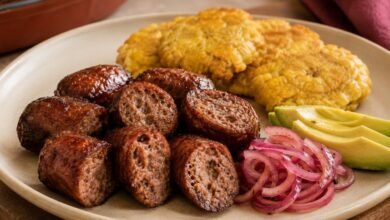
What Is Anticucho de Corazón? Bolivia’s Beef Heart Skewer Explained

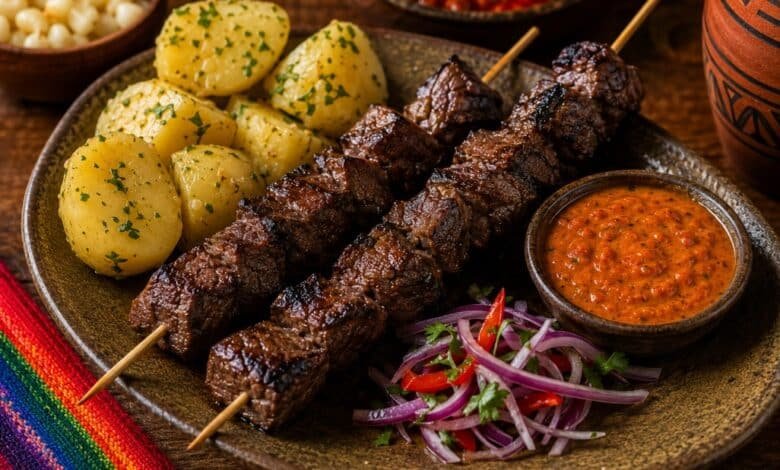
Anticucho de corazón sounds much more dramatic in English than it tastes. Translate it literally and you get “heart anticucho,” which tends to make first-time diners picture something medically complicated. Put it over charcoal, however, and the experience is far more familiar: deeply browned beef, smoke, garlic, chile, vinegar and the kind of firm juicy bite that makes you reach for the next piece before finishing your internal speech about eating organ meat.
The important word is corazón. In classic Bolivian anticucho, particularly the tradition associated with La Paz, we are talking about beef heart. Not steak pretending to be exotic. Not liver. Not an unspecified “beef skewer.” Actual heart, carefully cleaned, seasoned, threaded onto skewers and cooked over fierce heat.
And once you understand what a heart physically is — a hardworking muscle — the dish becomes considerably less mysterious.
My favorite foods often do this. They begin with an ingredient people overlook, apply serious technique and end up making the supposedly prestigious cuts look slightly bored with themselves.
If your goal is not simply understanding the dish but actually finding it in the United States, start with my Best Anticucho Boliviano Near Me guide.
What is anticucho de corazón?
Anticucho de corazón is a grilled beef-heart skewer associated with Andean cooking and especially important in Bolivian and Peruvian food traditions. In the La Paz-style Bolivian preparation, beef heart is seasoned with ingredients such as garlic, vinegar, oregano, cumin and pepper, then cooked over charcoal and served with potato, red ají and spicy llajua that may include ground peanut.
The name tells you the protein. Corazón means heart. So when a restaurant lists anticuchos de corazón or anticucho de corazón de res, it is giving you much more useful information than the generic word anticucho alone.
This matters in modern restaurants because anticucho has become a broader culinary vocabulary. You can now encounter chicken anticuchos, steak anticuchos, octopus anticuchero and tenderloin seasoned in an anticuchera style. Delicious possibilities, perhaps, but not automatically beef heart.
Why beef heart works so well on a skewer
A heart is a working muscle, and that explains both the attraction and the challenge. Unlike richly marbled steak cuts, beef heart is comparatively lean and dense. It has a concentrated beef flavor but does not have much internal fat available to rescue it if somebody cooks it carelessly.
Strongly beefy and savory rather than liver-like or strongly mineral.
Firm and springy, with more structure than tender steak.
It needs enough heat for browning without so much time that the lean muscle dries and toughens.
That combination makes skewering extremely logical. Small or thin pieces expose plenty of surface to the heat, allowing the exterior to brown quickly while the inside retains moisture. The cook gets char without needing to leave a large roast sitting over the fire for an eternity.
This is one of those traditional techniques that looks rustic until you examine the physics and realize somebody knew exactly what they were doing.
Beef heart is organ meat, but it does not behave like liver
Yes, anatomically the heart is an organ. Culinarily, however, the comparison with liver is not very helpful.
Beef heart
Muscular, firm and intensely beefy. When grilled, it develops browned edges and a texture closer to a structured steak than a soft organ preparation.
Beef liver
Soft and more fragile, with a pronounced mineral flavor that many people recognize immediately as liver. It behaves very differently both in the mouth and on the heat.
This distinction is why I think heart is one of the easiest traditional offal dishes for a cautious first-timer. The word may feel adventurous; the flavor is surprisingly legible.
If you like grilled beef but dislike liver, anticucho is still very much worth trying.
The first serious cooking step happens before the marinade
A whole heart is not simply diced indiscriminately and sent to the grill. There are membranes, vessels, connective tissue and firmer sections that need attention. Good preparation begins with trimming.
The useful muscular portions are cleaned so the diner receives pieces that can actually be bitten through comfortably. This is one reason two anticuchos can taste similar yet feel dramatically different in the mouth. Seasoning cannot compensate for sloppy butchery.
If you bite into something that feels stringy, rubbery or almost impossible to cut with your teeth, do not automatically decide that “beef heart is tough.” Some of what you are fighting may simply have needed to be removed before cooking.
Good anticucho texture starts with a knife, not the grill. Clean trimming creates the foundation; heat can only work with what the cook gives it.
Thin enough for speed, substantial enough to feel like meat
The cut has to negotiate two competing desires. Make the pieces enormous and the exterior can darken long before the center reaches the texture the cook wants. Make them too thin and the heart can dry before it develops the satisfying bite anticucho needs.
Traditional preparations therefore tend toward manageable slices or chunks threaded onto a skewer, giving the fire plenty of surface area to work on.
I like pieces that remain recognizably meaty. Anticucho should not feel like jerky threaded onto a stick. There needs to be enough thickness to preserve some juiciness beneath the char.
This is where experienced vendors have an enormous advantage: repeat the same action hundreds of times and your hands develop an understanding of thickness that a recipe measured in centimeters can never quite reproduce.
The marinade is there to season the heart, not hide it
In the La Paz preparation I use as a reference, the ingredient list surrounding the heart includes garlic, grape vinegar, oregano, cumin, black pepper, salt, red ají and optional lemon juice.
This is a wonderfully sensible combination for a lean meat. Garlic amplifies savoriness. Cumin gives warmth. Oregano brings herbal character. Vinegar cuts through the deep beef flavor and makes smoke feel brighter rather than heavier.
The point is not to marinate the heart until nobody remembers which animal appeared at dinner. A good anticucho still tastes distinctly of beef beneath its seasoning.
And because recipes vary between vendors and households, I would treat this as a strong La Paz reference rather than a constitution that every Bolivian grandmother signed.
Why anticucho wants a very hot grill
Heart is lean enough that slow indecision over weak heat does it few favors. Anticucho works because the pieces meet serious heat, develop browning quickly and come off before the interior has spent too long losing moisture.
The surface hits heat
Moisture begins evaporating from the exterior and the meat starts browning.
Char develops
Edges darken, smoke joins the flavor and the heart begins smelling considerably more seductive than its anatomical description suggested.
The cook watches the center
The goal is enough cooking for a safe, properly prepared serving without continuing until the lean muscle becomes dry and exhausting.
The skewer leaves the fire
Now potato and llajua can do what the grill cannot: add softness, starch, richness and chile around the meat.
This is why I become suspicious of pale anticucho. Char is not purely cosmetic here. Browning is part of the flavor architecture.
USDA food-safety guidance treats heart as an organ/variety meat and recommends cooking such meats to 160°F / 71.1°C. That is worth remembering if you are preparing heart yourself rather than eating from an experienced restaurant kitchen.
What should anticucho de corazón feel like?
The ideal texture is one of the most misunderstood parts of the dish. Heart should not mimic tenderloin. If you expect something buttery-soft, you are asking a hardworking muscle to become a different anatomical structure for your convenience.
Good heart has resistance. It should feel firm, springy and substantial. What it should not feel is leathery, desiccated or impossible to bite through.
Firm is normal. Rubber is not.
A well-prepared piece gives way cleanly after a little chew, releases savory juices and lets you appreciate the contrast between the browned exterior and the dense center.
That chew is part of the pleasure. We have become slightly overcommitted to describing tenderness as though it were the only virtue meat can possess.
Why beef heart can taste more “beefy” than expensive steak
This sounds counterintuitive until you remember what much of steak luxury actually comes from: fat.
A beautifully marbled ribeye tastes wonderful partly because fat carries aroma and creates richness. Heart offers much less of that cushioning. The flavor impression is therefore leaner and more direct. You notice muscle, smoke, browning and seasoning rather than buttery marbling.
That is why people sometimes describe heart as having an unusually concentrated beef taste. Not necessarily stronger in every imaginable dimension — just less distracted.
The llajua then becomes even more interesting because it can supply richness from outside the meat rather than asking the heart to contain it internally.
The complete Bolivian anticucho is more than heart on a stick
If you stop your definition at grilled beef heart, you understand the protein but miss the plate.
Potato and sometimes yuca
The mild starch softens the firm texture of the meat, absorbs sauce and gives you a gentler bite between pieces of smoky heart.
Red ají and peanut llajua
Chile adds energy while peanut can provide the body and richness that the lean heart does not naturally have.
It is an extremely intelligent balance. One ingredient is lean and muscular; another is soft and starchy. One is smoky; another is saucy. One gives strong beef flavor; another gives chile and richness.
Even if you are primarily curious about the heart, do not ignore everything surrounding it. The accompaniments explain why that particular protein works so well as a complete street-food dish.
Why La Paz and anticucho belong so naturally together
Anticucho is not merely a recipe associated with La Paz. It is part of the city’s public food rhythm.
Municipal material continues to describe it as a traditional paceño food, and dedicated anticucho fairs have brought together dozens of women vendors selling skewers into the evening. That timing makes perfect sense. Anticucho is a food of heat, aroma and immediacy. A charcoal grill becomes its own advertisement once the city starts cooling down.
The role of the anticuchera matters here. Repetition creates technical skill: trimming, slicing, loading skewers, managing charcoal, knowing when to turn the heart and adjusting sauce while a line of people waits.
Fine dining often celebrates precision as though somebody invented it after purchasing tweezers. Street cooks have been doing precision under much worse lighting for a very long time.
Why heart became food instead of waste
The longer history of anticucho is considerably more complicated than a modern national label. Accounts from the Andes connect earlier skewered meat preparations with pre-Columbian foodways, then describe major changes after Spanish colonization introduced cattle and new ingredients.
Peruvian historical accounts particularly emphasize enslaved Africans adapting beef offal into what became the now-famous beef-heart anticucho. Bolivian sources discussing anticucho place the dish inside that same broader colonial Andean history.
This is important because heart was not historically prestigious meat. Transforming inexpensive or discarded cuts into something deeply desirable is a recurring story across world cuisines: barbecue, pâté, tripe, oxtail, ramen, cassoulet — humans are extremely talented at turning class hierarchy into dinner and then eventually charging twenty-eight dollars for it.
Anticucho belongs to that much more interesting culinary tradition of technique creating value.
Seven things I look for in a good anticucho de corazón
The good signs
The warning signs
Notice how little of that depends on restaurant décor. A humble anticuchera with good charcoal technique can absolutely outperform a fashionable dining room where somebody became distracted designing the plate.
Bolivian or Peruvian? The word corazón does not answer that
Both Bolivia and Peru have major beef-heart anticucho traditions. So seeing anticuchos de corazón confirms the protein, not the nationality.
To understand the style, look at everything around it.
A Bolivian menu may place anticucho among salteñas, silpancho, sopa de maní, pique macho, charque, falso conejo, plato paceño, api and mocochinchi. A Peruvian menu may surround the skewer with ceviche, causa, lomo saltado, huancaína, ají de gallina, choclo and chicha morada.
The seasoning gives more clues too. Classic Peruvian anticucho strongly emphasizes ají panca in the marinade. The La Paz-style Bolivian preparation becomes particularly distinctive through red ají, potato and peanut llajua.
If you want that comparison ingredient by ingredient, see Bolivian Anticucho vs Peruvian Anticucho.
If heart still makes you nervous, start with the sauce
I do not mean hide the meat under sauce. I mean use the complete plate to make the first encounter feel less clinical.
Try one small piece of heart by itself so you actually learn what it tastes like. Then try another with llajua. Follow it with potato. Suddenly the experience is not “I am eating a cow’s heart.” It is beef, smoke, chile, nutty richness and starch behaving coherently together.
This is why cultural context matters. Ingredients can sound strange when stripped from the dish that taught people how to enjoy them.
If your main hesitation is flavor rather than anatomy, read What Does Bolivian Anticucho Taste Like?.
If I were building a Bolivian tasting around anticucho de corazón
I would not simply order every meat dish on the menu. Heart already gives the meal plenty of grill and savory intensity, so the interesting additions should reveal other textures and regional ideas.
Start with salteña
Juicy filling inside baked pastry could hardly be more different from charcoal-grilled heart. That contrast makes salteña one of my favorite first introductions to a larger Bolivian meal.
Add sonso de yuca if the restaurant has it
Sonso moves us toward eastern Bolivia and into a completely different relationship with starch: cooked yuca worked together with cheese and cooked until warm, cohesive and browned. If you are already curious about cassava, my Best Sonso de Yuca Near Me guide explains what to look for and where the U.S. search is strongest.
I especially like the contrast conceptually. Anticucho gives us heart, charcoal and La Paz street-food energy. Sonso gives us yuca, cheese and a strong connection with eastern Bolivian cooking. Two dishes, two regions, no repetition.
Then choose a drink with personality
If the restaurant has a liquor program and you are of legal drinking age, Chuflay is one of the most recognizable Bolivian options: Singani lengthened with ginger ale, citrus and ice. The official Singani 63 version uses Singani, lemon juice, ginger ale and a lime garnish. :contentReference[oaicite:3]{index=3}
For the drink itself, see What Is a Chuflay Cocktail?. If you are trying to locate one in the U.S., use my Best Chuflay Cocktail Near Me guide.
And if alcohol is not part of the evening, mocochinchi is a much more interesting answer than pretending a Bolivian dinner requires a cocktail to qualify.
Why Chuflay actually makes sense with grilled heart
This pairing is not about a sacred traditional rule. It is about flavor mechanics.
Anticucho is smoky, salty, intensely beefy and potentially spicy. Peanut llajua can add richness. A cold highball brings bubbles, sweetness, citrus and dilution — exactly the kind of contrast that helps reset the palate after a rich grilled bite.
Singani also has an aromatic grape character, which means Chuflay does not disappear beside the food the way an anonymous spirit-and-soda can.
I would keep it straightforward rather than asking the bartender to turn it into a twelve-ingredient cocktail. Anticucho already has enough personality at the table.
And why sonso belongs in the same broader conversation
Sonso de yuca is not a traditional side that must appear beside every anticucho. I would never pretend it is.
What makes the connection useful is regional exploration. Bolivia’s food identity cannot be reduced to La Paz, just as Italian cooking cannot sensibly be reduced to one Roman pasta.
Anticucho introduces you to one powerful highland and urban street-food tradition. Sonso takes you toward the tropical eastern lowlands, especially the camba food world, where yuca and cheese create a completely different comfort-food language.
If a Bolivian restaurant happens to serve both, that is a much more interesting tasting opportunity than ordering three preparations of beef simply because you arrived hungry.
Anticucho de corazón is also a useful lesson in how menus hide technique
A menu can write “beef heart skewers” in four words. Those four words conceal trimming, slicing, marinating, skewering, charcoal management, turning, timing, sauce preparation and the accumulated instinct required to do all of that repeatedly without drying the meat.
This is why I dislike the idea that humble food is somehow simple food.
Simple plating is not simple technique.
The best anticucho may arrive on a disposable plate from someone who has cooked more beef heart in one month than a fashionable chef handles in an entire career.
What if a restaurant replaces the heart with steak?
Then you have a different dish, even if the marinade is related.
This is not automatically a criticism. Tenderloin anticuchero can be delicious. Chicken anticuchos can be delicious. Octopus can carry anticuchero seasoning beautifully.
But the reason beef heart matters is precisely because anticucho developed a technique suited to that ingredient. Swap heart for tenderloin and you change the flavor, texture, fat level, cooking challenge and historical meaning all at once.
Call it a modern interpretation and I am interested. Tell me it is identical and I become difficult.
Can you make anticucho de corazón at home?
Yes, but buying the heart is easier than preparing it well.
If you are working with a whole heart, trimming becomes the first important skill. Remove tough connective structures and prepare relatively even pieces so they cook at a similar rate. Season or marinate them, thread them onto skewers and use strong heat rather than allowing the meat to slowly dehydrate over a timid grill.
For home food safety, USDA guidance recommends cooking heart and other organ/variety meats to an internal temperature of 160°F / 71.1°C. :contentReference[oaicite:4]{index=4}
I would also make the sauce before lighting the grill. Once heart is cooking, the meal moves quickly. That is not the moment to discover you forgot to grind the chile.
The question I would ask before ordering
If a menu simply says anticuchos, ask what protein the kitchen is using.
If they say beef heart, excellent. Then ask whether it comes with potato and what sauce is served alongside. Those two answers tell you much more about the intended plate than asking whether the dish is “authentic,” a word capable of turning perfectly pleasant restaurant conversations into doctoral defenses.
If they say tenderloin, chicken or another protein, you now know you are ordering an anticucho-style interpretation rather than classic corazón.
Simple questions are usually better than ideological ones.
What I want from the first skewer
I want the exterior properly dark. I want to smell charcoal before the sauce reaches me. I want the heart trimmed cleanly and cut small enough for high heat to have done its job.
The first bite should be firm but comfortable. Beef should be the first recognizable flavor, followed by garlic, seasoning, acidity and smoke.
Then I want llajua.
With peanut in the La Paz-style sauce, the whole balance changes: lean becomes richer, chile becomes rounder and the potato suddenly becomes the most useful object on the plate.
That is anticucho de corazón at its best — not a stunt ingredient, not a historical curiosity, but a cooking technique that understands exactly what beef heart needs.
Does your family prepare corazón differently?
If your Bolivian family slices the heart differently, uses another marinade, makes a different llajua or serves anticuchos with another starch, I would love to hear about it. Regional and family variations are exactly where a dish stops behaving like a definition and starts behaving like living food.
If you know a Bolivian restaurant in the United States serving a particularly good anticucho de corazón, send me the restaurant name, city and a current menu or plate photo if possible.
Email: info@dianaisabela.com
I am always more interested in what skilled cooks actually do than in pretending one recipe owns the final word.
What is anticucho de corazón?
Anticucho de corazón is a grilled beef-heart skewer. In La Paz-style Bolivian preparations, the heart can be seasoned with garlic, vinegar, oregano, cumin and pepper, grilled over charcoal and served with potato, red ají and llajua.
What does corazón mean on an anticucho menu?
Corazón means heart in Spanish. Anticucho de corazón or anticuchos de corazón therefore indicates that the skewers are made with heart, commonly beef heart.
Does anticucho de corazón taste like liver?
No. Beef heart is muscular and tastes much more like concentrated grilled beef than liver. It has a firmer, springier texture and a cleaner beef flavor.
Why is beef heart used for anticuchos?
Beef heart has strong beef flavor and a firm texture that works well when trimmed, cut into manageable pieces and cooked quickly over strong heat. The skewer format creates plenty of browned surface while allowing the center to retain moisture.
Is beef heart supposed to be chewy?
It is naturally firmer than tender steak and should have some pleasant chew. Properly prepared heart should still bite through comfortably and should not be dry, rubbery or filled with tough connective tissue.
What is used to season Bolivian anticucho de corazón?
La Paz-style preparation guidance includes garlic, grape vinegar, oregano, cumin, black pepper, salt and red ají, with optional lemon. Recipes vary between households, vendors and regions.
What is served with Bolivian anticucho de corazón?
Potatoes are a characteristic accompaniment, and some La Paz-style preparations also include yuca. Spicy llajua, including peanut-based versions, adds chile flavor and richness to the lean grilled heart.
Are Bolivian and Peruvian anticuchos both made with beef heart?
Classic versions in both Bolivia and Peru commonly use beef heart. The wider marinade, sauce, side dishes and restaurant context help distinguish the culinary style.
Does anticuchero always mean beef heart?
No. Anticuchero or anticuchera can refer to a seasoning or preparation style. Restaurants may use it with steak, chicken, tenderloin, octopus or other proteins, so check the menu description when you specifically want beef heart.
How should beef heart be cooked safely at home?
USDA food-safety guidance recommends cooking organ and variety meats such as heart to an internal temperature of 160°F or 71.1°C, measured with a food thermometer.