Bolivian Anticuchos in Rhode Island: A Providence Food Trail
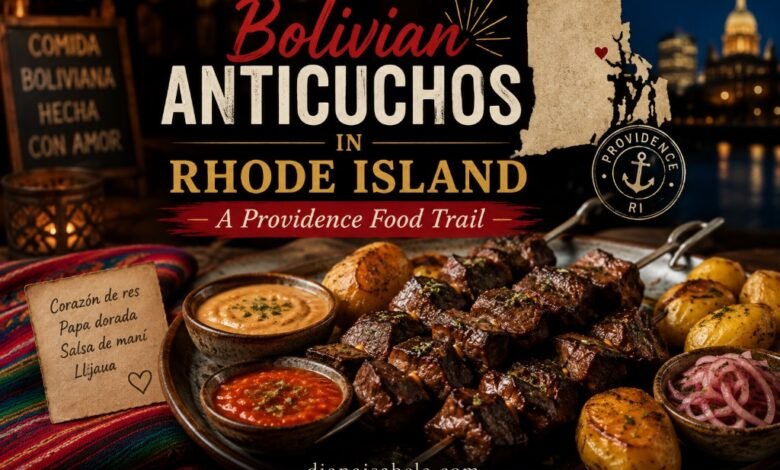
Rhode Island is tiny enough that you can cross a worrying amount of the state before your coffee cools, yet somehow Providence has managed to make the Bolivian anticucho search more interesting than several states ten times its size.
The reason is not abundance. This is not Northern Virginia, where several Bolivian kitchens give you a route. Nor is it Maryland, where one current restaurant gives you a particularly clean answer. Providence gives us something messier and, from a food-writer point of view, much more fun: Bolivian and Peruvian dishes sharing menus, classic anticuchos appearing and disappearing with availability, and the word anticuchero wandering away from beef heart entirely and attaching itself to tenderloin and ribeye.
In other words, Rhode Island is where the vocabulary starts flirting.
The place I would call first for actual anticuchos is Julianna’s on Pocasset Avenue. Its current ordering system still carries an Anticuchos listing, recently priced at $12.99, but the dish has also shown as sold out. Around it sits a menu where Bolivian salteñas, sopa de maní, silpancho, pique macho, falso conejo and Bolivian-style chicharrón coexist with explicitly Peruvian dishes. A few miles away, Los Andes openly embraces both Bolivian and Peruvian cooking, yet its current anticucho story has evolved toward beef tenderloin marinated anticuchera-style rather than the classic heart skewer.
If you only want a restaurant list, this page will look unusually short. If you want to understand what you might actually eat in Providence — and why two menus using the same anticucho vocabulary can be describing very different plates — Rhode Island turns out to be an excellent little case study.
If Rhode Island is only one stop in a larger search, the national Bolivian anticucho guide compares Providence with Virginia, Maryland, New York and the other places I would investigate first.
Providence is basically the whole Rhode Island story
This is one of those rare occasions when the state’s small size makes the food guide more honest rather than less ambitious. I do not need to invent separate Newport, Warwick and Pawtucket anticucho scenes simply because those names exist on a map. The useful evidence is concentrated in Providence, and pretending otherwise would only create more driving for less dinner.
Providence has long been surprisingly good at South American food for a city of its size. The Chalkstone Avenue area in particular gives you Peruvian and Bolivian influences close enough together that the cuisines stop feeling like theoretical national categories and start behaving the way food actually behaves in immigrant communities: side by side, occasionally borrowing from each other, sometimes sharing one restaurant and sometimes arguing quietly through the sauces.
That is what makes this state different from Maryland. There, I can point to Kantuta’s and say: this is currently the cleanest Bolivian anticucho anchor. Providence requires a little more reading.
Julianna’s — Providence
Julianna’s is the Rhode Island place I would call first if beef-heart anticucho is the actual mission. Its current ordering system still includes Anticuchos, recently listed at $12.99, while the wider menu contains enough explicitly Bolivian food to make the restaurant genuinely relevant rather than merely convenient.
The menu labels its chicken and beef salteñas as Bolivian. The chicharrón de cerdo is described as Bolivian style. Then come sopa de maní, silpancho, pique macho, falso conejo, picante de pollo, humintas and cuñape — a collection that gives you plenty of Bolivia even before we begin arguing about which side of the Andes one particular skewer is leaning toward.
At the same time, the menu is openly South American rather than nationally pure. Papa a la huancaína is identified as Peruvian. Seafood dishes use rocoto and Peruvian panca. Lomo saltado and chaufa sit comfortably beside silpancho. I actually prefer that honesty. Providence is not asking us to believe two neighboring cuisines have never met.
There is one very important practical sentence hiding among those facts: the anticuchos have recently been marked out of stock. I would therefore never build a long Providence drive around the menu page alone. Call first. The listing tells us the dish genuinely belongs to the restaurant; the phone call tells us whether it belongs to tonight.
If I wanted actual anticuchos in Rhode Island tonight: Julianna’s would be my first phone call. If they say yes, excellent. If they say no, I would decide whether the evening is still about Bolivian food or whether I am willing to switch from a classic skewer to the broader anticuchero family.
“Out of stock” is annoying, but it is also unusually honest
I have developed a strange affection for online menus that admit when something is unavailable. Not because I enjoy disappointment, obviously, but because `OUT OF STOCK` is far more useful than a gorgeous menu page confidently selling a dish the kitchen stopped making six months ago.
Julianna’s current ordering system has repeatedly shown anticuchos at $12.99 while marking them unavailable. That means several things at once. The dish belongs to the restaurant’s recent menu. It is not safe to assume you can order it at any given moment. And there is at least some possibility that availability changes rather than the dish having disappeared permanently.
This is exactly the sort of nuance that gets destroyed when local food writing insists every business must be either “serves anticuchos” or “does not serve anticuchos.” Kitchens do not organize themselves for the convenience of spreadsheets.
Sometimes there are twelve portions in the morning and none after dinner rush. Sometimes the butcher delivery changes. Sometimes a dish that requires particular prep simply is not made every day. Restaurant food is a perishable system run by human beings, not a database field.
If anticucho is the reason you are going, ask one very specific question: “Do you have the anticuchos today?” If the answer is yes, follow with “Are they beef heart?” and you have learned more in fifteen seconds than another half-hour of scrolling.
What I would eat at Julianna’s if the skewers disappeared before I arrived
Luckily, the menu does not collapse when anticucho disappears. This is where I would stop treating the evening as a failed search and begin treating it as dinner.
Salteña first
The current menu explicitly labels both beef and chicken versions as Bolivian. I would start there because a juicy salteña and a charred anticucho occupy completely different ends of the texture spectrum, and if the anticucho is unavailable the pastry still makes a very persuasive introduction to the cuisine.
Sopa de maní if Rhode Island is cold
This feels almost unfairly obvious. Peanut soup on a gray Providence evening has all the emotional intelligence of a very good sweater: warming, comforting and considerably more useful than pretending you are not cold.
Silpancho when hunger becomes serious
Once breaded beef, rice, potato, egg and salsa enter the picture, the original plan for “a little anticucho” has formally ended. I support accepting this transition with dignity.
Falso conejo for a different beef mood
If heart is unavailable but you still want a Bolivian beef dish, falso conejo takes you toward breaded beef and sauce instead of grill and skewer. Same animal, completely different evening.
Los Andes is where the word anticucho changes clothes
Los Andes — Providence
Los Andes openly describes itself as a restaurant of Peruvian and Bolivian cuisine, which immediately makes life easier. Nobody is pretending the menu belongs exclusively to one side of a national border. The restaurant builds its identity around the Andes as a region, and that approach is especially visible when anticucho language appears.
The current 2026 menu does not give us a classic beef-heart skewer. Instead, it lists Anticuchos de Lomo: beef tenderloin marinated in anticuchera and served with roasted fingerling potatoes, choclo, huancaína and rocoto crema. There are also larger steaks prepared in an anticuchero style.
This is not the dish I would use to answer “Where can I get classic Bolivian beef-heart anticuchos?” It is, however, a very good answer to another question: what happens when anticucho becomes a flavor system rather than one specific cut of meat?
For a first-time diner who finds beef heart psychologically difficult, this can actually be an interesting bridge. Tenderloin gives you a much more familiar texture while the marinade and sauces introduce some of the chile-driven flavor language surrounding anticucho. It is not a substitute if authenticity of the protein is the goal. It is a very sensible gateway if curiosity is.
Anticucho, anticuchera, anticuchero — Providence makes the grammar deliciously confusing
This is the perfect city for explaining something the national guide can only touch briefly: once anticucho becomes famous enough, its seasoning escapes the skewer.
A menu might offer anticuchos, meaning the skewered dish. It might say anticuchos de corazón, which gives us the important clue that heart is involved. But it may also describe a steak, chicken or seafood preparation as anticuchero because the cook is borrowing the chile, seasoning and grilling vocabulary rather than reproducing the classic dish.
Los Andes demonstrates that evolution beautifully. A tenderloin marinated in anticuchera can absolutely taste like it belongs to the anticucho family without pretending to be beef heart. The same principle appears elsewhere in contemporary South American restaurants where octopus, ribeye and chicken acquire anticuchero preparations.
This reminds me a little of fashion words escaping their original garments. “Tuxedo” eventually becomes a stripe on trousers. “Ballet” becomes a flat. “Corset” becomes a top that has never met actual structural boning in its life. The reference survives even when the original object has wandered off.
Food does the same thing, only with more chile.
The useful distinction: if you specifically want classic Bolivian anticucho, ask for anticuchos de corazón. If you simply want anticuchero flavor, the menu can become much wider.
Providence does not seem particularly interested in keeping Bolivia and Peru apart
And honestly, that is part of the charm.
Julianna’s menu can call a salteña Bolivian and papa a la huancaína Peruvian without requiring either dish to leave the building. Los Andes literally describes itself through both countries. This feels much closer to the reality of immigrant restaurant communities than the imaginary world where every recipe must present its passport before entering the kitchen.
Of course, this overlap makes a targeted anticucho search more complicated. Both Bolivia and Peru have powerful beef-heart traditions. Peruvian menus frequently lean into ají panca, rocoto, choclo and huancaína-related flavors. Bolivian menus may surround anticucho with salteñas, silpancho, sopa de maní, pique macho, falso conejo, api, mocochinchi and other cues from a different culinary landscape.
Providence gives us both vocabularies close together, sometimes on the same menu.
I do not think the useful response is to police every sauce with a national flag. The useful response is to describe the plate accurately. A beef-heart skewer sitting inside a heavily Bolivian menu deserves different framing from beef tenderloin in anticuchera marinade beside choclo, huancaína and rocoto crema.
If you enjoy this particular culinary family tree, continue with Bolivian Anticucho vs Peruvian Anticucho.
The Chalkstone Avenue effect
One of the things I like about Providence is how geographically close several South American food stories become. Chalkstone Avenue and the surrounding neighborhoods contain restaurants where Peruvian cooking is deeply visible, while Julianna’s sits only a short drive away with a substantial Bolivian menu woven into its broader South American identity.
This is useful if you are the sort of person who goes out for dinner with one specific craving and then becomes distracted by comparative culinary research. I sympathize. I have lost perfectly good afternoons this way.
You could begin by looking for Bolivian heart anticucho at Julianna’s, then discover that the item is unavailable and spend the rest of the evening comparing sopa de maní, silpancho and the anticuchero language at Los Andes instead. This would technically constitute failure according to the original search query and a very successful dinner according to everyone at the table.
Search engines are not always the best judges of evenings.
How I would build a Providence anticucho evening
There are two versions depending on what Julianna’s tells me on the phone.
If the anticuchos are available
I would start at Julianna’s and order them first rather than burying the palate under several heavier mains. Add salteñas if sharing, then choose something dramatically different afterward — sopa de maní if you want comfort or a larger Bolivian plate if appetite has decided to become ambitious.
If the anticuchos are sold out
I would stay if Bolivian food is the real goal. If the grill flavor itself matters more, I might move toward Los Andes and order Anticuchos de Lomo, fully aware that I have shifted from beef heart to tenderloin and into a much more Peruvian–Bolivian crossover presentation.
The crucial thing is knowing when the question changes. “I want Bolivian beef-heart anticucho” and “I want something anticuchero in Providence tonight” sound similar, but they lead to different plates.
What I would put around the skewers at Julianna’s
If anticuchos are available, I would resist the temptation to make every other dish another meat-heavy plate. Beef heart already gives you grill, chew and intensity. The rest of dinner should change the rhythm.
Salteñas are especially good at this job because juicy filling and pastry could hardly behave more differently from a charred skewer. Huminta and cuñape give corn, yuca and cheese room to enter the evening. Sopa de maní brings warmth and softness. Then, if everybody still claims to be hungry, a shared larger plate can settle the matter.
I have a separate guide to what to eat with Bolivian anticuchos for the person who correctly suspects that “potatoes” cannot possibly be the end of this conversation.
And if beef heart makes someone at the table nervous?
This is where Providence offers a rather elegant compromise.
At Julianna’s, the nervous diner can eat a salteña, silpancho or another familiar Bolivian dish while the more curious person tries the anticucho. Nobody needs to stage an intervention.
At Los Andes, Anticuchos de Lomo gives you familiar tenderloin dressed in anticuchera flavors. It is not the classic heart version, but for a first encounter with the flavor profile it may be considerably less psychologically dramatic.
I am always suspicious of food writing that treats eating unusual ingredients as a test of character. Dinner is not military training. You are allowed to approach something unfamiliar gradually.
If the word heart is the only obstacle, my guide to what Bolivian anticucho tastes like explains why the flavor is much more recognizably beefy than many first-time diners expect.
The Providence takeout problem is mostly physics
Rhode Island is small, which helps. Beef heart is lean, which does not.
Anticucho is one of those foods whose charm declines in direct proportion to the amount of time it spends cooling inside a closed container. The firm texture becomes firmer, the char loses some of its energy and a sauce that was supposed to provide contrast can simply soak everything if packed together for too long.
If Julianna’s confirms anticuchos for pickup, I would collect them as close to eating time as possible. Keep sauces separate when you can. Potato will survive a slightly longer journey with grace; lean grilled heart is less forgiving.
Los Andes also offers pickup, but the tenderloin version has a little different texture equation. Still, grilled food wants to be eaten while somebody in the kitchen still remembers taking it off the heat.
Providence traffic is unlikely to rival Manhattan, but that is no reason to take the scenic route home with dinner.
A small price reality check
Julianna’s recently listed Anticuchos at $12.99. Los Andes currently lists its tenderloin Anticuchos de Lomo at $15. Those numbers appear pleasantly comparable until you remember they are not actually the same dish.
One is an anticucho listing inside a restaurant with substantial Bolivian food and a history of availability issues. The other uses beef tenderloin with anticuchera marinade, fingerling potatoes, choclo, huancaína and rocoto crema in a more composed restaurant presentation.
Comparing the two only by price would be like comparing boots and ballet flats because both are sold in pairs.
Use the numbers to decide whether the evening fits your budget. Use the menu to decide whether it fits your craving.
Why Rhode Island does not need a separate Providence page yet
Almost everything useful on the current Rhode Island map already leads to Providence. Creating another page called “Bolivian Anticuchos in Providence” today would mostly repeat Julianna’s, Los Andes and the same distinction between heart anticucho and anticuchero preparations.
That is not extra usefulness. It is one article wearing two name tags.
If Providence gains another current Bolivian anticucho restaurant, a recurring food truck or a strong weekend Bolivian food event with its own local pattern, then the city can earn a separate guide. Until then, this Rhode Island page already functions as the Providence guide without pretending there is a second statewide food ecosystem hiding somewhere near the beach.
Outside Providence, I would not manufacture a statewide treasure hunt
I searched beyond the city because Rhode Island’s size makes that wonderfully easy to imagine. What I did not find was enough convincing current Bolivian anticucho inventory elsewhere to justify sending readers from Cranston to Newport to Warwick in pursuit of vague possibilities.
There are South American and Latin American restaurants across the state. That alone is not evidence of this specific dish or tradition. The strongest current Bolivian food context and anticucho evidence remain concentrated in Providence.
That may change. Small communities often support food through catering, family events and specials long before someone creates a polished permanent menu online. If a Bolivian weekend kitchen appears in Pawtucket next month serving perfect heart skewers, I will be delighted to make this page less tidy.
Until then, Providence wins by actually having the food.
The restaurant I would call first, and the restaurant I would visit second
My Rhode Island strategy is wonderfully uncomplicated. Call Julianna’s first. Ask whether the anticuchos are available today and whether the current version is beef heart. If the answer is yes, you have the strongest direct lead on this page.
If the answer is no but Bolivian food is still the goal, stay with Julianna’s and order from the menu that is actually alive that day. Salteñas, sopa de maní, silpancho and falso conejo are not consolation prizes simply because Google did not receive its desired skewer.
If what you really wanted was the anticuchero flavor family and you are comfortable shifting from Bolivia-specific beef heart into a contemporary Peruvian–Bolivian restaurant interpretation, Los Andes becomes interesting. Its tenderloin version is not a hidden substitute; it is openly something else, and that honesty makes it much more enjoyable.
Knowing exactly when you changed your mind is an underrated dining skill.
Rhode Island may be the smallest page geographically and one of the richest conceptually
Virginia taught us that a regional cluster gives you options. Maryland showed how one strong Bolivian restaurant can anchor an entire state search. New York showed how old menus can survive longer than restaurants.
Providence adds another lesson: a dish can remain culturally meaningful even as its vocabulary spreads into neighboring cuisines and new proteins.
At Julianna’s, anticucho still exists as an actual menu item beside unmistakably Bolivian dishes, even if the kitchen sometimes sells out. At Los Andes, anticuchera has become a technique and flavor reference applied to tenderloin and steak inside a restaurant that openly embraces both Bolivia and Peru.
I find that evolution much more interesting than pretending there is one frozen “authentic” plate and everything else is a mistake.
Tradition is not fragile porcelain. Good cooks can touch it.
They just need to know what they are touching.
Know another Rhode Island place making Bolivian anticuchos?
This is a page where one good reader tip could genuinely change the map. If you know a Bolivian restaurant, family kitchen, caterer, food truck, pop-up or community event in Rhode Island serving anticuchos de corazón, send me the place name, city and whatever current details you have.
A menu photo, price, phone number or note about the days the dish appears is particularly helpful. I would also love to know if Julianna’s anticuchos return to regular availability.
Email: info@dianaisabela.com
The state is small. The chances that somebody knows somebody who knows where the skewers are should theoretically be excellent.
Where can I find Bolivian anticuchos in Rhode Island?
Providence is the strongest place to look. Julianna’s currently carries an Anticuchos listing and has a substantial menu of Bolivian dishes, although the anticuchos have recently appeared as out of stock, so call before visiting specifically for them.
Does Julianna’s in Providence serve anticuchos?
Anticuchos remain listed in Julianna’s current ordering system, recently at $12.99, but the item has also been marked out of stock. Call the restaurant before making a special trip for the dish.
Is Julianna’s a Bolivian restaurant?
Julianna’s describes itself broadly as a South American restaurant, and its menu includes both Bolivian and Peruvian food. Current dishes explicitly identified as Bolivian include beef and chicken salteñas and Bolivian-style chicharrón, alongside sopa de maní, silpancho, pique macho and falso conejo.
Does Los Andes in Providence serve classic beef-heart anticuchos?
The current menu reviewed does not list a classic beef-heart anticucho. Instead, Los Andes currently offers Anticuchos de Lomo made from beef tenderloin marinated in anticuchera and served with potatoes, choclo, huancaína and rocoto crema.
How much are anticuchos in Providence?
Julianna’s recently listed Anticuchos at $12.99, while Los Andes currently lists its beef-tenderloin Anticuchos de Lomo at $15. These are different preparations and prices can change.
What does anticuchero mean on a restaurant menu?
Anticuchero or anticuchera can refer to the seasoning and grilling style associated with anticucho rather than a traditional beef-heart skewer. Restaurants may apply anticuchero flavors to tenderloin, ribeye, chicken, octopus or other proteins.
Are Rhode Island anticuchos Bolivian or Peruvian?
Providence has significant overlap. Julianna’s combines Bolivian and Peruvian dishes on one menu, while Los Andes openly identifies its cuisine as both Peruvian and Bolivian. Check the protein, accompaniments and wider menu rather than assuming nationality from the word anticucho alone.
What should I order if Julianna’s is out of anticuchos?
Current Bolivian options include salteñas, sopa de maní, silpancho, pique macho, falso conejo, huminta, cuñape and Bolivian-style chicharrón. Availability of individual dishes can vary.
Should I call before driving to Providence for anticuchos?
Yes. Julianna’s current menu proves that anticuchos are part of its recent offering, but the dish has also appeared as sold out. A quick call is the best way to confirm today’s availability.
Are there Bolivian anticuchos outside Providence, Rhode Island?
The strongest current evidence found for Bolivian anticuchos in Rhode Island is concentrated in Providence. Other parts of the state do not currently have enough verified inventory to justify separate local recommendations.