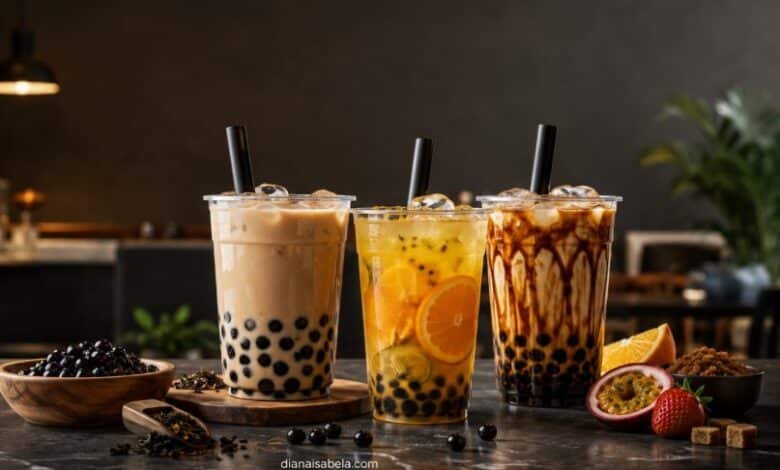
Searching for bubble tea near me should help you find more than the closest cup with tapioca pearls. A genuinely useful search should lead you to a shop that brews recognizable tea, serves fresh toppings, explains its milk options and lets you control sweetness without turning the ordering screen into a chemistry exam.
Bubble tea can be a clean jasmine tea with aloe, a classic black milk tea with chewy tapioca, a bright passion fruit drink, a brown sugar fresh-milk dessert or a blended taro drink. These are not interchangeable experiences. The right order depends on whether you want to taste tea, fruit, creaminess, texture or pure dessert.
Diana’s first rule: do not begin by adding three toppings to the sweetest drink on the menu. Choose the base first, then decide what texture would actually improve it.
This Diana Isabela guide explains how to find a better boba shop, read a bubble tea menu, understand sugar and ice levels, compare common toppings, estimate the price and build an order that tastes balanced rather than randomly overloaded.
Guide reviewed: August 5, 2026. Menus, prices, toppings and store availability can differ by location and change after publication.
How to Find Better Bubble Tea Near You
The closest bubble tea shop is not automatically the best choice, but you also do not need to drive an hour for every drink. Start with a map search, then narrow the results by menu clarity, tea selection, topping variety and recent customer photos.
Bubble tea is no longer just a sweet drink—it is a whole world of flavors, textures and tiny café decisions. Explore Boba.guide for guides to drinks, toppings, recipes and finding your next favorite order.
Search bubble tea near me for the broadest local results.
Search boba near me because many American shops use “boba” more prominently than “bubble tea.”
Search Taiwanese tea near me when you want a shop with a stronger tea focus.
Search milk tea near me for classic black, jasmine, oolong or roasted milk teas.
Search fruit tea near me when you want a lighter, brighter drink.
Search brown sugar boba near me when the goal is a rich fresh-milk dessert.
Search bubble tea open now only after checking whether the kitchen is still serving fresh pearls near closing time.
Use official store finders when a chain is nearby
Major chains maintain location directories that are generally more reliable than an old roundup or social-media post. Location pages can also show whether online ordering is available.
Do not judge a shop only by the number of flavors
A menu with 120 drinks can be exciting, but it can also hide the fact that many items use the same powders and syrups. A smaller shop with four well-brewed tea bases, fresh pearls and several thoughtful fruit drinks may deliver a much better cup.
Check the exact location
Franchised locations can differ in seasonal drinks, non-dairy milk, toppings, cup sizes and prices. Open the page for the branch you plan to visit rather than relying only on a chain’s national menu.
The Two-Minute Boba Shop Check
Before ordering, look for six signs that the shop takes tea and toppings seriously.
1. The menu identifies the tea base.
“Black milk tea,” “jasmine green tea” and “roasted oolong” tell you more than a vague label such as “special milk drink.”
2. Sweetness can be adjusted.
A good ordering system usually offers several levels, although signature drinks with fixed syrups may be less customizable.
3. Staff can explain the milk.
Milk tea may contain fresh dairy milk, a non-dairy creamer, condensed milk or a plant-based alternative. These ingredients do not taste or behave the same way.
4. Tapioca looks glossy and moves easily.
Pearls that appear dry, clumped or cracked may have been sitting too long.
5. The topping list is specific.
Tapioca, crystal boba, herbal jelly, pudding, aloe and popping boba should not all be treated as versions of the same thing.
6. Recent photos match the current menu.
Look for current cups, topping portions and drink colors rather than relying on an image posted several years ago.
A good boba shop should make customization feel useful, not necessary to rescue a badly designed drink.
Build Your First Bubble Tea in Five Decisions
Bubble tea becomes much easier when you stop reading the menu as a wall of names and treat it as five separate choices.
1. Choose the drink family
Milk tea: creamy, tea-based and the most classic starting point.
Fruit tea: refreshing, bright and usually lighter than milk tea.
Tea latte: brewed tea combined with fresh milk or a milk alternative.
Fresh milk drink: often built around brown sugar, taro or another flavor rather than a strong tea base.
Slush or ice blend: cold, thick and closer to a frozen dessert.
Milk foam tea: brewed tea topped with a creamy, lightly salty foam.
2. Choose the base
Black tea is robust. Jasmine green tea is floral and lighter. Oolong sits between green and black tea and may taste roasted, floral or creamy. A fruit drink may use tea, juice, jam, syrup or a combination.
3. Choose sweetness
For a first order, 50% sugar is a practical starting point for classic milk tea. Choose 30% for fruit tea when the fruit component is already sweet. Signature brown sugar drinks may not need additional sweetness at all.
4. Choose ice
Regular ice keeps the drink cold and may be part of the recipe’s balance. Less ice gives you a slightly less diluted drink. No ice can change the final volume, temperature and flavor, depending on how the shop prepares it.
5. Choose one topping
Tapioca pearls are the classic option. Aloe suits fruit tea. Herbal jelly works well with tea-forward or roasted drinks. Pudding makes milk tea feel more dessert-like. One topping is enough to understand what it contributes.
A dependable first order: black milk tea, tapioca pearls, 50% sugar and regular ice.
How Much Does Bubble Tea Usually Cost?
A standard bubble tea in the United States commonly falls around $5–$8 before delivery fees. City, cup size, chain, premium fruit, fresh milk, seasonal ingredients and toppings can push the total higher.
Basic brewed tea: often the least expensive category.
Classic milk tea: usually sits in the middle of the menu.
Fresh-fruit tea: may cost more when real fruit is used.
Brown sugar fresh milk: often priced as a specialty or signature drink.
Slushes and layered drinks: may cost more because of additional ingredients.
Toppings: commonly add an extra charge per selection.
Delivery: may include menu markup, service fees, delivery fees and tip.
When does a $9–$11 bubble tea make sense?
A higher price is easier to justify when the drink includes fresh fruit, high-quality tea, house-made toppings, fresh milk, a larger size or a carefully built specialty recipe. A high price is less convincing when the drink is mostly powder, syrup and ice.
The cheapest order is not always the best value
A plain brewed tea that tastes clean and aromatic can be more satisfying than a heavily customized milk drink. Conversely, paying extra for two toppings you do not enjoy does not improve value simply because the cup contains more ingredients.
Diana’s price rule: pay for a better base before paying for more toppings.
Milk Tea, Fruit Tea, Fresh Milk or Slush?
Classic milk tea
Classic milk tea combines brewed tea with milk, creamer or another creamy ingredient. Black milk tea is the most familiar version, but jasmine, oolong and roasted teas can also be used.
Choose it when: you want a balanced introduction to tea, creaminess and tapioca.
Fruit tea
Fruit tea usually combines tea with fruit juice, jam, purée, syrup or fresh fruit. The quality can range from genuinely refreshing to aggressively sweet.
Choose it when: you want something lighter, more acidic and less creamy.
Tea latte
A tea latte usually places greater emphasis on the brewed tea and fresh milk. It may taste cleaner and less dessert-like than conventional milk tea made with creamer.
Choose it when: you care about the tea and want a familiar milk texture.
Brown sugar fresh milk
Brown sugar fresh milk often contains milk, warm or freshly cooked pearls, brown sugar syrup and sometimes cream foam. It may contain little tea or no tea, depending on the recipe.
Choose it when: you want a rich dessert drink rather than a tea-forward cup.
Milk foam tea
Milk foam adds a creamy, lightly salty top layer to brewed tea. Some people sip through the foam; others mix it into the drink.
Choose it when: you want tea flavor with a creamy finish but not a full milk tea.
Slush or ice-blended drink
A slush is frozen and thick. Taro, mango, matcha, coffee and fruit flavors are common.
Choose it when: texture and cold sweetness matter more than tasting a delicate tea base.
Which Tea Base Should You Choose?
Black tea
Black tea is bold enough to remain noticeable after milk, sugar and tapioca are added. It is the safest base for a classic milk tea.
Jasmine green tea
Jasmine green tea is floral, fresh and lighter. It pairs particularly well with citrus, peach, lychee, mango and aloe.
Oolong tea
Oolong can taste floral, roasted, creamy or mineral depending on its style. It is a strong choice for diners who want more tea character without the full strength of black tea.
Roasted tea
Roasted oolong or roasted milk tea can offer toasted, nutty and caramel-like notes. Herbal jelly and pudding often work well with these flavors.
Earl Grey
Earl Grey brings bergamot citrus aroma. It can make milk tea feel more perfumed and elegant, but it may conflict with strong tropical toppings.
Matcha
Matcha is powdered green tea rather than a brewed leaf infusion. Its grassy bitterness works best when the sweetness is controlled.
Tea-free bases
Some taro, chocolate, yogurt, fruit, milk and slush drinks contain no tea. Others use tea even when the name does not make that obvious. Ask when caffeine matters.
How to Choose the Right Sugar Level
Sugar percentages are not standardized between shops. A 50% drink at one chain can taste sweeter than a 70% drink elsewhere.
0% sugar
Choose 0% when the drink contains sweetened fruit jam, brown sugar syrup, pudding, popping boba or another ingredient that already supplies sweetness. Zero added sugar does not always mean the finished drink contains no sugar.
30% sugar
Thirty percent works well for jasmine fruit teas, tea lattes and drinks where you want the tea to remain clear.
50% sugar
Fifty percent is the most useful first-order level. It usually keeps milk tea pleasant without making the cup taste like liquid candy.
70% sugar
Seventy percent may suit strong black tea, tart fruit or customers accustomed to standard chain sweetness.
100% sugar
Full sugar is designed around the shop’s standard recipe, but it can become overwhelming when combined with sweet pearls, pudding or syrup-heavy fruit flavors.
When the topping is sweet, the drink usually needs less added sugar—not more.
Best starting levels by drink
Black milk tea: 50%.
Jasmine fruit tea: 30–50%.
Brown sugar fresh milk: fixed sweetness or 0% additional sugar.
Taro milk tea: 30–50%, depending on whether powder or sweetened taro is used.
Matcha latte: 30–50% to soften bitterness without hiding it.
Passion fruit tea: 30–50% depending on acidity.
Milk foam tea: 30% or less when the foam is already seasoned and rich.
Regular Ice, Less Ice or No Ice?
Regular ice
Regular ice gives the drink the temperature and dilution the recipe was probably designed around. It is a good choice when you will drink the cup immediately.
Less ice
Less ice is useful for slow drinkers or delivery. The drink stays less diluted, though it may warm faster.
No ice
No ice does not always mean the shop fills the entire missing space with more tea. Some shops use a fixed recipe volume, while others add more base.
Hot bubble tea
Some milk teas can be served hot. Tapioca pearls soften in heat, and cold jellies may not suit the experience. Check which toppings are available for hot drinks.
Why ice changes sweetness
A drink tasted immediately may seem sweeter before the ice melts. As dilution increases, sweetness softens. Choosing no ice can make an already sweet recipe taste more concentrated.
Bubble Tea Toppings Explained
Tapioca pearls
Traditional boba pearls are made primarily from tapioca starch. They should be chewy, soft through the center and separate from one another.
Best with: black milk tea, roasted milk tea, brown sugar milk and taro.
Crystal boba
Crystal boba is usually more translucent, lighter and less chewy than tapioca. Ingredients vary by brand and shop.
Best with: fruit tea, jasmine tea and lighter milk teas.
Popping boba
Popping boba contains liquid that bursts when bitten. It is very different from chewy tapioca.
Best with: fruit tea and slushes.
Grass or herbal jelly
Herbal jelly has a soft, slippery texture and a mild herbal bitterness.
Best with: roasted tea, milk tea, coffee and less-sweet drinks.
Pudding
Bubble tea pudding is usually soft, custardy and sweet.
Best with: black milk tea, taro, caramel, coffee and roasted tea.
Aloe jelly
Aloe is light, juicy and slightly crisp.
Best with: jasmine, citrus, mango, lychee and passion fruit teas.
Nata de coco
Nata jelly has a firmer, bouncy chew and a mild coconut character.
Best with: tropical fruit drinks and slushes.
Red bean
Sweetened red bean is dense, soft and earthy.
Best with: matcha, taro, milk tea and dessert-style drinks.
Cheese or milk foam
Foam contributes creaminess, salt and richness rather than chew.
Best with: plain tea, fruit tea and tea-forward drinks.
Can you combine toppings?
Yes, but two toppings should have a reason to coexist. Pearls and pudding create a rich dessert texture. Aloe and crystal boba keep fruit tea light. Tapioca, pudding, jelly and foam together usually make the drink harder to taste and drink.
Diana’s topping limit: one topping for a first order, two only when they create a clear contrast.
How the Major Bubble Tea Chains Differ
Gong cha
Best for: tea customization, milk foam and a broad topping selection.
Menu direction: brewed teas, milk teas, fruit drinks, smoothies and specialty drinks.
Useful feature: sweetness, toppings and serving temperature can be adjusted for many orders.
Order idea: oolong tea with milk foam, 30% sugar and no additional topping.
Gong cha is a useful starting point when you want to understand how one tea changes with milk foam, pearls or reduced sweetness.
Kung Fu Tea
Best for: a very broad menu, slushes, punches, milk caps and topping experimentation.
Menu direction: milk tea, fruit-based punches, slushes, milk-cap drinks and seasonal items.
Useful feature: published nutritional and dietary information.
Order idea: classic Kung Fu milk tea with bubbles, 50% sugar and less ice.
Kung Fu Tea can feel overwhelming because the menu is large. New customers should choose the category first rather than scrolling through every named drink.
Sharetea
Best for: clear menu categories and a balance of classic, fruity, blended and caffeine-free options.
Menu direction: brewed tea, milk tea, fruit tea, matcha, ice blends and non-caffeinated drinks.
Useful feature: customers can begin with a category that matches the experience they want.
Order idea: jasmine green tea with fruit, aloe and 30% sugar.
Sharetea is practical for groups because one person can choose classic milk tea while another orders fruit tea or a non-caffeinated drink.
Tiger Sugar
Best for: brown sugar boba, fresh milk and visually layered dessert drinks.
Menu direction: black sugar milk series and related specialties.
Useful feature: a focused identity rather than a generic version of every boba category.
Order idea: signature black sugar boba milk with cream mousse, without an additional topping.
Tiger Sugar is not the best first stop when you want to study delicate tea bases. It is a better choice when you specifically want a rich brown sugar and milk experience.
The Alley
Best for: brown sugar drinks, tea-focused branding and polished specialty beverages.
Useful feature: the brand emphasizes its own sugar-cane syrup and carefully designed drinks.
Order idea: a tea-forward latte or brown sugar specialty with no extra topping.
When an Independent Boba Shop Is the Better Choice
An independent shop can outperform a major chain when it has a clear point of view. The strongest local stores often focus on one or more of these strengths:
single-origin or carefully selected teas;
tea brewed in small batches;
fresh seasonal fruit;
house-made taro, pudding or jelly;
pearls cooked repeatedly throughout the day;
unusual Taiwanese or regional flavors;
better control over dairy and plant-based milk;
a concise menu that staff can explain confidently.
Questions worth asking
“Which tea base is used in this drink?”
“Is the taro made from fresh taro or powder?”
“Are the pearls sweetened already?”
“Which fruit drinks contain tea?”
“Which drinks can be made with fresh milk or oat milk?”
“When was the current batch of boba cooked?”
Staff should not need to reveal a secret recipe, but they should be able to explain the basic structure of the drink.
Bubble Tea Orders for Different Tastes
For a classic first experience
Black milk tea + tapioca pearls + 50% sugar + regular ice.
For someone who finds milk tea too heavy
Jasmine green fruit tea + aloe + 30% sugar + regular ice.
For a tea lover
Roasted oolong tea + milk foam + 30% sugar + no chewy topping.
For a dessert mood
Brown sugar fresh milk + tapioca pearls + cream foam + no extra sugar.
For a taro beginner
Taro milk tea + 30–50% sugar + pudding or no topping.
For a tropical fruit mood
Passion fruit green tea + nata jelly + 30% sugar + regular ice.
For someone who dislikes tapioca
Peach oolong tea + aloe or crystal boba + 30% sugar.
For a less-sweet creamy drink
Jasmine tea latte + fresh milk or oat milk + 30% sugar + less ice.
For a caffeine-conscious order
Choose a drink from the shop’s confirmed non-caffeinated category and ask whether the base contains tea, matcha or coffee.
Which Bubble Tea Drinks Survive Delivery Best?
Bubble tea is best shortly after preparation, but some drinks travel better than others.
Best delivery choices
milk tea with less ice;
plain brewed tea;
fruit tea without fresh foam;
drinks with jelly or aloe;
sealed cups with toppings packed separately, when available.
More difficult delivery choices
brown sugar milk with warm pearls;
milk-foam drinks that should remain layered;
slushes that melt quickly;
drinks with standard ice traveling long distances;
tapioca pearls in a delivery taking more than a short trip.
Why tapioca becomes hard
Tapioca texture changes as the pearls cool and sit in liquid. A pearl that was soft and chewy at the shop may become firmer during a long delivery.
Best delivery modification
Choose less ice, limit the order to one durable topping and avoid a distant shop unless the drink is worth the travel time.
Caffeine, Dairy, Vegan Options and Allergens
Does bubble tea contain caffeine?
Bubble tea made with black, green, jasmine, oolong or matcha generally contains caffeine. The exact amount depends on the tea, brewing strength and serving size.
Fruit tea can also contain caffeine when it uses a brewed-tea base.
Which bubble tea is caffeine-free?
Some fruit drinks, fresh-milk drinks, yogurt beverages, chocolate drinks and taro drinks may be caffeine-free, but the name alone is not enough. Use a shop’s confirmed non-caffeinated menu or ask staff.
Does milk tea contain dairy?
It may. Some shops use fresh milk, some use dairy-based ingredients, and others use non-dairy creamer that may still contain milk-derived components.
Can bubble tea be vegan?
Many brewed teas and fruit teas can be vegan, but toppings, creamers, pudding, foam, honey and flavored mixes vary.
Ask whether the creamer contains milk derivatives.
Ask whether pudding contains dairy or egg.
Ask whether jelly contains gelatin.
Ask whether honey is part of the standard recipe.
Ask whether plant-based milk is available.
Is tapioca vegan?
Plain tapioca starch is plant-based, but the syrup, flavoring and preparation can differ. Confirm when strict vegan requirements matter.
Is bubble tea gluten-free?
Many tea, milk and tapioca combinations may not contain obvious gluten ingredients, but powders, cookies, flavored toppings and shared equipment can introduce gluten.
Common allergen concerns
milk and milk-derived ingredients;
soy in creamers or mixes;
tree nuts in nut milks or specialty toppings;
egg or dairy in pudding;
gluten in cookie toppings or flavored powders;
gelatin in some jellies;
cross-contact from shared scoops and equipment.
Allergy rule: never rely only on the words “non-dairy,” “vegan-style” or “fruit tea.” Ask about the exact drink and topping.
Bubble Tea Calories and Hidden Sweetness
There is no reliable single calorie number for bubble tea. Cup size, tea, milk, creamer, syrup and toppings can transform a light brewed tea into a substantial dessert.
What adds the most
tapioca pearls;
brown sugar syrup;
sweetened pudding;
milk or cream foam;
sweetened fruit jam;
popping boba;
cookie crumbs;
large cup sizes;
multiple toppings.
Published Kung Fu Tea nutritional information illustrates how dramatically toppings can change an order: its standard bubbles are listed as adding approximately 199–298 calories depending on serving configuration, while pudding, jellies, red bean and milk cap each add their own amount.
A lighter bubble tea order
choose brewed tea or fruit tea;
set sweetness to 0–30%;
choose aloe, chia or no topping;
skip milk foam;
avoid brown sugar syrup;
select the smaller size;
check whether the fruit ingredient is already sweetened.
A dessert order can still be intentional
There is nothing wrong with choosing brown sugar milk, pudding or pearls when you want dessert. The problem is treating every drink as a light tea while stacking several dessert components into one cup.
How to Recognize Good Bubble Tea
The tea remains visible in the flavor
In a tea-based drink, you should taste black tea, jasmine, oolong or matcha rather than only sugar and creamer.
The pearls are chewy through the center
Fresh tapioca should not be hard in the middle, mushy outside or stuck into one clump.
The sweetness supports the base
Fruit should taste bright, not like candy syrup. Milk tea should taste creamy, not flat and sugary.
The drink is properly mixed
Powder should not collect at the bottom. Fruit purée and milk should not form unpleasant clumps unless the drink is intentionally layered and meant to be shaken.
The topping matches the drink
Good menu design creates combinations where texture and flavor make sense.
The shop can describe its ingredients
Staff should know whether a drink contains tea, dairy, creamer, fresh fruit or powder.
Customization improves the drink
Reducing sweetness should reveal more tea or fruit character, not expose an empty, watery base.
The last sip is still enjoyable
A balanced cup should not finish as a pile of syrup, melted ice and five toppings that cannot pass through the straw.
A Note From Diana
Bubble tea is often presented as a cute drink built for photos, but the best cup is really an exercise in editing.
The menu gives you tea, fruit, milk, sugar, ice, foam, jelly, pudding and pearls. You do not need to use everything simply because it is available.
I like to decide what the drink is supposed to be before I customize it. If I want to taste jasmine, I keep the sugar low and choose aloe or no topping. If I want dessert, I order brown sugar milk with pearls and stop there. If I want something refreshing, I choose fruit tea and avoid adding pudding just because the ordering screen suggests it.
The smartest first bubble tea order is not the most creative one. It is the one that teaches you what each part contributes.
Choose one base, one mood and one texture. Let the drink taste like an idea—not an accident.
Bubble Tea Near Me: The Practical Summary
Best first drink: black milk tea with tapioca, 50% sugar and regular ice.
Best lighter drink: jasmine fruit tea with aloe and 30% sugar.
Best dessert drink: brown sugar fresh milk with pearls and no extra topping.
Typical U.S. price: approximately $5–$8 before delivery fees and premium add-ons.
Best topping rule: begin with one topping.
Best sugar rule: reduce added sugar when the drink already contains syrup, jam, pudding or sweet pearls.
Best delivery rule: choose less ice and avoid long travel times for warm tapioca.
Best shop signal: clear tea bases, fresh toppings and staff who can explain the ingredients.
Best local-search method: compare official menus and the exact branch before ordering.
Where can I find good bubble tea near me?
Search both bubble tea near me and boba near me, then compare the shop’s current menu, tea bases, sweetness controls, toppings and recent customer photos. Use an official store locator when choosing a national chain.
What is the best bubble tea for a beginner?
A classic black milk tea with tapioca pearls, 50% sugar and regular ice is a dependable first order because it shows the balance between tea, creaminess, sweetness and chewy boba.
How much does bubble tea usually cost?
A standard bubble tea in the United States commonly costs about $5 to $8 before delivery fees. Premium fruit, fresh milk, large sizes, specialty recipes and extra toppings may increase the price.
What is the difference between boba and bubble tea?
In common American usage, boba and bubble tea often refer to the same drink category. Boba can also refer specifically to the chewy tapioca pearls added to the drink.
What sugar level should I choose for bubble tea?
Fifty percent is a practical starting point for classic milk tea. Thirty percent often works well for fruit tea or tea lattes. Brown sugar drinks and sweetened toppings may require no additional sugar.
Does bubble tea contain caffeine?
Bubble tea made with black, green, jasmine, oolong or matcha generally contains caffeine. Some fresh-milk, fruit and specialty drinks may be caffeine-free, but the exact base should be confirmed with the shop.
Is bubble tea vegan?
Some brewed teas and fruit teas can be vegan, but creamers, fresh milk, pudding, foam, honey and jellies vary. Ask about the exact milk, sweetener and topping ingredients before ordering.
Why do boba pearls become hard during delivery?
Tapioca pearls change texture as they cool and sit in liquid. A long delivery can turn soft, warm pearls firmer and less chewy, so bubble tea is usually best enjoyed shortly after preparation.
Which bubble tea topping should I try first?
Tapioca pearls are the classic first topping. Aloe works well with fruit tea, herbal jelly complements roasted tea, and pudding makes milk tea more dessert-like.
Can zero-sugar bubble tea still contain sugar?
Yes. Zero percent usually refers to adjustable added sweetener. Fruit jam, brown sugar syrup, sweetened pearls, pudding, popping boba and flavored mixes may still contain sugar.