Russian Kotleti in Massachusetts: From Newton’s Pozharsky Cutlet to Boston Deli Counters
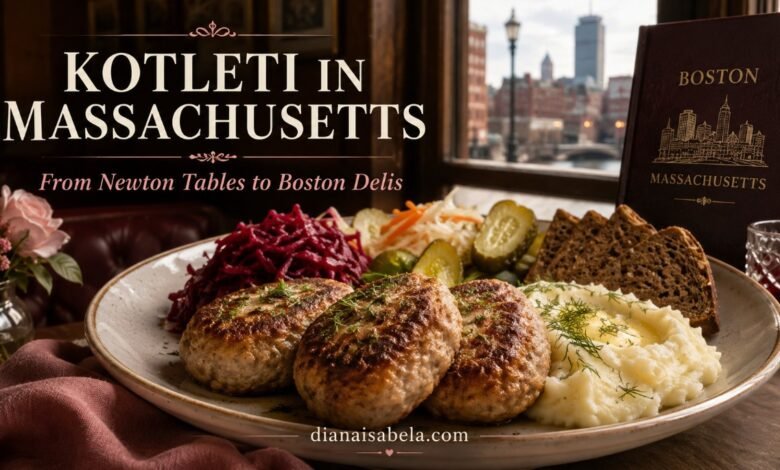
Massachusetts is a surprisingly good place to learn why the word cutlet can either solve dinner or completely mislead you. In Newton Centre, a Russian and Eastern European restaurant serves hand-chopped chicken as a Pozharsky cutlet. In South Boston, a Polish deli keeps homemade chicken cutlets hot behind the counter. Farther west, a Chicopee deli describes its chicken cutlet very clearly as a breaded chicken breast.
All three belong in a conversation about Eastern European comfort food. Only some belong in the same technical family as Russian kotleti.
That difference is more interesting to me than pretending Massachusetts has dozens of exact Russian kotleti restaurants when it does not. The useful guide is the one that tells you where the strongest match is, where a deli is worth checking, and where the word “cutlet” means something entirely different.
My father is a chef, so I grew up learning that the construction of food matters more than the name printed above it. A whole chicken breast, a hand-chopped chicken mixture and a finely ground patty can all become “cutlets” in English, yet the fork encounters three different dishes.
For the tender, formed-meat feeling people usually mean when they search for Russian kotleti, Newton is the most interesting Massachusetts starting point. Boston gives you the deli-counter version of the hunt. Chicopee gives you an excellent lesson in what not to confuse with kotleti.
If you only remember one thing: ask whether the meat was ground or chopped before the cutlet was shaped. That question is much more useful than trusting the English word “cutlet.”
Newton Centre
The Massachusetts cutlet I would travel for is the one called Pozharsky
Cafe St. Petersburg gives us the strongest current restaurant answer in Massachusetts because its menu does not merely say “chicken cutlet.” It identifies a Pozharsky Cutlet made from hand-chopped chicken, topped with crispy breadcrumbs and served with mashed potatoes.
That word hand-chopped matters. We are not dealing with an intact chicken breast pounded thin and breaded. The meat has already been broken down before the cutlet is formed, putting the dish much closer to the texture and construction people expect from Russian chicken kotleti.
NEWTON CENTRE · RUSSIAN / EASTERN EUROPEAN RESTAURANT
Cafe St. Petersburg
The Massachusetts restaurant stop where technique makes the connection to kotleti much stronger than the English menu name alone.
My order: Pozharsky cutlet, then something pickled or fresh rather than another soft, creamy side. The restaurant’s house-pickled vegetables make far more sense to me than building an entire dinner in shades of mashed potato.
The menu around the cutlet is useful too. There is borscht with beef and cabbage, Olivier, handmade pelmeni filled with veal and pork, vareniki with potatoes and mushrooms, golubtsy, buckwheat, roasted potatoes and syrniki.
This is where restraint becomes useful. If the main course already includes chicken, breadcrumbs and mashed potatoes, I would not begin with pelmeni and then add vareniki because both sounded charming. A good menu is permission to choose, not an instruction to complete the collection.
I would go sharper at the beginning: house-pickled cucumbers, cabbage and tomatoes, or perhaps a fresh salad. Then the Pozharsky cutlet has room to be rich without the entire table feeling upholstered.
The technical story
Pozharsky is the elegant cousin who proves chicken does not have to be boring
There is something wonderfully confident about taking inexpensive poultry and making texture the luxury.
A good Pozharsky-style cutlet is not impressive because the ingredient list reads like a jewelry inventory. It is impressive because the chicken stays delicate. The cook has to manage moisture, binding, browning and handling carefully enough that the final cutlet holds together while remaining soft inside.
That makes it spiritually very close to good kotleti. The dishes are not interchangeable terms, but they share one of the same central pleasures: formed chicken whose texture has been deliberately softened rather than left as an intact muscle.
Simple food becomes luxurious when the cook understands exactly which part should stay simple.
Bread is a good example. In discussions of kotleti, people sometimes reduce bread to an economical filler. Of course thrift matters historically; household cooking has never existed outside household budgets. But hydrated bread can also help retain moisture and soften a minced-meat mixture.
That is technique, not embarrassment.
Many traditional home kitchens understood this long before anyone needed terms like protein structure or moisture retention. Somebody cooked one batch, noticed which patties remained tender, and repeated the thing that worked. A grandmother does not have to say “food science” for food science to occur in her frying pan.
Butter and dairy can serve similar purposes in richer poultry cutlets. Chicken—especially lean chicken—does not bring the natural insurance policy of a fatty pork mixture. The recipe therefore has to build tenderness deliberately.
And then the cook has to know when to stop.
South Boston
Boston changes the assignment: now we are shopping for dinner
Baltic European Deli is useful for a completely different reason. This is not the restaurant version of the search. It is an Eastern European grocery-and-deli stop where prepared food, bakery items, deli meats, frozen foods and everyday shopping all live together.
The business currently lists a homemade Chicken Cutlet served hot. Its public information does not give me enough detail to claim that this particular cutlet is ground chicken in the Russian-kotleti sense, so I would not tell you that it is an exact match.
I would tell you to ask.
SOUTH BOSTON · POLISH & EASTERN EUROPEAN DELI
Baltic European Deli
A prepared-food and grocery stop where the cutlet question can be answered at the counter instead of guessed from a photograph.
Ask this: “Is the chicken cutlet made from ground chicken, or is it a whole chicken breast?”
I like this kind of stop because even an unsuccessful exact-kotleti search does not leave you with a tragic dinner. You are already standing inside a Polish and Eastern European food shop. The contingency plan is pierogi, stuffed cabbage, kielbasa, bread, soup, pickles or whatever looks best that day.
This is one of the advantages delis have over restaurant searches. A restaurant menu can answer yes or no. A good deli can answer, “No, but look at this.”
And sometimes “look at this” is how dinner improves.
The South Boston basket
I have one rule for deli counters: choose a dinner before the deli chooses one for you
A prepared-food counter removes the inconvenient little pause between wanting something and owning it. Every salad is already made. Every dumpling looks useful. There is bread. There is sausage. There is probably cake.
This is dangerous.
Find the cutlet first
Ask whether it is ground or whole meat and whether it was made that day. That determines what the rest of the dinner needs.
Pick one starch
Potatoes, bread or pierogi. I know all three have made compelling presentations. Dinner still only needs one lead starch.
Introduce acidity
Pickles, sauerkraut, cabbage or beets keep a rich cutlet from becoming the beginning of a very long nap.
Buy tomorrow strategically
A frozen or prepared item for another meal makes the grocery trip useful beyond the immediate craving.
Then choose the treat
Pastry, cake, chocolate, preserves—whatever looks genuinely worth it. Pleasure is allowed; logistical chaos is optional.
The balancing principle is simple. If the cutlet is rich and the starch is soft, make the vegetable sharper. If the cutlet itself is lean and crisp, a creamier side has more room.
This is not about making Eastern European comfort food “lighter.” I dislike that reflex. It is about making rich food taste more distinctly rich because something else on the plate has acid, freshness or crunch.
Contrast is not punishment. Contrast is why the next bite still tastes exciting.
Chicopee
Bernat’s gives us the most useful “no” in this entire guide
Sometimes the best evidence in local food research tells you that a place does not have the thing you thought it might.
Bernat’s Polish Deli & Bakery is wonderfully clear. Its product list describes the Chicken Cutlet as breaded chicken breast and the Pork Cutlet as breaded pork.
That means I would absolutely consider Bernat’s for Polish deli food and breaded cutlets. I would not send you there claiming those dishes are Russian-style minced kotleti.
CHICOPEE · POLISH DELI
Bernat’s Polish Deli & Bakery
The place in this guide that helps us draw the line cleanly between minced kotleti and whole-meat breaded cutlets.
This is an important distinction because breadcrumbs appear in both food families. A minced chicken kotleta can have breadcrumbs in or around the mixture. A whole chicken cutlet can be coated in breadcrumbs too.
The crumb is not the deciding factor.
The deciding question is what happened to the meat before the cutlet took shape.
At Bernat’s, the chicken starts as a chicken breast. The muscle structure remains intact. When you cut into it, you see fibers of chicken meat.
With kotleti or a Pozharsky-style cutlet, the chicken has been chopped or ground first. The kitchen then builds a new texture from that mixture.
Same English noun. Completely different engineering.
The Massachusetts cutlet decoder
Three dishes can share one English word without sharing a texture
KOTLETI
Ground or finely chopped first
The meat becomes a seasoned mixture before shaping. The finished patty is tender, cohesive and softer than an intact piece of meat.
This is the family your Russian-kotleti craving is usually asking for.
POZHARSKY
Chicken with texture as the luxury
Finely chopped or minced poultry is formed into a particularly tender cutlet, often enriched so the center remains soft and juicy.
Cafe St. Petersburg is the strongest Massachusetts example in this guide.
WHOLE-MEAT CUTLET
The chicken breast stays a chicken breast
An intact breast, pork chop or similar cut is breaded and cooked. The crust surrounds whole muscle rather than a formed meat mixture.
Bernat’s current chicken and pork descriptions fall here.
You do not have to memorize Eastern European culinary vocabulary before dinner. Just remember:
“Was this made from ground or chopped meat?”
If yes, you are probably close to the texture you want.
If no, you have found another kind of cutlet. It may still be delicious. It simply deserves its own name in your expectations.
What the fork should tell you
Great chicken kotleti feel tender because somebody knew when to stop touching the meat
Chicken is not difficult because it lacks flavor. Chicken is difficult because lean ground poultry gives the cook relatively little room to mistreat it.
Mixing is one of the first places things go wrong. Once ground or chopped chicken, seasoning and whatever softening ingredients the recipe uses have come together evenly, aggressive extra mixing can begin building a tighter structure.
That may be useful when you want a springy sausage texture.
It is considerably less charming when the goal is a delicate kotleta.
Mix enough, not endlessly
The mixture needs to hold together. It does not need to pass a structural-engineering inspection.
Give lean poultry some help
Onion, hydrated bread, dairy or butter can contribute to a softer result depending on the recipe.
Brown the outside properly
The exterior should develop savory color while the center stays juicy. Pale steaming is not the same experience.
Do not cook from fear
Leaving lean chicken in the pan indefinitely “to be safe” eventually produces safety from pleasure too.
The ideal formed chicken cutlet holds together when lifted but yields easily once you eat it. That balance is what makes a good version feel almost luxurious despite very ordinary ingredients.
And this is where the Pozharsky tradition becomes such a useful reference point. It treats tenderness as something worthy of attention rather than an accidental side effect.
Three Massachusetts dinners
I would not serve Newton, Boston and Chicopee the same plate
One of the mistakes people make with traditional comfort food is confusing abundance with lack of editing.
A generous table can still have rhythm.
If there are potatoes, pierogi, bread, potato salad and another creamy salad beside one cutlet, none of those foods has done anything wrong individually. They have simply all applied for the same position.
Give the plate some contrast and suddenly everything becomes more noticeable.
New England makes this easy
Massachusetts weather understands Eastern European comfort food without a mood board
There are cuisines food writers work very hard to make look “cozy.” Massachusetts in January does most of the work for us.
Borscht, mashed potatoes, browned chicken and pickled vegetables make obvious sense when daylight disappears early and Boston has spent the afternoon throwing cold rain sideways.
But I would not eat the exact same supporting plate throughout the year.
Pozharsky cutlet, mashed potatoes, pickled vegetables and perhaps borscht first. This is not the month for pretending dinner should be aspirationally cold.
Keep the chicken but bring in radish, cucumber, cabbage and more herbs. The center can stay comforting while the edges get fresher.
A cutlet with tomato-cucumber salad, pickles and bread feels much better than recreating a February plate in July because tradition apparently outlawed weather.
Buckwheat, mushrooms and browned poultry have almost suspiciously good chemistry with New England fall.
The dish does not have to change identity every season. The supporting cast can simply acknowledge the temperature outside.
And yes, the outfit changes too
Newton is a dinner outfit; the South Boston deli is a good-shoes outfit
For Cafe St. Petersburg, I would wear something polished enough to make the evening feel planned: tailored trousers or dark denim, a fine knit or silk blouse, boots, a structured coat, earrings. Elegant, not ceremonial.
The cutlet itself has similar energy. Familiar chicken, but with noticeably better tailoring.
The deli requires different intelligence. Flat boots or sneakers. Coat you can move in. Crossbody or another bag that leaves your hands available. You may leave carrying bread, jars, frozen food and a container you promised yourself you would not open until home.
A tiny handbag that accommodates one lipstick and a sense of superiority is not useful here.
I like clothes that understand where we are actually going.
Outside the strongest stops
Do not turn one chicken cutlet into a two-hour highway commitment
Massachusetts does not have the density of Russian prepared-food businesses that New York or New Jersey can offer. Once you move away from the strongest pockets, the better strategy is to change the search vocabulary before dramatically increasing the radius.
Try Pozharsky cutlet. Someone searching only the word kotleti could easily miss the most relevant Massachusetts restaurant dish.
Search Polish, Ukrainian and Eastern European delis. Prepared-food counters are much more promising for this kind of everyday dish than a generic restaurant search.
Ask whether the cutlet is made from ground meat. Massachusetts demonstrates perfectly why the word cutlet by itself is not enough.
Shop the surrounding meal. A good deli can still make the trip worthwhile through cabbage, beets, bread, pierogi, soup and freezer foods.
Then decide whether cooking wins. There is a distance at which a frying pan becomes the more sophisticated transportation plan.
For a wider location search, continue with my Russian kotleti near me guide. If Massachusetts is giving you better deli results than restaurant results, use the Russian deli guide next.
And if geography remains stubborn, the Russian kotleti recipe is where I would stop refreshing maps and start chopping onion.
What Massachusetts does particularly well
This state gives us a better cutlet lesson than a longer restaurant list would
The Massachusetts story is not “here are twelve places and perhaps one of them has kotleti.” That would be padding dressed as usefulness.
Instead, we have three genuinely different pieces of the puzzle.
Newton gives us hand-chopped chicken in the Pozharsky tradition—the strongest restaurant connection to the tender formed-meat texture people are usually seeking. South Boston gives us a Polish and Eastern European deli where homemade hot cutlets belong inside the much more everyday world of prepared food. Chicopee gives us explicitly whole-meat breaded cutlets and therefore an unusually clean comparison.
I would rather understand those three places properly than pretend all cutlets are interchangeable.
The distinction is visible on the plate and obvious on the fork. Chopped or ground chicken produces a formed interior. Whole chicken breast retains its fibers. Breadcrumbs can surround either one. Potatoes are very happy to meet both.
And perhaps that is the most Massachusetts thing about this guide: a relatively small food trail manages to become an unexpectedly good education.
Fortunately, the homework includes mashed potatoes.
Information reviewed: August 2026. Restaurant menus and prepared-food selections can change. If one exact cutlet is the only reason for a dedicated trip, call first.
Massachusetts questions
Russian Kotleti in Massachusetts FAQ
Where can I find Russian-style kotleti in Massachusetts?
Cafe St. Petersburg in Newton Centre is the strongest current restaurant match. Its menu lists a Pozharsky Cutlet made from hand-chopped chicken with crispy breadcrumbs and mashed potatoes. South Boston also has Eastern European deli counters worth checking for homemade cutlets.
Where can I eat a Pozharsky cutlet near Boston?
Cafe St. Petersburg at 57-1 Union Street in Newton Centre currently serves a Pozharsky Cutlet made from hand-chopped chicken, topped with crispy breadcrumbs and served with mashed potatoes.
Is a Pozharsky cutlet similar to Russian kotleti?
Yes. A Pozharsky cutlet is made from chopped or minced poultry rather than an intact chicken breast, so its tender formed texture is much closer to chicken kotleti than to a schnitzel-style cutlet.
Where can I buy Eastern European cutlets in Boston?
Baltic European Deli on Dorchester Avenue in South Boston currently lists a homemade hot Chicken Cutlet. Its public description does not specify whether the chicken is ground or whole, so ask the deli directly if you specifically want a minced kotleti-style cutlet.
Are the cutlets at Bernat’s Polish Deli Russian kotleti?
The current Bernat’s product list describes its Chicken Cutlet as breaded chicken breast and its Pork Cutlet as breaded pork. These are whole-meat breaded cutlets rather than Russian-style minced kotleti.
What is the easiest way to tell kotleti from a regular chicken cutlet?
Ask whether the meat was ground or chopped before the cutlet was shaped. Kotleti are formed from ground or finely chopped meat, while many breaded chicken cutlets begin with an intact chicken breast.
What should I eat with a Pozharsky cutlet?
Mashed potatoes are a natural comfort-food pairing. Add something acidic or fresh such as pickled cucumber, cabbage, beets or a cucumber-and-tomato salad so the plate has contrast.
Should I call a Massachusetts deli before driving for kotleti?
Yes. Prepared-food selections can change, and the word cutlet may describe either a minced patty or an intact breaded piece of meat. A quick call can confirm what is available and how the cutlet is made.
Can I find Polish cutlets in Western Massachusetts?
Bernat’s Polish Deli & Bakery in Chicopee lists chicken and pork cutlets among its prepared foods. Its current descriptions identify them as whole-meat breaded cutlets rather than Russian-style minced kotleti.
What should I search if there are no Russian kotleti near me in Massachusetts?
Try Pozharsky cutlet, Polish deli, Ukrainian market, Eastern European deli, ground chicken cutlet and prepared Eastern European food. If you find a generic chicken cutlet, ask whether it is made from ground chicken or a whole breast.