Outdoor Wedding Guest Dresses: What to Wear When the Venue Is Beautiful but Complicated

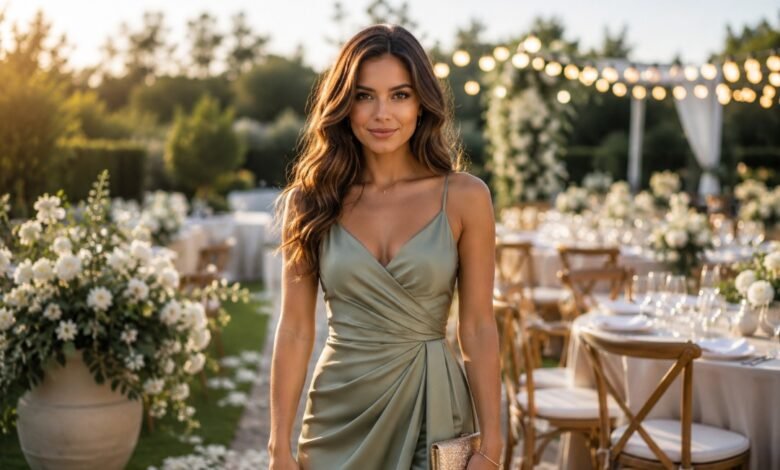
Outdoor weddings are romantic until the ground, weather, and wind start giving opinions.
Outdoor wedding guest dresses need more than prettiness. They need the right fabric, shoes that can handle real terrain, a hemline that behaves, and styling that works in sun, breeze, grass, gravel, sand, or sunset air. The goal is simple: look elegant without spending the whole wedding managing your outfit like a fragile houseplant.
Outdoor wedding style has to pass the “real life” test
An outdoor wedding usually looks effortless in photos: flowers, sunlight, maybe a vineyard view, maybe a garden path, maybe a beach ceremony with a breeze that looks poetic for exactly three seconds. But for guests, the venue is not just scenery. It changes everything about the outfit.
A ballroom dress can rely on smooth floors, air-conditioning, predictable lighting, and chairs that do not sink into the earth. Outdoor wedding guest dresses do not get that luxury. They need to work with terrain, temperature, movement, and light. That does not mean boring. It means choosing beauty with a brain.
Start with the ground, because the ground always wins
The venue surface is the quiet dictator of outdoor wedding style. Grass, sand, gravel, stone, decking, and terrace tile all ask for different shoes and different dress lengths. Ignore the ground and you may spend the ceremony sinking, slipping, dragging fabric, or doing that tiny embarrassed walk nobody wants in wedding photos.
Choose stable shoes and a hem that floats above trouble
Block heels, wedges, dressy flats, and low platforms work better than stilettos. Midi lengths are usually safer than floor-length dresses that collect grass.
Soft structure beats heavy formality
Beach ceremonies need easy movement, breathable fabrics, and shoes that make sense near sand. A polished sandal often looks better than a heel pretending the beach is marble.
Romance, but make it practical
Vineyards, barns, and countryside venues often mean gravel paths. Choose thicker heels, secure straps, and fabrics that will not snag easily.
Watch the slit and shoe grip
Courtyards, old estates, and terraces photograph beautifully but can be tricky. Avoid ultra-long hems and slippery soles.
Thin heels can betray you
Decking and plank floors are not always heel-friendly. A secure block heel, wedge, or refined platform keeps things elegant and stable.
Think wind, not just skyline
Terrace weddings need controlled fabric, stable shoes, and a layer for evening air. A dress that flies open in a breeze is not the drama we want.
The best outdoor wedding guest dresses have controlled movement
Movement is beautiful outdoors. Chaos is not. You want fabric that catches air softly, not fabric that reveals your entire inner life every time the wind changes direction.
Best fabrics for outdoor wedding guest dresses
Fabric decides how expensive the outfit looks and how well it survives the day. Outdoor weddings usually involve shifting light, movement, heat, air, and sometimes dust or damp grass. A fabric that wrinkles instantly or clings in heat can make a good dress feel harder than it needs to be.
The best fabrics look polished but not stiff. They move, breathe, hold shape, and photograph well in natural light. That is why crepe, chiffon with weight, satin that is not paper-thin, georgette, silk blends, and soft jacquard often work better than anything too heavy or too flimsy.
Fabric cheat sheet
Shoes for outdoor weddings: the unglamorous detail that saves the look
Outdoor wedding shoes need to be pretty, but they also need to function like they have a job. If your heel sinks into grass or catches in decking, the whole outfit becomes less elegant immediately. The best shoe is the one that lets you walk normally while still looking dressed.
Block heels
Best all-around choice for grass, gardens, vineyards, and terraces. They feel dressy without being fragile.
Wedges
Useful for lawns and beach-adjacent venues. Choose refined shapes, not heavy vacation wedges.
Dressy flats
Perfect when terrain is genuinely difficult. Pointed flats, embellished flats, or sleek ballet flats can look intentional.
Stable sandals
Great for summer, beach, and resort settings. Ankle straps help when the ceremony includes walking over uneven ground.
Match the outfit to the type of outdoor venue
“Outdoor wedding” can mean ten different things. A garden wedding is not a barn wedding. A beach wedding is not a vineyard dinner. A rooftop terrace is not a backyard lawn. The dress should understand the location instead of treating every outdoor setting like the same floral midi moment.
For a complete starting point across dress codes, seasons, and silhouettes, use the main wedding guest dresses guide. Then narrow the outfit by venue, ground, and weather.
Garden weddings
Soft color, romantic fabric, and grass-friendly shoes usually work best. If the venue is very floral, choose elegance over competing with the landscaping. More detail: garden wedding guest dresses.
Beach weddings
Breathable fabrics, secure sandals, and movement-friendly silhouettes matter most. Avoid heavy gowns and shoes that make no sense near sand. More detail: beach wedding guest dresses.
Barn and vineyard weddings
Think gravel, wood, country roads, and evening temperature drops. Romantic but practical is the sweet spot. Compare barn wedding guest dresses and vineyard wedding guest dresses.
Rooftop weddings
Wind, terrace flooring, skyline photos, and evening polish matter. Go sleek, secure, and city-ready. More detail: rooftop wedding guest dresses.
Outdoor wedding colors that photograph beautifully
Natural light changes color. A shade that looks quiet indoors can become gorgeous outside, while anything too pale can drift dangerously close to bridal in sunlit photos. Outdoor weddings usually love color with softness, depth, or earthiness.
For daytime, dusty rose, sage, soft blue, warm taupe, peach, and muted florals feel easy and wedding-appropriate. For sunset or evening, wine, bronze, navy, deep green, espresso, and rich berry shades look more elevated. White, ivory, cream, and very pale champagne are still best avoided unless the couple specifically requests a light color palette for guests.
Heat, sun, and the ceremony chair problem
Outdoor weddings often involve sitting in direct sun longer than expected. That changes the outfit. Heavy polyester, tight sleeves, thick lining, and clingy fabric can become uncomfortable quickly. Breathable construction matters, especially for summer ceremonies.
Look for dresses that allow you to sit, stand, and walk without constant adjustment. A midi with a little room through the skirt is often more comfortable than a tight dress that looks incredible only while standing still. If the ceremony is in the afternoon, bring sunglasses if appropriate, use breathable undergarments, and choose makeup that will not surrender after twenty minutes.
Wind, sleeves, and the “hold my dress” situation
Wind does not care about your Pinterest board. If the venue is exposed — beach, hilltop, rooftop, vineyard, open lawn — avoid ultra-light skirts, unsecured wrap fronts, and dramatic slits that turn every breeze into a negotiation.
Sleeves can be helpful, but only if they are not giant floaty panels. A cap sleeve, slim long sleeve, flutter sleeve with restraint, or one-shoulder neckline can work beautifully. The goal is movement, not a fabric emergency.
What not to wear to an outdoor wedding
Outdoor weddings are where small outfit mistakes become very visible. The wrong shoes sink. The wrong fabric wrinkles. The wrong hem drags. The wrong color photographs bridal. The wrong neckline needs constant attention. None of this means you have to dress safely in the boring sense. It means the look needs editing.
Skip this
Choose this instead
For broader rules on colors, formality, and guest etiquette, check the wedding guest dress etiquette guide. If you are debating whether something is too white, too casual, too revealing, or too attention-grabbing, use what not to wear to a wedding as the safety filter.
Outdoor wedding outfit formulas that do not fight the venue
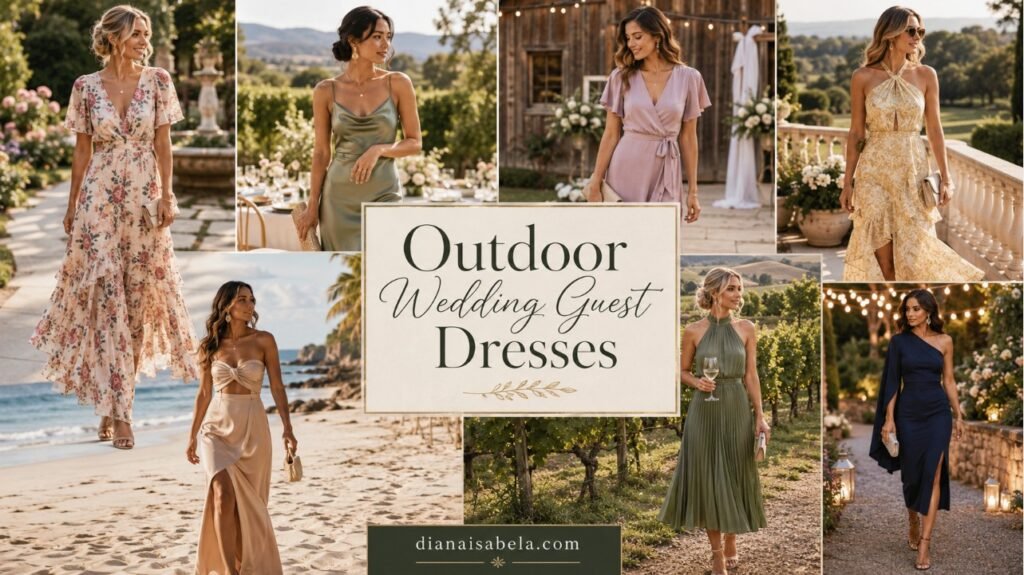
These are the kinds of combinations that work in real settings, not just on a hanger. Adjust the color and fabric based on season, but keep the logic: stable shoes, controlled movement, and polish that fits the venue.
Floral or sage midi dress, low block heels, pearl earrings, and a small shoulder bag. Romantic, but not fragile.
Soft printed dress or elegant slip-style midi, flat sandals or dressy low wedges, minimal jewelry, and a lightweight wrap.
Wine, olive, bronze, or floral midi dress with block heels and a cropped jacket for the temperature drop after sunset.
Terracotta, navy, dusty blue, or deep rose dress with stable heels or polished boots, plus jewelry that keeps the look refined.
Sleek satin midi, jumpsuit, or column dress with secure heels, statement earrings, and a blazer or wrap for evening air.
Polished wrap dress, comfortable block heels, soft color, and a bag that feels dressy without being too formal.
How to make an outdoor wedding guest dress look expensive
Outdoor settings can make cheap details more obvious: thin lining in sunlight, clingy fabric, sloppy hems, plastic-looking shine, or a print that feels too casual. The easiest way to look more expensive is to choose one elegant focal point and keep everything else calm.
A simple crepe midi in a beautiful color can look richer than a complicated dress with poor fabric. A satin dress with a blazer can look more refined than a heavily embellished dress that feels too evening for the venue. A dressy jumpsuit with gold earrings can look sharper than a floral maxi that drags through gravel. Expensive is not always more. Usually, it is better editing.
Pay attention to the bag, too. Outdoor weddings make big everyday totes look especially wrong. A small clutch, structured mini bag, or soft evening bag instantly makes the outfit feel intentional.
The outdoor wedding checklist before you leave
Before you commit to the outfit, do a quick practical test. Not glamorous, extremely useful.
Outdoor wedding dressing is not about being less stylish. It is about being smarter.
The best outdoor wedding guest dresses understand the location. They let you walk on grass, survive a breeze, sit through a sunny ceremony, move through gravel, pose at golden hour, and still look polished when the reception starts. That is the difference between a pretty dress and the right dress.
Choose the outfit that works with the venue, not against it. Stable shoes, beautiful fabric, controlled movement, and a color that photographs well will take you very far. The outdoor setting can do the drama. Your dress just needs to arrive prepared.
FAQ
What should a woman wear to an outdoor wedding as a guest?
A woman can wear a midi dress, polished maxi dress, secure wrap dress, dressy jumpsuit, or elegant knee-length dress to an outdoor wedding. The best choice depends on the terrain, weather, dress code, and time of day.
What shoes are best for an outdoor wedding guest?
The best shoes for an outdoor wedding are block heels, wedges, dressy flats, stable sandals, or low platforms. Avoid thin stilettos on grass, gravel, sand, decking, or uneven stone because they can sink, slip, or get caught.
Can I wear a long dress to an outdoor wedding?
Yes, you can wear a long dress to an outdoor wedding, but the hem should not drag on grass, sand, gravel, or damp ground. A controlled maxi or ankle-length dress is usually safer than a floor-sweeping gown.
What fabrics are best for outdoor wedding guest dresses?
Good fabrics for outdoor wedding guest dresses include crepe, weighted chiffon, georgette, satin with some weight, silk blends, soft jacquard, and breathable linen blends for relaxed warm-weather weddings.
What colors are best for outdoor wedding guest dresses?
Dusty rose, sage, soft blue, terracotta, wine, navy, bronze, olive, warm taupe, and muted florals all work well for outdoor wedding guest dresses. Avoid white, ivory, cream, and very pale champagne unless the couple specifically approves them.
What should you not wear to an outdoor wedding?
Avoid thin stilettos, dragging hems, very flimsy dresses, casual sundresses, bridal-looking pale colors, heavy gowns for relaxed venues, and outfits that need constant adjusting in wind or heat.
Can I wear flats to an outdoor wedding?
Yes, dressy flats can be a smart choice for outdoor weddings, especially on grass, gravel, sand, or uneven ground. Choose pointed flats, embellished flats, sleek ballet flats, or refined sandals so the look still feels wedding-appropriate.
How do you dress for an outdoor wedding when it might be cold?
Choose a dress that works with a polished layer, such as a blazer, cropped jacket, wrap, shawl, or lightweight coat. Outdoor venues can cool down after sunset, especially vineyards, gardens, rooftops, and countryside locations.