Inside Damson Madder: How an Indie Label Built a Recognizable Fashion World

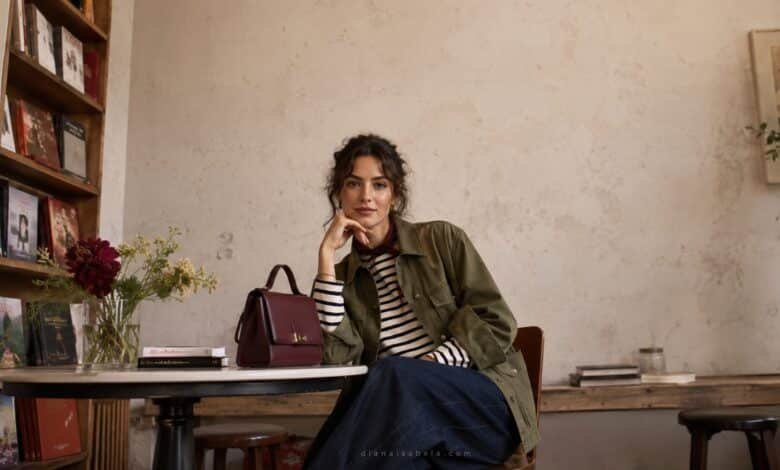
I have a test for fashion brands that say they have a strong identity.
Remove the logo. Close Instagram. Take away the model, the campaign location, the perfect flowers and the loaf of sourdough placed on a table with the confidence of a paid actor.
Can you still recognize the clothes?
With Damson Madder, the answer is often yes.
You may recognize the curved seam running through a pair of jeans. A checked skirt worn with something unexpectedly practical. A generous collar that changes the entire expression of a jacket. A reversible garment designed as though two wardrobes agreed to share custody. A dress that appears sweet from a distance and slightly rebellious once its volume, color or styling becomes clear.
Recognition without a giant logo is one of the most difficult forms of fashion power to build.
It cannot be applied to a finished garment in an afternoon. It develops through repetition, restraint and the willingness to return to certain ideas without making the next collection feel like a copy of the last one.
Damson Madder has built that kind of visual vocabulary remarkably quickly.
The London label was founded in 2020 and has since moved far beyond the category of a tiny social-media discovery. Vogue Business reported in March 2026 that the company had grown from £4.5 million in revenue in 2023 to £19 million in 2024, with £31 million projected for 2025. Wholesale had become a substantial part of the business, and the United States was described as its fastest-growing market.
Those numbers change the meaning of the story.
Damson Madder is no longer interesting merely because it is independent. It is interesting because it is attempting the more difficult transition from recognizable indie label to serious international fashion company—without immediately sanding away the peculiar details that made people notice it.
The checks remain. The denim still receives more thought than ordinary denim strictly requires. Outerwear still carries humor and utility in the same garment. Dresses still arrive as complete visual ideas rather than neutral backgrounds waiting for accessories.
But growth makes every creative decision heavier.
A small brand can repeat a successful idea and call it continuity. A larger brand must decide when continuity becomes dependence. A small label can communicate values through the founder’s voice. A larger company needs reporting, systems, supplier relationships and language precise enough to survive real scrutiny.
This is what makes Damson Madder worth examining now.
Not simply because the clothes are popular. Not because a reversible trench or leopard cargo became visible online. The deeper question is whether the brand has built a design language strong enough to survive distribution, international growth and the commercial pressure to reproduce its own greatest hits.
The first impression is playful. The lasting impression is more disciplined.
At first glance, Damson Madder can look like a collection of charming contradictions.
Gingham beside utility pockets. Full skirts beside practical shoes. Stripes layered with checks. Denim treated almost like tailoring. Oversized collars placed on jackets designed to survive actual weather.
The styling is lively enough to make every piece seem as though it belongs to a person with an interesting Saturday planned.
That first impression is important, but it does not explain the brand’s growth.
Plenty of labels can create a pleasant aesthetic for one season. Social media has produced an entire generation of brands capable of arranging a patterned dress, a café table and a slightly ironic handbag into an attractive square image.
Damson Madder’s stronger achievement is that the visual language continues across different product categories.
The identity is not trapped inside one famous print.
It appears in the relationship between sweetness and practicality. In how a simple category receives one unexpected intervention. In how a familiar garment becomes slightly stranger without losing its original function.
A pair of jeans remains jeans. A coat remains useful outerwear. A striped shirt can still be worn with old trousers. The special detail does not always swallow the garment beneath it.
This is the point where a cute brand begins to look like a serious design business.
The strongest pieces are recognizable but not sealed inside the brand’s own universe. They can leave the campaign and still make sense.
That matters because no real wardrobe is a complete editorial shoot.
It contains different price points, different ages of clothing, different brands and pieces purchased during several versions of the person who owns them.
The clothes that last are often those capable of forming new relationships.
The brand began with frustration, not a gap manufactured by marketing
Damson Madder was founded by Emma Hill in London in spring 2020.
According to the brand’s own account, Hill had worked in fashion for years and had become disillusioned with damaging practices she observed behind the scenes. She wanted to create something slower, more considered and more responsible while keeping innovative design at the center.
That final part matters.
Responsible fashion has often been presented through restraint: neutral colors, simplified silhouettes and clothes designed to prove seriousness by refusing visible pleasure.
Damson Madder’s proposition was different.
Improved practices did not have to produce a beige uniform.
A garment could contain color, humor, volume and novelty while still being developed more carefully. Responsibility and imagination did not need to stand on opposite sides of the studio.
This idea arrived at a complicated moment.
Launching during 2020 meant entering a world in which routines, shopping habits and the purpose of clothing had suddenly changed. Customers were questioning what they wore, how often they wore it and whether aspirational fashion still made sense when ordinary life had become so uncertain.
The brand’s early categories answered that uncertainty in a useful way.
They were expressive without being ceremonial.
Denim, shirts, jackets, dresses and practical layers could create personality without requiring a red carpet or a fictional social calendar.
This balance—recognizable enough to share, familiar enough to wear—became one of the company’s commercial strengths.
The brand could attract customers through a distinctive image and then give them several levels of entry.
One person could buy a dramatic dress.
Another could begin with a striped shirt.
Someone else could choose denim, outerwear or a small accessory carrying only part of the color story.
A fashion world becomes easier to grow when customers do not have to move into it completely.
The name began with dye experiments, and the collections still think in color stories
The name Damson Madder came from the label’s early work with recycled and organic fabric bases and experiments with natural dyes.
“Damson” referred to plum. “Madder” referred to the flowering plant historically associated with red dye.
This origin feels unusually appropriate because color remains central to how the collections communicate.
The brand does not simply place a fashionable shade onto a standard product.
Color often organizes the whole collection.
Brown may appear beside blue, pink, olive, cream or burgundy. Checks may use palettes that feel inherited and newly invented at once. Technical outerwear can arrive in patterns more commonly associated with tablecloths or summer dresses. Deep denim gives softer shades something firm to push against.
This color intelligence helps the vintage references avoid becoming literal.
A familiar silhouette in an unusual palette becomes harder to assign to one decade.
A classic check in unexpected shades feels less like reproduction and more like editing.
Color also creates a subtle commercial structure.
Several garments may share enough of a palette to appear naturally connected without forming a strict matching set. A skirt suggests a shirt. A shirt makes a bag look suddenly relevant. The customer begins to see not one garment but a system.
That is persuasive branding.
It also requires discipline from the shopper.
A coherent color story should make a new piece easier to wear with an existing wardrobe. It should not convince you that the existing wardrobe is now the obstacle.
The business grew too quickly to remain a romantic little secret
Fashion still enjoys presenting successful independent labels as charming accidents.
A founder has a good idea. A product goes viral. A community gathers. Suddenly a small studio becomes a recognized name.
The reality is usually less cinematic.
Growth requires buying decisions, production planning, inventory management, wholesale relationships, hiring, software, customer service, returns and the ability to deliver the same brand promise across more products and more countries.
Vogue Business reported that Damson Madder’s revenue rose from £4.5 million in 2023 to £19 million in 2024, with £31 million projected for 2025. Wholesale accounted for around one-third of sales, and the United States had become the company’s fastest-growing market.
Those figures are striking, but the operational consequences are more revealing.
A brand growing at that rate cannot continue operating as if every problem can be solved through founder instinct and a beautiful campaign.
Systems become part of the creative story.
Can inventory be planned without flooding the market?
Can the customer receive reliable service in several regions?
Can fit remain consistent while categories expand?
Can supplier relationships deepen rather than fragment?
Can the brand retain its sense of discovery when products become available through major retailers?
These are not glamorous questions, but they decide whether rapid attention becomes a durable business.
The move into wholesale is particularly important.
Retail partners increase visibility and give customers physical access to products they may hesitate to order online. At the same time, wholesale buyers naturally select items they believe will perform commercially.
This can narrow a brand’s public identity.
If reversible coats, leopard cargos or checked dresses sell most easily, international customers may begin to understand the entire label through those few categories.
The company must therefore keep the broader design language visible while allowing bestsellers to perform their commercial role.
The Vogue Business profile reveals a company thinking beyond the next drop
The March 2026 Vogue Business profile is valuable because it does more than repeat the origin story.
It places Damson Madder inside the realities of fashion growth.
The article describes the importance of viral products, the expansion of the team, the role of wholesale, investment in business infrastructure and plans for physical retail. It also notes the challenge of maintaining responsible practices while the company scales.
This tension is not a side note.
It is the central test of the brand’s next chapter.
It is easier to speak about careful production while quantities are small and relationships are concentrated.
As volume increases, the company has to maintain visibility across more materials, more facilities, more orders and more markets.
It is also easier to create scarcity when a label is genuinely small.
As the business expands, scarcity becomes a choice rather than a natural condition. The distinction between limited production and manufactured urgency becomes more important.
The profile also shows why Emma Hill’s background as a buyer mattered.
Damson Madder was not built only through creative instinct. It was built by someone who understood assortment, customer response and how individual products function inside a wider commercial offer.
This helps explain why the brand’s most distinctive ideas often appear inside recognizable categories.
A customer may hesitate before buying a completely unfamiliar object.
She understands jeans, shirts, coats and dresses.
The brand changes those categories enough to create desire without making them impossible to decode.
What I took from the Vogue Business profile: Damson Madder’s growth is not simply the result of social-media luck. Virality helped, but the business expanded because recognizable products were supported by assortment strategy, wholesale distribution, hiring and operational investment.
A recognizable brand language is built from relationships, not one signature object
None of these ideas belongs exclusively to Damson Madder.
That is not a weakness.
Fashion identity rarely depends on complete invention. It depends on arranging familiar references into a combination that feels culturally and emotionally specific.
Damson Madder’s combination often brings together three wardrobes.
The first belongs to someone practical: she likes pockets, useful jackets, weather-ready layers and clothes that tolerate movement.
The second belongs to someone romantic: she notices checks, ruffles, full skirts, unusual collars and the emotional effect of color.
The third belongs to a contemporary city dresser: she understands relaxed denim, oversized proportion, deliberately imperfect layering and the importance of making one polished piece slightly strange.
The brand becomes recognizable where those wardrobes overlap.
A jacket may have the shape of workwear but the collar of a dress.
A skirt may carry a nostalgic check but be styled with a technical layer.
Jeans may feel practical until the seam begins curving through the leg like a piece of architectural drawing.
A dress may appear modest until its proportions occupy enough space to change the room around it.
The strongest pieces do not use every part of the vocabulary at once.
They choose one or two signatures and allow the garment category underneath to remain legible.
The weaker pieces risk becoming perfect summaries of the brand and complicated additions to a wardrobe.
A checked, reversible, oversized garment with contrast ties, a large collar and an unusual sleeve may communicate everything Damson Madder stands for.
It may also contain one idea too many.
The clothes work because two moods are usually disagreeing
The most interesting Damson Madder pieces are rarely pure examples of one aesthetic.
They are built through controlled contrast.
Sweetness meets utility.
Nostalgia meets modern proportion.
Volume meets practicality.
A formal fabric meets an everyday silhouette. A technical fabric receives a print associated with something domestic or playful.
This tension keeps the clothes from becoming flat.
Pure romantic dressing can feel precious.
Pure utility can feel severe.
Pure nostalgia can become costume.
Pure trend awareness can expire before the fabric does.
Contrast interrupts those outcomes.
The eye remains interested because it cannot resolve the garment immediately.
This is also why head-to-toe brand styling can sometimes feel less effective in real life than one Damson Madder piece worn with ordinary clothes.
If every garment contains the same tension, the tension becomes predictable.
A checked skirt, unusual blouse, oversized jacket, patterned sock, playful bag and practical shoe may create a successful campaign look. Outside the campaign, the brand may become more visible than the person.
An old grey sweater changes that.
A plain leather bag changes it.
Jeans from another label change it.
Ordinary objects create friction and allow the special piece to regain its specificity.
This principle extends beyond Damson Madder and connects with the approach in my three-point outfit check: the outfit needs a hierarchy. Not every piece needs to compete for the role of “the reason the outfit works.”
Denim proves the brand can be recognizable without relying on print
Print gives a fashion brand an efficient path to recognition.
Denim is more demanding.
Customers already understand jeans. They know how the waistband should feel, where the rise sits, whether the leg twists and whether a pocket changes the balance of the body.
A printed dress can persuade through emotion before the customer considers engineering.
Jeans are less forgiving.
Damson Madder’s denim often carries identity through seam placement, turn-up hems, leg shape, pocket proportion and wash. This matters because it shows the design language working through construction rather than surface alone.
Curved seams alter the apparent movement of the leg.
Barrel shapes introduce volume while keeping the ankle or hem controlled.
Dark indigo gives the construction a clearer architectural quality. Softer washes allow unusual seams to feel less severe.
The best result is denim that simplifies the rest of the outfit.
A white tank, grey knit or striped shirt becomes enough because the jeans are already doing the visual work.
The danger is allowing the novelty of the construction to distract from basic fit.
An interesting seam cannot repair a waistband that gaps.
A dramatic leg cannot compensate for an uncomfortable rise.
A clever pocket is not useful if it pulls the fabric out of shape.
Without physically testing a pair, it would be irresponsible to promise comfort, durability or universal sizing. What can be assessed through product information is the intended silhouette, visible construction, composition and the questions a shopper should ask before keeping it.
My detailed online clothing quality inspection guide explains how to use product images, fibre information, seams and measurements before ordering a distinctive garment.
Outerwear may be where the design identity creates the strongest value
A statement blouse is visible while you are wearing it.
A coat becomes the public version of nearly every outfit beneath it.
This makes outerwear a particularly strong category for a recognizable brand.
One coat can carry Damson Madder’s personality over old denim, a simple knit, plain trousers or a dress from another label. The customer receives a clear visual identity without needing an entire coordinated wardrobe.
The brand’s outerwear often combines several of its best ideas: quilting, contrast collars, checks, reversible construction, practical pockets, barn-jacket references, generous proportion and technical fabric treated with unexpected humor.
This category also exposes weaknesses quickly.
A collar may look beautiful while the jacket is open and collapse when fastened.
An oversized sleeve may be expressive and impossible beneath another layer.
A reversible coat may contain one complete side and one side that behaves mainly as an attractive lining.
Quilting adds warmth and visual softness, but it also adds physical bulk. The jacket that looks charmingly generous in a campaign may feel significantly larger in a car, restaurant or crowded train.
These practical questions do not make the design less desirable.
They make the purchase more precise.
Outerwear can also justify a higher price more easily than a highly specific top or occasion dress.
It is worn often, seen repeatedly and exposed to practical demands. When construction is good and the design remains appealing across several seasons, cost per wear can become more convincing.
The smartest coat is not necessarily the one that contains the greatest number of brand signatures.
It is the one capable of carrying those signatures into ordinary life.
The dresses arrive as complete ideas, which makes them both easy and demanding
Many dresses are praised for versatility because they possess almost no identity of their own.
They are simple, neutral and prepared to become whatever the shoes or bag require.
Damson Madder dresses often take the opposite position.
They arrive already speaking.
The check determines mood. The skirt establishes movement. A ruffle decides that restraint has received enough attention. A fitted bodice and fuller lower half create a complete proportion before jewelry appears.
This can make getting dressed wonderfully easy.
Put on the dress. Add practical shoes. Carry a bag. Leave.
The same completeness can make repetition feel more visible.
A memorable print and distinctive silhouette may create a stronger sense of “the same dress” than a plain slip or shirt dress.
Some people enjoy becoming associated with one excellent piece.
Others become uncomfortable after one photographed event.
That personal habit matters more than theoretical versatility.
A dress can work with sneakers, sandals, boots and flats and still receive little wear because the wearer avoids repeating recognizable clothing.
The answer is not to reject expressive dresses.
It is to give them a real calendar.
Not “summer.”
Lunch. Travel. A casual wedding event. A museum day. A birthday dinner. Work with a cardigan. A holiday evening. A weekend market.
The more specific the dress, the more specific the plan should become.
Volume also deserves practical thought.
A full skirt looks beautiful in movement and occupies space while sitting. Large sleeves may not fit under a narrow coat. A fitted bodice may require more bust depth than the general size label suggests.
The quieter pieces may reveal more confidence than the obvious statements
A strong fashion brand does not need every product to behave like a manifesto.
Shirts, cardigans, knitted tops and simpler separates can carry identity through smaller decisions.
Stripe spacing.
A layered neckline.
An unusual collar.
Buttons in an unexpected color. A sleeve proportion that changes how the shirt sits beneath a jacket.
These categories are often the best entrance into a distinctive brand because they can be repeated without requiring the rest of the wardrobe to reorganize itself.
A striped shirt can work with denim, tailored trousers, a solid skirt, shorts and knitwear from several other labels.
A cardigan can move between a dress, tank, T-shirt and blouse.
A special collar can appear fully one day and only partially beneath a sweater the next.
The garment’s identity changes according to how much remains visible.
This creates more styling control than a complete statement dress.
It also tests whether the brand can create interest without depending on maximum volume or print.
The best quieter pieces contain one clear idea.
Too many special details reduce repeatability.
Too few make the customer question why she should pay more than she would for an ordinary version elsewhere.
A successful entry piece should therefore be a category you already wear, improved by one recognizable design decision.
The weakest entry purchase is often a category you normally ignore, chosen because it seems like the most affordable way to participate in the brand.
Reversible clothing is clever only when both versions deserve daylight
Few product descriptions create value as efficiently as the word “reversible.”
Two looks. One garment. A small wardrobe triumph appears to have occurred before anybody has inspected the second side.
Reversible construction can be genuinely useful.
A coat can move between print and solid. A dress can change emphasis. One travel piece can serve different outfits.
It can also function mainly as an exciting product feature.
The second side may contain less convincing finishing, compromised pockets, visible hardware or a color that works beautifully as a lining and awkwardly as the main surface.
A reversible piece should be judged as two garments sharing one construction.
Would you buy either side separately?
Are the pockets functional in both configurations?
Do the closures make visual and practical sense from each direction?
Can the piece be reversed easily, or does the process require privacy, patience and several minutes of fabric negotiation?
Sometimes the alternate side does not need to function equally.
Its greatest contribution may be appearing at the collar, cuff or open front. In that case, it behaves more like an exceptional lining.
That still has value.
It is simply not the same as receiving two complete garments.
The campaigns sell a life of curiosity rather than traditional luxury distance
Fashion campaigns rarely sell clothing alone.
They sell evidence that a life exists around the clothing.
Damson Madder’s world often feels social, curious and slightly eccentric. People gather, walk, collect, make things, notice details and participate in activities beyond being beautifully dressed.
The clothes do not primarily promise entry into a polished elite.
They promise entry into an interesting group.
The person wearing the checked skirt may know where the good café is. The person in the quilted jacket may have a hobby. The model in the full dress looks as though she has somewhere specific to go rather than nowhere to be admired.
This is a powerful form of aspiration.
Status is replaced by cultural fluency.
The desired person is observant, creative, socially connected and capable of making ordinary life visually meaningful.
That emotional positioning suits the clothes.
Utility, volume and practical layers look more convincing around movement and activity than inside a perfectly still luxury setting.
The danger is that belonging can become another product category.
A customer may believe she is buying a jacket while actually buying temporary access to the imagined group around it.
This does not make the campaign dishonest.
All successful branding creates association.
The useful question is whether the garment remains desirable after the association is named.
Would you want the coat without the community scene?
Would you choose the dress without the room, friends and perfect light?
Would the bag remain interesting alone against a plain background?
A campaign can create a world.
Good editorial thinking helps the reader return from that world with the correct object.
“Appreciation Society” turns community into the subject rather than the backdrop
For Spring/Summer 2026, Damson Madder partnered with British style and culture magazine The Face on the Appreciation Society campaign.
The project celebrated female friendship and community through group portraits of real-life friends and hobbyists in London.
Conceptually, this is a natural continuation of the brand’s identity.
The clothes often look ready for an activity. The campaign gives them one.
Instead of surrounding the garments with anonymous lifestyle decoration, it places them around groups connected by actual interests and relationships.
This approach feels more specific than the now-common use of “community” as a synonym for customers or followers.
It also creates a standard the brand will need to maintain.
Community becomes credible through continuity.
Are collaborators credited clearly?
Do relationships continue beyond one campaign?
Are people treated as participants rather than supporting texture?
Does the company listen to the communities it enters as it expands internationally?
An editorial profile cannot answer all of those questions from outside the business.
It can identify why they matter.
A London-centered idea of curiosity and friendship may travel attractively to Los Angeles, New York or Paris. But each location already contains its own communities, creative histories and visual languages.
International growth will feel strongest when the brand approaches those places as cultures rather than as new backdrops for the original story.
SS26 widens the wardrobe without abandoning the handwriting
The current Spring/Summer 2026 selection shows Damson Madder attempting to expand the situations in which the brand can appear.
There is expressive denim, including straight-leg shapes, turn-up hems and dark washes. Checked shirts and skirts continue the familiar pattern language. Striped tanks, layered shirts, knitted tops and graphic T-shirts create quieter entry points.
Dresses range from ruffled minis to denim styles, picnic checks and reversible gingham. Accessories extend the same world through sailor hats, headscarves, caps, striped bags and patterned socks.
High Summer moves gingham, harlequin, stripes, lace and spots into swimwear, sarongs, headwear and lighter layers.
This breadth is strategically important.
A brand that depends mainly on dresses risks becoming seasonal and occasion-led.
A brand that expands only through generic basics may lose the reason customers noticed it.
The challenge is to create quieter products that still feel authored.
A simple tank should contain enough thought to justify its place beside cheaper alternatives.
A graphic T-shirt should add more than an easy logo opportunity.
An accessory should feel like a useful extension of the wardrobe rather than a smaller object produced because every growing brand eventually feels pressure to sell a complete lifestyle.
The current collection succeeds most clearly when a familiar category carries one controlled signature.
The dark denim with visible construction.
The striped shirt with an altered layer or proportion.
The check used in a category where check is not the predictable choice.
The full dress balanced by fabric or styling that prevents it from becoming costume.
The risk appears when several signatures gather without hierarchy.
The brand’s world is already recognizable.
Not every product needs to repeat the entire explanation.
The responsibility story is strongest when it includes unfinished work
Damson Madder publicly places responsible practices, transparency and considered production near the center of its company story.
The brand has published an Impact Report and separate information about its ethos, materials, factories and certifications.
This is useful because it gives readers something specific to examine.
Fashion responsibility cannot be proven by repeating a general adjective.
It involves fibre cultivation or extraction, processing, dyeing, manufacturing, transport, packaging, inventory, care, returns and eventual disposal.
Progress in one area does not remove impact elsewhere.
The most credible reporting therefore includes both achievements and limitations.
The company’s Impact Report describes its intention to share progress alongside ongoing efforts to address wider industry barriers. Its responsibility pages state that products begin development 12 to 18 months before reaching the customer and describe long-term factory and supplier relationships, third-party audits and a supplier code of conduct.
These are meaningful disclosures.
They should still be read as brand-published information rather than as independent proof that every garment performs equally well.
The useful reader does not respond with automatic praise or automatic cynicism.
She asks more precise questions.
The final question is personal but essential.
A more responsibly sourced garment bought impulsively and worn twice is not automatically a successful wardrobe decision.
Better production should support more deliberate consumption.
It should not become permission to order an entire color story.
The materials information becomes useful when it explains trade-offs
Material conversations become shallow when fibres are divided into saints and villains.
Cotton is natural, but its impact depends on cultivation, water, chemistry, certification and use.
Polyester is fossil-derived, but it can provide strength, weather resistance, quick drying and shape retention in categories where those properties matter.
Elastane can improve fit and recovery while making recycling more difficult.
The useful question is not whether a garment contains one morally approved word.
It is whether the material suits the function and whether the brand explains its choices honestly.
Damson Madder states that more than 92 percent of the cotton used in its products is organic or recycled and identifies GOTS, OCS and GRS certifications connected to its fibre sourcing. The company also explains that it uses synthetics selectively for stretch, longevity or performance outerwear and prioritizes certified recycled fibres where possible.
This kind of explanation is more credible than pretending synthetic materials have no role.
It also gives the reader a standard for evaluating the finished garment.
If polyester is being used for performance, does the product category require and deliver that performance?
If a fabric is described as durable, do the seams, hardware and care instructions support repeated use?
If an item is reversible or multi-way, can its components be maintained and repaired?
If a delicate dress requires specialist care, is that compatible with the frequency of wear imagined?
Longevity is not created by fibre composition alone.
A theoretically preferable textile inside a poorly constructed or extremely short-lived design may not create a strong outcome.
Equally, a technical garment worn frequently for several years may serve a clearer function than a natural-fibre piece purchased for its language and rarely used.
What can be judged from research—and what still requires wear
A serious fashion profile can examine company history, design language, public reporting, collection strategy, product composition and visible construction without pretending that online research is identical to wearing the clothes.
Product photography can reveal seam placement, proportion, pocket design, lining, closures and pattern alignment.
Fabric composition and care instructions can suggest how a garment may behave.
Size charts can identify likely fit questions.
Customer service and returns information can help a reader understand the practical risk of ordering.
Some conclusions still require direct experience.
A photograph cannot confirm that a coat is warm.
A product description cannot prove that denim retains its shape after repeated wear.
A beautiful seam cannot tell us whether it remains secure after washing.
A selected material cannot establish that every garment produced by the brand has the same physical quality.
This distinction does not weaken the editorial analysis.
It makes it more accurate.
When products are provided for testing, the useful review should document what was actually observed.
Fabric hand and weight.
Measurements compared with the published chart.
Fit while standing, sitting and moving.
Opacity.
Pocket function.
Wrinkling and steaming.
Repeated styling.
Washing or care performance where appropriate and agreed.
That methodology makes positive conclusions more valuable because the reader can see what supports them.
It also protects the difference between a brand profile and a product review.
Value begins where the campaign ends
Damson Madder occupies a commercially difficult position.
It costs more than mass-market fashion but far less than traditional luxury. Customers therefore expect the difference to be visible in design, construction, materials, production choices or garment life.
The price can be understood through several forms of value.
Design value
Custom prints, developed silhouettes, unusual seams, reversible construction and repeated refinement require real creative labor.
Design has value even when it is not visible as handwork.
Material value
The textile should suit the garment’s function. A technical jacket, rigid jean, fluid dress and knit require different properties.
Construction value
Complex seams, quilting, lining and reversible finishing require more work. Complexity alone does not prove quality, but good execution can justify cost.
Wardrobe value
A distinctive coat worn sixty times may provide stronger value than a less expensive dress worn twice.
Emotional value
Clothing can create delight, confidence and creative energy. That value is real.
The danger appears when the emotion belongs mainly to acquisition.
If the best part is waiting for the delivery, the garment may be functioning as entertainment rather than wardrobe.
This is why conventional cost-per-wear calculations are not enough.
The relevant question is not how many situations could theoretically accommodate the item.
It is how often you will choose it over the clothes you already love.
Sales can improve value or distort desire.
A discounted garment may bring a considered purchase within budget.
It may also create interest in something ignored at full price.
If the price introduced the desire, I wait.
The best Damson Madder outfit does not look like a complete Damson Madder campaign
A campaign must communicate the collection.
Your outfit must communicate you.
Those are different responsibilities.
One checked skirt may be enough.
Wear it with an old grey knit and shoes chosen for the day.
One distinctive coat may be enough.
Place it over a white top and familiar jeans.
Curved-seam trousers may need only a fitted tank or a compact cardigan.
A romantic dress may benefit from a useful bag rather than another romantic object.
A striped shirt often becomes more visible beside solid trousers than beside its perfectly coordinated partner.
This does not mean matching sets or pattern mixing should be avoided.
It means the outfit needs hierarchy.
When every garment has equal visual intensity, the eye stops understanding which decision matters.
Ordinary objects create authorship.
A worn leather bag.
Plain sneakers.
A coat from another label.
A practical sock.
Hair that does not repeat the garment’s mood.
Those pieces show that the wearer selected the Damson Madder item rather than entering the brand world unchanged.
This is also why I would begin with a category already present in the wardrobe.
A person who wears jackets constantly may gain real value from distinctive outerwear.
Someone who lives in jeans may find designed denim easier than a full printed dress.
A regular shirt wearer can integrate a stripe or unusual collar without learning a new dressing habit.
The right first purchase is not necessarily the least expensive item.
It is the item whose role is already understood.
This is a brand for people comfortable with being remembered
Damson Madder makes the most sense for customers who enjoy visible design.
Not necessarily loud design.
Visible design means the print, seam, color or proportion remains noticeable. The garment does not disappear completely into a neutral wardrobe.
You may love the brand if you already mix practical and romantic clothing.
If dresses with utility jackets, full skirts with sneakers, workwear trousers with sweet blouses and checks with modern bags already make sense to you, the brand’s contradictions will feel natural.
You may love it if you repeat statement clothes.
A memorable coat becomes valuable only when recognition does not discourage wear.
You may love it if you enjoy volume.
Barrel trousers, full skirts, generous jackets and expressive sleeves require comfort with silhouette.
You may love it if your wardrobe contains quiet foundations.
Plain knitwear, old denim, simple T-shirts and practical shoes give the designed pieces space.
The brand may feel difficult if you prefer sleek, body-skimming minimalism.
There are simpler pieces, but the central language often involves pattern, volume and visible construction.
It may feel difficult if your work environment requires conventional corporate dressing.
Some shirts, knitwear and denim can integrate naturally. The strongest brand identity often sits outside traditional office expectations.
It may also feel difficult if memorable repetition makes you uncomfortable.
A recognizably checked coat or expressive dress may be noticed more than a neutral basic.
That can be part of the pleasure.
It can also reduce wear if the customer prefers her clothing to remain anonymous.
The harder achievement will be remaining specific at a larger scale
Damson Madder’s achievement is not that it invented gingham, puffed sleeves, reversible coats or curved-seam jeans.
Fashion rarely advances through complete invention.
The achievement is that the brand arranged familiar ideas into a vocabulary people can recognize and built a fast-growing business without immediately removing every strange edge.
The next stage is more difficult.
Growth demands more products, more markets, more retail partners and greater operational consistency. It creates pressure to repeat what has already sold.
The company will have to protect distinction without turning its signatures into compulsory decoration.
Checks must continue evolving.
Reversibility must remain useful rather than automatic.
Volume must change role from one category to another.
Responsibility reporting must become more detailed as production expands.
Community must become more than campaign scenery.
International expansion must learn from local lives rather than simply transporting a London mood.
The brand will also have to decide how broad its world should become.
Swimwear, technical clothing, accessories, home products and lifestyle categories can deepen an identity.
They can also dilute it if every possible object is expected to carry the same emotional story.
A fashion world is persuasive when the objects feel necessary to it.
It becomes merchandising when the world mainly exists to justify more objects.
Damson Madder remains worth watching because its design language is currently strong enough to make this tension interesting.
The company no longer needs to prove that people want it.
It must prove that desire can be managed without flattening identity.
That is the part of the story with lasting editorial value.
Not one viral product.
Not one sold-out collection.
Not one photograph that makes everybody want the same coat before breakfast.
The longer story is whether the clothes continue to feel discovered after the brand itself is no longer a discovery.
A recognizable world matters most when you can leave with only one piece
Damson Madder has built a fashion world with real architecture.
It has favorite colors, recurring shapes, visual jokes, practical objects and characters who seem to live somewhere beyond the product page.
The world is coherent enough to recognize.
It is also open enough for a customer to enter through one garment.
That may be the brand’s most useful quality.
You do not need the complete matching set.
You do not need the campaign bag, socks, jacket and reversible explanation.
You can enter through jeans that make old tops feel newly deliberate.
A coat that carries personality over quiet clothes.
A striped shirt that feels familiar until one detail changes the sentence.
A dress with enough movement to justify a memorable afternoon—and enough reality to return for several more.
The best purchase should not make your wardrobe imitate Damson Madder.
It should allow one Damson Madder idea to become useful inside the wardrobe you already built.
That is the difference between consuming a brand and developing personal style.
One asks how completely you can enter the world.
The other asks what you can bring back from it.
Selected reading and brand information
The company history, name origin and founding approach were reviewed through the official Damson Madder About Us page.
Current responsibility goals, development timelines, supplier expectations and public commitments were reviewed through the official Damson Madder Responsibility page and Damson Madder Impact Report.
Material percentages, certifications and fibre explanations were reviewed through the official Damson Madder materials information.
The SS26 campaign concept was reviewed through the official Appreciation Society campaign page, while current product direction was checked through the SS26 collection.
Business growth, revenue figures, wholesale expansion and international strategy were reviewed through the Vogue Business profile How Damson Madder’s Emma Hill Built a £31 Million Business in 5 Years.
Questions and answers
What is Damson Madder known for?
Damson Madder is known for expressive checks, constructed denim, reversible outerwear, oversized collars, full dresses and styling that combines vintage sweetness with practical utility. Its identity usually comes from proportion, print and construction rather than a large visible logo.
Who founded Damson Madder?
Emma Hill founded Damson Madder in London in 2020 after working in the fashion industry as a buyer. The brand says she wanted to create a slower and more considered company without sacrificing innovative or playful design.
Is Damson Madder still an independent brand?
Damson Madder began as an independent London label and retains that creative identity, although it has grown into a substantially larger international business with direct sales, major wholesale partners, overseas pop-ups and plans for further physical retail expansion.
Why did Damson Madder become popular?
The brand combined strong social-media visibility with a recognizable design language and familiar wardrobe categories. Viral pieces attracted attention, while denim, outerwear, shirts, dresses and accessories gave customers several practical ways to enter the brand.
Is Damson Madder a sustainable brand?
Damson Madder publicly emphasizes responsible design, traceability and more considered production. It publishes materials information, certifications and an Impact Report. Those disclosures are useful, but individual garments should still be assessed by their exact composition, construction, care requirements and likely wardrobe life.
What should I buy first from Damson Madder?
Start with a category you already wear regularly. A distinctive jacket, designed pair of jeans, striped shirt or cardigan may integrate more easily than a highly specific dress. The strongest first purchase adds the brand’s personality without requiring several new supporting pieces.
Are Damson Madder reversible clothes worth it?
They can be worthwhile when both sides look complete, the closures and pockets work in each configuration and you genuinely like both versions. If only one side feels convincing, the alternate fabric may be better understood as an attractive lining rather than a second complete garment.
How does Damson Madder sizing fit?
Fit varies because the collections include fitted bodices, relaxed denim, barrel trousers, oversized jackets and full skirts. Compare the individual garment measurements with a similar item you own and pay close attention to shoulders, bust depth, waistband, rise, sleeve length and total garment length.
Is Damson Madder good quality?
This profile does not claim hands-on testing of the brand’s garments. Product information can reveal materials, visible construction and care requirements, but comfort, durability, fit consistency and wash performance should be assessed through physical examination, reliable customer feedback and the individual product’s return terms.
How do I style Damson Madder without looking overdone?
Use one major Damson Madder idea at a time. Pair a checked skirt with a plain knit, designed denim with a simple top or a statement coat with familiar jeans and practical shoes. Ordinary pieces allow the branded garment to remain distinctive without making the outfit feel like a complete campaign recreation.