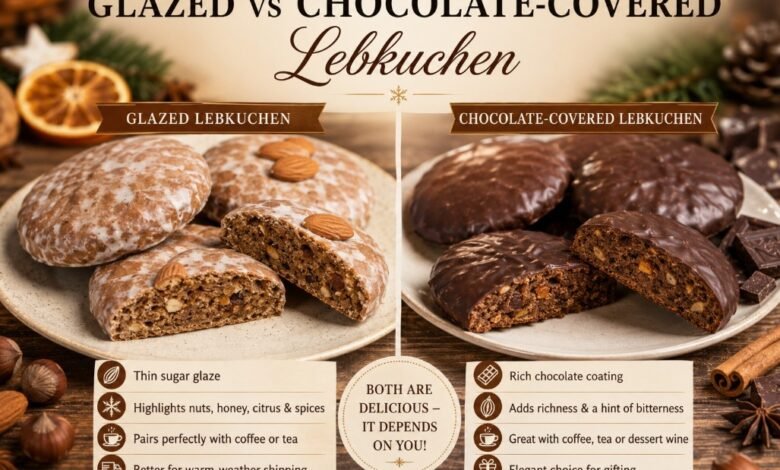
The difference between glazed and chocolate-covered Lebkuchen is not simply that one has sugar and the other has cocoa. A thin sugar glaze keeps the honey, nuts, candied citrus and spices close to the surface, while a dark-chocolate coating adds richness, bitterness and a firmer first bite. Glazed Lebkuchen usually gives the clearest view of the dough. Chocolate-covered Lebkuchen often feels more indulgent and may be easier for a first-time buyer who already enjoys chocolate desserts.
Neither finish is automatically more authentic or higher quality. Premium Elisenlebkuchen can be glazed, chocolate-covered or left largely plain. Standard flour-based Lebkuchen also appears under both coatings. The dough determines the category and overall quality; the coating changes how that dough tastes, feels, travels and presents as a gift.
This guide compares the two finishes in practical terms: sweetness, texture, spice visibility, chocolate quality, freshness, warm-weather shipping, gift appeal, serving and price. Readers who are still learning the wider category can begin with what Lebkuchen is and how its main varieties differ. For a comparison based on the dough rather than the coating, see Elisenlebkuchen vs regular Lebkuchen.
The most useful answer: Choose glazed Lebkuchen when you want to taste the nuts, honey, citrus and spices clearly. Choose dark-chocolate Lebkuchen when you want a richer dessert with a bittersweet shell. Choose an assorted box when buying for the first time or serving several people.
Glaze Reveals the Lebkuchen; Chocolate Reframes It
Sugar glaze acts as a light finish, while chocolate acts as a second major flavor. That distinction explains nearly every practical difference between the two styles.
A traditional sugar glaze is thin enough to follow the surface of the cookie rather than bury it. The glaze adds immediate sweetness and may form a delicate shell, but the flavor underneath appears quickly. The eater notices the honey, almonds, hazelnuts, candied orange, citron and spices with relatively little interference.
Chocolate-covered Lebkuchen begins differently. The tongue meets cocoa butter, sugar and cocoa solids before reaching the spiced center. With dark chocolate, the coating introduces bitterness and roasted cocoa notes. Milk chocolate adds dairy richness and stronger sweetness. Either version changes the balance of the complete cookie.
This does not mean glaze is neutral. A heavy glaze can create a pronounced sugar crust, and a very sweet white coating can dominate a mild dough. The useful comparison is between a thin sugar glaze and a well-made chocolate shell on otherwise similar Lebkuchen.
When both versions use the same dough, the glazed cookie is usually the better diagnostic tool. It shows whether the center is aromatic, moist and nut-rich. Chocolate can improve the overall pleasure of a cookie while making weaknesses in the dough less obvious.
That does not make chocolate deceptive or inferior. A dark shell can be an intentional part of the flavor architecture. Cocoa bitterness can balance honey and sugar, emphasize orange peel and make cloves or cinnamon feel warmer. A carefully coated chocolate Elisenlebkuchen is not merely a glazed cookie with an unnecessary extra layer; it is a distinct dessert.
Glazed Lebkuchen asks you to notice the cookie. Chocolate-covered Lebkuchen asks you to notice the relationship between the cookie and its coating.
Preference often depends on what the buyer already enjoys. Someone who loves fruitcake, marzipan, candied citrus and nut pastries may prefer glaze because those flavors remain exposed. Someone who enjoys chocolate-orange desserts, chocolate-covered marzipan or spice cake with ganache may prefer chocolate.
The occasion matters too. A glazed cookie can feel lighter during an afternoon coffee break. A dark-chocolate round feels more like an after-dinner dessert. A milk-chocolate assortment may be easier to share with children or guests who are unfamiliar with the slightly bitter flavor of candied citron.
The most accurate conclusion is therefore not that one finish wins. Glaze offers clarity. Chocolate offers transformation. An assorted box is valuable because it lets the buyer decide which experience matters more.
Glazed Lebkuchen Gives the Clearest Taste of Nuts, Honey and Spice
Glazed Lebkuchen is usually the best choice for understanding the underlying dough. The thin sugar layer adds sweetness and a light surface texture without introducing a competing cocoa flavor.
On premium Elisenlebkuchen, the glaze allows almonds and hazelnuts to remain central. The first bite may be sweet, but the nut texture appears almost immediately. Honey rounds the flavor, while candied orange and citron provide fragrance and a faint bittersweet edge.
Spices also remain easier to identify. Cinnamon may lead, followed by clove, cardamom, coriander, anise, ginger or nutmeg depending on the producer. Without chocolate, the difference between a delicate and strongly spiced recipe becomes clearer.
The visual appearance is more transparent as well. A translucent white glaze often reveals the brown surface and irregular structure underneath. Buyers can see whether the cookie appears dense and nut-based or smooth and flour-based. Almond decorations, citrus pieces and surface cracking remain visible.
Fine cracks in a sugar glaze are not automatically a defect. A thin glaze dries into a shell that may develop small lines during handling. The more important question is whether the center remains moist and aromatic.
A good glaze should not form a thick, hard disk. It should break easily and dissolve with the cookie. If the glaze is excessively heavy, the first bite may taste like plain sugar before any spice appears.
Glazed Lebkuchen is best for: tasting the dough, comparing spice blends, noticing citrus and evaluating nut quality.
Glazed Lebkuchen may be less ideal for: people who dislike visible candied peel or strongly spiced nut pastries.
The best drink pairing: black coffee, breakfast tea or Earl Grey.
The main quality risk: an overly thick glaze covering a dry or bland center.
Glazed versions often feel slightly brighter than chocolate-coated ones. Citrus appears fresher, honey seems more floral and spices feel less muted. This brightness makes the cookie suitable for a daytime coffee table rather than only a heavy evening dessert.
Glaze also works well in comparative tastings. When several producers use different nut ratios and spice blends, chocolate can make the products seem more alike. Glazed samples reveal differences in dough more clearly.
For that reason, someone researching brands should taste at least one glazed product from each producer before deciding which bakery makes the best Lebkuchen. The favorite chocolate-coated product may reflect a favorite chocolate, while the favorite glazed product more directly reflects the bakery’s Lebkuchen recipe.
Glazed cookies can be visually elegant without expensive packaging. Their pale cracked surfaces, visible almonds and round wafer-backed shape already signal a traditional European sweet. A simple box may therefore feel sufficiently special even without a decorative tin.
The finish does have limitations. Sugar glaze can attract moisture in a humid environment and may become sticky. In very dry air, it can crack more noticeably. Proper sealing matters after the package is opened.
Glazed Lebkuchen also exposes every strength and weakness. If the nuts taste stale, the spices are unbalanced or the center is dry, there is no cocoa layer to soften the impression. That honesty is precisely why it is such a useful first tasting for someone who genuinely wants to understand Lebkuchen.
Chocolate-Covered Lebkuchen Is Richer, Deeper and More Dessert-Like
Chocolate-covered Lebkuchen combines a spiced nut or gingerbread center with a cocoa-based shell, creating a richer and often more familiar dessert. Dark chocolate is generally the most revealing chocolate finish because its bitterness balances sweetness without overwhelming the spices as strongly as milk chocolate can.
The first sensory change is texture. A well-tempered or properly set chocolate coating gives a clean crack before the teeth reach the soft center. That contrast makes the cookie feel more luxurious even when the dough is identical to the glazed version.
Dark chocolate changes the flavor sequence. Cocoa arrives first, followed by honey, orange, nuts and spice. The finish may return to chocolate, especially when the coating is substantial. This layered progression is one reason many people prefer chocolate-covered Elisenlebkuchen.
Chocolate and citrus have a natural affinity. Candied orange peel that feels prominent or slightly bitter in a glazed cookie may become smoother and more dessert-like under dark chocolate. Clove and cinnamon also tend to feel warmer beside cocoa.
Hazelnuts can become more noticeable because chocolate and hazelnut are already a familiar pairing. Almonds may seem more marzipan-like, especially when the cookie contains a soft, fine crumb.
Milk chocolate produces a different result. It reduces bitterness, adds creaminess and makes the cookie sweeter. This can help first-time buyers who find dark chocolate or candied citrus too intense, but it may hide the spice and nut profile.
Dark chocolate and milk chocolate should not be treated as one finish. Dark chocolate usually creates contrast. Milk chocolate usually creates softness and sweetness.
The quality of the chocolate is crucial. A thin, smooth shell should melt without feeling waxy. A coating made with lower-quality fats may remain greasy on the palate and prevent the spice from reappearing after the first bite.
Chocolate can also make a flour-based standard Lebkuchen feel richer. That is useful for large holiday assortments, where the buyer values variety and affordability. However, the coating should not be mistaken for evidence that the interior is premium Elisenlebkuchen.
Large chocolate-coated Elisen rounds are especially satisfying in small portions. One cookie can be divided into quarters and served after dinner. Because the coating adds richness, a full large round may feel heavier than the equivalent glazed version.
Chocolate-covered Lebkuchen also looks polished. A dark glossy surface works well in gift tins, formal dessert boards and holiday photography. Minor variations in the underlying dough become invisible, creating a more uniform presentation.
The disadvantage is temperature sensitivity. Chocolate can soften, melt or develop bloom during warm shipping. A buyer ordering in a hot climate must consider delivery timing more carefully than someone buying glazed cookies.
For a person who thinks they dislike Lebkuchen because of candied citrus, dark chocolate is often worth trying. The cocoa does not remove the citrus, but it changes its role from a leading flavor into part of a broader chocolate-orange-spice profile.
The Fairest Comparison Uses the Same Dough Under Both Coatings
A valid glazed-versus-chocolate comparison should keep the Lebkuchen base as similar as possible. Comparing a premium chocolate Elisenlebkuchen with an inexpensive glazed flour cookie would confuse the effect of the coating with differences in ingredients and quality.
Specialist producers often solve this problem by selling the same nut-rich dough in classic glazed, chocolate and assorted versions. This allows the buyer to compare what the coating actually changes.
In a same-dough tasting, begin with the glazed piece. The palate is clean, and the lighter finish allows the spice blend to appear clearly. Then taste the chocolate-covered piece. Notice whether cocoa suppresses, complements or extends the same flavors.
Use room-temperature cookies. Cold chocolate feels hard and releases less aroma. A cookie that has just arrived from a cold delivery environment should rest in its sealed package until it reaches room temperature, reducing the risk of condensation.
Cut each cookie into equal pieces. This matters because a large bite may contain proportionally more coating around the edge, while a small central piece may contain mostly dough. Quartering two equally sized rounds creates a fairer comparison.
Drink water between samples. Coffee and tea are excellent pairings, but they can affect the evaluation. Black coffee may make the glazed cookie seem less sweet, while milk can soften dark chocolate.
First sample: glazed Lebkuchen at room temperature.
Second sample: water or plain bread to reset the palate.
Third sample: chocolate-covered Lebkuchen made from the same or a closely matched dough.
Final comparison: taste both again with coffee or tea to decide which works better in normal serving conditions.
Pay attention to more than preference. Ask which version makes the nuts clearer, which emphasizes citrus, which produces the longer spice finish and which feels more balanced after several bites.
Some people prefer the first bite of chocolate but the complete glazed cookie. Others find glazed Lebkuchen exciting at first but too sweet by the end, while dark chocolate maintains balance. Preference can change as the portion continues.
An assorted box also reveals how the coating affects perceived moisture. Chocolate may make the center feel softer because it provides fat and slows moisture loss. A glazed cookie may feel slightly drier at the surface even when the internal dough is identical.
Plain nut Elisenlebkuchen can serve as a control sample. With no full sugar or chocolate shell, it provides the most direct version of the dough. A three-way assortment of plain, glazed and chocolate-coated pieces is therefore the most educational format.
Which Is Sweeter: Glazed or Chocolate-Covered Lebkuchen?
Glazed Lebkuchen often tastes sweeter at the beginning, while dark-chocolate Lebkuchen may taste less sweet overall because cocoa adds bitterness. Milk-chocolate Lebkuchen is commonly the sweetest of the three major finishes.
Sugar glaze places concentrated sweetness directly on the tongue. The sensation is immediate and bright. Once the glaze dissolves, the spices and nuts become clearer, so the sweetness may fade relatively quickly.
Dark chocolate contains sugar, but cocoa solids and roasting flavors provide bitterness. This bitterness reduces perceived sweetness even when the nutritional sugar content is not dramatically lower.
Milk chocolate contains dairy solids and generally more obvious sweetness. Combined with a sweet Lebkuchen center, it can produce a dessert closer to a chocolate confection than a restrained spiced nut cake.
Perceived sweetness also depends on the dough. A honey-heavy, fruit-rich center may make glazed Lebkuchen taste sweeter, while a dark cocoa or high-nut dough may remain balanced under the same glaze.
Thickness matters. A very thin dark-chocolate shell may add less total sugar than a heavy white glaze. A thick chocolate coating can make even dark chocolate feel dominant and rich.
Best for someone avoiding a sugary first impression: thin dark-chocolate coating or plain nut Lebkuchen.
Best for someone who enjoys a clear sweet glaze: classic glazed Elisenlebkuchen with black coffee.
Best for children or milk-chocolate lovers: smaller milk-chocolate Lebkuchen pieces.
Anyone monitoring sugar intake should use the nutrition panel rather than sensory impressions. Dark chocolate can taste less sweet while still contributing substantial sugar. Nuts make Elisenlebkuchen satisfying but do not turn it into a low-sugar food.
Drink pairing can change sweetness perception dramatically. Unsweetened coffee makes glaze feel balanced. Sweet hot chocolate beside milk-chocolate Lebkuchen may become excessive. Earl Grey can sharpen citrus and make both finishes feel lighter.
The First Bite: Delicate Sugar Shell vs Chocolate Snap
Glazed Lebkuchen usually begins with a light crack or quick dissolution, while chocolate-covered Lebkuchen begins with a firmer shell that melts into the center.
A thin dry glaze should break without requiring effort. The surface may feel slightly crisp, but the transition to the soft dough is immediate. This creates a more unified bite in which coating and center blend quickly.
Chocolate creates a clearer boundary. The teeth pass through a smooth shell before reaching the dense or cake-like interior. On a high-quality large Elisen round, this contrast can be one of the most pleasurable aspects of the cookie.
The temperature of chocolate changes the texture significantly. When cold, the shell becomes harder and may separate from the dough. At room temperature, it cracks gently and melts with the center.
Glaze is less temperature-sensitive but more humidity-sensitive. It may become sticky when exposed to moist air. Chocolate may remain neat in moderate humidity but soften in heat.
Small cookies create more coating per bite because they have a greater surface-area-to-center ratio. Mini chocolate Lebkuchen can therefore taste more chocolate-heavy than a large round made from the same dough.
Large glazed rounds provide more interior relative to the surface. The eater experiences a substantial amount of nut dough after the first thin layer of sweetness.
Size changes the comparison. A mini chocolate cookie and a large glazed round do not have equivalent coating-to-dough ratios, even when the recipe is similar.
Chocolate can help maintain a perception of moisture by coating the exterior. Glaze offers less of a fatty barrier, so its surface may dry more noticeably after opening. Good packaging remains more important than the coating alone.
The edible wafer underneath both versions introduces a final dry, delicate layer. It should remain thin and neutral. A tough or leathery wafer may indicate moisture migration or poor storage.
Glaze Makes Spices and Citrus Easier to Identify
Glazed Lebkuchen generally presents the spice blend and candied citrus more directly, while chocolate integrates those flavors into a broader cocoa profile.
Cinnamon appears clearly under either finish, but subtler spices are easier to detect without chocolate. Cardamom, coriander, anise and nutmeg can disappear behind a strong cocoa shell.
Clove behaves differently. Dark chocolate can intensify its deep, warm quality, making the combination feel luxurious. In a glazed cookie, clove may seem sharper or more medicinal if used heavily.
Candied orange pairs exceptionally well with dark chocolate. The combination resembles classic chocolate-orange confectionery, which can make traditional Lebkuchen more accessible to an international audience.
Citron is more challenging for some eaters. Its floral bitterness is easier to notice under glaze. Chocolate can reduce that impression without removing it entirely.
Honey is also more visible in glazed or plain cookies. Under chocolate, it contributes moisture and rounded sweetness but may no longer be identifiable as a separate flavor.
Choose glaze to evaluate: honey character, spice complexity, orange and citron balance.
Choose dark chocolate to emphasize: cocoa, hazelnut, orange, clove and a longer roasted finish.
Choose milk chocolate to soften: citrus bitterness and strong spices.
People who say Lebkuchen tastes “too perfumed” may be reacting to candied citron or a strong clove-anise combination. A chocolate-coated version can be a useful second attempt because the cocoa reorganizes those flavors.
Conversely, someone who finds chocolate Lebkuchen generic should try a glazed Elisen round. Removing the cocoa may reveal a complex dough that was present but difficult to notice.
Not Every Chocolate Coating Delivers the Same Experience
The quality and type of chocolate can matter as much as the Lebkuchen underneath it. Dark chocolate, milk chocolate, white chocolate and compound coatings behave differently in flavor, melting and storage.
Dark chocolate is the classic choice for balance. Cocoa bitterness offsets honey and sugar, while the relatively clean flavor allows spices to return after the chocolate melts.
Milk chocolate produces a rounder, sweeter result. It pairs naturally with hazelnut but may make a heavily glazed or sweet dough feel excessive. It also introduces dairy as an allergen.
White chocolate contains cocoa butter but no cocoa solids. It adds vanilla-like sweetness and creamy fat without bitterness. On Lebkuchen, it can overwhelm subtle spices unless used sparingly.
A compound coating may replace some cocoa butter with other fats. These coatings can be practical for mass production and temperature stability, but they may feel waxier and melt less cleanly.
Read the ingredient list when chocolate quality matters. Cocoa mass, cocoa butter and sugar indicate a conventional chocolate formula. Vegetable fats appearing prominently may suggest a different type of coating.
Chocolate thickness is equally important. A premium chocolate does not improve the cookie if applied so heavily that every bite tastes mainly of the shell.
The ideal coating supports the Lebkuchen rather than converting it into a chocolate bar with a spiced filling.
Surface appearance can provide clues but not proof. A smooth shine suggests careful setting or tempering, while gray or white streaks may indicate chocolate bloom caused by temperature changes. Bloom usually affects appearance and texture more than safety, but a damaged premium gift should still be reported to the seller.
Glaze and Chocolate Behave Differently During Storage and Shipping
Chocolate offers some protection against moisture loss but is vulnerable to heat; glaze tolerates moderate warmth better but can crack, absorb moisture or become sticky.
During winter shipping, both finishes generally travel well when sealed and protected from crushing. Lebkuchen is more durable than cream-filled pastries and is well suited to mail-order holiday gifting.
Warm-weather shipping creates the largest difference. Chocolate can soften inside the package, transfer onto wrappers or lose its smooth finish. A delivery left in direct sun may arrive badly damaged even when the interior remains edible.
Glazed Lebkuchen does not melt in the same way, making it potentially safer for warm climates. However, high humidity can make the glaze tacky, while physical impacts can cause visible cracking.
Temperature changes can also produce condensation. Opening a very cold package immediately in a warm humid room may put moisture on the coating. Let the sealed package adjust gradually to room temperature.
After opening, reseal both styles promptly. Chocolate may slow moisture exchange, but exposed cut edges and wafer bases can still dry. Glazed cookies should not remain uncovered on a holiday table for several days.
For hot-weather delivery: glazed may be the lower-risk finish, but verify the seller’s shipping policy.
For cold-weather gifting: either finish travels well when properly packed.
For long service at a party: chocolate is neat in a cool room; glaze may become sticky in humidity.
For storage after opening: reseal both and follow the manufacturer’s instructions.
Do not refrigerate Lebkuchen automatically. Refrigeration can dull aroma, harden chocolate and introduce condensation. Use the producer’s storage guidance, generally favoring a cool, dry place in sealed packaging.
Gift tins are useful only when the cookies remain sealed within them. A decorative metal container without an effective inner bag may not preserve moisture after opening.
Does Chocolate-Covered Lebkuchen Cost More?
Chocolate-covered Lebkuchen may cost slightly more than glazed Lebkuchen, but many producers price equivalent packages similarly. Packaging, nut content, brand, weight and import costs often influence the final price more than the coating.
When glazed and chocolate products use the same dough, weight and box size, any price difference generally reflects chocolate and production. Dark chocolate adds ingredient cost and requires coating, setting and temperature-controlled handling.
However, manufacturers often simplify pricing across a collection. A five-piece glazed Elisen package and a five-piece chocolate Elisen package may share the same list price even if the production costs differ.
Assorted packages can provide the best value for an undecided buyer. They remove the need to purchase two full boxes and make a direct comparison possible.
Price per cookie is less useful than price per ounce when sizes differ. Mini chocolate pieces may appear inexpensive individually while containing more coating and less interior than large glazed rounds.
Best value for learning your preference: one mixed box using the same dough in both finishes.
Best value for a serious dough comparison: glazed or three-way plain, glazed and chocolate assortment.
Best value for a chocolate lover: a refill box without a decorative tin.
Do not pay a large premium merely because a box says “chocolate.” Confirm whether the interior is Elisenlebkuchen, standard Oblatenlebkuchen or a flour-based shape. High-quality dough and high-quality chocolate together justify a premium more convincingly than coating alone.
Glazed and Chocolate Lebkuchen Need Different Pairings
Glazed Lebkuchen pairs best with drinks that reduce sweetness, while chocolate-covered Lebkuchen pairs well with drinks and fruit that complement cocoa.
Black coffee is excellent with glaze. The bitterness counters the sugar shell and exposes honey, citrus and nuts. An Americano works well with a full large round, while espresso suits a smaller portion.
Earl Grey is another strong glazed pairing because bergamot echoes orange and citron. A plain breakfast tea provides tannin without adding another flavor.
Dark-chocolate Lebkuchen pairs beautifully with coffee, but tea can reveal more nuance. Assam, Darjeeling or unsweetened spiced tea prevents the chocolate from becoming heavy.
Pear works with both finishes. Its mild acidity and soft texture refresh the palate without competing with the spices. Orange is especially good with dark chocolate, while tart apple suits glaze.
Milk-chocolate Lebkuchen benefits from less sweet accompaniments. Avoid pairing it with sweet hot chocolate, flavored syrup and whipped cream unless the goal is an intentionally extravagant dessert.
Glazed tasting plate: glazed Elisenlebkuchen, black coffee and tart apple slices.
Dark-chocolate tasting plate: chocolate Elisenlebkuchen, Assam tea and fresh pear.
Comparison plate for two: one glazed and one chocolate-covered round cut into quarters, water, coffee and orange slices.
A relaxed European café-style presentation requires only a small plate, plain drink and neat portioning. The site’s cozy European café food guide offers additional ideas for creating that atmosphere without turning the table into a crowded Christmas display.
For a larger holiday board, include both finishes plus a contrasting crisp biscuit such as Spekulatius. The textural difference prevents the board from becoming a collection of similarly soft, heavily coated sweets.
Which Finish Makes the Better Lebkuchen Gift?
An assorted box is the safest gift because it does not require knowing whether the recipient prefers sugar glaze or chocolate. When only one finish is possible, the recipient and occasion should guide the choice.
Glazed Lebkuchen feels traditional, visually distinctive and focused on the baked product. It is a thoughtful gift for someone who enjoys German baking, candied fruit, nut pastries or tea-time sweets.
Dark-chocolate Lebkuchen has broader visual appeal. The glossy coating feels luxurious, and chocolate is familiar even to someone who has never tried German gingerbread.
Milk-chocolate assortments are useful for families with children, although they may seem less sophisticated to a recipient who prefers dark chocolate and less sweetness.
A decorative tin adds presentation but should not replace product information. Confirm the number of pieces, weight, coating and whether the contents are premium Elisenlebkuchen or a mixed collection.
For an office, individually wrapped mixed pieces make more sense than five very large rounds. For a host gift, a tin containing several substantial glazed and chocolate cookies feels complete.
For warm-climate delivery, consider glaze or verify heat-protected chocolate shipping. A beautiful chocolate gift loses much of its effect if the coating arrives melted.
The safest premium gift is not the biggest chest. It is a well-sealed mixed assortment with clear ingredients, useful portions and a delivery date the recipient can manage.
Anyone planning a formal winter gathering can include a small Lebkuchen tin on a dessert or coffee table. Readers coordinating food with a seasonal event may also find the site’s guide to winter wedding guest dresses useful for the wider occasion.
Dietary Differences Between Glazed and Chocolate Lebkuchen
The coating changes some allergen questions, but the underlying Lebkuchen remains the primary source of nuts, wheat, eggs and honey.
Milk chocolate contains dairy. Dark chocolate may be dairy-free by recipe but can contain milk traces or be processed on shared equipment. White chocolate also generally contains milk.
Soy lecithin is common in chocolate coatings. Someone avoiding soy should check the exact product rather than assuming dark chocolate is suitable.
Sugar glaze may contain only sugar and water in a simple recipe, but commercial glazes can include glucose syrup, acidity regulators or other ingredients. It does not make the complete cookie vegan or allergen-free.
Elisenlebkuchen usually contains substantial almonds, hazelnuts or walnuts regardless of coating. Eggs commonly bind the dough, and honey makes many traditional versions unsuitable for vegans.
Wheat can appear in the dough or edible wafer. A glazed appearance does not indicate gluten-free status, and a chocolate shell does not hide a gluten-free center unless the product is specifically labeled.
Confirm the whole product, not only the coating. Dairy-free glaze does not make a cookie vegan, and dark chocolate does not make a wheat-containing Lebkuchen gluten-free.
For serious allergies, ask about shared equipment and recipe changes. Seasonal products can be reformulated, and an assortment may contain several varieties with different allergen profiles in one box.
Which Lebkuchen Should You Buy First?
A first-time buyer should choose an assorted box containing both glazed and dark-chocolate Lebkuchen made from the same nut-rich dough. This offers the fairest comparison and prevents one coating preference from defining the entire category.
Begin with glaze if your purpose is education. It reveals whether the dough is genuinely aromatic, nutty and moist. Follow with chocolate to see how cocoa changes the same base.
Choose glazed only when the buyer enjoys honey cakes, citrus peel, marzipan, nut pastries and visible spice complexity. Choose dark chocolate only when the buyer strongly prefers cocoa or worries that traditional citrus may feel too unusual.
Choose milk chocolate for children, very sweet dessert preferences or someone who dislikes dark chocolate. Choose plain nut Lebkuchen for the most direct dough experience.
Best first purchase: assorted glazed and dark-chocolate Elisenlebkuchen.
Best for understanding the recipe: glazed or plain nut Lebkuchen.
Best for chocolate lovers: dark-chocolate Elisenlebkuchen.
Best for a family party: mixed mini Lebkuchen with several finishes.
Best for warm-weather delivery: glazed, unless the seller provides suitable chocolate shipping.
Best gift without knowing preferences: a medium assorted tin.
A Note From Diana: I would not try to choose one permanent winner. Glazed Lebkuchen tells me whether the bakery made a beautiful cookie. Dark chocolate tells me whether that cookie can become an even richer dessert without losing its identity. The best box is the one that lets me taste both before deciding.
After choosing a finish, use the Best Lebkuchen Near Me guide to compare current United States specialists, German importers, seasonal stores, package formats and prices.
Glazed vs Chocolate Lebkuchen in One Clear Answer
Glazed Lebkuchen gives the clearest taste of the underlying dough. Its thin sugar shell allows almonds, hazelnuts, honey, candied citrus and spices to remain prominent. It is especially useful for comparing bakeries and understanding premium Elisenlebkuchen.
Dark-chocolate Lebkuchen adds bitterness, richness and a contrasting snap. It pairs naturally with hazelnuts, orange and warm spices and often feels more luxurious. Milk chocolate is sweeter and more approachable but can hide subtle flavors.
Glaze is less vulnerable to melting during warm-weather shipping, while chocolate may offer a richer gift presentation and some protection against moisture loss. Neither coating determines whether the dough is premium.
For a first purchase, choose a mixed box made with the same dough in both finishes. Taste the glazed cookie first, then the chocolate-covered version at room temperature. The result will show whether you prefer clarity or contrast.
Is glazed or chocolate-covered Lebkuchen better?
Glazed Lebkuchen is better for tasting the nuts, honey, citrus and spices clearly. Chocolate-covered Lebkuchen is better for a richer dessert with cocoa bitterness and a firmer shell. An assorted box is the best first purchase because preference is personal.
Which is sweeter, glazed or chocolate Lebkuchen?
Glazed Lebkuchen often tastes sweeter at the beginning because sugar reaches the tongue immediately. Dark-chocolate Lebkuchen may taste less sweet because cocoa adds bitterness. Milk-chocolate Lebkuchen is commonly the sweetest option.
Do glazed and chocolate Lebkuchen use the same dough?
Some producers use the same nut-rich dough for both finishes, making a direct comparison possible. Other products may use different recipes, sizes or quality categories, so check the exact description before comparing.
Which Lebkuchen should a first-time buyer choose?
Choose an assorted package containing glazed and dark-chocolate cookies made from the same Elisen or Nuremberg-style dough. Taste the glazed version first and the chocolate version second.
Which finish shows the Lebkuchen spices more clearly?
Sugar glaze usually shows cinnamon, cloves, cardamom, honey and candied citrus more clearly because it does not add a strong cocoa flavor. Dark chocolate integrates the spices into a deeper chocolate-orange profile.
Which type is better for warm-weather shipping?
Glazed Lebkuchen is generally less vulnerable to melting, although humidity can make the glaze sticky. Chocolate-covered Lebkuchen requires more care in hot weather and should not be left outside after delivery.
Is dark-chocolate or milk-chocolate Lebkuchen better?
Dark chocolate provides bitterness and preserves more spice contrast. Milk chocolate is sweeter, creamier and often more approachable for children or people new to Lebkuchen. The better option depends on the eater.
Is glazed Lebkuchen more likely to be gluten-free?
No. Gluten depends on the dough and edible wafer, not whether the cookie is glazed or chocolate-covered. Choose only a specifically labeled gluten-free product and confirm cross-contact if medically necessary.
Which Lebkuchen finish makes the best gift?
A mixed tin containing glazed and chocolate-covered Lebkuchen is the safest gift. Glazed cookies appeal to traditional baking enthusiasts, while chocolate-covered cookies have broader dessert appeal.
How should glazed and chocolate Lebkuchen be served?
Serve both at room temperature. Glazed Lebkuchen pairs well with black coffee or Earl Grey tea. Dark-chocolate Lebkuchen pairs well with coffee, Assam tea, pears and oranges.