Best Anticucho Boliviano Near Me: Where to Find It in the USA
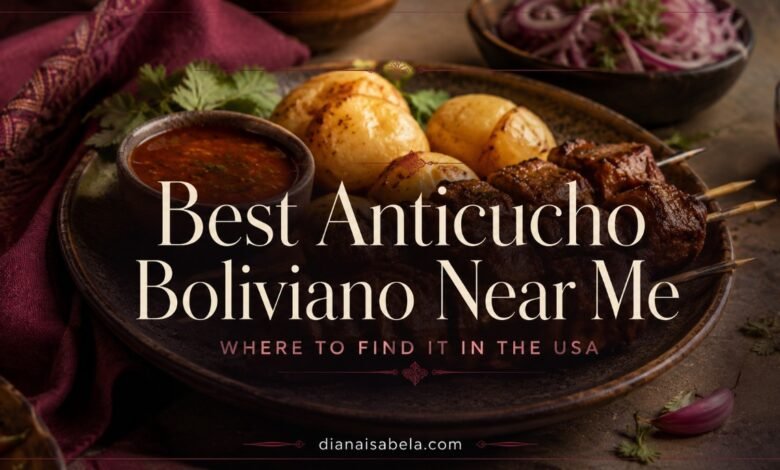
I have a small disagreement with restaurant search engines. Ask for Bolivian anticucho, and within seconds they begin offering every beef-heart skewer between Miami and Los Angeles as if the Andes were one enormous restaurant with a shared menu and suspiciously efficient catering.
Some of those skewers may be wonderful. They are simply not all Bolivian, and that distinction is worth making because anticucho is much more interesting than the generic English description “grilled meat on a stick” suggests. In Bolivia, and especially in the food culture of La Paz, the dish is closely associated with beef heart, intense heat, potatoes, chile and sauces that give a very lean piece of meat the moisture and contrast it needs.
I grew up with a chef for a father, so ingredients that make other people hesitate usually make me curious about technique first. Beef heart is a perfect example. It is not mysterious, but it is unforgiving: trimmed and cooked well, it tastes deeply beefy, smoky and satisfying; treated lazily over weak heat, it can acquire roughly the same elegance as chewing the strap of an expensive handbag.
This guide is for the person who actually wants to find Bolivian anticuchos in the United States, not for someone who needs another giant restaurant list assembled from whatever happened to contain the word anticucho. I am looking at the wider Bolivian menu, the preparation, the region, whether the restaurant still exists, whether the dish is really available and whether the information is useful enough to justify getting in the car.
Where I would start looking before hunger ruins my judgment
If I had to find Bolivian anticuchos in the United States tonight, I would not begin with the biggest cities or the most glamorous dining scenes. I would begin where Bolivian food communities give the dish a realistic chance of appearing: Northern Virginia and the Washington metropolitan area are especially promising, Maryland adds another useful pocket, Queens has a meaningful Bolivian food history, Providence has an interesting Bolivian–Peruvian overlap, and Florida deserves careful investigation because anticucho itself is easy to find there while the specifically Bolivian version is considerably harder to prove.
That geography is more useful than simply saying “try a Latin American restaurant.” The phrase Latin American covers an absurd amount of culinary territory. It is rather like telling somebody searching for a particular vintage Chanel jacket to begin in “a store that sells clothes.” Technically defensible, practically hopeless.
Start with the state that makes sense for you:
I am deliberately stopping at five for now. California, Texas, New Jersey, Illinois and several other states have plenty of South American restaurants and, in some cases, excellent anticuchos. What they do not yet give me is enough reliable Bolivian-specific inventory to justify creating a state page merely because fifty matching buttons would look impressively symmetrical.
One habit will save you a surprising amount of driving: if anticuchos are the entire reason for the trip, call the restaurant and ask whether they have anticuchos de corazón that day. Traditional dishes can sell out, disappear temporarily or live on weekend and special menus that are much less tidy than the permanent online menu suggests.
The first American places I would actually investigate
A nationwide hub should not swallow the job of the state guides, so I am not going to turn this section into forty nearly identical restaurant cards. These are the places that explain why particular regions rise to the top of the search. Some have direct anticucho evidence; others are established Bolivian kitchens where the sensible move is to call rather than pretend an abbreviated online menu tells us everything cooking in the kitchen.
Cristina’s Carry Out — Falls Church, Virginia
Falls Church is one of the most useful places to begin a Bolivian food search in Northern Virginia, and Cristina’s belongs near the top of my call list. The restaurant is identified locally with Bolivian cuisine, and anticucho appears in current restaurant data associated with the business. It is also a useful reminder that a dish like this does not require a grand dining room to be interesting; a small carry-out kitchen with the right grill is considerably more relevant than an expensive restaurant whose only connection to Bolivia is a vague “Latin flavors” paragraph.
If the anticuchos are available, wonderful. If they have sold out, you are still in an area where another Bolivian dinner is possible without turning the evening into an interstate road movie.
El Pike Restobar — Arlington, Virginia
El Pike has served Bolivian food in Arlington for decades and currently publishes a menu with dishes such as salteñas, silpancho, charque, sopa de maní, picante de pollo and trancapecho. I do not currently see anticucho on that published menu, which is precisely why I am not stamping a large “confirmed” label onto the restaurant simply because it would make the page look more decisive.
This is a place I would call if I were already searching around Arlington. An established Bolivian kitchen is a sensible lead; a two-hour drive based on wishful thinking is not.
Kantuta’s — Silver Spring, Maryland
Kantuta’s is one of the reasons Maryland deserves its own guide. The restaurant identifies itself around Bolivian and Latin American food, while its wider menu includes the sort of dishes that give an anticucho listing meaningful context rather than leaving a lonely skewer floating on a generic menu. Salteñas, sopa de maní and other Bolivian dishes make this much more useful for somebody who wants an actual Bolivian meal rather than a single checkbox.
I would not necessarily order three more heavy meat dishes beside the skewers simply because enthusiasm has taken control of the table. Anticucho becomes more interesting when the rest of dinner changes texture and temperature instead of trying to out-muscle it.
Julianna’s — Providence, Rhode Island
Providence gives this story a different shape. Julianna’s openly moves between Bolivian and Peruvian food rather than pretending neighboring traditions live behind an invisible wall. Its current menu identifies Bolivian salteñas and Bolivian-style dishes alongside Peruvian preparations, while anticuchos have also appeared in its current ordering system. That makes it useful, but it also means we should not lazily claim that every element on the plate represents one pristine national template.
I actually like that complexity. Immigrant food rarely behaves as neatly as a museum label. Restaurants adapt, families cross borders, cooks borrow from colleagues and customers order what they know. The interesting part is understanding the overlap, not pretending it does not exist.
For the deeper local picture, I am separating the addresses, additional candidates and city-by-city logic into the individual Virginia, Maryland, New York, Rhode Island and Florida guides rather than forcing the national page to impersonate five state directories at once.
To understand anticucho, imagine La Paz after the light begins to change
The dish makes more sense when you stop thinking of it as an “appetizer” and start thinking about the city around it. In La Paz, anticucho belongs to a living street-food tradition built around beef heart, potatoes, chile, sauce and the unmistakable theatre of a hot grill. The anticuchera is part cook, part keeper of repetition: she knows the heat, the timing and the look of meat that has been turned enough times to become instinct rather than instruction.
That image matters because restaurant menus can make traditional food look strangely static. You get a dish name, a description, a price and an “add to cart” button, as if street food emerged fully formed from an e-commerce plugin. The real experience is more kinetic: smoke rises, meat cooks quickly, people arrive and leave, potatoes catch sauce, chile wakes up the palate, and the grill accumulates its own history over an evening of service.
La Paz continues to celebrate anticucho as part of its traditional gastronomy, and city events have featured groups of anticucheras selling the dish. I love that detail because it reminds us how much culinary authority exists outside celebrity-chef mythology. Technique does not become less serious because the person mastering it is standing beside a street grill instead of beneath pendant lights in an open kitchen.
A beautiful restaurant plate can absolutely respect anticucho. What I care about is whether refinement remembers the reason the dish works: direct heat, properly cooked heart, potato that belongs there for more than decoration, and sauce with enough character to make you want the next bite.
Beef heart is much less dramatic than people expect
The words beef heart have a remarkable ability to make people who happily eat ribeye suddenly develop a strong emotional attachment to chicken. The hesitation is understandable, but heart is not much like the softer organ meats people often imagine. It is a hardworking muscle with a distinctly beefy flavor and a firm structure, and that muscular texture is exactly why technique matters so much.
A cook first has to trim it properly. Heart is not a tidy steak cut waiting politely for the grill; connective tissue and tougher sections need attention, and the pieces should be cut with enough consistency that they cook at roughly the same speed. Otherwise one bite can be tender while the next feels as if it has plans to outlive you.
Thin pieces and strong heat are a very useful friendship
When the meat is cut sensibly, high heat can brown the exterior quickly before the lean interior dries out. This is one of those basic kitchen principles my father repeated in a hundred different forms: when the pan or grill is not ready, the ingredient pays for your impatience. Weak heat lets moisture escape while you wait for color; strong heat gives you a chance to develop char while the center still has something worth protecting.
The marinade matters too, but not in the magical way recipe mythology sometimes suggests. Vinegar, chile, garlic and spices bring flavor and affect the surface, yet no marinade can rescue poor trimming or a cook who has forgotten the skewers while checking Instagram. Tenderness is a relationship between the ingredient, the cut and the heat, not an inspirational quote about soaking meat overnight.
What should the texture actually feel like?
Expect more structure than a filet. A good anticucho should still have chew, but it should be pleasant chew rather than a resistance-training exercise. The flavor should read as beef first, with smoke, seasoning and chile building around it. If you are expecting liver, the surprise is often how familiar the meat actually tastes once the word heart stops doing psychological damage.
I go deeper into that first-bite question in What Does Bolivian Anticucho Taste Like?, especially for anyone who is curious but not quite ready to order an organ with the confidence of Anthony Bourdain walking into a night market.
The potato is doing more work than it gets credit for
A good anticucho plate is a small lesson in balance. Beef heart brings browned, smoky intensity and a relatively lean texture; potato brings softness and starch; chile adds aroma and heat; sauce restores moisture and can introduce richness or acidity. None of those pieces needs to scream because the pleasure comes from moving between them.
This is why I dislike descriptions that reduce the potato to a “side.” The potato absorbs what the meat leaves behind and catches the sauce beautifully, giving your mouth a softer interval between bites of charred heart. It is the culinary equivalent of leaving enough negative space in an outfit for the interesting piece to breathe — and yes, I know I promised not to compare everything to clothes, but some habits survive.
Peanut-based chile sauces appear in descriptions of La Paz-style anticucho, and the logic is lovely: peanut gives body and richness while chile keeps the sauce awake. Other cooks and regions may use different sauces, and I would never expect every Bolivian restaurant in America to reproduce one sacred formula as if somebody had filed a patent in 1847. Traditional cooking has always changed between households long before it crossed national borders.
What matters to me is whether the plate makes culinary sense. The sauce should support the grilled heart rather than bury it under sweetness, and any fresh, acidic or spicy element should help reset a mouthful built around char and starch. When every component is rich, soft and brown, dinner starts planning a nap without consulting you.
Bolivian and Peruvian anticuchos are family, not photocopies
This is probably the most important distinction for anybody searching in the United States. Peru has an enormous, internationally visible anticucho tradition, and many American cities have considerably more Peruvian restaurants than Bolivian ones. A generic search for “anticuchos near me” therefore produces Peruvian results very naturally, and there is nothing wrong with that unless you specifically wanted the Bolivian tradition.
Both cuisines are connected to a broader Andean history, beef heart matters deeply to both, and heat, chile and potatoes move through both traditions. The differences become easier to notice when you look at the entire meal rather than trying to identify a nationality from one skewer. Peruvian menus often signal themselves through ingredients and dishes such as ají panca, rocoto, choclo, ceviche, causa and lomo saltado. A Bolivian restaurant may surround anticucho with salteñas, silpancho, sopa de maní, chairo, charque, pique macho, api, mocochinchi and llajua.
Even then, cuisine refuses to behave like a spreadsheet. A Bolivian kitchen can use an ingredient associated strongly with Peru; a Peruvian cook can serve a peanut sauce; a restaurant may have Bolivian owners, Peruvian staff and customers who have spent twenty years asking for both. Food crosses borders with significantly less paperwork than people do.
For that reason, I would never identify a “Bolivian anticucho” from one ingredient alone. I look at how the restaurant describes itself, the rest of the menu, the preparation and the accompaniments. The deeper story belongs in Bolivian Anticucho vs Peruvian Anticucho, where there is enough room to talk about overlap without turning dinner into a flag competition.
Old menus are surprisingly good at haunting the internet
A menu can be completely authentic and still be useless for tonight. Restaurants close, businesses move, dishes become weekend specials, prices age badly and ordering platforms continue displaying items long after availability has changed. Sometimes a restaurant has the opposite problem: it still serves a traditional dish, but a redesigned website decides twelve cocktail photographs are more important than explaining what the kitchen actually cooks.
That is why I mentally separate three questions whenever I research a local food lead: does the restaurant currently exist, is it genuinely relevant to Bolivian food, and is anticucho actually available or at least worth calling about? Those questions sound obvious, yet the web is full of local guides that have managed to answer none of them while still awarding five stars.
New York illustrates the problem beautifully. Old indexed information for Renacer in Woodside contains a wonderfully specific Bolivian anticucho description with beef heart, boiled potato and peanut sauce. It is valuable evidence of how the dish appeared in Queens, but the restaurant is now reported closed. That makes it part of the culinary story, not somewhere I am going to tell you to take an Uber.
The practical rule is simple: a historic menu can teach us about a dish; it cannot prove that a restaurant is open tonight.
Your first anticucho does not need to become a test of courage
There is no medal for eating heart, so I would not approach the plate as if someone were filming an episode called Diana Proves She Is Adventurous. If grilled beef sounds good to you, begin there. Try a bite with only a little sauce so you understand the meat, then combine it with the potato and chile and notice how much more complete the dish becomes.
If the restaurant serves llajua, taste it before applying it with the confidence of somebody who has never been betrayed by a green sauce. If there is a peanut-based accompaniment, try it with both the meat and potato; that combination often makes much more sense than tasting the sauce in isolation.
How much should you order?
There is no universal answer because portions vary dramatically. Some places sell an individual skewer, others serve several pieces with potatoes and sauce, and restaurant versions can be large enough to function as a substantial appetizer. If you are alone and curious, one order plus another dish is usually a more interesting introduction than trying to make anticucho carry the entire meal. For two people, it is naturally shareable; for a group, order enough that nobody is forced into an elaborate politeness ritual over the final piece.
If you would rather know the little details before the server arrives, my separate guide to how to eat Bolivian anticuchos covers the skewer, sauces, ordering language and first-timer questions without turning supper into etiquette school.
Once you find the skewer, please allow yourself to have dinner
Search engines do something peculiar to our brains: after spending twenty minutes hunting one dish, we arrive at the restaurant as though ordering anything else would breach a contract. Anticucho can be the reason you came, but a good Bolivian kitchen usually has other things to say, and the best second dish is not necessarily more grilled meat.
If you want something warm and completely different
Sopa de maní moves the meal from smoke and chew toward warmth, softness and comfort. Peanut appears in a very different role here, which is exactly why the pairing can be more interesting than ordering another appetizer with the same texture.
If pastry is involved, my discipline becomes unreliable
Salteñas bring soft dough, a juicy filling and that tiny moment of concentration required to eat one without turning your shirt into evidence. They are also one of the easiest ways to experience another recognizable side of Bolivian food in restaurants that serve both.
If “just a snack” has clearly failed
A silpancho, pique macho, charque, chicharrón or another house specialty can take over once anticucho has done its job. I would choose according to the restaurant rather than obeying a theoretical checklist; kitchens tend to reveal their personalities through the dishes regular customers keep ordering.
If you want something cold in the glass
Mocochinchi is worth noticing when available. If the bar has Singani and actually knows what to do with it, a chuflay belongs to a completely different but very enjoyable Bolivian conversation.
For the full plate rather than one skewer in isolation, see What to Eat With Bolivian Anticuchos.
Street anticucho and restaurant anticucho live different lives
Moving a street food into a sit-down restaurant changes the experience even if the recipe remains recognizably the same. On the street, the grill is part of dinner: you see smoke, smell the meat before ordering, watch skewers move over heat and eat something designed around immediacy. Potato and sauce have practical jobs because the whole system evolved around serving food quickly, hot and satisfying without requiring twelve pieces of cutlery.
A restaurant has other possibilities. The kitchen can control presentation more carefully, sauces may become smoother, portions can grow and somebody may decide the plate desperately needs micro cilantro. None of this is automatically bad. Traditional food does not become fraudulent because it acquired ceramic plates, just as a beautiful dress does not lose its soul because it moved from a market stall to a proper wardrobe.
The useful question is whether refinement preserves what made the dish compelling. I care more about properly cooked heart than a perfect brushstroke of sauce, more about real char than the color of the plate, and more about whether potato and chile still make sense with the meat than whether the garnish looks expensive.
I also refuse the opposite cliché — that a plastic stool automatically grants authenticity. A restaurant cook can understand anticucho profoundly, and a street vendor can have an off night. Technique is wonderfully democratic that way. The setting changes; the meat still knows whether somebody overcooked it.
The phone call that can save a fifty-minute drive
You need perhaps thirty seconds, not a culinary deposition. Ask whether they have anticuchos de corazón today, confirm that they are made with beef heart if the menu is ambiguous, ask how many come in an order if you are feeding a group, and check whether they are available at the time you plan to arrive. If the answer is no, one more question — “Do you usually have them on another day?” — can turn a failed dinner plan into a useful future one.
This is one of those moments when old-fashioned human contact remains inconveniently superior to an app. The person inside the restaurant knows what the kitchen prepared this morning. Your cached menu does not.
If the anticuchos sold out, you have not been personally betrayed
I understand that it can feel surprisingly intimate after a long drive, but a genuine Bolivian restaurant still gives you options. Salteñas are an obvious pivot when available; sopa de maní takes you somewhere warmer and softer; silpancho is ideal if disappointment has made you aggressively hungry. Depending on the restaurant, charque, fricasé, chicharrón, pique macho, chairo or falso conejo may be better choices than forcing yourself into the nearest generic skewer simply because you wanted to preserve the original plan.
Sometimes the smartest question is simply, “What is especially good today?” A restaurant worker may point you toward the thing the kitchen is genuinely proud of, which is often much more useful than trying to win an argument with a search result.
What should anticuchos cost?
There is no particularly honest nationwide number because American restaurant portions are wildly inconsistent. One place may sell a single palo, another gives several pieces with potatoes and sauce, and a more polished restaurant may price the dish as a substantial appetizer. City rent, labor, portion size and service model matter as much as the ingredient itself.
I would therefore use current price as planning information rather than a ranking system. A cheaper skewer is not automatically more traditional, and a higher price is not evidence that somebody has discovered a rare breed of emotionally sophisticated cow. What matters is whether the portion, preparation and restaurant context justify it.
On the individual state pages I will include specific prices only when the menu information is recent enough to help rather than confuse you.
How I decide whether a Bolivian anticucho lead is worth your time
I am not searching for museum-level purity, because that is not how living food works. I am looking for coherence. The restaurant’s wider menu should make sense with its claimed identity, the anticucho description should tell us something useful about the protein or preparation, and the final plate should make culinary sense rather than borrowing the word anticucho because it sounds exciting.
The aim is not to police grandmothers. It is to keep a local food guide useful enough that the person reading it can make a reasonable dinner decision.
Why anticucho can feel comforting even when you did not grow up with it
Fire gives unfamiliar food a curious psychological advantage. Smoke, browned meat, hot potato and chile are sensory signals many people understand before they know anything about the recipe’s history. You may never have eaten Bolivian anticucho, yet grilled meat beside a potato does not feel abstract; the unfamiliar details — heart, llajua, a particular chile profile — have somewhere comfortable to land.
This is one reason diaspora restaurants fascinate me. At their best, they give you enough familiarity to enter a cuisine without sanding away everything distinctive. The worst version of “accessible” food removes every sharp edge until the dish tastes like something you already knew. The best version gives you a bridge and still lets the other side remain interesting.
Anticucho has a very good bridge.
If your state is missing, that tells you something useful
I have not forgotten California, Texas, Illinois, New Jersey, Connecticut, Massachusetts or the rest of the country. In several of those states, finding the word anticucho is remarkably easy. The difficult part is building a page specifically about Bolivian anticucho without quietly filling it with Peruvian restaurants, historical listings or businesses whose only connection to the dish is another type of grilled skewer.
California, for example, has a large and fascinating Peruvian anticucho landscape. That may deserve its own story, but it does not automatically justify a page promising Bolivian anticuchos in California. Illinois has genuine Bolivian food businesses, yet I want stronger dish-specific evidence before asking anybody to use a dedicated guide. Florida has both historical Bolivian anticucho records and abundant current anticucho options, but there the main job is separating what is active now from what survives online as an old menu.
New York presents another kind of problem: Queens has a meaningful Bolivian food history, but restaurant turnover makes yesterday’s excellent menu poor evidence for tonight’s dinner. That is why the first five state guides are not a popularity contest. They are simply the places where the current evidence gives us something substantial enough to investigate without manufacturing a page for the sake of symmetry.
If you have become more interested than you originally planned
This is usually how food research works on me. I begin looking for dinner and twenty minutes later I am thinking about migration, street vendors, muscle structure and whether peanut sauce can tell us anything meaningful about national identity. If you have reached the same stage, these are the next four rabbit holes.
What stays with me after following this dish around America
Anticucho is not compelling because beef heart is exotic. It is compelling because simple food exposes technique. You notice whether the pieces were trimmed thoughtfully, whether the marinade had a purpose, whether the grill was actually hot and whether somebody understood the moment when firm becomes tough. There is very little for the cook to hide behind, which I find rather elegant.
When everything works, the result has the confidence of the best street foods: complete without appearing to have tried very hard to impress you. The heart is smoky and beefy, the potato catches the sauce, chile keeps the plate awake, and the entire thing makes sense before anyone needs to explain its philosophy.
Somewhere in La Paz, an anticuchera can probably accomplish all of that in less time than it took me to research one American restaurant menu. Fair enough. My contribution is simply to make the American search less ridiculous: if you are craving Bolivian anticuchos, I would rather help you drive toward a real possibility than toward an old menu, the wrong cuisine or a restaurant that disappeared three years ago.
When you finally find the right skewer, eat it while it is hot, drag the potato through the sauce, taste the chile before announcing that you love spicy food — and perhaps save the white silk blouse for another evening.
Know a Bolivian anticucho place I should investigate?
The American Bolivian food scene is much larger than the portion of it maintaining perfect websites. If you know a restaurant, family kitchen, food truck, weekend pop-up, community event or bakery counter serving real Bolivian anticuchos, send me the name, city and state. A current menu photo, price, address or note about which days the dish is served is even better.
Email: info@dianaisabela.com
I am especially interested in good leads outside the first five state guides. This page should grow because the food exists, not because somebody decided all fifty states would look impressive in a navigation bar.
Where can I find Bolivian anticuchos in the United States?
Northern Virginia and the Washington-area suburbs are strong places to begin, especially around Falls Church and Arlington, with additional useful leads in Maryland and Providence. New York and Florida also deserve deeper local research, although restaurant availability varies by city.
What are traditional Bolivian anticuchos made from?
Classic Bolivian anticuchos are strongly associated with beef heart. The heart is trimmed, cut into pieces, seasoned or marinated and grilled on skewers. Potatoes and chile-based sauces are characteristic companions, with peanut llajua appearing in descriptions connected with La Paz.
Does beef heart taste like liver?
No. Beef heart is muscular tissue and generally tastes recognizably beefy rather than liver-like. It has a firmer texture than a tender steak, so careful trimming and effective high-heat cooking are important to keep it pleasant rather than tough.
Are Bolivian anticuchos spicy?
The grilled meat itself does not have to be extremely hot, but chile and spicy sauces are important in many traditional servings. Heat levels vary widely, so taste the restaurant’s sauce before adding a large amount.
What is usually served with Bolivian anticuchos?
Potatoes are one of the most characteristic accompaniments. Depending on the preparation, anticuchos may also be served with llajua, chile sauce, peanut-based sauce or other sides that bring moisture and contrast to the grilled heart.
Are Bolivian and Peruvian anticuchos the same?
They share a broader Andean history and beef heart is important in both traditions, but common seasonings, accompaniments and restaurant contexts can differ. Individual recipes also overlap, especially in restaurants serving both Bolivian and Peruvian food.
What should I ask when calling a restaurant about anticuchos?
Ask whether they have anticuchos de corazón today, confirm that they are made from beef heart if the menu is unclear, ask how many come in an order and check whether they will still be available at the time you plan to visit.
Why does a menu sometimes call chicken or steak anticucho?
Some restaurants use anticucho or anticuchero to describe a seasoning or grilling style rather than exclusively beef-heart skewers. If you specifically want the classic preparation, look for anticuchos de corazón or ask the restaurant directly.
Can Bolivian anticuchos be ordered for takeout?
Many restaurants may offer anticuchos for takeout, but availability and ordering policies vary. Because grilled heart is best while hot, pickup timing matters, and it is worth calling if the online ordering menu is unclear.
What should I order if a Bolivian restaurant is out of anticuchos?
Look at what that particular kitchen does well. Salteñas, sopa de maní, silpancho, charque, chicharrón, pique macho, chairo or falso conejo can all be worthwhile alternatives depending on the restaurant.