Shchi Soup Near Me in Indonesia: Why Bali Is Your Best Place to Look
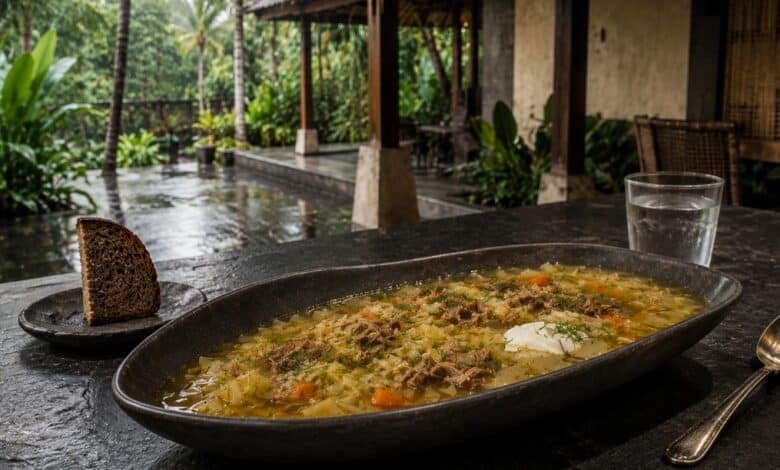
If you are searching Indonesia for shchi, I would save myself a great deal of optimistic scrolling and begin with Bali. The island has developed a surprisingly visible Russian and broader Eastern European food scene, with borscht, pelmeni, syrniki, blini, solyanka and even seasonal cold soups appearing across cafés and restaurants from Seminyak to Ubud.
Classic cabbage shchi is the awkward guest who has not yet bothered to leave a reliable online calling card. I can confirm restaurants currently cooking recognisably Russian soups in Bali, but I cannot confirm a permanent shchi listing strongly enough to tell you to get on a scooter and cross the island for it. That distinction matters. Russian food nearby is evidence of possibility, not evidence of today’s cabbage soup.
Fortunately, Bali is unusually good territory for the kind of search shchi requires. There are Russian-speaking residents, cafés serving home-style food, delivery businesses and restaurants whose soup lists extend well beyond one token borscht. And if all of that fails, Indonesian markets already sell most of what you need to make a very good pot yourself.
The Honest Answer: I Found Russian Soup in Indonesia, but Not a Shchi Bowl I Would Promise Today
Bali currently has several businesses actively serving Russian or Slavic food. Current menus and restaurant information confirm borscht, pelmeni, blini, cutlets and other familiar dishes. Some kitchens go further: solyanka and okroshka are also currently visible in Bali food listings.
What I did not find was a sufficiently current, reliable menu stating that classic shchi is a permanent offering. That does not prove nobody on the island cooks it. It means I would treat shchi as a dish to ask about rather than a dish to assume.
This is exactly where knowing the soup helps. Fresh shchi may be described simply as Russian cabbage soup. Sour shchi may surface through sauerkraut wording. A Russian-speaking kitchen may use the Cyrillic щи and never bother with the English spelling at all.
If you need to identify what counts as shchi before beginning that hunt, my introduction to the cabbage, fermented and green versions gives you the useful distinctions first.
Bali Is the Place Where I Would Actually Spend Time Looking
There is a wonderfully improbable logic to Russian soup on a tropical island. Bali attracts long-term residents from around the world, and enough Russian-speaking diners live or stay here that home-food cravings have produced real restaurants rather than occasional novelty nights.
That means you can move between Seminyak, Canggu, Uluwatu and Ubud and find businesses serving dishes such as borscht, pelmeni and syrniki without treating the experience as a cultural theme park. The food exists because people actually want to eat it.
For shchi, that matters more than finding one old review containing the word “cabbage.” A kitchen already cooking several Russian soups has the equipment, ingredients and audience to make a rotating shchi special far more plausibly than a generic international café.
I would therefore treat Bali as a network rather than one destination: ask restaurants what soup is on today, check Russian-language community recommendations, search delivery menus, and look at cafés that already demonstrate a real Slavic repertoire.
The Restaurants I Would Ask First
Eden Hookah Club
Eden currently operates Bali venues in Seminyak, Canggu, Ubud and Uluwatu and actively promotes a Russian menu alongside its broader food offering. Its current material confirms borscht, pelmeni and blini, while the restaurant’s current menu also includes okroshka.
That is a much better clue than a restaurant that once ran a Russian-themed dinner in 2019. I would still ask specifically whether shchi or Russian cabbage soup is available before travelling for it. A serious Russian menu makes the question sensible; it does not make the answer automatically yes.
Vkusno Bali
Current ordering information for Vkusno includes borscht and solyanka, which immediately puts it on my list of kitchens worth checking if the real objective is Russian soup rather than merely Russian-labelled food.
Solyanka also tells me something useful about the kitchen’s flavor vocabulary. A restaurant willing to cook a strong meat broth with pickled components is operating beyond the universal tourist trio of pancakes, dumplings and beet soup. Again, I found no current permanent shchi listing, so call or message rather than assuming.
Ubud
Ubud has several current Russian or Slavic food options, and that density makes the area worth searching even when one particular soup is not advertised. Current restaurant listings show borscht, dumplings, cutlets and other familiar dishes at multiple venues.
I would search the daily soup rather than attach the entire mission to one restaurant. Home-style dishes can rotate quickly, especially in cafés whose audience includes long-term residents rather than only one-time tourists.
Once the dish moves away from permanent restaurant menus, the same logic I use with Eastern European delis becomes useful: look for the kitchen that actually cooks home food, then ask what soup is in the pot today.
Borscht Everywhere Does Not Mean Shchi Is Hiding Under the Same Name
This is probably the easiest mistake to make in Bali because borscht is highly visible. Russian cafés advertise it, review sites mention it, delivery menus photograph it beautifully, and its beet-red colour is rather more cooperative with social media than a golden bowl of cabbage.
Shchi is not pale borscht. Fresh shchi builds itself around cabbage and broth. Sour shchi gets its deeper acidity from fermented cabbage. Neither needs beetroot to explain itself.
If a restaurant tells you, “We don’t have shchi, but we have borscht,” that can still be a very good lunch. It just is not the same soup. This is where I separate their flavors once the shared potatoes, carrots and sour cream stop being a useful comparison.
Solyanka Is Actually an Encouraging Sign
Finding solyanka on a Bali menu interests me more than finding yet another generic “Russian salad.” It tells me the kitchen is willing to make a fairly specific soup with a stronger identity: rich broth, pickled cucumber, meat and a distinctly salty-sour profile.
For someone seeking shchi, this does not make solyanka a replacement. But it makes that kitchen worth asking. A restaurant with an active Russian soup repertoire is exactly where a less-famous cabbage soup may appear as a special.
If you decide to order what is actually available rather than continue the hunt, my comparison explains why fermented-cabbage shchi and pickle-driven solyanka satisfy completely different kinds of sour-soup craving.
Bali Is Small on a Map and Enormous When Traffic Gets Involved
“Available in Bali” is not the same thing as “near me.” A restaurant in Ubud is not conveniently around the corner when you are in Uluwatu, and anyone who has spent an optimistic afternoon watching a navigation estimate become an autobiography already understands this.
Search Like Someone Who Actually Wants the Soup, Not Just Results
One English spelling is not enough. I would use several versions and combine them with the Bali area I am willing to travel to.
And Then Ask the Question the Search Result Cannot Answer
If I found a promising Russian café, I would not send twelve paragraphs over WhatsApp. I would ask whether they have shchi today. If the answer is yes, then I want three details: fresh cabbage or sauerkraut, what broth, and whether it is a permanent item or a special.
- Do you have shchi or Russian cabbage soup today?
- Is it made with fresh cabbage or sauerkraut?
- Is the broth beef, chicken, mushroom or vegetable?
- Does it contain potatoes?
- Is sour cream served separately?
- Is it available every day or only sometimes?
Those questions are enough to prevent most surprises. This is the longer version of how I decode the bowl when a menu description says almost nothing useful.
Fresh or Sour Matters More Than Whether the Restaurant Looks Russian Enough
Fresh-cabbage shchi is the easier, gentler introduction. The cabbage softens into the broth but retains a mild vegetal sweetness, and chicken or beef can give the soup substance without turning it sour.
Sauerkraut changes the experience. Fermentation gives the broth a deeper tang and makes the cabbage itself more assertive. Add beef, potato and sour cream and the result can feel extraordinarily wintry despite being eaten twenty minutes from a palm tree.
If a café finally says yes but asks which kind you want, this is my taste-and-texture comparison of the two versions before you commit.
Indonesia Is Also a Good Place to Remember That Shchi Does Not Require Beef
Beef shchi may be the version many people picture first, but chicken, mushrooms and meatless broths all make sense within the larger family. That flexibility matters when a dish travels.
Indonesia has a predominantly Muslim population, and many restaurants naturally make ingredient and sourcing choices around halal dining. I would therefore never infer the meat from the word “Russian.” Ask. A chicken shchi can be excellent, and a mushroom version can be deeply savory if the broth is taken seriously.
The important thing is knowing what you are ordering rather than judging a soup against an imaginary universal pot.
Does Hot Shchi Make Any Sense in Bali? Strangely, Yes.
I admit that beef broth and sauerkraut are not the first things that come to mind while standing in tropical humidity. And yet people eat hot soup in warm climates all over the world, including Indonesia, where steaming bowls are hardly culinary strangers.
The more interesting adjustment is appetite. In Bali heat, I would prefer a lighter chicken or fresh-cabbage shchi at lunch and save a rich sour beef version for a rainy evening, an air-conditioned restaurant or the wet season when comfort food suddenly feels much less geographically confused.
A smaller bowl also makes sense. Shchi does not have to arrive as a winter survival exercise. It can be a first course before dumplings, cutlets or something fresh.
And Russian cuisine has its own answer to hot weather anyway. Current Bali menus offering okroshka prove that cold soup can travel to the tropics with considerably less existential difficulty.
If You Find Okroshka Instead, Take the Climate’s Hint
Okroshka is almost comically well suited to Bali compared with steaming sauerkraut broth. It is cold, fresh and typically built around chopped vegetables, potato, herbs and egg with a tangy liquid base such as kefir or kvass depending on the version.
That does not make it a substitute for shchi in flavor. It makes it another good example of how broad Russian soup culture actually is. The cuisine knows winter, but it also knows that humans occasionally live through July.
If the restaurant has borscht, solyanka and okroshka but no shchi, this is my guide to choosing among the other soup personalities without treating them as interchangeable.
What About Jakarta?
Jakarta is large enough that virtually any international food search feels plausible, but I found much stronger current evidence for Russian dining in Bali than for a dependable shchi trail in the capital. That changes my strategy.
I would search delivery and social channels before planning a restaurant expedition. Look for Russian home food, Eastern European catering, imported-food businesses and community cooks in addition to ordinary restaurants. A soup as domestic as shchi can be much more likely to exist through a small kitchen than through a glossy permanent menu.
Older Indonesian listings do show Russian-style borscht and related food businesses around the country, but old evidence is not dinner. Verify that the business still operates and ask about today’s soup.
My rule for Jakarta: a current message from the kitchen beats a five-year-old restaurant article every single time.
What About the Rest of Indonesia?
Outside Bali and Jakarta, I would not expect an exact shchi search to be especially generous. Surabaya, Bandung and other major cities may have international restaurants or Eastern European home cooks, but city size alone is not evidence that someone has cabbage soup simmering today.
Search for the people and cuisine first. Russian food, Eastern European food, Russian home kitchen, catering and imported grocery searches can reveal the ecosystem around the dish. Then ask directly.
If there is no local community lead, this is one of those rare culinary searches where giving up on restaurants is not actually giving up on the food. Shchi is remarkably forgiving to make at home.
Indonesian Markets Already Sell Almost the Entire Recipe
Fresh cabbage, potato, carrot, onion, garlic, chicken and beef are ordinary ingredients. That makes fresh shchi surprisingly uncomplicated in Indonesia. The shopping challenge is more likely to be good dill, proper sour cream and sauerkraut if you want the sour version.
Large supermarkets and imported-food businesses can help with sauerkraut, but you can also make fermented cabbage yourself if you are comfortable with safe fermentation practices. What I would not do is replace it automatically with a strongly seasoned local pickle and still expect classic sour shchi flavor.
Fermentation traditions can speak beautifully to each other without being identical.
And No, Sauerkraut and Acar Are Not the Same Shortcut
Indonesia has no shortage of clever ways to make vegetables acidic, fresh, fermented or pickled. But sour shchi depends on the character of fermented cabbage, not merely the existence of something sour in the refrigerator.
Adding vinegar can sharpen broth. Adding an Indonesian pickle could create an interesting new soup. Neither reproduces the flavor created when cabbage itself ferments before entering the pot.
If you want classic sour shchi, source or make sauerkraut. If you want to experiment afterward, excellent. First learn the accent before writing the remix.
What Would I Serve Beside Shchi in Bali?
Probably less than I would in January. Sour cream and fresh dill are enough to finish the bowl. Good bread adds texture, though I would not abandon the meal if imported rye proves unnecessarily expensive.
With a lighter chicken or vegetable shchi, pelmeni or a cutlet could make sense as a second course. With a rich sour version full of meat and potatoes, I would stop sooner. Tropical weather has a persuasive way of explaining portion size without any nutritional lecture from me.
If you want the traditional and lighter pairing options in one place, this is how I decide what the bowl actually needs around it.
At Some Point, the Most Direct Route to Shchi Is a Pot in Your Bali Kitchen
I would happily spend an afternoon searching Russian cafés because that is how interesting places get discovered. But if three restaurants tell me they have borscht, two offer solyanka and everyone becomes strangely silent when cabbage enters the conversation, I am buying the cabbage.
Fresh shchi is the easiest place to begin: broth, cabbage, potato, carrot, onion, herbs and whatever protein suits your kitchen. For sour shchi, replace the fresh-cabbage direction with sauerkraut and season more cautiously because fermented cabbage brings salt as well as acidity.
The soup is technically simple enough that ingredients and timing matter more than culinary theatrics. My recipe starts with a proper fresh-cabbage pot and then gives you the turn toward sour shchi without changing dinner into a chemistry exam.
If the Tropical Kitchen Produces Too Much Soup, Freeze It
A large pot of hot soup can feel wonderfully ambitious at six in the evening and slightly accusatory by lunch on day three. Fortunately, shchi freezes well enough that you do not need to organize the rest of the week around cabbage.
Freeze portions before adding sour cream. Potato may soften somewhat after thawing, while fresh dill is much nicer added after reheating. Sour shchi tends to be particularly forgiving because the cabbage was already soft from fermentation.
If freezer space in your villa or apartment is limited, smaller meal-sized containers are much more useful than one glorious frozen monument. This is the storage method I use when I want tomorrow’s soup without eating it tomorrow.
My Actual Indonesia Search Order
So, Where Is the Best Place to Look for Shchi in Indonesia?
Bali is my clear first choice. Seminyak, Canggu, Ubud and Uluwatu already have active Russian-food businesses and current menus showing a broader Slavic soup culture than I could verify elsewhere in Indonesia. That gives you realistic places to ask rather than theoretical restaurants on an old list.
I still would not promise a permanent bowl of shchi today. Ask Eden, Vkusno or another serious Russian-food kitchen about daily soup; search the dish in Cyrillic; check local Russian-speaking food communities; and confirm before travelling across the island.
For Indonesia beyond Bali, search Russian home food and specialty kitchens before expecting a permanent restaurant listing. And if you are following this dish across countries rather than staying on one island, this is where I keep the wider search for shchi around the world.
If Someone Is Quietly Cooking Shchi in Bali, I Want to Know Where
Bali is exactly the kind of place where the best lead may not be the restaurant with the biggest website. It may be a small café making one soup on Tuesdays, a Russian-speaking home cook delivering to Canggu, or an Ubud kitchen whose menu changes depending on what everyone suddenly misses from home that week.
If you find shchi anywhere in Indonesia, send me the island or city, place, exact menu name, current price if you know it, and what was actually in the bowl. Fresh cabbage or sauerkraut matters. So does the broth. If somebody makes an excellent chicken or mushroom version specifically suited to Bali, I am curious about that too.
And if you end up cooking it yourself, tell me what Indonesian shopping changed about the process. Where did you find dill? Which sauerkraut worked? What bread did you serve? Did sour shchi feel absurd in tropical weather right up until the first spoonful? Those are precisely the details I want in a real-world food guide.
info@dianaisabela.comQuestions About Finding Shchi in Indonesia
Can you find shchi in Indonesia?
Possibly, especially in Bali, where several restaurants currently serve Russian and Eastern European food. However, a permanent current shchi listing is difficult to confirm, so ask the kitchen about its daily soup before making a special trip.
Where should I look for shchi in Bali?
Start in areas with an established international and Russian-speaking dining scene such as Seminyak, Canggu, Ubud and Uluwatu. Prioritize restaurants already serving Russian soups and home-style dishes, then ask directly about shchi.
Do Russian restaurants in Bali serve shchi?
Some Bali restaurants currently serve Russian soups such as borscht, solyanka and okroshka, but a permanent shchi listing was not confirmed in this guide. Soup selections can change, so check current availability directly.
What should I search for besides shchi?
Try the Russian spelling щи, Russian cabbage soup, sauerkraut soup and the Indonesian phrase sup kubis Rusia. Use the name of your Bali area as well because island travel times can be significant.
Is shchi the same as borscht?
No. Classic shchi is centred on cabbage, while familiar red borscht is driven by beetroot. Sour shchi gets its acidity from fermented cabbage rather than the earthy sweetness associated with beet soup.
Can shchi be made with chicken instead of beef?
Yes. Chicken shchi can be lighter while still keeping the cabbage-and-broth structure of the soup. Mushroom and vegetable versions are also possible, and the exact preparation varies by household and kitchen.
Can I use kimchi or Indonesian pickles instead of sauerkraut?
They can create interesting soups, but they will not reproduce classic sour shchi. Sauerkraut has a different seasoning and fermentation profile, so use fermented cabbage intended for that style if you want the traditional flavor.
Can I make shchi at home in Indonesia?
Yes. Fresh cabbage, potatoes, carrots, onions, chicken and beef are widely available. Sauerkraut, dill, sour cream and dark bread may require a larger supermarket, imported-food shop or online retailer depending on your location.
What should I eat with shchi in Bali?
Sour cream, dill and sturdy bread are simple companions. A lighter fresh-cabbage soup can also be followed by dumplings or a cutlet, while a rich sour version may already be substantial enough on its own.
Can homemade shchi be frozen in Bali?
Yes. Shchi generally freezes well. Freeze it in practical portions before adding sour cream, expect potatoes to soften somewhat after thawing, and add fresh dill when reheating.