New York makes you earn certain lunches. Colombian sancocho is one of them — not because it is impossibly rare, but because the most interesting pots do not all appear in the same neighborhood, on the same day, or even with the same meat.
Queens is the real playground. In the space of a few neighborhoods you can move from beef sancocho to gallina, oxtail, fish and costilla, sometimes according to a weekly soup calendar that feels more useful than any ranking. Brooklyn gives you a solid beef-rib option, while the Bronx has its own current sancocho stop. The trick is deciding whether today is a “whatever good pot is closest” day or a “I specifically want Sunday gallina and I am willing to organize my afternoon around it” day.
Queens Is Where I Would Begin
There is a reason this guide starts here rather than in Manhattan. Queens has both concentration and variety. You are not merely choosing between Restaurant A and Restaurant B serving approximately the same beef soup. Current menus show gallina on Sunday, fish on Friday, costilla on specific days, Saturday pots and even restaurants listing several different sancochos side by side.
Las Tres Colombian Restaurant
Las Tres has one of the most entertaining soup menus I found in New York because it does not force sancocho into a single identity. The current listing includes Sancocho de Carne, Sancocho de Cola, Sancocho de Gallina, Sancocho de Pescado and Sancocho de Pata.
That is the sort of menu that makes me want to bring another person purely for comparative purposes. Beef and gallina already create very different broths; oxtail adds its own gelatin-rich depth; fish changes the entire direction of the dish; pata moves you toward another texture altogether.
If you are trying to understand sancocho rather than simply eat the nearest bowl, Las Tres is particularly useful because the variations are visible on one menu instead of being scattered across five kitchens.
Grano de Café Colombia
Grano de Café Colombia turns sancocho into a weekly ritual. Its current menu identifies Friday Sancocho de Pescado and Sunday Sancocho de Gallina, each currently listed online at $7.50 for the soup portion.
I love menus like this because they tell you something about how the kitchen thinks. Friday is not simply “soup day”; it has a fish identity. Sunday gallina has an entirely different emotional register — slower, more family-table, more like the sort of pot around which lunch becomes the day’s main event.
For someone staying in Queens for a weekend, I would genuinely use the calendar. Fish on Friday, something else on Saturday, gallina on Sunday. There are worse ways to understand a neighborhood.
El Rinconcito Paisa Restaurant & Bakery
El Rinconcito Paisa is exactly why the day of the week belongs in a useful sancocho guide. Its current menu lists Sancocho de Costilla de Res only Friday, currently at $15.95.
That specificity is valuable. You know you are getting beef rib rather than a vague “beef soup,” and you know not to wander in on Tuesday expecting the same pot.
Costilla is an easy version to love because long-cooked beef rib gives the broth both meat flavor and body. If the connective tissue has had enough time to soften, the rib should yield easily while the broth carries a little of that gelatinous richness without becoming greasy.
Noches de Colombia Queens
Noches de Colombia gives the weekend two different moods. The current Queens listing has a Saturday sancocho section with a small soup plus two accompaniments at $14.95 and a large at $17.95. Sunday shifts to Sancocho de Costilla, with the current listing showing $11.50 for small and $15.95 for large, again with two accompaniments.
The part I like is not merely the pricing. Saturday and Sunday are not presented as interchangeable. If beef rib is specifically what you want, Sunday is the more useful day. If you are flexible and simply want the weekend pot, Saturday works differently.
The two-accompaniment format also matters when comparing value. A $16 bowl that comes as part of a fuller meal should not be judged against another restaurant’s $13 soup-only listing as though the two purchases were identical.
New York al Toque
New York al Toque sits in the middle of one of the city’s most rewarding neighborhoods for Latin American food, and its current direct Toast menu lists Sancocho de Res at $15. There is also a 16-ounce smaller sancocho option currently listed at $8.
The menu allows the main sancocho order with rice, arepa or without either, which makes this one of the clearer choices if you care about portion flexibility. Sometimes you want a serious lunch. Sometimes you are in Jackson Heights and have made the entirely reasonable mistake of wanting four more things afterward.
One caveat: the restaurant’s menu mixes several Latin American influences, so I would choose it because the beef sancocho is currently documented, not because I am trying to declare every item on the menu representative of one Colombian regional tradition.
Brooklyn Has a Particularly Straightforward Costilla Stop
Colombia in Park Slope
Brooklyn’s most useful current Colombian lead is pleasantly uncomplicated: Colombia in Park Slope lists Sancocho de Costilla among its soups, currently at $20 online.
If I lived nearby, this is the kind of menu I would appreciate. There is no requirement to plan an expedition around a once-a-week soup calendar. You see costilla, you know the protein, and you can compare it with ajiaco on the same soup menu if half the table suddenly changes its mind.
Beef rib also travels relatively well compared with delicate fried food. If I were carrying dinner home through Brooklyn rather than eating immediately, sancocho would be one of the less alarming things to put in a takeout bag — assuming the lid has made peace with gravity.
Brooklyn has plenty of Latin American restaurants serving dishes called sancocho, but that does not automatically make each one Colombian. This distinction matters more in New York than in some cities because Dominican sancocho is also widely available. I would rather give you one clearly Colombian current option than pad the page with unrelated bowls simply because they share a name.
The Bronx: One Current Lead, Without Pretending Every Sancocho Is Colombian
Noches de Colombia Bronx
Noches de Colombia’s Bronx location currently has a dedicated Sancochos section on its direct Toast ordering menu, with sancocho listed at $21.17 when I checked it.
The public item name is less specific than the Queens Sunday costilla listing, so if the protein matters to you, this is exactly where I would call and ask what is in the current pot. A menu can confirm that sancocho is being sold without answering whether today’s version is beef rib, another beef cut or something else.
That distinction is not nitpicking. If you have just spent an hour reading debates about gallina versus costilla and then order “sancocho” without asking which one it is, the universe is allowed to laugh at you a little.
The Bronx is also full of Dominican restaurants where sancocho is a completely legitimate and beloved dish. Those bowls are not mistakes; they are simply part of a different culinary tradition. For this particular search, I keep the focus Colombian instead of treating every soup with the same name as interchangeable.
If I Had One Week in New York, I Would Follow the Soup Calendar
New York’s most interesting sancocho information is not a ranking. It is the day of the week. Once you see that, the city becomes much easier to navigate.
This is the part of New York dining I find charming. The internet trains us to believe every food should be available every day, in every neighborhood, until 11:47 p.m. A pot of gallina quietly saying “Sunday” feels almost rebellious.
What Are You Actually in the Mood For?
Once you stop treating sancocho as one dish, the restaurant choices become much easier.
If you want the safest first bowl: costilla
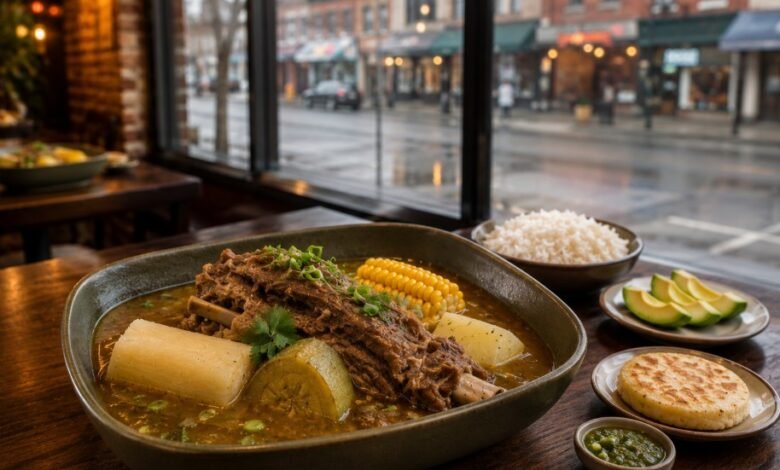
Beef rib is a generous introduction because it gives you a familiar meat profile while the yuca, green plantain, corn and broth explain the rest of the dish. In New York, current costilla leads include El Rinconcito Paisa, the Sunday menu at Noches de Colombia Queens and Colombia in Park Slope.
If you want poultry with more character: gallina
Gallina means mature hen rather than simply any chicken. The meat tends to have more structure and a more pronounced poultry flavor than young chicken. Grano de Café currently marks Sunday for gallina, while Las Tres also lists a gallina sancocho.
If the distinction interests you, I have a separate comparison of how gallina and beef change the broth, meat texture and whole personality of the pot.
If you want richness: cola
Oxtail brings bone, fat and connective tissue into the conversation. Las Tres currently lists sancocho de cola, making it one of the more unusual choices in the Queens group.
If you want something lighter in direction, not necessarily in flavor: pescado
Fish changes sancocho more dramatically than swapping one land animal for another. Grano de Café lists fish sancocho on Friday, while Las Tres currently has a pescado version on its broader soup menu.
If you want to explore rather than commit to one definition
Las Tres is the obvious playground. A menu containing carne, cola, gallina, pescado and pata makes the point better than a paragraph ever could: sancocho is a family of pots, not a single universal recipe.
What a New York Bowl Is Costing
The current examples I checked run from small soup portions under $10 to restaurant orders above $20. The number alone does not tell you whether you are comparing the same amount of food.
$7.50: current Friday fish and Sunday gallina soup listings at Grano de Café Colombia.
$13–$15: several current Las Tres sancocho listings, depending on protein.
$15: Sancocho de Res at New York al Toque on direct Toast.
$15.95: Friday Sancocho de Costilla de Res at El Rinconcito Paisa.
$14.95–$17.95: Saturday small and large sancocho at Noches de Colombia Queens, currently including two accompaniments.
$20: Sancocho de Costilla at Colombia in Park Slope on the current online listing.
$21.17: current direct Toast sancocho listing at Noches de Colombia Bronx.
Delivery apps can make those comparisons messy because the same restaurant may charge differently for pickup, dine-in and delivery. Portion also matters. An eight-dollar soup and a twenty-dollar full sancocho plate may both be perfectly fairly priced; they are simply not the same purchase.
Should You Cross New York for One Bowl?
Sometimes yes. Usually not for the reason you think.
I would cross neighborhoods for a version I could not get near home — Friday costilla, Sunday gallina, oxtail, a particular fish pot. I would not spend ninety minutes chasing one ordinary beef sancocho because somebody described it as “number one” on a list created without regard for where anyone actually lives.
If you are in Jackson Heights, Queens already gives you enough options to keep the search local. If you are in Park Slope, the current costilla down Fifth Avenue makes much more sense than traveling to Jamaica simply to save a few dollars. If you are staying in the Bronx, start there and only build a Queens food trip when the variety itself is part of the fun.
New York Menu Spanish You Actually Need
“¿Qué sancocho tienen hoy?”
Ask which sancocho they have today. This is more useful than asking simply whether they have sancocho because the protein may rotate.
“¿Es de costilla o de res?”
Useful when a menu says only beef. Costilla tells you specifically that rib is involved; res alone does not identify the cut.
“¿Qué viene con la sopa?”
Ask what comes with the soup. Rice, avocado, arepa and other accompaniments vary enough that you should not assume a $15 bowl and another $15 bowl represent the same meal.
“¿Todavía queda?”
This is the question for late lunch or dinner. A menu can be current and the pot can still be finished for the day.
If you want more help decoding restaurant terminology before choosing a place, my broader guide to finding a good Colombian bowl nearby covers the common menu names and what they usually signal.
I Judge the Yuca Before I Judge the Décor
New York can make almost any restaurant look convincing with warm lighting, tiled floors and a very photogenic bottle of hot sauce. Sancocho is less easily impressed.
My first test is often yuca. It should yield easily and have that soft, slightly fluffy starchiness that lets it absorb broth. Fibrous, stubborn yuca can pull you out of the meal immediately. Green plantain should be fully cooked and taste like it has belonged to the pot for a while, not like someone dropped it in after remembering the ingredient list.
Then I look at the meat
Costilla should have benefited from its time in hot liquid. The rib does not need to collapse into threads, but it should not ask for a steak knife either. Gallina is naturally firmer; that is part of what distinguishes mature hen from ordinary young chicken. Oxtail should make sense of its reputation for richness by becoming tender around the bone.
And finally, the broth
I want enough body to show that the pot has been cooking as one thing, not broth plus separately boiled ingredients assembled at the last minute. But “body” is not code for grease. A rich beef sancocho should still allow you to taste herbs, corn and the vegetal side of the starches.
Fish is its own category. There I want a broth that has absorbed seafood flavor without destroying the fish through endless cooking. A Friday pescado pot should not taste like Sunday beef wearing a fish costume.
Queens Also Makes the Best Case for Trying More Than One Version
If your only sancocho experience is costilla, you understand one very satisfying branch of the family tree. New York makes it unusually easy to move around that tree without leaving the city.
Try gallina and notice how the meat stays firmer. Try cola and watch how oxtail changes the broth’s texture. Try pescado and see how suddenly corn, yuca and plantain read differently when beef is no longer supplying the dominant savory note.
This is also where knowing a little about the dish itself becomes useful. Sancocho varies enormously across Colombia, and there is no single national ingredient checklist that every respectable pot must obey. If you are curious about that larger story, my guide to what Colombian sancocho actually is goes deeper into the regional idea behind the dish.
A Word About Dominican Sancocho in New York
You will run into it. Often. Especially once you start searching beyond Colombian restaurants.
Dominican sancocho is not an imitation of Colombian sancocho, and Colombian sancocho is not the default version against which every Caribbean bowl should be measured. They belong to related but distinct food traditions, with different combinations of meats, roots, plantains and seasoning depending on the cook.
That matters for a local search because typing “sancocho” into an app in the Bronx or Brooklyn can give you excellent Dominican options. If Colombian is specifically what you want, verify the restaurant’s cuisine and read the menu wording instead of assuming the first result is the same dish you had in Cali, Bogotá or Queens.
What I Would Do on a Cold New York Weekend
Friday, I would be tempted by the fork in the road: beef-rib sancocho in Jamaica or fish sancocho in Corona. Saturday, Noches de Colombia gives you the uncomplicated pleasure of a weekend pot with accompaniments. Sunday is where I would save my curiosity for gallina.
And if the weather is doing that New York thing where wind somehow finds the exact opening between your scarf and coat, I would abandon any heroic cross-borough plan and go to the best confirmed bowl nearest me.
Sancocho is comfort food. It should occasionally be allowed to comfort you without requiring an itinerary worthy of international diplomacy.
My Favorite New York Food Tips Usually Begin With “Only on Sunday”
Those are the messages I want. Not another giant list of vaguely Colombian restaurants, but the useful details people actually learn by living near a place: the Jamaica kitchen where costilla appears on Friday, the Corona bakery where Sunday means gallina, the Queens counter where the oxtail version is better than the beef one, or the Brooklyn restaurant whose bowl somehow survives the trip home perfectly.
If you know a New York sancocho worth adding, send me the restaurant name, borough and neighborhood, the exact menu name, protein, current price, serving day and what comes on the side. I am also very interested in family versions — especially the ingredients that cause affectionate arguments around the table.
Write to me at info@dianaisabela.com. The more specific the tip, the more useful this New York pot map becomes.
Questions About Colombian Sancocho in New York
Where can I find Colombian sancocho in New York City?
Queens currently has the widest range of documented options in this guide, including Las Tres Colombian Restaurant in College Point, Grano de Café Colombia in Corona, El Rinconcito Paisa in Jamaica, Noches de Colombia Queens and New York al Toque in Jackson Heights. Colombia in Park Slope has a current beef-rib sancocho listing in Brooklyn, and Noches de Colombia Bronx currently lists sancocho on its direct ordering menu.
Where can I get sancocho de gallina in Queens?
Grano de Café Colombia in Corona currently lists sancocho de gallina as a Sunday special. Las Tres Colombian Restaurant in College Point also currently lists sancocho de gallina among several sancocho varieties.
Where can I find sancocho de costilla in New York?
Current examples include El Rinconcito Paisa in Jamaica, Queens, where beef-rib sancocho is listed for Friday; Noches de Colombia Queens, which currently lists sancocho de costilla for Sunday; and Colombia in Park Slope in Brooklyn, where sancocho de costilla appears on the current soup menu.
Is Colombian sancocho available every day in NYC?
Some restaurants list sancocho more broadly, while others tie specific versions to certain days. Current examples include Friday beef-rib sancocho at El Rinconcito Paisa, Friday fish and Sunday gallina at Grano de Café Colombia, and weekend sancocho listings at Noches de Colombia Queens. Call ahead if you are traveling specifically for one version.
How much does Colombian sancocho cost in New York?
Current published examples range from smaller soup portions below $10 to full restaurant orders around $15 to more than $20. Protein, portion size, sides and ordering platform all affect the price, so compare what is actually included rather than using the number alone.
Where can I find sancocho de pescado in Queens?
Grano de Café Colombia in Corona currently lists fish sancocho as a Friday special. Las Tres Colombian Restaurant in College Point also currently includes sancocho de pescado on its soup menu.
Can I find sancocho de cola in New York?
Las Tres Colombian Restaurant in College Point, Queens, currently lists sancocho de cola along with several other sancocho varieties. Oxtail generally gives the broth a rich texture because of its bone and connective tissue.
Is every sancocho in New York Colombian?
No. New York also has a large Dominican food scene, and Dominican sancocho is widely available. If you specifically want Colombian sancocho, check the restaurant’s cuisine and exact menu description rather than relying only on the word sancocho in a search result.
Which borough is best for Colombian sancocho?
Queens currently offers the most variety among the documented New York options in this guide, including beef, beef rib, gallina, fish, oxtail and other versions across several neighborhoods. Brooklyn and the Bronx also have current Colombian sancocho options, so the best choice still depends on where you are and which protein you want.
Should I call a New York restaurant before going for sancocho?
Yes if sancocho is the main reason for your trip, especially for a day-specific gallina, fish or beef-rib pot. Sancocho is usually prepared in batches, so a current menu does not guarantee that the restaurant has portions remaining late in the day.