What Is Colombian Sancocho? Regional Styles, Ingredients & Taste

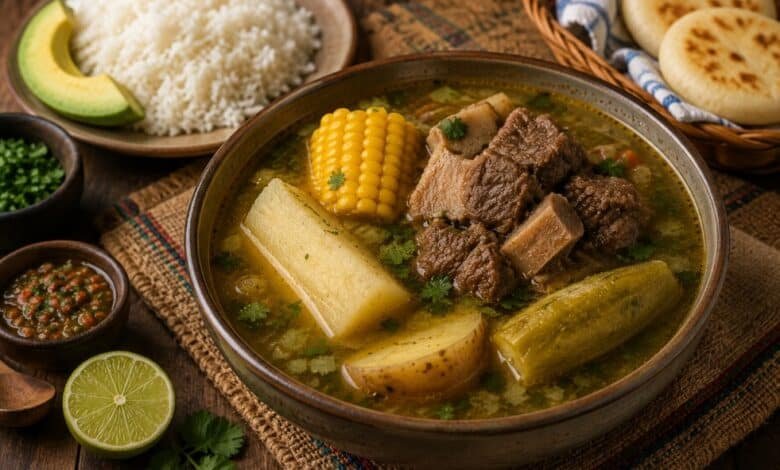
Colombian sancocho is a slow-simmered soup or stew built around broth, meat or fish, starchy vegetables such as yuca and green plantain, and the flavors of the region where it is cooked. There is no single Colombian sancocho recipe that every family follows. A bowl in Valle del Cauca may center on hen, while a coastal version may feature fish, and another kitchen may build its pot around beef rib, oxtail or several meats at once.
That variety is not a problem to solve. It is the point.
Sancocho is one of those dishes that makes much more sense once you stop asking, “What is the official recipe?” and start asking, “What kind of sancocho is this, who cooks it, and where does that version come from?”
Looking for a restaurant rather than an explanation? My Best Sancocho Colombiano Near Me guide covers current restaurant starting points, prices, addresses, proteins and what to ask before making a special trip.
What Is Colombian Sancocho?
Colombian sancocho is a hearty one-pot soup built from a flavored broth, a protein and substantial vegetables or tubers. Yuca, green plantain and potato are among the ingredients most strongly associated with the dish, while corn, herbs and regional vegetables often appear as well.
The protein can vary dramatically:
beef;
beef rib;
hen;
chicken;
oxtail;
pork;
fish;
or several meats in the same pot.
The result sits somewhere between what an English-speaking diner may call a soup and what they may call a stew. There is clearly broth, but the bowl is usually loaded with large pieces of starch and protein rather than finely diced ingredients floating in liquid.
Is sancocho specifically Colombian?
Sancocho exists in several Latin American and Caribbean cuisines. Colombia has its own deep tradition of the dish, but the word itself is not exclusive to Colombia.
That distinction matters when searching for it abroad. Dominican, Puerto Rican, Panamanian and other versions can appear beside Colombian sancocho in search results, and they should not automatically be treated as the same dish.
Why Colombian Sancocho Is Not One Recipe
Trying to define Colombian sancocho through one rigid ingredient list misses how the dish works culturally.
Colombia contains coastal, Andean, Pacific, valley, plains and tropical food traditions with very different agriculture, proteins and local habits. Sancocho adapts to those environments.
One family may insist that gallina is essential. Another may remember beef rib from childhood. A coastal household may consider fish entirely natural. In another region, combining meats is part of the experience.
Authentic Colombian sancocho is a tradition with many regional expressions, not one standardized national formula.
Family recipes matter too
Even within one region, cooks make choices differently.
One pot may contain more plantain. Another may have a stronger cilantro finish. Someone may cook the yuca until the edges partially dissolve and thicken the broth, while another cook prefers large intact pieces.
The difference between two bowls does not automatically tell you which one is “wrong.”
The Anatomy of a Colombian Sancocho Bowl
Despite all the regional variation, most recognizable Colombian sancochos can be understood through several functional parts.
The broth
The broth holds the entire dish together. Meat or fish, aromatics, herbs and starches contribute to it during cooking.
It should not taste like plain water surrounding boiled ingredients. Nor should bouillon completely overwhelm everything else.
The protein
Protein establishes much of the broth’s personality. Beef rib contributes a different body from hen; oxtail behaves differently from fish.
The starches
Yuca, plantain and potato do more than make the bowl filling. They absorb broth, release starch and create the characteristic substantial texture.
The vegetables
Corn and other vegetables bring sweetness and variety. Corn on the cob is especially recognizable in many restaurant presentations.
The aromatics
Onion, scallion, garlic and herbs provide the savory framework around the meat and starch.
The finishing herbs
Cilantro is especially common and can bring freshness to a bowl that would otherwise be extremely heavy.
Why Yuca Is So Important in Sancocho
Yuca, also called cassava, is one of the ingredients that immediately gives many sancochos their characteristic body.
Properly cooked yuca becomes tender and slightly creamy. Its edges may soften into the broth while the center remains substantial enough to pick up with a spoon.
What good yuca should feel like
A fork or spoon should pass through the piece without much resistance.
The texture should be:
soft;
starchy;
slightly fibrous but not woody;
able to absorb broth;
substantial without being hard.
Why undercooked yuca hurts the whole bowl
One hard piece can interrupt the comforting texture of an otherwise slow-cooked soup. If the meat falls apart but the yuca fights back, the pot feels unfinished.
Green Plantain Changes More Than the Flavor
Green plantain in sancocho is not the sweet fried plantain many diners know from Latin American restaurant sides.
Because it is unripe, green plantain is starchy rather than dessert-sweet.
As it cooks, it contributes:
body to the broth;
a gentle vegetal sweetness;
starch;
soft but substantial texture;
a flavor that immediately separates the soup from an ordinary beef-and-potato stew.
Green plantain versus maduros
Maduros are ripe, sweet plantains typically fried or baked until caramelized.
Green plantain in sancocho plays a completely different role. It behaves more like a root vegetable or starch than a sweet side dish.
How the Protein Changes the Entire Sancocho
Sancocho de res
Beef sancocho is robust and familiar to diners who enjoy beef soups and slow-cooked stews.
Depending on the cut, the broth can range from relatively clean to deeply meaty.
Sancocho de costilla
Beef rib adds bone, fat and connective tissue.
A good rib version often has more body than a soup made only with lean cubes of beef. The bone-in presentation also makes the meal feel intentionally rustic.
Sancocho de gallina
Gallina means hen, and that distinction matters.
Hen generally has firmer meat and a stronger poultry flavor than the young chickens most American supermarkets sell.
The texture can surprise someone expecting tender rotisserie-style chicken. Properly cooked gallina may still have more chew, but that concentrated flavor is one reason cooks value it.
Sancocho de pollo
Chicken produces a softer and often milder version than mature hen.
For someone who enjoys chicken soup but is unsure about gallina texture, this can be an easier entry point.
Sancocho de cola
Cola refers to oxtail.
Oxtail contains bone, fat and connective tissue that can create a particularly rich broth when simmered slowly.
The meat should become tender around the bone while retaining the deep beef flavor associated with this cut.
Sancocho de pescado
Fish versions shift the entire personality of the dish.
Instead of heavy beef richness, the broth can become more delicate, coastal and aromatic. The vegetables and seasonings may also change according to the local tradition.
Why the Region Matters When Someone Says “Colombian Sancocho”
Colombia’s geography makes regional variation unavoidable.
Food from the Pacific coast does not have to look like food from Valle del Cauca. Caribbean ingredients differ from Andean ingredients. River and coastal communities have access to fish that inland farming areas do not.
This produces versions of sancocho whose differences can be much larger than simply swapping chicken for beef.
Useful rule: when someone tells you a Colombian sancocho is “authentic,” the next useful question is: authentic to which region, family or cooking tradition?
Sancocho Valluno and the Valle del Cauca Tradition
Sancocho de gallina is one of the emblematic foods associated with Valle del Cauca and Cali.
Colombia’s official tourism material identifies sancocho de gallina among the traditional dishes of Valle del Cauca and describes versions made with potato, yuca, plantain and hen.
That combination explains why sancocho valluno is such a useful introduction to the dish: the major structural ingredients are easy to recognize while the gallina gives the broth a particular identity.
It is also gathering food
Sancocho in Valle del Cauca is strongly connected with social eating and special occasions.
This is not difficult to understand when you look at the pot itself. The dish scales naturally. A large outdoor pot can feed extended family and friends without requiring individual restaurant plating.
Why wood-fire cooking appears in the conversation
Traditional outdoor sancochos may be cooked over wood fire. Smoke, pot size and long cooking influence the final result in ways that are difficult to reproduce precisely on a restaurant stovetop.
That does not mean a gas-stove restaurant sancocho is automatically inauthentic. It means an outdoor gallina sancocho is a particular experience of its own.
Sancocho on Colombia’s Pacific Side
The Colombian Pacific has one of the country’s most distinctive food traditions, shaped by seafood, tropical produce, African Colombian culinary heritage and locally available herbs.
Fish sancocho is one of the important regional expressions documented by Colombian cultural and tourism sources.
Why fish changes the balance
A fish broth does not need the same heaviness as beef rib or oxtail.
The cook has to preserve:
the flavor of the fish;
the structure of delicate flesh;
the starch from plantain and yuca;
fresh herbs;
the regional character of the broth.
Smoked ingredients can appear
Some Pacific and Magdalena Medio traditions involve smoked fish or meat preparations, adding another layer that an inland beef sancocho does not necessarily have.
Caribbean Colombian Sancocho Has Its Own Logic
Along Colombia’s Caribbean side, seafood, plantain, yuca, ñame and other coastal ingredients shape the broader food culture.
Fish sancocho naturally belongs in that environment.
A coastal bowl may feel lighter in meat character while still being deeply filling because the roots and plantains remain substantial.
Do not judge coastal sancocho by beef-soup standards
The point is not whether it produces the darkest broth or the biggest bone.
The better question is whether the seafood, tubers, aromatics and broth taste integrated.
What Does Sancocho Trifásico Mean?
Sancocho trifásico is a multi-meat sancocho, typically built around three proteins.
There is no universal combination that every Colombian kitchen must use.
Possible combinations can involve:
beef;
pork;
chicken or hen;
other regional meats.
Colombian regional food sources specifically document sancocho trifásico in Santander food traditions, including preparations cooked over wood fire.
Why three meats?
The goal is abundance and broth complexity.
Different meats contribute:
fat;
bone;
gelatin;
different textures;
distinct savory flavors.
Is trifásico automatically “better”?
No.
More meat is not automatically more balanced. For a first tasting, a single-protein beef-rib or gallina version can actually make it easier to understand what the dish is doing.
What Does Colombian Sancocho Taste Like?
Colombian sancocho tastes savory, starchy, herbal and deeply comforting, with the exact flavor determined by its protein and region.
It is usually less about aggressive spice and more about depth from long cooking.
Beef sancocho
Expect a meaty broth, softened starches and the subtle sweetness of corn or plantain.
Gallina sancocho
The broth may feel slightly cleaner than a fatty beef version while the hen contributes a pronounced poultry flavor.
Oxtail sancocho
This can be richer, deeper and more gelatinous.
Fish sancocho
Fish creates a more coastal, savory and sometimes lighter-tasting broth, although the yuca and plantain still make it substantial.
Is Colombian sancocho spicy?
Not necessarily.
Many versions are flavorful rather than chile-hot. Ají may be served on the side so each diner controls the heat and acidity.
What Texture Should Sancocho Have?
A good sancocho is neither thin consommé nor mashed stew.
The broth should remain spoonable while carrying enough starch and gelatin to feel substantial.
Yuca
Tender and creamy at the edges.
Potato
Soft enough to absorb broth without completely disappearing.
Plantain
Cooked through and starchy, with enough structure to remain a recognizable piece.
Corn
Juicy rather than dried out.
Beef rib
Tender around the bone.
Gallina
Firmer than young chicken but not unpleasantly dry.
Oxtail
Tender with characteristic gelatinous connective tissue.
The vegetables should feel like they cooked in the broth, not like separately boiled ingredients assembled at the last minute.
Why Does Sancocho Come With Rice, Avocado and Arepa?
A Colombian restaurant may serve the bowl with an entire second plate.
That is not necessarily excess. The accompaniments create different ways to eat a rich soup.
White rice
Rice absorbs broth and turns a spoonful into something denser.
I prefer adding a little at a time instead of dumping the entire mound into the soup immediately.
Avocado
Cool avocado is one of the best contrasts to steaming broth.
It brings richness without adding more cooked starch.
Arepa
An arepa gives you a mild corn flavor to alternate with the soup.
The exact type depends on the restaurant and region.
Ají
Colombian ají can add chile, herbs and acidity.
Try the broth first. You want to know what the kitchen made before turning it into your personal hot-sauce experiment.
Lime
A little lime can brighten a fatty beef or oxtail broth.
Again, add it after tasting.
How Are You Supposed to Eat Sancocho?
There is no complicated etiquette test waiting for you.
Use the bowl and side plate in whatever rhythm works.
One easy approach
Taste the broth by itself.
Try the meat with some broth.
Break a little yuca or potato with the spoon.
Add a small amount of rice.
Take avocado between hot spoonfuls.
Add ají only after deciding how much heat the bowl needs.
Can you put the rice in the soup?
Yes.
Some diners mix rice into the broth; others keep it on the side. There is no need to police someone’s lunch.
What about the corn cob?
If the corn is too awkward for a spoon, use your fingers. Sancocho is not a dish whose success depends on looking elegant while eating it.
Sancocho Versus Other Colombian Soups
Sancocho versus ajiaco
Ajiaco santafereño is associated especially with Bogotá and uses several kinds of potato along with chicken, corn and guascas.
Sancocho is a broader regional family of soups that commonly features yuca and plantain and can use many different proteins.
Sancocho versus caldo de costilla
Caldo de costilla is a beef-rib broth traditionally associated with breakfast and restorative eating.
It is generally simpler and less loaded with the large variety of starches typical of sancocho.
Sancocho versus mondongo
Mondongo centers on tripe and has its own vegetable and seasoning structure.
It is not simply another name for sancocho.
Sancocho versus mute
Mute is strongly associated with Santander and often includes corn, grains or legumes alongside meats and vegetables.
Its ingredient logic differs substantially from a typical sancocho.
Sancocho versus soup of the day
In Colombian restaurants, “sopa del día” can be almost anything.
Do not assume the daily soup is sancocho unless the restaurant says so.
How to Recognize a Good Colombian Sancocho
The broth tastes like the pot
You should taste the meat or fish, the starches and the aromatics as one integrated broth.
The yuca is properly tender
Hard yuca immediately tells you something went wrong.
The plantain belongs in the soup
It should taste cooked into the dish rather than randomly added.
The protein matches its style
Rib should be tender around the bone. Oxtail should show gelatinous richness. Hen may retain more chew without being dry.
The broth has enough liquid
A mountain of potato with two tablespoons of broth is not a satisfying sancocho.
The salt does not do all the work
A good broth has depth before you identify saltiness.
The starches are not interchangeable mush
You should still be able to tell yuca from plantain and potato.
The sides feel intentional
Rice, avocado and arepa should improve the experience rather than exist because every plate gets the same automatic garnish.
Which Colombian Sancocho Should You Try First?
If you have never tasted Colombian sancocho, beef rib and gallina are the two versions I would look for first.
Start with beef rib when:
you like beef stew;
you enjoy bone-in meat;
you want a rich broth;
you are already comfortable with yuca and plantain.
Start with gallina when:
you prefer poultry;
you want a classic Valle del Cauca connection;
you enjoy herb-forward broths;
you do not mind firmer meat texture.
Try oxtail next when:
You want something deeper, richer and more gelatinous.
Try trifásico when:
You understand the basic dish and want the abundance of several meats in the same pot.
Try fish sancocho when:
You want to see how radically regional geography can transform the same broad culinary idea.
A Note From Diana
I think sancocho is much easier to understand when you stop trying to turn it into a perfect recipe card.
The ingredients matter, obviously. But what interests me more is the logic of the pot.
A family has meat. There is yuca. There are plantains. There is corn. A huge pot can sit over heat while people talk, arrive, leave, come back, add something, taste the broth and eventually eat together.
That explains sancocho better to me than arguing whether the “correct” version contains this exact potato or that exact meat.
When I order it in a restaurant, I look first at the broth. Then the yuca. Then the meat.
If those three make sense together, I am already happy.
Then I take a little avocado, add rice only when I want it, and leave the ají alone until I know what the soup tastes like without help.
Sancocho should taste like everything spent enough time in the same pot to become a meal together.
Colombian Sancocho in One Clear Guide
What it is: a Colombian family of hearty soups built around broth, protein and substantial vegetables or tubers.
Common starches: yuca, green plantain and potato.
Common proteins: beef, beef rib, hen, chicken, oxtail, pork and fish.
Famous regional expression: sancocho de gallina from Valle del Cauca.
Trifásico: a multi-meat style generally involving three proteins.
Taste: savory, starchy, herbal and shaped heavily by the protein.
Texture: broth-rich but substantial, with large tender pieces rather than finely diced vegetables.
Common sides: white rice, avocado, arepa, ají and sometimes lime.
Best first versions: beef rib or gallina.
Most important lesson: regional differences are part of Colombian sancocho, not evidence that one bowl is automatically wrong.
What is Colombian sancocho?
Colombian sancocho is a hearty family of soups made with broth, a protein and substantial ingredients such as yuca, green plantain, potato and corn. Beef, beef rib, hen, chicken, oxtail and fish are among the proteins used in different regional versions.
What does Colombian sancocho taste like?
Colombian sancocho is savory, starchy and often herbal, with the protein determining much of the flavor. Beef rib produces a richer meat broth, gallina has a pronounced poultry character, while fish creates a distinctly coastal style.
Why is yuca used in sancocho?
Yuca adds a soft, starchy texture, absorbs broth and can help give sancocho more body as it cooks. Properly cooked yuca should be tender rather than hard or woody.
What is sancocho de gallina?
Sancocho de gallina is a hen-based version of sancocho strongly associated with Valle del Cauca. It commonly includes ingredients such as yuca, green plantain and potato, although family and restaurant recipes vary.
What does sancocho trifásico mean?
Sancocho trifásico is a multi-meat version generally made with three proteins. The exact meats vary by regional tradition and cook, so the term does not identify one universal three-meat combination.
What is the difference between sancocho and ajiaco?
Ajiaco santafereño is associated with Bogotá and is traditionally built around chicken, several kinds of potato, corn and guascas. Sancocho is a broader regional family of soups and commonly uses yuca and green plantain with several possible proteins.
Is Colombian sancocho spicy?
Colombian sancocho is not necessarily chile-hot. Its flavor usually comes from the broth, meat, tubers, plantain, herbs and aromatics. Ají is often served separately for diners who want additional chile and acidity.
Why is rice served with sancocho?
White rice gives diners another starch that can be eaten beside the soup or added a little at a time to the broth. Avocado, arepa and ají are also common restaurant accompaniments.
What is the best Colombian sancocho for a first-time diner?
Beef-rib sancocho and sancocho de gallina are two useful first choices. Beef rib is rich and familiar to people who enjoy beef stews, while gallina offers a classic connection to Valle del Cauca and a stronger poultry flavor.
Is there one authentic Colombian sancocho recipe?
No. Sancocho varies significantly across Colombian regions and families. Different versions can use hen, beef, oxtail, pork, fish or several meats, along with different local vegetables and seasonings.