Sancocho de Gallina vs Sancocho de Res: Which Colombian Bowl Should You Order?

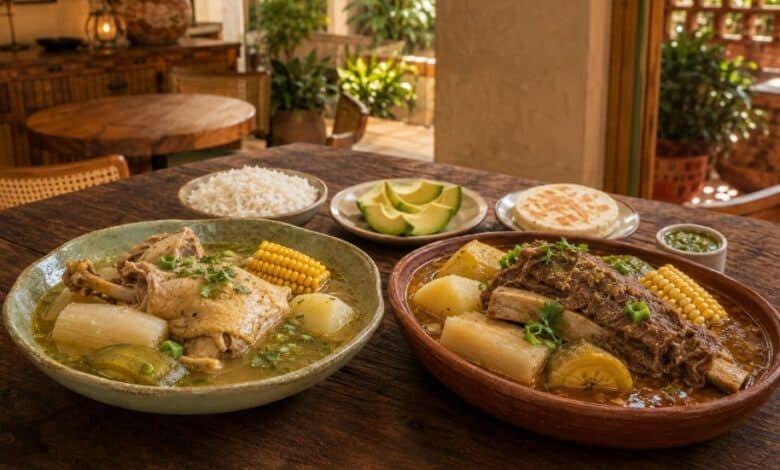
Put sancocho de gallina and sancocho de res beside each other and the family resemblance is obvious: generous pieces of root vegetables, plantain, corn, herbs and a broth substantial enough to qualify as lunch without needing much persuasion. Then take one spoonful from each pot and the resemblance starts to loosen.
Gallina brings a distinctly poultry-driven savoriness, firmer meat and a tradition especially intertwined with places such as Valle del Cauca. Beef sancocho can feel darker, rounder and more collagen-rich, particularly when the kitchen uses costilla. Neither is the “real” version and neither automatically outranks the other. They are two different ways of using the same Colombian soup logic.
Same Family, Completely Different Mood
Sancocho de Gallina
This is the bowl I think of when somebody wants sancocho with a strong sense of countryside cooking. Gallina means hen, not simply the interchangeable word for any chicken. A mature bird has more developed muscle and connective tissue, so the texture is usually firmer and the flavor can be more assertive than a soup made with young supermarket chicken.
That firmness is not a defect. In a carefully cooked gallina sancocho, the meat retains identity even after the broth has become deeply savory.
Sancocho de Res
Beef gives the dish a different gravity. When the kitchen uses rib, bone and collagen can give the broth more roundness, while long simmering can take the meat toward the tender, yielding texture many first-time diners instinctively associate with a comforting stew.
A good beef sancocho can therefore feel richer without necessarily containing more seasoning. Some of that impression comes simply from what beef contributes to the liquid.
The important point is that the protein does more than provide a chunk of meat to place in the center of the bowl. It changes the broth itself, how the starches taste after simmering, and even which bite feels best with rice or avocado.
The Broth Is Where the Argument Is Actually Settled
If you judge these two versions only by the meat on top, you miss half of what makes the comparison interesting. Sancocho is a long conversation between meat, water, aromatics and starches. The broth remembers everything that has been cooking in it.
Gallina broth: savory, aromatic, sometimes surprisingly clean
A mature hen can produce a broth with pronounced poultry flavor without automatically making it heavy. Depending on the recipe, aromatics such as scallion, garlic, cilantro or cimarrón can sit especially clearly against that poultry base.
This is one reason gallina works beautifully with yuca and green plantain. Those ingredients contribute starch and body while the poultry gives the soup enough savory character to avoid tasting merely vegetal.
Beef broth: deeper and often rounder
Beef takes the broth toward darker savory flavors. Rib makes the contrast stronger because bone, fat and connective tissue can contribute gelatin and a fuller mouthfeel during extended cooking.
That does not mean every beef sancocho should be greasy. In fact, excessive surface fat can flatten the distinction between richness and heaviness. The best bowls give you body while allowing cilantro, corn and the earthy starches to remain recognizable.
Why Gallina Is Firmer — and Why That Is Not Bad Cooking
This is probably the most useful thing to know before ordering sancocho de gallina for the first time. Gallina is a mature hen. Mature birds have worked their muscles longer than the young chickens most Americans routinely eat, so the meat naturally has more structure.
If you approach the bowl expecting ultra-soft rotisserie-chicken texture, you may mistake normal gallina character for toughness. What I want instead is meat that has softened enough to eat comfortably but still feels substantial.
There is a line, of course. Traditional does not mean indestructible. Meat that is aggressively dry and stringy does not become wonderful because somebody tells you it is rustic.
Beef gives you another kind of tenderness
With sancocho de res, the exact cut matters enormously. Lean beef can behave very differently from costilla. Rib contains connective tissue that responds beautifully to long, moist cooking, which is why well-made sancocho de costilla can give you meat that pulls apart almost effortlessly.
This is also why “sancocho de res” and “sancocho de costilla” are useful distinctions on restaurant menus. Both are beef, but the second tells you much more about the experience you are buying.
Yuca and Plantain Taste Different Depending on the Protein
The yuca is technically the same yuca, yet I never experience it exactly the same way in the two pots. This is one of those kitchen details that sounds absurd until you eat the dishes side by side.
With gallina
Yuca absorbs poultry broth while retaining its slightly earthy, starchy character. Green plantain can feel more obvious too, especially when the soup is aromatic rather than heavily fatty. Corn contributes sweetness that plays nicely against herbs and chicken flavor.
With beef
The same starches pick up deeper meat flavor. Yuca can become especially luxurious in a rib broth because its fluffy interior carries both stock and rendered richness. Plantain helps thicken the pot and softens some of beef’s heavier notes.
Potatoes vary widely by Colombian region and restaurant, so I would not pretend there is one mandatory potato for either bowl. The important thing is timing: potatoes should be cooked through while still recognizable, not used as accidental thickener because they disintegrated forty minutes ago.
Gallina Carries a Particularly Strong Valle del Cauca Accent
Sancocho belongs across Colombia, with regional variations in proteins, vegetables, seasoning and cooking methods. But sancocho de gallina has an especially strong cultural association with Valle del Cauca and the food traditions around Cali.
Historical material in Colombia’s traditional-cuisine collections documents sancocho de gallina among Valle del Cauca preparations, and Cali continues to celebrate kitchens built around the dish. That connection matters because sancocho is not simply a recipe that happens to have regional versions; it is also gathering food, family food and food tied to place.
Wood fire is another part of that story. Traditional sancochos may be cooked outdoors over firewood, which changes both the social ritual and potentially the flavor. I would never claim that a Miami restaurant needs a wood fire to produce legitimate sancocho, but understanding that tradition explains why Colombians can discuss a pot of soup with the seriousness other cultures reserve for barbecue.
If you want the broader context of how the dish changes across Colombia, I would read my introduction to Colombian sancocho and its regional styles rather than trying to force all of those regional variations into this one comparison.
Gallina vs Res at a Glance
There Is Also a Social Difference
I hesitate to reduce food traditions to mood boards, but the context in which a dish is cooked really does affect how people think about it. Colombian sources repeatedly describe sancocho as food for gatherings, celebrations and communal cooking. Gallina, particularly in Valle del Cauca traditions, fits beautifully into that landscape.
A large hen slowly cooking with plantain, yuca and corn makes sense as something around which people wait, talk and eat. The pot has its own timetable. It is almost aggressively incompatible with the modern idea that every lunch should be optimized into twelve efficient minutes.
Beef sancocho can be equally communal, of course. The distinction is not that gallina belongs to families and beef belongs to restaurants. Rather, gallina retains a particularly strong cultural aura of the traditional pot in some regions, while beef rib has become an exceptionally restaurant-friendly version because diners recognize the ingredient immediately and it responds so well to slow cooking.
Which One Should You Order?
Choose gallina if you love characterful poultry
If chicken soup is already one of your comfort foods but ordinary chicken breast bores you, gallina is the more interesting direction. Expect more texture from the meat and a broth that can be intensely savory without necessarily being heavy.
Choose beef rib if you want the easiest first sancocho
Costilla gives a newcomer familiar signals: tender beef, a rich broth and satisfying collagen-driven body. It is an especially good introduction to how yuca and green plantain behave in sancocho because the beef flavor provides a strong frame around them.
Choose gallina if the restaurant only makes it on weekends
A limited schedule often tells you something about how the kitchen treats the dish. If costilla is available daily but gallina comes out on Sunday, I would be tempted by the Sunday pot simply because it is the less interchangeable experience.
Choose res when you care most about soft meat
This is not universal, but properly cooked beef rib will usually feel more immediately tender than mature hen. If firmer poultry makes you unhappy regardless of tradition, do not order gallina to prove your culinary sophistication. Lunch is not an exam.
How I Read These Two Names on a Restaurant Menu
Sancocho de gallina tells me something useful immediately: mature hen is supposed to define the pot. If a restaurant lists it only Saturday or Sunday, I treat the serving day as part of the plan rather than an inconvenient footnote.
Sancocho de res confirms beef but does not identify the cut. If the exact meat matters, ask.
Sancocho de costilla is more specific. I expect beef rib unless the menu says otherwise, and I expect the rib to contribute both meat and body to the broth.
When I am actually hunting for one of these bowls rather than comparing them academically, I use the wider restaurant search I keep for Colombian sancocho, because current menus and serving days matter as much as knowing which protein you prefer.
What About Ordinary Chicken Sancocho?
This is where English translations create unnecessary confusion. Gallina and pollo are not culinary synonyms even though both come from chickens. Gallina refers to hen; pollo generally refers to younger chicken.
A pollo sancocho can be wonderful, and depending on the region or family it may be completely normal. But if a restaurant specifically advertises sancocho de gallina, I would not casually rewrite it as chicken sancocho and erase the distinction. The meat behaves differently, which is part of why the dish has its own identity.
This also explains why diners sometimes disagree wildly about whether gallina was “too firm.” One person is evaluating it against mature-hen expectations; another is evaluating it against boneless chicken thigh. They are essentially grading two different assignments.
And No, Beef Is Not Automatically the Richer Experience
Beef generally gives you darker savory flavors and rib can add more gelatin, so describing it as richer is reasonable in a technical sense. But eating pleasure is not measured in collagen units.
A well-seasoned gallina broth can feel more vivid because poultry, cilantro, scallion and plantain remain distinct. A poorly handled beef pot can feel heavy and dull. Conversely, magnificent costilla broth can have enough depth to make a simpler poultry version seem almost austere.
Technique wins. Protein determines the direction; the cook decides whether the journey is worth taking.
My First-Timer Order Would Still Be Costilla — But Only Once
If I were introducing someone to Colombian sancocho with no other information, I would start with sancocho de costilla. Beef rib is familiar enough that the diner can concentrate on everything else: why there is green plantain in soup, what perfectly cooked yuca feels like, why corn belongs beside savory broth and why rice and avocado appear outside the bowl.
Then I would order gallina the next time. Otherwise it is very easy to leave with the impression that Colombian sancocho simply means beef rib plus root vegetables, which misses an enormous part of what makes the dish fascinating.
The joy of sancocho is not finding the one canonical bowl. It is realizing that Colombians built a culinary idea sturdy enough to survive changes in meat, geography, ingredients and family preference without losing its identity.
If Your Family’s Pot Breaks Every Rule I Just Mentioned, I Want to Hear About It
Food gets most interesting precisely where tidy definitions stop behaving. Maybe your family’s gallina always has a particular herb nobody else seems to use. Maybe the beef sancocho you grew up with absolutely needs corn, while your aunt insists corn belongs nowhere near her pot. Maybe your best memory involves a wood fire outside Cali rather than anything served from restaurant china.
Send me the region, protein, vegetables, side dishes and the one preparation detail your family refuses to compromise on. If you have a restaurant version worth comparing too, include the city, menu name, price and serving day.
I am collecting the differences rather than trying to iron them flat. You can write to me at info@dianaisabela.com.
Questions About Sancocho de Gallina and Sancocho de Res
What is the main difference between sancocho de gallina and sancocho de res?
The main difference is the protein and what it contributes to the pot. Sancocho de gallina uses mature hen, which has firmer meat and pronounced poultry flavor. Sancocho de res uses beef; versions made with rib can have softer meat and a fuller broth because bone and connective tissue contribute gelatin during long cooking.
Is gallina the same as chicken in sancocho?
Not exactly. Gallina refers to a mature hen, while pollo generally refers to younger chicken. Mature hen usually has firmer, more developed meat and can produce a more assertive poultry broth, which is why sancocho de gallina has a different eating character from a typical young-chicken soup.
Which sancocho has the richer broth?
Beef rib sancocho often has a fuller, more gelatinous broth because rib contains bone and connective tissue. Gallina broth can still be deeply savory, but it may feel more aromatic and poultry-forward rather than as round and beefy. Cooking technique and the rest of the ingredients ultimately matter as much as the protein.
Is sancocho de gallina supposed to have firm meat?
Gallina is naturally firmer than young chicken because it comes from a mature hen. Properly cooked gallina should remain pleasantly structured while becoming tender enough to eat comfortably. Firmness is normal; extremely dry or stringy meat is not automatically a sign of authenticity.
Which sancocho is better for a first-time diner?
Sancocho de costilla is often the easiest starting point because beef rib gives the soup a familiar rich meat flavor while letting you experience characteristic ingredients such as yuca and green plantain. Gallina is an excellent second bowl if you want to understand how dramatically the protein can change sancocho.
Does sancocho de gallina come from Valle del Cauca?
Sancocho de gallina has a particularly strong cultural association with Valle del Cauca and Cali, and Colombian traditional-cuisine sources document it as an important preparation from the region. However, gallina sancocho is not limited only to Valle del Cauca, and sancocho traditions vary across Colombia.
Do gallina and beef sancocho use the same vegetables?
They can share many ingredients, including yuca, green plantain, potato, corn and herbs, but there is no single mandatory ingredient list for every Colombian sancocho. Recipes vary by region, family and restaurant.
What does sancocho de res mean on a menu?
Sancocho de res means beef sancocho, but the phrase does not necessarily identify the cut. If a menu says sancocho de costilla, it is more specifically indicating rib. Ask the restaurant which beef cut is used if that matters to your order.
Why is sancocho de gallina often served on weekends?
Some Colombian restaurants prepare gallina as a weekend or special-day batch rather than an everyday soup. This fits the dish’s strong association with communal meals and slower cooking, although serving schedules vary by restaurant. Always check the current menu or call ahead.
Which is better, sancocho de gallina or sancocho de res?
Neither is universally better. Choose gallina for firmer poultry, aromatic broth and a style strongly associated with traditional regional cooking. Choose beef, especially costilla, for deeper beef flavor, softer long-cooked meat and a fuller broth. The better bowl is ultimately the one made with better broth, properly cooked starches and well-handled meat.