Shchi Soup Near Me in the UK: Where to Look Beyond Borscht
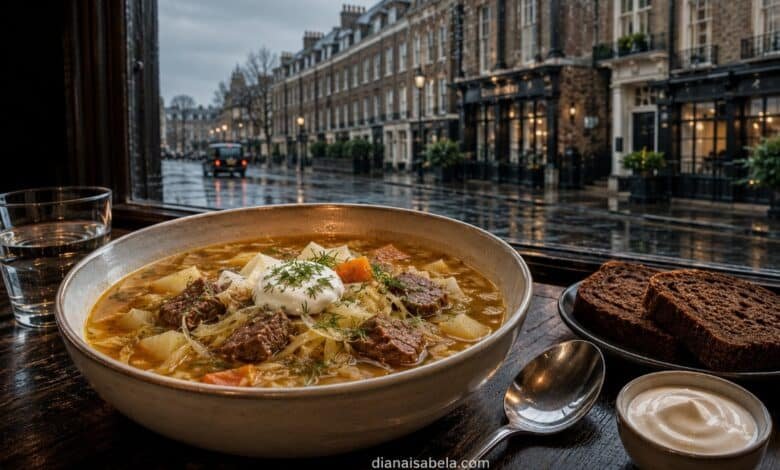
Finding borscht in Britain is relatively easy. Finding shchi is where the expedition begins. The old cabbage soup has all the qualities that should make it perfect for a damp British afternoon — hot broth, cabbage, potato, beef or mushrooms, dill, perhaps sour cream — yet it appears on restaurant menus far less reliably than its beet-red relative.
That does not mean you should give up after searching “Russian cabbage soup” once. In the UK, shchi is exactly the kind of dish that may appear as a seasonal soup, a deli-counter special, homemade takeaway food or a transliterated menu item that disappears again before the search engines have noticed it.
London gives you the strongest starting point because it has Russian and broader Eastern European restaurants, grocery shops and prepared-food counters concentrated closely enough to make an actual search worthwhile. Outside London, I would change tactics: look for the kitchens and communities first, then ask about the soup directly.
First, the Useful Truth: Shchi Is Not a Reliable Permanent Menu Item in Britain
I would love to give you a neat list of ten British restaurants where a bowl of shchi waits every afternoon beneath a tiny cloud of dill-scented steam. The current reality is more interesting and slightly less convenient. Russian and Eastern European food is certainly available in Britain, particularly in London, but shchi does not have the menu permanence of borscht, pelmeni or beef stroganoff.
That makes checking the current menu essential. A restaurant can be genuinely Russian, cook excellent soups and still not have shchi that week. Another kitchen may make it as a seasonal or rotating special without giving the soup a permanent page online.
This distinction matters because I do not think “Russian restaurant near me” is enough information to justify a forty-minute journey. If the specific craving is cabbage shchi, verify the cabbage shchi.
London Is Where I Would Start the Hunt
London has the obvious advantage of density. Russian and Eastern European restaurants, food shops and communities overlap in several parts of the city, which gives you more than one route to the same bowl. Soho gives you established restaurant territory, while areas such as Notting Hill, Bayswater, Fulham and East Finchley give you access to specialist food shops and prepared foods.
The important point is that I would not treat every Russian restaurant as a confirmed shchi destination. Instead, I would use places with serious soup traditions as places to check first, then confirm the day’s offering before travelling specifically for shchi.
ZIMA Soho
ZIMA is one of the obvious places to understand why the distinction between “Russian soup available” and “shchi available today” matters. Its current food offering demonstrates a substantial Russian and Eastern European soup vocabulary, but the exact soups change. That makes it useful territory for a soup lover, not permission to assume cabbage shchi is waiting every day.
If I were nearby, I would happily look at the soup list. If I were crossing London specifically for shchi, I would phone first and ask the question directly.
There is also a useful lesson here for anyone who has only ever ordered borscht: if shchi is absent, another soup can still teach you something. Solyanka brings pickle-driven acidity and richer meat flavors; ukha moves toward clear fish broth; green sorrel soups go in yet another direction. I gathered those differences in this tour through the soups I would order when the familiar beet-red bowl is not the only option.
For Shchi, I Would Take Food Shops More Seriously Than Most Restaurant Guides Do
A specialist grocery with homemade or prepared food can sometimes be more promising than a polished restaurant menu. Shchi is fundamentally home food. It belongs comfortably beside prepared salads, pelmeni, kotleti, buckwheat, pickles and the mysterious refrigerated containers that frequently contain something far more interesting than their typography suggests.
In London, Dacha Shop is useful because it specialises in Russian and Eastern European groceries and advertises homemade food alongside its retail selection. Its current store network gives you several parts of the city to check rather than one destination.
Dacha Shop — Fulham
I would phone and ask specifically whether there is homemade shchi or cabbage soup available that day. If not, ask whether the prepared soup selection changes during the week.
Dacha Shop — East Finchley
This is another sensible place to ask about fresh prepared food rather than relying entirely on what appears online. A soup that moves through a deli counter quickly may never receive the same digital attention as caviar, pelmeni or packaged groceries.
Dacha Shop — Moscow Road
Bayswater and the surrounding west-London area make this a practical stop if you are already looking for Eastern European ingredients or prepared foods. Again, I would treat shchi as a call-first item rather than promise that a particular soup is sitting behind the counter every afternoon.
Dacha Shop — Notting Hill Gate
This branch gives west London another specialist-food option. If a prepared soup is not available, the advantage of a grocery route is obvious: cabbage, sauerkraut, kefir, sour cream, dill, rye bread and other useful ingredients can turn the failed soup mission into dinner anyway.
That deli-counter method is exactly why I rely on a different strategy for prepared-food shops than I do for ordinary restaurant menus.
The Thirty-Second Phone Call That Can Save a Two-Hour Soup Journey
You do not need to deliver a lecture on Slavic culinary history to whoever answers the phone. Be specific enough that the kitchen understands what you want and flexible enough to catch the soup under another name.
- “Do you have shchi today?”
- “Is it fresh-cabbage shchi or sauerkraut shchi?”
- “Do you have Russian cabbage soup today?”
- “Is it a regular soup or only a daily special?”
- “Does it contain beef, chicken or no meat?”
- “Will you have it later today, or has it sold out?”
If the answer is “green shchi,” ask what the greens are. Sorrel-based green shchi is a different soup experience from classic cabbage shchi, and I would much rather discover that before ordering than spend the first five spoonfuls accusing the cabbage of disappearing.
If unfamiliar menu wording is the problem, these are the questions I use to work out what kind of bowl a restaurant is actually describing.
Fresh Shchi and Sour Shchi Are Worth Searching for Separately
If you search only one English phrase, you may miss half the possibilities. Fresh-cabbage shchi may simply appear as cabbage soup or Russian cabbage soup. Sour shchi may be described with sauerkraut, sour cabbage or fermented cabbage instead.
The two are not just different names for an identical bowl. Fresh cabbage produces a gentler broth with a mild vegetable sweetness. Sauerkraut adds fermentation, acidity and a more assertive flavor that works particularly well with beef and sour cream.
So when a shop says “yes, we have cabbage soup,” my next question is what kind of cabbage. This is where I compare the fresh and fermented versions by flavor, broth and texture.
Search the Soup, Not Just One English Spelling
Transliteration is where a perfectly good bowl can become invisible. The common English spelling is shchi, but menus, shops and community posts may use other spellings or simply translate the name as cabbage soup.
I would try combinations such as shchi London, Russian cabbage soup London, sour cabbage soup London, sauerkraut soup London and the Cyrillic щи. For deli counters, add the name of the neighbourhood rather than searching the whole country.
Do not assume every result for cabbage soup is shchi. Polish, Ukrainian, Baltic, Central European and other culinary traditions have their own cabbage soups. Ingredient overlap does not erase the identity of the dish. I separate shchi from the much broader cabbage-soup universe here.
Outside London, I Would Search for the Community Before the Dish
The further you move from London’s concentration of specialist restaurants and shops, the less useful an exact dish search may become. Instead of typing “shchi Manchester” twenty times and hoping the internet eventually becomes frightened enough to produce soup, search for Russian, Ukrainian and Eastern European groceries, delis, community cafés and prepared-food counters first.
Manchester
Begin with Eastern European supermarkets, independent delis and kitchens offering prepared food. Ask about daily soups rather than looking only for a permanent restaurant listing. A kitchen that regularly makes borscht, pelmeni, cabbage rolls or prepared salads is more useful to investigate than a generic “European” restaurant with no relevant cooking tradition.
Birmingham
The same rule applies here: look for specialist grocery and prepared-food businesses first. Search for cabbage soup, sauerkraut soup and щи as well as the English transliteration, and confirm before travelling.
Edinburgh and Glasgow
Do not limit the hunt to explicitly Russian restaurants. Broader Eastern European food shops can be valuable because the ingredients and customer base create a much better environment for rotating traditional soups than an ordinary city-centre restaurant menu.
Leeds, Bristol and other large cities
I would use the same sequence everywhere: specialist food shop, prepared-food counter, Russian or Ukrainian café, then restaurant. Call before making a dedicated journey because traditional soups often rotate and online menus may lag behind the actual counter.
Do Not Confuse Green Shchi With the Cabbage Version You Were Hunting
Green shchi deserves its own appetite. It is commonly associated with sorrel or other leafy greens and can include potato, egg, broth, herbs and sour cream. The tartness comes from the greens rather than fermented cabbage.
That means finding a menu with green shchi is good news if you love sorrel, but not necessarily good news if you spent the train journey imagining sauerkraut and beef. Names matter because expectations affect flavor long before the spoon arrives.
If a London menu offers a sorrel soup and you are wondering whether it scratches the same itch, my explanation of the green branch shows why it really deserves to be treated separately.
Delivery Apps Are Useful for Discovery, but I Would Not Trust Yesterday’s Search Result
Delivery platforms can reveal kitchens that ordinary restaurant searches miss, especially small places that are much more active in takeaway than in maintaining elaborate websites. Search several spellings and inspect the soup category rather than only the restaurant name.
The weakness is timing. Delivery availability changes with your postcode, hour and day, and rotating soups can disappear from the interface as soon as a batch sells out. A screenshot from last month does not put soup in today’s pot.
If the platform shows shchi, check the description before ordering. Cabbage type, meat and broth matter. If it shows only borscht or solyanka, that does not prove the kitchen never makes shchi; it only tells you what is being sold through that channel at that moment.
If You Find Solyanka Instead, Know What You Are Saying Yes To
Solyanka is not a substitute in the sense of tasting similar to shchi. It is a substitute only in the sense that both can satisfy the craving for a hot, sour, substantial Eastern European soup.
A familiar meat solyanka is usually much louder: pickled cucumber, meat or sausage, tomato richness, often olives, lemon and sour cream. Sour shchi gets its defining tang from fermented cabbage and usually feels less crowded.
If a restaurant offers solyanka but not shchi, I would order it because I like solyanka, not because I expect the same bowl under another name. This comparison makes the cabbage-versus-pickle distinction much easier to taste before you order.
What Should a Good Bowl of Shchi Look Like?
There is no single appearance because recipes vary, but classic cabbage shchi should still make culinary sense when you look into the bowl. Fresh versions often have a golden or pale broth with visible cabbage, carrot, onion and perhaps potato and meat. Sour shchi may look slightly deeper and more rustic because sauerkraut has a softer texture and stronger flavor.
I would not expect beet-red broth unless the kitchen is serving an entirely different soup. I would not expect cream to make the whole liquid opaque. Sour cream is commonly added as a garnish, where it can soften acidity without erasing the broth.
If you want a better idea of the flavor before travelling across town, I break the soup down from gentle fresh cabbage to deeper fermented tang here.
What I Would Order With It in Britain
If I finally tracked down sour shchi after a long London search, I would not immediately bury the victory beneath five heavy side dishes. Dark rye bread and sour cream may be enough, especially if there is a proper amount of beef and potato in the bowl.
Fresh-cabbage shchi leaves more room. Kotleti, buckwheat, potatoes or dumplings can turn it into a fuller Eastern European meal without forcing the soup itself to carry everything. A fresh cucumber-and-tomato salad is particularly useful when the rest of the table is rich.
For a larger dinner, these are the combinations I use to decide when the soup needs only bread and when it can comfortably become the first act.
There Is a Point Where Cooking It Yourself Becomes the Easier Option
If your nearest possible shchi involves three trains, two phone calls and the phrase “we sometimes have it on Wednesdays,” a cabbage, onion and soup pot begin looking wonderfully efficient.
The ingredients are not especially difficult to find in Britain. Fresh cabbage is everywhere. Sauerkraut is increasingly ordinary supermarket territory, while Eastern European shops give you more choice if you want a stronger fermented version. Potatoes, carrots, onions, beef, dill and sour cream require no culinary treasure map.
The useful part is that homemade shchi also lets you choose the personality you were actually searching for. Make it mild with fresh cabbage, or go straight toward fermented sour shchi. My version begins with a proper beef-and-cabbage pot and shows exactly where I change course for sauerkraut.
If You Make a Large Pot, Freeze the Victory
Shchi is one of those recipes where the effort-to-portion ratio improves dramatically when you cook more than one dinner. The broth, cabbage and beef freeze well enough that an extra batch can become a much easier future lunch.
Potatoes can soften after freezing and sour cream is better added fresh, so I would portion the soup before garnishing it. Then your second encounter with shchi requires a saucepan rather than another expedition across Greater London.
If batch cooking is the plan, this is how I handle the cabbage, potatoes, dairy and reheating so the freezer portion still tastes like dinner.
My UK Search Order, From Most Promising to Most Desperate
So Where Can You Find Shchi in the UK?
My most useful answer is London first, particularly specialist Russian and Eastern European food shops and restaurants with serious soup menus. But I would not currently promise that a specific restaurant has classic shchi every day. The dish is too prone to seasonal menus, rotating batches and deli-counter availability for that kind of confidence to be helpful.
Use Soho and west London’s Russian food businesses as starting territory, check Dacha’s prepared-food counters, search the day’s restaurant soup menus and phone before a dedicated journey. Outside London, work outward from Eastern European grocery and deli communities rather than expecting an exact dish search to reveal everything.
If you are travelling elsewhere and want to widen the search beyond Britain, this is where I keep my broader guide to tracking down shchi in different places.
If You Find a Proper Bowl in Britain, Please Tell Me Before It Disappears Again
Shchi is exactly the sort of food that can hide in plain sight. A restaurant may run it for winter. A deli may make one batch on Thursday. A tiny prepared-food counter may have excellent sour shchi and devote precisely zero energy to making the internet aware of this achievement.
So if you find one in London, Manchester, Birmingham, Edinburgh, Glasgow, Leeds, Bristol or somewhere much smaller, send me the place, city, what the menu called it and whether the cabbage was fresh or fermented. If you remember the price and whether it contained meat, even better.
I am equally interested in British home versions. Tell me which sauerkraut you use, where you find good rye bread, whether you make beef or mushroom broth and what your family insists must go into the pot. Good soup knowledge tends to travel through people long before it reaches a polished menu.
info@dianaisabela.comQuestions About Finding Shchi in the UK
Can you find shchi in the UK?
Yes, but it is less consistently listed than borscht. London is the strongest place to start because it has Russian and Eastern European restaurants, specialist food shops and prepared-food counters. Calling ahead is sensible because shchi may be seasonal or part of a rotating soup selection.
Where should I look for shchi in London?
Start with Russian and Eastern European restaurants, delis and specialist grocery shops, particularly businesses that sell homemade prepared food. Soho, Notting Hill, Bayswater, Fulham and East Finchley are useful areas to investigate.
Does every Russian restaurant in London serve shchi?
No. A restaurant can serve Russian food and several traditional soups without keeping shchi on its permanent menu. Check the current soup list or call before travelling specifically for it.
What should I search for if I cannot find shchi online?
Try shchi, Russian cabbage soup, sour cabbage soup, sauerkraut soup and the Cyrillic spelling щи. Different menus and shops may translate or transliterate the name differently.
Is Russian cabbage soup always shchi?
No. Many cuisines have cabbage soups, and an English menu description may not identify the specific tradition. Ask whether the soup is shchi and whether it uses fresh cabbage or sauerkraut.
What is the difference between fresh and sour shchi?
Fresh shchi uses fresh cabbage and tends to be milder and more brothy. Sour shchi uses fermented cabbage or sauerkraut, giving the soup a deeper tang and more assertive flavor.
Is green shchi the same as cabbage shchi?
Not usually. Green shchi is commonly associated with sorrel or other leafy greens and often contains potato, egg, herbs and broth. Its tart green flavor is quite different from fresh- or sour-cabbage shchi.
Can I find shchi outside London?
Possibly, but exact listings can be harder to find. Search Russian, Ukrainian and Eastern European delis, grocery shops, prepared-food kitchens and restaurants in cities such as Manchester, Birmingham, Glasgow and Edinburgh, then ask about the daily soup selection.
What should I order with shchi?
Dark rye bread, sour cream and dill are simple companions. A lighter bowl can also be followed by kotleti, buckwheat, potatoes or dumplings, while a rich sour shchi may need very little beyond bread.
Can I make shchi at home in the UK?
Yes. Fresh cabbage, potatoes, carrots, onions, beef, dill and sour cream are easy to find, while sauerkraut is available from many supermarkets and Eastern European food shops. Homemade shchi is particularly practical when local restaurants do not list it regularly.