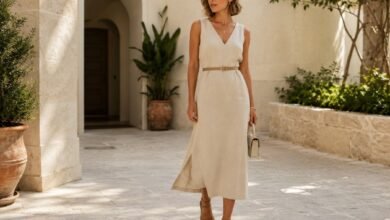
Why Some Relaxed Clothes Look Expensive and Others Look Like Pajamas

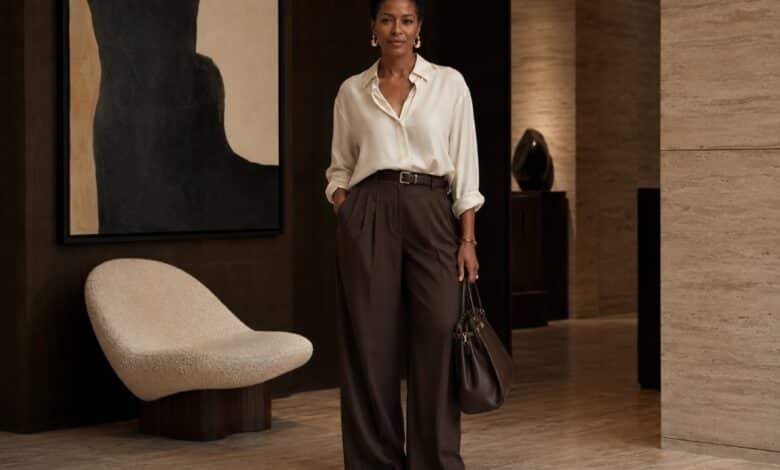
Relaxed clothing has excellent public relations. It promises comfort, confidence and that very specific kind of elegance in which a woman appears to have stepped out for coffee without spending forty minutes negotiating with her waistband.
Then the package arrives.
The trousers pool sadly around the shoes. The matching shirt looks less like understated tailoring and more like something issued at a luxury wellness retreat. The soft neutral fabric photographs beautifully while standing still, but after one drive across town the entire outfit seems to have lost the will to continue.
The problem is not that relaxed clothes are inherently sloppy. Some of the most sophisticated outfits are built from wide trousers, generous shirts, fluid dresses and soft tailoring. The difference is that expensive-looking ease is rarely accidental. It depends on proportion, fabric behavior, finishing, grooming and one or two elements that quietly insist the outfit is complete.
Relaxed clothes look expensive when their looseness appears deliberate. The garment should have controlled volume, a clear shoulder or waist relationship, fabric with enough weight to drape well, clean hems and refined details. Pairing soft clothing with one structured element—such as a leather bag, polished shoe, belt, defined neckline or tailored outer layer—prevents the outfit from reading as sleepwear.
Relaxed is a silhouette. Sloppy is an unresolved decision.
The word “relaxed” describes space between the garment and the body. It can mean a soft shoulder, a wider leg, a dropped waist, an easy sleeve or a dress that moves rather than clings.
Sloppiness is different. Sloppiness appears when the garment seems to be wearing the person. The shoulder falls in an uncertain place. The sleeve hides the hand without looking intentional. The trouser breaks repeatedly over the shoe. The neckline stretches. The fabric collapses around every pressure point.
None of those problems is caused simply by comfort.
A relaxed outfit can be extraordinarily precise. The trouser may be wide, but its crease is sharp. The shirt may be oversized, but the collar holds its shape. The dress may have no fitted waist, but the shoulder line and hem create a clean column.
I think this is why some simple outfits look more expensive than complicated ones. They leave no confusion about the intended line.
Controlled ease
One or two relaxed shapes, clear proportions, clean fabric movement and a visible finishing point.
Unmanaged volume
Everything is loose, every edge is soft, and no part of the outfit explains where the silhouette begins or ends.
The first step is therefore not “make it tighter.” It is to identify what the outfit is missing: structure, proportion, contrast, grooming or simply a better hem.
Every relaxed outfit needs a decision about where the volume lives
Volume is not the enemy. Unplanned volume is.
An oversized shirt with narrow trousers creates contrast. A fitted tank with a wide trouser gives the eye a clear torso-to-leg relationship. A loose column dress maintains one uninterrupted vertical line. A full skirt begins at a visible waist.
Problems appear when the outfit expands in every direction at once.
Imagine a long dropped-shoulder shirt, wide pull-on trousers, a large tote, chunky slides and a loose cardigan. Each individual item may be attractive. Together, they remove nearly every visible boundary of the body.
The solution does not require body-conscious clothing. It requires an interruption in the softness.
A useful styling question is: where do I want the eye to understand my shape?
It might be at the shoulder. It might be at the waist. It might simply be the narrow line of the ankle beneath a wide trouser. One clear point is often enough.
The shoulder often decides whether the outfit looks expensive
The shoulder is one of the first places I inspect because it controls how the rest of the garment hangs.
A relaxed shirt can have a dropped shoulder, but the drop should look deliberate and similar on both sides. A soft jacket can be unstructured, but the shoulder seam should not twist toward the front. A sweater can be oversized, but the neckline should remain stable.
When the shoulder area collapses, the entire garment starts to look tired.
Natural shoulder
A seam that sits close to the actual shoulder creates a cleaner, more traditional silhouette. It works especially well when the body of the garment is loose because it preserves definition at the top.
Dropped shoulder
A dropped shoulder feels more casual and modern. It should be paired with intentional sleeve length and sufficient fabric weight. If the sleeve is also excessively long and the cuff has no structure, the garment may resemble something borrowed from a much larger person rather than designed with volume.
Extended or sculpted shoulder
A slightly extended shoulder can make relaxed trousers or a loose dress look much more refined. It creates a horizontal line that balances volume below.
This does not require dramatic padding. A cap sleeve, reinforced shoulder seam, crisp sleeveless cut or subtle internal structure can do the job.
Mirror test: cover the lower half of your reflection and look only at the neckline, collar and shoulders. If that area looks collapsed, the outfit will struggle to look polished no matter how beautiful the trousers are.
The label tells you the fiber. Your body discovers the behavior.
Two garments can contain the same percentage of linen, cotton or viscose and behave completely differently. The weave, thickness, treatment and construction determine whether fabric drapes, floats, clings, wrinkles, stretches or collapses.
Expensive-looking relaxed clothing usually has enough substance to maintain a line. It does not need to be heavy, but it should not reveal every pocket edge, waistband seam or undergarment movement.
| Fabric behavior | More polished result | Risk to watch |
|---|---|---|
| Crisp | Holds collars, cuffs, pleats and architectural shapes. | Can look stiff or become dramatically creased if too rigid. |
| Fluid | Moves elegantly and creates soft vertical lines. | May cling, reveal underwear or look like sleepwear without structure. |
| Textured | Adds depth to simple neutral outfits. | Very rough or open texture may look casual or lose shape. |
| Dense knit | Creates smooth lines and controlled stretch. | Can become hot, heavy or show pressure marks. |
| Lightweight woven | Breathes well and works for generous silhouettes. | May become transparent, crumpled or visually fragile. |
Drape is not the same as thinness
Good drape means fabric falls in coherent lines. It moves around the body rather than attaching itself to every curve or forming random folds.
A very thin fabric may feel light but lack enough weight to fall cleanly. It can catch on the body, bunch around the waistband and make a simple outfit look cheaper.
When shopping, pinch a section of fabric and release it. Watch whether it falls back into place. Walk. Sit. Put your hands in the pockets. If the entire garment changes shape when you use the pocket, the construction may not support real life.
Wrinkles can look elegant or exhausted
Linen and cotton wrinkle. That is not automatically a flaw. The question is whether the creases look like a natural result of movement or whether the fabric completely loses its original silhouette.
Slight rumpling across a linen shirt can look relaxed and attractive. Dense horizontal creases across tight hips or a severely crushed lap may make the same fabric look unkempt.
Fit affects wrinkling. Fabric under tension creases more sharply. A small amount of ease often helps linen look more graceful.
“Natural fabric” is not a magic spell. A badly cut linen trouser remains a badly cut trouser, only now it is described as artisanal.
You do not need a tiny waist. The outfit needs a point of orientation.
Advice about relaxed clothing often becomes repetitive: tuck the top, add a belt, define the waist. Sometimes that works beautifully. Sometimes it destroys the line of the garment and creates unnecessary bulk.
Waist definition does not have to mean cinching.
A waistband visible beneath a short top creates definition. So does an open shirt over a tonal base because the two vertical edges frame the torso. A side tuck can suggest proportion without forcing fabric around the entire waist. A dress with a back seam or gentle shaping can acknowledge the body without gripping it.
Full tuck
Best for lightweight shirts and trousers with a smooth, attractive waistband. It creates the clearest division between upper and lower body.
Avoid stuffing thick fabric into a narrow waistband. If the tuck creates a padded ring around the middle, the styling trick has become a construction project.
Partial tuck
Useful for oversized shirts, but it should look deliberate. Tuck a small section near the front button or slightly off-center. Pull enough fabric free that the back still hangs naturally.
No tuck
Untucked can look excellent when the top ends at a purposeful point. The hem might meet the high hip, align with the widest point of the trouser or create a clean long line over a narrower lower half.
If an untucked shirt ends at the widest part of the body and balloons outward, try opening the lower buttons, shortening the hem or selecting a straighter cut.
Belted
A belt works when it belongs to the garment and the outfit. A substantial leather belt can give a fluid dress structure. A narrow tonal belt may quietly define the waist.
But not every loose dress is secretly begging to be belted. Some are designed as columns, trapezes or architectural shapes. Forcing a belt onto them can create gathering in all the wrong places.
A hem can make a $70 outfit look considered—or unfinished
Relaxed clothing depends heavily on length because wider shapes create more fabric near the edges of the outfit.
Wide trousers that are one inch too long do not merely look slightly long. They collapse over the shoe, collect dirt and disturb the vertical line that made them attractive in the first place.
An oversized shirt that ends at an awkward point can shorten the legs. A midi dress that lands at the broadest part of the calf may feel heavier than the same dress shortened slightly. Sleeves that cover the hand can look editorial in photographs and irritating while trying to eat lunch.
The trouser break
A full-length relaxed trouser should either fall cleanly toward the shoe with minimal break or intentionally pool in a fashion-forward way. The vague middle ground—several accidental folds and a heel trapped somewhere beneath—is rarely flattering.
Choose the shoes first before hemming trousers. A pair cut for sneakers may not work with a low sandal. If both are important, you may need separate trousers rather than asking one hem to perform miracles.
The sleeve ending
Rolling a sleeve exposes the wrist and adds structure. A precise cuff can transform a loose shirt because it creates a firm edge near the hand.
If the sleeve is meant to remain long, the cuff should close properly and the hand should remain usable. Elegant clothing should not make simple tasks theatrical.
The shirt hem
Curved hems tend to look more casual and layer well. Straight hems can appear cleaner and more modern. Side slits help longer shirts move and prevent them from clinging around the hip.
Alterations are especially valuable for relaxed clothes. A simple hem or sleeve adjustment can turn “almost right” into a wardrobe favorite.
A matching set needs one clue that it is allowed outside the bedroom
Matching sets are appealing because they remove the hardest morning decision: whether the top and bottom belong together. Unfortunately, some sets answer that question with such enthusiasm that they resemble very elegant pajamas.
The difference usually comes from tailoring, fabric and styling.
Look for a public-facing detail
A collar, shaped waistband, front crease, structured pocket, substantial button, cuff or tailored hem signals that the garment is designed as clothing rather than sleepwear.
A soft set with piping can look chic, but piping also has a long relationship with pajamas. The shoes and bag must make the intended setting clear.
Separate the set psychologically
Before buying, imagine each piece worn alone. Can the shirt work with jeans or tailored shorts? Can the trousers work with a fitted tank, crisp blouse or lightweight sweater?
If both pieces only make sense together, the set may be less versatile than it appears.
Change the texture around it
A fluid set benefits from firmer accessories: smooth leather, metal jewelry, structured eyewear or a compact bag. A crisp linen set can handle softer additions such as a woven sandal or suede bag.
The goal is contrast, not matching every texture to itself.
The set test: if adding slippers would make the outfit completely believable as sleepwear, change at least two finishing elements before leaving home.
The oversized shirt should look borrowed from a wardrobe, not stolen from a laundry basket
An oversized shirt is one of the most useful pieces in a modern wardrobe. It can cover, layer, frame, soften or sharpen depending on how it is worn.
It is also one of the easiest pieces to get wrong.
The collar should retain some shape. The button placket should lie reasonably flat. The shoulder drop should appear intentional. The back should have enough volume to move without forming an enormous bubble above the hips.
Wear it open
An open shirt over a fitted tank or simple dress creates two vertical lines that lengthen the torso. This is particularly useful when the shirt is long or wide.
The base layer should be simple. Complicated necklines, lace edges and multiple straps can make the open shirt feel like a cover-up rather than part of the outfit.
Button it strategically
Leaving several buttons open at the neck creates lightness. Opening one or two buttons at the hem helps the shirt move over wider hips.
If the shirt pulls across the chest when fully buttoned, sizing up may help—but check the shoulder and sleeve afterward. Sometimes the better solution is a different cut designed with more room through the bust.
Roll the sleeves with intention
A clean two-fold roll usually looks more polished than repeatedly pushing fabric upward. Keep both sides approximately even, though not so mathematically perfect that you appear to have used measuring equipment.
Use a partial tuck carefully
Tuck near the center or slightly to one side. Do not gather half the shirt into a small waistband and leave a dramatic fabric tail behind unless that is genuinely the intended silhouette.
Wide trousers look luxurious when the fabric falls before it spreads
Wide-leg trousers create movement and presence, but the line should begin at the waist or hip and travel downward. When the fabric balloons outward immediately, the trouser can add bulk without creating elegance.
Inspect the rise, pleats and pocket placement.
Pleats
Pleats need enough room to remain closed while standing. If they pull open permanently, the trouser may be too tight through the waist or lower stomach, even if the leg is extremely wide.
One or two controlled pleats can create beautiful volume. Excessive gathering beneath an elastic waistband may create the appearance of a fabric shelf.
Pockets
Side pockets should remain flat. If they flare outward, check the size, hip fit and pocket construction. Sometimes removing or closing a pocket creates a cleaner line.
Fabric weight
Very light wide trousers may cling between the legs or reveal every outline. A slightly more substantial fabric usually creates a smoother fall.
The top relationship
A wide trouser does not require a skin-tight top. It needs a top that gives some information about the torso. A sleeveless knit, tucked tee, shorter blouse, shaped vest or open shirt over a close base can all work.
The site’s guide to making simple clothing look more expensive explores several finishing tricks, but with wide trousers the most important investment is often tailoring the length correctly.
A loose dress needs presence, not necessarily a belt
Loose dresses are often treated as either beachwear or emergency camouflage. They can be much more interesting than either category suggests.
A sophisticated relaxed dress usually has a strong design feature: a shaped neckline, beautiful shoulder, dramatic sleeve, controlled column, asymmetric hem, visible seam, textured fabric or deliberate volume.
Column dress
A column dress skims downward in a relatively straight line. It looks polished when the fabric has enough weight and the armholes fit cleanly. A side slit or back vent provides movement.
Trapeze dress
A trapeze widens from the shoulder. The shoulder and neckline therefore matter enormously. A clean sleeveless cut, structured collar or shaped sleeve prevents the dress from looking like an anonymous fabric triangle.
Tiered dress
Tiers add movement and romance, but too many gathers can create unnecessary volume. Look at where the first seam falls. A seam beginning directly beneath the bust creates a different silhouette from one beginning near the hip.
Shirt dress
The collar, placket and cuff provide built-in structure. A shirt dress can be worn loose, partially belted or open over another outfit.
Check for gaping buttons and whether the back gathers pleasantly or forms a large bubble. Side views are essential.
A loose dress does not need to prove the existence of your waist to be flattering. It needs to show that its shape is a design choice.
The clothes can whisper. The shoes and bag still need to finish the sentence.
Relaxed clothes often have fewer obvious decorative elements. That places more responsibility on accessories.
A polished shoe makes soft trousers look intentional. A structured bag gives an oversized dress a visual boundary. A proper belt can turn an elastic-waist trouser from casual to city-ready.
Shoes with soft trousers
Minimal leather sandals, sleek sneakers, loafers, pointed flats and low block heels all work. The best choice depends on the hem and occasion.
Extremely bulky shoes can overwhelm fluid fabric. Very flimsy slides may reinforce a pajama impression. Look for a defined sole, secure shape or visible craftsmanship.
Structured bags
A bag does not need to be rigid, but it should have a recognizable shape. A compact top-handle bag, clean shoulder bag or medium leather tote can sharpen an outfit built from soft pieces.
Soft bags
A slouchy bag can still work when another element provides definition. Pair it with a crisp shirt, tailored trouser, shaped shoe or strong jewelry.
Belts
Belts are especially effective when relaxed clothes lack a visible edge. Use them at the waist, through trouser loops or even over an open jacket when appropriate.
Brown leather often feels softer and richer with cream, white, olive, denim, navy and black than highly contrasting black accessories. The existing guide to styling brown shoes includes combinations that work particularly well with relaxed neutrals.
Neutral does not automatically mean expensive
Beige has received an extraordinary amount of credit for work it did not personally perform.
A poorly cut beige outfit remains poorly cut. A beautiful cobalt shirt can look more luxurious than a weak oatmeal set. Color does not determine quality; harmony and fabric behavior do.
Neutral outfits often look sophisticated because they reduce visual noise and allow silhouette and texture to become more noticeable. That means the silhouette and texture must actually be good.
Tonal dressing
Combine related shades rather than insisting on an exact match: cream, oat, camel and chocolate; soft gray, charcoal and silver; pale blue, denim and navy.
Slight differences in tone make the outfit feel layered. An almost-but-not-quite matching set can look accidental, especially when the undertones conflict.
Texture contrast
Pair matte linen with smooth leather, soft knit with polished metal, fluid viscose with woven accessories or crisp cotton with suede.
When every piece has the same dry, rumpled texture, the outfit may feel flat. When everything is shiny and fluid, it can resemble sleepwear or evening loungewear.
Dark relaxed clothing
Black, navy, espresso and deep olive can make loose silhouettes feel more architectural. The risk is losing all detail. Use texture, exposed skin, jewelry or a contrasting accessory to keep the outfit readable.
Quiet luxury was never supposed to mean dressing like a bowl of oatmeal. Keep the quiet. Add a point of view.
Relaxed clothes reveal whether the rest of the look is awake
A structured outfit can carry more visual weight on its own. Relaxed clothes depend more heavily on grooming because they intentionally avoid stiffness.
This does not mean full makeup, perfect hair or an expensive manicure. It means one or two signs that the final appearance was considered.
Hair
A sleek bun, deliberate ponytail, softly styled waves, clean short cut or even a controlled natural texture can balance loose clothing. The exact style matters less than whether it seems intentional.
Very loose clothes plus hair that completely hides the neckline and shoulders can remove too much structure. Tuck the hair behind one ear, lift it partially or choose stronger earrings.
Jewelry
Medium hoops, a watch, sculptural earrings, a cuff or a simple chain provide definition. Tiny delicate jewelry may disappear inside a voluminous outfit, while too many large pieces can fight the clothing.
Makeup
A defined brow, fresh skin, mascara or lip color may be enough. The purpose is not to appear heavily made up. It is to give the face some contrast when the outfit is soft and neutral.
Garment condition
Lint, pilling, stretched necklines, missing buttons and dirty shoes matter more than price. Relaxed clothing should look cared for, not neglected.
A handheld steamer, fabric shaver, lint roller and shoe cloth may contribute more to an expensive-looking wardrobe than another shopping order.
Seven relaxed outfit formulas that remain fully dressed
Wide trousers + sleeveless knit + leather sandal
The trousers provide movement while the knit gives the torso a clean outline. A substantial sandal and structured bag keep the outfit from becoming lounge-adjacent.
Oversized shirt + straight jeans + pointed flat
Roll the sleeves, open the collar and use a partial tuck. The straight jean gives the shirt enough contrast without making the outfit feel tight.
Fluid matching set + compact bag + metal jewelry
Choose a set with a collar, clean waistband or tailored pocket. Firm accessories clarify that the outfit belongs outside the house.
Loose column dress + cuff bracelet + strong sandal
The uninterrupted dress line looks modern. A cuff and shaped shoe add definition without forcing a belt onto the silhouette.
Relaxed blazer + simple tank + pull-on trouser
The blazer supplies the shoulder line. Keep the tank clean and tuck it enough to reveal the waistband. Push the sleeves to expose the wrist.
Full midi skirt + fitted tee + soft loafer
The visible waist controls the skirt volume. A loafer makes the combination feel more city-ready than a flimsy slide.
Tailored shorts + oversized blouse + slim belt
The shorts create a clean lower boundary. The blouse can remain generous as long as the shoulder, cuff or neckline has definition.
Repeat one deliberate detail
Repeat the brown of the shoe in the bag, the metal of the earring in the belt buckle or the cream of the shirt in the sandal. The repetition quietly holds the outfit together.
Audit the garment before the mirror convinces you with mood lighting
Relaxed clothing can appear very forgiving in fitting rooms because it does not pinch immediately. That does not mean the fit is correct.
Spend several minutes in the garment. Let the fabric warm against the body. Sit. Walk. Carry your bag. Put your hands in the pockets. Raise your arms. Turn sideways.
Do not buy for the campaign version of your life
Relaxed fashion is often photographed in beautiful environments: stone villas, quiet cafés, bright kitchens and hotels where nobody appears responsible for carrying groceries.
The image can be inspiring. It is not proof that the garment belongs in your wardrobe.
Imagine wearing it in your car, office, school pickup line, supermarket, restaurant and home. Can it be washed at the frequency your life requires? Can you wear a normal bra? Can you sit without rearranging six feet of fabric?
The garment should support your real life while adding beauty to it—not require you to adopt a new fictional identity with a permanent coastal residence.
The first mistakes I would correct in a too-casual outfit
The trousers are touching too much floor
Hem them. This is one of the quickest and most effective corrections. Wide trousers should interact with the shoe, not clean the street.
The shirt collar has disappeared
Steam it, adjust it or choose a shirt with more structure. Open the neckline and add visible jewelry if the collar remains soft.
The outfit has no contrast
Add contrast through shape or texture rather than immediately adding bright color. Try a leather belt, polished loafer, compact bag or metal earring.
The matching set looks like sleepwear
Change the shoe and bag first. Add a belt or roll the sleeve. If the set remains pajama-like, separate the pieces and style them individually.
The oversized top is hiding every proportion
Try a partial tuck, open lower buttons, roll the sleeves or wear it over a more fitted base. If none helps, the shirt may simply be too large or too long.
Everything is wrinkled at the same time
Let one naturally rumpled fabric be the relaxed feature. Pair it with a smoother trouser, polished accessory or clean shoe.
The accessories are also overly casual
Replace the floppy tote, worn slide or stretched fabric belt. One good leather or structured element may be enough.
The outfit looks disconnected from the wearer
Add something personal: a favorite watch, stronger lip color, recognizable jewelry, interesting glasses or a color you genuinely enjoy. Expensive-looking style is not the same as anonymous style.
The best relaxed wardrobe is not a collection of beige sets
A useful relaxed wardrobe begins with repeated shapes you already enjoy wearing.
Perhaps you like wide trousers with sleeveless tops. Perhaps shirt dresses make your mornings easier. Perhaps you prefer straight jeans, oversized shirts and loafers. Perhaps your ideal combination is a column dress, substantial sandal and beautiful earrings.
That repeated combination is not boring. It is the beginning of a personal uniform.
Build variations through color, texture and season rather than constantly changing the silhouette. A white cotton shirt, blue striped shirt and soft linen shirt can serve similar roles while producing different moods. Wide trousers in black, chocolate and stone can work with most of the same tops and shoes.
This is more practical than buying isolated “statement basics” that refuse to cooperate with one another.
The purpose of relaxed clothing is not to look as though you have stopped caring. It is to remove unnecessary discomfort while keeping the choices that create presence.
Comfort looks expensive when it appears chosen
Relaxed style is not a lesser version of dressing up. It is its own discipline.
The clothes require room, but the outfit still needs direction. The fabric can wrinkle, but it should retain a recognizable shape. The shirt can be oversized, but its collar, cuff or shoulder should contribute something. The trousers can be wide, but the hem must cooperate with the shoe. The dress can ignore the waist, but it cannot ignore design.
And sometimes the difference between elegant ease and pajama energy is almost comically small: a rolled sleeve, a proper hem, a leather sandal, a visible wrist, a bag with a shape of its own.
You do not need to make every soft outfit more formal. You simply need to finish the thought.
That is the secret of expensive-looking relaxed style. It never seems as though the wearer suffered for the outfit—but it also never seems as though the outfit happened by accident.
Questions and answers
Why do some oversized clothes look expensive while others look sloppy?
Expensive-looking oversized clothes usually have controlled volume, stable shoulders, clean hems and fabric with enough substance to hold a deliberate shape. Sloppy-looking pieces often twist, sag, pool around the shoes or hide every point of proportion.
How do I make loose clothes look more polished?
Add one clear point of structure. This might be a shaped shoulder, visible waistband, leather belt, structured bag, polished shoe, rolled cuff or stronger neckline. You do not need to make the entire outfit fitted.
How can I wear a matching set without looking like I am wearing pajamas?
Choose a set with at least one tailored detail, such as a collar, crease, shaped waistband, substantial buttons or structured pockets. Style it with proper shoes, a defined bag and visible jewelry. Separating the pieces and wearing them with other wardrobe items is another good test of versatility.
Should I size up to achieve an oversized look?
Not always. Sizing up can distort the shoulder, neckline, armhole and sleeve length. Clothing intentionally designed with an oversized cut usually gives extra room while preserving the important proportions.
Do I always need to define my waist in relaxed clothes?
No. You need a point of orientation, but it does not have to be a tightly belted waist. A visible waistband, shorter top, open shirt, strong shoulder, ankle-length hem or clean vertical dress line can provide enough structure.
What shoes make relaxed outfits look more expensive?
Minimal leather sandals, loafers, pointed flats, clean sneakers and low block heels work well. Look for a secure shape, defined sole and material that feels substantial. Very flimsy slides can make fluid trousers or sets look more like loungewear.
Can wrinkled linen still look elegant?
Yes. Natural linen creasing can look attractive when the garment fits properly and the rest of the outfit appears cared for. Severe crushing, tight tension lines and dirty or neglected accessories are more likely to make it look sloppy.
How long should wide-leg trousers be?
They should usually fall close to the top of the shoe with little accidental pooling. The ideal length depends on the shoe, so try the trousers with the footwear you expect to wear most often before altering them.
How do I stop an oversized shirt from overwhelming me?
Roll the sleeves, open the collar, use a partial tuck or wear the shirt open over a simpler fitted base. Check that the shoulder drop and shirt length look intentional. If styling cannot restore proportion, the shirt may be too large or cut incorrectly for you.
What is the easiest expensive-looking relaxed outfit?
Wide-leg trousers with a clean sleeveless top, leather shoes and a structured bag are a reliable option. Another easy formula is a loose column dress with sculptural earrings and a substantial sandal.