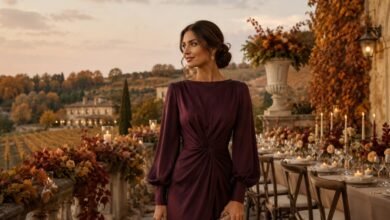
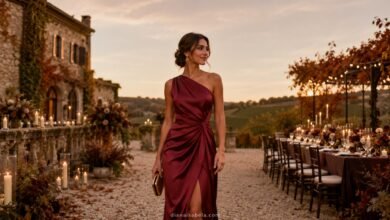
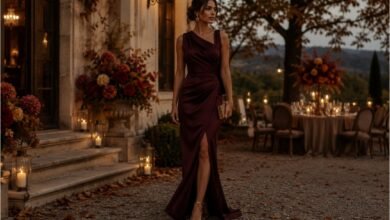
What Not to Wear to a Fall Wedding: The Outfits I Would Fix Before Leaving the House

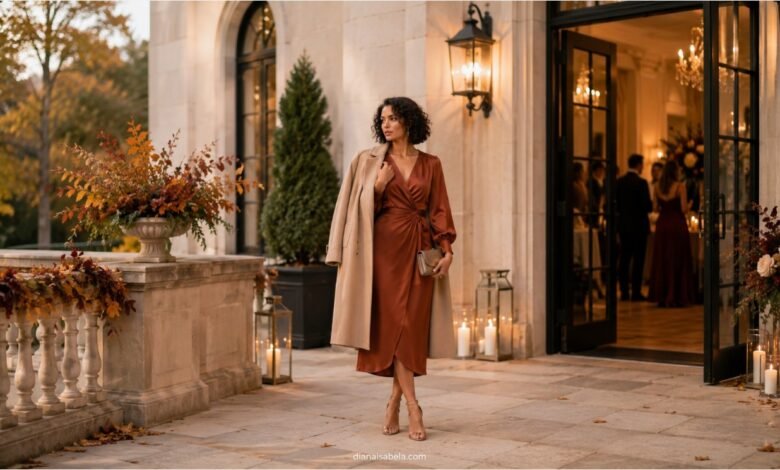
Most fall wedding outfit mistakes do not begin with an obviously terrible dress. They begin with a perfectly nice piece that belongs to the wrong occasion, the wrong weather, or a slightly different version of the wedding you imagined.
The pale satin dress looked champagne online and nearly white in the photographer’s flash. The velvet midi felt luxurious until the heated greenhouse reception turned it into personal central heating. The delicate heel was elegant for approximately twelve seconds before it disappeared into wet grass. The dark outfit looked chic in the bedroom mirror and unexpectedly funereal beside candlelight, black chairs, and a room full of burgundy flowers.
Fall creates more styling possibilities than almost any other wedding season, but it also creates more traps. Rich colors can become heavy. Practical shoes can become too casual. Warm layers can swallow the dress. Romantic prints can look summery. Rustic venues can tempt guests into costume. A forecast that sounds pleasant can feel cold once the sun disappears.
This is not a list of rigid fashion commandments. It is an outfit evidence room: fifteen common choices, the reason each one can fail, and the exact adjustment that can make it wedding-ready again.
Before deciding an outfit is inappropriate, read the whole wedding
A clothing item is rarely appropriate or inappropriate in isolation. Black can look elegant or mournful. Boots can look polished or practical in the wrong way. A long dress can be formal or beachy. A floral print can feel romantic or strangely tropical. Context changes the verdict.
Before rejecting or approving an outfit, look at four clues together: dress code, venue, time, and weather.
Dress code
Formal, cocktail, semi-formal, dressy casual, and casual invitations create different expectations. A beautiful cotton midi may work for dressy casual and feel noticeably underdressed at black tie optional.
Venue
A city restaurant, vineyard, church, barn, garden, museum, and hotel ballroom do not ask the same practical questions. Terrain, architecture, lighting, and heating matter.
Time
Afternoon weddings usually tolerate softer color, print, and lower heels. Evening receptions support deeper shades, stronger fabric, and more polished accessories.
Weather
Fall is not one temperature. Early September and late November may require completely different fabrics, outerwear, and footwear.
If the invitation wording is unclear, review the guide to wedding guest dress codes before deciding what the dress should look like.
The most useful question is not, “Is this item allowed?” It is, “Does the entire outfit respect the level, setting, and physical reality of this particular wedding?”
Case file one: the dress is not white, but it still looks bridal
Champagne satin, ivory lace, pale cream, or a nearly white floral
A dress does not need to be pure optical white to create a bridal impression. Champagne, oyster, pale beige, cream, very light blush, icy silver, and ivory-based prints can photograph much lighter than they appear in person.
Fabric matters as much as color. Champagne satin with a corseted bodice, ivory lace, pearl embellishment, a sweeping skirt, or a train may look bridal even if the shade technically sits outside white.
Why it goes wrong: the issue is not a courtroom debate over whether the color qualifies as beige. The issue is the overall visual effect beside the bride, flowers, flash photography, and evening lighting.
How I would repair it: move several shades deeper. Choose bronze instead of champagne, mushroom instead of ivory, dusty rose instead of pale blush, or slate instead of icy silver. If the dress is printed, make sure a darker color clearly dominates the whole garment.
A small amount of white is usually not the problem
A navy floral with small white petals is not the same as an ivory dress with a few navy leaves. Look at the outfit from several feet away. Which color does the eye register first?
If the answer is white, cream, or something that could become white in photographs, choose another dress.
Bridal construction can make a safe color questionable
A pale blue dress may still feel bridal if it includes a train, white lace, pearl-covered corset, or elaborate tulle skirt. Meanwhile, a simple cream-and-burgundy print may look completely guest-appropriate if burgundy controls the visual effect.
Color names on retail websites are not reliable evidence. “Sand,” “vanilla,” “natural,” and “soft gold” can all arrive looking suspiciously close to ivory.
Photograph the dress before making the decision
- Take one photograph in natural window light.
- Take another under warm indoor lighting.
- Use the camera flash once.
- Stand several feet from the mirror.
- Place the dress beside a white shirt or sheet for comparison.
- Ask what color another person notices first without telling them the product description.
The broader guide to what not to wear to a wedding covers bridal colors and etiquette across all seasons.
Case file two: the black outfit became too serious
Black is not forbidden at a fall wedding. It is one of the most elegant and practical colors for evening receptions, restaurants, galleries, hotels, and formal venues.
The problem appears when every element reinforces severity: opaque black fabric, high neckline, long sleeves, black tights, black closed shoes, black coat, dark bag, severe hair, and deep makeup. The outfit can lose its sense of celebration.
Black is easiest when the fabric moves
Chiffon sleeves, satin draping, velvet texture, lace detail, a softly pleated skirt, or an elegant neckline give the color dimension. Flat fabric and rigid construction can feel more corporate or somber.
Add warmth instead of random brightness
Warm gold jewelry, bronze heels, a berry lip, a patterned bag, chocolate suede, or a camel coat can soften black without turning the outfit into a color-blocking exercise.
Show some visual lightness
An open neckline, visible ankle, sheer sleeve, polished skin, or delicate shoe can prevent a dark outfit from looking closed from neck to floor.
Read the cultural context
Some families or traditions may still associate all-black clothing more strongly with mourning. When you know the wedding has a traditional or culturally specific atmosphere, ask someone close to the couple if you are uncertain.
A black wedding guest outfit should feel intentional, elegant, and alive. It should not look like the wearer is attending a business dinner immediately after a memorial service.
Case file three: the dress is burgundy, but everything else says summer holiday
Thin cotton, beachy halter neck, open back, tiered skirt, or tropical construction
Changing a summer dress from yellow to rust does not automatically turn it into fall wedding attire. Silhouette and fabric carry seasonal information just as strongly as color.
A burgundy linen sundress with thin ties, a very open back, and flat woven sandals may still look like vacation dressing. An olive cotton maxi with a beachy halter neckline may feel disconnected from a candlelit October reception.
Why it goes wrong: the outfit depends too heavily on color to communicate the season while the fabric, cut, and accessories continue telling a summer story.
How I would repair it: add structure and weight. Try closed-toe shoes, a tailored coat, suede or leather accessories, warm metal jewelry, and a polished bag. If the dress remains visibly beachy, save it for another occasion.
Florals are allowed; tropical energy is the problem
Fall weddings can support floral dresses beautifully. Dark backgrounds, painterly botanicals, small romantic prints, blurred leaves, and rich color combinations all work.
Large palm leaves, neon tropical flowers, beach-cover-up fabric, and resort construction are harder to reconcile with the season—especially at a church, formal estate, historic hotel, or evening restaurant.
A lightweight dress can still work in early fall
September weddings may be warm. Chiffon, light crepe, satin, and soft floral dresses can be perfectly appropriate. The difference lies in refinement rather than sheer weight.
A lined chiffon midi with elegant sleeves feels seasonal in a way that an unlined cotton sundress does not, even if both are comfortable in the same temperature.
Case file four: the silhouette is right, but the fabric is lowering the whole outfit
Two dresses can share the same length, neckline, and waist shape yet belong to completely different occasions because of the material.
Fabric influences movement, structure, light, warmth, and the level of polish. It is often the hidden reason an outfit feels underdressed even when you cannot immediately explain why.
Basic jersey
Thin jersey can cling, stretch, reveal seams, and look like everyday clothing. A substantial ponte or formal draped jersey may work, but fabric quality has to be obvious.
Casual cotton
Cotton poplin and structured cotton can suit dressy-casual daytime weddings. Thin sundress cotton, T-shirt cotton, and casual shirting may feel too ordinary for cocktail or formal invitations.
Linen
Linen belongs naturally at warm destination, garden, beach, or relaxed daytime weddings. In cool late fall or an evening ballroom, it can look seasonally misplaced and wrinkle heavily.
Chunky knit
Warmth does not automatically equal occasion dressing. Thick sweater dresses, visible ribbing, and casual knit texture may feel better suited to brunch or work.
Fabrics that usually elevate fall wedding outfits
Crepe, satin, chiffon, velvet, jacquard, brocade, lace, georgette, smooth fine knit, and high-quality suiting fabrics create stronger wedding context.
This does not mean every guest needs luxury fabric. It means the material should hold its shape, move well, photograph cleanly, and look intentional beside the venue.
Do not expect accessories to perform a complete fabric transformation
Statement earrings and heels can elevate a simple dress. They cannot always persuade thin T-shirt jersey to become formalwear.
When the base fabric feels wrong, adding more accessories often makes the contrast more obvious. The jewelry looks dressed up; the dress still looks casual.
Case file five: the shoes were chosen for the dress and ignored the wedding
Needle heels on grass, open sandals in cold rain, or heavy boots with delicate chiffon
The shoe can look perfect beside the dress and still be wrong for the event. Fall venues frequently include wet lawns, gravel, stone paths, stairs, cold pavement, old church floors, barns, vineyards, and outdoor photographs.
Why it goes wrong: impractical shoes change posture, movement, and comfort. A guest who cannot walk without sinking, slipping, or carrying her shoes will not look more polished because the heel was beautiful in the mirror.
How I would repair it: match the shoe to both the hemline and terrain. Use block heels for grass, closed pumps for cool indoor weddings, sleek boots under longer dresses, slingbacks for transitional weather, or formal flats when the event includes significant walking.
Boots are not automatically too casual
A refined ankle boot or elegant knee-high boot can work with a midi or maxi, especially at a church, barn, estate, restaurant, or cold outdoor wedding.
The problem is usually the specific boot: heavy lug sole, distressed leather, chunky hardware, casual Western construction, or a shaft that interrupts the hem awkwardly.
Open-toe shoes are not automatically wrong
Elegant sandals can work for a warm early-fall wedding or indoor evening reception. They look less logical during a cold outdoor ceremony, especially when paired with a heavy coat.
The detailed guide to shoes for a fall wedding compares pumps, block heels, boots, sandals, flats, and different surfaces.
Case file six: the dress is elegant and the coat belongs to another life
Fall wedding outfits are often built in two unrelated stages. First comes the dress, selected with patience and optimism. Then the temperature drops, and the guest grabs whichever jacket happens to be closest to the door.
The result may be a satin midi under a sporty puffer, a chiffon gown beneath a short utility jacket, or a formal velvet dress with a casual cardigan that ends at the widest part of the skirt.
The outer layer may be visible longer than expected
Arrivals, outdoor ceremonies, cocktail hours, photographs, venue transfers, terrace conversations, and the late-night exit can all involve the coat. It is not always a five-minute practical interruption.
A casual coat does not ruin your moral character
Warmth matters. In truly cold weather, wearing the only coat that protects you is better than physically suffering for a photograph.
Still, when you have time to plan, choose outerwear at the same moment as the dress. A tailored wool coat, long structured coat, cape, velvet jacket, substantial wrap, or refined faux-fur layer will create a much more coherent result.
Length creates the cleanest visual problems or solutions
A very short jacket over a full midi can cut the body awkwardly. A knee-length coat over a floor-length gown may leave a large section of skirt exposed. A long coat often creates the easiest line with midi, ankle-length, and formal dresses.
Statement sleeves need space
Balloon sleeves, puff shoulders, and layered chiffon sleeves may not fit beneath a narrow coat. Try the complete combination before the wedding instead of discovering the problem in the car.
For more pairings by silhouette and dress code, use the guide to what to wear over a dress to a fall wedding.
Case file seven: dressing for the month instead of the forecast
“It is an October wedding, so velvet must be right”
October can mean a crisp mountain evening, a warm Southern garden, a humid conservatory, or a cold waterfront. Month alone does not determine the outfit.
Why it goes wrong: seasonal styling becomes costume-like when it ignores temperature. Velvet can be miserable in a heated greenhouse. A sleeveless slip dress can be miserable on an exposed terrace.
How I would repair it: check the hour-by-hour forecast, wind, rain, sunset time, and indoor heating. Build removable warmth rather than choosing one dress that can only tolerate one temperature.
Wind changes the answer
A calm 55°F afternoon and a windy 55°F waterfront ceremony do not feel equal. Exposed venues require secure skirts, proper outerwear, closed shoes, and layers that do not need to be held in place.
Rain changes more than footwear
Long hems, pale suede, unprotected satin, delicate bags, and floor-skimming chiffon may become difficult in wet weather. Choose a manageable hem and bring an umbrella that does not leak rust-colored water onto the dress.
Indoor weddings can still be cold
Churches, converted barns, historic buildings, tented receptions, and rooms near open doors may remain cool. A reception described as indoor is not always warm.
Overheating is also an outfit mistake
Heavy velvet, thermal layers, opaque tights, boots, and a high neckline may be perfect outside and oppressive on the dance floor.
The best plan usually involves removable pieces: coat, wrap, jacket, tights under a long skirt, or sleeves without excessive fabric weight.
Case file eight: the barn invitation became a costume brief
A barn, farm, orchard, or countryside venue can influence an outfit without requiring a character transformation.
Guests sometimes read “rustic wedding” and immediately assemble cowboy boots, fringe, a wide belt, felt hat, plaid, suede jacket, and prairie floral. One or two of those elements may work. All of them together can feel more themed than celebratory.
The venue is a setting, not necessarily the dress code
Many barn weddings include crystal chandeliers, formal tables, plated dinners, florists, live music, and cocktail attire. The architecture may be rustic while the event remains elegant.
Choose one grounded element
A block heel, polished boot, suede bag, dark floral, warm brown coat, or textured wrap can acknowledge the venue without creating costume.
Western boots require a deliberate decision
Refined Western boots may work when the invitation, couple, or venue clearly supports them. Casual work boots, highly distressed leather, and oversized decorative stitching can pull the outfit below the intended level.
Prairie details can become too literal
A high ruffle neck, puff sleeves, floral maxi, lace-up boots, and wide belt may look beautiful individually. Together, they may feel as though the outfit was built from the venue’s mood board rather than your own style.
The dedicated guide to fall barn wedding guest dresses gives more balanced options for rustic settings.
Case file nine: every piece is trying to prove it knows the season
Rust dress, burgundy shoes, pumpkin clutch, gold leaves, plaid wrap, and berry makeup
Fall style becomes less sophisticated when every item performs the same seasonal theme. Richness needs breathing room.
Why it goes wrong: the outfit stops looking naturally autumnal and begins resembling a decorative display assembled beside the venue entrance.
How I would repair it: keep two or three autumn cues and neutralize the rest. Pair the rust dress with chocolate shoes and a simple metallic bag. Wear the burgundy velvet dress with black pumps and understated jewelry.
Fall colors do not all need to appear together
Burgundy, forest green, rust, mustard, plum, brown, and copper are individually beautiful. Combining too many can make the outfit muddy.
Choose one main color, one supporting neutral, and perhaps one small accent. This creates depth without visual competition.
Texture deserves the same restraint
Velvet, suede, lace, brocade, faux fur, and metallic leather all carry strong seasonal character. A velvet dress, suede shoe, faux-fur coat, and brocade bag can become visually heavy even when the colors coordinate.
Autumn motifs can be charming in small doses
Leaf-shaped earrings, botanical prints, berry lipstick, or warm florals can work. Avoid turning every accessory into a literal symbol of the season.
Case file ten: the outfit is glamorous but belongs to a different kind of evening
A wedding can support sensuality, sparkle, fitted silhouettes, open backs, slits, and dramatic necklines. The problem is not one sexy detail. It is the combination of every nightlife signal at once.
A very tight satin mini with a plunging neckline, high slit, open back, sheer cutouts, metallic stiletto, and club-style bag may feel more like birthday-night dressing than wedding guest attire.
Balance one revealing feature with structure elsewhere
If the neckline is low, consider a longer hem or sleeves. If the back is open, keep the front refined. If the dress is short, choose a cleaner neckline and elegant outer layer.
Fit should allow movement without constant management
A dress that requires repeated pulling, lifting, smoothing, or checking will become less elegant as the evening progresses.
Sequins are not automatically too much
Sequin dresses can work beautifully for evening cocktail, formal, or festive weddings. The strongest versions usually have a controlled silhouette and restrained accessories.
Dense sparkle with a very short hem, deep neckline, dramatic slit, statement earrings, glitter bag, and metallic shoe may overwhelm the celebration.
The question is not whether the outfit attracts attention
Fashion is allowed to be noticed. The question is whether the attention feels appropriate to a wedding where the couple remains the center of the event.
Case file eleven: the outfit looks like a meeting with better earrings
Plain office sheath, work pumps, tote-style bag, and a necklace added at the last minute
Work dresses are often polished, modest, and well fitted, which makes them tempting for weddings. Some can transition beautifully. Others retain such strong corporate energy that accessories cannot change the message.
Why it goes wrong: office fabrics, rigid necklines, conservative construction, and everyday accessories create competence rather than celebration.
How I would repair it: change at least two major elements. Add a more distinctive shoe, evening bag, textured coat, stronger earring, softer hairstyle, or richer makeup. If the dress still looks corporate, choose another base piece.
Not every tailored dress is office wear
Sculptural crepe, asymmetric necklines, elegant sleeves, draped waists, and rich color can make a tailored dress feel completely wedding-ready.
The difference is whether the design appears selected for a celebration rather than chosen because it satisfies a workplace dress code.
The bag often reveals the problem
A large structured work tote can pull even a beautiful dress into daytime territory. Use a compact shoulder bag, clutch, mini top-handle bag, or refined crossbody that holds essentials without resembling commuter luggage.
Case file twelve: the outfit is beautiful but one level off
Being underdressed or overdressed often comes from ignoring the exact invitation wording and styling only for the season.
Casual fabric at a formal wedding
A cotton wrap dress in a deep fall color may look beautiful but still feel underdressed in a hotel ballroom. Formality comes from construction and fabric, not seasonal palette alone.
Full gala drama at a semi-formal wedding
A floor-length embellished gown, elaborate updo, crystal jewelry, and formal minaudière may feel excessive at an afternoon restaurant or relaxed estate ceremony.
Cocktail dressing at a church daytime wedding
A sleek mini with dramatic cutouts may satisfy the guest’s idea of polished while conflicting with the ceremony setting and family atmosphere.
Dressy casual does not mean ordinary casual
Jeans, leggings, sweatshirts, sneakers, basic T-shirt dresses, and everyday knits are rarely improved enough by one nice accessory.
Formal does not always require floor length
A sophisticated midi, ankle-length dress, tailored jumpsuit, or structured evening separate may work depending on the venue and invitation. The outfit must still carry sufficient polish.
When you are caught between levels, dress for the most formal clue: evening time, grand venue, traditional invitation, or explicit wording.
Case file thirteen: the outfit only works while standing still
A wedding guest outfit has a job. It must survive transportation, greetings, ceremony seating, stairs, dinner, photographs, dancing, temperature changes, and perhaps six to ten hours of wear.
A dress can be visually perfect and practically unsuccessful.
The neckline moves
If you need to check or lift it every few minutes, try fashion tape, a different bra, tailoring, or another dress.
The hem tangles
Walk quickly, climb stairs, and turn before deciding a long dress is wearable. Tailoring may be necessary.
The waistband hurts
Sit for fifteen minutes in the complete outfit. A waist that feels secure while standing can become painful during dinner.
The sleeves restrict movement
Raise your arms, reach forward, and try the coat. Beautiful sleeves are not helpful when they prevent ordinary movement.
The shoes last one hour
Wear them around the house on the same flooring type when possible. Bring polished backup flats rather than casual slides.
The fabric requires constant smoothing
Very thin satin, clingy jersey, and static-prone skirts may behave differently after sitting or layering over tights.
Comfort does not require lowering the style level
Lower heels, elegant flats, lined dresses, sleeves, tailored jumpsuits, stretch crepe, supportive undergarments, and practical coats can all look sophisticated.
The most polished guest is rarely the person wearing the most difficult outfit. Ease improves posture, movement, and the ability to enjoy the wedding.
Five outfit investigations: what fails and what I would change
The original outfit
A thin burgundy slip dress, delicate stiletto sandals, and a sheer wrap.
What fails
The color is right, but the thin fabric, open shoe, unstable heel, and decorative wrap ignore gravel, wind, and the temperature drop after sunset.
The revised outfit
Keep the burgundy color but choose a lined satin or crepe midi. Add a narrow block heel, structured bag, and tailored wool coat. The result remains romantic while acknowledging the actual venue.
The original outfit
A black high-neck sweater dress, opaque tights, black ankle boots, black coat, and dark lipstick.
What fails
Nothing is individually inappropriate, but the total look becomes too severe and visually heavy for a wedding.
The revised outfit
Choose a smoother knit or crepe dress with an open neckline or visible ankle. Add warm metallic earrings, a berry rather than near-black lip, and a camel, burgundy, or textured coat.
The original outfit
An ivory floral midi with tiny pale pink flowers, nude sandals, and pearl earrings.
What fails
The dress photographs predominantly ivory, and the pearls increase the bridal impression.
The revised outfit
Choose the same silhouette in a darker floral background—navy, rose, plum, or olive. Keep the nude shoe if the weather is warm, then replace the pearls with gold or colored stone earrings.
The original outfit
A rust prairie maxi, embroidered Western boots, wide belt, fringe bag, and felt hat.
What fails
The guest has interpreted the venue more strongly than the formal dress code. The combined pieces become costume.
The revised outfit
Choose a rust crepe or chiffon gown with cleaner lines. Keep one venue-aware detail, perhaps a refined suede bag or polished block heel, and remove the remaining Western references.
The original outfit
A plain navy office sheath, standard work pumps, large tote, and a crystal necklace.
What fails
The necklace does not change the corporate structure of the remaining outfit.
The revised outfit
Replace the tote with a compact evening bag, choose a sculptural shoe, add a tailored velvet jacket, and wear stronger earrings instead of the necklace. If the dress still looks like workwear, switch to a draped navy midi.
The final door-check before leaving for a fall wedding
Stand in front of the mirror wearing everything: dress, shoes, tights, jewelry, coat, bag, and the actual undergarments. Many outfit problems remain invisible until the whole combination appears together.
Ask these questions once, not throughout the reception
- Does the outfit look clearly different from bridalwear?
- Does it match the stated dress code?
- Does the fabric suit the venue and time of day?
- Can the shoes handle grass, gravel, stairs, rain, or long standing?
- Is the outerwear warm enough and visually connected to the dress?
- Does the outfit feel celebratory rather than corporate, funereal, or costume-like?
- Is there one focal point, or are all the details competing?
- Can you sit, walk, raise your arms, and dance comfortably?
- Will the dress remain secure without constant adjustment?
- Have you checked how the color looks in photographs?
- Does the outfit still make sense after sunset?
- Would you feel comfortable standing beside guests dressed one level more formally?
When in doubt, remove one themed detail
Take off the leaf earrings, plaid wrap, fringe bag, or second statement accessory. Editing usually improves a fall outfit more than adding another seasonal cue.
When the outfit feels flat, change one major piece
Do not keep adding small jewelry in an attempt to transform the look. Change the shoe, bag, coat, or dress. Major visual problems usually need major visual solutions.
When comfort is the concern, solve it before leaving
Add the tights. Change the heel. Tailor the hem. Bring the coat. Use fashion tape. Pack formal flats. A wedding is not improved by proving you can tolerate avoidable discomfort.
Fall wedding style works best when it feels seasonal without becoming themed, elegant without becoming competitive, and practical without looking accidental.
For a wider selection of dresses, fabrics, colors, and venues, visit the complete fall wedding guest dress guide or browse the main wedding guest dress collection.
Questions about what not to wear to a fall wedding
Can I wear black to a fall wedding?
Yes. Black is appropriate for most modern fall weddings, especially evening, hotel, restaurant, gallery, and formal celebrations. Add texture, movement, warm jewelry, or a softer accessory so the outfit feels celebratory rather than severe.
Is it inappropriate to wear champagne or beige?
It depends on how light the dress appears. Champagne, cream, oyster, and pale beige can photograph close to white, particularly in satin, lace, or bridal silhouettes. A deeper bronze, mushroom, taupe, or mocha is usually safer.
Can I wear boots to a fall wedding?
Sleek ankle boots or refined knee-high boots can work with the correct dress and venue. Avoid heavy lug soles, distressed work boots, and very casual styles unless the invitation clearly supports them.
Are floral dresses appropriate in fall?
Absolutely. Choose deeper backgrounds, painterly flowers, muted botanicals, or richer color combinations. Very tropical prints and beachy fabrics may feel out of season, especially at formal evening weddings.
Can I wear a sleeveless dress to a cold fall wedding?
You can, provided you bring outerwear that supplies real warmth. A sleeveless velvet or lined crepe dress beneath a wool coat may be more practical than a long-sleeve dress in thin sheer fabric.
Are opaque tights too casual for a wedding?
They can work for dressy-casual or semi-formal church, barn, estate, restaurant, and cold outdoor weddings. With a very delicate or formal dress, sheer tights often create a lighter and more elegant result.
Can I wear a sweater dress?
A refined knit midi can work when it has substantial fabric, a polished silhouette, and elegant accessories. Basic ribbed sweater dresses, oversized knits, and casual everyday styles may feel underdressed.
Is a short dress inappropriate for a fall wedding?
Not automatically. A sophisticated cocktail mini or knee-length dress may suit an evening restaurant or hotel wedding. Extremely short hems combined with plunging necklines, cutouts, or nightclub accessories may feel less appropriate.
Can I wear a puffer coat over my wedding guest dress?
Wear the coat that keeps you safe and warm when conditions are genuinely cold. For a planned fall wedding outfit, however, a tailored wool coat, long formal coat, cape, or substantial wrap usually looks more cohesive in arrivals and photographs.
What colors should I avoid at a fall wedding?
Avoid colors that appear bridal on the particular dress, including white, ivory, very pale cream, or champagne that photographs nearly white. No autumn color is universally forbidden; the dress code, culture, fabric, and overall styling matter more.