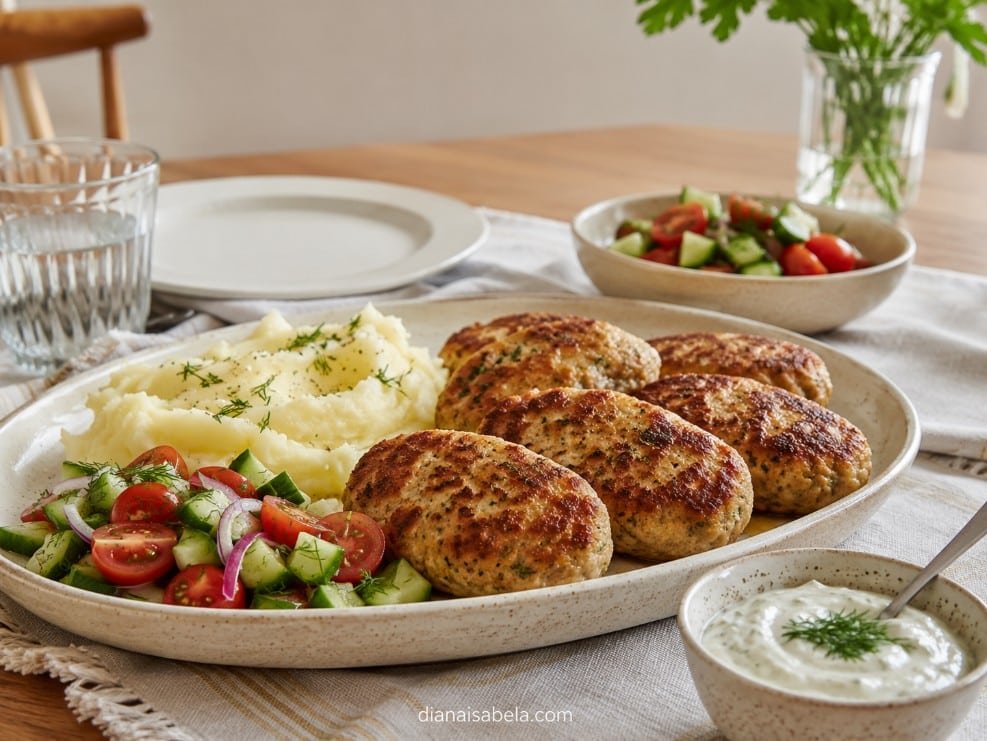
Turkey kotleti can be tender, juicy and deeply satisfying, but only when the mixture is built to protect lean ground turkey from drying out. The most reliable method is to combine the meat with grated onion, bread softened in milk, a little sour cream and gentle seasoning, then chill the mixture before shaping. Pan-fry the kotleti over moderate heat and cook them only until the center reaches 165°F or 74°C.
The key difference with turkey: turkey breast is much leaner than pork, beef or many chicken mixtures. Instead of adding more breadcrumbs whenever the mixture feels soft, first give the bread time to absorb moisture and chill the bowl. The mixture should remain tender, not stiff.
Why this turkey kotleti recipe stays tender
Turkey is often chosen because it feels lighter than beef or pork, but the same leanness that makes it appealing can also make the finished kotleti dry. The answer is not to hide the meat under a heavy coating or add so much bread that the patties taste like stuffing. The goal is to create a balanced mixture that holds moisture without becoming loose.
This version uses bread softened in milk as a panade. The softened bread disperses through the meat and helps retain liquid during cooking. Grated onion adds both moisture and flavor, while sour cream softens the texture without making the kotleti taste creamy.
Chilling is another important step. Freshly mixed ground turkey can be sticky and difficult to shape. Resting the bowl in the refrigerator gives the bread time to absorb moisture and makes the mixture easier to handle. It also reduces the temptation to keep adding breadcrumbs.
Soft center · golden crust · lighter family dinner · easy meal prep
What makes this different from chicken kotleti?
Chicken and turkey can look interchangeable in recipes, but they do not always behave the same way. Ground chicken is often softer and may contain a mix of white and dark meat. Ground turkey varies more dramatically depending on whether it is made from breast only or includes darker, fattier meat.
Turkey breast needs more protection from dryness. A blend containing dark meat is usually easier to cook and reheats better. This recipe is designed to work with either, but you may need one extra spoonful of milk or sour cream when using very lean breast meat.
For a similar but slightly milder version, use my chicken kotleti recipe. For the more traditional pork-and-beef style, see the classic Russian kotleti recipe.
Choosing the right ground turkey
The package label matters more than many cooks realize. Ground turkey breast and regular ground turkey can produce noticeably different results even when every other ingredient remains the same.
Ground turkey breast
Ground turkey breast is very lean, pale and mild. It can make excellent kotleti, but the mixture needs enough moisture and should not be overcooked.
When using breast meat, keep the full amount of soaked bread and sour cream. If the mixture looks dry before chilling, add one tablespoon of milk. Avoid adding extra breadcrumbs unless the mixture remains impossible to shape after resting.
Ground turkey with dark meat
Ground turkey that includes thigh or other dark meat has more fat and a fuller flavor. It is usually more forgiving and remains tender even after reheating.
This is my preferred choice for family dinners and meal prep because the kotleti stay softer on the second day.
Very lean 99% turkey
Extra-lean turkey can work, but timing becomes critical. Use an instant-read thermometer and remove the kotleti as soon as the center reaches 165°F or 74°C. A spoonful of sour cream and the full milk-soaked bread mixture are especially useful here.
Best overall choice: regular ground turkey containing some dark meat gives the easiest balance of tenderness, flavor and structure. Use ground turkey breast when you want the leanest option, but handle it gently and watch the temperature closely.
Ingredients for juicy turkey kotleti
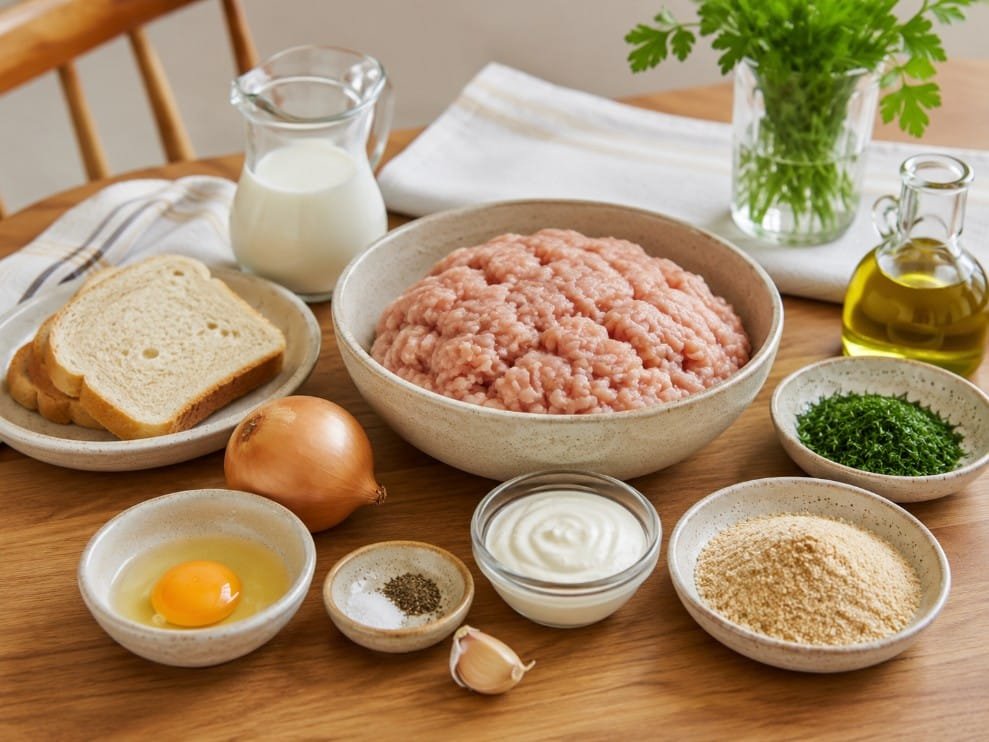
Ground turkey: 1½ pounds or 680 grams. Regular ground turkey is easiest to work with, but ground turkey breast also works.
Soft white bread: 2 ounces or 55 grams, about 2 medium slices with the crusts removed.
Milk: ⅓ cup or 80 milliliters, plus 1 tablespoon if needed for very lean turkey.
Onion: 1 small onion, about 4 ounces or 115 grams, finely grated.
Egg: 1 large egg.
Sour cream: 2 tablespoons or 30 grams.
Garlic: 1 small clove, finely grated or minced.
Salt: 1¼ teaspoons fine salt, or to taste.
Black pepper: ½ teaspoon.
Fresh dill or parsley: 2 tablespoons finely chopped.
Fine breadcrumbs: ⅓ cup or 35 grams for a very light exterior coating, optional.
Oil: 2 to 3 tablespoons for pan-frying.
Why bread is important
Bread is not included simply to stretch the meat. Once softened in milk, it forms a panade that helps the turkey retain moisture. Dry breadcrumbs absorb liquid quickly and can make the mixture heavy when used in the same quantity.
Soft sandwich bread, brioche without excessive sugar or a plain white roll can all work. Avoid very crusty artisan bread unless it is soaked thoroughly.
Why use sour cream?
Sour cream adds a small amount of fat and moisture while keeping the flavor balanced. Two tablespoons are enough to soften the texture without making the mixture wet.
Full-fat plain Greek yogurt can replace it, although yogurt is slightly more acidic and may create a firmer texture if too much is added.
Does the egg make the kotleti tough?
One egg adds enough structure for this amount of meat. More is not better. Two eggs can make the finished kotleti bouncy or firm, especially when using very lean turkey.
Equipment you need
Large mixing bowl
Small bowl for soaking the bread
Box grater or fine grater for the onion
Large skillet with a lid
Thin flexible spatula
Instant-read thermometer
Plate or tray for the shaped kotleti
Parchment paper, optional
A heavy stainless-steel, cast-iron or quality nonstick skillet gives the most consistent browning. Use a pan large enough to leave space between the kotleti.
How to make turkey kotleti
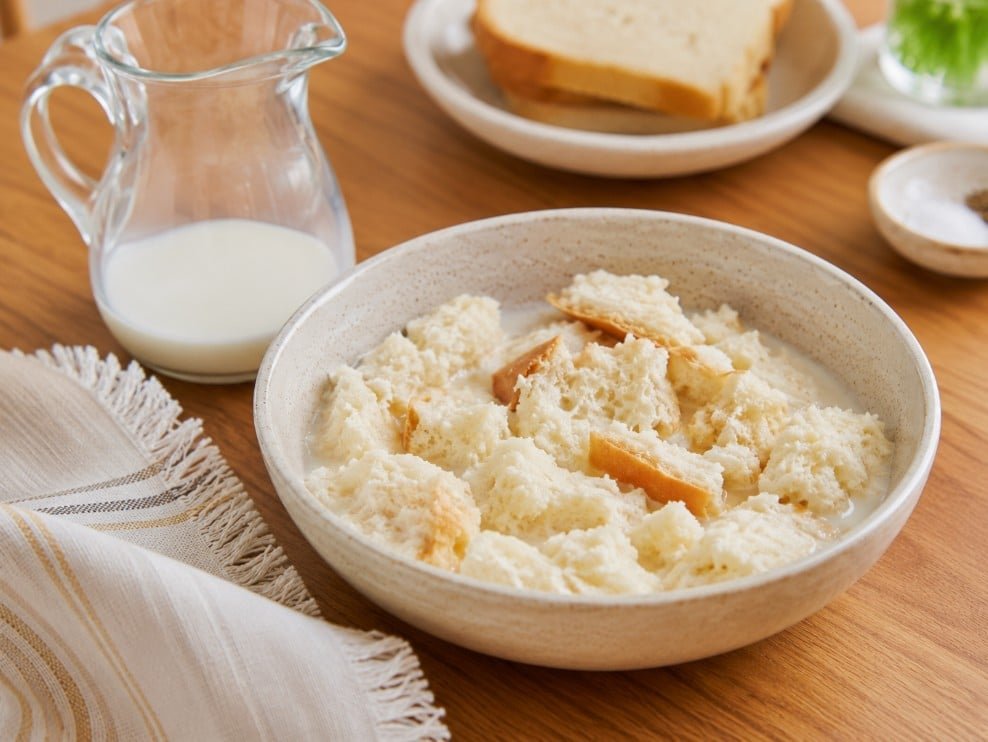
1. Soften the bread
Tear the bread into small pieces and place it in a bowl. Pour the milk over the bread and let it stand for 5 to 8 minutes.
The bread should become completely soft but should not float in a large puddle of milk. Mash it lightly with a fork.
2. Grate the onion
Grate the onion on the fine side of a box grater. Include the juice because it contributes moisture and distributes the onion flavor throughout the meat.
Finely chopped onion can be used, but grated onion creates a smoother mixture and reduces the chance of the patties splitting around large pieces.
3. Combine the ingredients
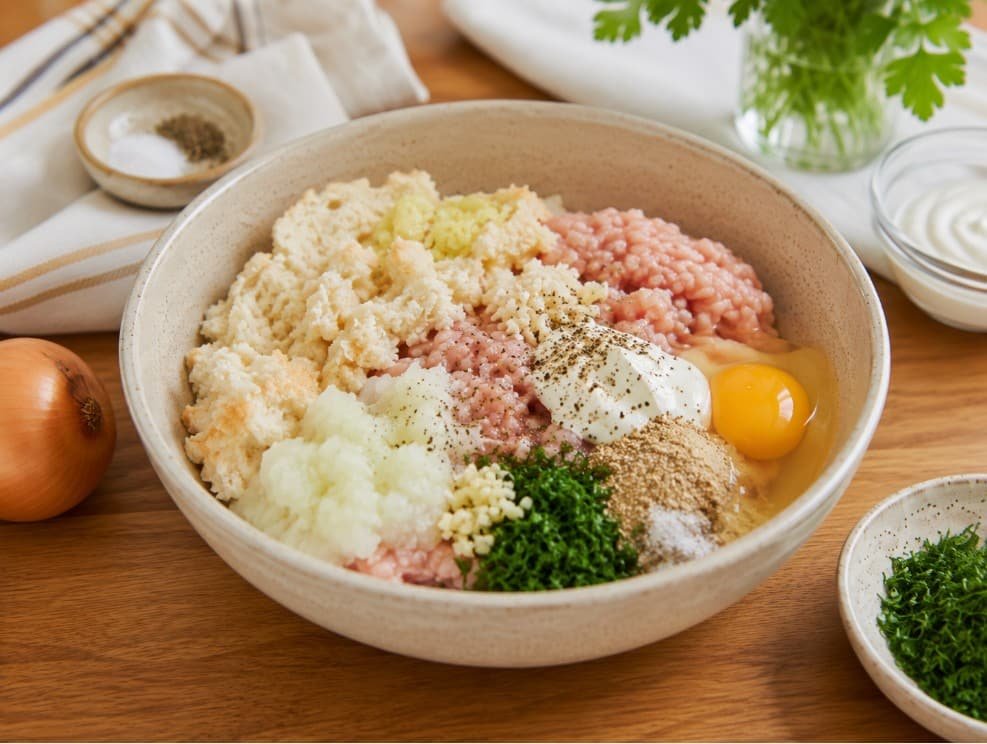
Add the ground turkey to a large bowl. Add the softened bread with any milk remaining in the bowl, grated onion, egg, sour cream, garlic, salt, pepper and herbs.
Mix gently with clean hands or a fork until the ingredients are evenly distributed. Stop as soon as the mixture looks cohesive.
4. Chill the mixture
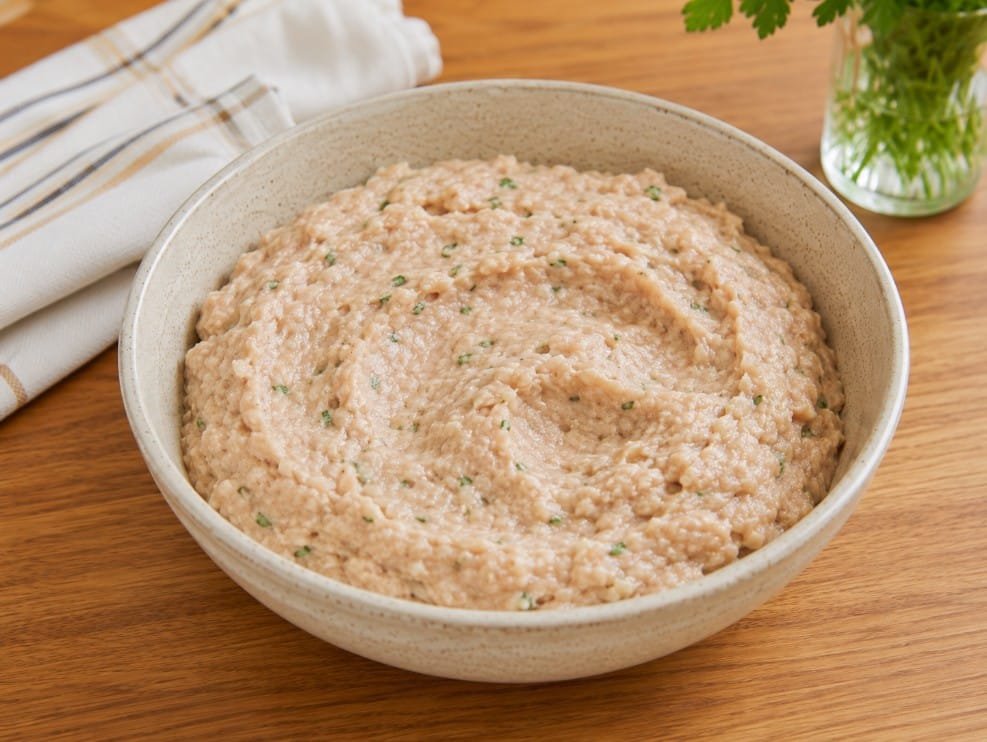
Cover the bowl and refrigerate for 25 to 30 minutes.
This rest allows the bread to absorb moisture fully and makes the mixture easier to shape. It also keeps the turkey cold while you prepare the pan.
How the turkey kotleti mixture should feel
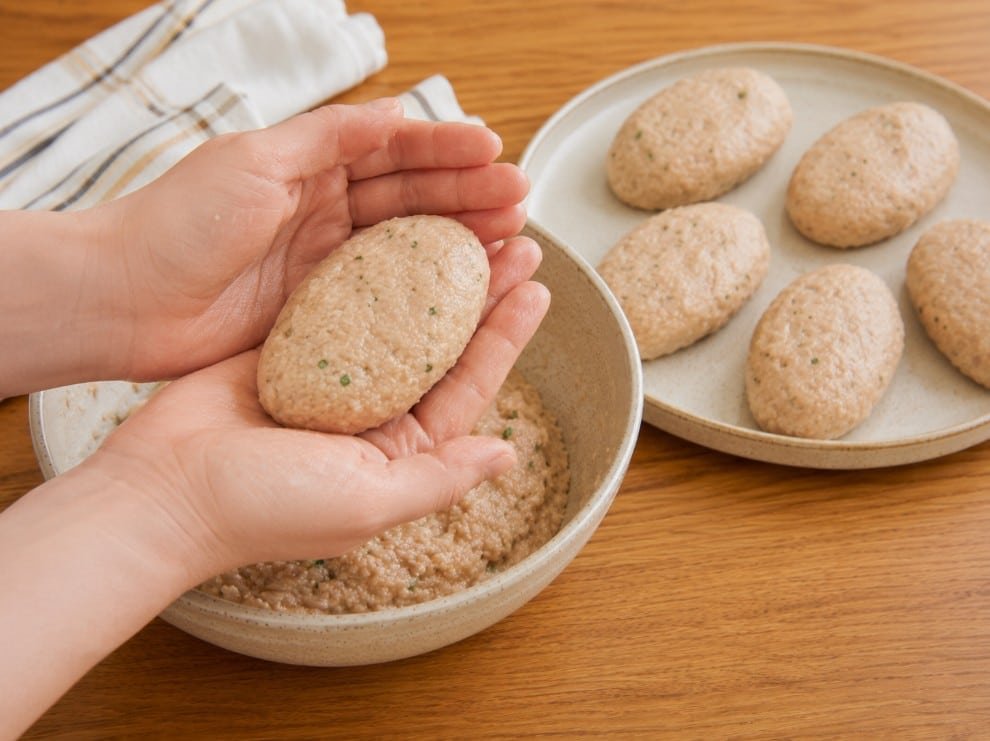
The mixture should be soft, slightly sticky and moist, but it should hold together when pressed gently in your hand. It will not feel as firm as a burger mixture.
If the mixture is too wet
First, chill it for the full 30 minutes. If it still spreads immediately and cannot be shaped, add 1 tablespoon of fine breadcrumbs. Mix gently and wait 5 minutes before checking again.
Add a second tablespoon only if necessary. Too many breadcrumbs create dry, dense kotleti.
If the mixture feels dry
Add 1 tablespoon of milk or 1 teaspoon of sour cream. This is most likely to happen with extra-lean turkey breast or if the bread did not absorb enough liquid.
Cook a test piece
Fry one teaspoon-sized piece of the mixture before shaping the full batch. Taste it for salt and seasoning.
This small test also reveals whether the mixture holds together in the pan.
How to shape turkey kotleti
Lightly wet or oil your hands. Divide the mixture into 10 equal portions and shape each portion into an oval about ¾ inch or 2 centimeters thick.
Do not compress the meat tightly. Use just enough pressure to create a smooth shape without packing the mixture like a dense burger.
Should turkey kotleti be breaded?
Breading is optional. A very light coating of fine breadcrumbs gives the surface more color and helps protect the soft mixture during flipping.
Roll each shaped kotleta lightly in breadcrumbs and shake off the excess. Do not create a thick breaded shell.
For an unbreaded version, place the shaped kotleti directly on a lightly oiled tray until the pan is ready.
How to pan-fry turkey kotleti
Heat 2 tablespoons of oil in a large skillet over medium heat. The oil should shimmer but not smoke.
Add the kotleti in a single layer, leaving space between them. Cook in batches if needed.
Fry the first side for approximately 4 to 5 minutes without moving the kotleti repeatedly. Once the bottom is golden and releases easily, turn each one with a thin spatula.
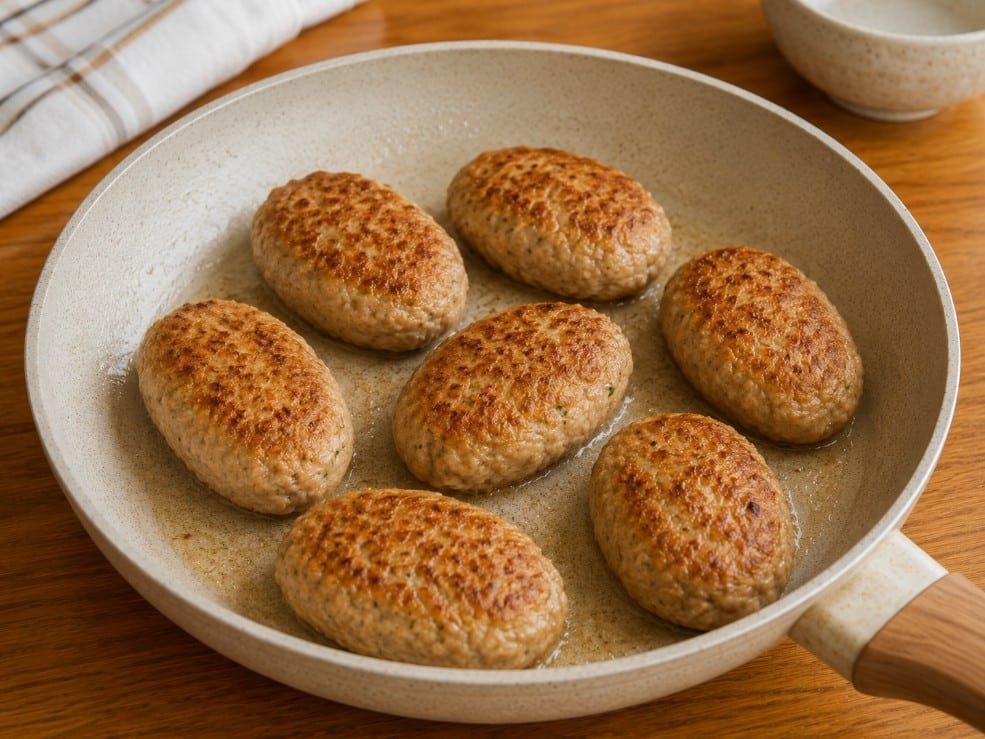
Cook the second side for 3 to 4 minutes. Lower the heat to medium-low, cover the skillet and cook for another 2 to 4 minutes, depending on thickness.
Check the center with an instant-read thermometer. Insert it through the side into the thickest part of the kotleta.
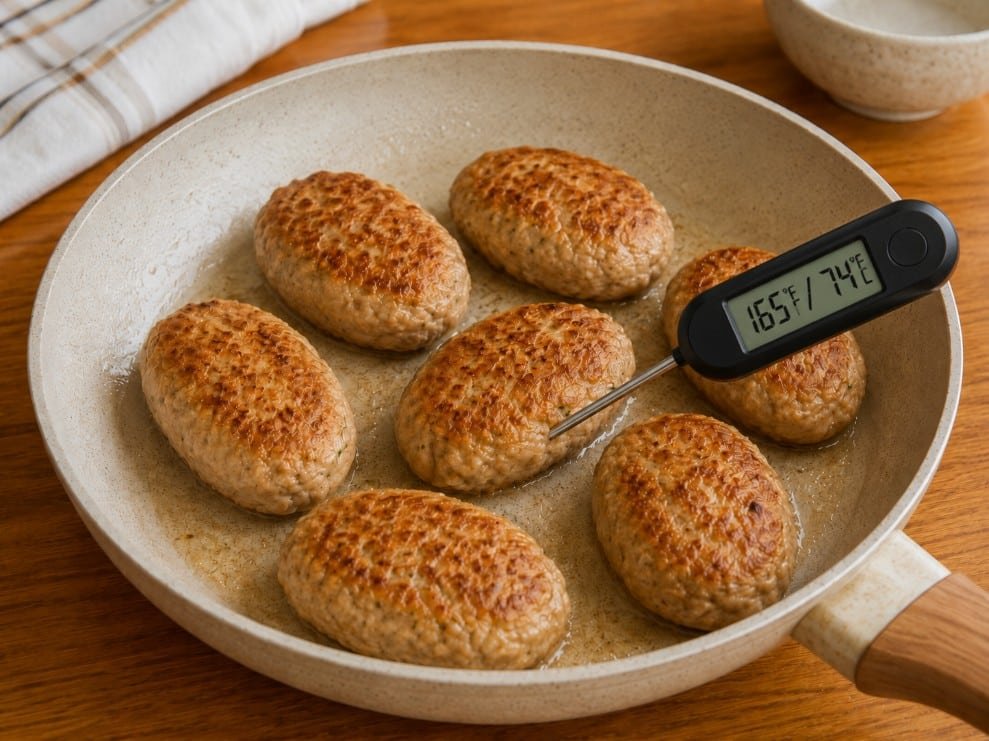
Safe internal temperature: turkey kotleti should reach 165°F or 74°C. Remove them once they reach that temperature instead of continuing to cook them until they feel very firm.
What should the inside look like?
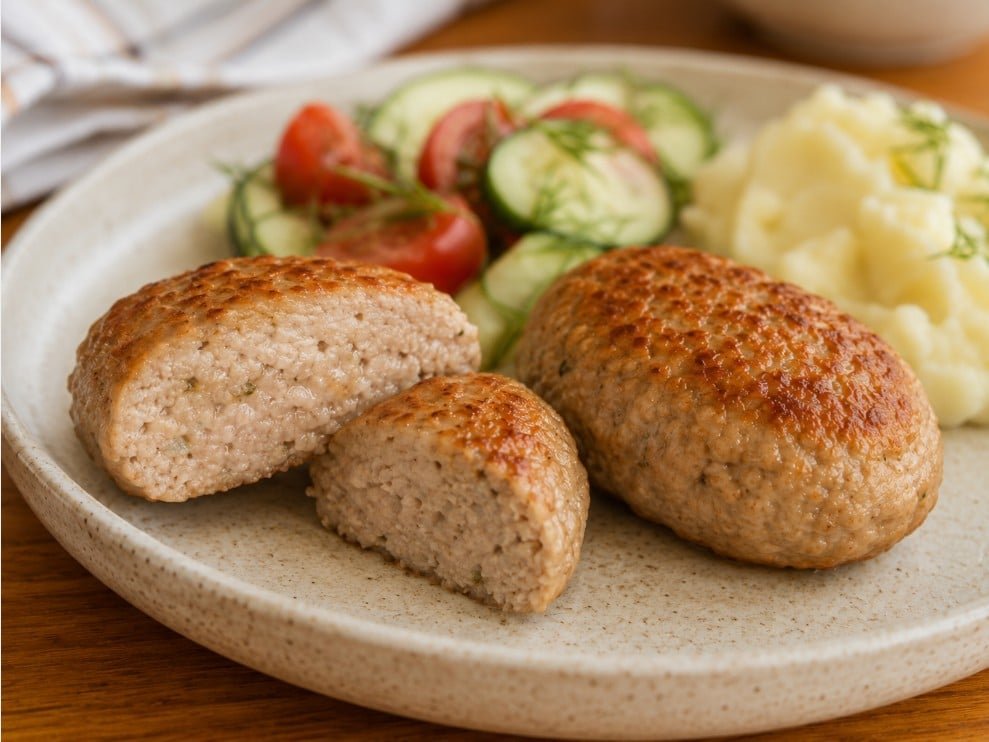
The center should be fully cooked, moist and tender, with no raw pink meat. A small amount of clear juice is normal.
Let them rest
Transfer the cooked kotleti to a plate and rest for 5 minutes before serving. This short rest allows the juices to settle.
Common turkey kotleti mistakes and how to fix them
The kotleti are dry: the turkey may have been extra lean, the mixture may have lacked moisture or the patties may have cooked beyond 165°F or 74°C.
The mixture is too sticky: chill it before adding breadcrumbs. Slight stickiness is normal with ground turkey.
The kotleti fall apart: make sure the bread is evenly distributed, shape smaller patties and wait until the first side develops a crust before turning.
The outside browns too quickly: reduce the heat. The skillet is too hot for the thickness of the patties.
The surface is pale: preheat the skillet properly, avoid crowding and use a small amount of oil.
The texture is rubbery: the mixture was probably overworked or contained too much egg.
The kotleti taste bready: too much bread or breadcrumbs were added to make shaping easier.
The onion tastes raw: grate it finely or sauté it briefly and cool it before mixing.
Do not press the patties in the pan
Pressing with a spatula squeezes out moisture. Shape the thickness before cooking and leave the kotleti alone while the crust develops.
Substitutions and variations
Instead of sour cream
Use full-fat plain Greek yogurt, mayonnaise or 1 tablespoon of melted butter. Greek yogurt creates a slightly tangier flavor, while mayonnaise produces a very soft texture.
Instead of milk
Water, unsalted broth or unsweetened oat milk can soften the bread. Broth adds more savory flavor.
Gluten-free turkey kotleti
Use gluten-free white bread for the panade and gluten-free fine breadcrumbs for the optional coating.
Without egg
The recipe can be made without egg, but the mixture will be more delicate. Add 1 extra tablespoon of soaked bread and chill the mixture for at least 40 minutes.
Turkey and pork kotleti
Replace one-third of the turkey with ground pork for a richer and more forgiving version. Reduce the sour cream to 1 tablespoon because the pork supplies additional fat.
Turkey and zucchini kotleti
Add ½ cup or 60 grams of finely grated zucchini that has been salted, rested and squeezed very dry. Wet zucchini will make the patties difficult to shape.
Herb variations
Dill creates the most familiar Eastern European flavor. Parsley is milder. Chives, a small amount of thyme or finely sliced green onion also work.
What to serve with turkey kotleti
Turkey kotleti are mild enough to work with both traditional comfort-food sides and lighter vegetables.
Classic dinner: mashed potatoes, cucumber-tomato-dill salad and gravy.
Lighter plate: roasted vegetables, cabbage salad and yogurt-dill sauce.
Meal-prep bowl: buckwheat, sliced kotleti, cucumber and roasted carrots.
School lunch: one smaller kotleta, rice, cucumber slices and fruit.
Family celebration: buttered potatoes, mushroom sauce, beet salad and pickles.
Quick sandwich: sliced turkey kotleta, lettuce, cucumber and mustard in a soft roll.
For more ideas across chicken, beef, pork, turkey, fish and vegetable versions, visit the complete kotleti recipes guide.
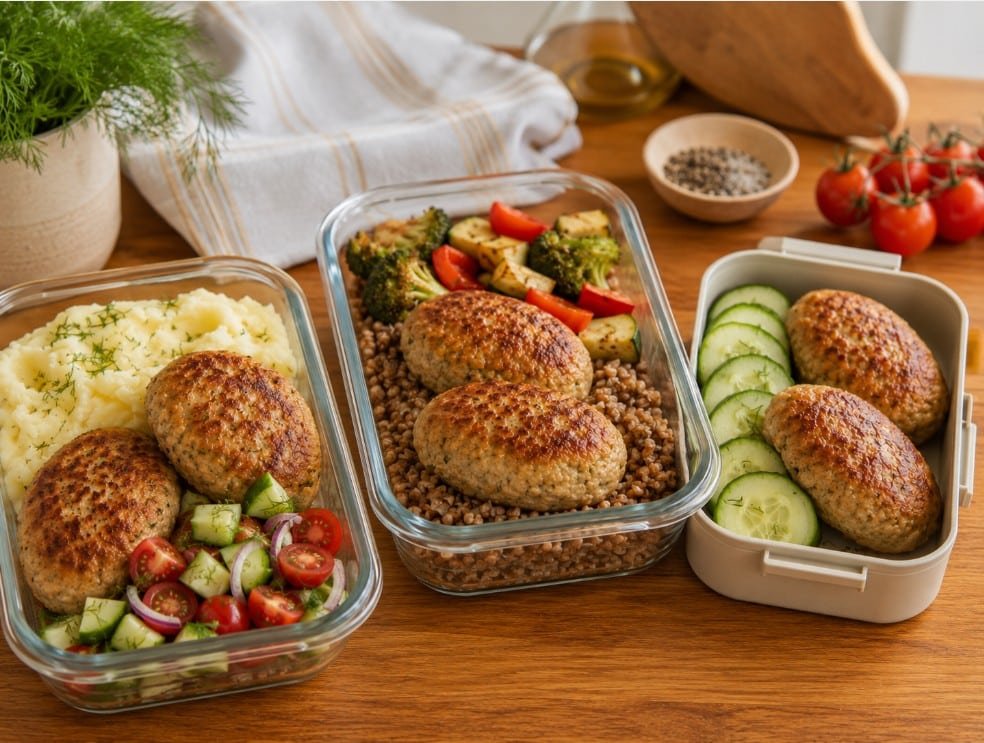
Make-ahead, storage, freezing and reheating
Make the mixture ahead
Mix the turkey mixture up to 12 hours before cooking. Cover it tightly and keep it refrigerated.
Shape the kotleti shortly before frying so the surface does not dry out.
Refrigerating cooked turkey kotleti
Cool the kotleti promptly and store them in an airtight container in the refrigerator for up to 3 to 4 days.
Place parchment between layers if the exterior is lightly breaded.
Freezing raw turkey kotleti
Shape the patties and arrange them on a parchment-lined tray without touching. Freeze until firm, then transfer them to a freezer-safe bag or container.
Separate layers with parchment and label the package with the date. For best texture, use within 2 to 3 months.
Freezing cooked turkey kotleti
Cool completely, freeze in a single layer and then pack into a freezer-safe container. Remove as much air as practical.
How to reheat without drying them out
Place the kotleti in a covered skillet with 1 to 2 tablespoons of water or broth. Warm over low heat until hot in the center.
They can also be reheated in a covered baking dish at 325°F or 165°C. Add a spoonful of broth or sauce before covering.
In the microwave, use medium power and short intervals. Cover the kotleti so steam remains around the meat.
Best meal-prep strategy: refrigerate enough cooked kotleti for the next two days and freeze the rest in individual portions. This protects the texture better than keeping the entire batch in the refrigerator all week.
Turkey kotleti recipe summary
Prep time: 20 minutes
Chilling time: 30 minutes
Cook time: 18 minutes
Total time: 1 hour 8 minutes
Yield: 10 medium kotleti
Quick method
Soak the bread in milk for 5 to 8 minutes.
Combine turkey, softened bread, grated onion, egg, sour cream, garlic, herbs and seasoning.
Mix gently and chill for 25 to 30 minutes.
Shape into 10 oval patties and coat lightly with breadcrumbs if desired.
Pan-fry over medium heat until golden on both sides.
Cover briefly and cook until the center reaches 165°F or 74°C.
Rest for 5 minutes before serving.
Frequently asked questions about turkey kotleti
Why are my turkey kotleti dry?
Turkey kotleti usually become dry when very lean turkey is used without enough moisture or when they are cooked beyond 165°F or 74°C. Milk-soaked bread, grated onion and sour cream help protect the texture.
Can I use ground turkey breast?
Yes. Ground turkey breast works, but it is very lean. Keep the full amount of soaked bread and sour cream, and add one tablespoon of milk if the chilled mixture feels dry.
Do I have to add breadcrumbs to turkey kotleti?
No. Breadcrumbs are optional for the exterior. The mixture itself uses softened bread. Add dry breadcrumbs to the mixture only if it remains impossible to shape after chilling.
Why is my turkey mixture so sticky?
Ground turkey is naturally softer and stickier than many beef or pork mixtures. Chill it for 25 to 30 minutes and shape the patties with lightly wet or oiled hands.
What temperature should turkey kotleti reach?
The center should reach 165°F or 74°C. Insert an instant-read thermometer through the side into the thickest part of the kotleta.
Can turkey kotleti be baked instead of fried?
Yes. Arrange them on a lightly greased or parchment-lined tray, brush the tops with oil and bake until the center reaches 165°F or 74°C. The crust will be lighter than pan-fried kotleti.
Can I freeze turkey kotleti before cooking?
Yes. Shape them, freeze them in a single layer on parchment and then transfer them to a freezer-safe container. Separate layers with parchment.
How long do cooked turkey kotleti last in the refrigerator?
They are best eaten within three to four days when cooled promptly and stored in an airtight container.
How do I reheat turkey kotleti without drying them out?
Warm them in a covered skillet over low heat with a small splash of water or broth. They can also be reheated in a covered baking dish.
What sides go well with turkey kotleti?
Mashed potatoes, buckwheat, rice, roasted vegetables, cucumber salad, cabbage salad, mushroom sauce and dill yogurt sauce all pair well with turkey kotleti.