Fresh Cabbage Shchi vs Sour Cabbage Shchi: Same Soup, Completely Different Mood

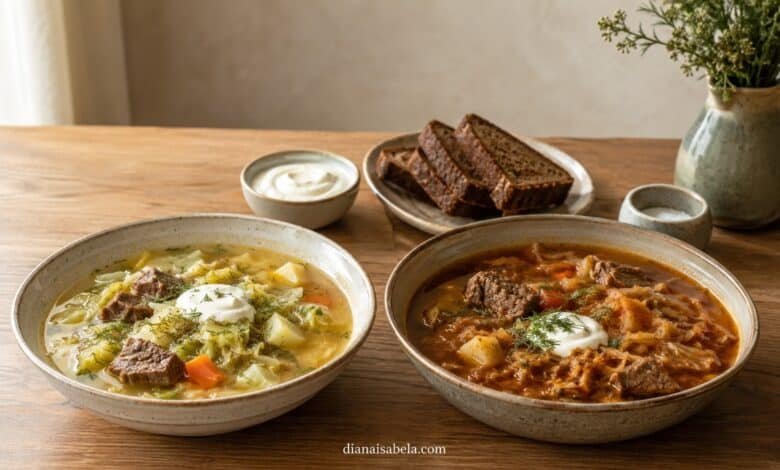
Fresh-cabbage shchi and sour-cabbage shchi are related in the way two sisters can be related while making completely different entrances at dinner.
One is softer, sweeter and more quietly vegetable-forward. The other walks in carrying fermented cabbage, deeper acidity and the confidence of a soup that knows exactly what it smells like. Both can be brothy. Both can be rich. Both can contain beef, potato, carrot, onion, dill and a spoonful of sour cream. But swap fresh cabbage for sauerkraut and the entire emotional temperature of the bowl changes.
So if you have ever ordered shchi once and thought, I expected something different, you may not have misunderstood the soup. You may simply have met a different member of the family.
The Real Difference Starts Before the Soup Pot
Fresh-cabbage shchi begins with cabbage that has not been fermented. Its flavor enters the soup as a vegetable first: slightly sweet, green, gently peppery when raw, then softer and calmer as it cooks.
Sour-cabbage shchi begins with fermented cabbage — usually the kind of sauerkraut whose acidity already exists before it meets the broth. That means the cook is not beginning with a neutral vegetable and building flavor around it. The cabbage arrives with opinions.
This is why the difference between the two soups is larger than simply “one is more sour.” Fermentation changes the cabbage before cooking ever begins, and the broth has to respond to that.
Sauerkraut is made by fermenting salted cabbage. During fermentation, beneficial bacteria produce acids and the cabbage becomes increasingly sour while its flavor and texture change. That acidity is already part of the ingredient when it enters a pot of sour shchi.
Fresh cabbage has no comparable built-in fermentation acidity. If a fresh-cabbage shchi tastes bright, that brightness has to come from somewhere else: tomatoes in some versions, perhaps a little brine, herbs, seasoning, other vegetables or simply a lighter broth that allows the cabbage itself to stay vivid.
That is the foundation.
Everything else — beef versus chicken, potatoes versus no potatoes, mushrooms, herbs, sour cream, how long the soup rests — is built on top of it.
If you are still at the stage of finding the soup rather than choosing between versions, my Shchi Soup Near Me guide is the wider starting point.
Fresh-Cabbage Shchi Is the Softer Introduction
Fresh-cabbage shchi is the version I would hand to someone who hears “cabbage soup” and immediately imagines punishment.
It does not have to taste aggressively cabbage-like.
Once simmered in broth, fresh cabbage loses much of the sharp raw character people associate with a chopped head on the kitchen counter. It softens. Its sweetness becomes more obvious. The broth moves through the leaves. Onion and carrot begin to matter just as much. Potato, if used, makes the whole bowl feel rounder and more substantial.
In a good fresh shchi, cabbage is important without screaming for attention.
Vegetable, brothy and often surprisingly gentle. Beef or mushroom can easily become the first thing you notice before cabbage.
Usually low unless the recipe adds another acidic ingredient. This is the major reason fresh shchi feels milder than a sauerkraut version.
Tender rather than fermented-soft. Depending on the cut and cooking time, the leaves can still have a little structure without feeling crunchy.
Often tastes cleaner and more open because strong fermentation is not dominating the liquid.
I think fresh shchi is particularly good at showing off the broth.
If the cook has made a beautiful beef stock, you notice it. If mushrooms are doing the work, they have room to speak. If the soup is meatless and built carefully around vegetables, herbs and cabbage, it can feel surprisingly delicate for something with such sturdy ancestry.
It is also the version most likely to confuse someone expecting a dramatic sour soup.
You take the first spoonful.
You wait for fermented fireworks.
Nothing explodes.
Instead you get warm broth, sweet cabbage and the realization that shchi is capable of being extremely polite.
Fresh Does Not Mean Bland
This deserves saying because mild soups are constantly being accused of lacking personality simply because they are not aggressively salty, sour or spicy.
Fresh-cabbage shchi can still be deeply savory.
Beef bones or meat can give the broth body. Mushrooms can pull it in an earthy direction. Onion becomes sweet. Carrot brings its own quiet sweetness. Bay leaf and pepper change the aroma. Dill can make the entire bowl smell brighter the second it hits the surface.
Then sour cream changes it again.
A spoonful does not merely make the soup creamy. It rounds the broth, softens sharp edges and creates that familiar hot-soup-cool-cream contrast that makes Eastern European soup tables feel instantly recognizable.
And then there is bread.
I consider good dark bread less a garnish and more a structural support system.
A soup can technically exist without bread.
So can I.
That does not mean we need to prove anything.
Sour-Cabbage Shchi Has More Tension in the Bowl
Sour shchi does not gently introduce itself.
The fermented cabbage brings acidity before the stock, meat and vegetables have even had a chance to negotiate the final mood.
That acidity is the point.
Not vinegar-sharp in a good version. Not random sourness. More like a deep fermented tang that keeps rich broth awake.
This is why sour-cabbage shchi can handle beef so beautifully. Fat and gelatin give the soup richness; fermented cabbage keeps that richness from becoming sleepy.
The relationship is almost architectural.
Broth provides weight.
Cabbage provides lift.
Potato softens the middle.
Carrot adds sweetness.
Dill makes the top smell alive again.
Sour cream comes in at the end and politely rounds off everybody’s sharpest argument.
More pronounced and fermented. Even before tasting, you can often tell this is not the fresh-cabbage version.
Built into the cabbage itself. This gives the broth a tangier foundation instead of relying on an acidic finishing ingredient.
Softer, more seasoned and less leafy-tasting than fresh cabbage. Long simmering can make it almost melt into the rest of the soup.
Feels more integrated with the cabbage because the sauerkraut liquid and fermented flavor move through the entire pot.
If fresh shchi is comforting because it is gentle, sour shchi is comforting because it has contrast.
It is warm and acidic.
Rich and bright.
Soft but lively.
A little serious, perhaps, but in the attractive way.
Put Them Side by Side and the Difference Becomes Obvious
I do not love comparison articles that turn food into a spreadsheet and somehow make lunch sound like accounting.
But there are a few differences worth seeing clearly.
First impression
Fresh cabbage: broth, vegetables and gentle cabbage sweetness usually arrive together.
Sour cabbage: the fermented tang tends to introduce itself early and then pull the rest of the ingredients into focus.
Acidity
Fresh cabbage: naturally mild. Any significant sourness generally comes from other ingredients or seasoning choices.
Sour cabbage: naturally tangy because the cabbage has already fermented before entering the soup.
Sweetness
Fresh cabbage: cooking reveals a subtle vegetable sweetness, especially alongside carrot and onion.
Sour cabbage: sweetness still exists in the soup, but it works against stronger acidity rather than standing alone.
What you notice about the meat
Fresh cabbage: a good beef or chicken broth can become a major part of the first impression because cabbage is not dominating the liquid.
Sour cabbage: meat and fermented cabbage behave more like a partnership. Richness becomes more noticeable because acidity is constantly balancing it.
Who usually prefers it
Fresh cabbage: people who prefer gentler soups, dislike sauerkraut or want cabbage without pronounced fermentation.
Sour cabbage: people who love fermented foods, pickled flavors, tangy soups or richer beef broths with something acidic to cut through them.
The Broth Is Where the Cabbage Decision Becomes a Soup Decision
The easiest mistake is thinking the only difference lives in the cabbage itself.
It does not.
Once cabbage cooks long enough in broth, its flavor becomes part of the liquid. The choice between fresh and fermented cabbage therefore changes every spoonful, even when there is no cabbage sitting on the spoon.
Fresh cabbage lets the stock stay more recognizable
A beef broth still tastes very clearly like beef broth. A mushroom version can smell unmistakably earthy. A chicken version can remain light.
The cabbage contributes sweetness and vegetal character, but it usually does not repaint the entire room.
Sauerkraut seasons the liquid from inside the pot
This is why a sour shchi can taste pleasantly tangy even when you mostly spoon up broth and potato.
The fermented character has moved into the liquid.
And because sauerkraut is salted during fermentation, the cook also has to think more carefully about seasoning the final soup. Salt is not arriving from one source anymore.
This is one reason homemade sour shchi can vary so dramatically. One batch of sauerkraut may be softer, saltier or more assertively sour than another. A good cook tastes the cabbage and adjusts the pot instead of treating every jar as a standardized industrial personality.
Sour Shchi Is Not “Fresh Shchi Plus Vinegar”
This is probably the most important misconception to remove.
Fermented cabbage is not simply cabbage that happens to taste sour.
During fermentation, microorganisms convert carbohydrates into acids. The cabbage’s acidity, aroma and texture change during that process. By the time sauerkraut enters a soup pot, it is already a transformed ingredient.
Adding a splash of vinegar to fresh-cabbage soup may make the broth more acidic.
It does not magically turn the fresh cabbage into fermented cabbage.
The flavor is different because the ingredient itself is different.
This is also why I would never judge sour shchi based on whether I enjoy raw fresh cabbage, or judge fresh shchi based on whether sauerkraut makes me nervous.
Same vegetable.
Different life experience.
Does Sour Shchi Always Taste More Intense?
Usually it tastes more acidic.
That is not automatically the same as more intense in every other direction.
A light broth with modest sauerkraut can still produce a relatively clean sour shchi. A fresh-cabbage version made with an extremely rich beef stock, browned meat and mushrooms can taste deeper and heavier even though it is less acidic.
This is why labels help but never tell the whole story.
Think of fresh versus sour as the cabbage axis.
Then ask:
- What broth is underneath it?
- Is there beef, chicken or no meat?
- Are mushrooms involved?
- How much potato is in the bowl?
- Is the cabbage dominant or supporting?
- Does the restaurant finish it with sour cream?
Those choices decide whether the final shchi feels light enough for lunch or substantial enough to make dinner plans unnecessary.
Which One Should You Order First?
I would choose according to appetite rather than some imaginary authenticity ranking.
Start with fresh-cabbage shchi. There is no medal for beginning with the version containing the ingredient you already know you dislike.
Sour-cabbage shchi is the obvious first date. Its acidity will probably feel familiar rather than challenging.
Fresh shchi often gives stock, mushrooms or meat more open space because fermented cabbage is not dominating the liquid.
Sour shchi makes enormous sense. Fermented cabbage and rich beef are very good at preventing each other from becoming boring.
Fresh shchi is usually the gentler introduction, but I would eventually try both. Otherwise you know one version, not the full personality range.
And if a menu simply says “cabbage soup,” do not assume you know which one has arrived. There are several Eastern European cabbage-soup traditions beyond shchi; my Shchi vs Cabbage Soup guide separates those names more carefully.
And Then Green Shchi Arrives and Refuses to Participate in the Cabbage Argument
This is where the category becomes more fun.
You can spend ten minutes carefully deciding between fresh cabbage and sauerkraut, only for someone at the next table to receive a green bowl full of sorrel and egg.
Green shchi is a different branch.
Sorrel typically provides the defining acidity rather than fermented cabbage. Spinach or other greens may join it. Egg, potato, chicken or meat can appear depending on the preparation.
The result tastes brighter and more herbal than classic cabbage-centered shchi.
So fresh versus sour is a very useful comparison, but it is not the full universe.
If that leafy version is the one confusing you on American menus, my What Is Green Shchi? guide handles it separately.
Why People Keep Talking About Shchi the Next Day
Soup leftovers have excellent public relations.
Someone always claims the bowl is better tomorrow.
With shchi, I understand the argument.
A soup containing cabbage, broth, vegetables and meat has multiple flavors moving through the same liquid. After resting, those flavors can feel more integrated when the soup is reheated.
Sour shchi makes this especially noticeable because fermented cabbage already carries such a pronounced flavor. Given time with beef broth, onion, carrot and potato, the tang can feel less separate from the rest of the bowl.
That does not mean every shchi is objectively superior the next day.
Freshness has pleasures too.
Fresh herbs smell brighter on day one. Newly cooked vegetables may have slightly more definition. A freshly finished bowl has that lovely first-night contrast between steaming soup and cool sour cream.
So my position is less dramatic:
eat some today;
save some for tomorrow;
conduct the most pleasant possible research project.
What About Texture After Reheating?
This is where fresh and sour cabbage behave a little differently in experience.
Fresh cabbage begins with more leafy structure, so repeated cooking can make it noticeably softer. If you love a bit of cabbage definition, you may prefer the first serving.
Sauerkraut is already softened and transformed through fermentation before cooking, so a very tender texture does not feel as surprising in sour shchi. In fact, that integrated softness can be part of what people like about it.
Potatoes are usually the ingredient I watch more carefully when reheating. Repeated aggressive boiling is not doing them any favors.
Gentle reheating is enough.
Your soup has already had a long day.
The Rest of Dinner Should Change With the Shchi
Fresh and sour shchi do not need identical supporting plates.
Because the soup is often gentler, a substantial second course can work beautifully: kotleti, roast meat, dumplings, buckwheat or potatoes. A fresh cucumber-and-tomato salad keeps the whole meal from leaning too beige, although beige food remains innocent until proven boring.
I like a calmer main beside all that tang. Potatoes, buckwheat, a simple cutlet or dark bread make sense. Pickles can still work, but you do not necessarily need every acidic thing in the refrigerator competing for attention.
Consider whether you need another large protein at all. Good bread, sour cream and something fresh may finish the meal better than ordering meat because a menu happened to contain more meat.
This is where dumplings, mushroom dishes, potato pancakes or another substantial second course can turn soup into dinner.
For a bigger list of pairings, sides and full-meal ideas, use What to Eat With Shchi.
If You Are Making Shchi at Home, Taste the Cabbage Before You Season the Pot
This is especially important for the sour version.
Fresh cabbage is relatively predictable.
Sauerkraut is not.
One batch can be gently tangy. Another can be bracingly sour. One may be fairly salty. Another may be mild enough that the broth needs more seasoning.
If you season the stock aggressively before tasting the sauerkraut, you can end up with soup that tastes as though three salt shakers formed a committee.
Taste first.
Then adjust.
If you are buying sauerkraut specifically for soup, I also prefer thinking about flavor rather than assuming “more sour” automatically means “better shchi.” The soup still needs balance.
You want cabbage with character.
You do not need cabbage seeking revenge.
There Is No Winner, Which Is Annoying but Delicious
Fresh-cabbage shchi is not the beginner version waiting to graduate into sour shchi.
Sour shchi is not the stronger, more authentic upgrade.
They satisfy different appetites.
Fresh shchi is what I want when I care about broth, vegetables and a gentler dinner. It can feel clean without becoming boring, comforting without becoming heavy and cabbage-forward without requiring anybody to love fermentation.
Sour shchi is what I want when I need contrast. Beef broth and acidity. Soft potato against fermented cabbage. Hot soup and cold sour cream. Something deeply comforting that still has enough tang to keep the spoon moving.
If I were introducing someone to shchi properly, I would not choose one.
I would choose two different days.
Fresh first.
Sour next.
Then allow the person to become opinionated in peace.
Which Shchi Would Be Waiting in Your Kitchen?
This is the part of food writing I always find more interesting than declaring one version “the winner.”
Families have preferences.
Cities have preferences.
One deli may make a sharp sauerkraut shchi that people plan their Friday around. Another kitchen may make a fresh-cabbage version so gentle and beefy that nobody misses the fermented tang at all.
If you grew up with shchi, tell me which bowl feels normal to you.
Fresh cabbage or sour?
Beef, chicken, mushrooms or meatless?
Potatoes mandatory or optional?
Sour cream stirred in completely or left as one cool white cloud until the spoon eventually destroys the aesthetic?
I also want the local discoveries — restaurants, delis, grocery counters, unusual recipes, serving traditions and the little details that never make it onto a formal menu.
Send them to me. The more shchi stories I collect, the more obvious it becomes that one humble cabbage soup contains enough strong opinions to support a very long dinner conversation.
info@dianaisabela.comFresh Cabbage Shchi vs Sour Cabbage Shchi: Common Questions
What is the main difference between fresh cabbage shchi and sour cabbage shchi?
Fresh-cabbage shchi uses unfermented cabbage and usually tastes gentler and more vegetable-forward. Sour-cabbage shchi uses fermented cabbage or sauerkraut, giving the broth a more pronounced tang and deeper fermented flavor.
Is sour cabbage shchi just fresh shchi with vinegar?
No. Sauerkraut is fermented cabbage, so its acidity, aroma and texture have already changed before it enters the soup. Adding vinegar to fresh-cabbage soup can make the broth more acidic but does not reproduce the flavor of fermented cabbage.
Which shchi is less sour?
Fresh-cabbage shchi is normally the less sour version because fresh cabbage does not bring fermentation acidity into the broth. The final recipe can still include other acidic ingredients, so individual bowls vary.
Which shchi is better for someone who does not like sauerkraut?
Fresh-cabbage shchi is the natural place to start. It keeps the cabbage flavor but replaces pronounced fermentation with a gentler vegetable sweetness and allows the broth, meat, mushrooms and herbs to stand out more clearly.
Does sour cabbage shchi always contain beef?
No. Sour-cabbage shchi can be prepared with different meats, broths or meatless ingredients. Beef is a particularly natural pairing with fermented cabbage, but it is not required for the soup to be sour shchi.
Does fresh cabbage shchi contain potatoes?
It can. Potatoes are common in many shchi preparations but recipes vary by household, region and cook. The distinction between fresh and sour shchi refers primarily to the cabbage rather than whether potatoes are included.
Why does sour cabbage shchi taste more acidic?
Sauerkraut develops acidity during fermentation before it is added to the soup. That fermented character then moves into the broth as the shchi cooks, making the entire bowl taste tangier than a typical fresh-cabbage version.
Is shchi better the next day?
Many people enjoy shchi after it has rested because the cabbage, broth, vegetables and meat can taste more integrated after reheating. Fresh herbs may taste brighter on the first day, so whether it is better is partly personal preference.
How can I tell which kind of shchi a restaurant serves?
Look for menu wording such as fresh cabbage, sauerkraut, sour cabbage or fermented cabbage. If the menu simply says shchi, ask whether the current soup uses fresh cabbage or sauerkraut and whether it contains meat.
Is green shchi the same as fresh cabbage shchi?
No. Green shchi is commonly associated with sorrel and other leafy greens rather than fresh white cabbage. It often has a brighter herbal acidity and may include egg, potato, chicken or meat depending on the recipe.